
Metro Mobile Shelving Units & Stem Casters
How to turn Metro Super Erecta wire or MetroMax polymer shelving into a rolling unit: mobile posts, stem caster types, brakes, load limits and when to choose track shelving instead — then design and price it in the Metro Mobile Shelving & Carts Configurator.
6
Caster types explained
2
Shelf platforms
3
Ways to go mobile
17
Metro online configurators
What Makes a Metro Shelving Unit Mobile
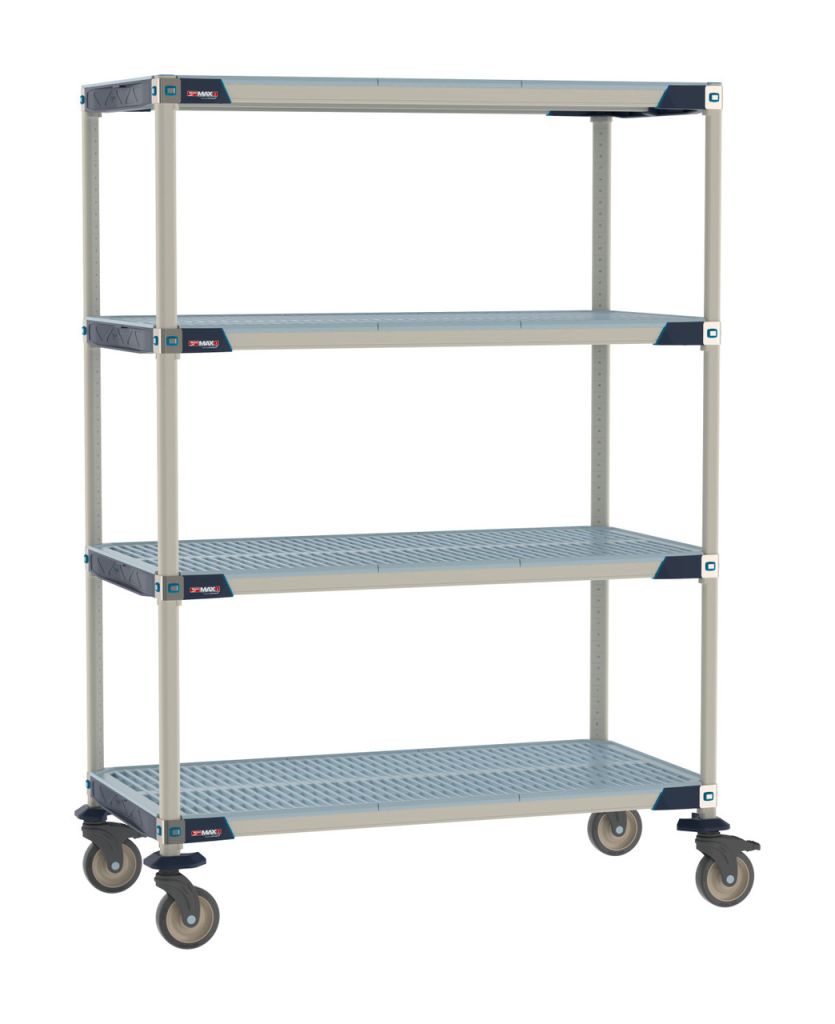
A Metro mobile shelving unit is ordinary Super Erecta wire or MetroMax polymer shelving built on posts that accept stem casters instead of leveling feet. The shelves, split sleeves and wedge connectors are the same as on a stationary unit. What changes is the post, which has a threaded or socket stem fitting at the bottom, and the casters that screw or push into it. Put four of those posts and four casters together and the unit rolls.
That simple idea covers a huge range of uses: a four-shelf MetroMax i unit wheeled into a walk-in cooler, a stainless unit pushed through a cart washer, a par-level cart restocked in central supply, or a heavy-duty dunnage rack moved for floor cleaning. Searches such as “metro x566egx3 mobile shelving unit” are usually from buyers who want exactly this: a complete unit that is ready to roll, in a common size such as 24 by 60 inches.
We have planned Metro storage for kitchens, hospitals, labs and warehouses across the West from Salt Lake City since 1997. When you know the size and the floor, the Metro Mobile Shelving & Carts Configurator builds a valid unit with matching posts and casters and rates freight to your dock.
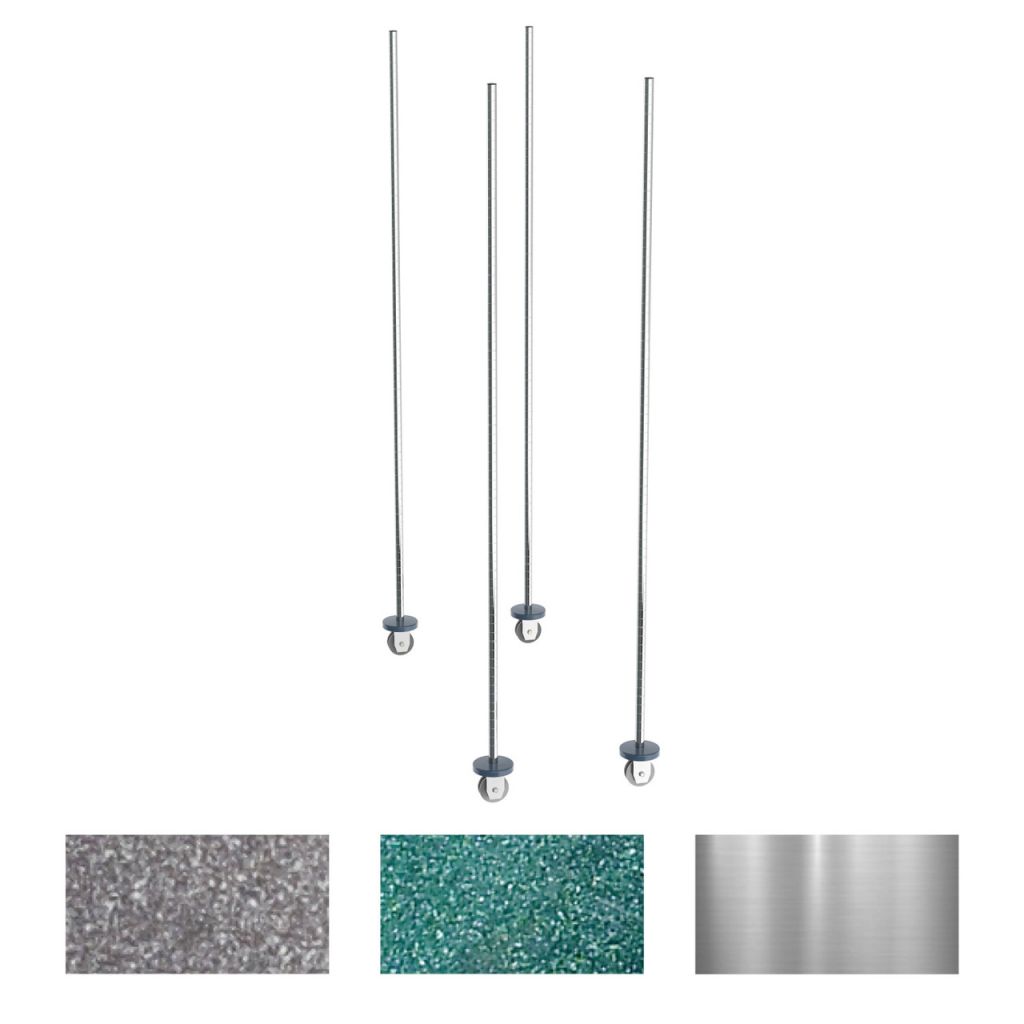
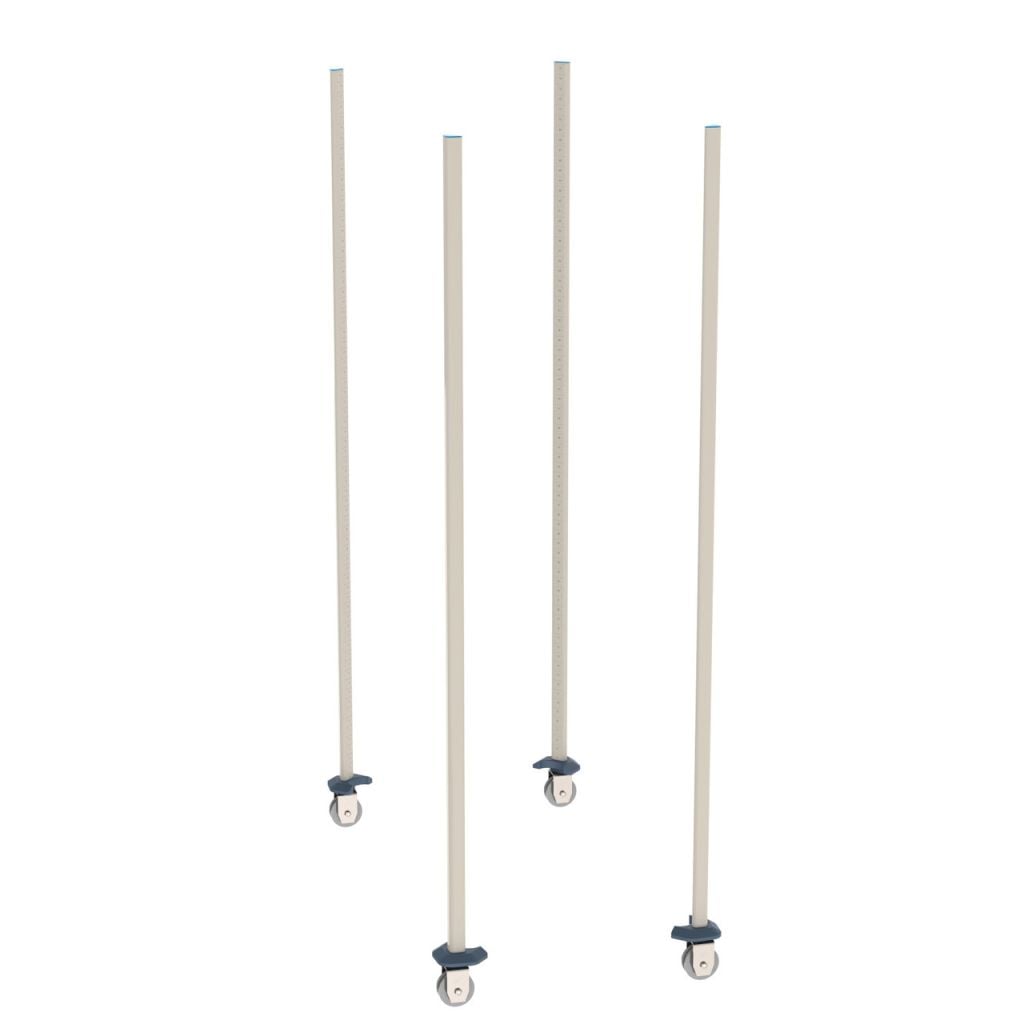
Mobile Posts and Caster Posts
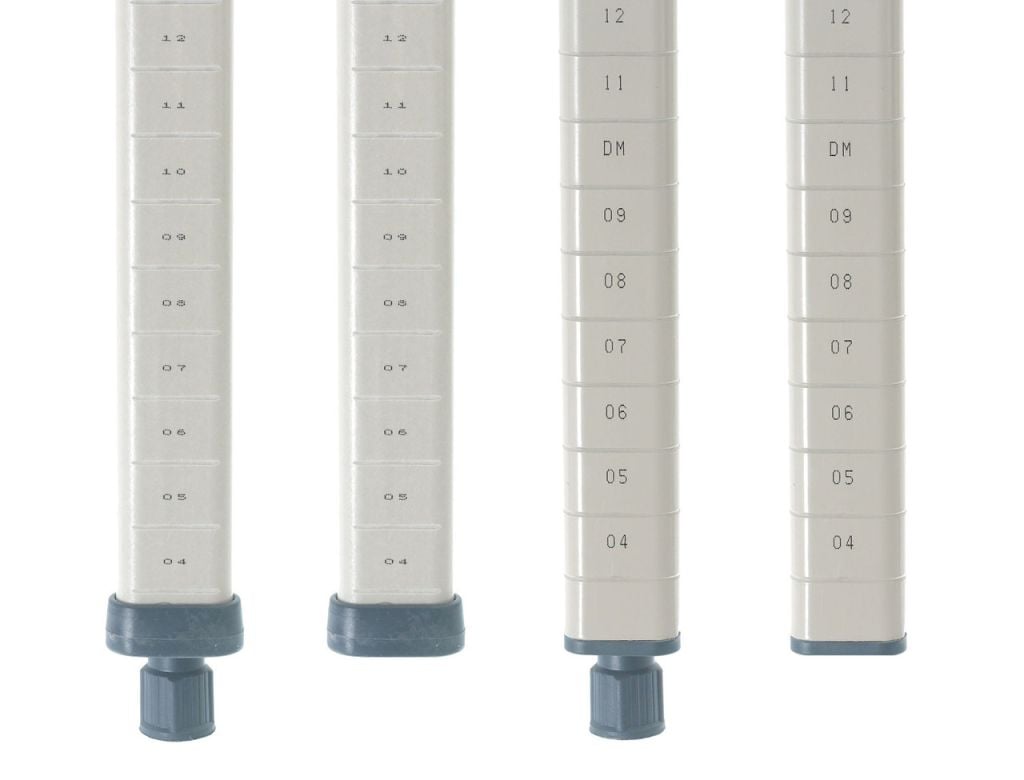
Stationary Metro posts end in a leveling foot. Mobile posts, often called caster posts, are made to take a stem caster. Because the caster adds height, a mobile post is shorter than a stationary post for the same overall unit height. That is why buyers search for caster posts by length — for example 63, 74 or 86 inch epoxy caster posts — and why the finished unit height is a few inches taller than the post.
Mobile posts are sold in the same finishes as the rest of the line: chrome, Metroseal gray or green epoxy and stainless for Super Erecta, and polymer or epoxy-coated steel posts for MetroMax. Match the post finish to the shelves and the room. A chrome post in a humid cooler will rust long before an epoxy or polymer one, and the casters themselves should be matched to the same conditions.
| Question | Stationary post | Mobile (caster) post |
|---|---|---|
| Bottom fitting | Leveling foot | Stem socket for a caster |
| Height of finished unit | Post length plus foot | Post length plus caster height |
| Can it be converted later? | Not usually; buy mobile posts | Yes, swap caster types as needs change |
| Shelf compatibility | Same shelves | Same shelves |
Post lengths, caster heights and exact finished heights vary by series and caster, so we confirm the current spec sheet for each unit. If a unit has to fit under a ceiling, a door header or into a walk-in, give us the clear height and we will pick the post and caster combination that fits.
Choosing Stem Casters
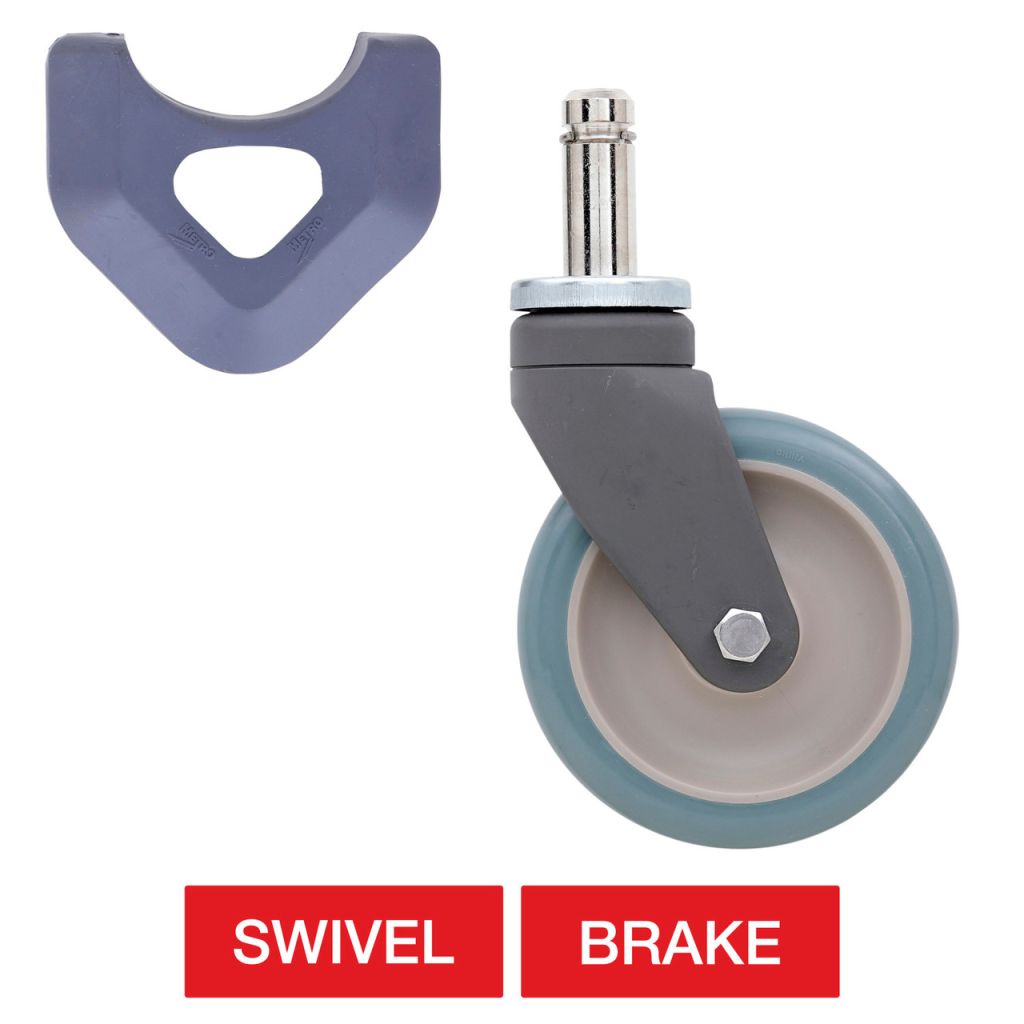
The caster is the part that decides how a mobile unit behaves: how easily it rolls, how quietly, what floors it can cross, whether it marks the floor and what it can survive. Metro offers stem casters in several diameters, tread materials and housings. Here is how to narrow the choice.
 Polymer, polyurethane treadCorrosion-proof housing for wet areas.
 Plated, rubber treadQuiet, general-purpose rolling.
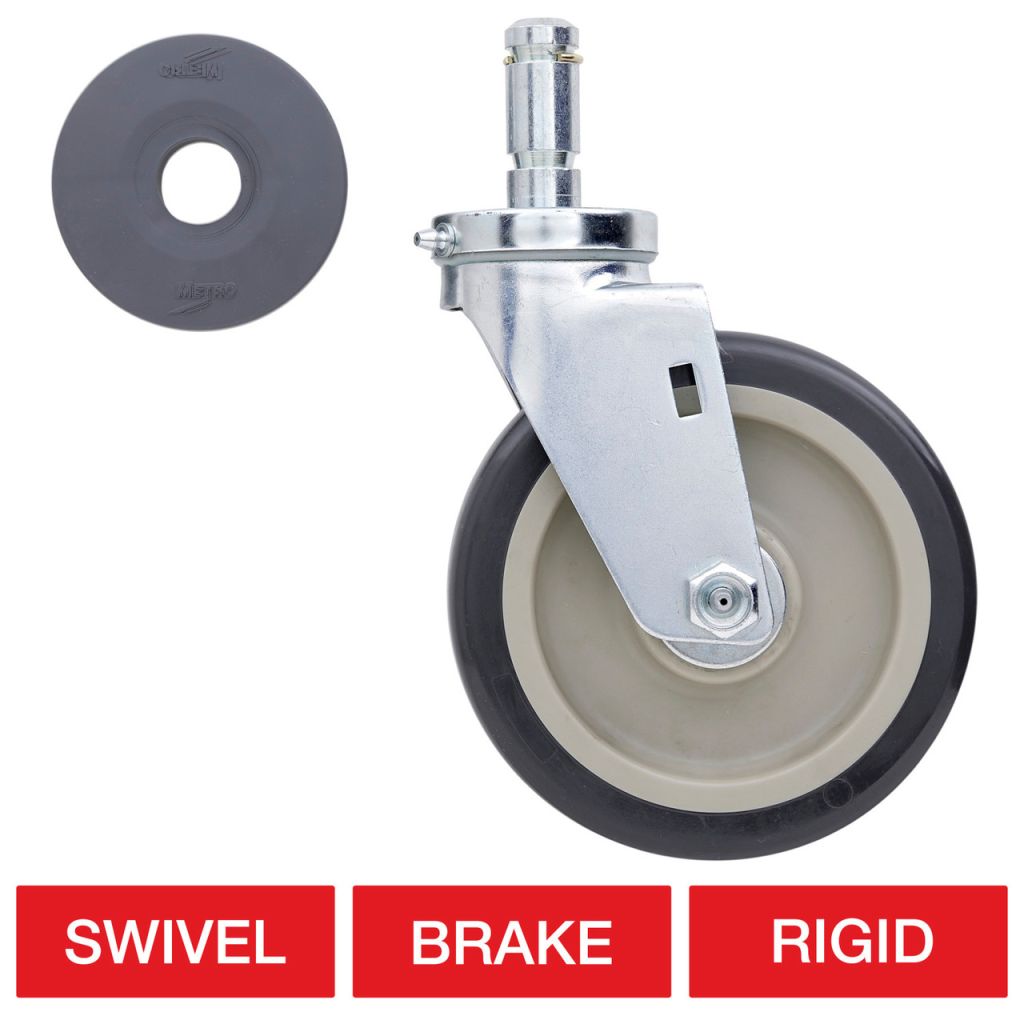 6 inch, polyurethane treadLarger wheel for heavier loads and thresholds.
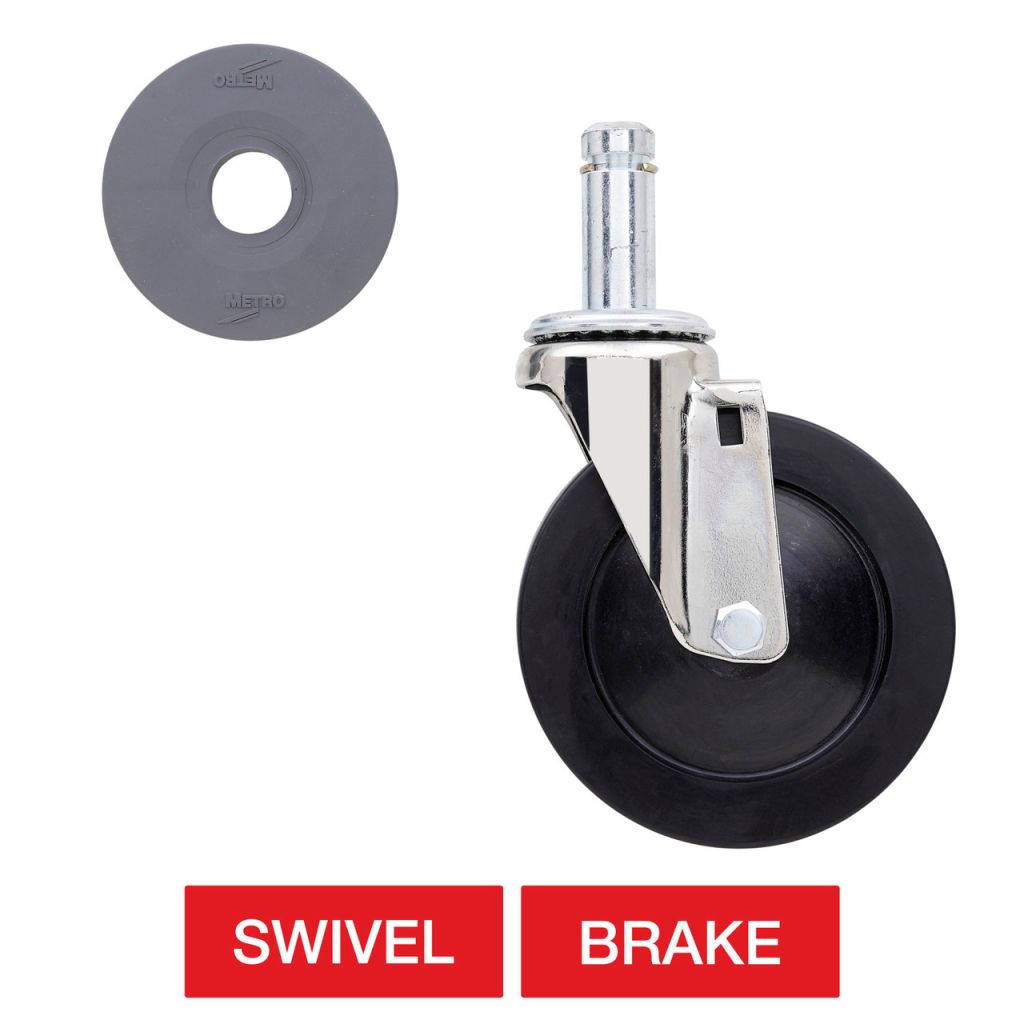 ConductiveDrains static in electronics areas.
 High-temperature autoclaveFor cart wash and autoclave cycles.
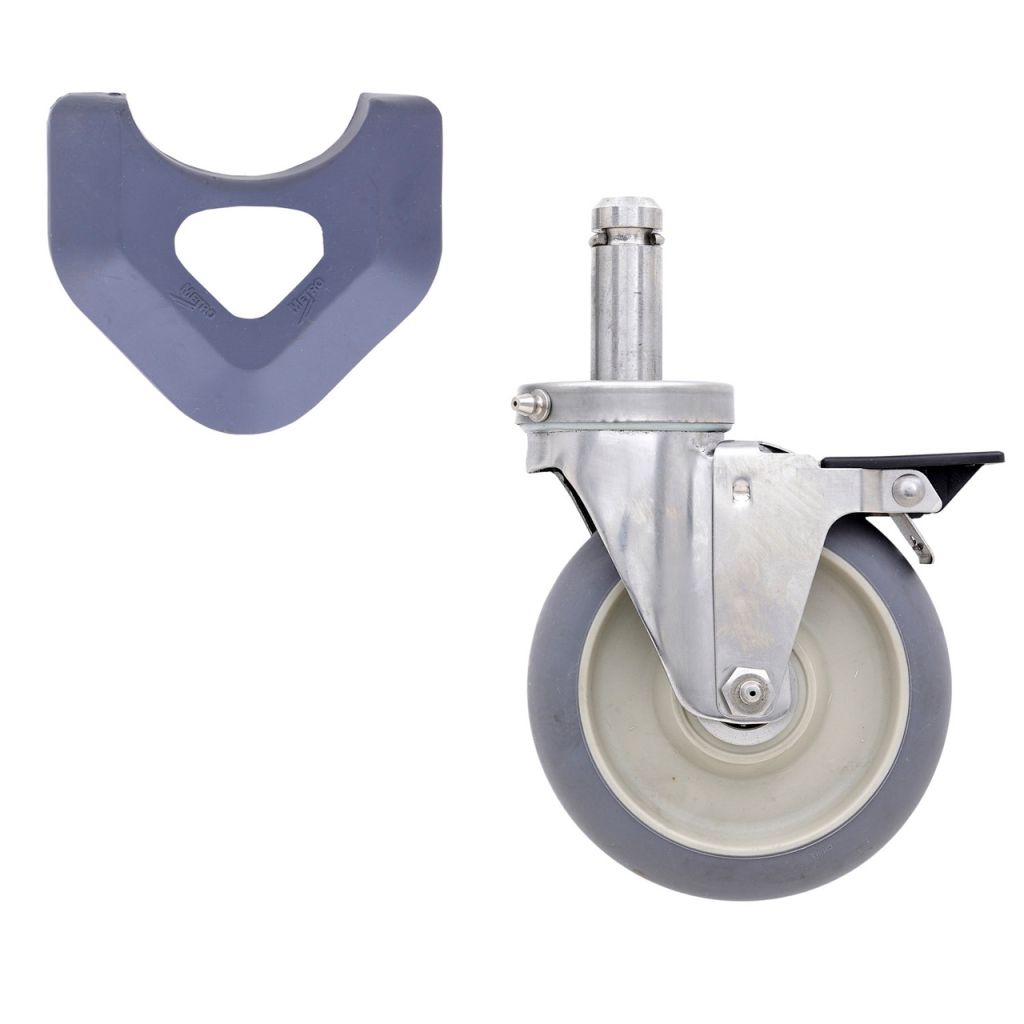 Donut, swivel with brakeCart-washable, with a brake.
| Need | Caster to look at | Why |
|---|---|---|
| Dry stock room, smooth floor | Plated caster with rubber tread | Quiet, non-marking, economical |
| Walk-in cooler or wet area | Polymer housing caster | Housing will not rust in moisture |
| Heavy loads or floor joints | 6 inch caster with polyurethane tread | Larger wheel rolls over gaps more easily |
| Cart washer or autoclave | High-temperature autoclave caster | Built for heat and washdown cycles |
| Electronics assembly | Conductive caster | Part of a grounded ESD path |
| Parking on a slope or in a corridor | Any type with brakes on two casters | Keeps the unit where you leave it |
Most mobile units use two swivel casters and two swivel casters with brakes, so the unit steers freely and parks securely. For long straight runs, some users prefer two rigid casters at one end. Load capacity of a mobile unit is usually limited by the casters, not the shelves, so a unit that holds a lot when stationary may be rated lower when mobile. Check the caster rating on the current spec sheet against the heaviest load you plan to move.
Complete Metro Mobile Units
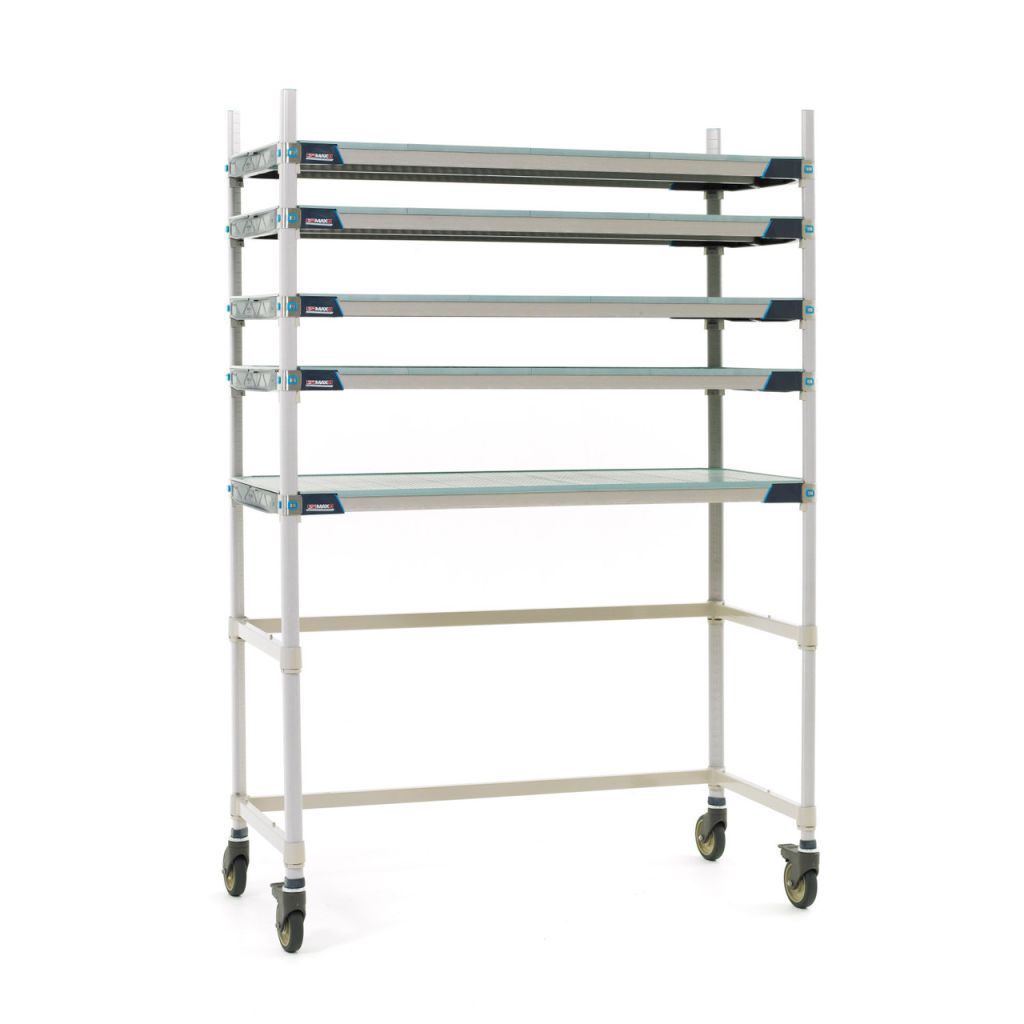
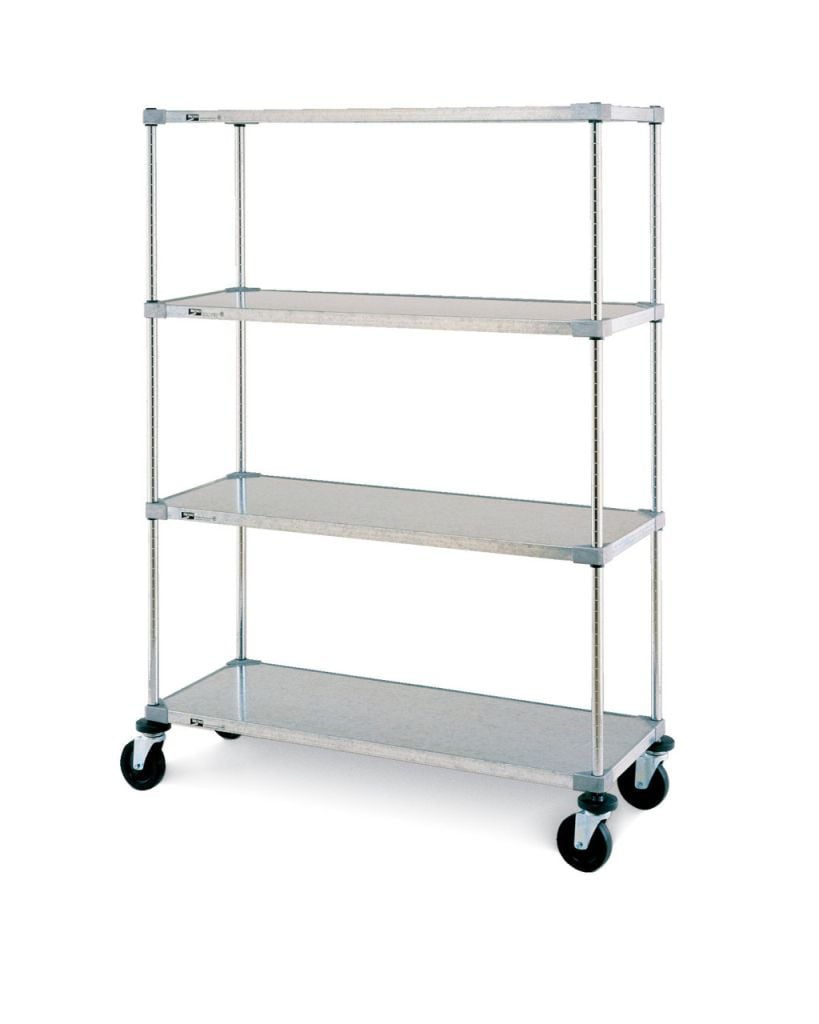
You do not have to assemble a mobile unit from parts. Metro sells many complete mobile units, and the configurator builds the rest from components. Common examples include MetroMax i four-shelf mobile units in 24 inch depth, nine-shelf and five-shelf sterile processing units, par-level and transport-exchange carts for hospital supply, galvanized solid-shelf carts for warehouses and mobile heavy-duty dunnage racks for walk-ins.
A complete unit is the easiest way to order the first time, because posts, shelves and casters are already matched. Buying parts makes sense when you are converting existing Metro shelving to mobile, replacing worn casters or building an unusual size.
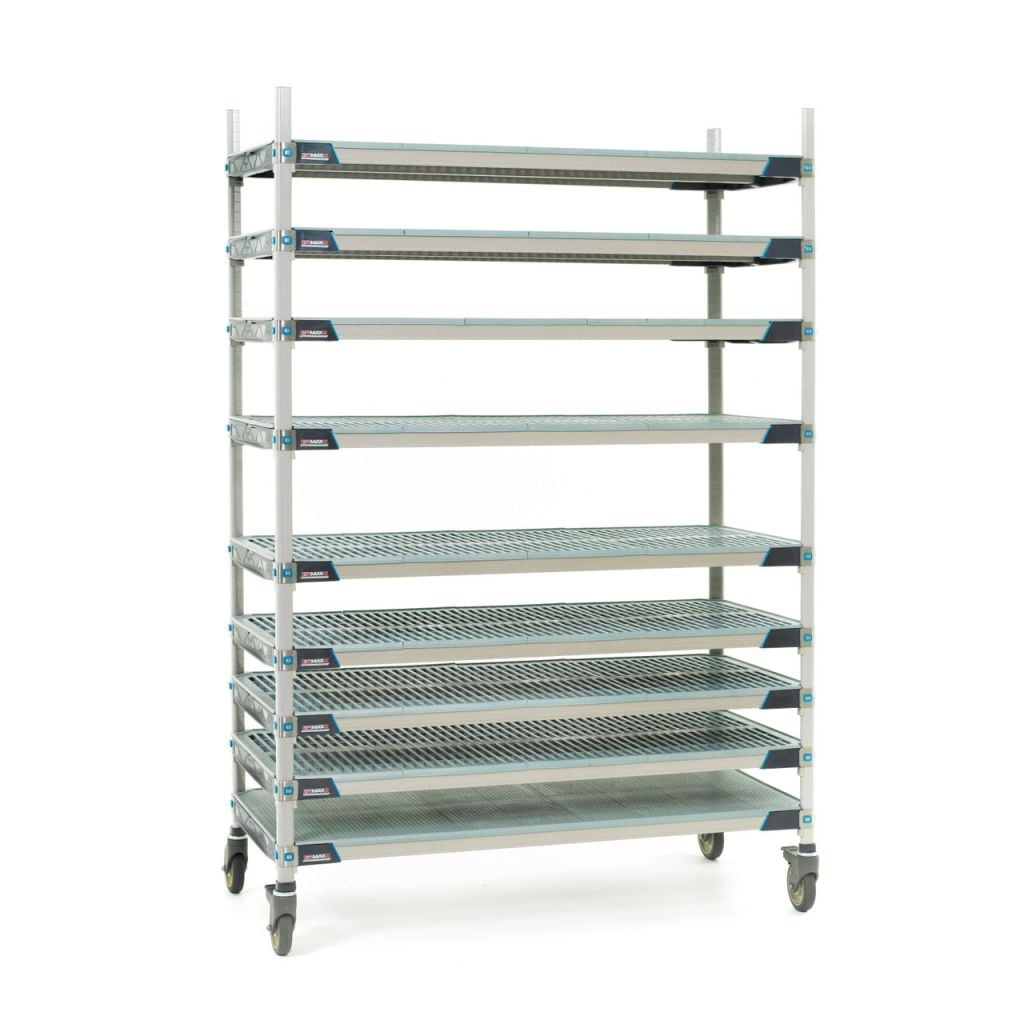 9-shelf sterile processingTall MetroMax i unit for wrapped trays.
 Par level cartRestock on the cart, roll to the floor.
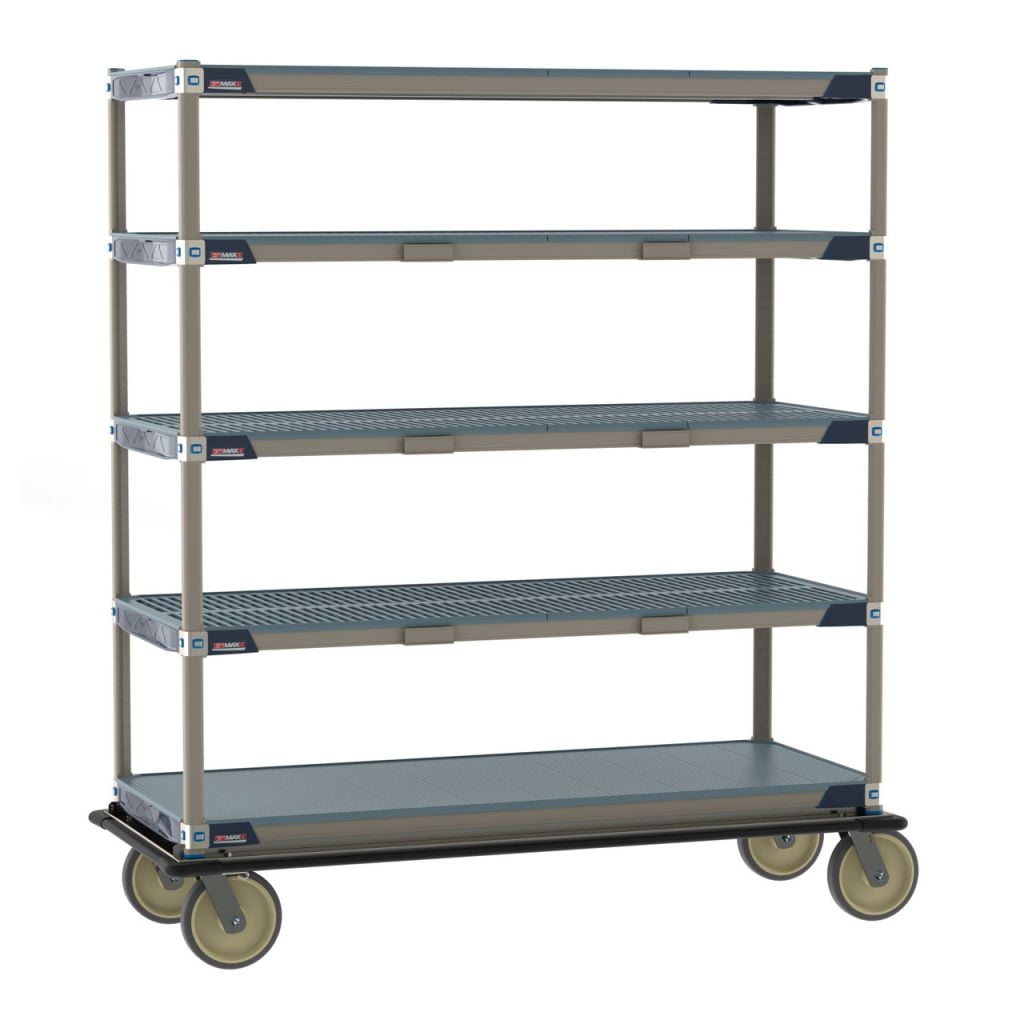 Transport and exchange cartSwap full for empty.
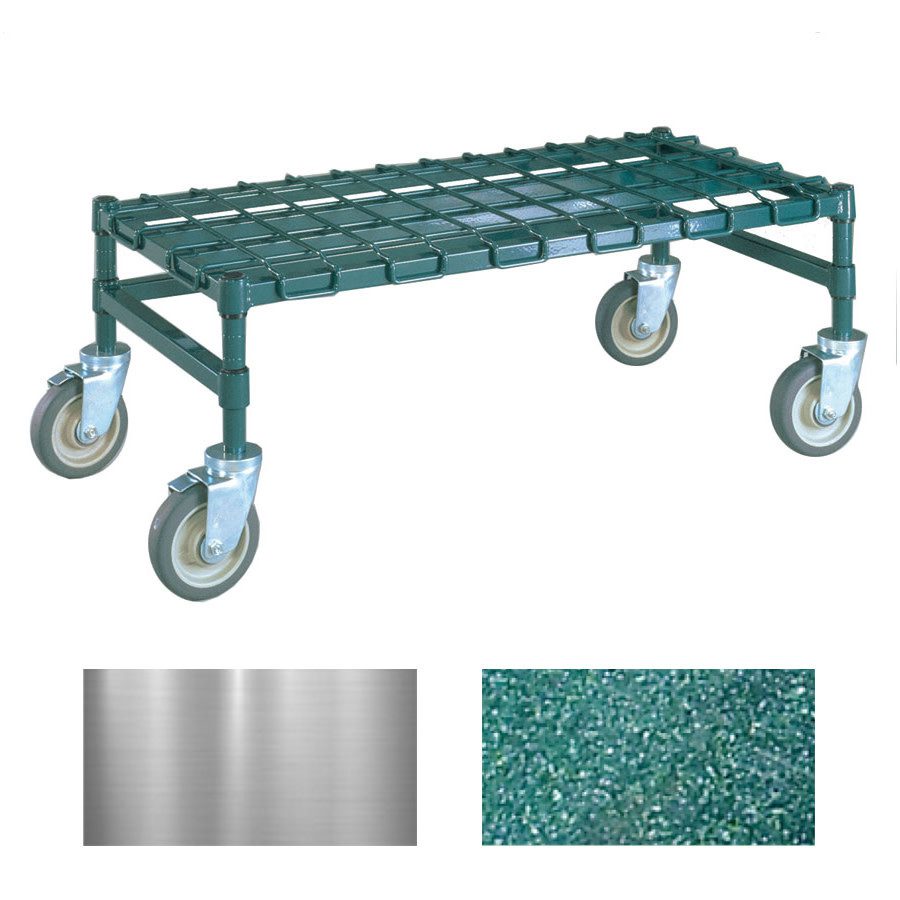 Mobile dunnage rackHeavy cases off the floor and movable.
 Feed cartSupplies to the line.
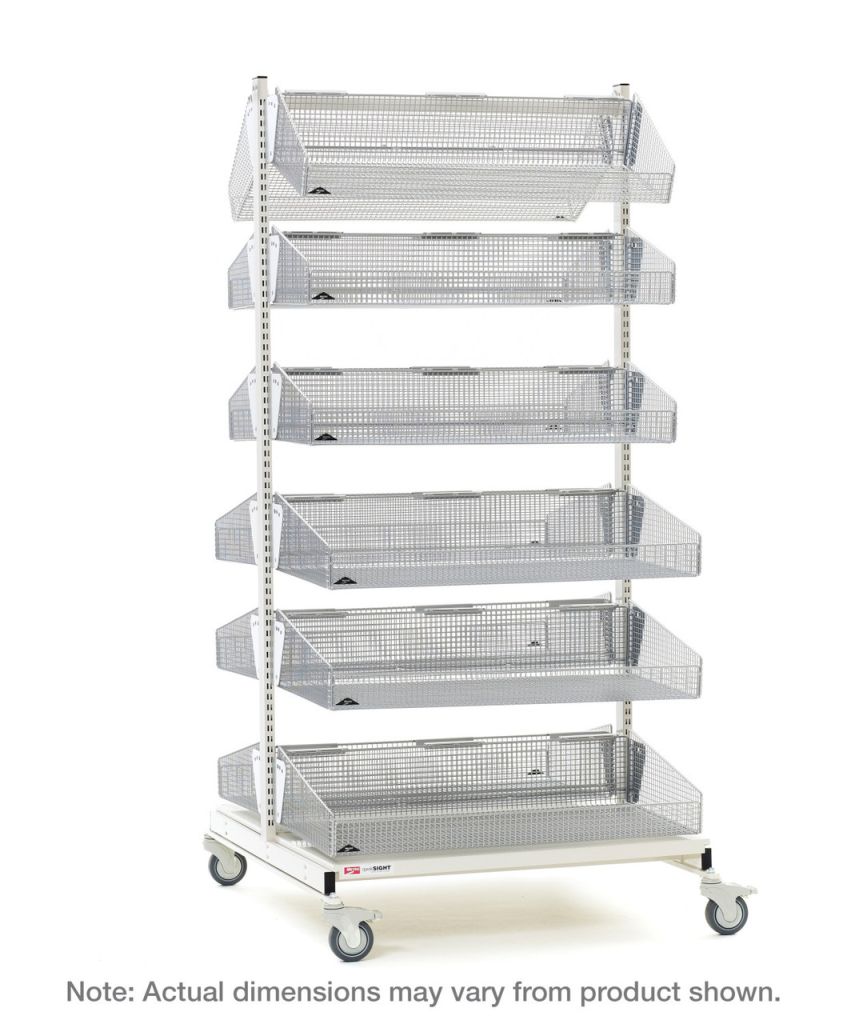 qwikSIGHT mobile basket unitBaskets on a rolling frame.
Design & price it online: Metro Mobile Shelving & Carts Configurator
Pick wire or MetroMax polymer, choose size, shelf count and finish, then mobile posts and caster type with or without brakes. The configurator validates the unit, totals it and rates freight to your ZIP. Save and share the quote.
Design & Price It Online All Metro Configurators Call (800) 326-4403
Mobile Units vs Track Shelving
“Mobile shelving” also describes high-density systems where shelving units roll on a floor track to close up aisles. Metro offers its own track kits: qwikTRAK floor track for Super Erecta and MetroMax units, and Top-Track overhead track for MetroMax. These let several units slide sideways along a fixed path so one aisle serves many units, which can add a lot of storage to a walk-in or stock room.
Choose free-rolling stem caster units when the shelving needs to go somewhere: to a cart washer, a floor, the dock or out of the way for cleaning. Choose track shelving when the shelving stays in one room and you need more storage in the same footprint. For larger high-density projects with mechanical carriages, see our rolling shelving page.
 qwikTRAK for MetroMaxFloor track kit for polymer units.
 Top-Track overheadOverhead guide, clear floor.
| Option | How it moves | Best for |
|---|---|---|
| Stem caster unit | Rolls freely anywhere | Transport, cleaning access, flexible layouts |
| qwikTRAK floor track | Slides along a floor track | More storage in walk-ins and stock rooms |
| Top-Track overhead | Guided from above | Track density with a clear floor for cleaning |
| High-density carriage systems | Mechanical or powered carriages | Records, archives, large stock rooms |
Planning a Mobile Unit
- Measure every doorway, elevator and threshold the unit must pass through
- Give us the ceiling or door header height so the finished unit with casters fits
- Estimate the heaviest load you will move, not just store
- Describe the floor: sealed concrete, tile, vinyl, quarry tile, drains or floor joints
- Note wet, cold, hot or washdown conditions so posts and casters match
- Decide how many casters need brakes; two is common
- For electronics areas, plan the full ESD path including conductive casters
Keep heavy items on the lower shelves of any mobile unit, and avoid tall, narrow units loaded high if they will travel often. Push rather than pull, slow down over thresholds and lock the brakes when parked. In seismic areas, a parked mobile unit should have brakes engaged and may need additional restraint; ask us about your building.
Typical Mobile Layouts
| Space | Unit | Notes |
|---|---|---|
| Walk-in cooler | MetroMax polymer unit on polymer-housing casters | Roll out for floor cleaning; will not rust |
| Central supply | Par level and exchange carts | Restock off the floor, swap full for empty |
| Dish room | Stainless or polymer unit on washable casters | Rolls through cart wash |
| Warehouse | Galvanized solid-shelf cart | Moves small parts to packing |
| Electronics | Conductive casters with ESD shelving | Part of a grounded path |
| Bakery or prep | Epoxy wire unit with brakes | Moves between prep and storage |
Care, Replacement Casters and Upgrades
Casters wear. Treads flatten, swivels collect debris and brakes lose grip, especially in kitchens and cart-wash areas. A worn caster makes a unit hard to push and can be a safety issue, so check casters as part of routine maintenance. Because Metro stem casters fit into the post socket, a worn caster can usually be replaced without taking the unit apart: unload the unit, lift one corner at a time and swap the caster.
- Clean hair, string and food debris from wheels and swivels regularly
- Replace any caster with a flat spot, cracked tread or loose swivel
- Upgrade to a polymer housing caster if plated casters are rusting
- Move to a larger wheel if units catch on floor joints or drains
- Add brake casters if units drift on sloped floors
- Match replacement casters to the post type; Super Erecta and MetroMax fittings differ
Converting existing stationary Metro shelving to mobile usually means new mobile posts, not just casters, because stationary posts are not made to take a stem. The shelves can usually be reused. Send us the existing shelf sizes and series and we will match the posts.
What to Send Us for a Quote
- Shelf size and number of shelves, or the item you are replacing
- Wire or polymer, and preferred finish
- Room conditions and floor type
- Heaviest load to be moved
- Doorway, elevator and ceiling limits
- Number of brake casters and any ESD or autoclave requirement
- Photos of existing shelving if converting or replacing parts
With those details we can confirm the posts, casters and unit height. Or answer the same questions in the configurator and compare wire and polymer units before you order. For non-shelving carts, see our Metro utility carts guide.
Shop Metro Mobile Shelving & Casters
Buy select items directly from our online store, or request a quote for volume, custom sizes and freight-rated orders.

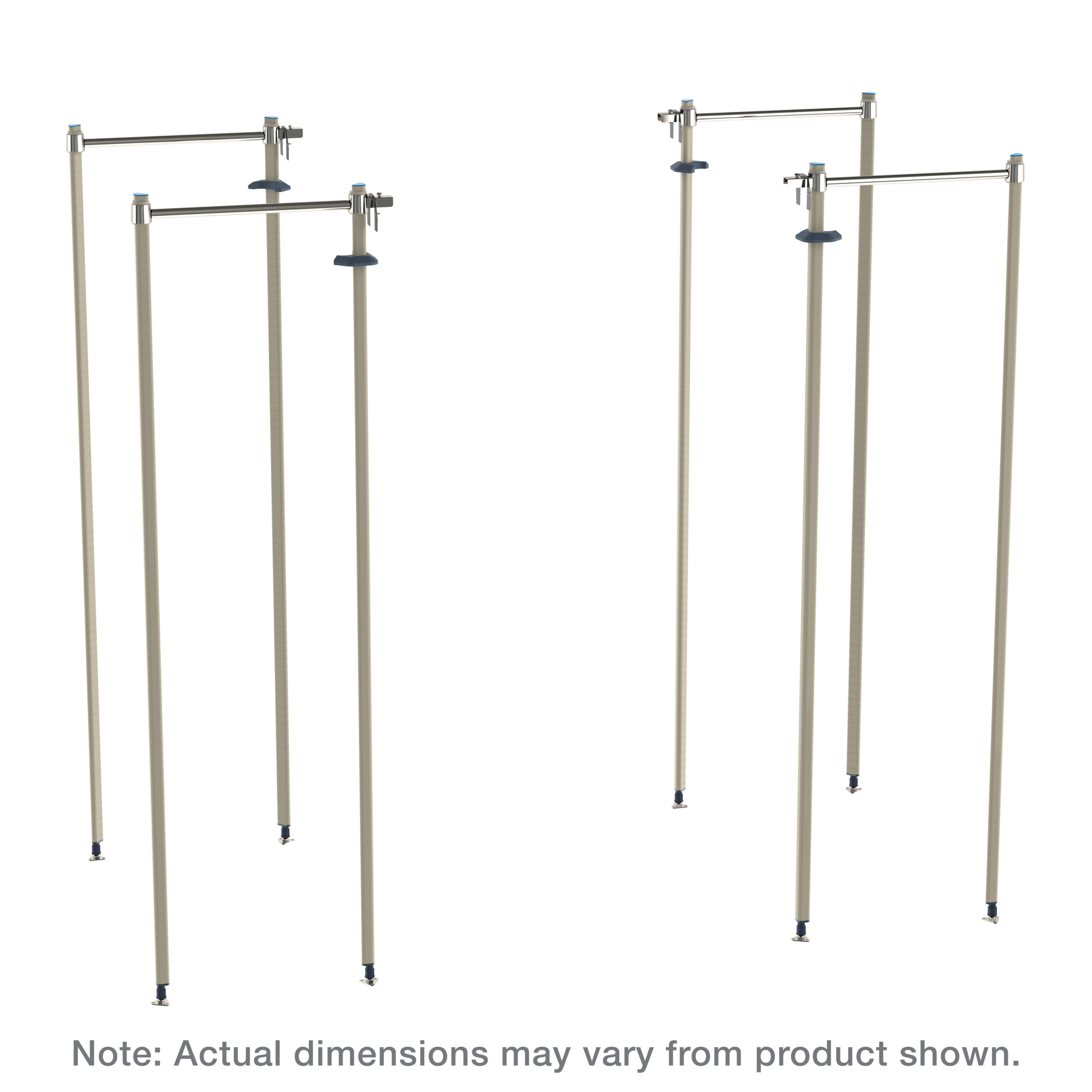
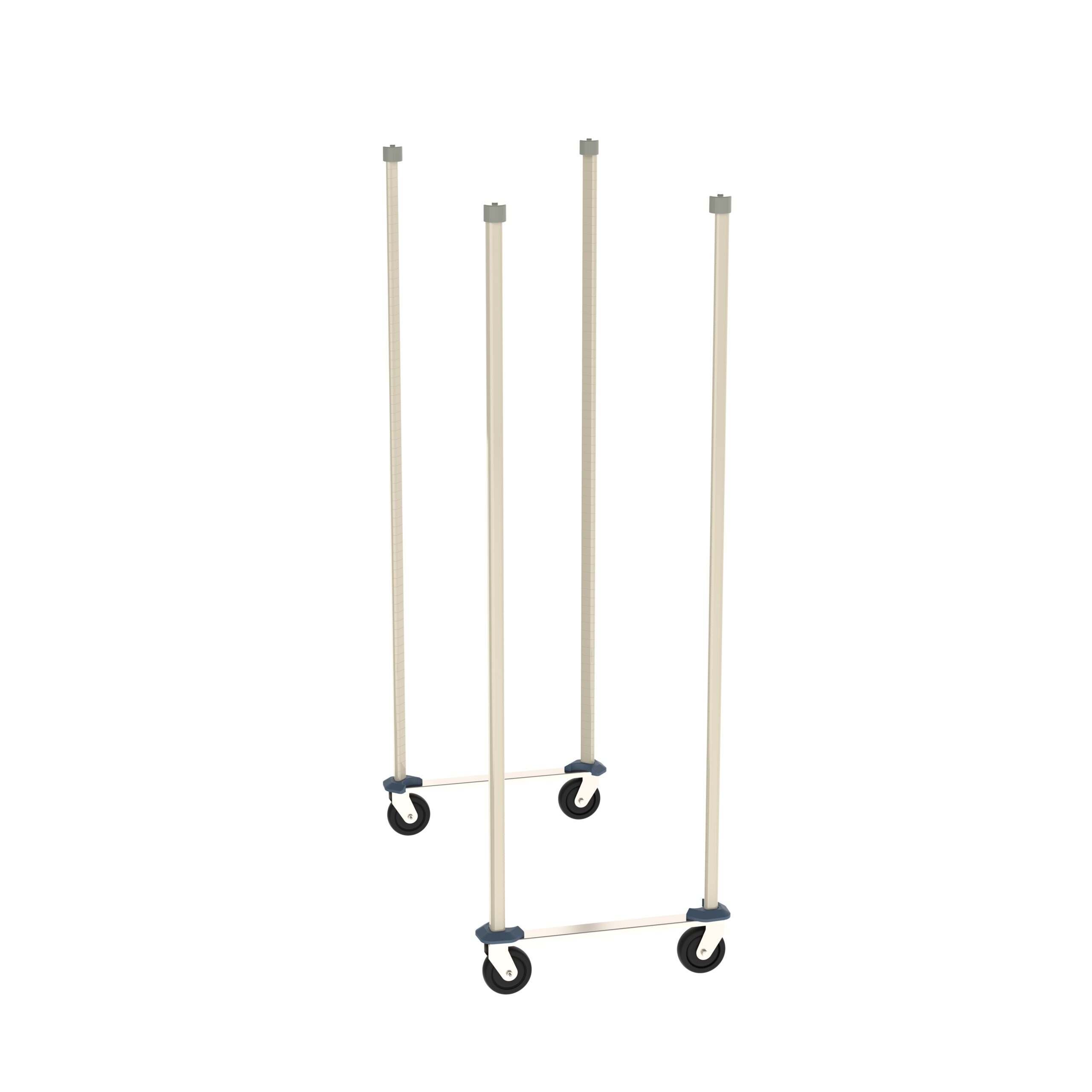

Moving totes or dishes rather than shelving? See our Metro totes, bins, dish carts & MetroTrux guide.
Caster-mounted units are one option. Compare system types, drive options, safety features and project examples on our main mobile shelving page.
Get a free quote
Tell us what you are storing, the room size and your timeline. A project specialist will follow up with layout options and pricing. Prefer to talk? Call (800) 326-4403.
Metro Mobile Shelving & Caster FAQ
How do I make Metro shelving mobile?
What is a Metro caster post?
Which casters should I use in a walk-in cooler?
Can I put casters on my existing stationary Metro shelving?
How much can a mobile Metro unit hold?
Do I need brakes?
Can I price a Metro mobile unit online?
Put Your Shelving on Wheels
Design it in the Metro Mobile Shelving & Carts Configurator or send us the size, floor and load for a review. Call (800) 326-4403 or request a quote online.