
Home / Cleanroom / Clean Room Gowning Benches
Clean Room Gowning Benches
Stainless steel gowning and step-over benches for controlled environments — perforated, solid or open-wire seats, 36″ to 84″ lengths, brushed 304 or electropolished finishes, and foot plates made to be bolted down. Specified correctly, the bench is the boundary between your unclassified side and your clean side.

40%
Laminar flow, perforated seat
36–84″
Standard bench lengths
500 lb
Seat weight capacity
304 / EP
Stainless finishes
What a Gowning Bench Actually Does
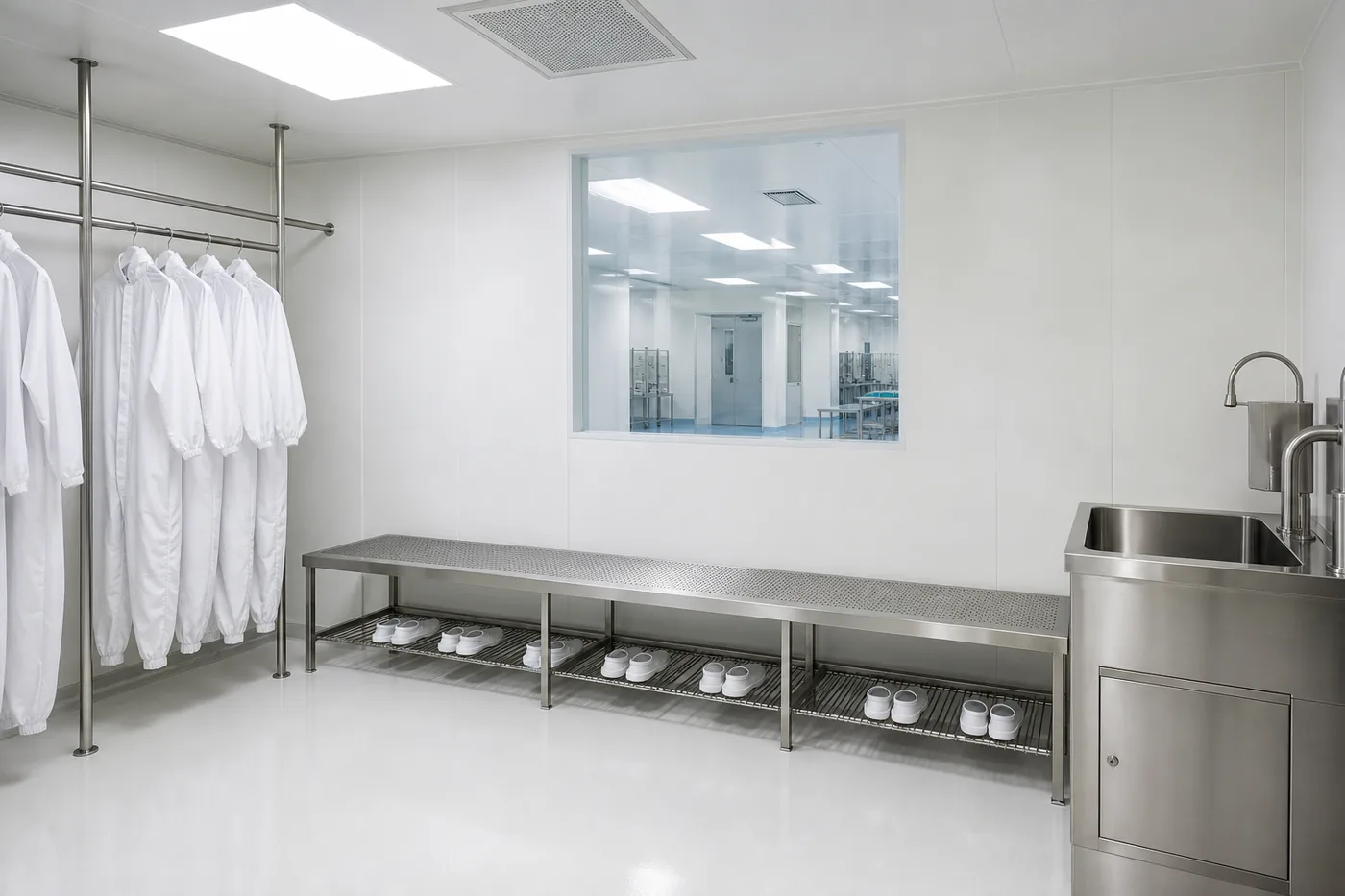
A gowning bench is not seating. It is the physical line where the unclassified side of your facility stops and the classified side begins, and it is the one piece of furniture whose job is to make people change their behavior. Someone sits down on the dirty side wearing street shoes, removes them, puts on cleanroom footwear or boot covers, then swings across the bench and puts clean feet down on the clean side. Get the bench wrong — too short, unanchored, positioned so people can walk around it — and you get cross-contamination at the exact point in the process designed to prevent it.
That is why these benches are stainless rather than painted steel or laminate: non-porous, non-shedding, resistant to the alcohols, quats and peroxides used for routine disinfection, and free of crevices where residue accumulates. The construction follows from the same requirement — rolled edges, ends turned down 90 degrees, welded joins where possible, and a brushed or electropolished finish.
Material Handling USA has supplied stainless equipment across the West since 1997, and we represent Eagle Group, whose MHC division builds the cleanroom bench line most of our customers specify — see the brand page for Eagle Group cleanroom gowning benches for model families, gauges and options. This page covers the bench itself. If you are planning the whole room — racks, layout and sequence — start at gowning room essentials instead and come back here to pick the bench.
Seat Materials: Perforated, Solid or Open Wire
The seat is the first real decision, and it is an airflow decision more than a comfort one. Three seat types cover almost every gowning room.
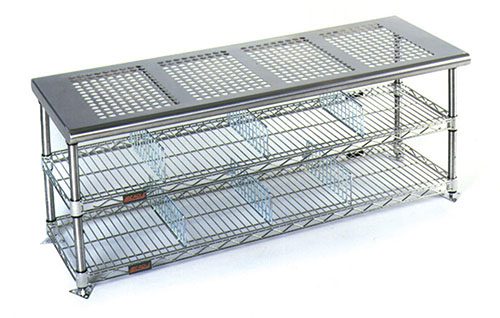
Perforated stainless seat
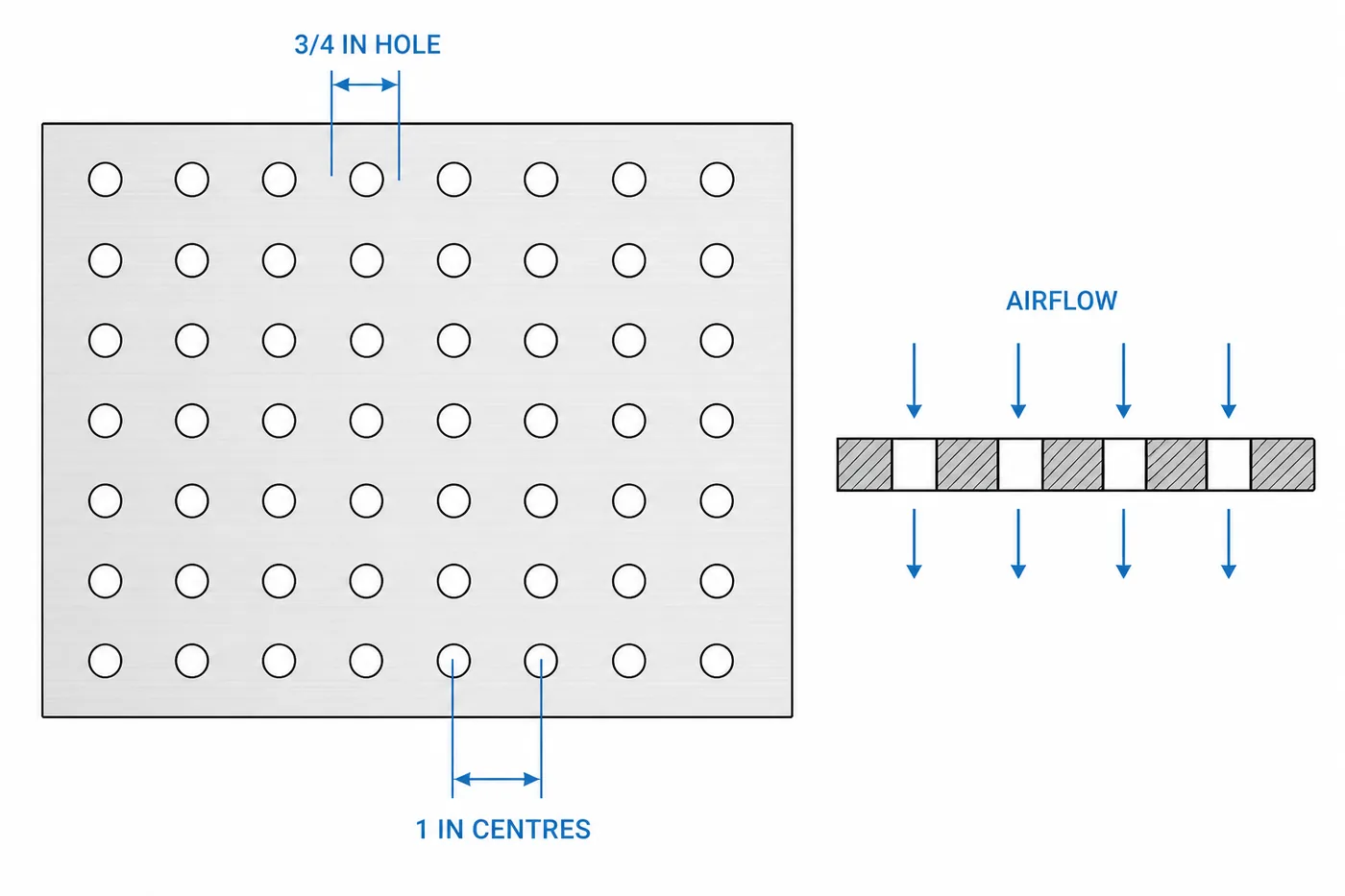
18″ wide, 3/4″ perforations on 1″ centers, roughly 40% laminar flow through the seat. The default for classified gowning rooms with downward airflow. Rolled front and rear edges, ends turned down 90 degrees, 500 lb capacity.
Solid stainless seat
14-gauge type 304, 18″ wide (narrower 9″ and 12″ solid benches run up to 84″). The simplest surface to wipe down and the one to choose when small items get handled at the bench and dropping them through the seat is a daily nuisance.

Open wire seat
14″ wide, 18″ high, lengths to 72″, about 62% laminar flow — the most open seat in the range. Four legs with foot plates, a three-sided channel frame and one wire shelf. Economical, and the usual choice for less demanding rooms or for use during construction while a room is brought into clean.
Choose an open seat when
- The room has unidirectional or downward airflow you do not want interrupted
- You are managing particle counts tightly and want fewer horizontal collection surfaces
- Static generation matters — less contact surface, less charge build-up
- The bench sits under or close to a filter face
Choose a solid seat when
- Small parts, caps or badges are handled at the bench and would fall through
- The room is cleaned with heavy liquid application and you want one continuous surface
- Gowning sequences are long enough that seat comfort matters
- Airflow through the seat is not part of the room design

Brushed 304 or electropolished?
Brushed #4 finish 304 stainless is adequate for most gowning rooms. Electropolishing removes the surface layer to leave a smoother, more passive finish with fewer micro-crevices, faster to sanitize and slower to corrode under aggressive cleaning chemistry. Specify electropolished for aseptic pharmaceutical production or where your quality group expects it in writing; for electronics, optics and assembly work, brushed 304 is the sensible purchase and the money is better spent on bench length.
Standard Sizes, Gauges and Published Specifications
These are the catalog specifications for the 18″-wide gowning benches with wire undershelf — the models most cleanrooms buy. Confirm the current specification on your quote before it goes into a submittal or a qualification package; model details change and we put them in writing.
| Element | Specification |
|---|---|
| Seat top | 18″ (457 mm) wide, 300-series stainless, #4 brushed finish; rolled edge front and rear with ends turned down 90°; 500 lb weight capacity |
| Perforated top | 3/4″ (19 mm) perforations on 1″ (25 mm) centers, allowing 40% laminar flow |
| Solid top | 18″ (457 mm) wide, 14-gauge type 304 |
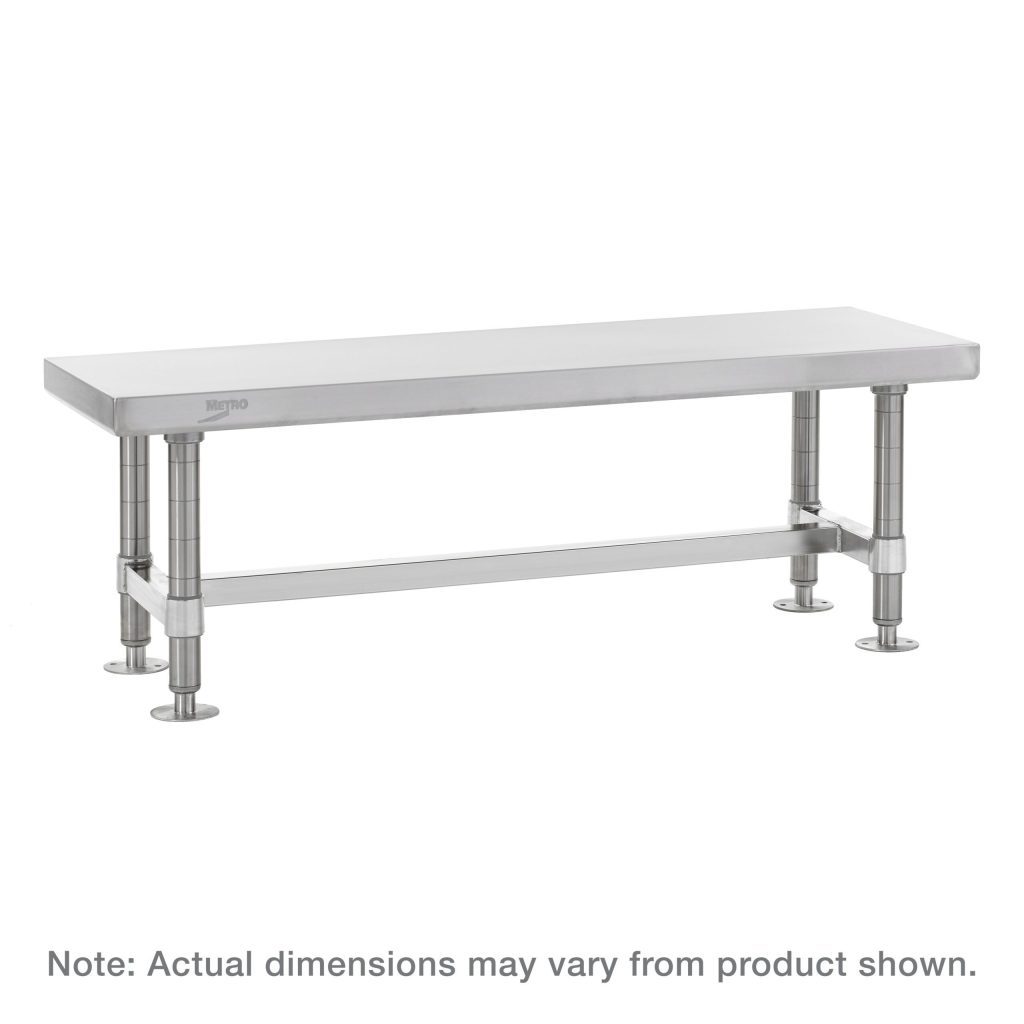
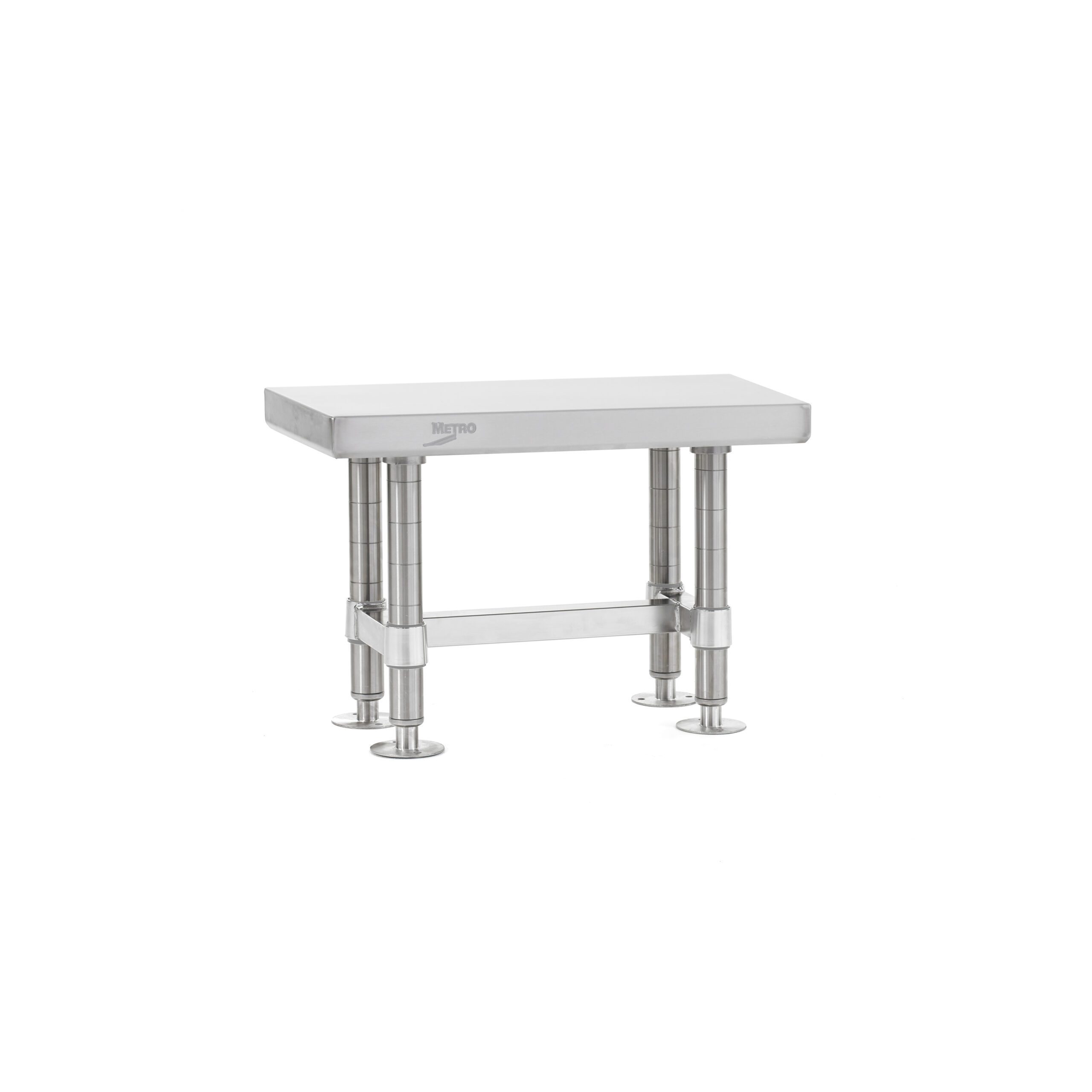
| Legs | 1″ (25 mm) diameter posts, 18″ tall, 16-gauge type 304 stainless; 72″ benches use six legs |
| Foot plates | 13-gauge stainless, triangular — allows the bench to be bolted to the floor if desired |
| Undershelf | Patented Quad-Truss® design (patent #5,390,803); 14″ × 36″ type 304 wire shelf. 72″ benches use two shelves with S-hooks |
| Finishes | 304 stainless steel, or 304 electropolished (EP model suffix) |
| Model families | PCRB18xx-W perforated top; CRB18xx-W solid top; wire bench in 14″ width |
| Model | Size (W × L × H) | Weight | Practical seated capacity |
|---|---|---|---|
| PCRB1836-W / CRB1836-W | 18″ × 36″ × 19″ | 44 lb | 1 person |
| PCRB1848-W / CRB1848-W | 18″ × 48″ × 19″ | 50 lb | 1–2 people |
| PCRB1860-W / CRB1860-W | 18″ × 60″ × 19″ | 56 lb | 2 people |
| PCRB1872-W / CRB1872-W | 18″ × 72″ × 19″ | 62 lb | 2–3 people |
Reading the model numbers
PCRB is the perforated seat, CRB the solid seat; the first two digits are the seat width, the next two the length. -W is the wire undershelf, EP an electropolished finish. 72″ benches take a second undershelf plus S-hooks; solid benches are also built in 9″ and 12″ widths to 84″ long, and the 14″ wire bench runs to 72″.
On load ratings
The 18″ seats are published at 500 lb, which is a static seat capacity, not a step-stool or platform rating. Benches are for sitting and for swinging across, not for standing on to reach high garment storage — put a proper stainless step stool in the room for that. If several people sit on one bench at once, distribute them along the length rather than clustering at an end.
Step-Over Benches and Crossover Discipline
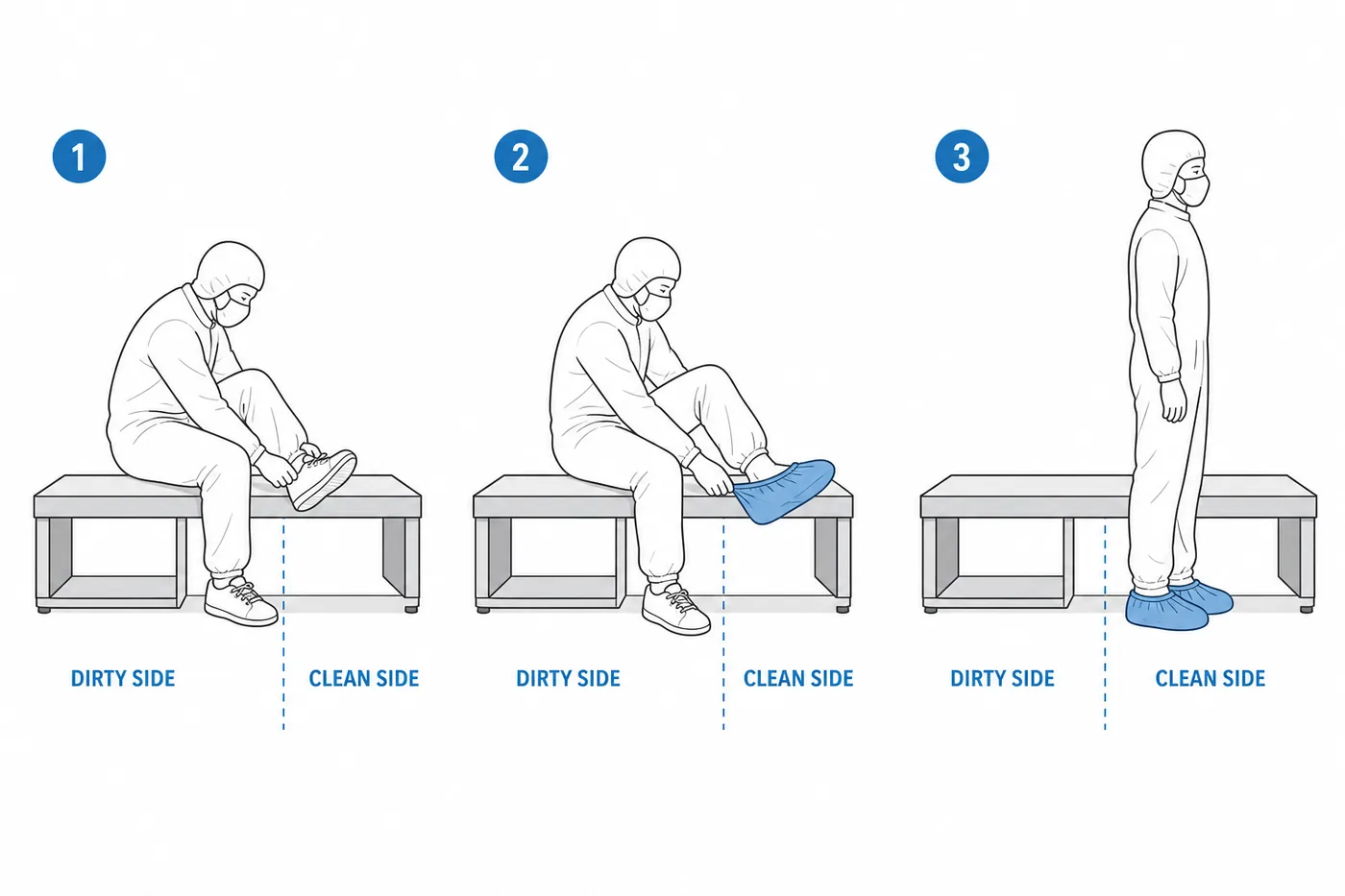
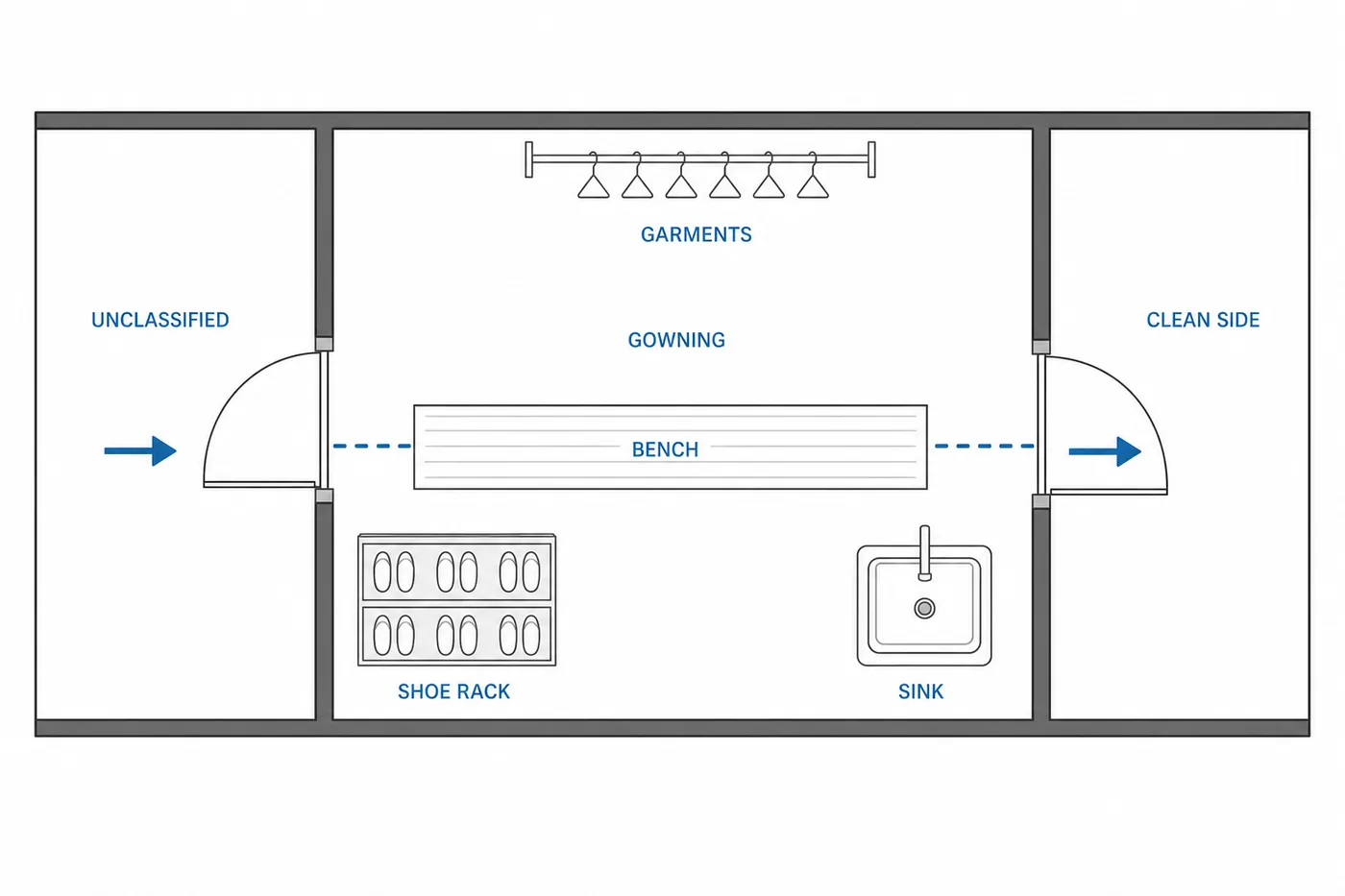
A step-over bench is placed across the gowning room as a barrier, and the gowning procedure requires people to cross it rather than walk around it. The sequence is simple and the discipline is everything: sit on the unclassified side, remove street footwear, put on cleanroom footwear or boot covers, then swing over the bench and place clean feet only on the clean side.
What makes it work in practice is layout, not the bench itself:
- The bench spans the room wall to wall, or wall to fixture, so there is no route around it
- Enough length for peak throughput — shift change is the design case, not the daily average
- Bolted to the floor so it cannot drift out of position; the triangular foot plates are made for this
- Street shoe storage strictly on the dirty side, cleanroom footwear strictly on the clean side
- Nothing stored on the clean side that came across from the dirty side
- Floor marking so the boundary is obvious to visitors, auditors and contractors
One-piece or two-piece configurations
A one-piece step-over bench is a single continuous run — usually 60″ or 72″ — that forms the whole barrier — the cleanest solution when the opening is narrow enough to span. A two-piece configuration uses two shorter benches end to end or in an L, and it is the better answer more often than people expect: it spans a wider opening, allows a procedurally controlled gate for carts, is light enough to move for cleaning behind, and lets you replace half the barrier if one piece is damaged. Two 72″ benches also seat far more people at shift change than one long run.
Seated bench or step-over bench?
They are not interchangeable. A seated bench supports donning garments where footwear crossover is handled elsewhere. A step-over bench is a barrier that enforces the crossover. Many gowning rooms need both, and your layout drawing should label which is which so the installer does not put the barrier on the wrong side of the door.
Free-Standing, Floor-Mounted or Wall-Mounted
How the bench meets the room decides how easy it is to clean under and how hard it is to defeat. All three mounting approaches are legitimate; they solve different problems.
| Mounting | How it works | Best for | Trade-off |
|---|---|---|---|
| Free-standing | Legs with triangular foot plates resting on the floor; bench can be moved for cleaning | Seated benches away from the crossover line; rooms with frequent deep-clean cycles | Can be pushed out of position, so it should not be the barrier |
| Floor-mounted (bolted) | Same foot plates, anchored through to the slab | Step-over barriers, high-traffic anterooms, anywhere the boundary must be fixed | Anchors and the floor seal around them become part of the cleaning routine |
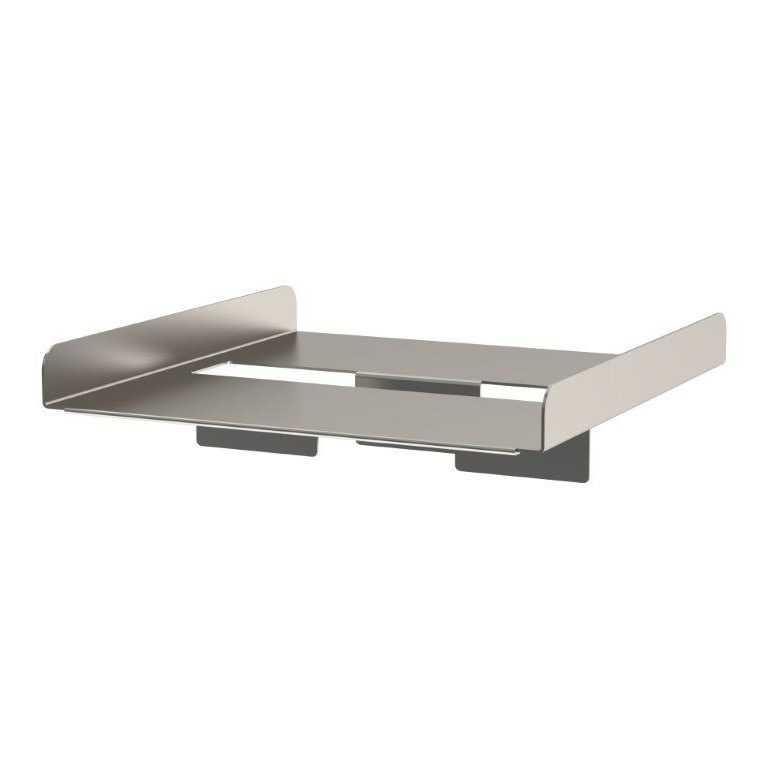
| Wall-mounted | Cantilevered bracket or wall-mounted table-style seat with no legs to the floor | Narrow anterooms and rooms where a fully clear floor makes wet cleaning faster | Requires structural backing in the wall and a lower load rating than a legged bench |
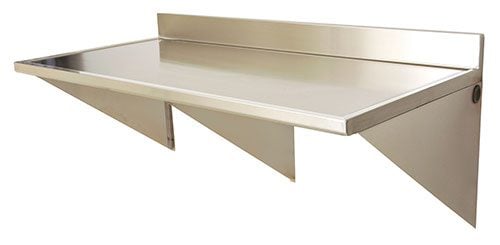

A practical rule: anchor anything that defines the boundary and leave everything else free-standing so housekeeping can get behind it. With coved welded flooring, involve the flooring contractor before you drill so the penetrations get sealed properly.
Not sure which bench belongs where?
Send us the gowning room dimensions, the airflow design and your peak headcount at shift change. We will come back with bench lengths, seat type, finish and mounting for each position in the room — plus the racks and shelving that go with them.
Shoe Storage, Bootie Racks and What Goes Under the Bench
The undershelf is the most under-specified part of the bench. A 14″ × 36″ Quad-Truss® wire shelf sits below the seat, and 72″ benches carry two with S-hooks. That shelf holds street shoes on the dirty side and cleanroom footwear on the clean side — the most common gowning failure we see is both ending up on the same shelf because nobody drew a line down the middle.
Wire is the right material under a bench: it holds no liquid, lets floor cleaning reach through, and adds no horizontal collection surface. Where footwear must be separated by person rather than by side, cubbies or a dedicated shoe rack outside the bench footprint beat zoning one shelf.
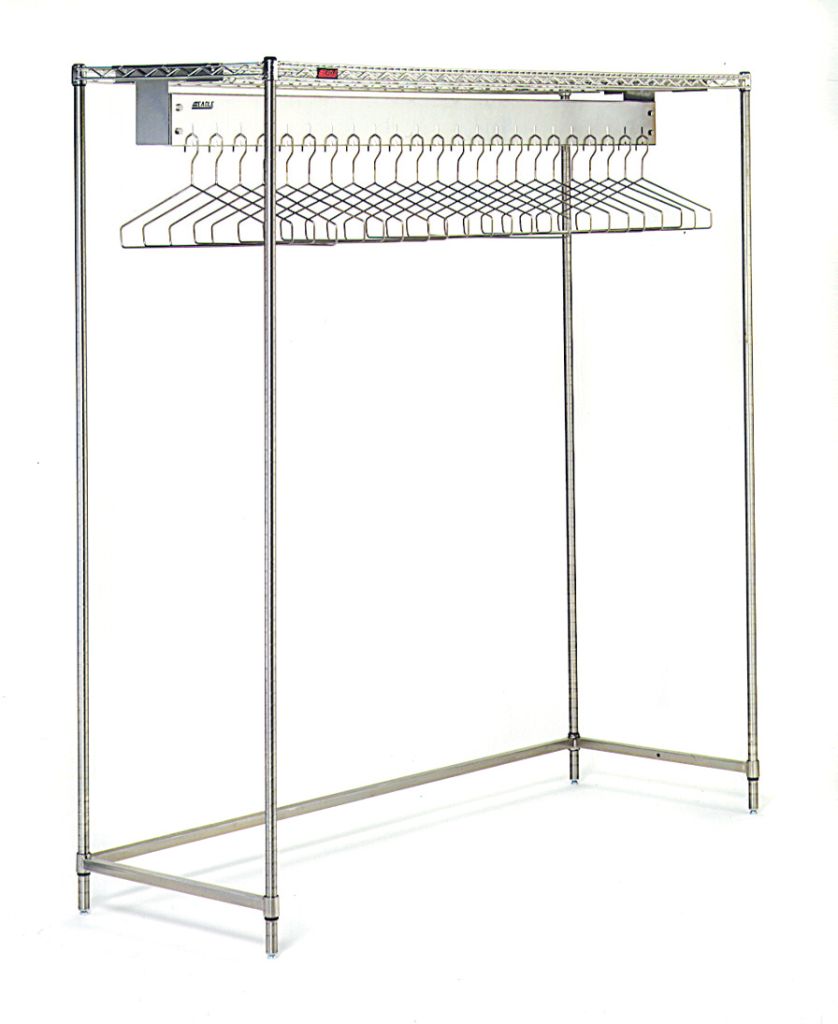
Gowning racks with hanger slots
Heavy-gauge type 304 hanger bar with slots on 2 1/2″ centers, a 1″ square three-sided bottom frame and a Quad-Truss® wire shelf. Posts are 1″ diameter with leveling feet; optional foot plates anchor it down.

Gowning racks with hanger tube
Same wire construction with a continuous hanger tube instead of slots — faster to load where garment volume is high and hanger spacing need not be controlled.
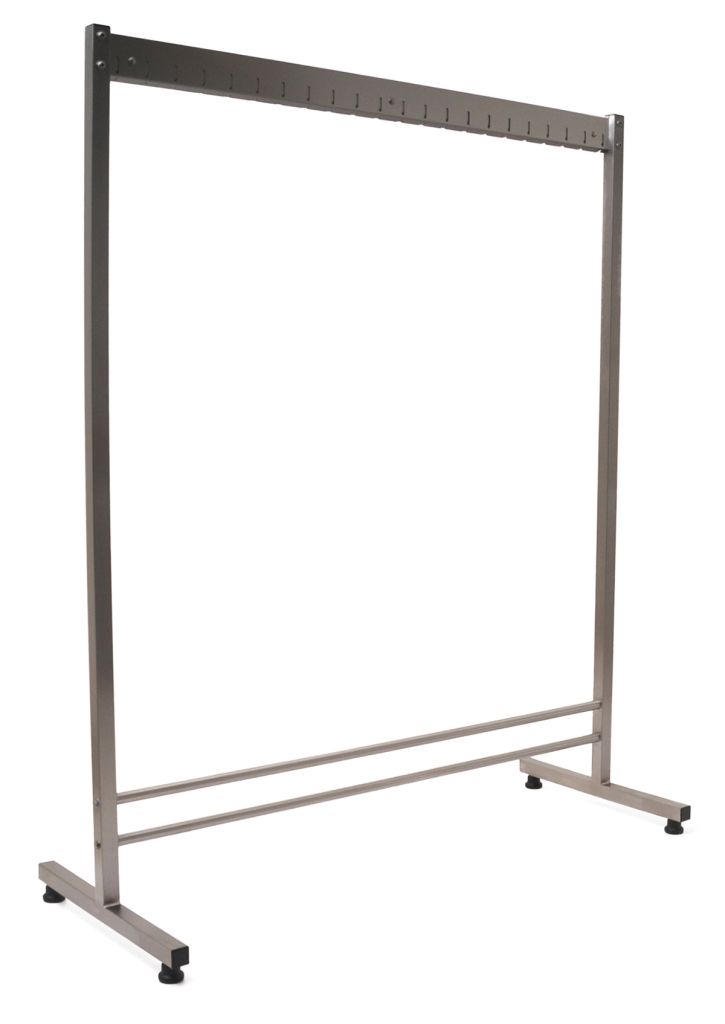
Freestanding racks with hanger rail
1 1/2″ welded tube frame shipped knocked-down, electropolished or brushed 300-series stainless, nylon dissipative feet and hanger slots on 3″ centers. An optional domed cap secures hangers in place.
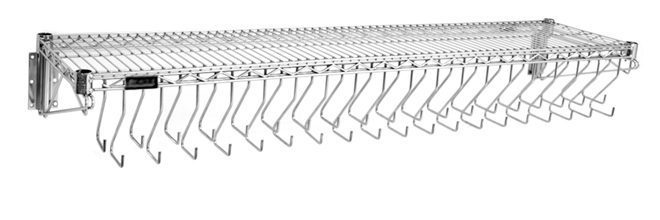
Wall mount racks with hooks
A compact 14″-wide design in 48″ (30 hooks), 60″ (38 hooks) or 72″ (46 hooks), in electropolished or chrome finish — the space-efficient answer in a narrow anteroom.
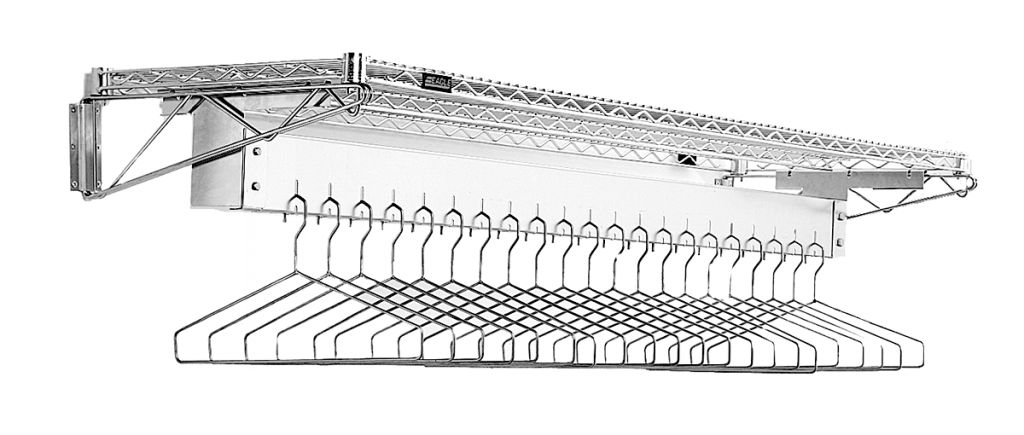
Wall mount racks with hanger slots
Wall-hung garment storage with controlled hanger spacing, mounted above the bench run so gowning happens within arm’s reach of the seat.
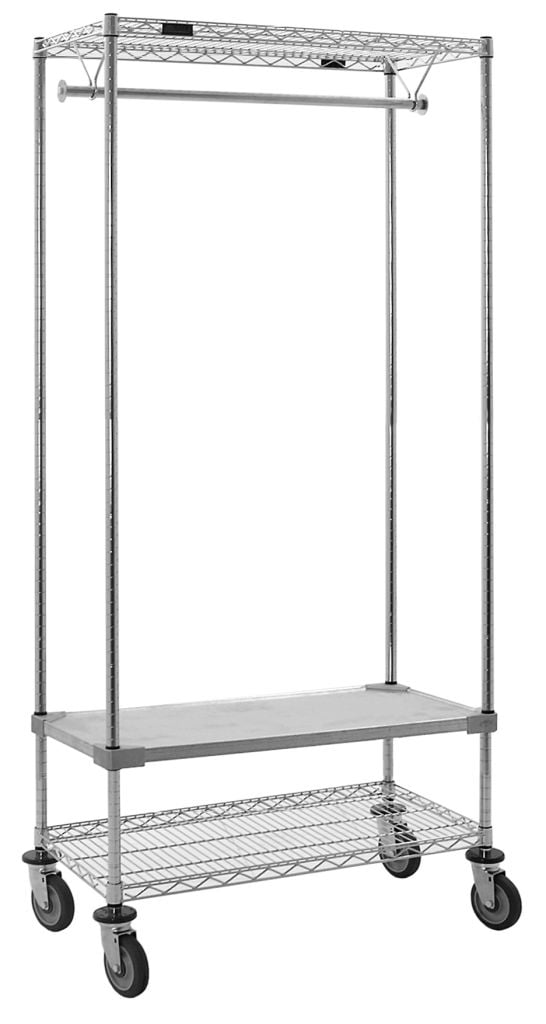
Mobile garment racks
Quad-Truss® wire shelves, 5″ polyurethane casters with rubber bumpers and a 1″ chrome hanger bar for standard hangers — for laundry turnaround and staging clean garments in.
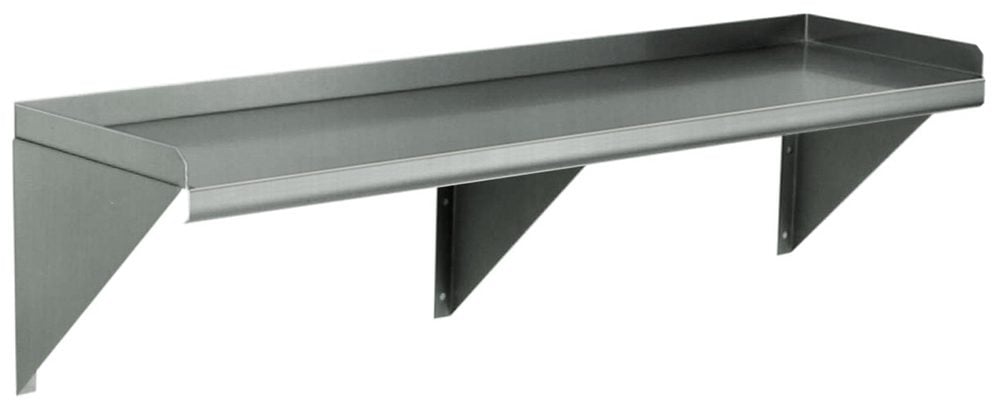
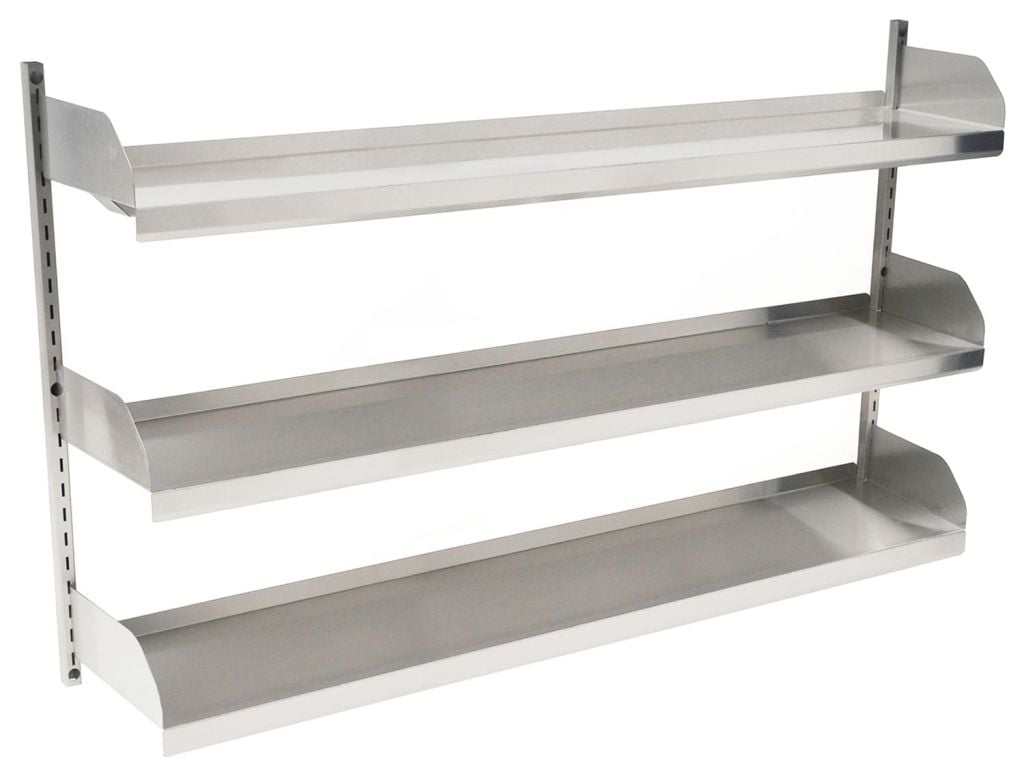
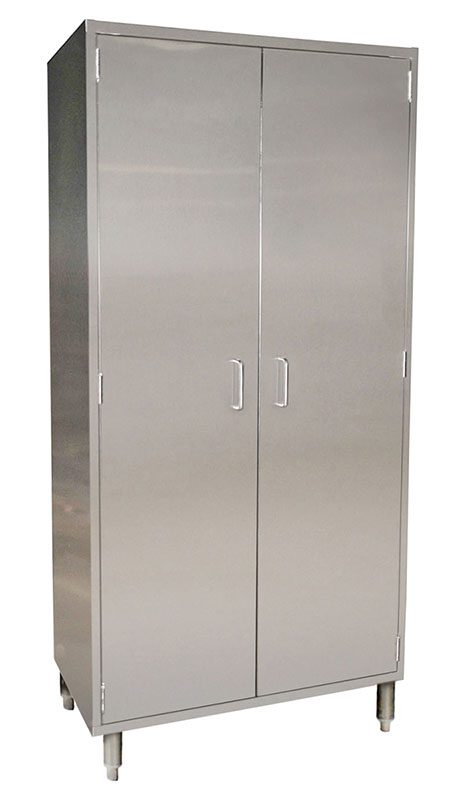
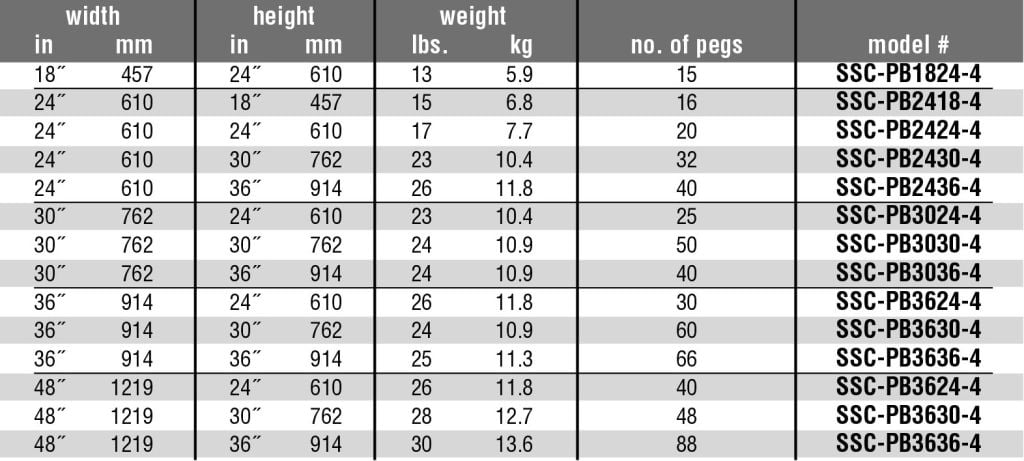
Two more pieces earn their space: a stainless pegboard for small items that need to stay visible, and a wire cart for restocking consumables. Outer cartons should never cross the line — break them down outside and bring product in on a wipeable cart.

Sizing Benches for Real Throughput
Bench length is a capacity calculation, not an aesthetic one. Plan roughly 24 to 30 inches of bench per person seated at the same time, then size for the busiest moment of the day rather than the average. If your shift change puts eight people into the anteroom in five minutes, two 72″ benches and a wider room will buy you more than any other change you can make.
Queuing in an unclassified corridor is not a contamination problem. Queuing halfway through a gowning sequence — one boot cover on, standing on the wrong side — absolutely is. Most shortcuts people invent in a gowning room trace back to a bench that was too short.
The 19″ overall height is close to standard chair height so people can sit, change footwear and swing a leg over without balancing on one foot. Leave at least 36″ of clear floor on each side for the swing, and keep the garment rack close enough that nobody walks while half-gowned.
| Bench length | Practical capacity | Typical use |
|---|---|---|
| 36″ | 1 person | Small lab or single-operator gowning alcove |
| 48″ | 1–2 people | Low-traffic gowning room or secondary anteroom |
| 60″ | 2 people | Moderate traffic, small production cleanroom |
| 72″ | 2–3 people | Shift-change traffic; supplied with six legs and two undershelves |
| Multiple benches | Scales linearly | Larger gowning rooms — usually better than one very long run |
Cleanability and Daily Maintenance
Cleanability is the reason for every construction detail: rolled edges, ends turned down 90 degrees, welded joins and a brushed or electropolished finish all exist so the bench can be wiped down every shift for a decade without becoming the dirtiest object in the room.
- Wipe down every shift with your validated disinfectant, following your own cleaning SOP and contact times
- Rotate disinfectants per your program, including a sporicidal agent where your classification calls for one
- Do not use chlorides, high-concentration bleach or abrasives on stainless — they pit and scratch the passive layer
- Never use steel wool or carbon-steel brushes; they embed particles that rust in place
- Clean the underside of the seat, the leg posts, the undershelf and the foot plates, not just the top
- Inspect welds and edges periodically for damage that opens up a crevice
- Check that bolted benches are still tight and still sitting exactly on the boundary line
- Keep model numbers, finish and material documentation with your equipment records
For regulated environments we supply model numbers, dimensional data, material specification and finish details for equipment lists and qualification records — ask for it with the quote. Any listings or third-party marks are model-specific, so we confirm in writing what applies to the exact models quoted rather than claiming it here.
How to Specify a Gowning Bench (and Lead Times)
Describe the room
Classification, airflow design, peak throughput at shift change, and whether you need a seated bench, a step-over barrier, or both.
Choose the seat
Perforated, solid or open wire; brushed 304 or electropolished; length; number of undershelves.
Fix the mounting
Free-standing, bolted to the slab or wall-mounted — and where the barrier line sits on the drawing.
Quote and documentation
Model numbers, dimensions, finishes and a written lead time, plus the specification data your records need.
Lead times, honestly
Standard models in standard finishes are the fastest to get. Electropolished finishes, custom lengths and fabricated configurations add time. We give you the current lead time in writing on the quote rather than a catalog estimate — tell us your installation or qualification date up front and we will tell you plainly whether it is achievable.
Related pages
- Gowning room essentials — the room-level guide: layout, sequence, racks and everything around the bench
- Eagle cleanroom products — the wider cleanroom range: tables, carts, casework and pass-throughs
- Laboratory furniture — benches, casework, countertops and sinks for the lab side
- Laboratory shelving & storage — shelving systems for labs and controlled-environment storage
- Stainless steel shelving — corrosion-resistant shelving for wet and washdown rooms
- Laboratory material handling solutions — carts, storage and workflow for lab and cleanroom facilities
Shop Cleanroom Gowning Benches & Accessories Online
Buy select items directly from our online store, or request a quote for volume, custom sizes and freight-rated orders.

Design & price it online: Metro Workcenters & Furniture Configurator
Configure Starsys workcenters, gowning benches and cleanroom furniture in our free Metro Workcenters & Furniture configurator — build the layout, see a full bill of materials and save or send the quote in minutes. Need a different Metro product? Browse all 17 tools in the Metro configurator hub.
Gowning Bench FAQs
Why are cleanroom gowning benches made of stainless steel?
What is the perforation pattern, and how much airflow does a perforated seat pass?
What ISO class are gowning benches suitable for?
Do gowning benches need to be anchored to the floor?
Should we specify a seated bench or a step-over bench?
What sizes are standard, and can benches be made to custom dimensions?
What is the difference between standard 304 and electropolished stainless?
How much bench length do we need, and how long does it take to get?
Ready to Equip Your Gowning Room?
Tell us your classification, your peak throughput and whether you need a crossover barrier. We will specify the benches, the racks and the storage around them, with the documentation your records need. Call 800-326-4403.