
Warehouse Design & Layout Solutions
Free layout design from Material Handling USA: a measured site survey, CAD and 3D drawings, aisle and clearance planning, slotting, and a phased installation plan , with the storage system specified bay by bay.
Prefer to talk it through?
Call (800) 326-4403

Free
Layout design with your equipment order
CAD + 3D
Dimensioned drawings and elevations
25+ yrs
Designing storage systems in the Mountain West
Phased
Installs that keep you shipping
Layout Design That Starts With Your Building, Not a Catalog

A warehouse layout is a set of trade-offs between storage density, travel time, safety and the money you have to spend. Push density too hard and picking slows down. Design for speed everywhere and you pay rent on aisles you did not need. The layout that fits your operation depends on your building envelope, your unit loads, how often each item moves, the lift trucks you own and the fire protection already installed above the racking.
Material Handling USA designs those layouts as part of supplying the storage system. That means the drawing, the capacity numbers, the bill of material and the install schedule all come from the same team , so a beam elevation that works on paper is also a beam elevation you can buy and install. We work from measured field conditions, your inventory and order data, and the published requirements that govern rack, aisles and sprinkler clearance.
Most projects start one of two ways: you configure a system yourself in one of our online design tools and send us the configuration, or we walk the building with you and build the layout from scratch. Either path ends with drawings you can hand to a landlord, an installer or a fire marshal.
Before selecting an option, compare the purchase and layout choices with the costs that follow them. Our total cost of ownership analysis for warehouse equipment explains how to review installation, downtime, maintenance, and future changes alongside the quote.
Our Warehouse Design Process
Five stages, each with an output you can review before the next one starts. Nothing gets ordered until the layout and the capacity numbers are agreed.
Needs assessment
Inventory profile, order profile, throughput, growth plan and the constraints you already know about. We ask for movement data by SKU because that is what drives slotting.
Site survey
We measure the building: column grid, clear height under joists and under sprinklers, dock and door locations, slab condition, panels, drains and obstructions.
Layout and drawings
Zoned block plan first, then a dimensioned equipment layout with bay sizes, beam elevations, aisle widths, flue spaces and egress, plus 3D views where they help.
Specification and quote
Every zone gets the right storage medium, a bill of material and a load rating per level. The quote is tied line by line to the drawing.
Phased installation
Delivery, staging and installation sequenced around your operation, managed by a project manager, closed out with a walkthrough and load plaques.
What we need from you
The fastest projects arrive with three things: a building footprint or lease plan, a spreadsheet of SKUs with dimensions and weights, and a movement report for a representative period. If you do not have all three, we start with what you have and measure the rest on site.
- Building information: dimensions, column grid, clear height under joists and under sprinklers, slab thickness and condition, dock and door locations
- Inventory profile: SKU count, pallet or carton dimensions, weight per unit load, units on hand and how many of each SKU you hold at peak
- Order profile: lines per order, orders per day, seasonality, cut-off times and carrier mix
- Velocity data: movements per SKU over a representative period , this is what makes slotting real instead of guesswork
- Equipment list: lift trucks by model, mast height and load center; pallet jacks; carts; any guidance system already installed
- Constraints: sprinkler design and commodity class, seismic design category, existing racking you intend to reuse, tenant improvement limits and budget timing
What You Receive

A layout package is only useful if it survives contact with reality , the installer, the inspector, the landlord and the operations manager all have to be able to work from it. Ours is built to be read by all four. Drawings are dimensioned and to scale, capacity claims are shown as positions and load per level rather than as a percentage, and the bill of material matches the drawing exactly.
You keep the files. If you later add a row, change a pallet size or move to a taller truck, the base drawing is already there and the revision takes hours instead of a new survey.
- Measured existing-conditions plan , walls, columns, clear heights, dock doors, drains, electrical panels, sprinkler heads and any obstruction that touches the layout
- Zoned block plan showing receiving, staging, reserve storage, forward pick, value-add, pack, shipping and office areas with the intended product path drawn on it
- Dimensioned equipment layout , bay sizes, beam elevations, aisle widths, flue spaces, cross aisles and clear egress routes
- 3D views or elevations for the areas that people find hardest to picture: pick modules, mezzanine levels, mobile shelving ranges and in-plant offices
- Bay-by-bay capacity summary: pallet positions, shelf or carton-flow pick faces, and the load per level assumed for each product family
- Product specification and bill of material tied to the drawing, so the quote and the layout never drift apart
- Phasing plan with move sequence, aisle-by-aisle cutover and the installation hours required for each phase
- A punch list and post-installation walkthrough, including load plaque placement and the items an inspector or safety officer typically asks about
 Dimensioned layout drawingsPlan views with bay sizes, aisle widths, wall and column clearances, and the equipment schedule that goes with them , the drawing your installer actually builds from.
 Zoned block plansReceiving, staging, reserve, forward pick, value-add, pack and ship drawn as zones with the product path across them, so flow problems show up before steel is ordered.
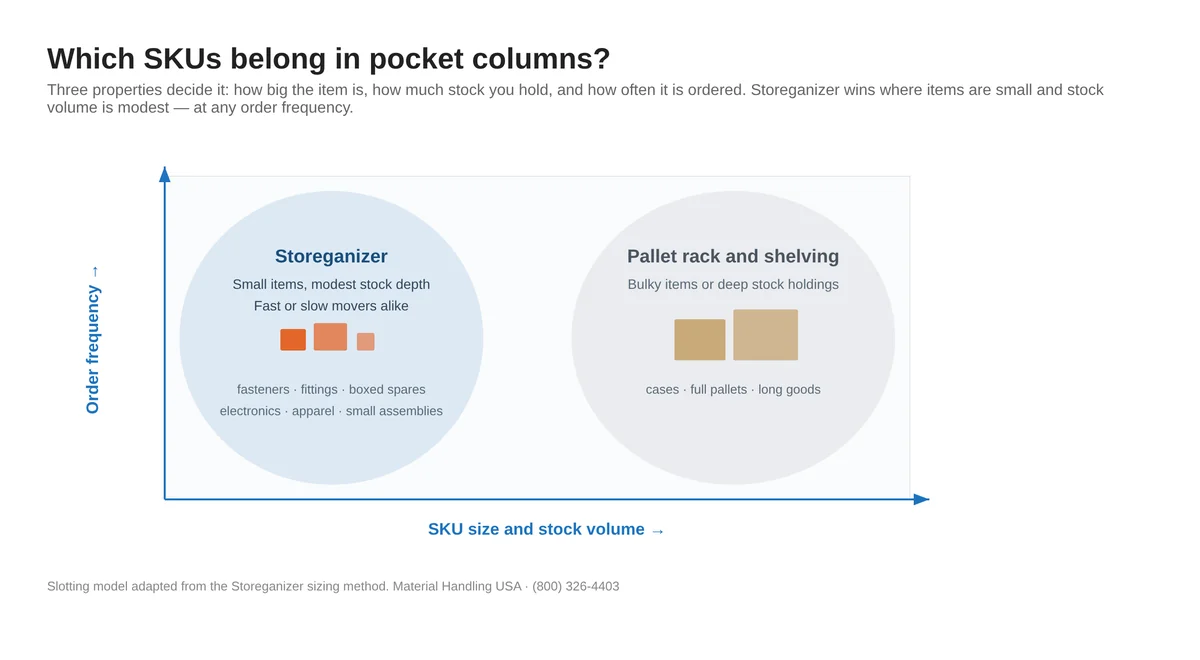 Slotting and media analysisEach product family plotted by cube, stock volume and order frequency, then matched to the storage medium that suits it instead of defaulting to pallet rack for everything.
Have a building and a deadline?
Send us the footprint and what you store. We will come back with a zoned layout, a capacity summary and a quote tied to the drawing.
Request a Layout Consultation Browse the Design Tools Call (800) 326-4403
Zoning, Flow and Traffic
Product should move in one direction with as little cross traffic as possible: dock to stock, stock to pick, pick to pack, pack to ship. Every crossing you draw into a layout becomes a daily congestion point and a safety exposure. Two decisions do most of the work , where staging sits relative to the dock, and whether the forward pick face is separated from reserve storage.

People come next, not last. OSHA 29 CFR 1910.176(a) requires sufficient safe clearances for aisles, at loading docks, through doorways and wherever a turn or passage has to be made, requires aisles and passageways to be kept clear and in good repair, and requires permanent aisles to be marked where mechanical handling equipment is used. Drawing walkways, crossings, mirrors, barriers and floor marking in the same pass as the racking is far cheaper than retrofitting them after an incident.
We also plan the boring things that get forgotten: battery charging and propane areas, trash and dunnage flow, returns processing, pallet storage, and where an empty trailer gets staged when three arrive at once.

Aisle Width and Clearance Planning
Aisle width is the single biggest lever on how much product fits in a building, and it is set by two independent requirements: the width your lift trucks need to work safely, and the minimum the fire code requires. Design to whichever is greater. The figures below are planning ranges published by lift-truck manufacturers and rack-safety specialists , the number that governs your layout is the right-angle stacking aisle from the spec sheet for your exact truck, mast, attachment and load.
| Truck class | Typical working aisle | Where it fits | Design note |
|---|---|---|---|
| Sit-down counterbalance forklift | 12-13 ft (144-156″) | Mixed dock work, trailer loading, yard and floor duty in one truck | Simplest and cheapest fleet, but aisles consume the most floor area |
| Stand-up / three-wheel electric | 10.5-12 ft | Interior-only operations that still need dock and floor flexibility | A practical middle step when the building cannot support guided aisles |
| Narrow-aisle reach truck | 8-10 ft (96-120″) | Single-deep selective rack in buildings with 24-32 ft clear height | Typically recovers one or more additional rack rows per bay of building width |
| Deep-reach truck (double-deep rack) | 9-10 ft | Multiple pallets per SKU where last-in/first-out rotation is acceptable | Density gain comes from the rack configuration, not from a narrower aisle |
| VNA turret / swing-reach truck | 5-7 ft (66-84″) | High-cube buildings with a large SKU count and disciplined put-away | Requires wire or rail guidance, a very flat slab and tighter rack tolerances |
| Order picker (person-up piece pick) | 5-7 ft | Case and piece picking from upper levels of shelving or rack | Aisle width is driven by the pallet or cart being pulled, not by turning radius |
Aisle width is a fleet decision as much as a rack decision
Moving from a counterbalance truck to a narrow-aisle reach truck can free several feet per aisle across the whole building. Before you assume that is a win, we price the recovered pallet positions against the truck change, the guidance system, the slab flatness work and the operator training that comes with it.
 Narrow aisle (8-10 ft)Single-deep selective rack served by a reach truck. The most common upgrade path for a building with 24-32 ft of clear height and a growing SKU count.
 Very narrow aisle (5-7 ft)Turret and swing-reach trucks in guided aisles. Highest cube utilization of any conventional rack layout, with the tightest requirements on slab flatness and rack tolerance.
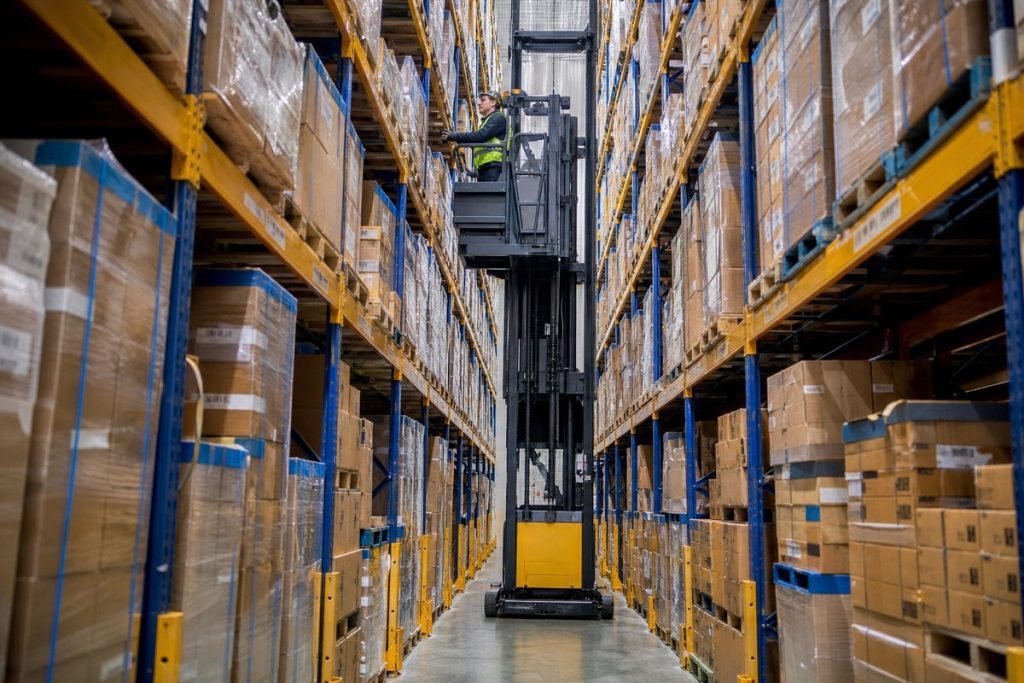 Person-up picking aislesOrder pickers working upper levels of rack or shelving. Aisle width is driven by the pallet or cart being pulled along the aisle rather than by turning radius.
Slotting: Putting Product Where It Belongs
Slotting is the part of layout design that pays back fastest, because it costs steel only once and saves travel every day. Three properties decide where an item belongs: how big the unit load is, how much of it you hold, and how often it is ordered. Small items ordered constantly belong at waist height in a dense forward pick face. Bulky, slow items belong in reserve positions or on the top levels. A large, fast-moving item may deserve a floor-level pallet position of its own.

We build the slotting plan from your movement data, not from intuition. Items are grouped by velocity band, then each band is assigned a storage medium, a pick level and a replenishment rule. The output is a location scheme you can load into your WMS or label on the beams, plus a golden-zone map showing which positions are reserved for the fastest movers.
Slotting also decides how many pick faces a bay has to provide, which is what drives the choice between shelving, carton flow, pocket storage and pallet positions. Getting this wrong is the most common reason a brand-new rack layout still feels slow.
Practical rules we apply: keep the fastest 10-20% of SKUs inside the shortest travel loop; never make a picker climb for a daily item; put heavy items low and light items high; and size the pick face so replenishment happens on your schedule rather than mid-pick.
For a practical review of bending, reaching, lifting, and repetitive handling, read our warehouse ergonomics guide before finalizing the slotting plan.
Slotting only pays off if the record matches the floor. See our inventory accuracy guide for the metrics and cycle count approach that keeps a slotting plan trustworthy.
Storage Systems We Design and Supply
Most facilities need three or four of these working together. Each card links to the full system page with configurations, capacities and accessories.
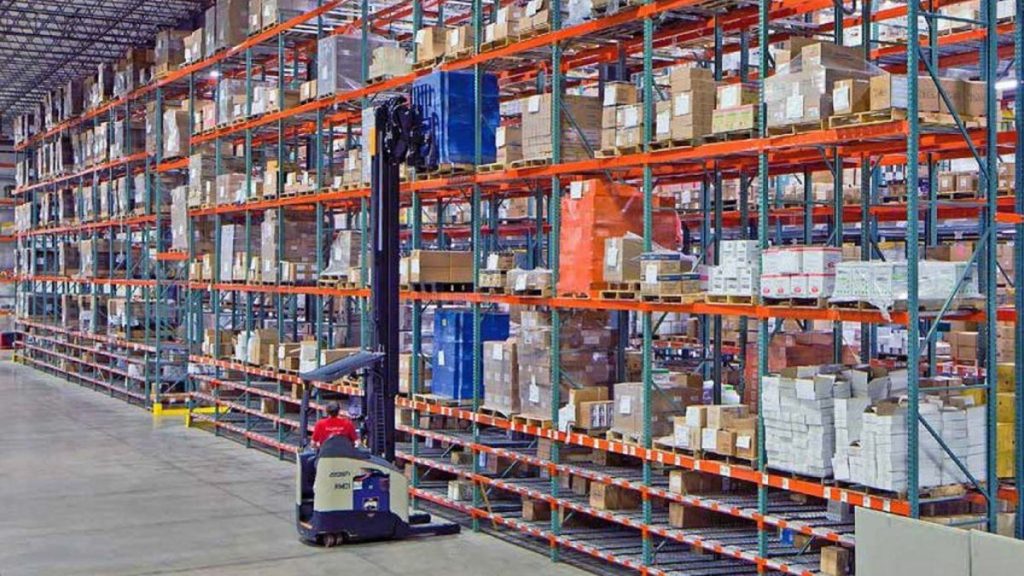 Pallet Rack SystemsSelective, drive-in, push-back, pallet flow, double-deep and structural rack. Selective gives every pallet its own face; the denser configurations trade selectivity for positions.
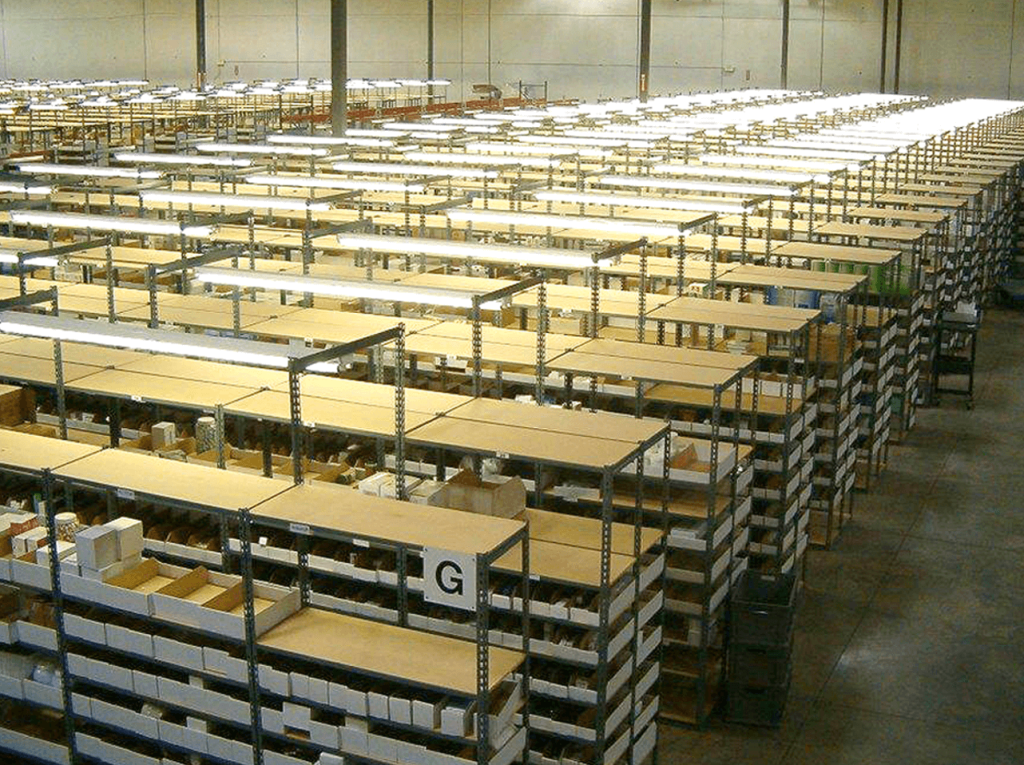 Industrial ShelvingBoltless rivet, clip, wire and heavy-duty steel shelving for hand-stacked cases, totes and small parts , the workhorse of any forward pick area.
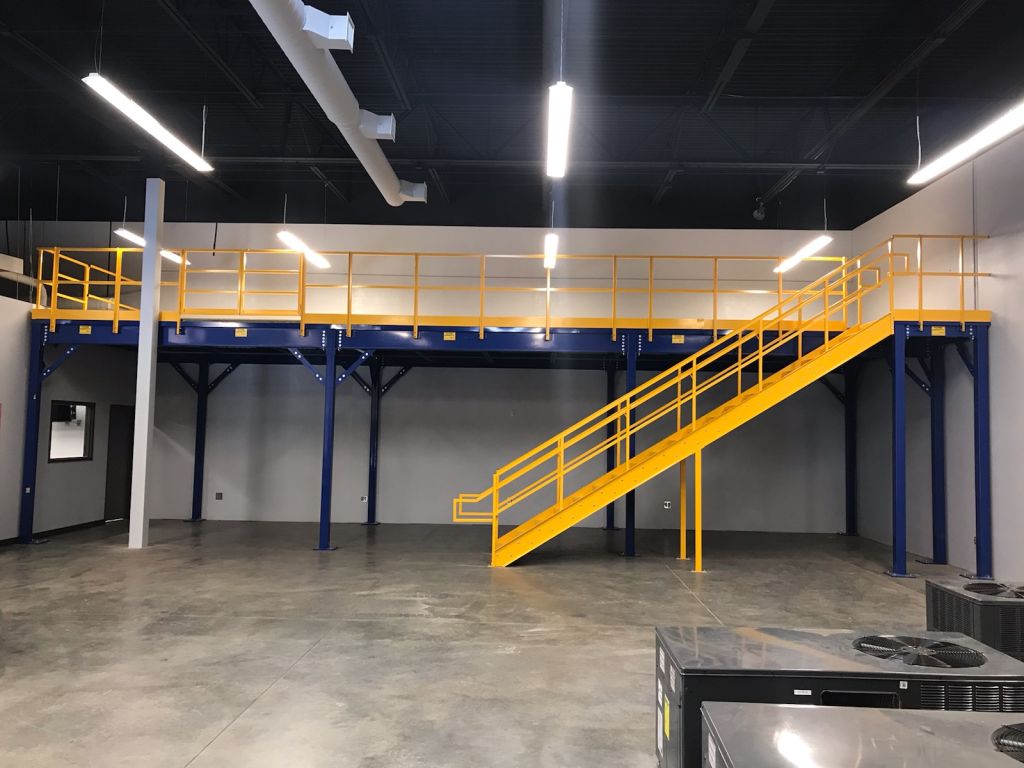 Mezzanines & Work PlatformsAdd a second or third working level inside the existing envelope for storage, pick floors, offices or equipment access, without expanding the building.
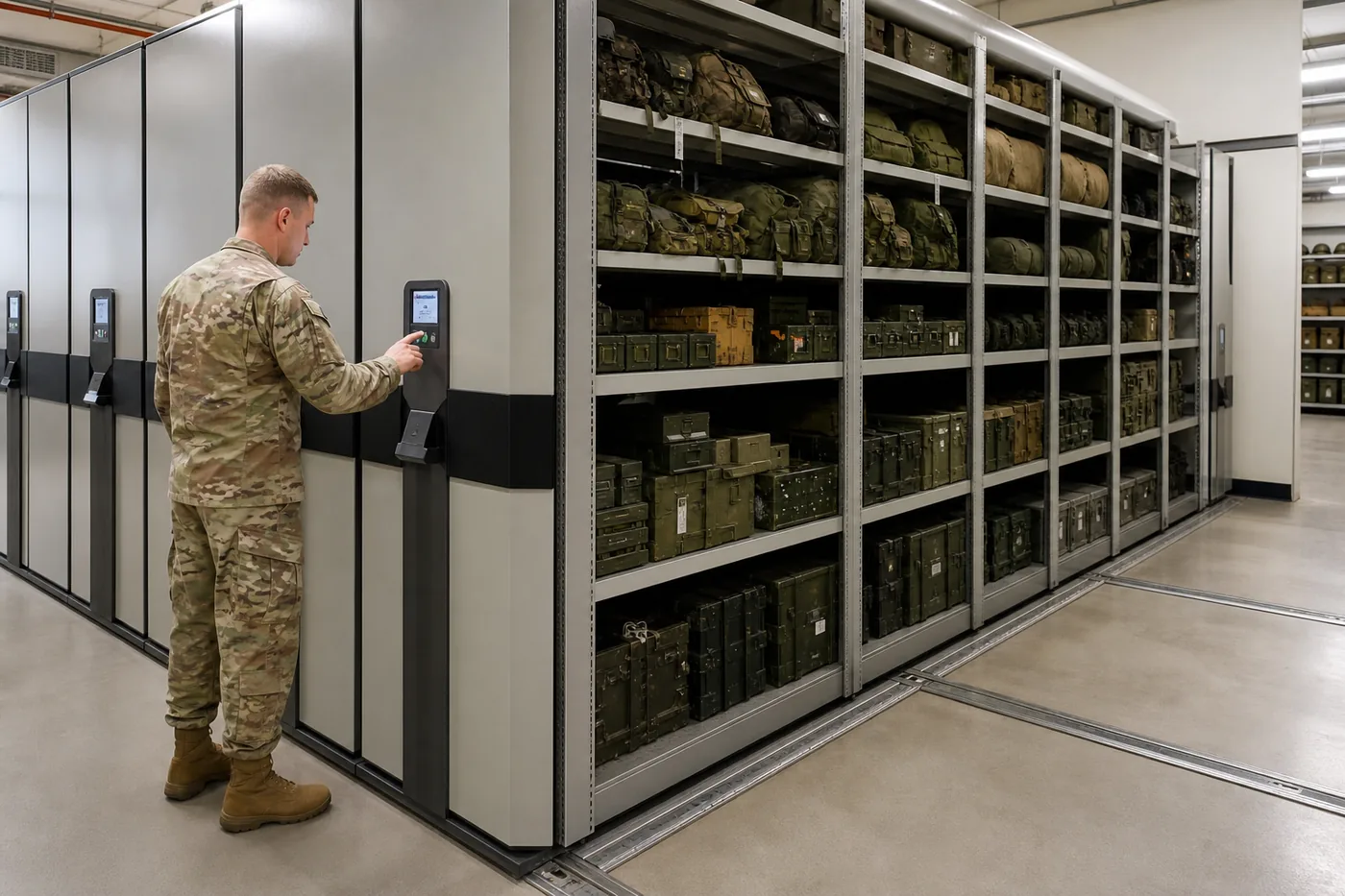 High-Density Mobile ShelvingCarriages on floor rails share one or two aisles across many ranges, which recovers the aisle space that fixed shelving gives away. Manual, mechanical-assist or electric.
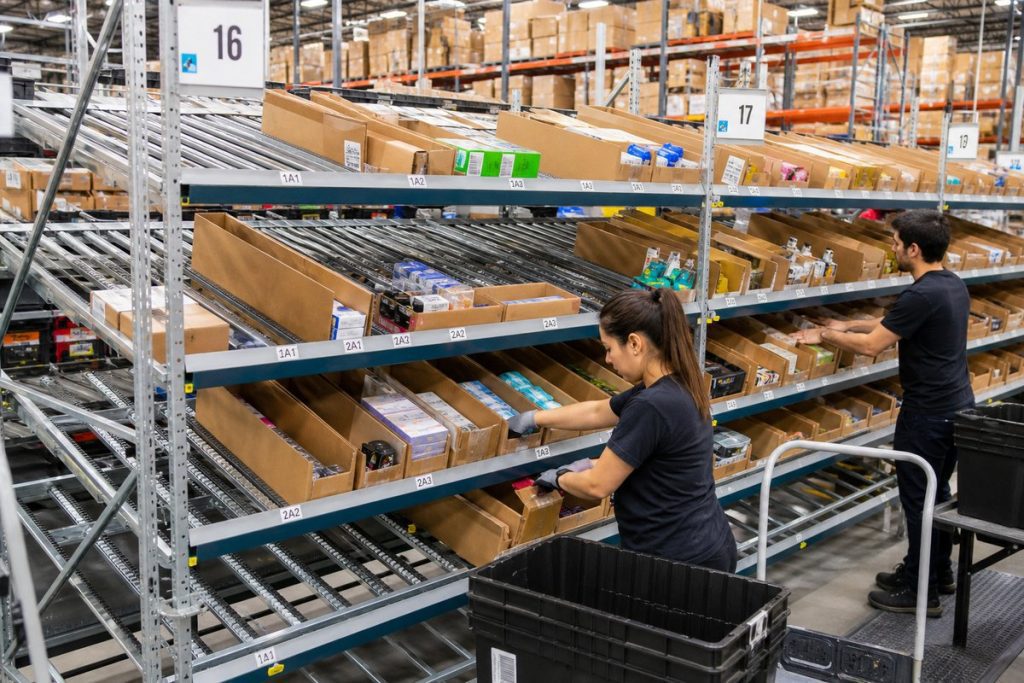 Carton Flow & Pick ModulesGravity lanes present cases at the pick face and replenish from the back, separating picking from replenishment traffic in high-line-count operations.
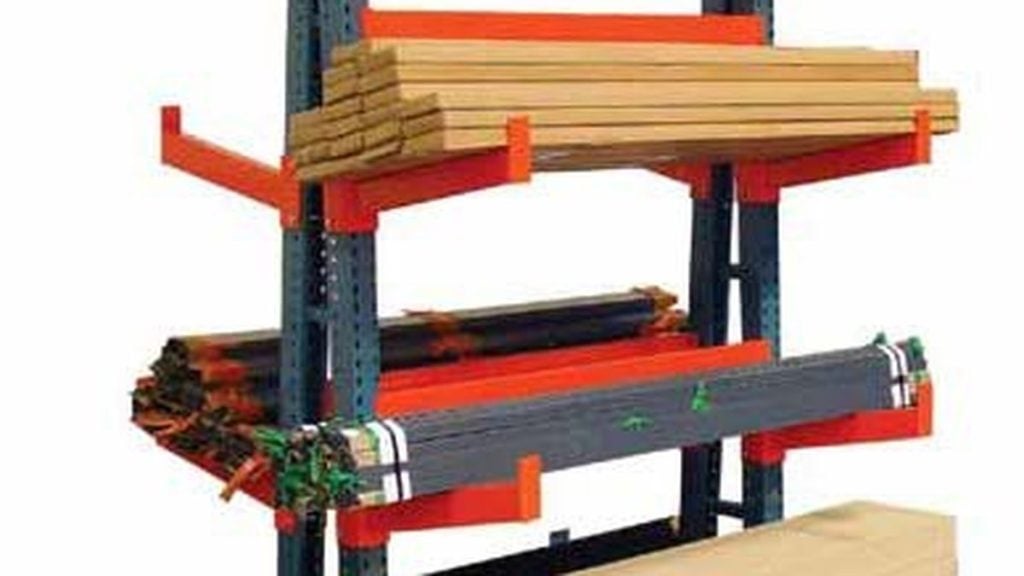 Cantilever RackUprights with arms and no front column, for lumber, pipe, tube, bar stock, sheet goods and anything longer than a pallet.
 Vertical Lift ModulesAutomated trays bring stored goods to an ergonomic pick window, converting unused clear height into dense, controlled storage for small parts and tooling.
 Security Cages & Wire PartitionsWire mesh partitions, tool cribs and cages for high-value stock, controlled substances, contractor areas and client separation inside a shared warehouse.
 Modular In-Plant OfficesPrefabricated offices, QC rooms, break rooms and shipping offices that install in days, sit at floor level or on a mezzanine, and can be moved when the layout changes.
Fire Code, Sprinklers and High-Piled Storage
Fire protection sets hard limits on a storage layout, and it is cheaper to design around them than to discover them during plan review. The requirements below come from NFPA 13 (installation of sprinkler systems) and Chapter 32 of the International Fire Code. Which edition and which table apply to your building depends on your jurisdiction, your commodity classification, your storage height and the sprinkler system that is actually installed above the rack.
| Requirement | What the codes say | What it changes in the layout |
|---|---|---|
| Clearance to storage | Minimum 18″ between the sprinkler deflector and the top of storage (more for some commodities such as rubber tires) | Sets the highest usable beam elevation , and therefore how many rack levels fit |
| Transverse flue space | Nominal 3″ between loads and at uprights in single-row rack; nominal 6″ in several double-row and higher-storage arrangements | Drives beam length, load spacing and whether flue-space keepers are needed |
| Longitudinal flue space | Nominal 6″ between the back-to-back rows of a double-row rack | Controls the row spacer length and the true footprint of a back-to-back run |
| High-piled storage threshold | Storage where the top of storage exceeds 12 ft , or 6 ft for high-hazard commodities such as Group A plastics, rubber tires, idle pallets and flammable liquids | Above this point IFC Chapter 32 applies to the whole storage area |
| Permit and documentation trigger | More than 500 sq ft of high-piled combustible storage area, including aisles, generally requires a permit and a plan submittal | Plan review usually asks for commodity class, storage height, aisle widths and rack elevations |
| Minimum aisle width (IFC 3206.9) | Not less than 44″ in sprinklered buildings; not less than 96″ in high-piled areas over 2,500 sq ft that are open to the public and contain high-hazard commodities | A code aisle can be wider than the aisle your lift truck needs , design to the greater of the two |
| Aisle clear height | The required aisle width must extend from floor to ceiling , rack members, conveyors and other obstructions cannot encroach on it | Rules out cross-aisle ties and low conveyor runs inside a required aisle |

In practice this is why we establish the sprinkler elevation before drawing a single beam level. The top-of-load elevation is the sprinkler deflector height minus the required clearance; everything else , how many levels fit, what beam you need, whether a mezzanine is viable , follows from that number. Flue spaces then determine load spacing and beam length, and the required aisle width has to be clear from floor to ceiling.
If your storage crosses the high-piled thresholds, expect a plan submittal that asks for commodity class, storage height and configuration, aisle widths, rack elevations and the sprinkler design. We prepare the layout information for that submittal and coordinate with your fire protection contractor.
No automatic compliance , and we will not pretend otherwise
A layout drawing is not an approval. We design to the published requirements we can verify and we flag what your authority having jurisdiction is likely to ask for, but code interpretation and approval belong to your fire marshal and building department. Permit submittals frequently require drawings sealed by an engineer licensed in your state, and changes to a sprinkler system must be designed by a qualified fire protection professional. We will tell you plainly when a project reaches that point.
Seismic, Structural and Load Capacity
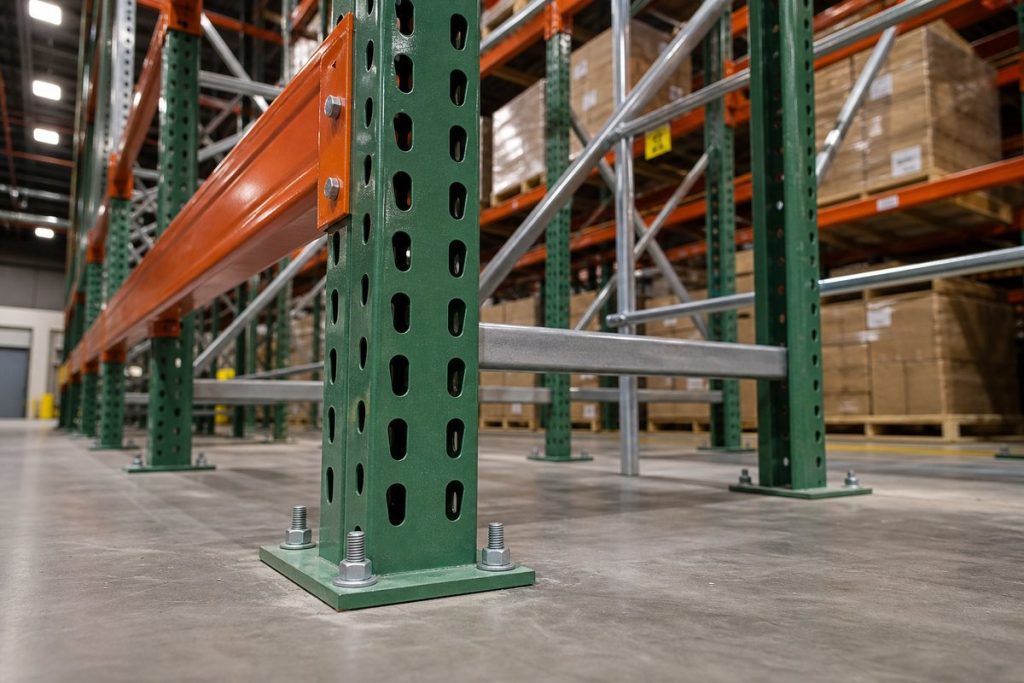
Steel storage rack is an engineered structure. The International Building Code points rack design at ANSI MH16.1, the Rack Manufacturers Institute standard for the design, testing and utilization of industrial steel storage racks, and points the seismic design at ASCE 7. Rack anchorage is governed by ASCE 7 anchorage provisions, and rack anchorage to concrete is designed using load combinations with overstrength , an overstrength factor of 2.0 for this case , which is why base plates and anchors on a seismic project are heavier than people expect.
Utah and much of the Mountain West sit in elevated seismic design categories, so this is not a formality here. Practical consequences we design for: anchor type and embedment matched to the slab, base plate size, whether a footing or slab thickening is required, row spacers and frame bracing, and the difference in cost between a code-minimum and a robust configuration.
ANSI MH16.1 Section 4.5 also covers load plaques. Every installation should carry plaques stating the configuration and permissible loads where operators can see them, and building officials increasingly ask for them at inspection. We include plaque placement in the closeout walkthrough.
- Rack designed and specified to ANSI MH16.1, with the manufacturer’s load tables supplied for your configuration
- Seismic design category, slab thickness and anchor schedule confirmed before ordering , not discovered by the install crew
- Load per level and per bay stated on the drawing for every product family
- Load capacity plaques specified and placed per ANSI MH16.1 Section 4.5
- Column protectors, end-of-aisle guards and row spacers included where traffic warrants them
- Coordination with the engineer of record when your jurisdiction requires sealed drawings
Working in a high seismic design category?
Send us your slab detail and storage heights. We will specify the rack, base plates and anchor schedule with the manufacturer’s load tables attached.
Request a Layout Consultation Configure Pallet Rack Online Call (800) 326-4403
Recovering the Cube You Already Pay For
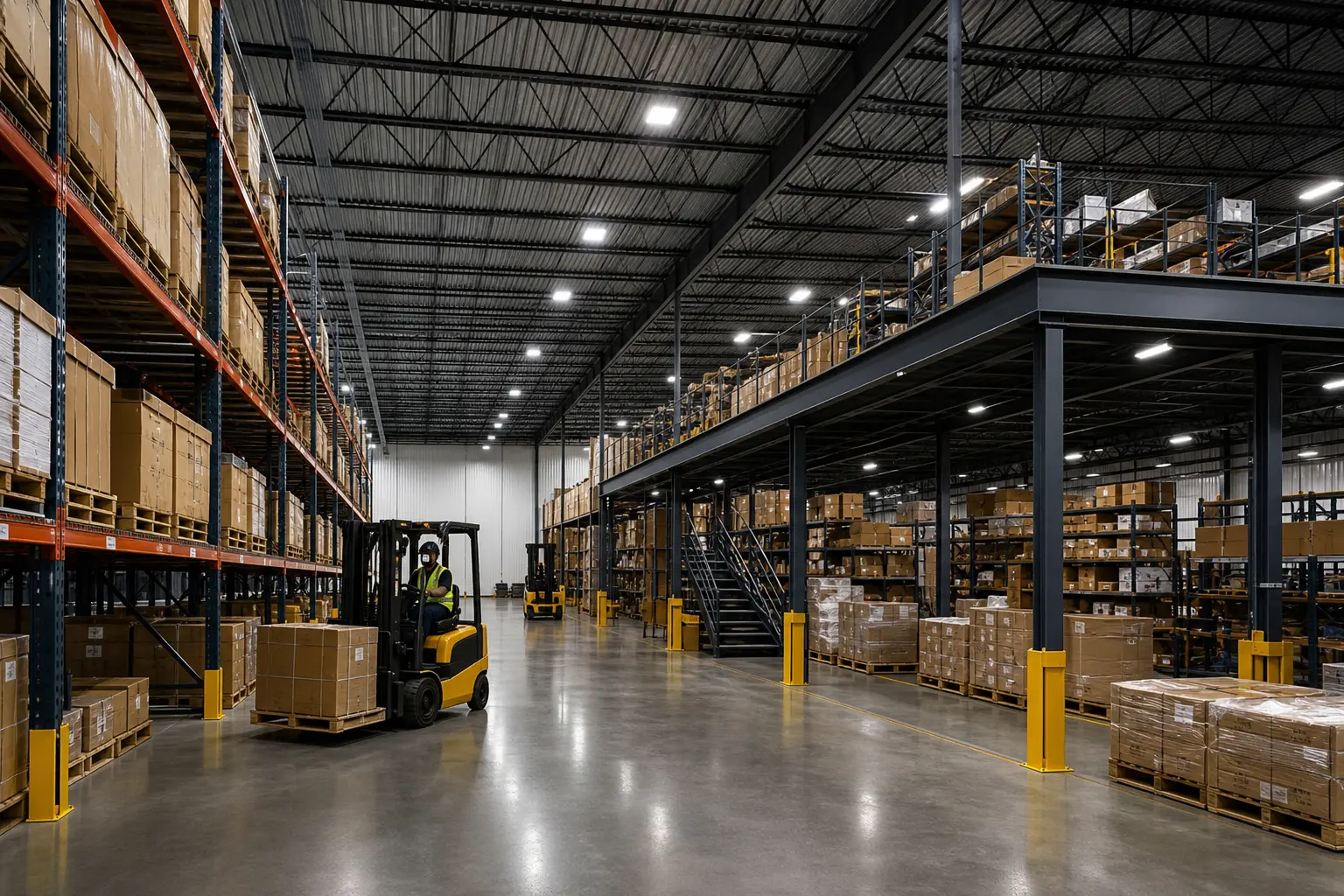
Most warehouses lease volume and use area. If your storage stops well below the sprinklers, the cheapest capacity available to you is already inside the building. Three moves recover it: go taller with rack and shelving up to the clearance limit, add a level with a mezzanine or work platform, or compress aisles with mobile carriages, denser rack configurations or automated vertical storage.
Each of those has a cost profile and a consequence for picking. Taller rack may require a different truck. A mezzanine changes egress, lighting and sprinkler design. Mobile shelving trades simultaneous access for density. We put the alternatives side by side with the positions gained and the operational trade-off for each, then let you choose on the numbers.
Phased Installation in a Working Building
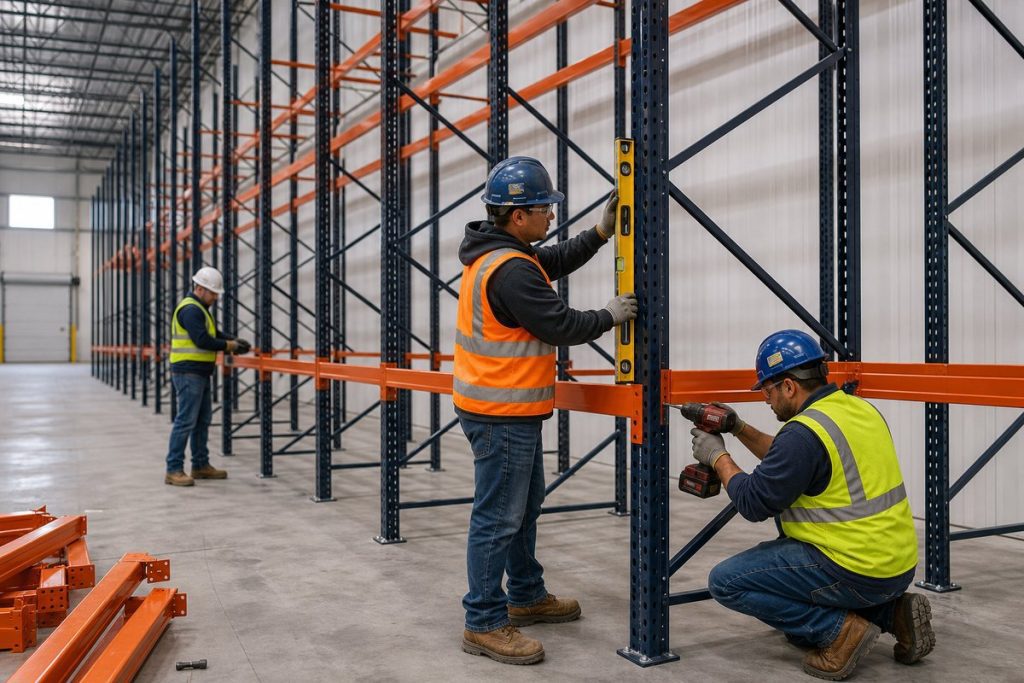
Almost every project we design happens in a building that still has to ship product. The phasing plan is therefore part of the design, not a scheduling detail bolted on at the end. The usual pattern: build new capacity in empty bays or a staging area, relocate product into it, reconfigure the vacated rows, then repeat. Cutovers are planned aisle by aisle and scheduled around your lowest-volume shift.
Our project managers coordinate delivery windows, staging space, lift equipment, crew size and the sequence of anchor drilling so dust and noise land where they hurt least. Long-lead items are identified at quote stage so a single component cannot hold the first phase. At closeout we walk the system with you: plumb and level checks, anchor torque, beam connector safety clips, wire deck seating, load plaques and the punch list.
| Phase | Typical activity | How we protect operations |
|---|---|---|
| Pre-install | Site walk with the crew lead, mark layout on the slab, confirm anchor locations against the drawing and the slab detail | Discrepancies are found with chalk lines, not with steel on the floor |
| Phase 1 build | Erect new rows in empty or staged areas, install decking and accessories, anchor and torque, apply plaques | No product moves yet, so throughput is untouched |
| Product move | Relocate inventory into the new positions by velocity band, following the slotting plan and updating locations | Move happens off-peak, and the picking scheme is updated as product lands |
| Reconfigure | Tear down and rebuild the vacated rows to the new bay dimensions and beam elevations | One area is out of service at a time; aisles stay clear for egress |
| Closeout | Plumb and level verification, anchor and hardware check, load plaque placement, punch list and training walkthrough | You end with as-built drawings and documented capacities |
Industries We Design Warehouses For
| Industry | What drives the layout | Systems we typically specify |
|---|---|---|
| Distribution & fulfillment | Lines per hour, dock-to-stock speed, returns processing | Selective rack for reserve, carton flow or shelving for the forward pick face, conveyor or cart travel |
| Manufacturing | Raw material staging, work-in-process buffers, tooling access at the cell | Cantilever rack, pallet rack, boltless shelving, workstations, vertical lift modules for tooling |
| Cold storage | Cube efficiency inside refrigerated envelope, FIFO rotation, condensate and floor detail | Drive-in, push-back or rail-guided mobile pallet racking; galvanized finishes |
| 3PL & logistics | Client separation, fast reconfiguration, contract-length payback | Selective rack, wire partitions to divide client zones, bolt-together systems that can be moved |
| Government, military & public safety | Chain of custody, controlled access, audit and inventory rules | High-density mobile shelving, security cages, weapons and evidence storage, lockers |
| Retail & e-commerce | Very wide SKU range, small-piece picking, seasonal peaks | Shelving and pocket storage for the long tail, mezzanines for pick floors, packing benches |
 Cold Storage & FoodRefrigerated cube is the most expensive space in any facility, so density and rotation discipline drive the layout , often rail-guided mobile racking or drive-in bays.
 3PL & LogisticsLayouts that can be re-divided as contracts change: bolt-together rack, wire partitions between client zones and bay sizes chosen for flexibility rather than one pallet spec.
 E-Commerce FulfillmentWide SKU range, small orders and hard carrier cut-offs. The design question is where the forward pick face sits and how it is replenished without blocking pickers.
Seven Layout Mistakes We See Most Often
| Mistake | Why it costs you | What we do instead |
|---|---|---|
| Designing to the roof, not to the sprinklers | The usable top-of-load elevation is set by sprinkler clearance and the fire protection design, not by the underside of the deck. | Establish the sprinkler elevation first, subtract the required clearance, then lay out beam levels. |
| Buying aisle width you do not need | A 13 ft aisle for every rack row can consume floor area that would otherwise hold product. | Compare the aisle the fleet actually requires against the code minimum and design to the greater of the two , then price the truck change against the recovered positions. |
| One rack type for every product | All-selective rack is easy to buy and wasteful when a handful of SKUs represent most of the volume. | Segment by cube, weight, velocity and rotation rule, then match each segment to the right medium. |
| No forward pick face | Picking cases out of reserve pallet positions puts pickers and lift trucks in the same aisles all day. | Split reserve from a dedicated forward pick face and replenish it on a schedule. |
| Ignoring flue space and load spacing | Loads pushed tight to uprights and to each other close the flues the sprinkler design assumes. | Draw the flues on the layout, size beams accordingly and add flue-space keepers where needed. |
| Layouts with no growth path | A plan sized to today’s inventory often breaks in two or three years. | Reserve expansion bays, keep bay sizes consistent and choose systems that can be added to. |
| Forgetting people and traffic | Pedestrian routes drawn last create blind corners, cross traffic and blocked egress. | Draw walkways, crossings, mirrors and marked aisles in the same pass as the racking. |
Start Your Layout Online
Our free configurators let you build a system, see it in 3D and save the configuration. Send it over and we pick the project up from there instead of starting from a blank page.
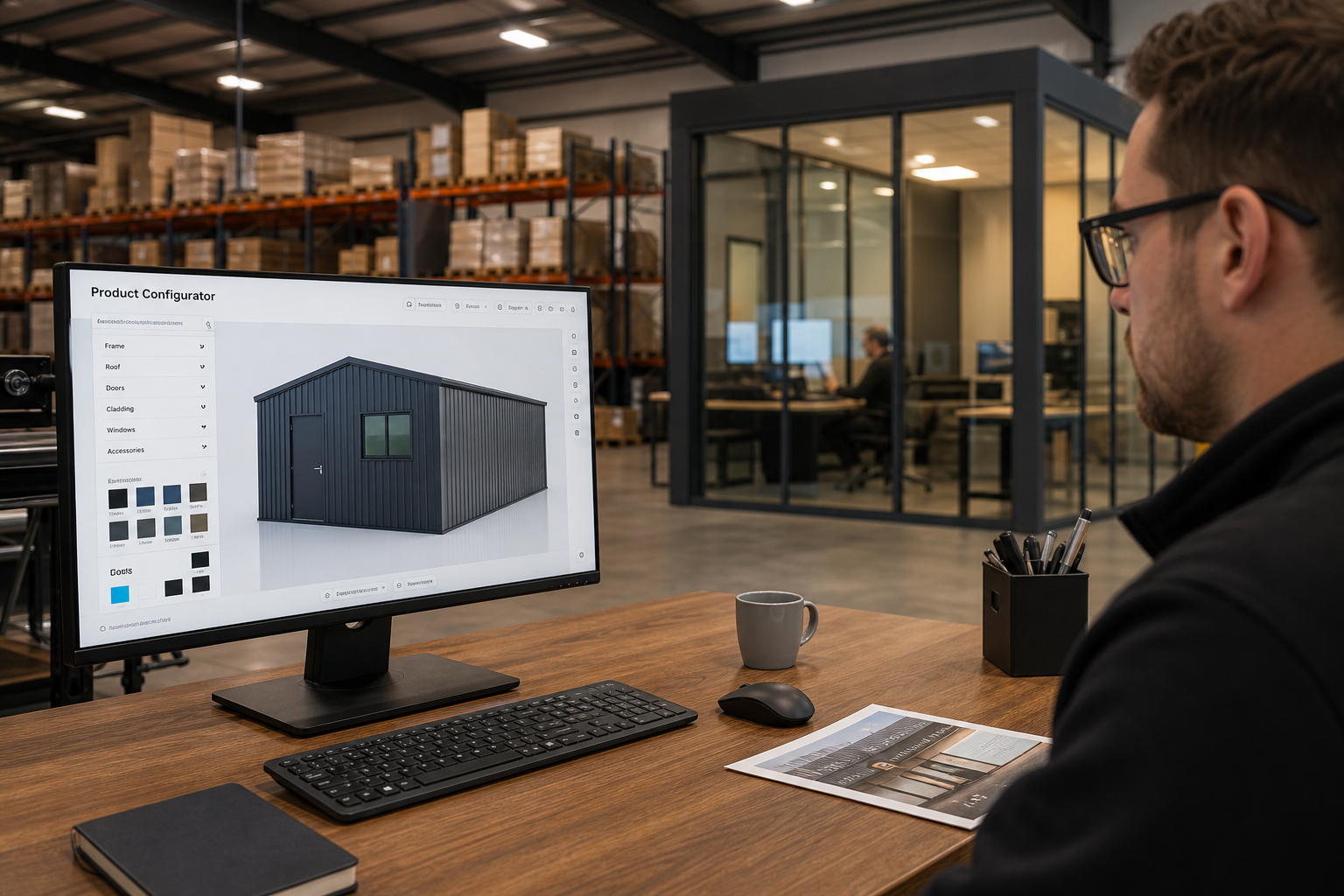 All MH-USA Design ToolsEvery configurator in one place , pallet rack, cantilever, modular buildings, security cages, shelving, pocket storage and vertical storage.
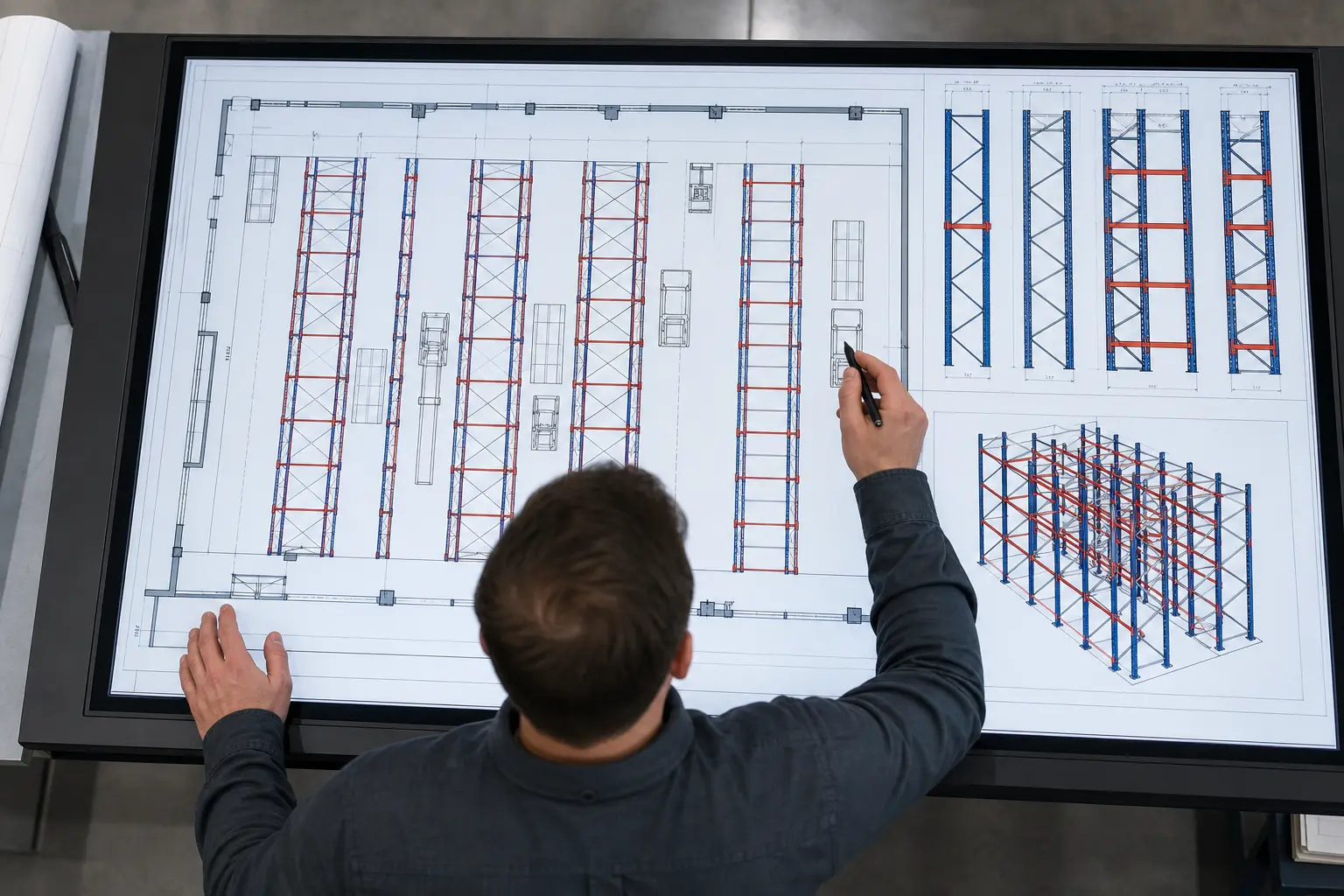 Pallet Rack ConfiguratorSet bay sizes, beam levels and load requirements, see the run in 3D and send the configuration to our team for pricing.
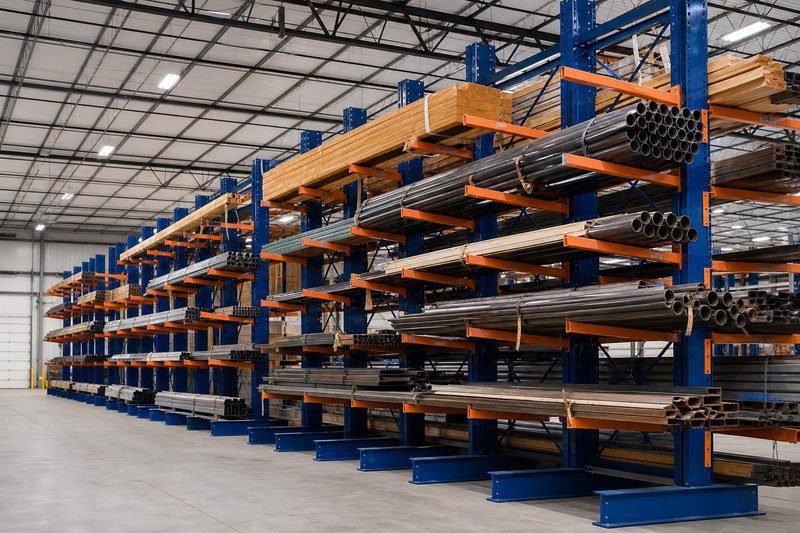 Cantilever Rack ConfiguratorConfigure arm length, capacity and column spacing for lumber, pipe, tube and sheet goods.
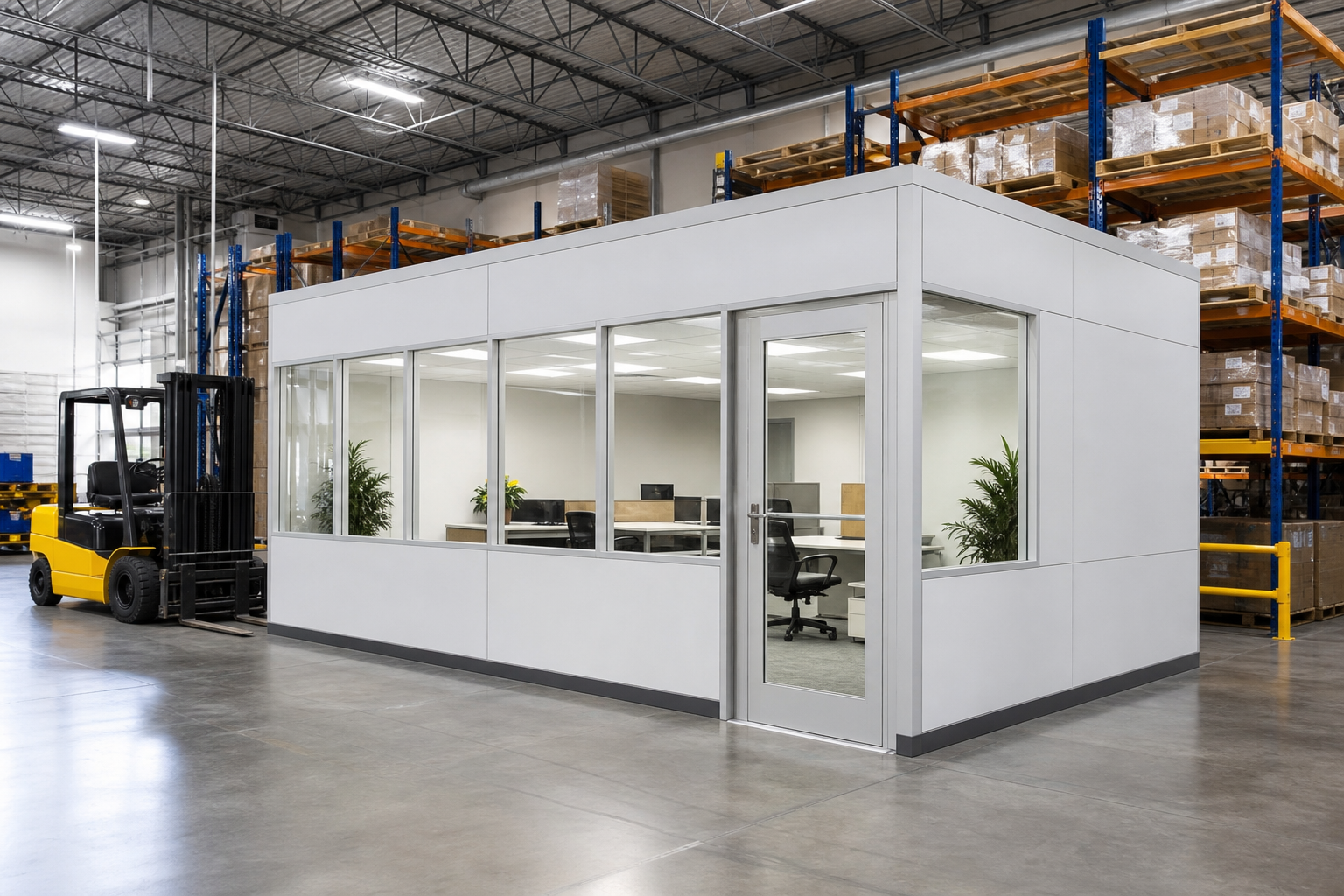 Modular Building ConfiguratorLay out in-plant offices, QC rooms and guard booths with windows, doors, HVAC and a second story where you need one.
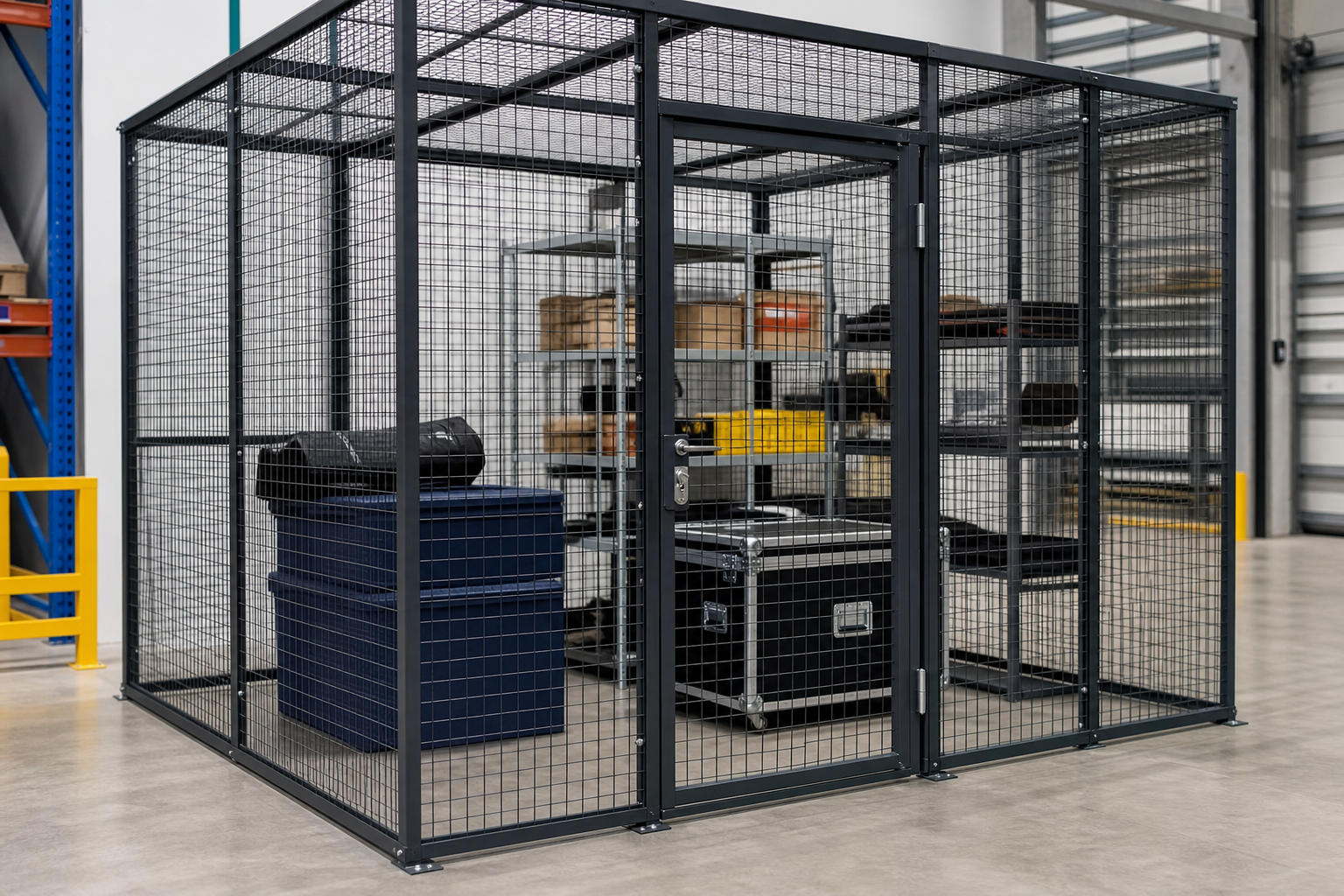 Security Cage ConfiguratorSize wire mesh enclosures, tool cribs and controlled-access cages, including door type and ceiling panels.
 Talk to a Design SpecialistPrefer a person? Send your building details and we will schedule a site visit or a screen share and build the layout with you.
Shop Online at MaterialHandling-USA.com
Outfitting a new facility? Bins, carts, shipping supplies, safety products and floor marking are available online with published pricing while your storage system is being built.
Warehouse Design & Layout FAQs
Is warehouse layout design really free?
How long does a warehouse layout project take?
What information do you need before you can start?
Do your drawings make my warehouse code compliant?
Can you redesign a working warehouse without shutting it down?
How much storage capacity can a layout redesign actually recover?
Do you handle permitting, installation and inspection?
Can I start the layout myself?
Related Products & Resources
 Full Warehouse Design SolutionsOur complete facility planning service: survey, layout, specification, installation and project management across every storage medium.
 Pallet Rack Design ServicesRack-specific engineering support: bay sizing, beam selection, capacity math, seismic anchorage and permit documentation.
 OSHA-Compliant Warehouse DesignAisle marking, pedestrian separation, rack protection and the housekeeping rules that shape a safe floor plan.
 Eliminate Bottlenecks With a Lean LayoutHow to find the constraint in your flow , and why moving storage rarely fixes a problem created by sequencing.
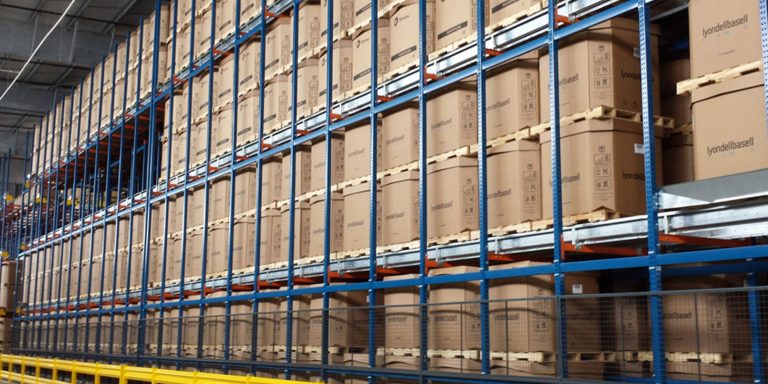 Go Vertical: Maximize Your CubeTaller rack, mezzanines and automated vertical storage compared by cost, positions gained and picking impact.
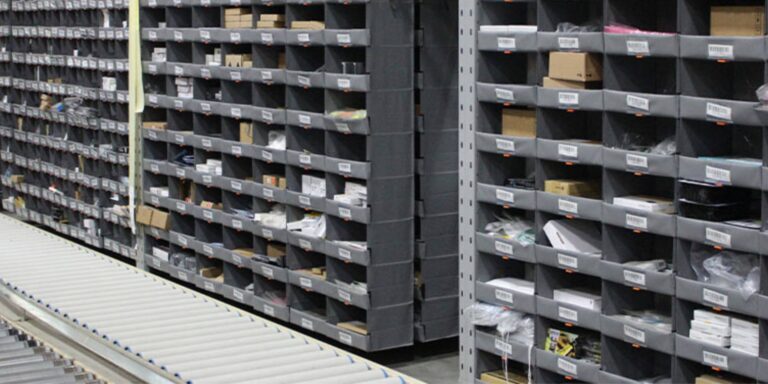 Warehouse OptimizationSlotting, replenishment, labeling and layout changes that raise throughput without buying a bigger building.
 Inventory Accuracy GuideMetrics, cycle count methods and technology choices that keep your layout’s record matching the floor.
Get a Free Warehouse Layout Design
Send us your building footprint and what you store. We will measure, design, specify and quote , then install it in phases around your operation. Salt Lake City headquarters, projects nationwide.