
Home / Law Enforcement / Evidence Storage
Evidence Storage Systems for Law Enforcement
A complete guide to designing a secure, defensible evidence room — pass-through intake lockers, refrigerated and biological storage, weapons and narcotics security, high-density shelving, and chain-of-custody tracking. Designed, supplied, and installed by Material Handling USA.
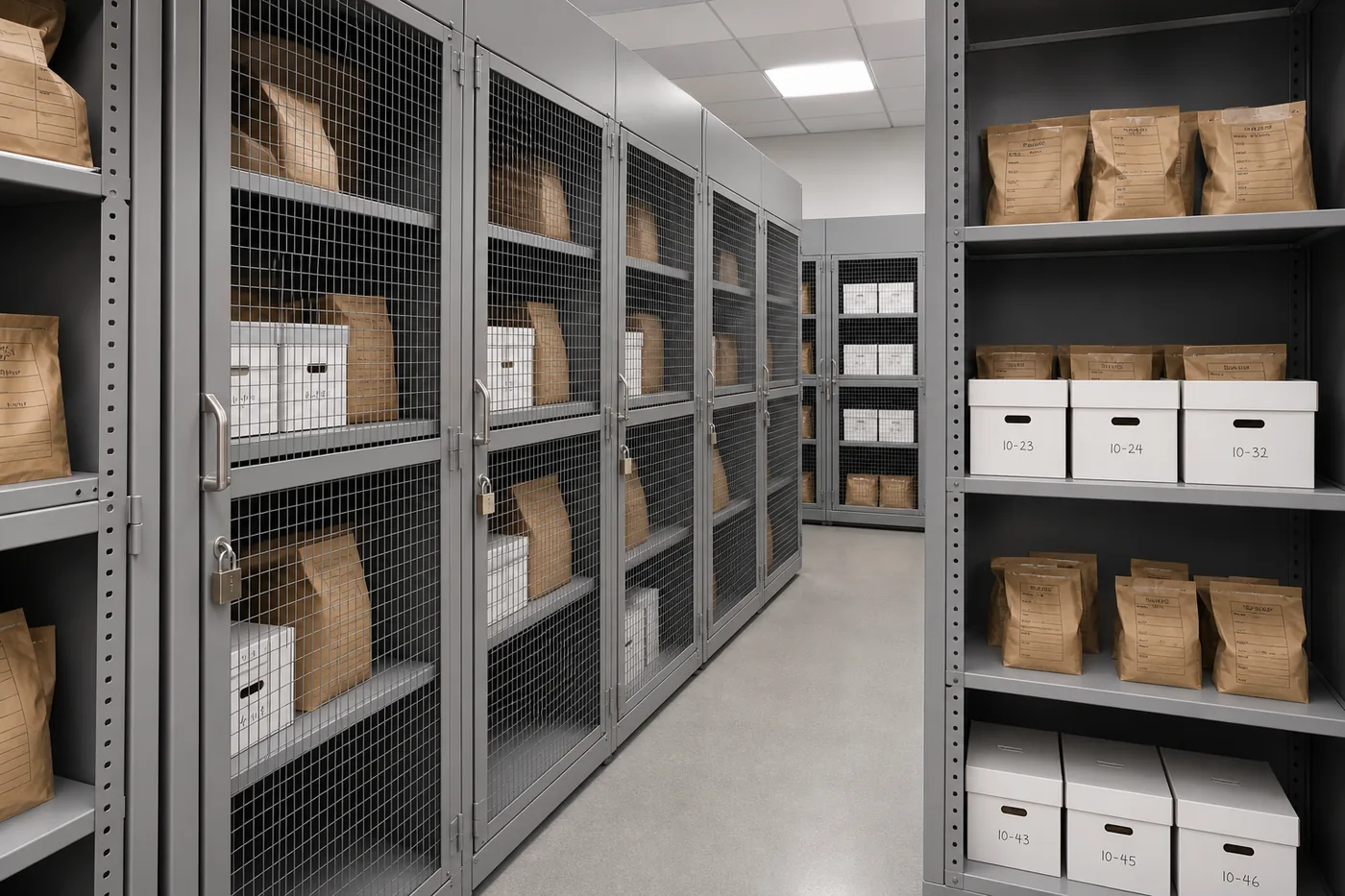
72 hrs
NIST dividing line between short-term and long-term evidence storage
2–8 °C
Refrigerated storage range defined for biological evidence
30+ yrs
Designing and installing storage systems for public-safety agencies
Free
Space planning, layout drawings, and quotes
Build an Evidence Room You Can Defend in Court
An evidence room has two jobs: keep every item intact, and prove who touched it. Everything else — shelving type, locker configuration, refrigeration, aisle layout — exists to serve those two jobs. This guide walks through the workflow an evidence room has to support, the storage equipment that fits each stage, and the planning decisions that are expensive to change later.
Material Handling USA designs, supplies, and installs evidence storage for police departments, sheriff’s offices, crime labs, courts, and campus public-safety agencies. We work from your intake volumes, retention rules, and floor plan — not from a catalog page. Questions on your project? Call (800) 326-4403 or request a free design consultation.
Evidence Intake and Chain of Custody
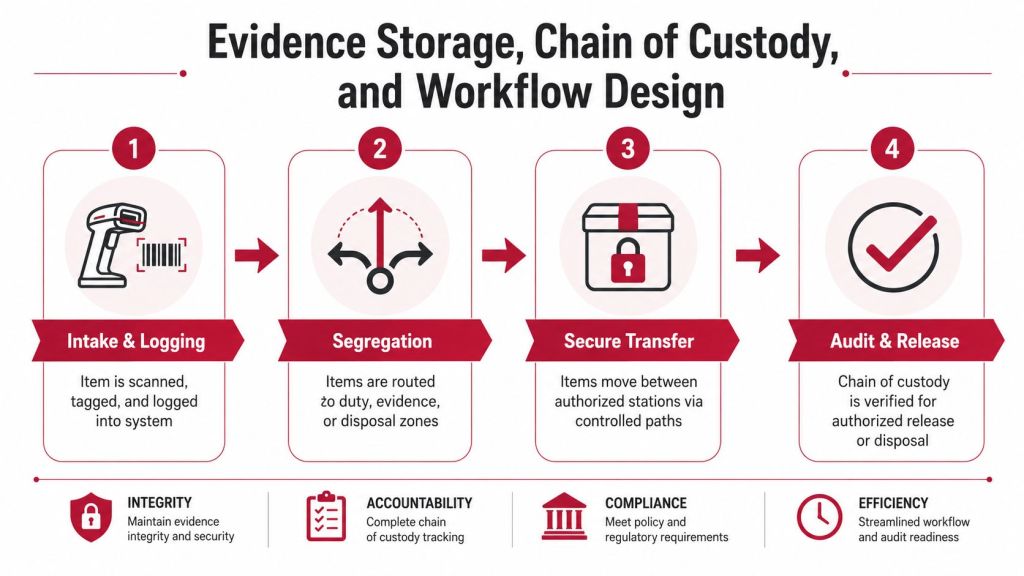
Chain of custody starts the moment an item leaves an officer’s hands. The weak point in most evidence rooms is not the shelving — it is the gap between an after-hours seizure and the technician who logs it the next morning. A designed intake area closes that gap.
A workable intake sequence looks like this:
- Package and seal at the scene or at a processing bench, with case number, item number, date, and collecting officer on the label.
- Deposit into a temporary locker that locks on close, so no second person is needed at 3 a.m.
- Log and barcode when the custodian retrieves the item, creating the first documented transfer.
- Assign a permanent location — shelf, bin, refrigerator, weapons rack, or bulk bay — recorded against the item record.
- Record every later movement: lab submission, court check-out, return, disposition.

The workflow your storage has to support
Design principle
Every hand-off is a place evidence can be challenged. Reduce hand-offs with pass-through lockers and single-purpose storage zones, then document the hand-offs you cannot remove.
Pass-Through and Temporary Evidence Lockers
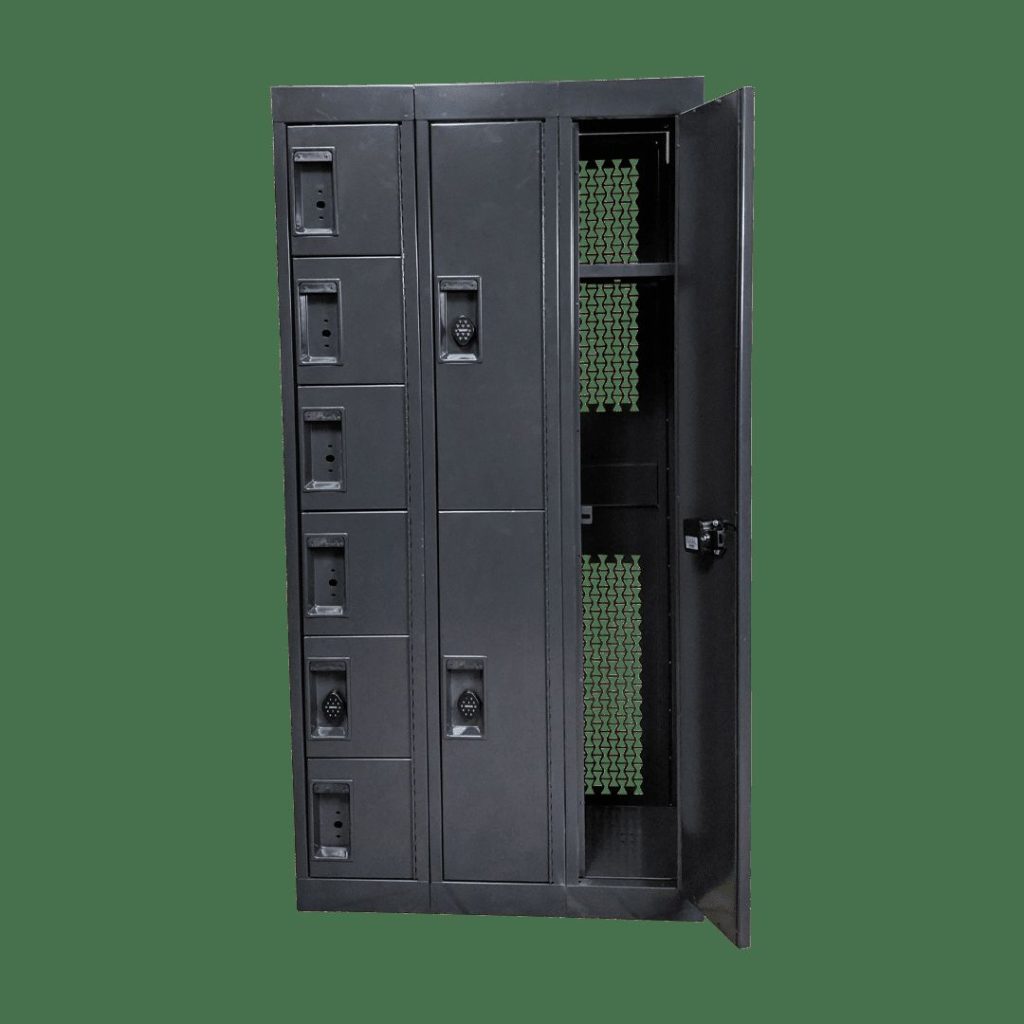
Temporary lockers hold evidence between deposit and processing. They come in two configurations, and most agencies end up using both.
Pass-through lockers are built into the wall separating the drop-off area from the secure property room. The officer loads from the public/patrol side; the custodian unloads from inside the secure room through a rear door. Nobody without evidence-room access ever stands in the evidence room.
Non-pass-through lockers are accessed from one side only. They cost less and can go anywhere there is wall space — satellite stations, garages, precinct hallways, or areas where a shared wall with the evidence room does not exist.
Both types use one-way keyless latches: the compartment locks when the door closes, and only the custodian can reopen it. Compartment sizes are mixed within one bank so a phone, a rifle, and a bag of clothing all have a home. Refrigerated inserts and drying compartments can be built into the same bank.
| Pass-through lockers | Non-pass-through lockers | |
|---|---|---|
| Access | Loaded from outside, emptied from inside the secure room | Loaded and emptied from the same side |
| Installed | Recessed into the wall between drop-off and evidence room | Surface-mounted against any wall |
| Best for | Main station intake, 24/7 deposits, highest chain-of-custody separation | Satellite offices, remodels, limited wall space, overflow |
| Locking | One-way keyless latch on deposit; rear master access | One-way keyless latch on deposit; front master access |
| Options | Refrigerated inserts, drying compartments, mixed compartment sizes, electronic locks | Same option set, single-side service |
| Trade-off | Requires a shared wall and coordination with the building | Custodian must enter the deposit area to retrieve |
Configuration behavior described above reflects published manufacturer documentation for pass-through and non-pass-through temporary evidence lockers.
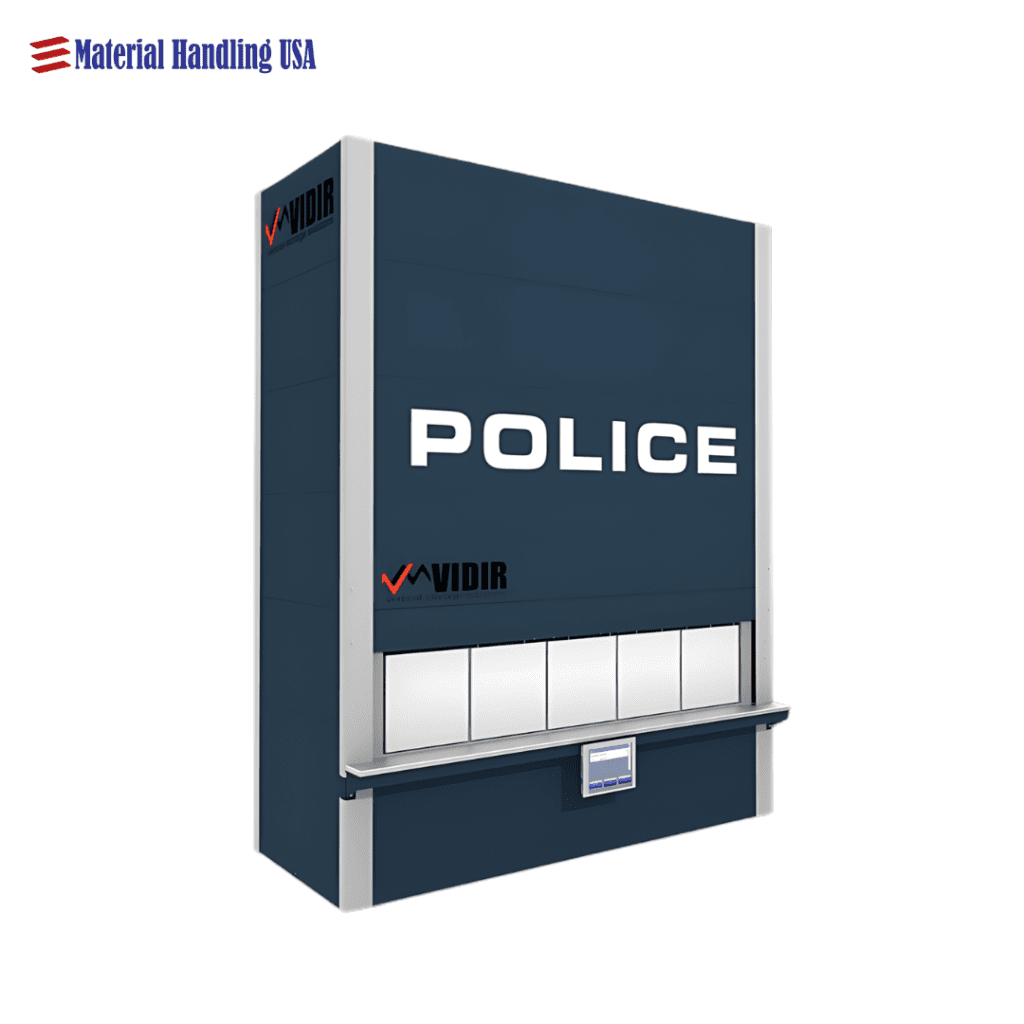 Electronic & Smart LockersKeypad or credential access with an audit log per compartment. Useful where the agency wants electronic records of every deposit and retrieval.
 Refrigerated Locker InsertsRefrigerated compartments inside a temporary locker bank so biological evidence goes straight into cold storage at deposit.
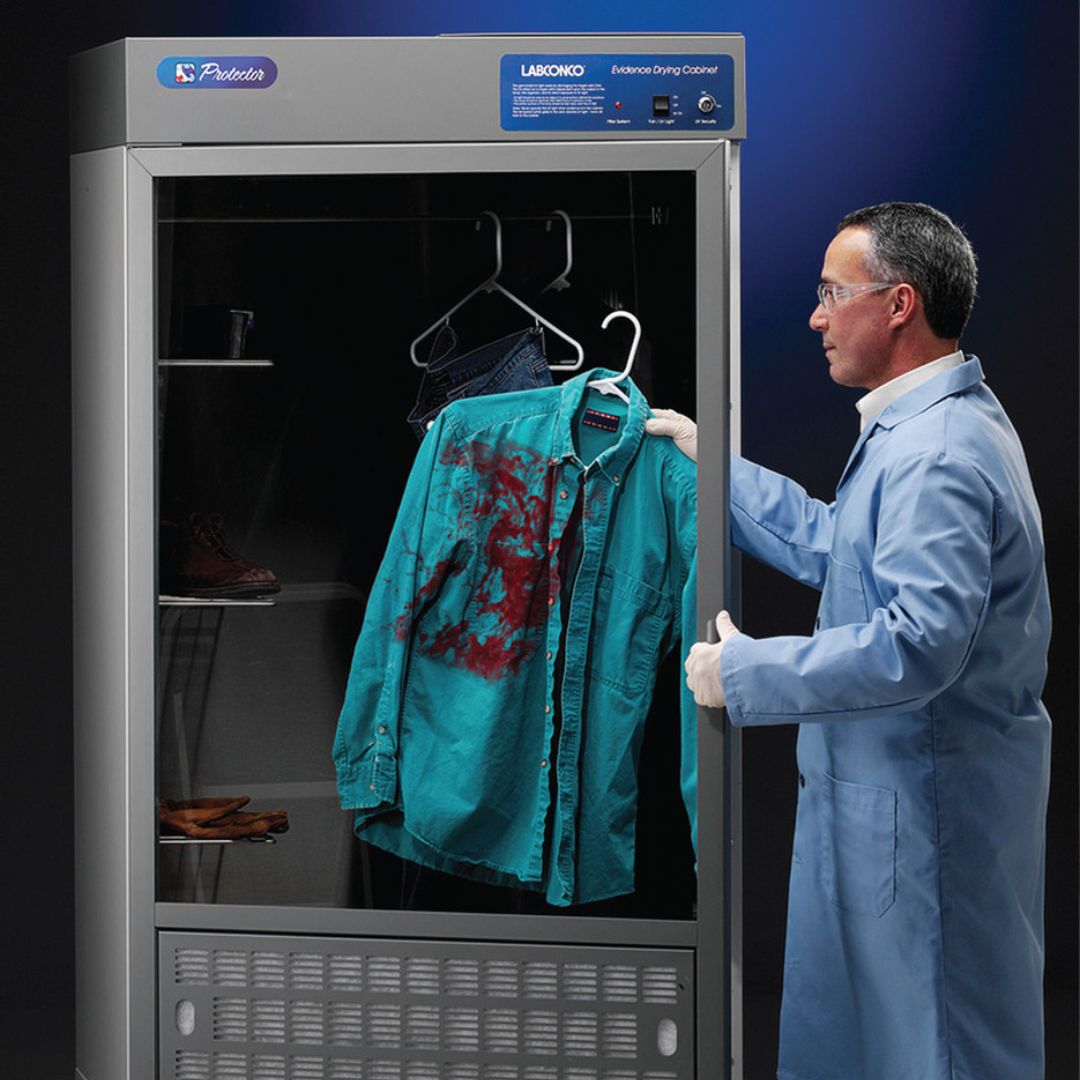
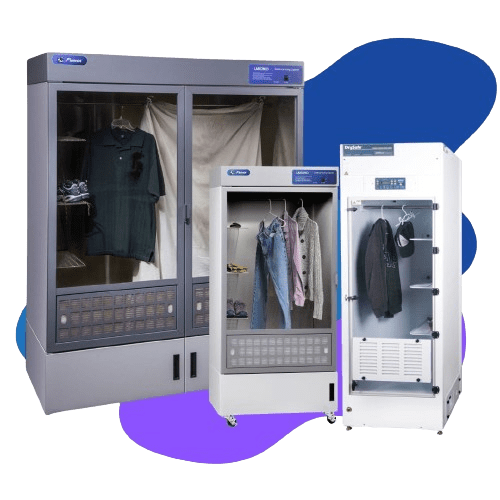
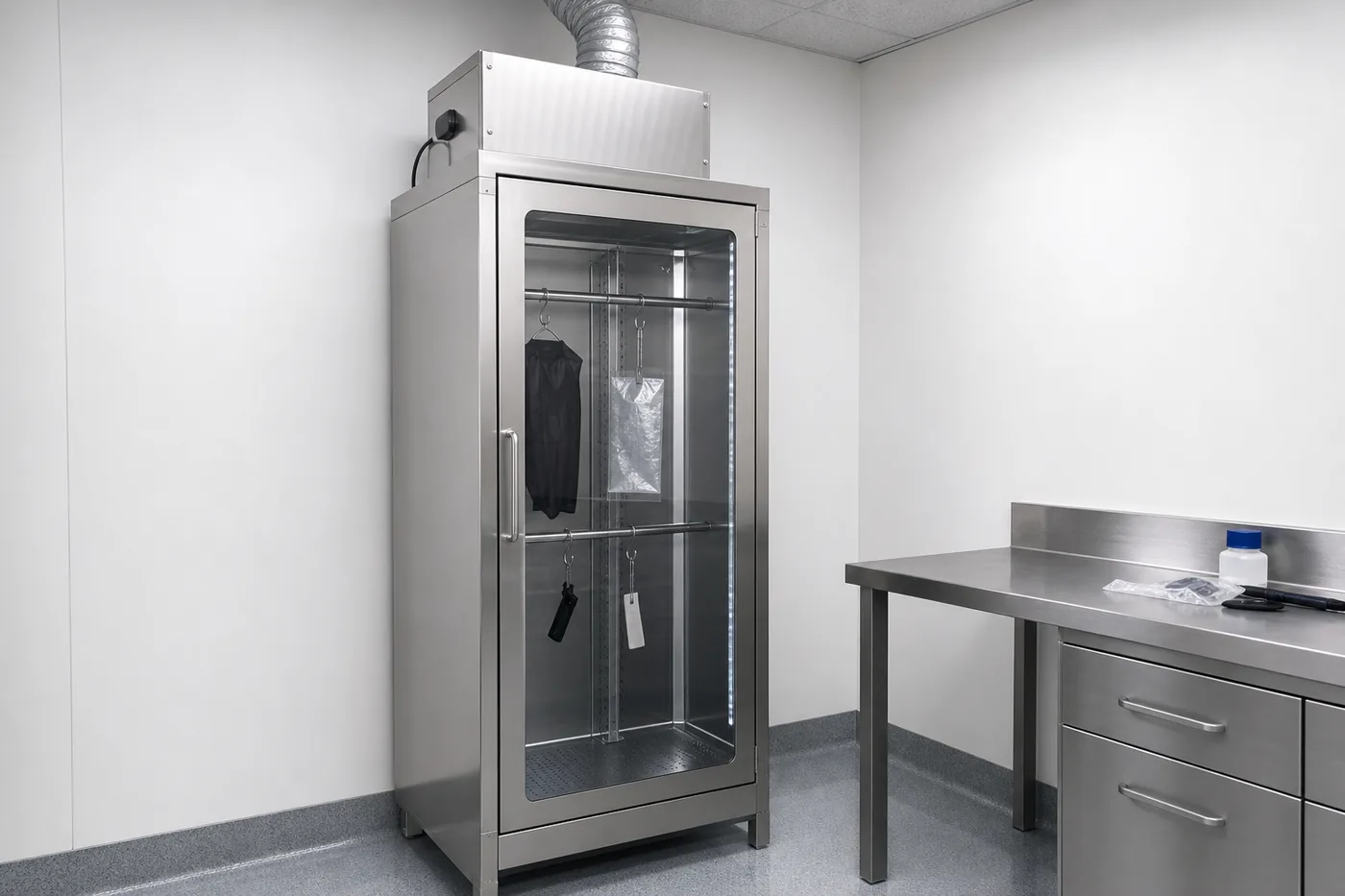 Drying Cabinets at IntakeWet and bloody items are dried in a filtered cabinet before packaging, one case per cabinet, to prevent cross-contamination.
Temporary, Short-Term, and Long-Term Storage
The 72-hour mark is the useful dividing line. The NIST Technical Working Group on Biological Evidence Preservation recommends treating any location that holds evidence for up to 72 hours as short-term storage, and any location holding evidence longer than 72 hours as long-term storage. That single distinction drives most equipment decisions.
Short-term storage is about speed and separation: temporary lockers, a drying cabinet, a refrigerator near the intake bench, and a bench with power and a scanner. Capacity is measured in items per shift.
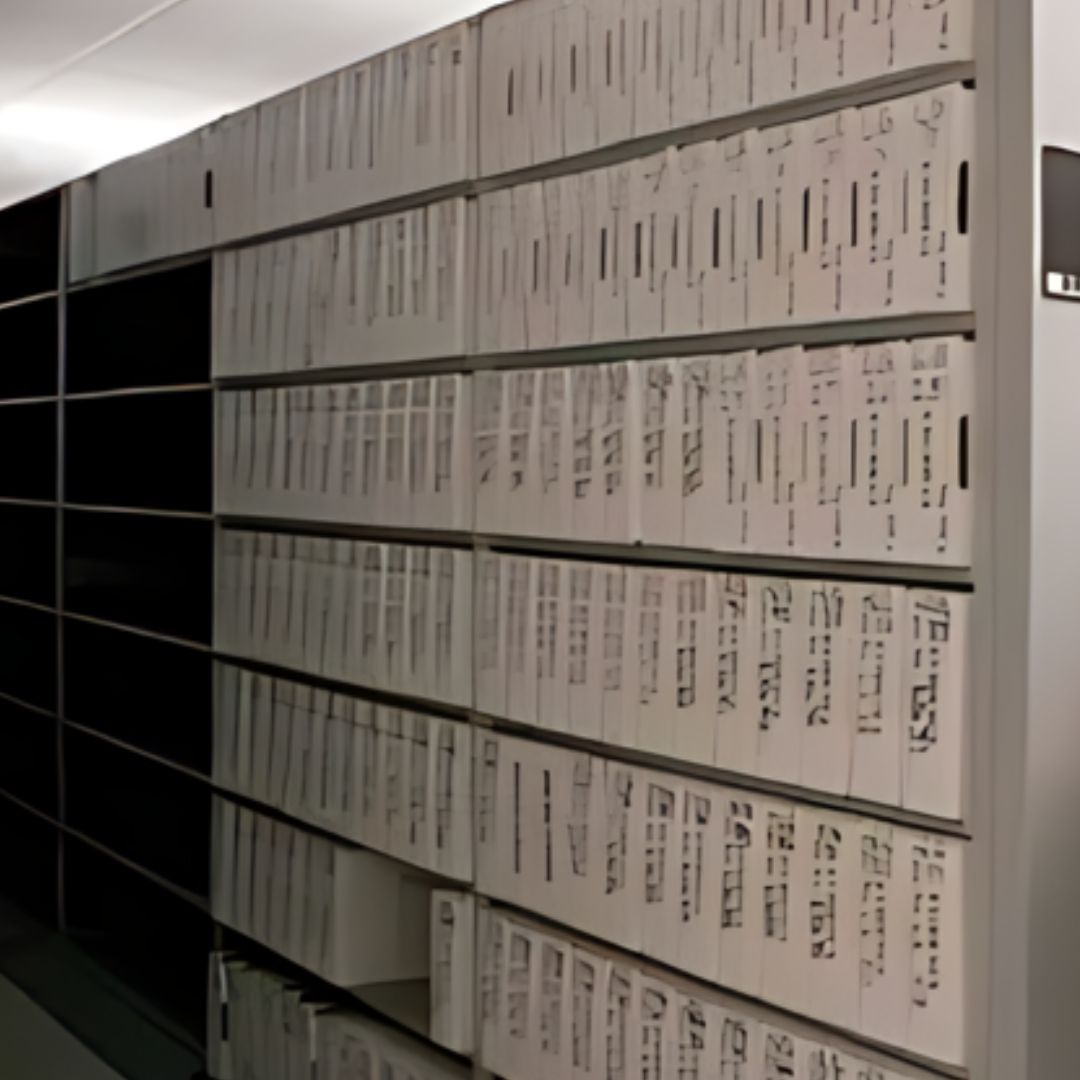
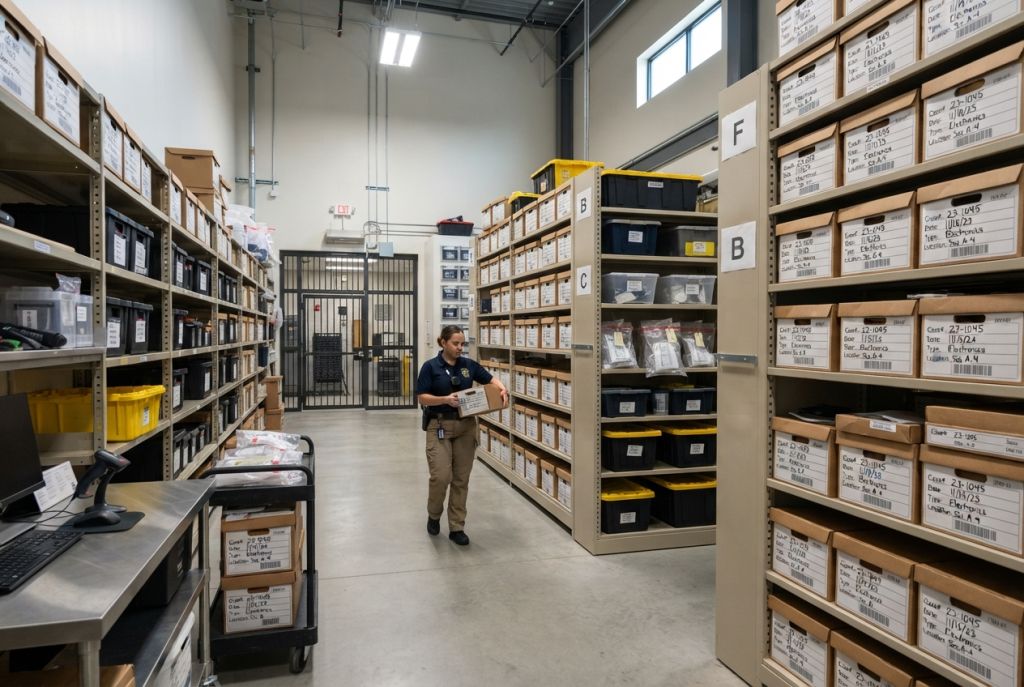
Long-term storage is about density, retrieval, and years of growth. Serious-crime evidence may be retained for decades, so long-term areas are where high-density mobile shelving, cantilever bays for bulk items, and locked cages earn their keep. Capacity is measured in linear feet per square foot of floor.
Retention periods themselves are set by state law, court rules, and your agency policy — they vary by jurisdiction and case type. Build the room around your own retention schedule rather than a national rule of thumb.
Storage condition definitions used in forensic practice
| Condition | Definition | Typical equipment |
|---|---|---|
| Frozen | Maintained thermostatically at or below −10 °C (14 °F) | Forensic freezer, alarmed and logged |
| Refrigerated | Maintained thermostatically between 2 °C and 8 °C (36–46 °F) at less than 25% humidity | Evidence refrigerator or refrigerated locker insert |
| Temperature controlled | Maintained thermostatically between 15.5 °C and 24 °C (60–75 °F) at less than 60% humidity | Conditioned evidence room with shelving or mobile shelving |
| Room temperature | Ambient temperature of the surroundings; may have no temperature or humidity control | Unconditioned bulk or overflow storage |
Definitions: NIST IR 7928, The Biological Evidence Preservation Handbook and its companion storage-conditions summary. Confirm the storage condition required for a specific item type with your crime laboratory.
Refrigerated and Biological Evidence Storage
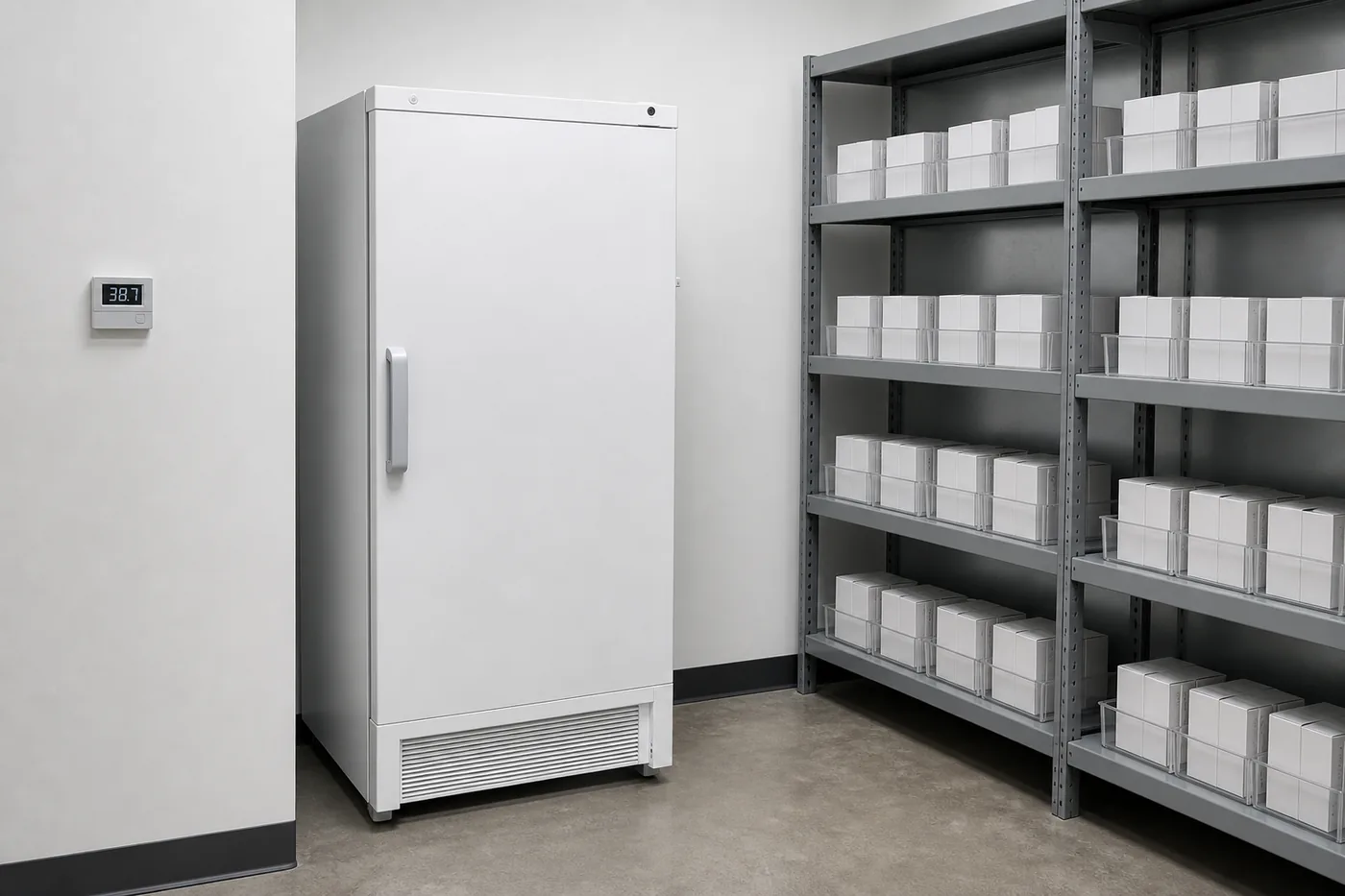
Biological evidence fails quietly. Moisture, heat, and condensation degrade DNA long before anyone notices, so the equipment around biological evidence matters as much as the shelving.
- Dry before packaging. Wet or bloody items are air-dried in a drying cabinet or dedicated drying room, one case at a time.
- Use breathable packaging for dried biological items — sealed plastic traps moisture and encourages bacterial growth.
- Refrigerate what cannot be dried yet in a nonporous container at 2–8 °C, away from direct sunlight, until it can be dried or submitted.
- Freeze what the lab specifies — some sample and extract types are stored frozen; confirm requirements with your laboratory.
- Log temperature on every refrigerator and freezer, and alarm the ones holding irreplaceable samples.
- Separate cases physically with closed-back shelving, bins, or dividers so packaging never touches packaging from another case.
Equipment that belongs in this zone: forensic refrigerators and freezers with lockable doors and temperature logging, refrigerated locker inserts at intake, filtered drying cabinets, closed-back steel shelving for sexual assault kits and boxed biological evidence, and stainless work surfaces that can be decontaminated.
Personal protective equipment, biohazard spill supplies, and an eyewash or safety shower belong in the same area — the International Association for Property and Evidence lists all of these in its published property-room safety standards. Fire, life-safety, and building requirements are set by your local and state authorities, so verify them with your fire marshal and building department during design.
Weapons, Narcotics, and Oversized Evidence
Some categories need their own room, rack, or vault. Mixing them into general shelving creates safety problems, audit problems, and — with narcotics — regulatory exposure.
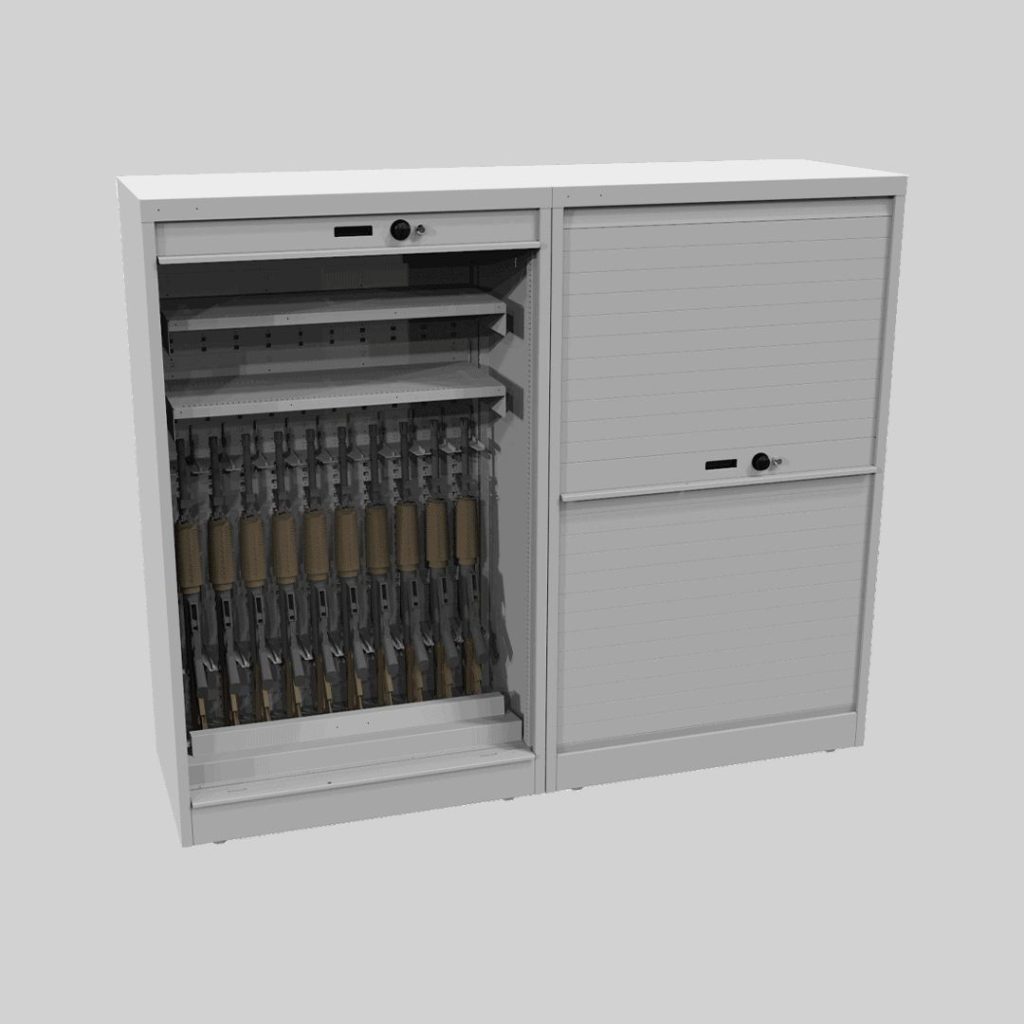
 Firearms and Long GunsBarrel-supported racks and weapon cabinets keep firearms separated, visible for audit, and off general shelving. Ammunition is stored separately. Cabinets and racks can be locked inside a larger restricted area for two-layer control.
 Narcotics and Controlled SubstancesA vault, modular strongroom, or locked cage with restricted keying, camera coverage, and its own access log. Handling and destruction rules come from state and federal authorities — design the space around the rules your agency operates under.
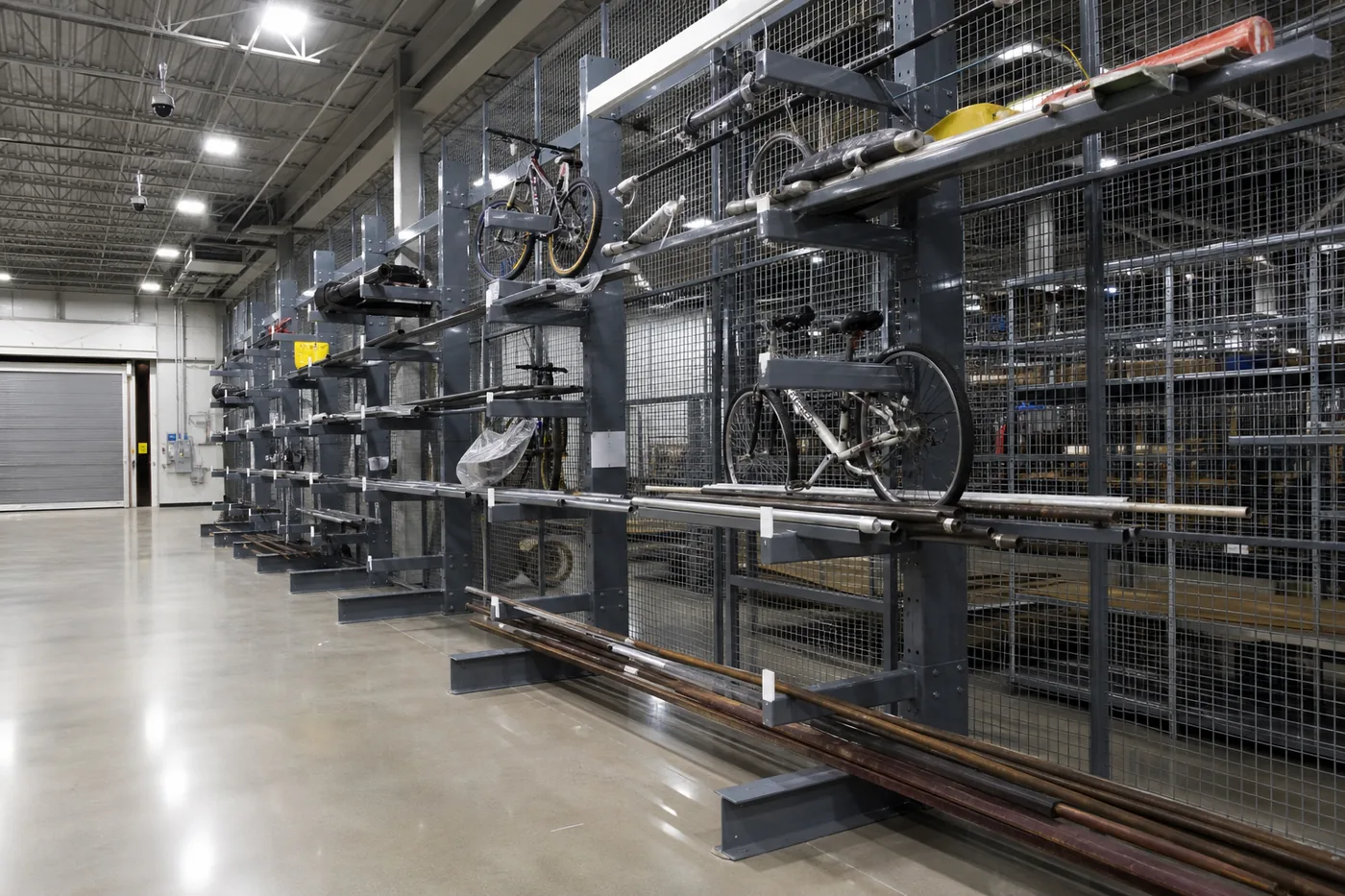 Oversized and Bulk ItemsBicycles, ladders, tires, doors, and recovered property need cantilever racking or wide-span bays, plus a door and aisle path wide enough to actually move them. Plan the route before the rack.
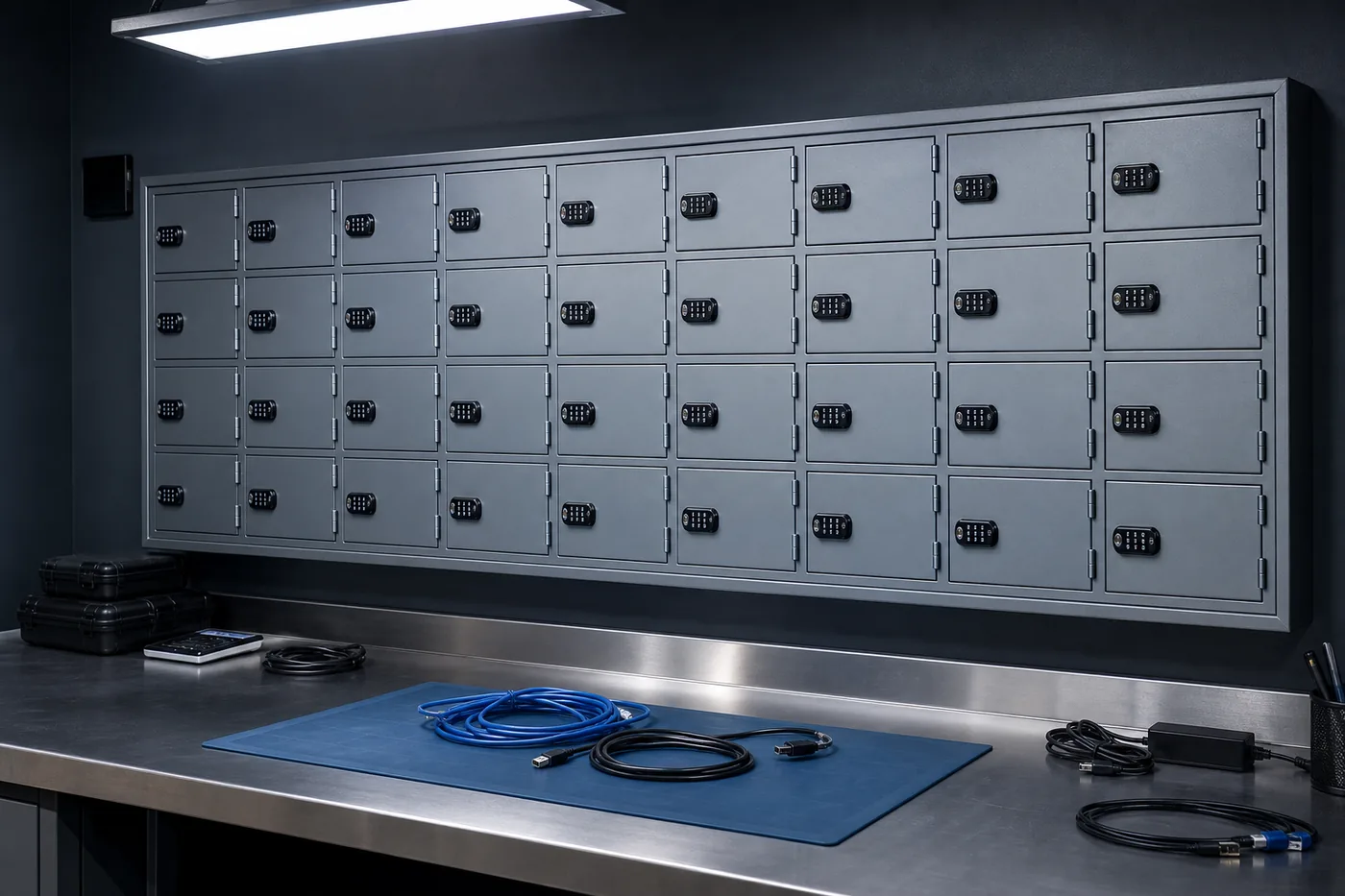 Digital Devices and MediaPhones, drives, and cards are stored in individual compartments with faraday or shielded pouches when required, near a forensics bench with power and network access, and away from magnets and heat.
High-Density Shelving: Getting More Room Without a Bigger Room
Static shelving spends most of your floor on aisles. High-density mobile shelving puts shelving carriages on floor rails so they share a single moving aisle — the same footprint holds substantially more evidence, and an addition or off-site warehouse can often be avoided.
Three drive types cover nearly every evidence room:
- Manual / direct-pull — light carriages moved by hand. Lowest cost, best for smaller rooms and low-frequency retrieval.
- Mechanical assist — a three-spoke handle and gear drive moves heavy loaded carriages with modest effort. The most common choice in evidence rooms.
- Powered / electric — push-button movement with safety sweeps and optional keypad or card lock-down of individual aisles.
Carriages are configured with closed-back shelving, bins, dividers, weapon shelves, and lockable mesh or solid doors, so one system can hold boxed evidence, bagged evidence, and secured categories side by side.
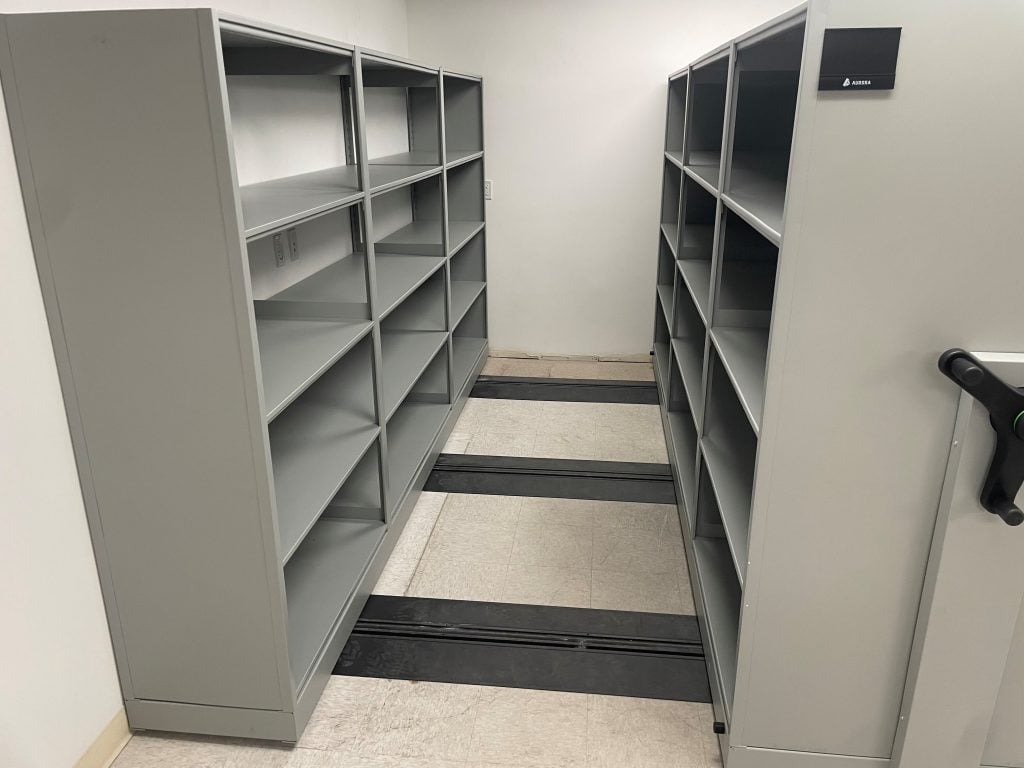
| Static shelving | Mobile (mechanical assist) | Electric mobile | |
|---|---|---|---|
| Aisles | One fixed aisle per shelving row | One shared moving aisle | One shared moving aisle |
| Capacity in the same footprint | Baseline | Substantially higher | Substantially higher |
| Retrieval effort | Immediate access to every row | Turn a handle to open the aisle | Press a button to open the aisle |
| Aisle-level security | Add doors or cages | Lockable carriage doors and aisle locks | Keypad or credential lock-down by aisle |
| Floor requirements | Level floor | Rail track, leveled and grouted as needed | Rail track plus power |
| Best fit | Small rooms, very high pick frequency | Most evidence rooms, long-term retention | High-volume rooms, ADA and audit-driven access control |
Real project
The Weslaco Police Department (TX) evidence room was losing floor space to fixed aisles. Material Handling USA designed and installed a mechanical-assist mobile shelving system with double-entry carriages on rail track, using 48" wide by 24" deep shelving sections sized for evidence boxes and bags — read the case study.
Secure Cages, Vaults, and Restricted Access
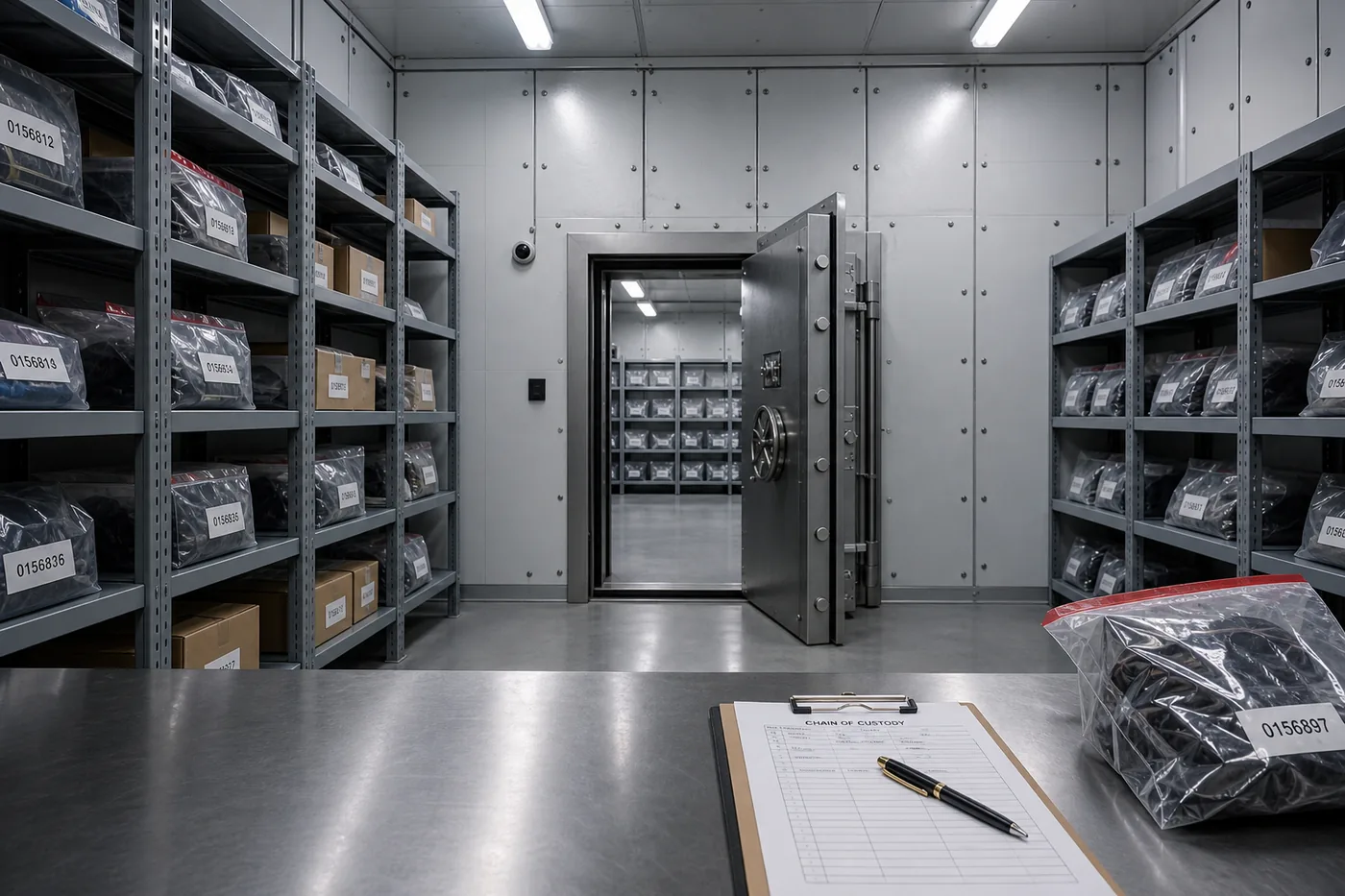
Not every item needs the same level of protection. Layered security lets you spend control where it matters: the evidence room is restricted, and rooms-within-the-room hold the categories that need a second lock and a separate log.
Wire mesh cages build a lockable enclosure inside an existing room — high-value property, narcotics, firearms, or a single case that needs isolation. Mesh keeps the space visible for camera coverage and lets sprinklers and airflow through.
Modular strongrooms and vaults add hardened walls and a rated door where an agency wants a genuine vault without pouring concrete.
Access control ties it together: restricted keying or credentials, door-status monitoring on evidence-room doors, motion detection inside storage spaces, camera coverage at intake and at every secured enclosure, and duress alarms where staff work alone. Federal facility-planning guidance for forensic facilities recommends exactly this combination of monitored doors, motion detection in evidence spaces, and duress alarms in key areas.
Security-design guidance summarized from the U.S. Department of Justice / NIJ Forensic Laboratories: Handbook for Facility Planning, Design, Construction, and Moving.
Labeling, Tracking, and Retrieval
Storage is only as good as your ability to find an item and prove its history. A location scheme plus barcodes turns a room full of bags into a searchable inventory.
- Label the room, not just the items. Every range, carriage, shelf, and bin gets a permanent, human-readable location code.
- Barcode at first logging and scan on every transfer — intake, lab, court, return, disposition.
- Store by location, not by case. Sequential shelf assignment fills the room evenly; the record, not the shelf, keeps cases together.
- Give purge candidates their own zone so disposition reviews do not require walking the whole room.
- Audit against the record — random shelf-to-record and record-to-shelf checks catch drift early.
Barcode scanning is the practical baseline. RFID adds bulk reads and near-real-time location visibility; a NIST assessment of RFID in forensic evidence management catalogs those benefits alongside the cost and implementation barriers, which is the trade-off to weigh before committing.
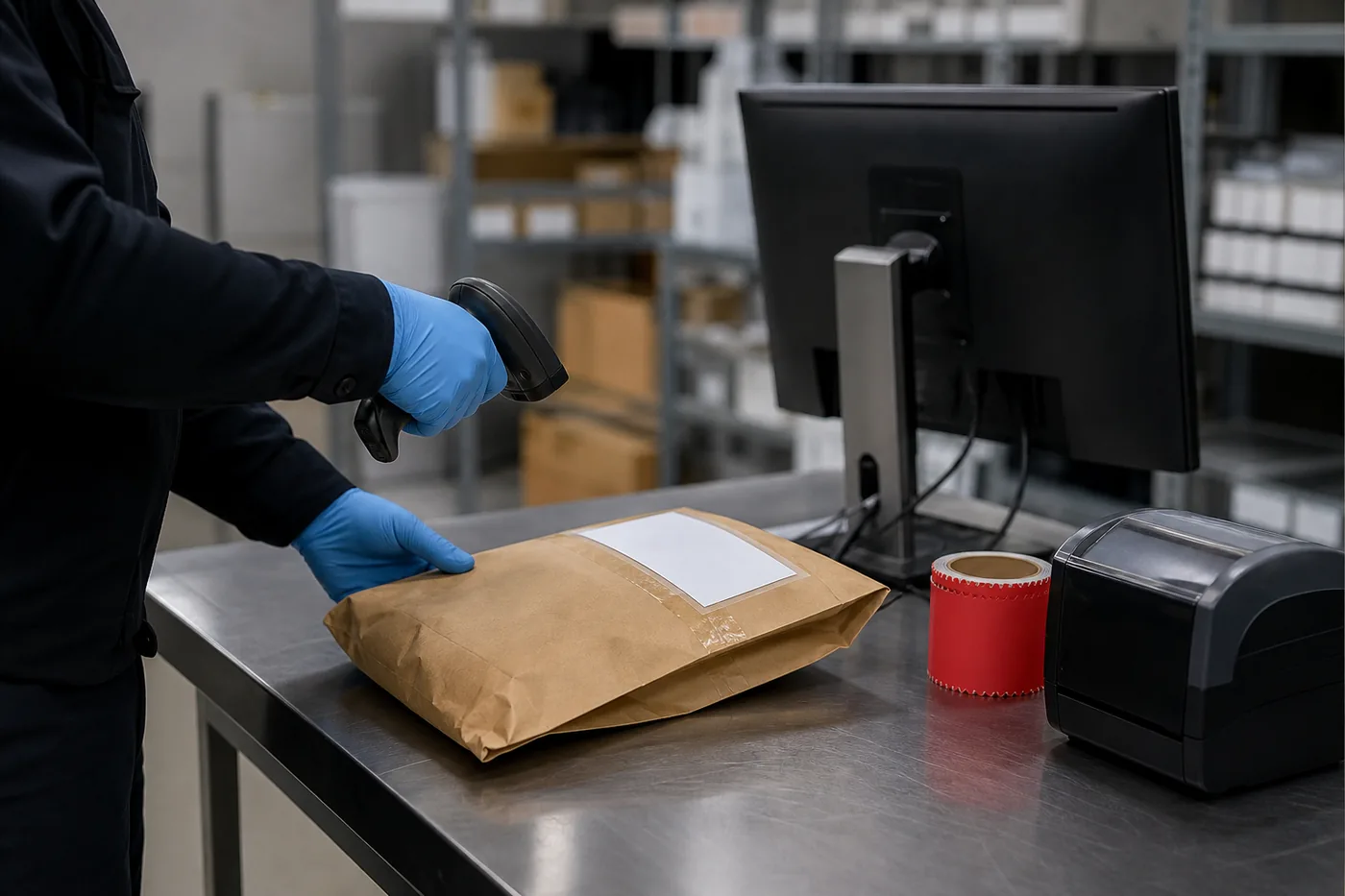
Reference: NIST IR 8030, RFID Technology in Forensic Evidence Management.
Evidence Room Planning and Layout
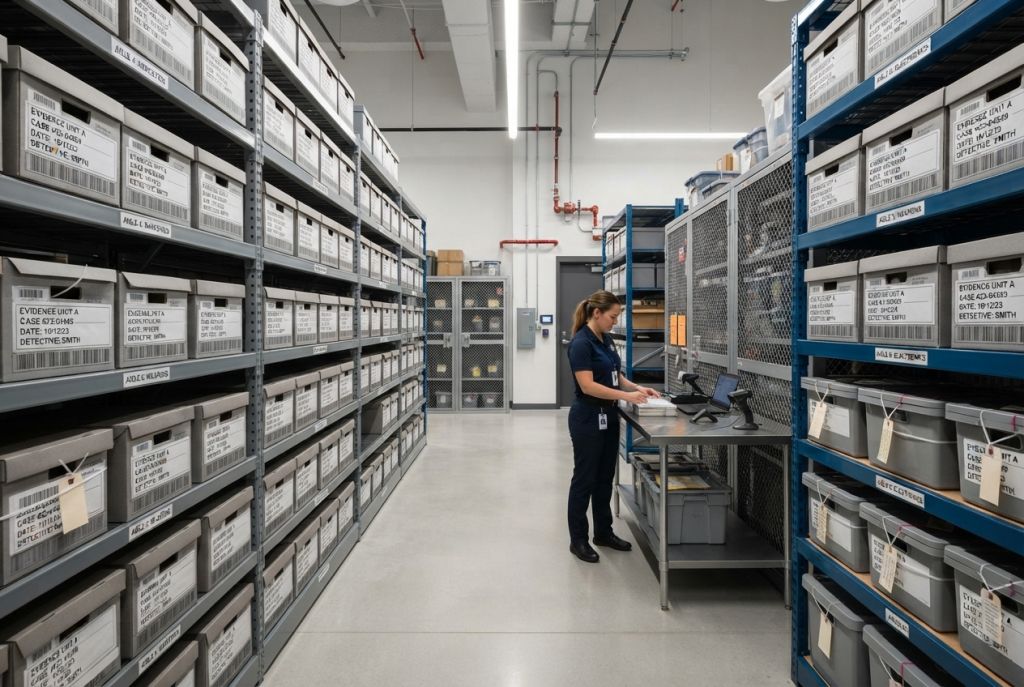
Layout is decided by flow. Evidence should move in one direction — from intake, through processing, into storage, and out through release or destruction — without crossing back through unsecured space.
A workable zoning pattern:
- Deposit zone (outside the secure room): temporary lockers, drop counter, camera.
- Processing zone: bench, scanner and printer, packaging supplies, drying cabinet, refrigerator.
- General long-term storage: high-density mobile shelving on rail, sized for your box and bag mix.
- Restricted zones: narcotics vault or cage, weapons racks, high-value cage.
- Cold storage: refrigerators and freezers with logging, on conditioned power.
- Bulk and oversized: cantilever or wide-span bays with a clear path to a wide door.
- Release and disposition: staging area for court check-out, return to owner, and destruction.
Get the dull numbers on paper first: annual intake, current linear feet in use, growth rate, retention schedule, ceiling height, clear door widths, floor levelness and slab capacity, sprinkler and lighting positions, HVAC capability, and where power and data can land.

Evidence room planning checklist
- Annual intake volume and five-year growth estimate documented
- Retention schedule confirmed with your agency counsel or court rules
- Current inventory measured in linear feet, by package type
- Special categories counted: firearms, narcotics, biological, digital, oversized
- Cold-storage capacity needed, with logging and alarm requirements
- Ceiling height, sprinkler and light positions verified against shelving height
- Floor levelness and slab capacity checked for rail-mounted systems
- Door and corridor widths measured for oversized items and for installation
- Access control, camera coverage, and door monitoring scoped with your IT or security vendor
- Safety equipment planned: PPE, spill kit, eyewash, ventilation, duress alarm
- Fire and building requirements confirmed with your local fire marshal and building department
- Installation window, after-hours access, and evidence relocation plan agreed
Free space plan
Send us your room dimensions and inventory counts and we will return a layout drawing with capacity options — the same deliverable used on the Roy and Weslaco police department projects. Request a free evidence room design or call (800) 326-4403.
Installation and Project Process
Evidence rooms cannot go offline, so the sequence matters as much as the equipment. Our projects follow the same five steps.
Consultation
We review intake volume, retention rules, special categories, and the constraints of the space — in person or by video.
Site measure
Floor, ceiling, doors, sprinklers, power, and slab conditions are verified before anything is drawn.
Layout and quote
You receive layout drawings with capacity options and a line-item quote, including accessories and installation.
Delivery and install
Factory-trained crews install rail, carriages, shelving, lockers, and cages — scheduled around your operations, including after hours.
Move-in and support
We help sequence the relocation of existing evidence, then provide operating training, warranty support, and future add-on carriages.
Recent public-safety projects
 Weslaco Police Department, TXMechanical-assist mobile shelving with double-entry carriages on rail track, configured for evidence boxes and bags.
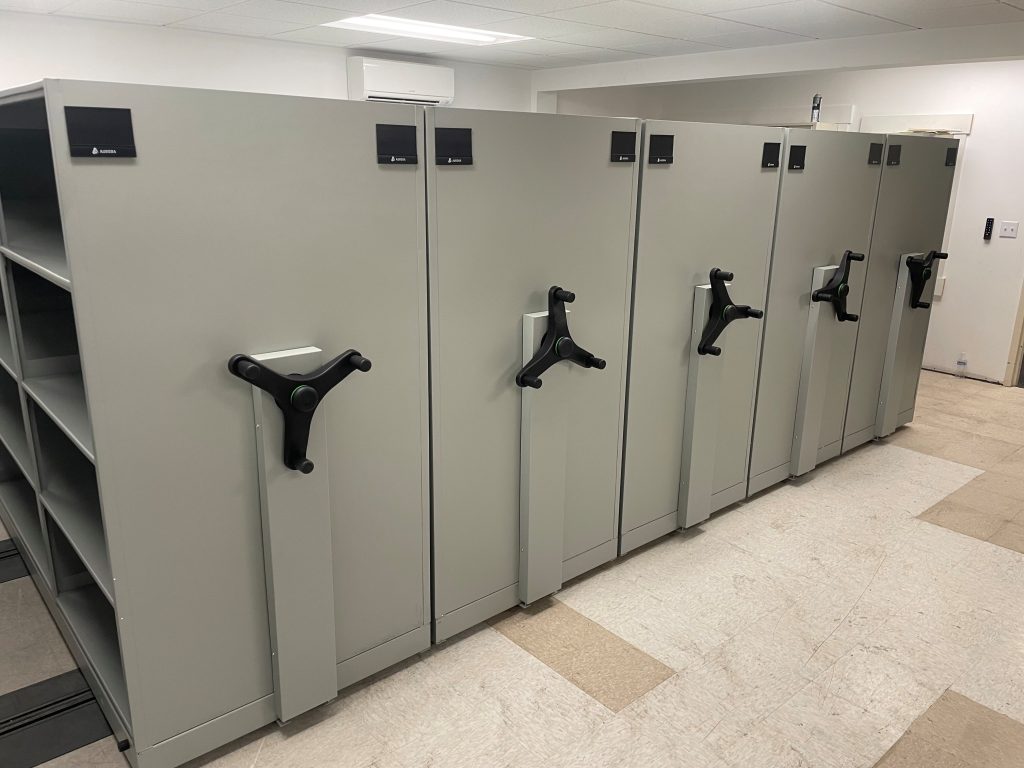 Roy Police Department, UTHigh-density mobile shelving designed from a room layout drawing to expand evidence capacity inside the existing footprint.
 Mechanical-Assist HandlesThree-spoke handle drives let one technician move fully loaded carriages, which is what makes high-density practical for daily evidence retrieval.
Frequently Asked Questions About Evidence Storage
What is the difference between a pass-through and a non-pass-through evidence locker?
How long is “short-term” evidence storage?
What temperature is used for refrigerated and frozen evidence?
Can biological evidence be stored in sealed plastic?
Can mobile shelving be retrofitted into an existing evidence room?
How much space does high-density shelving save?
Does a storage system make our agency compliant or accredited?
How do you keep chain of custody intact with high-density mobile shelving?
What does an evidence storage project cost?
Do you handle installation and moving the existing evidence?
Related Products & Resources
Explore the specific systems and guides referenced throughout this page.
 Evidence Storage SolutionsProduct overview of lockers, shelving, cabinets, and cages for property and evidence rooms.
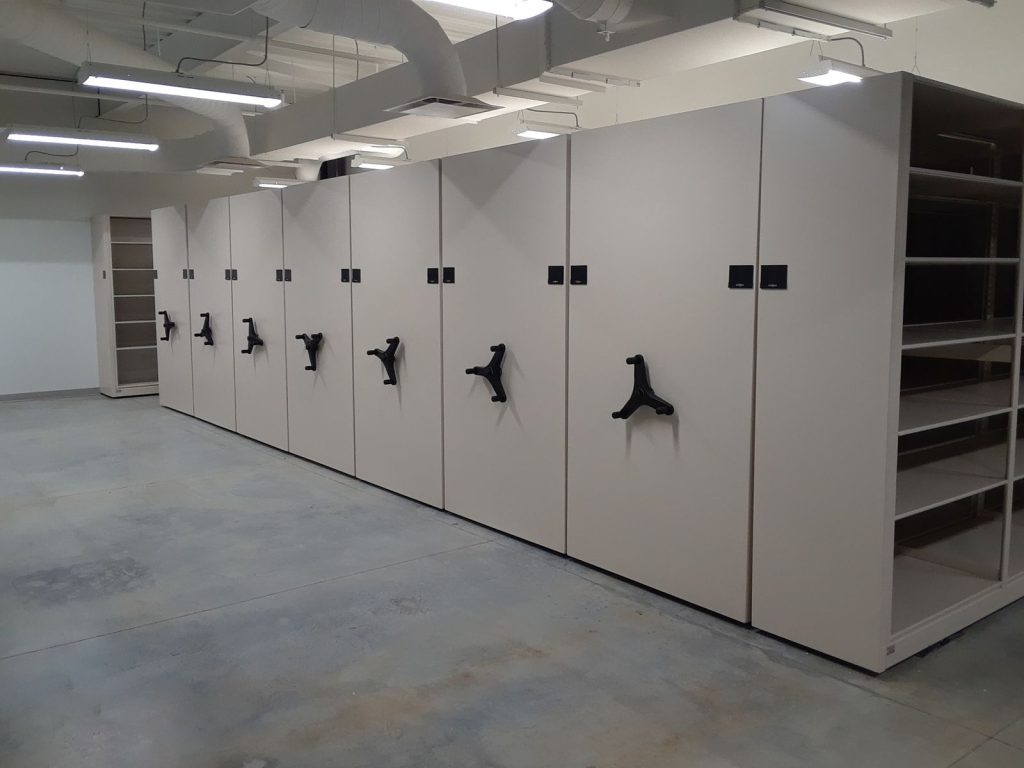 Law Enforcement Evidence StorageSystems and services built specifically for police, sheriff, and campus public-safety agencies.
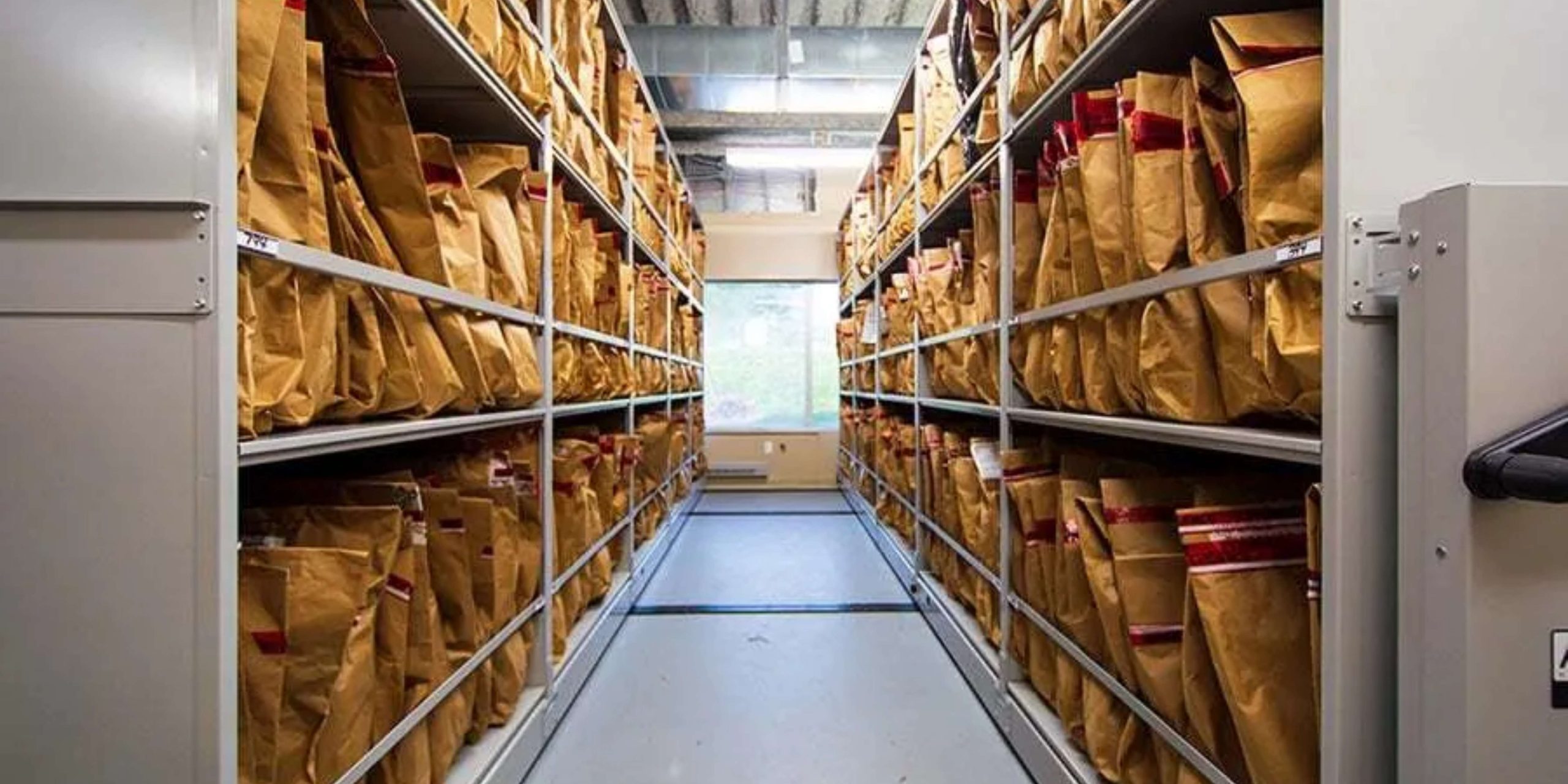 Evidence Storage Room DesignHow rooms are zoned, sized, and laid out — the design side of this guide in more detail.
 Forensic Evidence Drying CabinetsFiltered drying cabinets for wet and bloody evidence, sized from single-case units to walk-in cabinets.
 Weapon Storage Cabinets & RacksBarrel-supported racks and lockable cabinets for firearms held as evidence or duty equipment.
 Mobile Shelving SystemsManual, mechanical-assist, and electric high-density shelving for evidence, records, and supply storage.
 Guide: Evidence Storage Room DesignA step-by-step walkthrough of designing an evidence room from intake to disposition.
 Guide: Organizing a Police Evidence RoomLocation schemes, labeling, and purge workflows for an evidence room that has outgrown its system.
 Guide: Long-Term Evidence StorageWhat changes when evidence has to be retained for decades instead of months.
Need Help Designing Your Evidence Room?
Speak with a specialist who can design the right solution for your space, your retention rules, and your budget. Free space planning, layout drawings, and quotes.