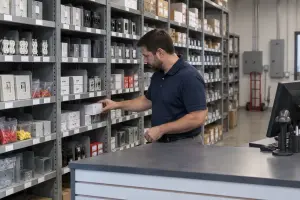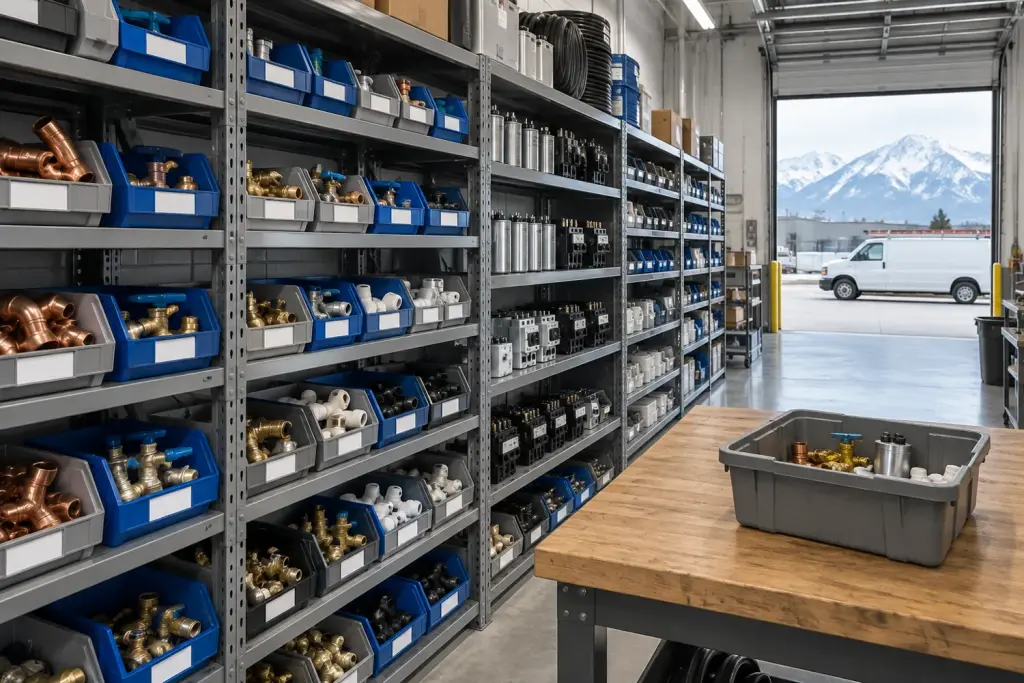
It is 7:00 a.m. in a Salt Lake County shop. A technician has a no-heat call waiting, and the van is short one 45/5 capacitor and two 3/4-inch copper elbows. The parts are somewhere in the building. Finding them takes ten minutes, and the same thing happens to three other techs before the trucks roll out.
Small parts bin shelving for Utah HVAC and plumbing contractors fixes that problem at the source. It gives every fitting, valve, control and fastener one labeled home, puts the fast movers where techs can reach them, and makes van restocking a single walk instead of a hunt. This guide covers what to store, which bin systems fit which parts, how to lay out the room, and the Utah code checks to make before you install.
Quick answer
- Store small parts by how fast they move, not just by product type.
- Give every part and every size its own bin or divided compartment.
- Put emergency repair parts at waist to shoulder height, near the kitting bench and the van door.
- Keep boxed equipment on pallet rack and pipe or line sets on cantilever rack, so bins only hold small parts.
- Use the same part numbers and location codes on shop bins and van bins.
Why Small Parts Slow Down Utah Service Crews

Utah licenses HVAC and plumbing work as separate trades. The Division of Professional Licensing lists classifications such as P200 General Plumbing Contractor, P201 Residential Plumbing Contractor and S350 HVAC Contractor in its contractor classification list. Many shops hold more than one, so one building often supports plumbing, HVAC, controls and sheet metal crews at the same time.
Those crews also cover a lot of ground. Even a rural county list, such as this Utah contractor directory from Uintah County, includes HVAC and plumbing firms based all over the state. When a van is two hours from the shop, a missing part is not a quick trip back.
Big equipment is rarely the problem. A furnace or condenser is easy to see. The trouble is the long tail of small parts: capacitors, contactors, igniters, compression fittings, cartridges and O-rings. They disappear into open cartons and mixed totes. Then a part that is on the shelf gets reordered, or a tech makes a supply house run for something the shop already owns.
Supplier guidance for trade contractors points the same way. Keep high-use parts in labeled bins, group them in a logical order, and load the most-used items closest to the van door, as covered in this HVAC and plumbing inventory management guidance. Our case study with Authority Heating & Cooling in Orem shows the full picture for a Utah HVAC contractor: pallet rack for boxed units, and bins closer to where kits get built.
Rule of thumb: If a tech pulls a part every week, it should be visible, labeled, and reachable without moving anything else.
What HVAC and Plumbing Shops Actually Store
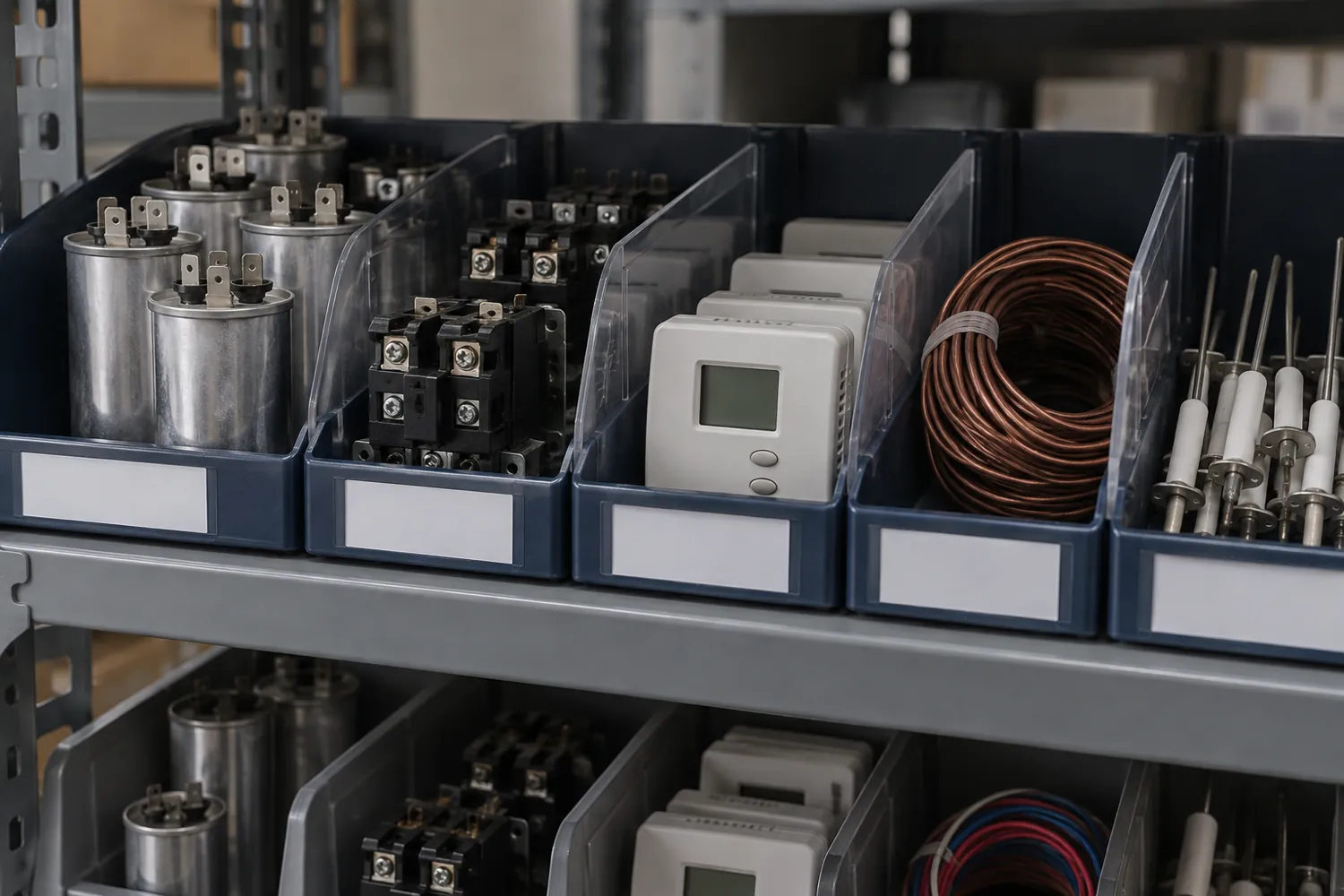
A contractor parts room is never one tidy product family. It mixes tiny electrical parts, heavy brass, bulky filters and long stock. The fastest way to plan it is to sort parts by how they move and what they need, then pick storage for each group.
| Part group | Typical parts | Bin setup that works | Store somewhere else |
|---|---|---|---|
| HVAC controls | Capacitors, contactors, relays, igniters, flame sensors, control boards, thermostats | Small divided shelf bins, one part number per compartment | High-value boards in a locked cabinet |
| Plumbing fittings | Copper and PEX fittings by size, couplings, adapters, supply lines | Long shelf bins with dividers so each size has its own slot | Pipe and tube on cantilever rack |
| Valves and repair parts | Ball valves, shutoffs, cartridges, washers, O-rings | Shelf bins at reach height near the kitting bench | Water heaters and fixtures on pallet rack |
| Fasteners and hangers | Screws, anchors, straps, clamps, brackets | Small hopper bins or divided bins | Bulk boxes in reserve storage |
| Filters and bulky consumables | Air filters, filter driers, sealants, tape, insulation | Open shelves or large hopper bins in their own zone | Flammables per the label and fire code |
Two habits make this table work. First, never mix sizes in one bin. A 1/2-inch tee and a 3/4-inch tee look alike in a hurry. Second, keep controls and electronics apart from heavy brass, so delicate parts do not get crushed when someone digs for a valve.
Some shops also service equipment that uses its own filters and cartridges, such as air purifiers. A supplier page like this one for replacement parts for purifiers can help you list those part families before you assign them bin locations.
Comparing Bin Shelving Options for Small Parts
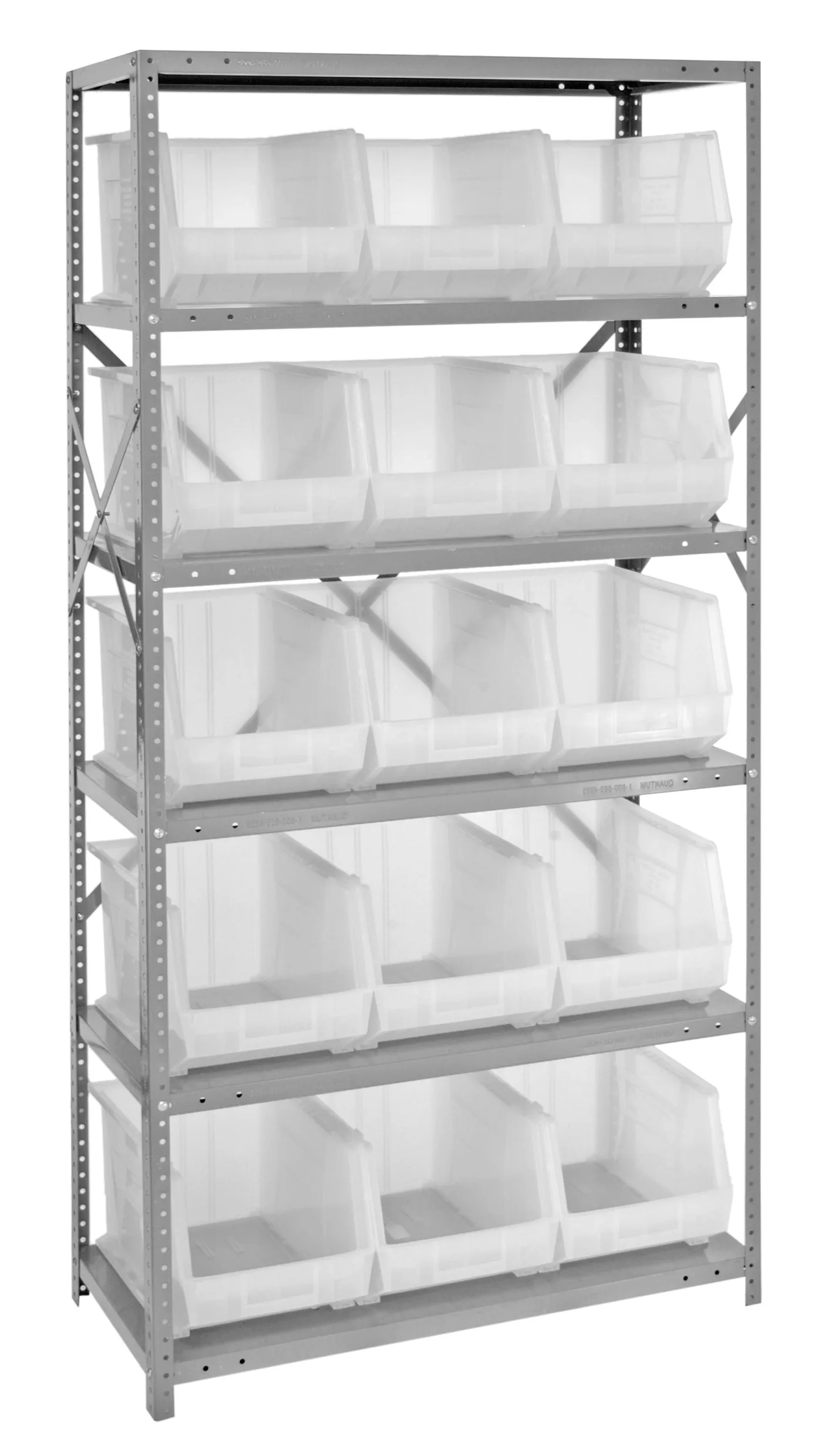
No single system handles every part in a contractor shop. Most good parts rooms use two or three types side by side. Here is how the common options compare.
Steel or boltless shelving with shelf bins
Boltless shelving in Utah is the flexible base for most shops. Shelves adjust without tools, and shelf bins sit on the decks in rows. It handles cartons, totes and small-parts bins in the same run. The weak point is loose cartons on flat shelves, which get messy fast unless every shelf is binned and labeled.
Open hopper bins
Hopper bins have a scooped, open front, so a tech can see and grab parts without pulling the bin. They are the best choice for high-pick fittings and fasteners. Capacity depends on the shelving under them. Published bin systems range from about 400 lb per shelf on steel shelving packages to about 800 lb per shelf on heavy-duty wire units, as shown in our industrial storage bin guide and in this open hopper bin shelving example. Always check the rating for the exact unit you buy.
Divider shelving and divided shelf bins
Divider systems split one shelf into many narrow slots. That suits plumbing fittings that come in many sizes. Borroughs Flexi-Bin shelving in Utah uses sliding dividers on steel shelves, so you can respace slots as your part mix changes. Divided plastic shelf bins do the same job inside a standard shelving unit.
Bin cabinets for controlled parts
Bin storage cabinets add doors and locks. They make sense for control boards, smart thermostats and other parts that walk away or cost a lot. A cabinet is slower to pick from, though, so keep cheap consumables on open bins out front.
Pocket storage for high-SKU distributors
If you run a supply counter or a branch with thousands of SKUs, compare bins with Storeganizer pocket storage for electrical, plumbing and HVAC distributors. It stores slow and medium movers in fabric pockets on pallet rack beams.
| Option | Best for | Main strength | Watch out for |
|---|---|---|---|
| Boltless or steel shelving with shelf bins | Mixed shop stock, cartons and bins | Flexible, easy to reconfigure | Gets messy if shelves are not binned and labeled |
| Open hopper bins | High-pick fittings and fasteners | Fast to see and grab | Shelf rating varies by model, often 400 to 800 lb |
| Divider shelving or divided bins | Fittings in many sizes, controls | One slot per size, easy to respace | Small slots waste space for bulky parts |
| Bin cabinets | High-value or theft-prone parts | Lockable, clean, protected | Slower picking |
| Pocket storage | Distributors with very high SKU counts | Dense storage of slow movers | Overkill for a single contractor shop |
Plan your parts room before you buy
Map your bins, kitting area and reserve stock in the free Parts & Kitting Storage Planner, or build shelving bays in the shelving and rack designer. Send the result to our team for a free layout and quote, or call (800) 326-4403.
How to Lay Out a Contractor Parts Room
Start with the work flow, not the catalog. The room has to support receiving, storage, kitting, van restocking and counts without workers crossing paths all morning. Follow these steps.
- Measure the space. Note wall lengths, ceiling height, doors, columns, benches, electrical panels and sprinkler heads. Mark the paths that must stay open for carts.
- List your parts by group and speed. Pull a year of usage if you have it. Sort parts into emergency, routine, specialty, bulky and controlled groups.
- Put fast movers in the golden zone. Emergency repair parts belong between waist and shoulder height, closest to the kitting bench and van door. Heavy brass goes low. Slow movers go high or in back.
- Give each part and size its own location. One part number per bin or compartment. Add dividers when a part comes in several sizes.
- Leave room to receive and restock. A staging shelf or cart spot near receiving keeps incoming boxes out of the pick aisle.
- Match the shop to the van. Set up shop bins in the same part order as van shelving, so a restock list is one walk down the aisle.
- Label everything and set reorder points. Every bin gets a part number, description and location code before it holds a single part.
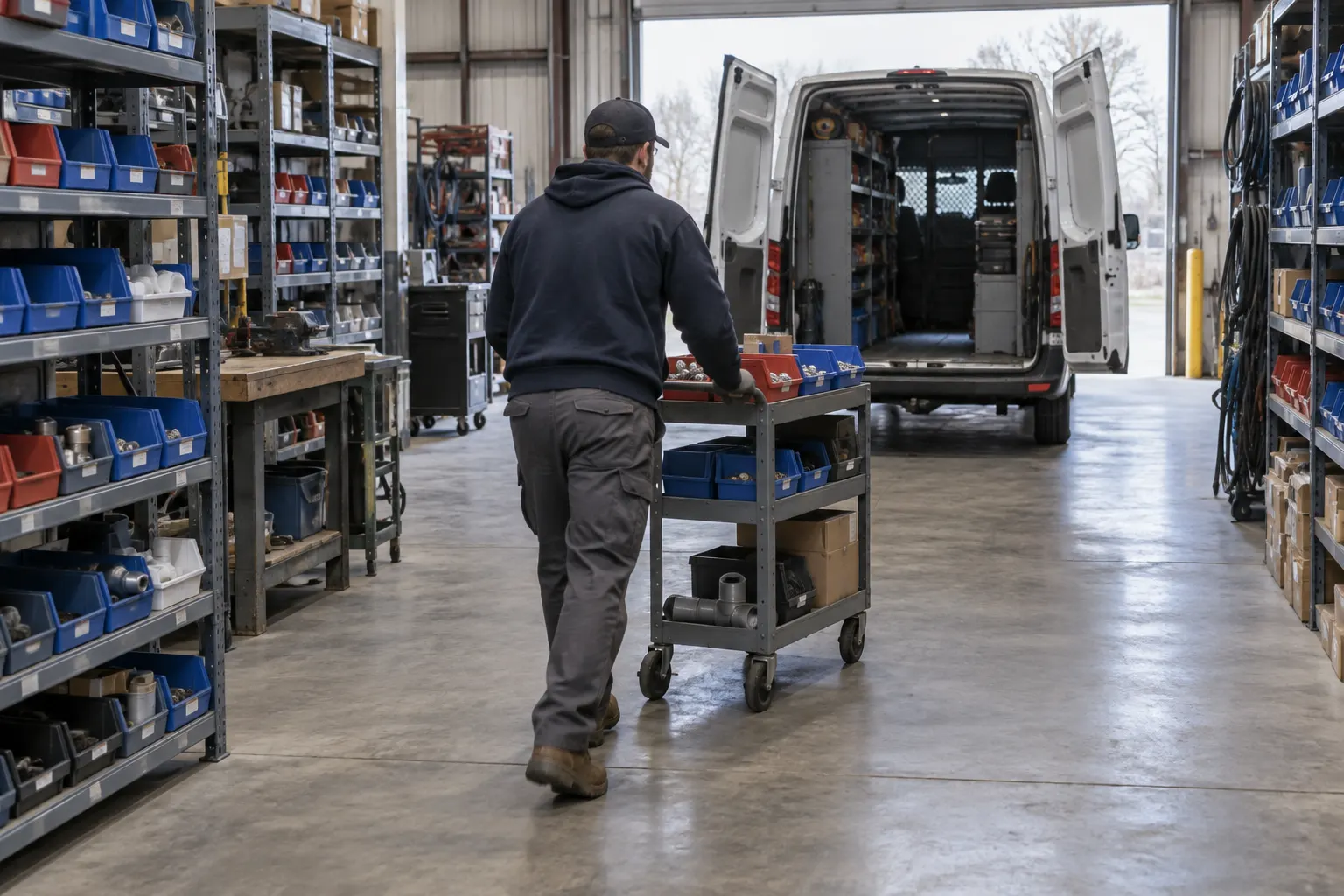
A boltless workbench at the end of the bin run makes a good kitting station. For a full checklist of zones, signage and counts, see our parts room organization checklist.
Labels, dividers and reorder points

A good label has the part number, a short description, and the supplier reorder code when you have one. For critical parts, add a minimum stock number to the label, such as “min 10,” so anyone can see when to reorder. That tip comes from this parts bin labeling guide. Our bin location labeling guide compares label types, and our two-bin inventory system guide explains the two-bin refill rule.
Dividers stretch a bin further. For example, the 8-inch shelf bins on our storage bins page take up to seven dividers each. Add a label to every compartment, not just the bin front.
Safety and Code Checks for Utah Shops
Shelving alone does not make a shop compliant. Check these items with your building official, fire marshal and installer before you set the last bay.
- Permits for tall storage. Salt Lake City requires a building permit for racking over 5 feet 9 inches tall, per its racking permit design guidance. Other Utah cities have similar rules. Ask your city whether a tall bin shelving run counts.
- Seismic anchoring. The Wasatch Front is earthquake country, and Salt Lake City notes that the whole city sits in seismic design categories D or E. Anchor tall shelving to the floor, and tie back-to-back runs together when the manufacturer calls for it.
- Load ratings. Brass valves and fittings are dense. Confirm the shelf rating for what you will really store, and put the heaviest bins on the lowest levels.
- Electrical panels. OSHA 1910.303(g) says the working space in front of electrical equipment may not be used for storage. Keep bins and carts out of that space.
- Sprinkler clearance. NFPA 13 generally calls for 18 inches of clear space below sprinkler deflectors. Keep top shelves and boxes below that line.
- Stable storage. OSHA 1910.176(b) requires stored material to be stacked and limited in height so it will not slide or collapse.
- Chemicals and gases. Store sealants, solvents and small gas cylinders by the label and your fire code, not in the general bin run.
- Van bins. Use secured inserts, latching bins or lids in vehicles so parts stay put on the road.
Matching the System to Your Operation
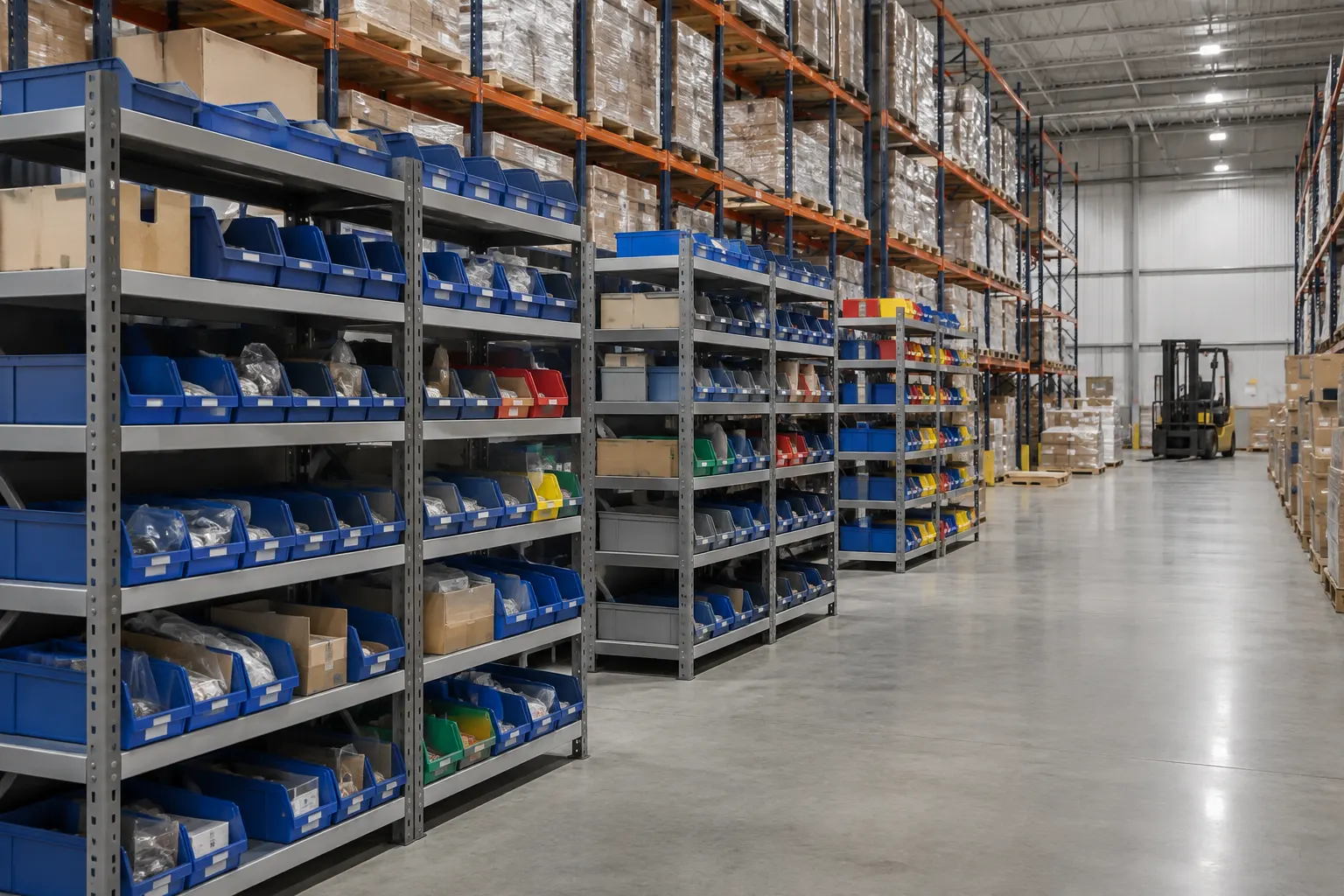
A one-van plumber and a statewide mechanical contractor need very different setups. Use this table as a starting point.
| Your operation | Good starting point | Main trade-off |
|---|---|---|
| Owner-operator with one or two vans | One or two shelving units with divided bins, plus van bins in the same order | Little reserve stock |
| Small service team (3 to 10 techs) | A boltless shelving run with hopper and divided bins next to a kitting bench | Needs firm labeling habits |
| Multi-crew contractor | Separate fast-pick, reserve and van restock zones, with a locked cabinet for controls | More floor space and planning |
| Contractor with a warehouse or supply counter | Bin shelving or pocket storage for small parts, pallet rack for boxed units, cantilever rack for pipe and tubing | Highest layout complexity |
Whatever the size, keep the van and the shop on the same system. The van needs secure, removable bins and fixed spots for emergency parts. The shop needs reserve stock, reorder points, and a layout that keeps techs out of incoming deliveries. For contractor-specific bin setups by trade, see bin shelving for plumbing, HVAC and electrical contractors and our full bin shelving product range.
What to Send for a Fast, Accurate Quote
A quote built only on shelf width misses the details that make a parts room work. Send us these and we can lay it out right the first time:
- Room measurements, ceiling height and photos, including doors, panels and sprinkler heads
- Your main part groups and a rough count of part numbers in each
- How many techs and vans restock from the room each day
- Which parts need to be locked up
- Any parts or equipment that will move to pallet or cantilever rack
- Your city, so we can flag permit and anchoring questions early
We will confirm product availability and delivery timing for your exact configuration when we quote it, since those change by product and size.
Frequently Asked Questions
Is bin shelving strong enough for brass fittings and valves?
Yes, if the shelf rating matches the load. Brass is heavy for its size, so check the per-shelf rating of the exact unit and keep the densest bins on the lower shelves. Very heavy parts may belong on a heavier shelving unit or rack.
Should every bin hold only one part number?
Yes, in almost every case. One part number per bin or per divided compartment makes empty spots obvious and keeps counts accurate. If you use dividers, label every compartment.
How many dividers can a shelf bin take?
It depends on the bin. For example, the 8-inch shelf bins on our industrial storage bin configuration guide accept up to seven dividers each. Check the bin model before you plan compartments.
How should vans and the shop share labels?
Use the same part number, description and location code in both places, and set up shop bins in the same order as the van. Van organization guides recommend numbered or color-coded bins and removable bins for frequently used parts. This HVAC van organization guidance is a good starting point for a fleet standard.
Do I need a permit for bin shelving in Utah?
It depends on the height and your city. Salt Lake City requires a permit for racking over 5 feet 9 inches tall. Ask your local building department whether your shelving run falls under that rule, and plan floor anchoring either way because of Utah’s seismic risk.
What if my parts room is very small?
Store only fast and medium movers in the room. Use the full wall height for slower parts, move boxed equipment and pipe to pallet or cantilever rack, and use a rolling cart for kitting instead of a fixed bench.
Should HVAC controls share bins with plumbing fittings?
Keep them in separate zones. Controls are light and easy to damage, and some are worth locking up. Fittings are heavy and come in many sizes, so they need sturdier bins with dividers.
Can I plan the layout myself before I call?
Yes. Use the free Parts & Kitting Storage Planner or the shelving and rack designer, then send the result to us. We will check it, suggest bins and dividers, and quote it.
Get a Free Parts Room Layout
Material Handling USA helps Utah HVAC and plumbing contractors plan small parts bin shelving that fits the way their crews work. Start with a free design tool, or send us your room details for a free layout and quote with no obligation.
- Parts & Kitting Storage Planner for bins, kitting and reserve zones
- Shelving and rack designer for boltless shelving bays
- Pallet rack designer for boxed furnaces, condensers and water heaters
- Cantilever rack designer for pipe, duct and line sets
Request a free quote or call (800) 326-4403 to talk through your shop, your vans or your central stockroom.
Related reading: Boltless shelving parts guide, Storeganizer alternatives comparison, and mining and MRO warehouse racking in Utah.