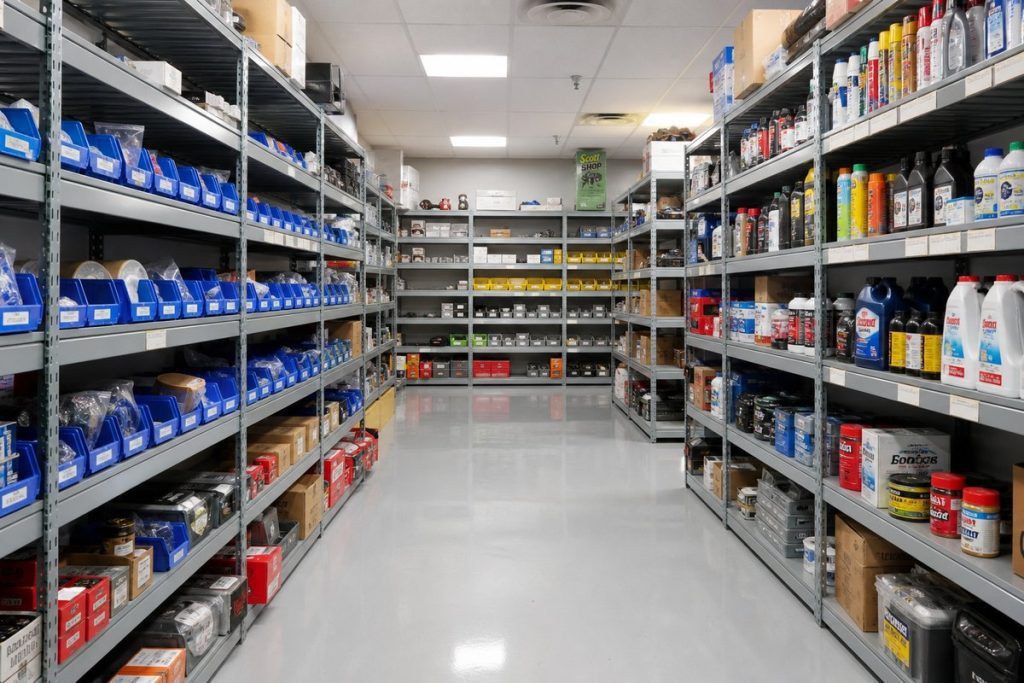
A mining warehouse in Utah can look calm right up until the wrong machine goes down. Then a maintenance lead needs a seal, bearing, gearbox, or sensor fast, and the part is nowhere near the aisle it should be in. That is where mining and MRO warehouse racking in Utah becomes a planning problem, not just a storage purchase.
The best projects balance three things at once: heavy industrial loads, fast access to critical spares, and Utah’s seismic and permit rules. A rack layout that works in a flat, low-risk stockroom can fail once the inventory includes rotables, pipe, long steel, pallets of consumables, and mixed-height bays that cross a permit threshold. The right layout keeps the right parts visible, reachable, and secured.
Quick answer
Match each part type to its own rack (selective pallet rack for palletized stock, cantilever rack for pipe and bar, structural rack for heavy rotables, shelving and bins for small parts), zone the room so critical spares sit near the issue window, and settle permits, seismic engineering, and anchorage before you order steel. In most Utah cities that means a building permit for rack over 5 feet 9 inches and stamped structural drawings for rack 8 feet and taller.
Mining and MRO Storage in Utah: What Makes It Different
A mining storeroom does not behave like a normal warehouse. Parts show up in odd sizes, the expensive items are often the least predictable, and the one component that stops production is usually the one nobody can find. Once that happens, the rack layout has already failed the operation.
Utah’s industrial base makes the problem bigger. The Utah Geological Survey says the state’s historical metal mining value exceeds $215 billion, ranks Utah as the third-largest metal-producing state in the U.S., and identifies copper as Utah’s most valuable mined commodity, with Utah second nationally in copper production (Utah Geological Survey metals overview). UGS also reports that mining (metals, industrial minerals, uranium, and coal) produced about $4.5 billion in 2024, roughly 47% of the state’s total extractive resource production of about $9.5 billion (UGS Utah Mining 2024). At that scale, the storeroom is part of an active industrial supply chain, not a back-room shelf system.
What that means on the floor
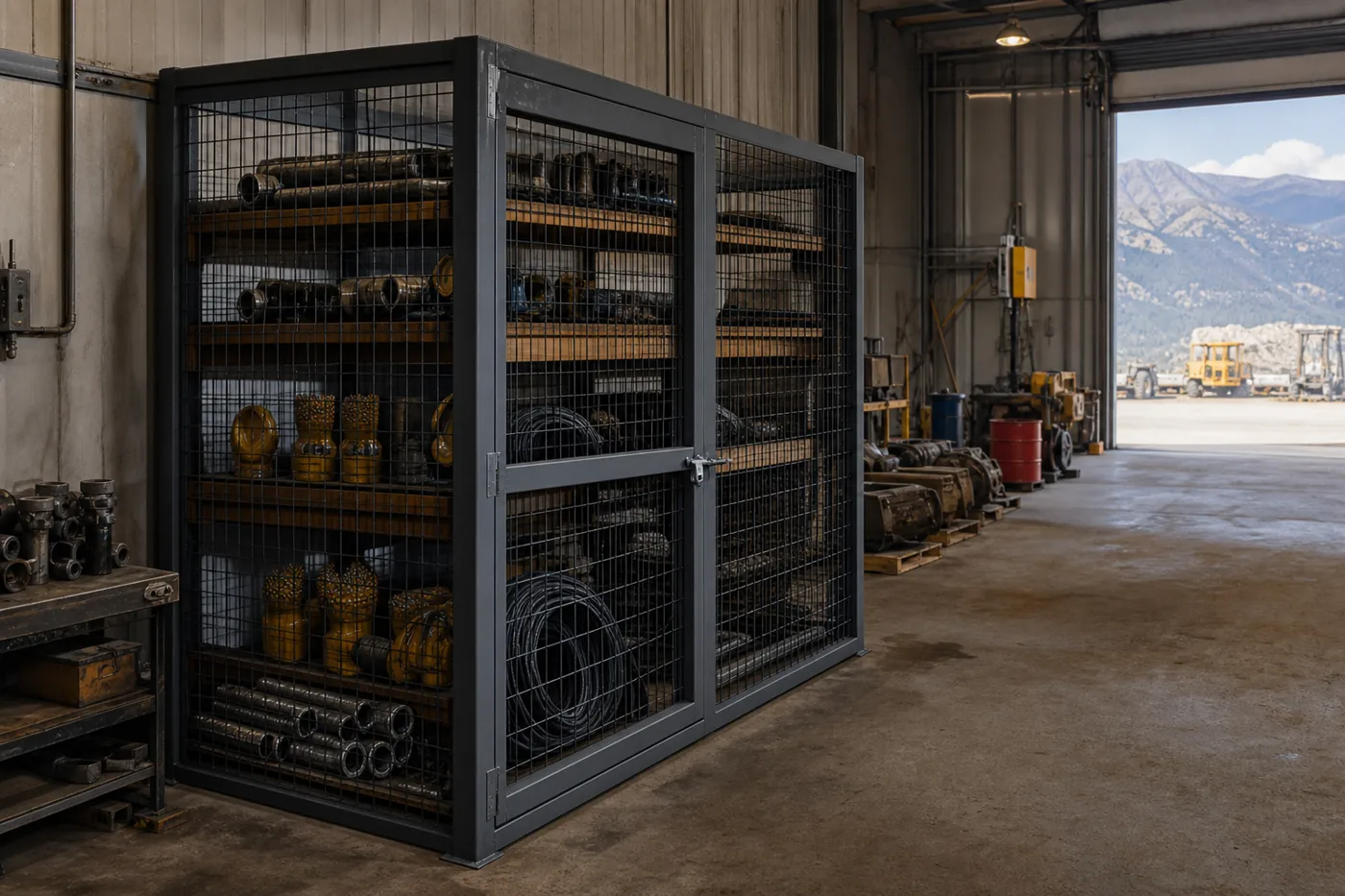
The inventory mix usually falls into three buckets. First are critical spares like pumps, motors, drives, gearboxes, and replacement assemblies. Second are general consumables such as fasteners, fittings, PPE, filters, seals, and lubricants. Third are awkward long items like pipe, rod, steel, or bar stock.
A single storage style rarely handles all three well. Selective pallet rack is strong for palletized stock. Cantilever rack fits long materials. Small-parts shelving or bin systems suit fast-moving consumables. Most Utah projects work better with a mixed layout than with one system forced to do everything.
Practical rule: if a part is costly to delay and hard to replace, it should never sit behind bulk stock or deep in a mixed bay.
That rule matters even more once seismic review and permitting enter the picture. Heavy industrial inventory needs clear access, but it also needs secure anchorage and a layout that can pass local review without rework. For teams working at mine sites, the mining and gas material handling solutions page shows how heavy-industry storerooms are configured end to end, and the mine site storage and equipment organization guide covers the yard and shop side of the same problem.
What Utah Mining and MRO Facilities Actually Store
The shape of the industry drives the shape of the storeroom. A 2024 Utah Legislative report said the state had six active coal mines in 2023, the fewest since mining began in Utah nearly 150 years ago, and coal production fell to 7 million short tons, about 35% below 2022 and far under the 24.5 million-ton average of the 2000s. The same report said mining employment had stabilized around 1,300 workers, with 1,361 employees in 2022, a 15% increase from the 2016 low of 1,185 (Utah Legislative mining report). On the nonfuel side, UGS reported that Utah ranked 8th in the U.S. for nonfuel mineral production in 2020, with an estimated value of $3.2 billion (UGS Utah Mining 2020).
Those numbers point to mature, capital-heavy operations. Mature operations carry more repair inventory, more planned maintenance stock, and more items that sit for months before use. That changes the rack conversation. You are not just storing product, you are protecting uptime.
The inventory profile usually breaks into four load types
- Palletized consumables: boxed parts, filters, packaging, and maintenance supplies that move often and need simple access.
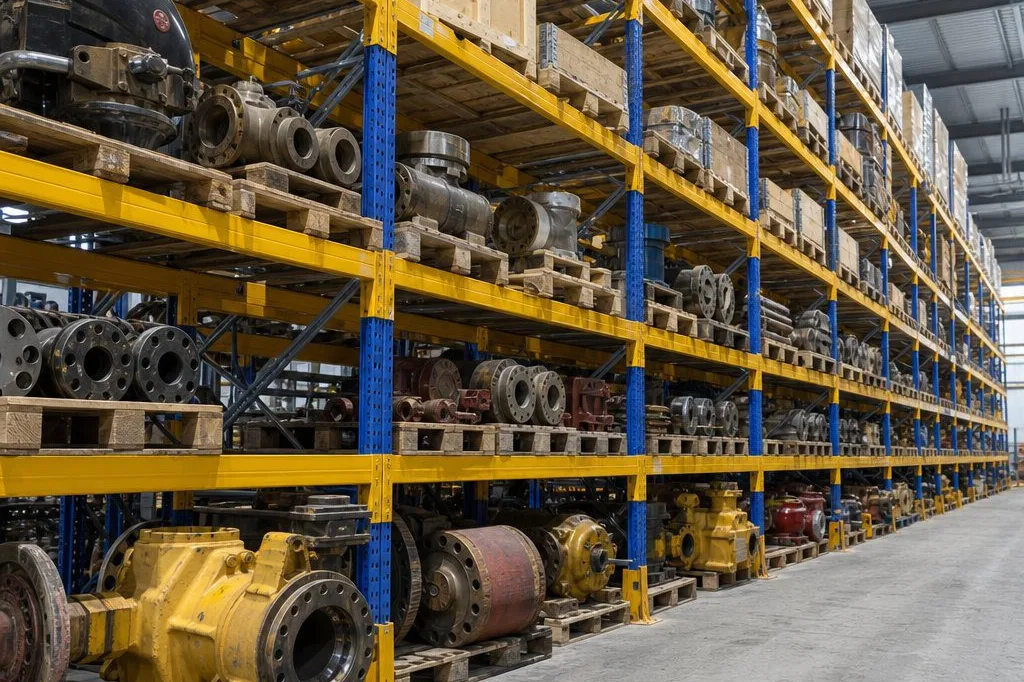
- Rotables and heavy components: motors, gearboxes, pumps, valves, and assemblies that need low, strong storage positions.
- Long stock: pipe, tube, drill rod, angle, and straight materials that belong on a rack shaped for the load.
- Slow-moving odd parts: one-off repair items, specialty components, and emergency spares that need labeled, easy-to-scan pick locations.
Utah facilities also have to think beyond storage density. If a critical part is being considered for a 3D printed replacement part, that does not remove the need for good storage. It usually makes traceability and slotting even more important because the physical item may be smaller, lighter, and easier to misplace.
For a practical mine or MRO parts room, a broad rule works better than a complicated one. Heavy rotables need floor-level or structural positions. Small fasteners need dense, labeled locations. Long material needs cantilever or other open support. When those categories blur together, operators spend time digging instead of servicing equipment.
Equipment Options and Configuration Trade-Offs
The right rack choice depends on how the part behaves. A pallet is not a pipe. A gearbox is not a bag of fasteners. The wrong match creates either wasted cube or unsafe handling.
| Rack type | Best application | Key advantage | Primary limitation | Plan it |
|---|---|---|---|---|
| Selective pallet rack | Palletized spares, boxed consumables, mixed maintenance stock | Direct access to each pallet | Lower density than deep-storage options | Pallet rack configurator |
| Cantilever rack | Pipe, bar, steel, drill rod, long parts | No front upright in the way of long loads | Not suited to small cartons or unit loads | Cantilever rack configurator |
| Structural steel rack | Heavy rotables, dense components, irregular industrial inventory | Bolted hot-rolled steel stands up to forklift abuse and heavy point loads | Costs more and can be overbuilt for light stock | Pallet rack systems |
| Industrial shelving and bins | Small parts, kits, consumables, repair items | Excellent visibility and picking control | Not right for pallet loads or bulky components | Shelving configurator |
| Security cage | Tooling, high-value spares, controlled items | Locks down shrink-prone inventory without slowing issue | Adds a step to every pick inside the cage | Security cage configurator |
How to choose without overbuying
Selective rack is the default when you need speed and flexibility. It is usually the cleanest fit for palletized MRO stock because the operator can reach each load without moving another pallet first. The trade-off is footprint. If your inventory is mostly small parts, selective rack wastes a lot of air.
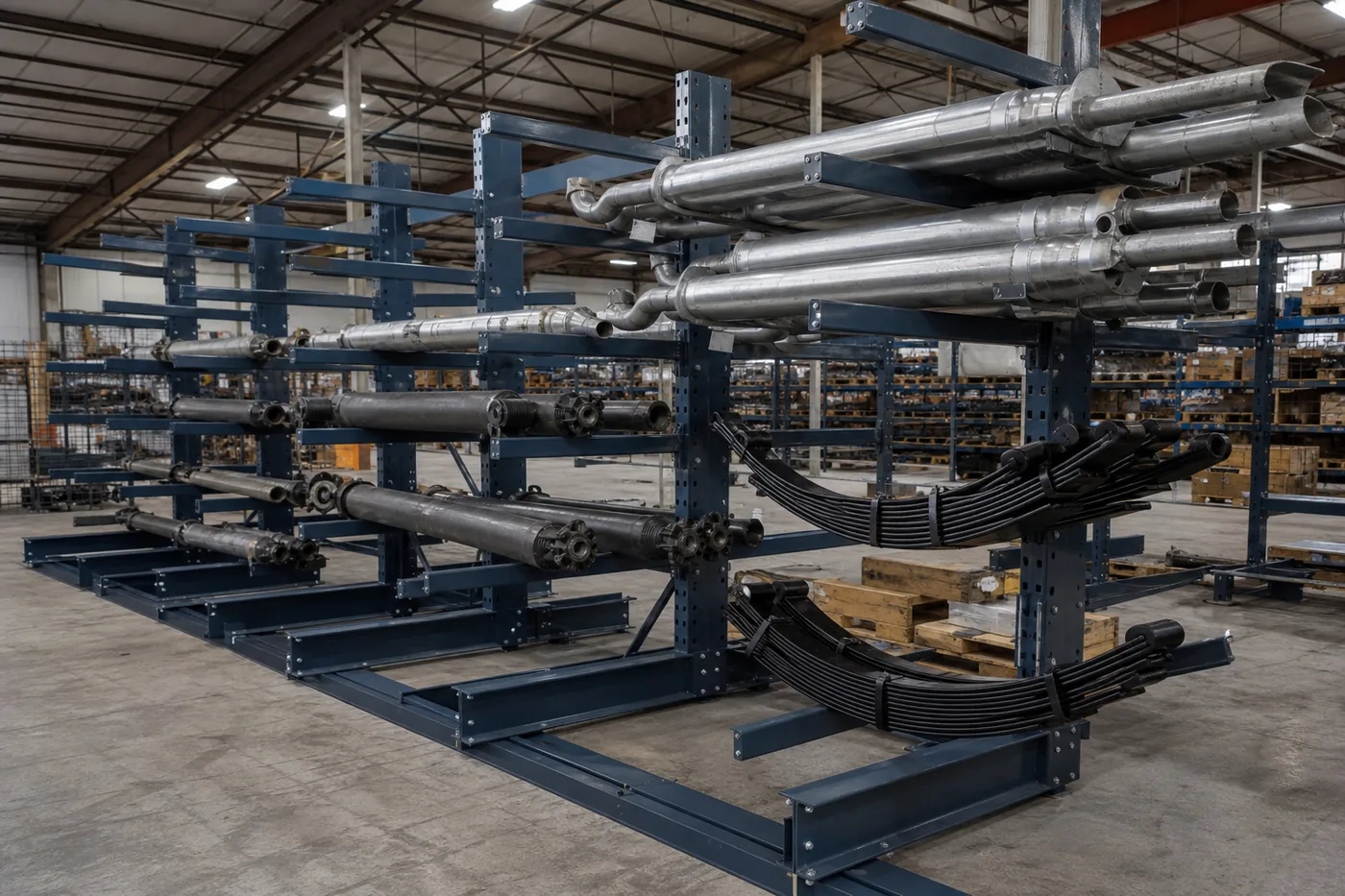
Cantilever rack solves a different problem. Long product needs open front access and support over the full load length. Placing pipe or steel on pallet beams creates handling risk and damage. Placing small cartons on cantilever arms creates sloppy picking and poor space use. The cantilever rack page covers arm length, column height, and single versus double sided layouts.
Structural rack matters when the load is heavy, awkward, or high consequence. That includes rotables and dense parts that do not belong on light-duty shelving. For small parts, though, structural steel is more rack than you need. A tool crib and MRO storeroom shelving layout handles those SKUs at a fraction of the footprint.
Buyer check: if operators need a ladder, a second person, or a lot of shuffling to reach the item, the storage method is probably wrong for that SKU.
For teams comparing layouts, slotting and layout design is the bigger issue before the steel is finalized. The rack type should follow the SKU profile, not the other way around.
Zoning Your Layout for Speed and Safety
The most effective layout is a zoned storage model. It separates critical spares, general consumables, heavy rotables, and long stock into different rack types so picks are faster and handling risk drops. It works because it keeps the high-value downtime parts near the door and keeps the awkward loads where the equipment can handle them.
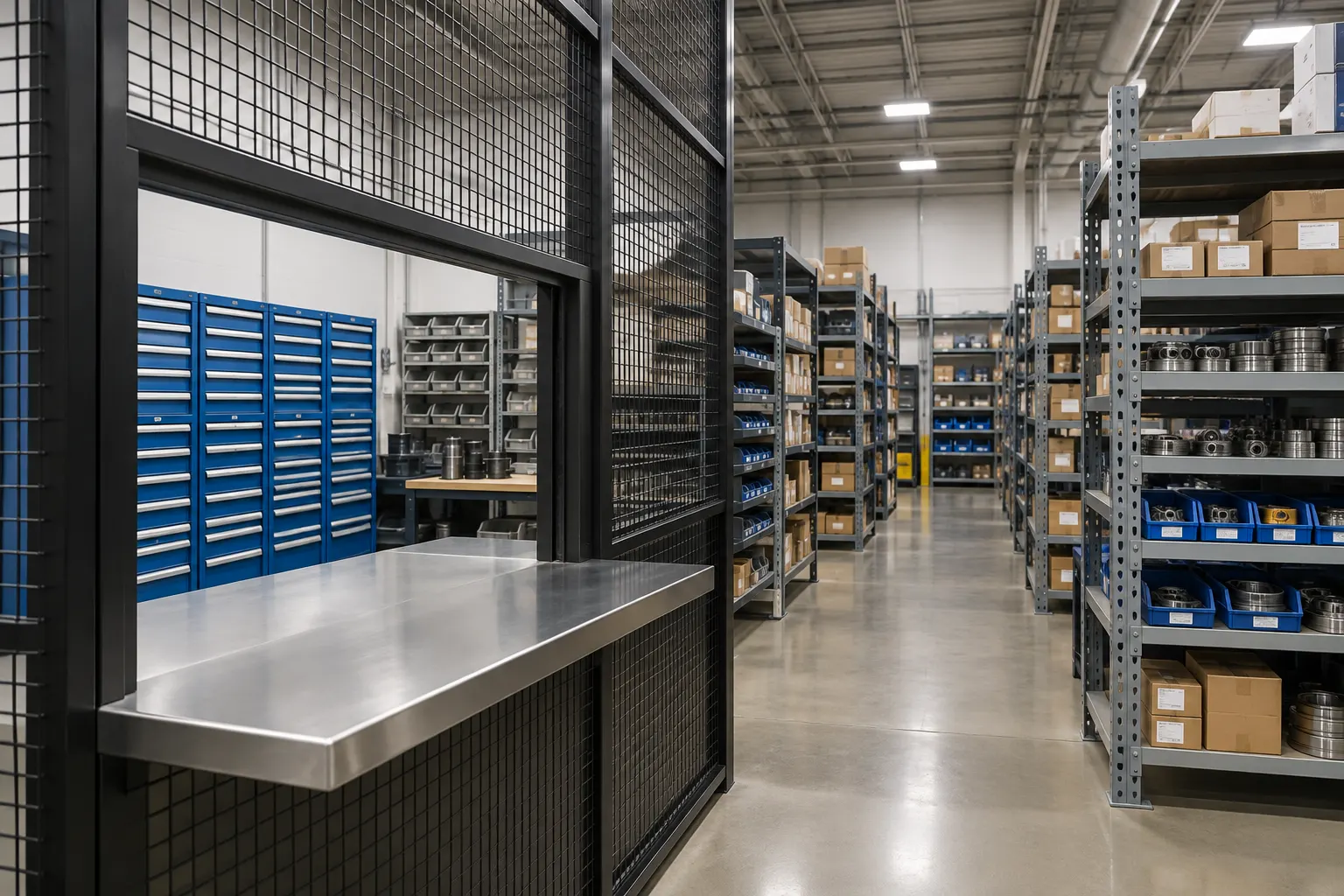
A simple zoning model
- Fast access zone: critical spares, top-priority repair kits, and parts that maintenance may need during a shutdown.
- General MRO zone: hardware, packaging, filters, PPE, fittings, and common replenishment stock.
- Heavy zone: motors, gearboxes, pumps, and other rotables that belong low and close to the handling path.
- Long-material zone: pipe, bar, rod, and similar stock placed in open rack geometry that fits the load.
The goal is not neatness for its own sake. It is fewer touches. A part that gets moved three times before use is exposed to damage, misplacement, and delay. A zoned layout cuts that down.
A lot of facilities make one mistake here. They put all “important” material in one area, then bury the urgent items behind the bulk reserve. That slows the first pick and creates congestion around the wrong aisle. Critical spares should be close to the working face, not behind it.
The same logic applies to aisle width and handling equipment. If the facility uses forklifts, order pickers, or side-loaders, the rack geometry has to match the turns and load transfer those machines make. Our forklift aisle width guide walks through the numbers. Otherwise, the system forces awkward moves that wear out equipment and people.
Lean warehouse layout design is useful here because the space problem is usually a workflow problem first. The rack should make the next move easier, not just fit more steel into the room.
Try the layout before you buy the steel
Build your bays in the free pallet rack configurator or cantilever rack configurator, then send the configuration to Material Handling USA for a Utah quote and permit review. Or call (800) 326-4403 and talk through the storeroom with a designer.
Navigating Utah Seismic Codes and Permit Rules
Utah rack projects need a seismic mindset from the start. Steel storage racks are treated as nonbuilding structures under seismic design rules, so anchorage, bracing, and load path matter, not just shelf capacity. In the Wasatch Front, the question is never only “how much can it hold,” but also “how will it behave when the ground moves.”
The local permit details that change the project
Salt Lake City’s racking permit guide says a building permit is required for racking over 5 feet 9 inches in height. Its standard submittal package is written for racking 8 feet or higher and calls for structural plans and calculations stamped by a Utah-licensed structural engineer, seismic design per ASCE 7 Section 15.5.3, and a special inspection agreement for storage racks. All of Salt Lake City falls in Seismic Design Category D or E, which is why special inspection applies (Salt Lake City racking permit guide).
The same guide asks for things buyers rarely think about at quote stage: a racking plan showing aisle widths and flue spaces, a full-height rack elevation with the distance from the top of storage to the sprinkler deflectors, a description of the commodities stored, and a summary of the existing fire sprinkler system.

That matters because rack height can change the whole job. A project that looks simple at quote stage may need drawings, inspections, and engineering sign-off once the height crosses the local threshold. Confirm those requirements before ordering steel, not after.
What to verify before a quote goes out
- Building jurisdiction: permit rules and thresholds vary by city and county. Springville, for example, publishes its own commercial racking permit checklist with an engineer’s stamp required at 8 feet.
- Rack height: the same design may trigger a permit in one area and not another.
- Anchorage detail: the slab, base plates, and anchor bolts have to match the load and site conditions.
- Inspection path: the project may need special inspection before use.
In Utah, the rack purchase and the compliance review should happen together, not in separate conversations.
There is no single statewide storage rack threshold. Each county and municipal building department sets its own submittal list, and most along the Wasatch Front ask for stamped drawings, anchor calculations, and load capacity documentation. Our pallet rack permits, engineering, and relocation page explains how Material Handling USA handles that paperwork as part of the project, and the cantilever rack installation in Utah page covers the same questions for long-material rack.
Daily Operations and Tiered Storage Safety
Once the rack is in place, daily behavior decides whether the system stays safe. OSHA’s warehousing guidance says shelving and racking should be inspected and maintained to prevent collapse, damaged sections should be isolated right away, upright guards help reduce forklift damage, and storage rack load capacities must not be exceeded (OSHA warehousing hazards and solutions). Federal OSHA also says all materials stored in tiers must be stacked, racked, blocked, interlocked, or otherwise secured to prevent sliding, falling, or collapse (29 CFR 1926.250).
What that looks like in a mine or MRO storeroom
Heavier items belong lower or in positions designed for them. That is not a style choice, it is a control against tip risk and dropped loads. Mixed inventory needs labels that tell operators where a load belongs and what the load limit is for that position.
Housekeeping matters too. Loose wrap, broken pallets, damaged dunnage, and stray parts create trip hazards and make inspection harder. If a bay is hit by a forklift, the damage needs to be reported and isolated right away, not left for “later” because the area is busy.
The smallest daily habits are usually the most valuable:
- keep aisles clear,
- mark damaged uprights,
- label load limits,
- and train staff to stop using a compromised section until it is checked.
For mixed MRO inventory, safety is not separate from throughput. A clean, labeled, and inspected rack line picks faster because people trust it. A messy line slows down every move because nobody wants to be the one who discovers the weak bay.
How to Plan a Utah Mining or MRO Rack Project in 6 Steps
- Profile the inventory. Sort every SKU into palletized, heavy rotable, long stock, or small part. Flag the critical spares that stop production.
- Measure the room and the slab. Record clear height, column spacing, door and dock locations, slab thickness if known, and any joints or trenches near planned anchor points.
- Zone the floor plan. Place the fast-access zone near the issue window, the heavy zone on the forklift path, long material along a wall or in a yard, and general MRO shelving in between.
- Configure the rack. Use the pallet rack configurator, cantilever rack configurator, and shelving configurator to set bay sizes, beam levels, arm lengths, and capacities.
- Check the permit path. Confirm the city or county threshold, whether stamped drawings and special inspection apply, and what the fire marshal needs to see about sprinklers and flue spaces.
- Schedule install and inspection together. Book the installer, the anchor inspection, and the final walkthrough as one sequence so the rack is loaded only after sign-off.
Planning Your Installation
A Utah rack install goes smoother when the site is ready before the steel arrives. The slab has to be understood, the anchor pattern has to fit, and the permit path should be settled early enough that the project does not sit in limbo. The biggest schedule risk is usually not the rack itself, but the handoff between design, permitting, and installation.
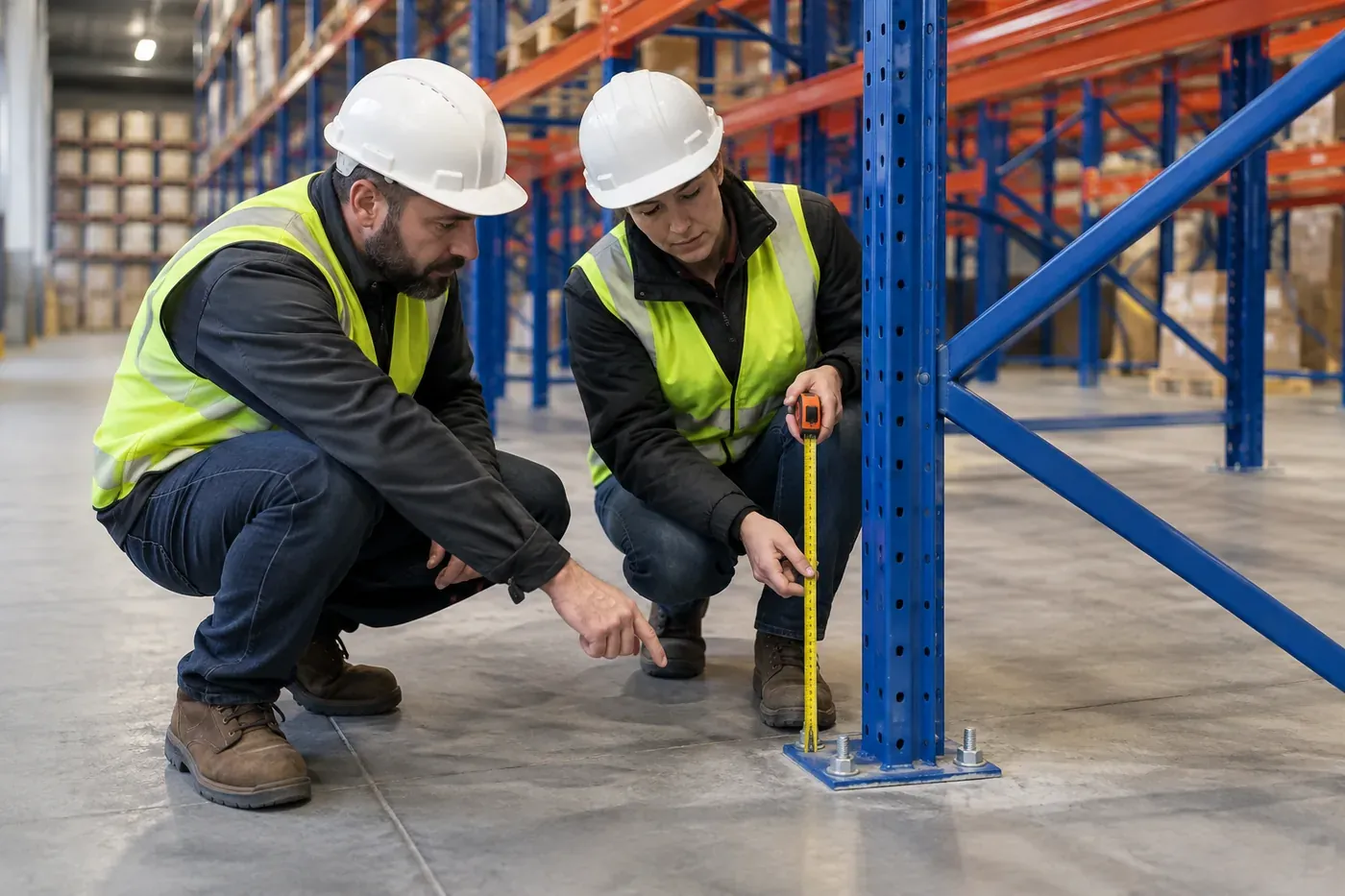
What to confirm before ordering
- Clear opening sizes: measure usable width, depth, and height, not just the nominal room size.
- Floor condition: identify slab quality, joints, and any obstructions at anchor points.
- Access path: confirm delivery routes, dock space, and lift equipment access.
- Inspection needs: know whether drawings, calculations, or special inspection will be required.
Common sizes may be stocked, subject to confirmation, but many projects still need configuration work before anything ships. That is why the quote should come after the layout review, not before it. Otherwise, the team ends up paying for changes that could have been caught on paper.
Material Handling USA can handle a Utah pallet rack layout, but the bigger value is getting the whole build sequence clear before purchase. That includes the storage method, the aisle logic, and the install scope. If you need a project review, the Utah pallet rack hub is the right starting point for local planning.
Frequently Asked Questions
Do I need a permit for warehouse racking in Utah?
In most Utah cities, yes, once the rack is taller than a few feet. Salt Lake City requires a building permit for racking over 5 feet 9 inches and stamped structural drawings for racking 8 feet or higher. Other cities and counties set their own thresholds, so confirm with the local building department before ordering.
What seismic design category applies to racking along the Wasatch Front?
All of Salt Lake City is in Seismic Design Category D or E, and most of the Wasatch Front is similar. In those categories, storage rack is designed as a nonbuilding structure under ASCE 7 Chapter 15, and special inspection of the anchorage is normally required.
Which rack type is best for heavy mining rotables like pumps and gearboxes?
Structural steel pallet rack or heavy-duty selective rack with the rotable on the lowest beam levels. Keep the load on a pallet or skid sized for the part, and confirm the beam capacity against the heaviest single item, not the average.
How should I store drill rod, pipe, and bar stock in an MRO warehouse?
On cantilever rack. It supports the load over its full length with no front upright in the way, so a forklift or side-loader can pick a single bundle without shuffling. Pallet beams are not designed for long, concentrated loads.
Where should critical spares go in the layout?
Closest to the issue window or the maintenance shop door, often inside a locked security cage. The parts that stop production should never sit behind bulk reserve stock or high in a mixed bay.
Can I use the same rack for small parts and pallets?
You can, but it usually wastes space and slows picking. Small parts belong on shelving or bins where every item is visible at arm’s reach. Reserve pallet rack for loads that move by forklift.
What documents does a Utah building department usually want for a rack permit?
A site plan, a racking floor plan with aisle widths and flue spaces, a full-height rack elevation, a description of stored commodities, information on the existing sprinkler system, stamped structural calculations, and a special inspection agreement. Material Handling USA prepares this package as part of the project.
Does Material Handling USA install racking at remote Utah mine sites?
Yes. Material Handling USA is based in Utah and designs, permits, delivers, and installs pallet rack, cantilever rack, shelving, and security cages for mining and MRO facilities across the state. Call (800) 326-4403 to discuss site access and scheduling.
Next Steps for Your Facility Upgrade
The best mining and MRO warehouse racking in Utah project does three things well. It matches the inventory to the right rack type, it zones the layout for speed and safety, and it respects Utah’s seismic and permit rules before the order is placed. That is what keeps maintenance teams from fighting the storeroom every time a line goes down.
If your current layout buries critical spares, mixes long material with small parts, or leaves you unsure about permit and anchorage needs, the next move is a layout review. Material Handling USA offers a free design discussion, a quote, and a practical storage plan that fits your space and workflow. Call (800) 326-4403, email Sales@MH-USA.com, or start at the Utah pallet rack hub to request a review and quote.
Design it yourself, then get a quote
Use our free online design tools to configure exactly what this article describes, then send the configuration to our team for pricing:
- Pallet rack configurator for palletized spares and consumables
- Cantilever rack configurator for pipe, rod, and bar stock
- Shelving configurator for small parts and tool crib storage
- Security cage configurator for high-value spares and tooling