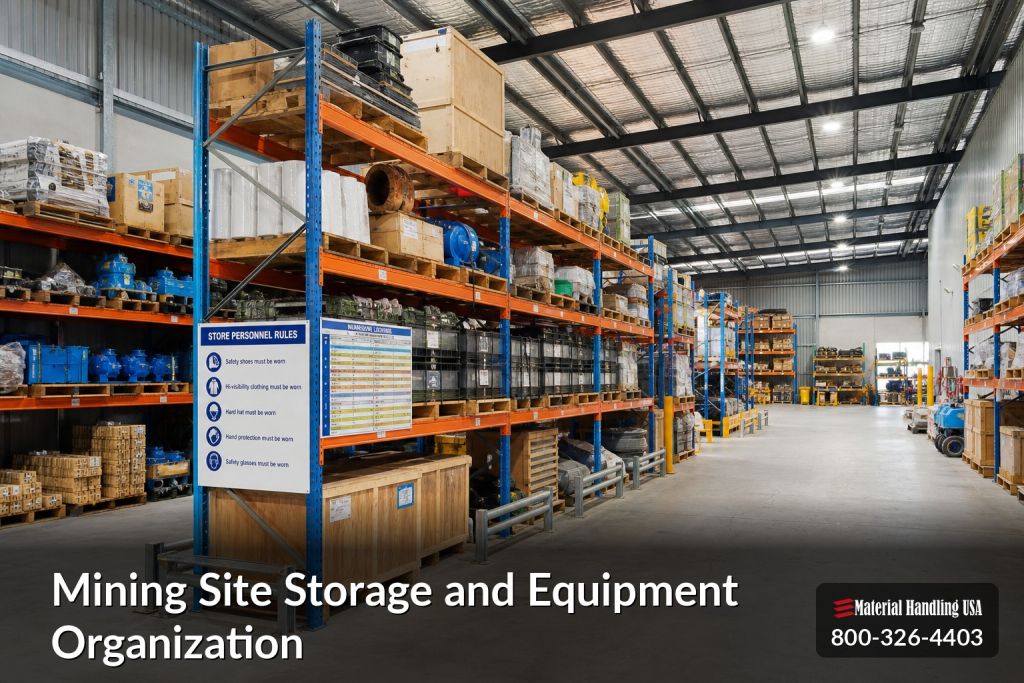
A mining site rarely falls behind because of one major failure. More often, the trouble starts with small misses. A welder can't find the right consumables. A mechanic walks across the site for a part that was logged but never returned to its home location. A high value tool sits exposed to dust and moisture because the nearest secure storage area is already overloaded. By the end of the week, those small misses turn into delayed maintenance, idle crews, and avoidable wear on expensive assets. For how the warehouse itself is zoned and racked around critical spares, see our mine site warehouse and MRO racking case study.
That's why mining site storage and equipment organization deserves the same attention as production planning. Buyers and facility managers aren't looking for prettier storage. They're looking for a system that holds up in dirt, vibration, weather, and constant movement. They also need a layout that supports retrieval, tracking, and security without slowing the job down.
Many teams run into another problem before they even start researching solutions. Search results for “mining storage” often point to IT infrastructure rather than physical storage. This guide stays focused on the physical side of the job. It covers planning, layout, rugged storage options, tracking systems, modular structures, safety, costs, timelines, and when it makes sense to bring in outside design help.
The High Cost of Disorganization on a Mining Site
A poorly organized mining site doesn't just look rough. It creates drag in every direction. Tools disappear into gang boxes with no assigned locations. Spare parts get stacked by convenience instead of category. Long materials end up leaning against walls because no one planned for proper cantilever storage. Crews spend time searching, double handling, and improvising.
That kind of setup usually creates three problems at once. First, retrieval gets slower. Second, damage goes up. Third, maintenance planning gets harder because nobody fully trusts the inventory record.
Where the real losses show up
The biggest costs usually don't appear as a line item called “disorganization.” They show up as delayed repairs, repeat purchases, rushed shipments, and equipment sitting idle while someone locates one missing component. In mining, those delays hit hard because the work is equipment-heavy and site conditions are unforgiving.
Practical rule: If people have to rely on memory to find parts, the storage system is already failing.
There's also a morale issue. When tradespeople spend too much time hunting for what should be easy to find, they stop trusting the system. Once that happens, even a decent storage plan can fall apart because crews start building their own unofficial stash points.
What works and what doesn't
What works is simple. Assign fixed storage zones, separate bulky items from small parts, secure high value tools, and map the flow from delivery to use to return. What doesn't work is treating storage as leftover space. On a mine site, “wherever it fits” becomes a long-term operating problem.
The sites that run better usually make one decision early. They stop seeing storage as housekeeping and start treating it as operating infrastructure.
Start with a Strategic Site Assessment and Workflow Map
The first purchase shouldn't be racking, shelving, or containers. It should be clarity.
Mining operations vary too much for copy-paste layouts. The global industry operates about 8,500 mining sites worldwide, with roughly 3,250 actively operational, and active sites need real-time asset control while legacy sites create different infrastructure challenges, according to the Global Tailings Review industry overview. That difference matters because a live production site needs fast access and tight control, while a legacy or transitional site may need staged storage, containment, and selective salvage.
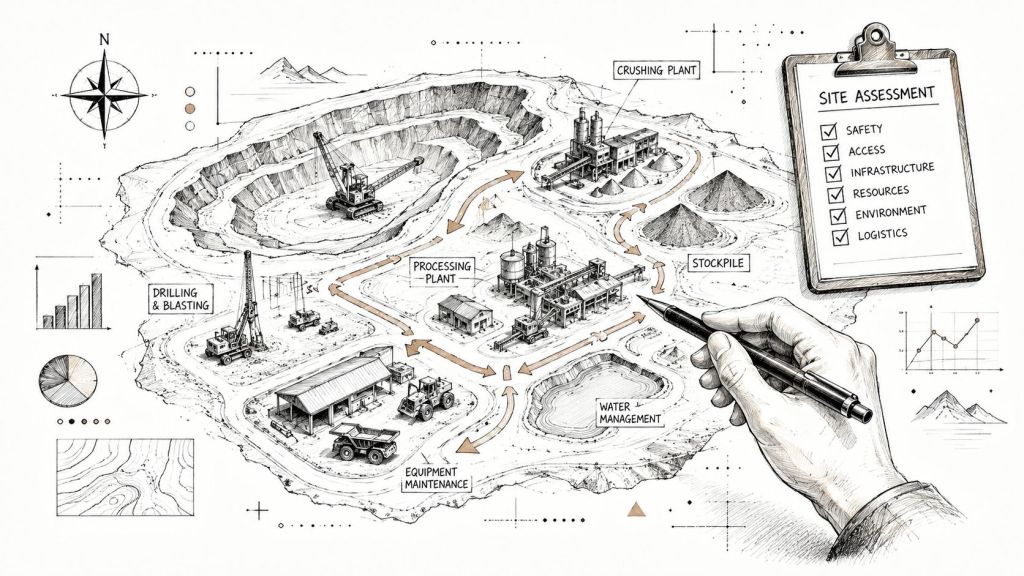
Run a workflow audit before you buy anything
A useful site assessment follows the path of the asset, not the map on the wall. Start with receiving. Then trace where each item goes next, who uses it, how often it moves, where it gets serviced, and where it should return after use.
Use these questions during the audit:
- What arrives in bulk and needs palletized storage, containment, or covered holding space?
- What gets used daily or weekly and should sit closest to the work face, maintenance bay, or issue point?
- What requires secure access because of value, calibration status, or safety risk?
- What materials are awkward in length, shape, or weight and need dedicated rack design?
- What items degrade in site conditions and need dust control, filters, compartmentalized storage, or corrosion protection?
Map the choke points
Most mine sites already have clues. You'll usually find them near maintenance areas, temporary laydown zones, and mixed-use storage rooms. Watch for pallets parked in aisles, hand tools mixed with critical test equipment, and parts stored by whoever had room that day.
A practical workflow map should identify:
- High traffic zones where retrieval speed matters most
- Security gaps where expensive tools or components can walk away
- Damage points where parts get crushed, scratched, or contaminated
- Return failures where assets leave a work area and don't come back to a known home
The best storage layouts reduce decisions in the field. Crews should know where an item lives without asking around.
Planning considerations buyers often miss
Managers often focus on capacity first. Capacity matters, but it isn't enough. You also need to plan around access width, handling equipment, dust exposure, weather, maintenance intervals, and whether the site footprint is stable or likely to shift.
That's where a design consultation can save rework. If you're reviewing options for rugged layouts, secure storage, or outdoor-rated systems, Contact Us for a free layout discussion and quote. Better planning usually means fewer field changes and a cleaner install schedule.
Designing Your Rugged Storage Infrastructure
A mining site usually starts losing efficiency at the handoff between receiving, storage, and the work face. Parts arrive in decent order, then end up split across containers, racks, benches, and laydown areas because the storage plan was built around available space instead of site conditions. Good infrastructure fixes that. It gives every material class a storage method that matches its weight, shape, exposure risk, and handling pattern.
Most sites do not need one storage product. They need a system. That usually means combining pallet rack for bulk stock, cantilever rack for long materials, shelving and bins for MRO parts, lockable cages for controlled items, and enclosed space for anything that dust, moisture, or rough handling can damage.
Match the storage type to the material
The fastest way to create storage problems is to mix unlike items because they happened to arrive on the same truck. Store by use case first, then by dimensions and turnover rate. Daily-use items should sit close to the access point and at an easy pick height. Slow-moving stock can go higher, deeper, or in secondary zones, consistent with equipment storage planning guidance from Network Right.
Storage discipline also produces measurable gains. According to proper storage guidance for mining hardware, individual compartments can reduce damage-related repair costs by 22% and improve part retrieval speed by 15%. The same source found that dividing space by type, size, and usage frequency can improve spatial efficiency by up to 30%.
Mining site storage solutions compared
| Storage Type | Best For | Key Benefit | MH-USA Solution |
|---|---|---|---|
| Heavy-duty pallet rack | Bulk parts, palletized inventory, drums, boxed supplies | Better vertical use and cleaner staging lanes | Selective pallet racking and related industrial storage systems |
| Cantilever rack | Pipe, bar stock, hose reels, timber, awkward long items | Supports long materials safely without bending or leaning | Cantilever rack layouts for oversized materials |
| High-density shelving | Small parts, maintenance spares, MRO stock | Keeps high-volume SKUs organized in a tighter footprint | Industrial shelving and bin systems |
| Wire security cage | High value tools, controlled issue inventory, service kits | Restricts access while keeping contents visible | Secure wire partitions and tool crib enclosures |
For site layouts that need storage tied directly to material flow, loading, and handling equipment, MH-USA also provides mining and gas material handling solutions.
Design details that matter in harsh conditions
Harsh conditions expose weak design decisions quickly.
Dust control matters for electronics, sensors, and calibrated equipment. Moisture protection matters for bearings, motors, and packaged parts. Load discipline matters for every rack system, especially where forklifts, telehandlers, or front-end loaders are operating in tight clearances.
Published guidance on mining hardware storage reported a 40% reduction in thermal failure rates when air filtration is maintained at 95% efficiency. The same source associated poor lubrication before storage with a 32% higher incidence of component corrosion and an 18% increase in reinstallation time. It also noted that asymmetric loading can increase rack stress by 25%. Those are design issues, not housekeeping issues.
What holds up well on active sites:
- Compartmentalized storage for small parts such as seals, bearings, connectors, and rebuild kits
- Galvanized or coated steel components in wet or corrosive areas
- Purpose-built long-load storage for pipe, bar, and timber
- Covered or enclosed zones for electronics, calibrated tools, and contamination-sensitive components
What breaks down fast:
- Mixed storage based on open space
- Open shelving for delicate parts near haul roads, washdown areas, or grinding work
- Long materials stored against walls or fences
- Rack levels loaded unevenly or beyond posted capacity
One trade-off comes up often. Enclosed storage protects parts better, but it can slow retrieval if the layout is cramped or poorly labeled. Open access speeds picking, but only where dust, weather, and theft risk are under control. The right answer is usually a layered setup: open storage for durable, fast-moving items, and secured or enclosed storage for high-value and condition-sensitive stock.
Remote sites also need to think beyond the rack itself. Material still has to move safely from storage to the point of use. For teams reviewing mobile transport and field logistics, it can help to look at related solutions for demanding jobsites during the planning stage.
Mining Equipment Warehousing: Build Zones Around the Work
Mining equipment warehousing is more than putting parts under a roof. It is the controlled space between receiving and the maintenance team. The layout should make it clear what is ready to issue, what is being inspected, what needs protection, and what must stay secure. Start by separating inbound material, active maintenance stock, slow-moving spares, repair holds, and return items. This keeps a new delivery from getting mixed with a part that is already assigned to a job.
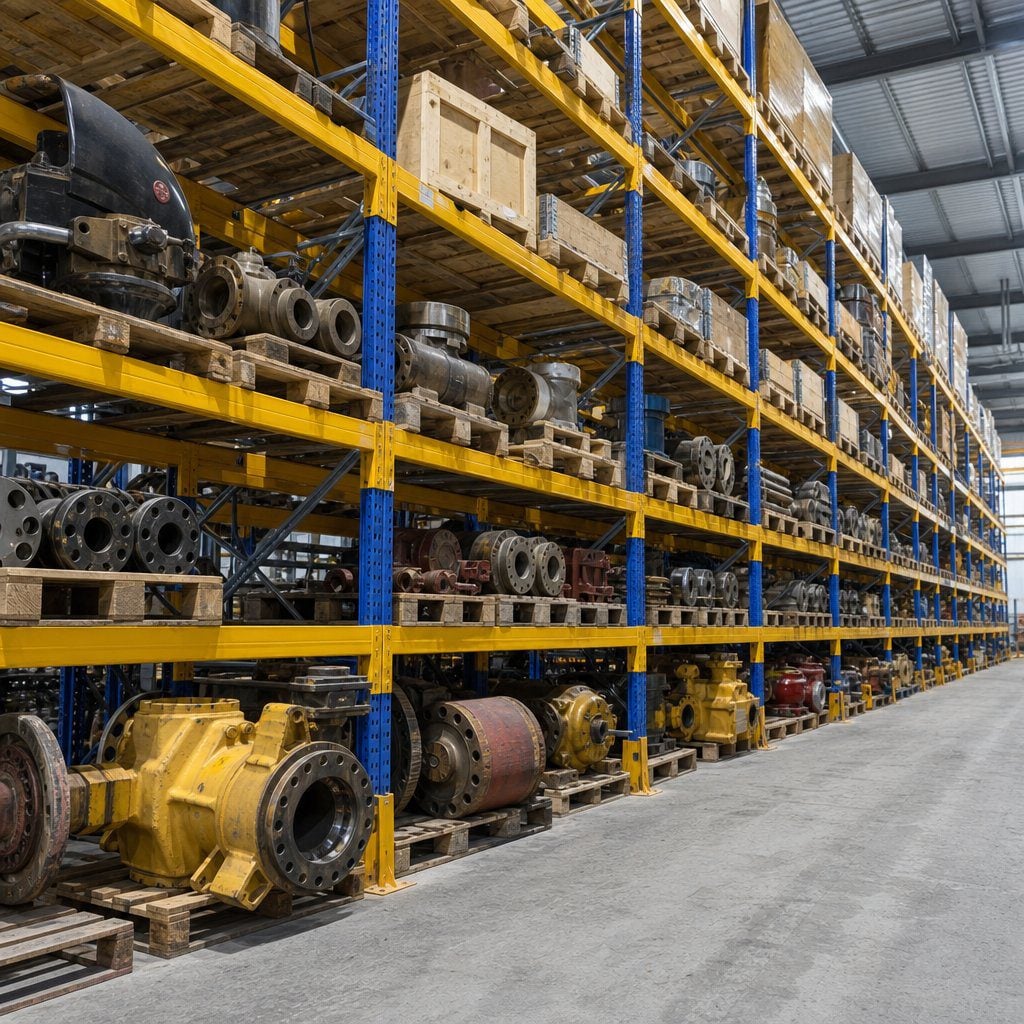
Storage facilities for mining equipment should separate by condition and access
Storage facilities for mining equipment work best when they separate parts by condition as well as size. A sealed bearing or electrical component may need a clean, enclosed location. A durable, palletized component may fit in a marked rack bay. A returned item should not go back into available inventory until the team has checked its condition. Give each area a plain-language status, such as received, ready to issue, inspection, repair, or return. The labels should match the words used in the inventory record.
Plan access before choosing equipment. Confirm how forklifts, telehandlers, carts, and people will approach each zone. Keep travel paths, door swings, and emergency routes clear. For long or irregular materials, use a storage method designed for that shape rather than leaning material against a wall. For heavy loads, work from the equipment manufacturer’s approved load information and the site’s handling process.
Storage and warehousing buildings for mining need a flexible shell
Storage and warehousing buildings for mining should support the work that happens inside them. A parts room may need controlled access and protection from dust. A tool crib may need an issue counter and clear sightlines. A bulk-storage area may need room for receiving, staging, and equipment turning. When the work area, site footprint, or crew mix may change, an enclosed modular space can help create a defined parts room or tool room without treating temporary laydown space as permanent storage.
Use this simple decision check before finalizing the layout:
| Item or zone | Choose based on | Planning question |
|---|---|---|
| Bulk mining components | Handling method, footprint, turnover | Can the team receive, stage, and retrieve it without blocking travel? |
| Small maintenance parts | Part protection, identification, pick frequency | Does every bin, shelf, and return point have a known location? |
| High-value tools and controlled inventory | Access control, visibility, accountability | Who can issue the item, and where is its return location? |
| Dust- or moisture-sensitive items | Environmental exposure, packaging, inspection needs | Does the storage area protect the item until it is needed? |
| Long, awkward, or heavy materials | Shape, approved load information, handling equipment | Is the chosen storage method designed for safe support and retrieval? |
Secure Mine Site Storage for High-Value Equipment
Mine site storage needs a clear answer for items that should not sit in open access areas. That can include high-value tools, critical spares, inspection equipment, and restricted issue inventory. A secure storage zone should be close enough to support the work, but separated from general traffic. Use an access process your crew can follow during every shift, with a defined issue point, return point, and location record.
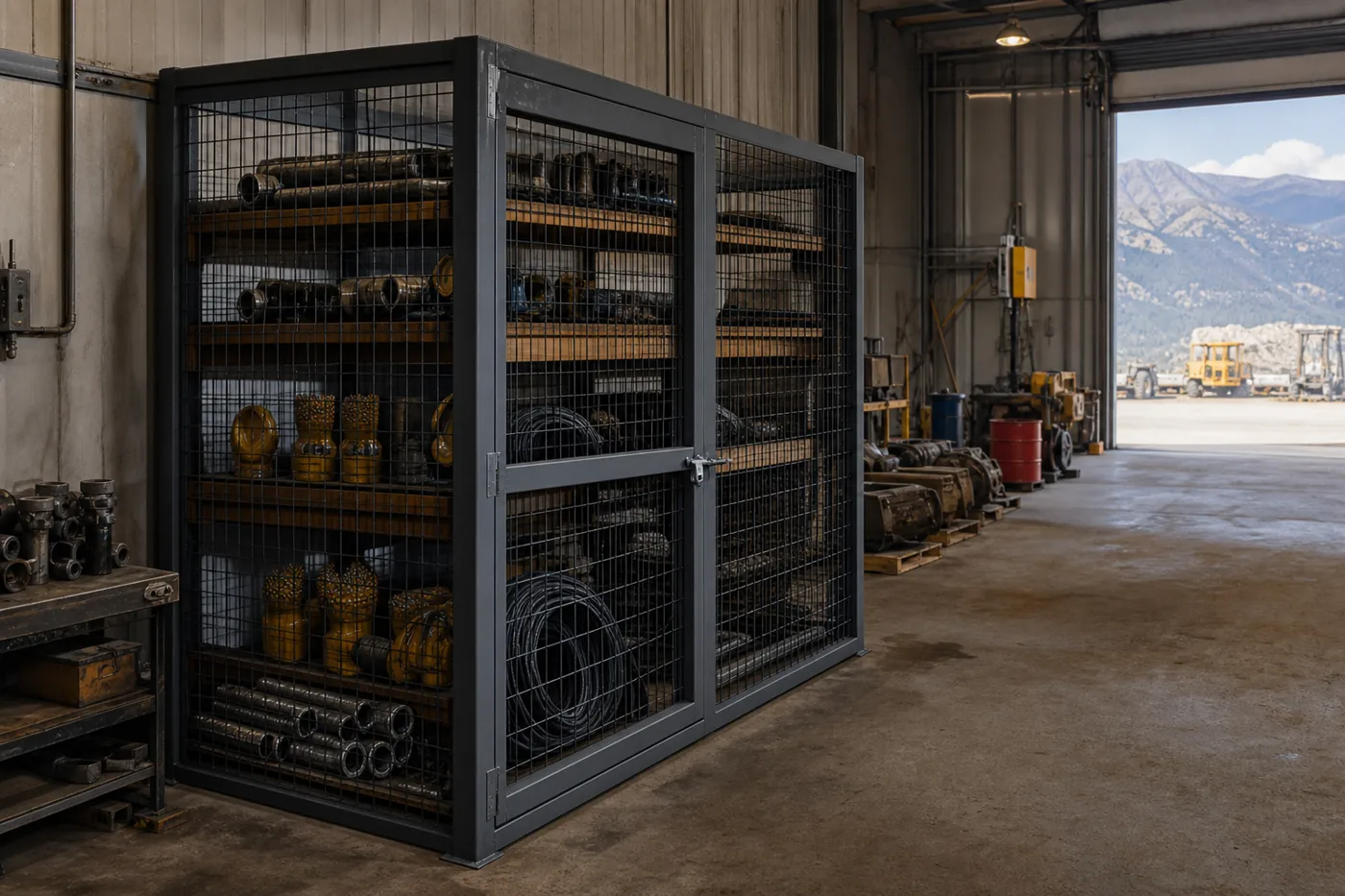
Security should not make daily work harder than necessary. Place the issue point near the people who use it, post simple return rules, and avoid mixing repair-hold items with ready-to-issue stock. If the site needs an enclosed parts room, tool crib, or supervisor space, a construction and mining modular building can help define that function while supporting a changing site layout.
Implementing Robust Inventory and Asset Tracking Systems
Good storage without tracking still breaks down. The rack may be solid, but if the item record is weak, people still lose time.
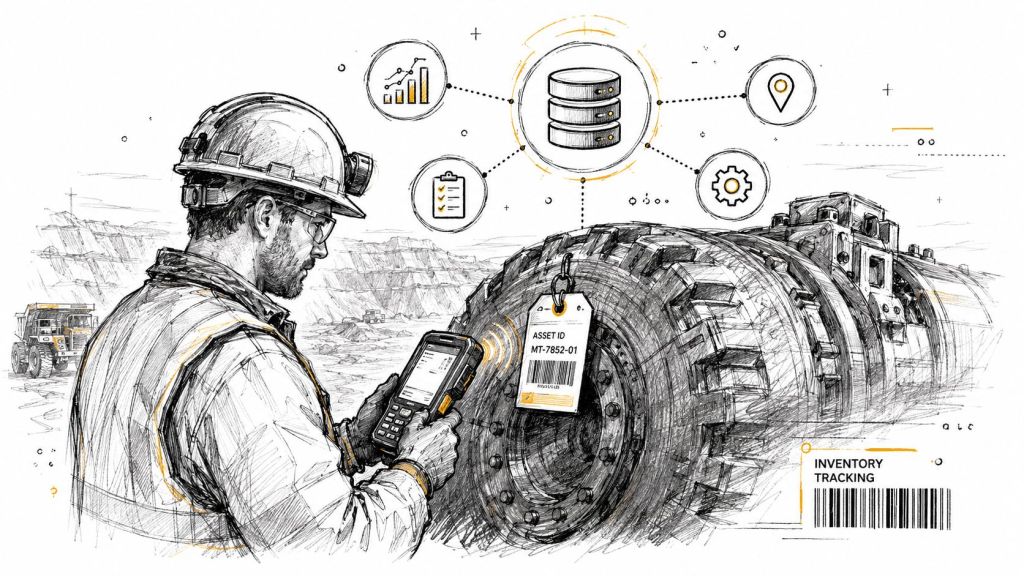
Modern tracking programs start with one rule. Every item gets a unique identifier before tracking begins. According to MapTrack's mining tool and material tracking practices, QR code labels can be applied in under five seconds, and standardized audits such as monthly for high-value items can reduce reconciliation time from days to hours.
Give every item a home and a name
A practical rollout looks like this:
- Label each asset with a unique identifier.
- Assign a home location such as a tool room, cabinet, shelf bay, cage, or container.
- Define ownership by crew, department, or cost center.
- Set issue and return rules for anything portable or high value.
- Audit on a schedule instead of waiting for shortages.
That “home location” rule matters more than many teams expect. When a tool has a known home from day one, loss drops and retrieval gets easier because workers don't need to guess.
Use tools that fit the environment
Mine sites need rugged labels and simple scanning. Weatherproof QR labels work well because they're fast to deploy and easy to read in the field. More advanced systems may layer in software for maintenance status, overdue alerts, and assignment records.
One option buyers often review is Enasys asset tracking software, which fits sites that need location control and accountability across tools, parts, and equipment.
If a check-out process is too slow, crews will work around it. The system has to be strict enough for control and simple enough for daily use.
For teams comparing shelter and building types for equipment support areas, it can also be useful to look at examples like Van Dyke Outdoors farm buildings to think through covered storage, access, and weather exposure in rugged environments.
Leveraging Modular Buildings for Security and Flexibility
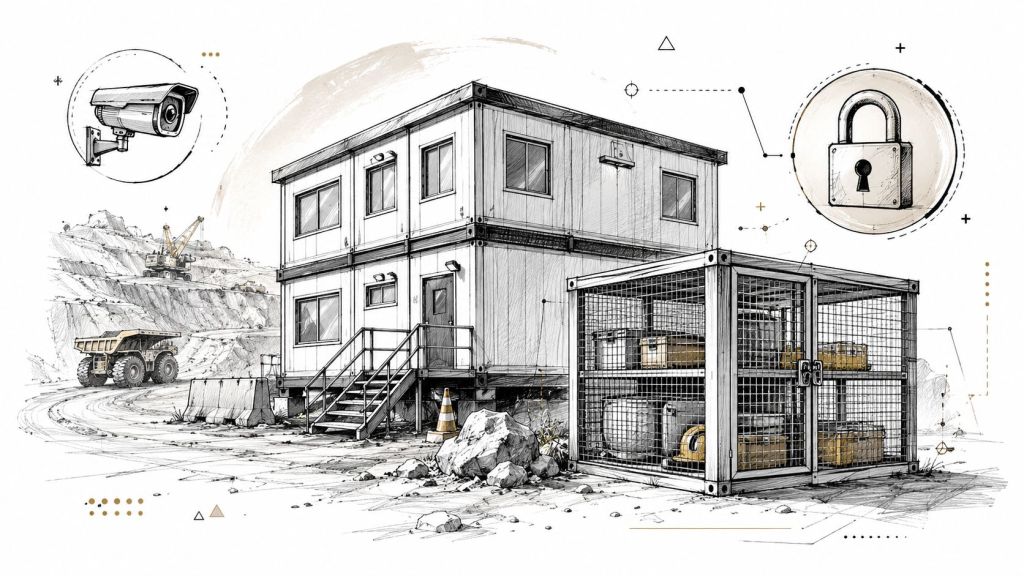
Permanent construction isn't always the smartest answer on a mining site. Operations shift. Ore bodies move. Temporary support areas become long-term, then disappear. That's why modular buildings and secure partitions are often the most practical choice for mining site storage and equipment organization.
A modular setup can create clean storage rooms, supervisor offices, issue counters, parts rooms, and maintenance support space without tying the site to one fixed layout.
Why modular makes sense in remote mining
An emerging trend in remote mining is modular storage. A cited source states that 42% of new projects in some regions are adopting it to reduce decommissioning costs, and 73% of plant managers say the lack of implementation guidance is a top planning barrier, based on this Hatch-linked reference.
The logic is straightforward. Modular systems can be placed faster than conventional builds, adjusted as the site changes, and removed or relocated with less waste when the project shifts.
Where buyers usually get the most value
The strongest use cases tend to be:
- Secure tool cribs with controlled access
- Parts rooms separated from dusty general storage
- Shift offices and planning rooms near maintenance or operations zones
- Bonded or restricted storage inside wire partitions or enclosed rooms
Access control matters here too. If multiple crews, vendors, and supervisors need different levels of entry, a structured lock hierarchy helps. For readers evaluating restricted entry systems, these commercial master key solutions show the kind of approach that can support controlled access planning.
For mining buyers evaluating enclosed support spaces, construction and mining modular buildings are one route to create secure, reconfigurable site infrastructure without committing to a fully permanent build.
Your Implementation Checklist for Safety and Compliance
Storage systems only stay effective when the team treats them as part of the safety program. Good organization supports safer movement, cleaner aisles, better access control, and clearer accountability. Bad organization creates hidden hazards.
One practical starting point for compliance review is the OSHA safety and health topics library, especially when you're aligning internal procedures with broader workplace safety expectations.
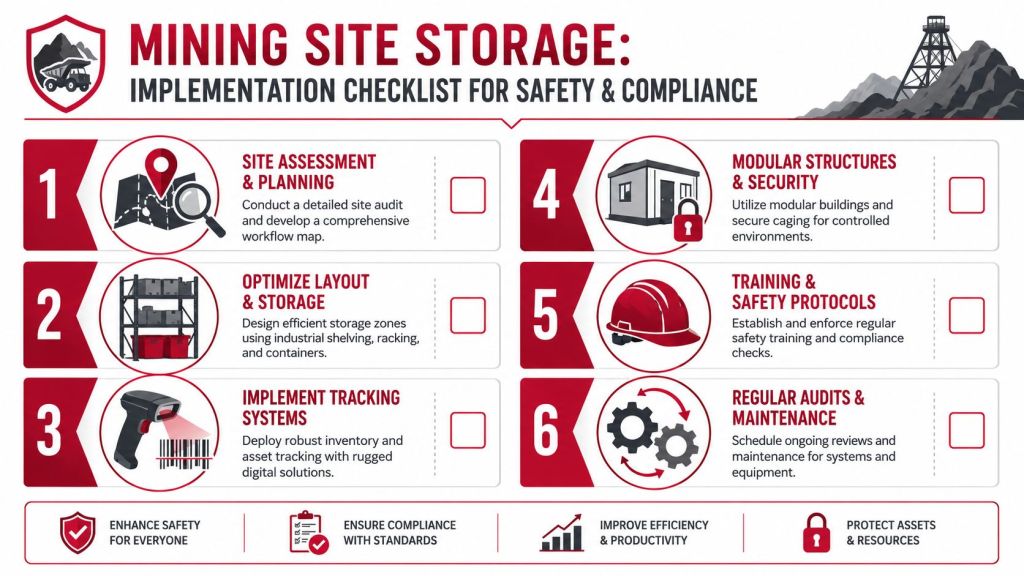
Use this field checklist
- Assess the site first. Audit traffic flow, issue points, maintenance zones, and environmental exposure before finalizing equipment placement.
- Separate storage by risk and use. Keep hazardous, delicate, heavy, and high-turn items in clearly defined zones.
- Mark locations clearly. Label aisles, bays, shelves, cages, and return points so the system works even during shift changes.
- Train the crews. Show people how to issue, return, scan, and inspect equipment. If training is skipped, the system won't hold.
- Inspect storage structures. Check shelving, rack uprights, anchors, doors, cages, and labels for wear, damage, or misuse.
- Document the rules. Keep written procedures for storage limits, return expectations, access control, and housekeeping.
Common mistakes to avoid
Some mistakes show up again and again:
- Treating laydown space as permanent storage
- Ignoring dust control for electronic or sensitive gear
- Skipping return-location discipline
- Using one room for every item class
- Buying storage before mapping the workflow
A safe storage system should make the right action the easy action.
Cost and timeline expectations
Costs depend on scope, site access, product type, and whether the project includes modular structures, cages, tracking software, or installation support. Timelines vary for the same reasons. Small retrofits may move quickly. Larger multi-zone projects usually need site review, layout work, product lead times, delivery coordination, and phased installation.
That's one reason early planning helps. It gives procurement teams more options, reduces field changes, and improves the odds of installing on the planned schedule.
Frequently Asked Questions About Mine Site Storage
A lot of teams start this process with partial information. A 2024 survey found that 68% of site managers had trouble locating physical storage protocols because search terms were getting mixed up with data storage topics, according to this article on mining storage confusion. That confusion is real, and it's one reason buyers often delay needed improvements.
What is mine site storage?
Mine site storage is the physical system for receiving, protecting, locating, issuing, and returning tools, parts, and materials used at a mining operation. It can include bulk storage, parts rooms, tool cribs, secure cages, shelving, rack systems, and enclosed support space.
How should mining equipment storage be organized?
Organize mining equipment storage around workflow and condition. Separate received items, ready-to-issue stock, repair holds, returns, and controlled inventory. Then assign each item a clear location and use storage that fits its size, exposure risk, and handling method.
What belongs in a mining equipment warehouse?
A mining equipment warehouse can hold maintenance components, tools, MRO supplies, replacement parts, and selected field inventory. The right mix depends on the site, but each zone should have a clear purpose, access path, and return process.
How do storage facilities for mining machinery protect sensitive parts?
Use the level of protection the part needs. Separate dust- or moisture-sensitive items from open, high-traffic storage, keep packaging and identification intact until issue, and set inspection rules for returned or damaged items.
When does a mining site need secure equipment storage?
Use secure equipment storage when access must be controlled or an item needs accountability. Common examples include high-value tools, critical spares, calibrated equipment, and controlled issue inventory. A secure area still needs an easy issue and return process.
Can a storage or warehousing building be changed as a mine site changes?
Yes. The layout should be reviewed when work areas, inventory mix, crews, or delivery patterns change. Modular and partitioned spaces can help define a parts room or tool crib when the site needs an adaptable enclosed area.
What is the first step in planning mining facilities assembly and installation?
Start with a site and workflow review. Confirm receiving routes, staging space, access paths, the items being stored, and the equipment used to handle them. Then coordinate the layout and installation sequence around site access and daily operations.
Conclusion: Transform Your Site from a Liability to an Asset
Mining site storage and equipment organization works when it follows the job. Start with the workflow. Match storage types to the materials. Build in tracking from the beginning. Use modular and secure spaces where flexibility and control matter. Then keep the system alive with training, inspections, and clear return rules.
That approach improves more than neatness. It supports retrieval speed, equipment care, site safety, and day-to-day accountability. It also gives buyers a clearer path for choosing racking, shelving, cages, and modular structures that will hold up under real conditions.
Sites that plan earlier usually get better layouts, smoother installs, and fewer last-minute workarounds. As demand and lead times shift, that extra planning window can make procurement easier and reduce schedule pressure later.
If you're ready to improve your site layout, storage capacity, or equipment control, Contact Us for a free consultation, free quote, and no-obligation layout support. You can also call 800-326-4403 or email Sales@MH-USA.com to discuss product options, fast shipping and delivery, competitive pricing, and the right solution for your facility.