
Tool Crib & MRO Storeroom Shelving in Utah
Shelving, drawer cabinets and bins planned as one tool crib for Utah plants, maintenance shops, fleet garages and facilities teams, so the right spare part or tool is issued fast and every item has one labeled home.
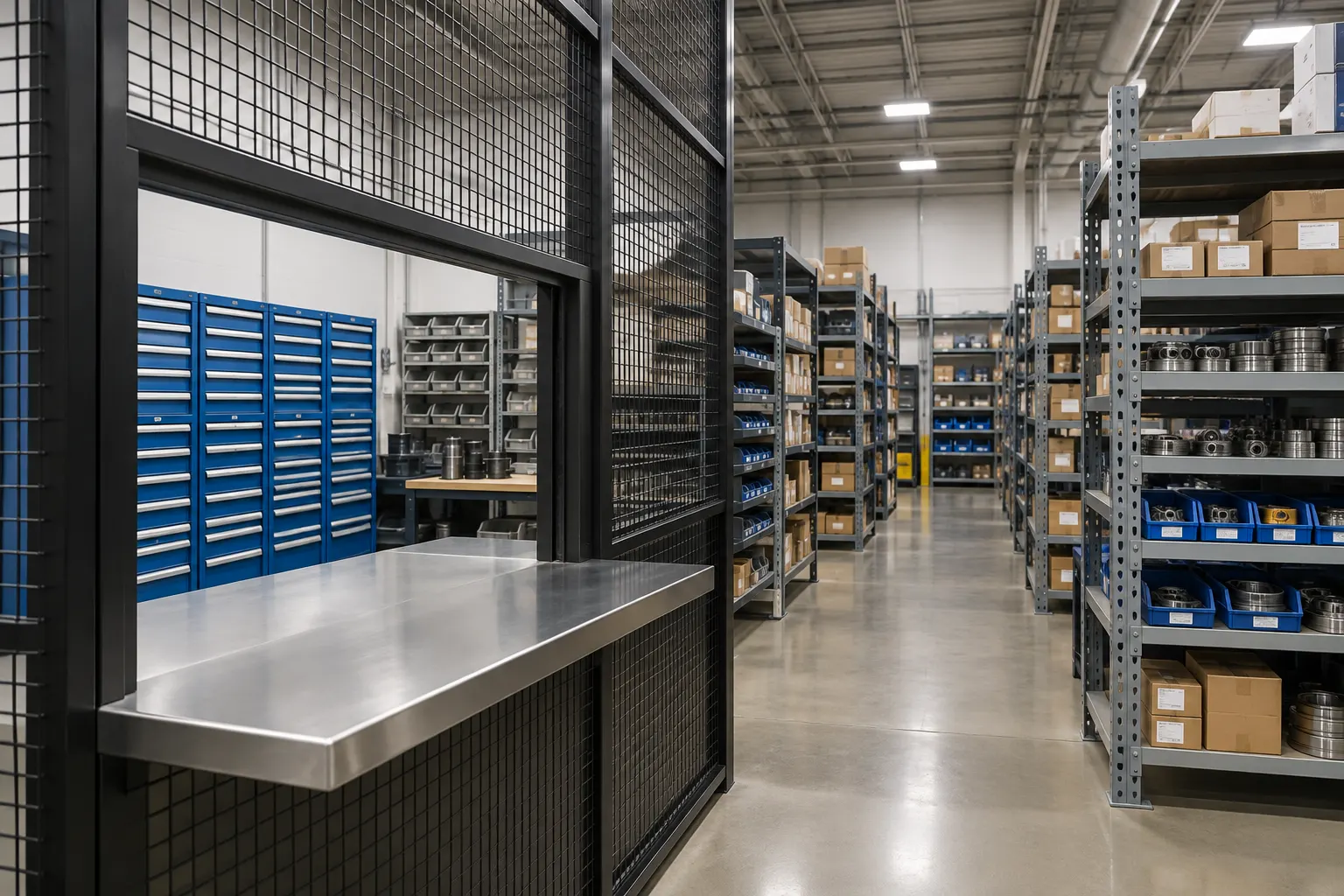
One crib plan
Shelving, drawers and bins
Issue-first
Layout starts at the window
801-328-8788
Utah project line
Statewide Utah
Logan to St. George
What Tool Crib Shelving Has to Handle
A tool crib, also called an MRO storeroom or maintenance stockroom, holds the items a plant cannot afford to hunt for: spare bearings and belts, motors and gearboxes, filters, fasteners, cutting tools, calibrated gauges and the hand and power tools that get checked out and returned. When a line is down, the minutes spent finding a part are part of the downtime.
That mix is why a crib rarely works with one kind of storage. Heavy boxed spares want deep, strong shelf levels. Small, high-count items want drawers or bins. Tools that leave the room need a location that shows at a glance what is out. Tool crib shelving is the backbone that ties those pieces together along the walls and in the aisles.
This page covers how Utah facilities plan that storage. For every shelving type we supply across the state, start at our Utah shelving solutions hub; for the national overview, see commercial and industrial shelving solutions.

Typical tool crib inventory and where it usually lives
| Item type | Examples | Usual storage |
|---|---|---|
| Heavy boxed spares | Motors, gearboxes, pumps, large bearings | Heavy-duty steel or bulk shelving, lower levels |
| Medium boxed parts | Belts, seals, filters, couplings | Steel or boltless shelving, mid levels, labeled locations |
| Small high-count items | Fasteners, fittings, inserts, fuses | Shelf bins, bin cabinets or modular drawers |
| Precision tools and gauges | Micrometers, torque wrenches, test meters | Modular drawer cabinets with dividers or foam |
| Checked-out tools | Drills, grinders, pullers, meters | Assigned shelf or drawer spots with an empty-spot check |
| Long or awkward items | Shafting, conduit, hose reels | Bulk rack, wide shelving or dedicated rack sections |
Shelving, Drawers and Bins: Choosing Storage for Each Item
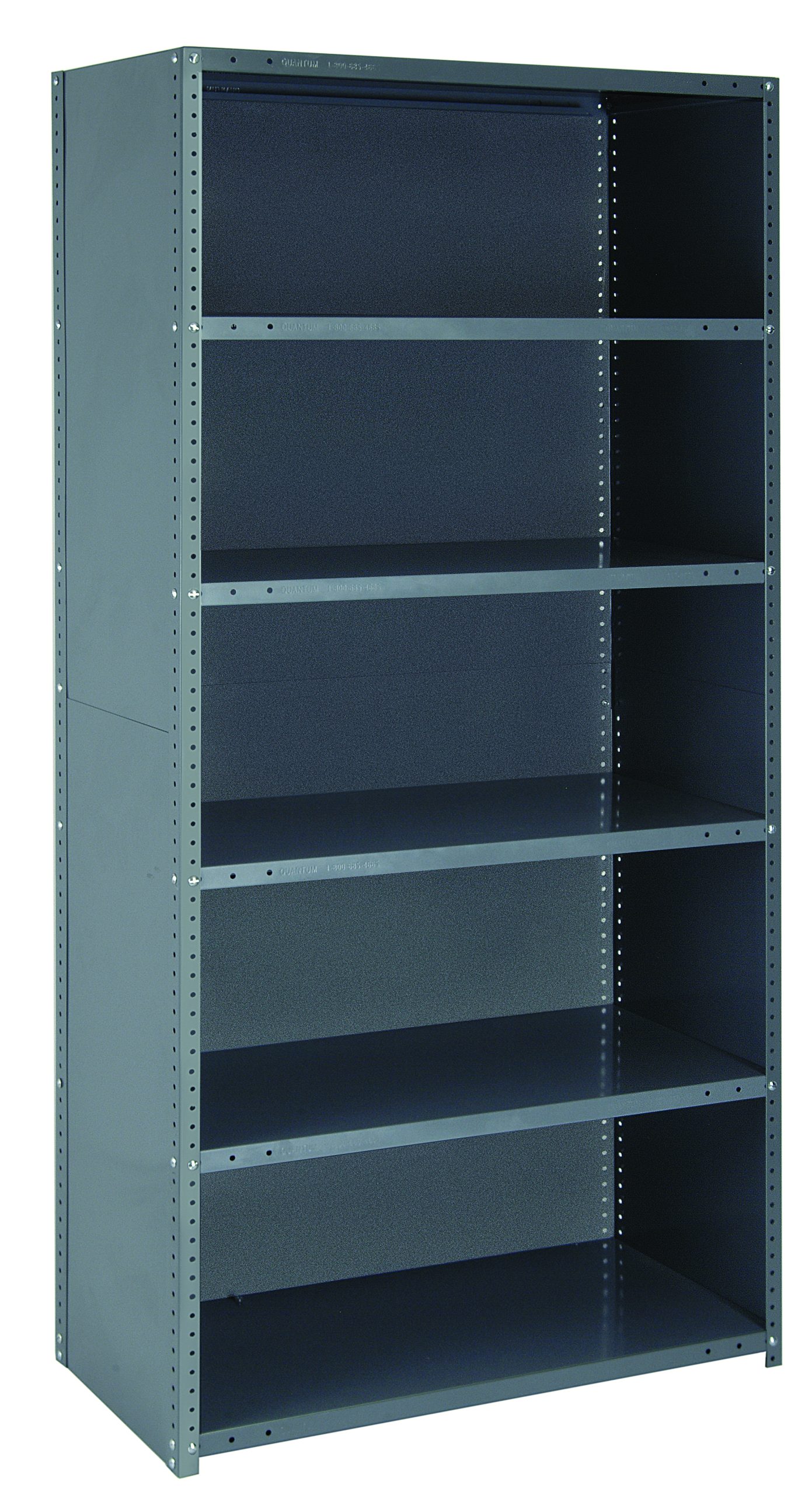
Steel shelving is the most common crib structure. Clip or bolted steel units take closed backs and sides, dividers, label holders and even drawer inserts, so one run can hold boxed parts and small items together. Our industrial steel shelving page covers open versus closed units and add-on runs.
Drawer units inside shelving put small parts at the face of the run without a separate cabinet. They suit cribs that are short on wall space but have a lot of fittings and hardware to control.
Boltless and bulk shelving carries heavier, larger boxed spares on wide levels. Boltless shelving is quick to re-space as the spare parts list changes. For a side by side look at each build, see our industrial shelving comparison.
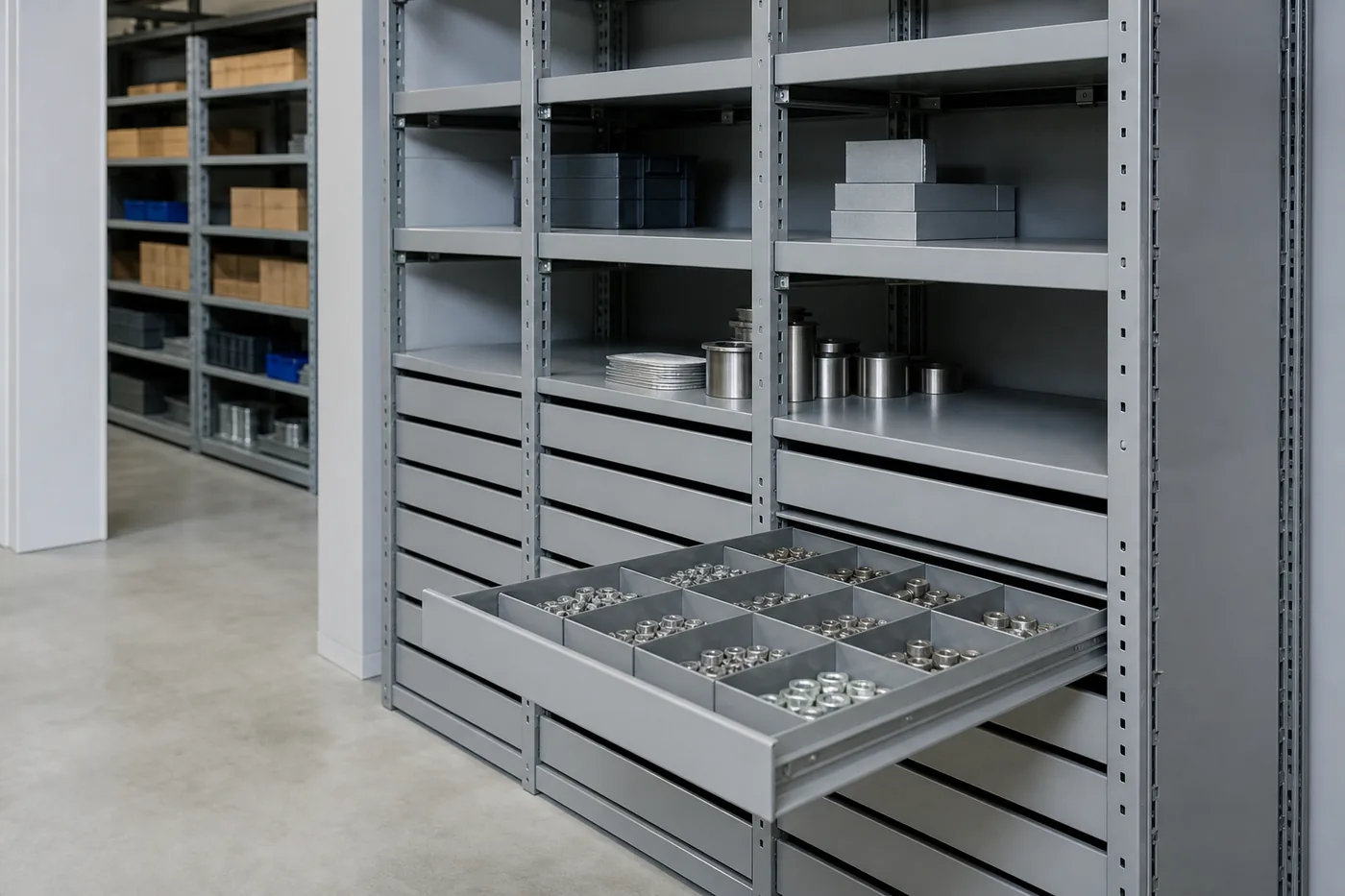
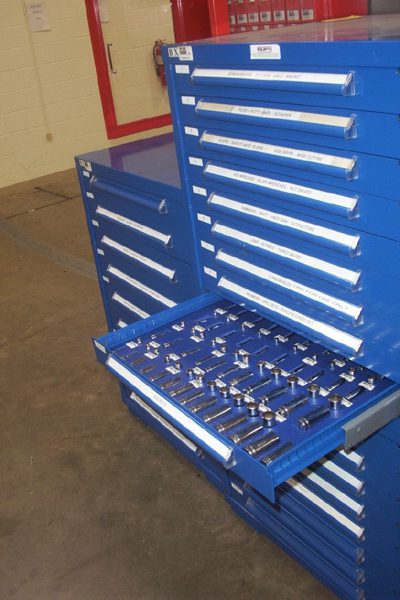
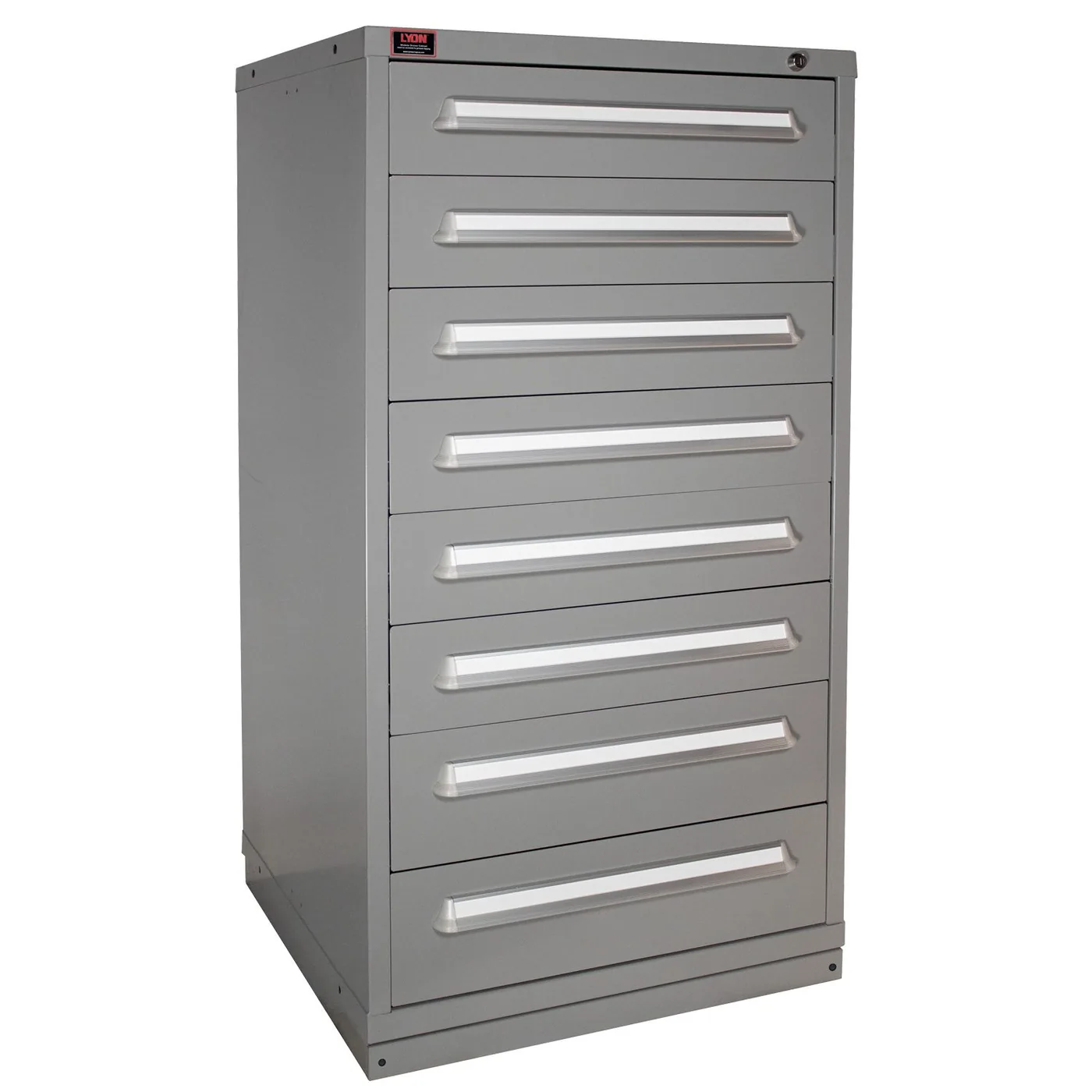
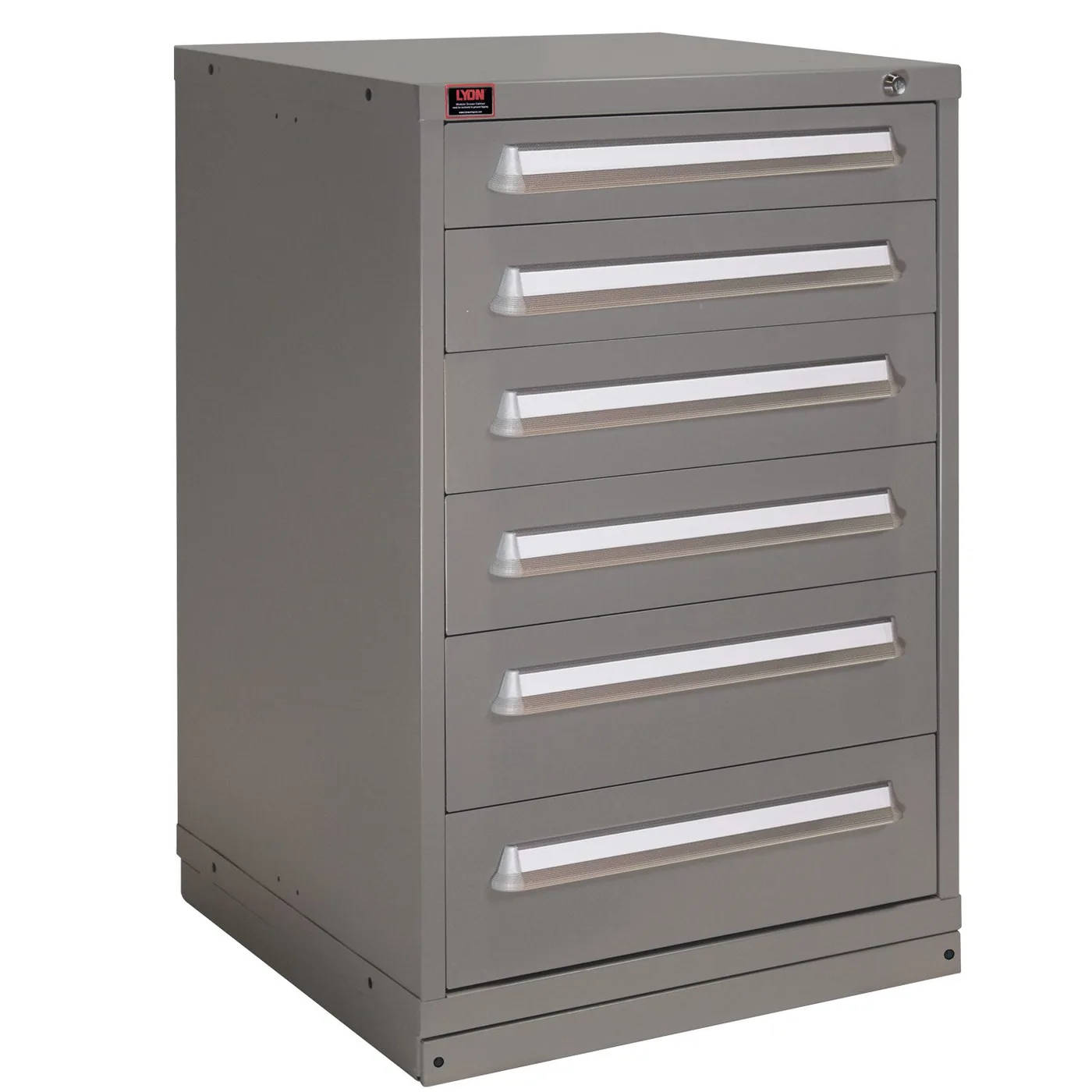
Modular drawer cabinets hold the most items in the least floor space and keep precision tools and small parts organized with dividers. They are the usual choice for cutting tools, gauges and anything that should not sit on an open shelf. See modular drawer cabinets and our broader industrial storage cabinets page.
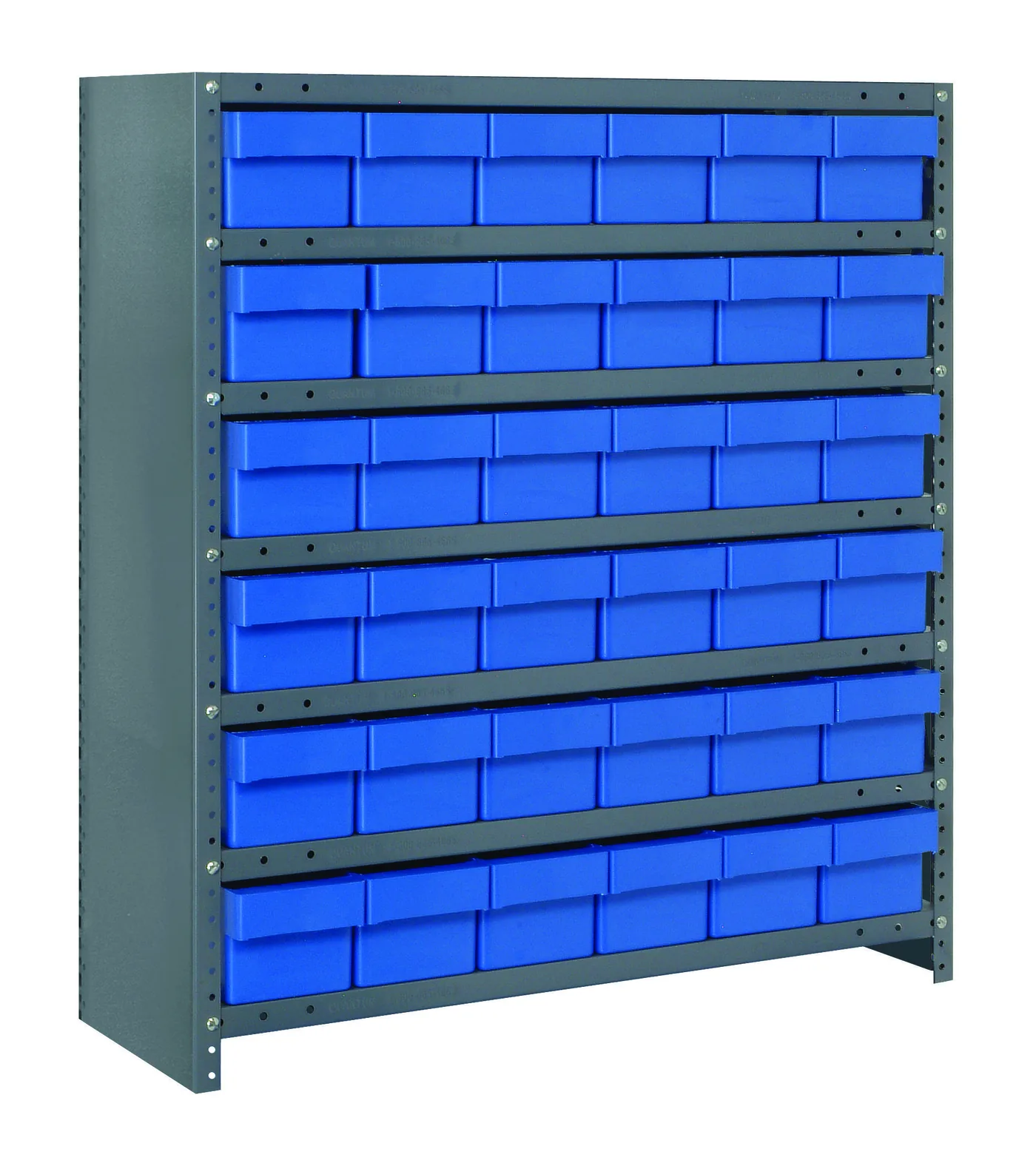
Bin cabinets put dozens or hundreds of bins behind lockable doors for consumables that should be visible but controlled. Compare them on our bin cabinets page.
High-density mobile shelving becomes worth a look once a storeroom runs out of floor space. Our maintenance storeroom mobile shelving guide explains when it pays off.
Crib storage options compared
| Storage type | Best crib use | Trade-off |
|---|---|---|
| Steel clip shelving | Boxed parts, mixed runs with dividers and drawers | Plan level spacing before ordering accessories |
| Boltless or bulk shelving | Heavy, wide or bulky spares | Less suited to many tiny items without bins |
| Modular drawer cabinets | Precision tools, cutting tools, small parts | Higher cost per location; slower for bulky items |
| Bin cabinets | Visible, lockable consumables | Fixed footprint; bins sized to the cabinet |
| Mobile shelving | Large spare parts lists in tight rooms | Aisle opens one at a time; floor rail review needed |
Zoning a Tool Crib Layout
A crib works best when it is laid out around how items are issued, not by the order they arrived. Most layouts we plan use four zones.
- Issue zone: the counter or window, a scanner or log, and the fastest movers within a few steps of it.
- Active parts zone: steel shelving and drawers for common spares, grouped by equipment line or part family.
- Heavy and bulk zone: lower, deeper levels and bulk shelving for motors, gearboxes and large boxed spares, close to a cart path or door.
- Controlled zone: lockable cabinets or enclosed bays for precision tools, high-value parts and anything with restricted access.
Keep aisles wide enough for the carts and hand trucks your team actually uses, and confirm required egress widths with your fire marshal before the layout is final.

Map how items leave
List what is issued most, what is checked out and returned, and what is only pulled for planned shutdowns.
Place the issue point
Put the counter or window where technicians arrive, then place fast movers closest to it.
Assign zones and levels
Heavy items low, small items in drawers or bins, controlled items in lockable storage.
Issue Windows, Kitting and Work-Order Staging
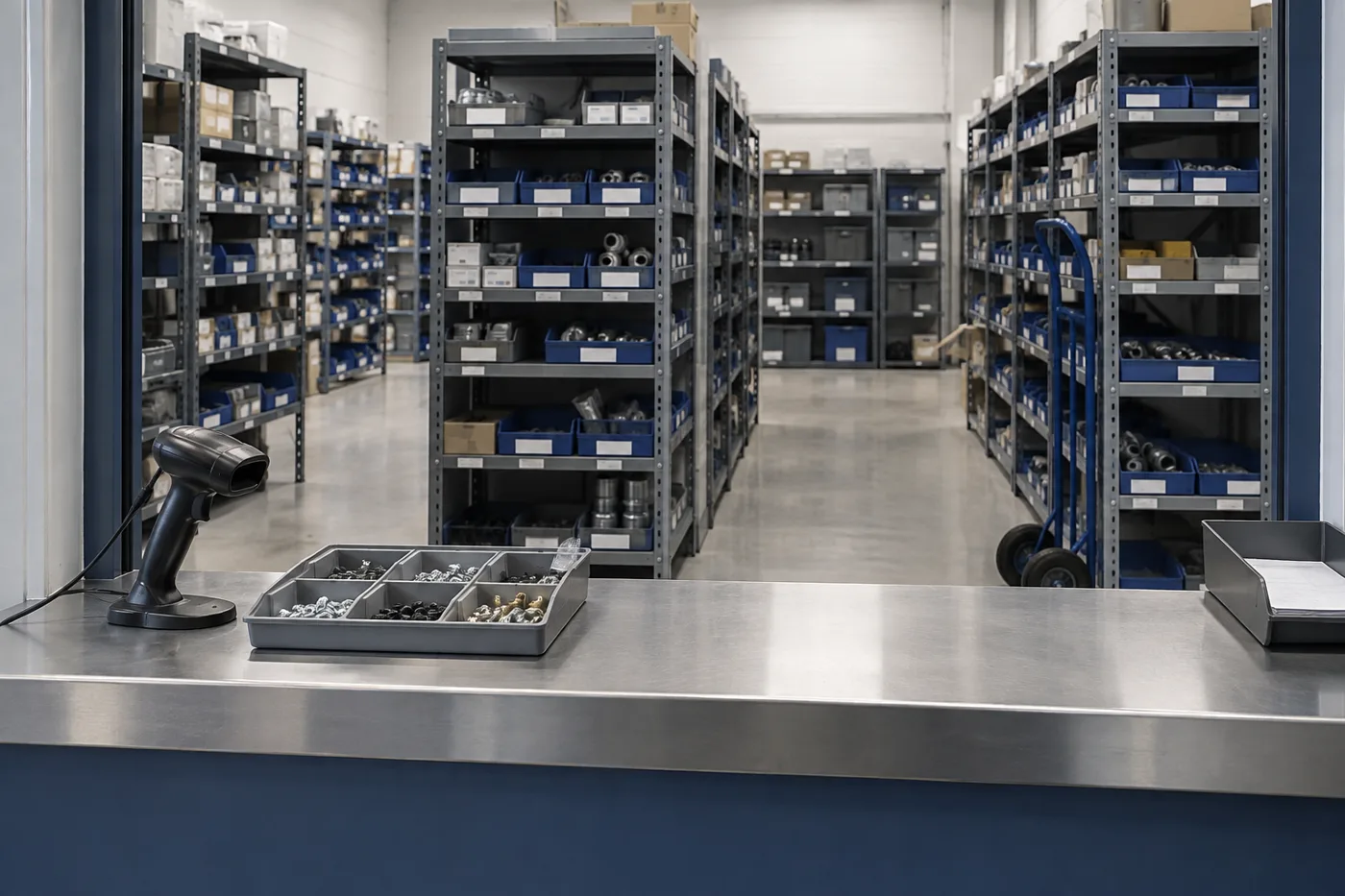
Many cribs are attended: technicians request a part at a window and an attendant pulls it. That model puts a premium on short pull paths. Shelving that faces the window, with the top movers at waist to shoulder height, cuts the walk for every request.
A counter with a small run of shelving behind it can hold the parts issued several times a day, the log or scanner, and returns waiting to be checked in. A nearby industrial workbench gives the attendant space to count, bag or inspect items without blocking the window.
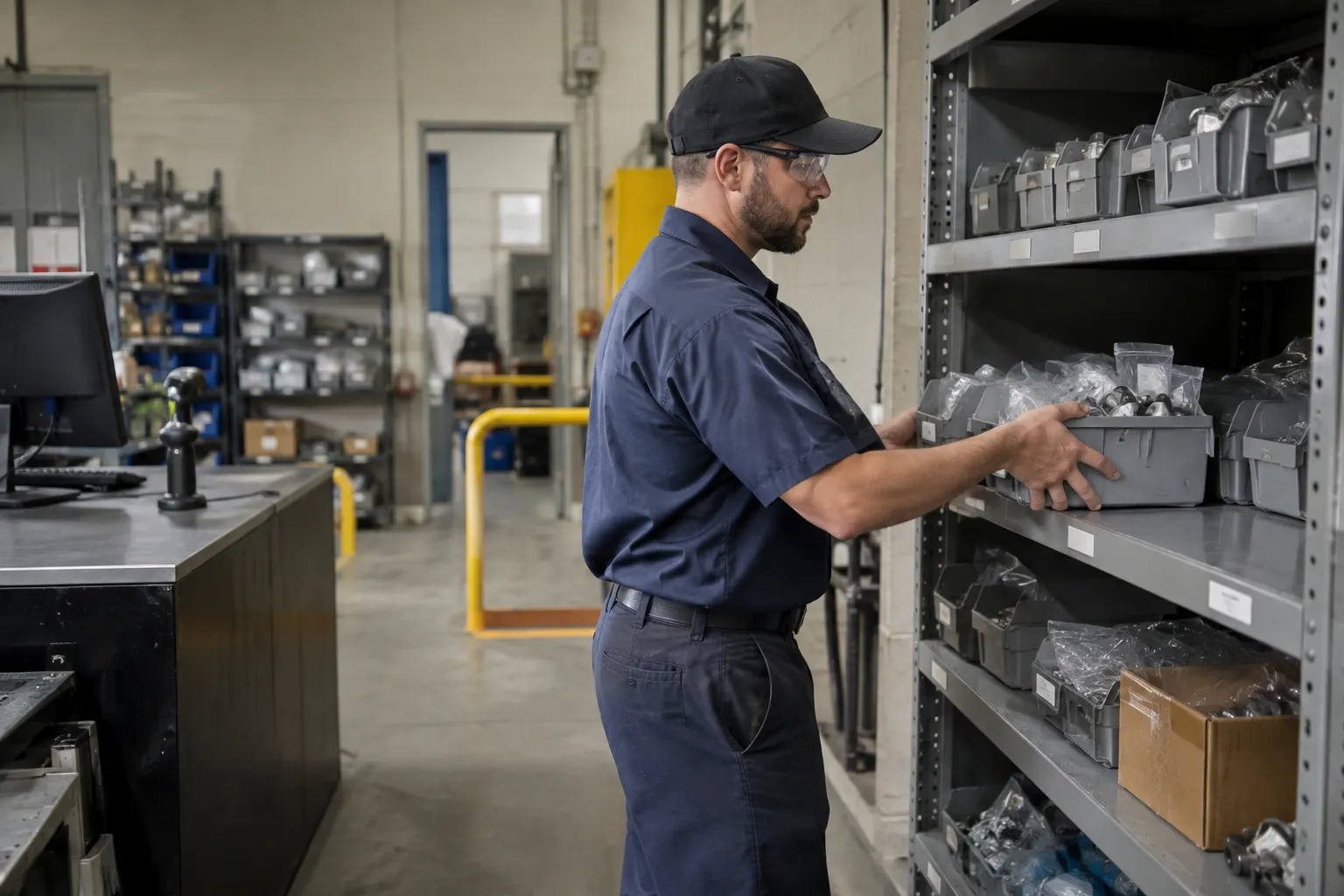
Kitting for planned work. When maintenance planners know the parts for a job in advance, the crib can pull them into a tote before the shift and place it on a labeled staging shelf. Technicians pick up a complete kit instead of waiting at the window.
A short run of shelving set aside for staged kits, marked by work order or date, keeps kits from mixing with stock. Returned items go to a separate returns shelf until they are inspected and put back in their home location.
Shutdown and turnaround work often needs more staging space than daily kits. Leaving a few open sections, or planning a temporary staging area, prevents crowded aisles during those weeks.
Labels, Dividers and Cycle Counts
A crib is only as fast as its locations are clear. Give every shelf, drawer and bin an address that matches your maintenance or inventory system, and put the label where it can be read without pulling the item.
Shelf dividers keep boxed parts from sliding into the next location. Label holders on the shelf edge make relabeling simple when the spare parts list changes. Our parts shelving page shows common accessories for parts storage.

Location and control checklist
- One item per location so an attendant never has to sort mixed parts.
- Addresses on every shelf, drawer and bin that match what your system prints.
- Min and max levels for critical spares, so reorders happen before a bin runs empty.
- Critical spares flagged separately from routine consumables so they are never borrowed for convenience.
- Empty-spot checks for tools: a marked shelf spot or foam cutout shows what is checked out.
- Open locations kept in reserve for new equipment and its spare parts.
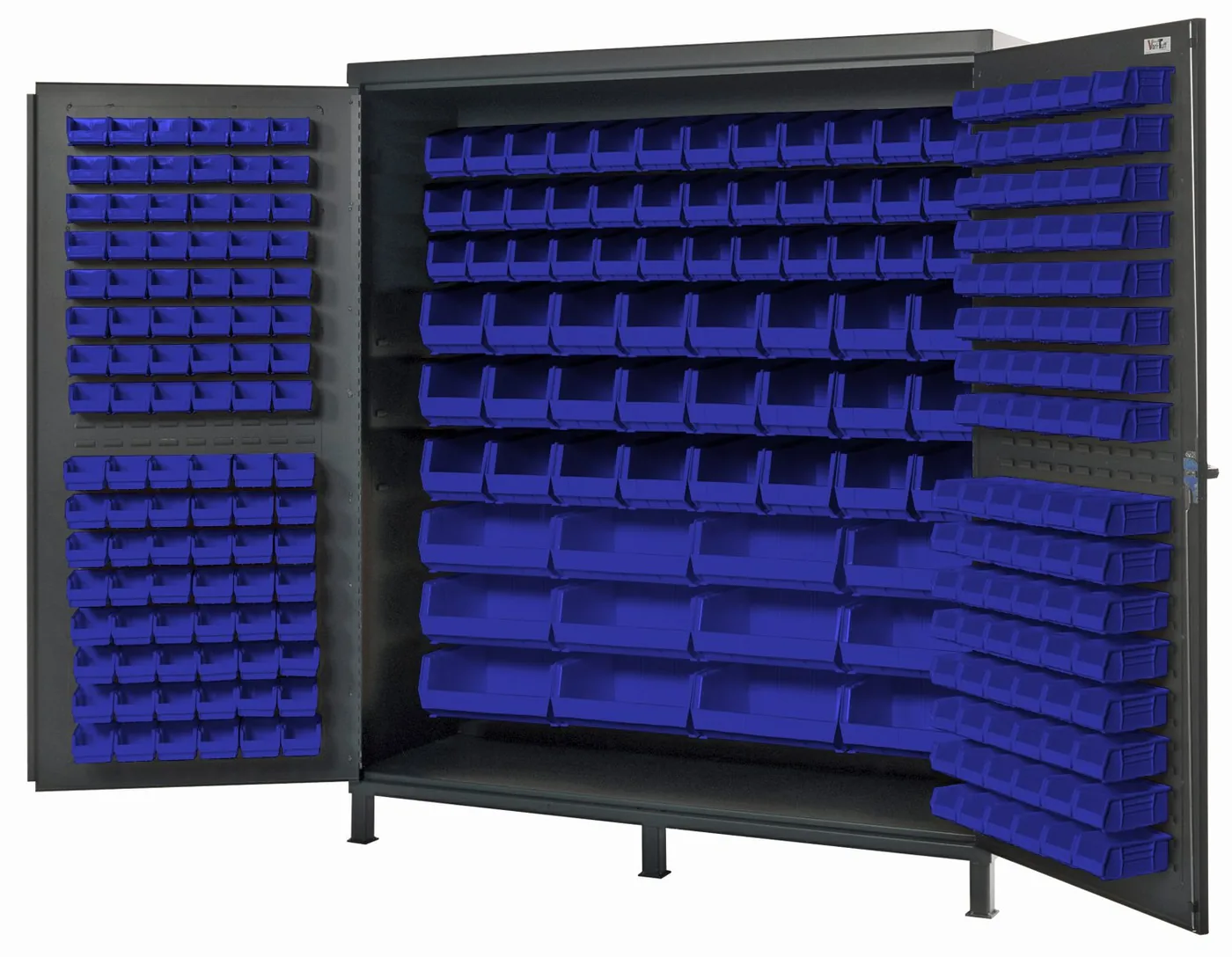
Fixed, labeled locations make cycle counting practical. Instead of a shutdown count, the crib counts a few sections each week. A variance points straight to one location and one part number.
Small consumables that are used constantly, such as fasteners, fuses and fittings, often sit best in bins. Our Utah bin shelving page covers bin sizes and shelving for those items.
Enclosing the Crib: Partitions, Lockable Bays and Cabinets
Most cribs need some form of access control. The level depends on what is stored and how the room is used.
Lockable bays within a shelving run work when only a few items need to be secured. Mesh panels and a hinged door can close off one section while the rest stays open.
Lockable cabinets protect precision tools and small high-value items inside an otherwise open storeroom.
A full wire partition enclosure turns an area of the plant floor into a controlled crib with a door and issue window. We plan the enclosure and the shelving inside it together; see tool crib enclosures for the partition side and our article on wire partitions for tool cribs.
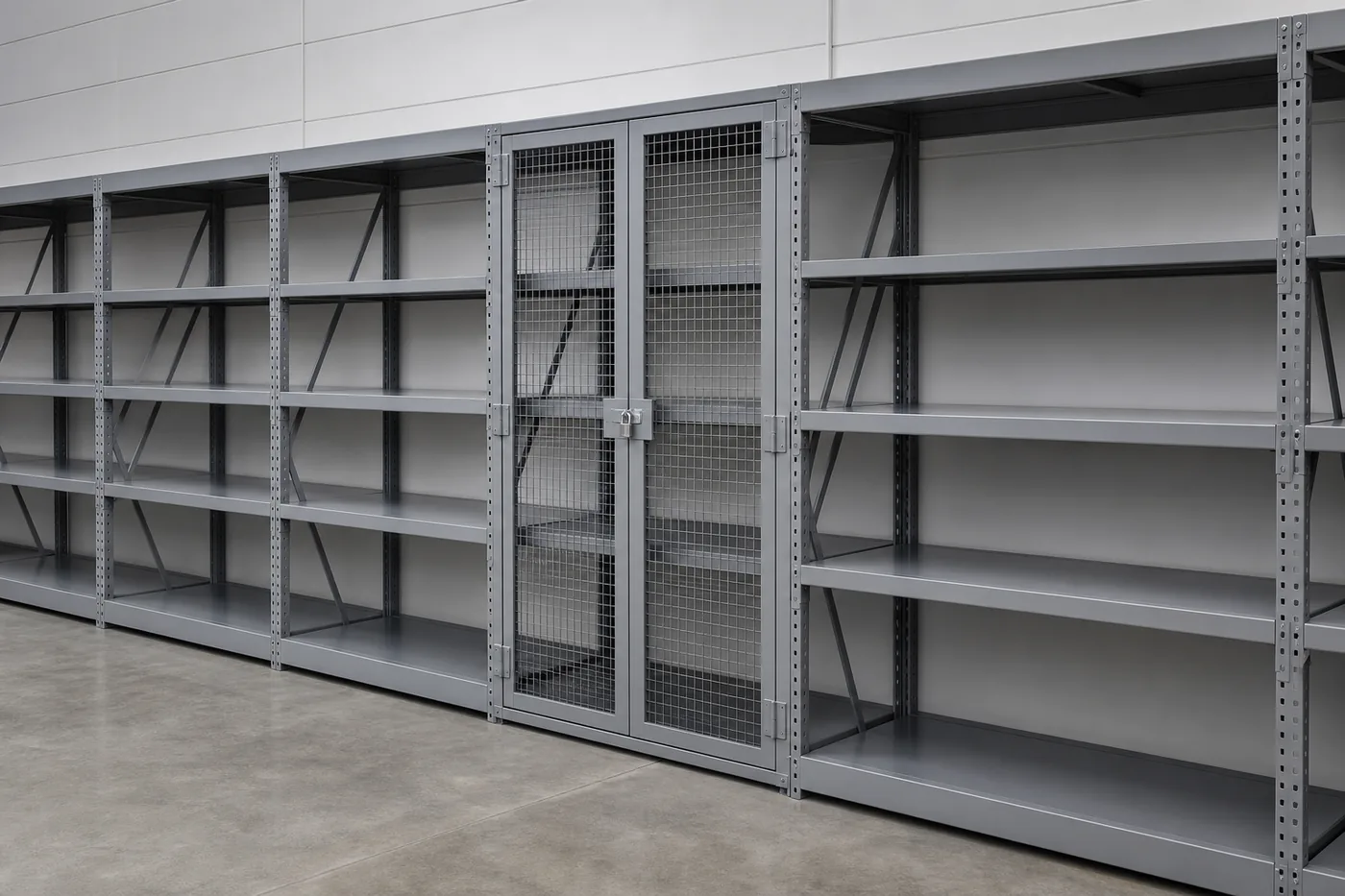
Plan the enclosure and shelving together
Shelving depth, aisle width and the location of the issue window decide how big an enclosure needs to be. Sizing the partition first and fitting shelving in afterward often leaves dead space or an aisle that is too narrow for carts.
Utah Tool Crib Planning Notes
Utah cribs support manufacturing along the Wasatch Front, mining and energy operations, aerospace and defense suppliers, fleet and transit garages, school districts and public facilities. A few items come up on nearly every Utah project.
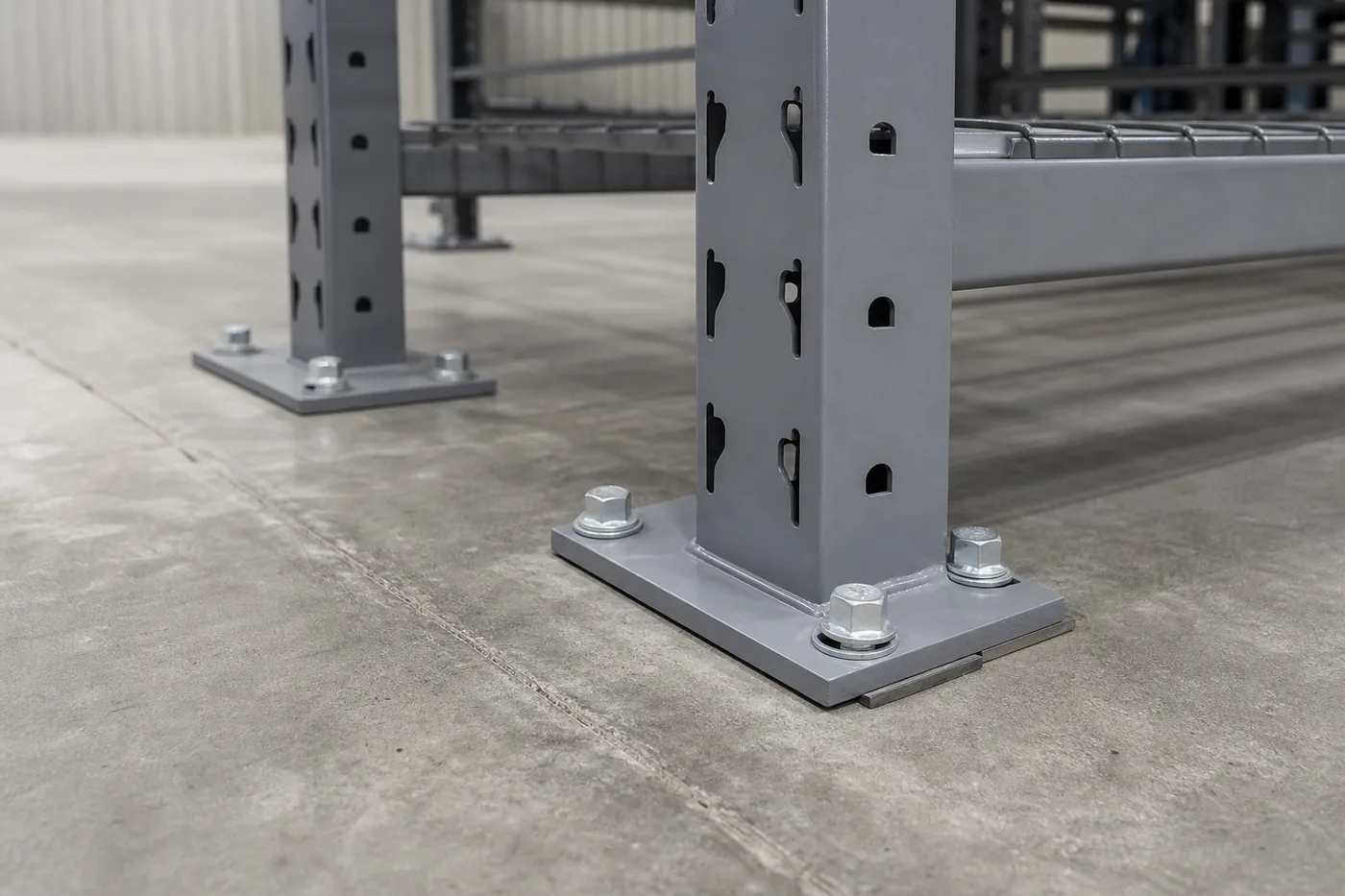
- Seismic anchoring: much of Utah is an active seismic area, so tall shelving is commonly anchored to the floor or tied together overhead. Your local building official sets the requirement; our shelving anchoring guide covers the usual questions.
- Sprinkler clearance: keep required clearance between top levels and sprinkler heads, and do not let overflow stock creep onto the top shelf.
- Working plants: most cribs stay open during a changeover, so delivery and setup are sequenced by zone.
- Availability: some common sizes are in stock at select manufacturers, subject to confirmation at quote time.
Related Utah shelving projects
These published Utah projects show similar storage in shop and tool room settings: a data center tool room with shelving and workbenches in West Jordan and a school district carpenter shop with boltless shelving in Salt Lake City. For mine and plant storerooms that also hold pallets, rotables and long stock, see our mining and MRO warehouse racking guide for Utah.
Planning Tool Crib Shelving With Our Utah Team
Send the room and the list
Room dimensions or a sketch, door and window locations, and a rough list of what the crib holds and issues.
Zone and storage plan
We lay out shelving, drawer cabinets, bins and any enclosure around your issue point and flag anchoring and sprinkler questions early.
Quote, delivery and setup
One quote covering the storage and accessories, delivered to your Utah site and sequenced so the crib keeps issuing parts.
Call our Utah project line at 801-328-8788 or request a quote. For other shelving across the state, go back to Utah Shelving Solutions.
Shop Tool Crib Storage Online
Buy select items directly from our online store, or request a quote for volume, custom sizes and freight-rated orders.
Get a free quote
Tell us what you are storing, the room size and your timeline. A project specialist will follow up with layout options and pricing. Prefer to talk? Call (800) 326-4403.
Tool Crib Shelving FAQs
What is tool crib shelving?
Is steel shelving or a drawer cabinet better for a tool crib?
How do you lay out an MRO storeroom?
Does tool crib shelving need to be anchored in Utah?
Can you add a cage or partition around the shelving?
Can you reuse our existing shelving?
Ready to Plan Tool Crib Shelving in Utah?
Send us your room and parts list for a free crib layout and quote.