
Mobile Shelving for Maintenance and MRO Spare-Parts Storerooms
How plant maintenance and reliability teams fit more critical spares into the storeroom they already have, without slowing down the technician who needs a part during a breakdown.
Who it is for
Maintenance managers, storeroom supervisors, reliability engineers and plant engineers
The problem
More critical spares than floor space, and parts that are hard to find fast
Where mobile fits
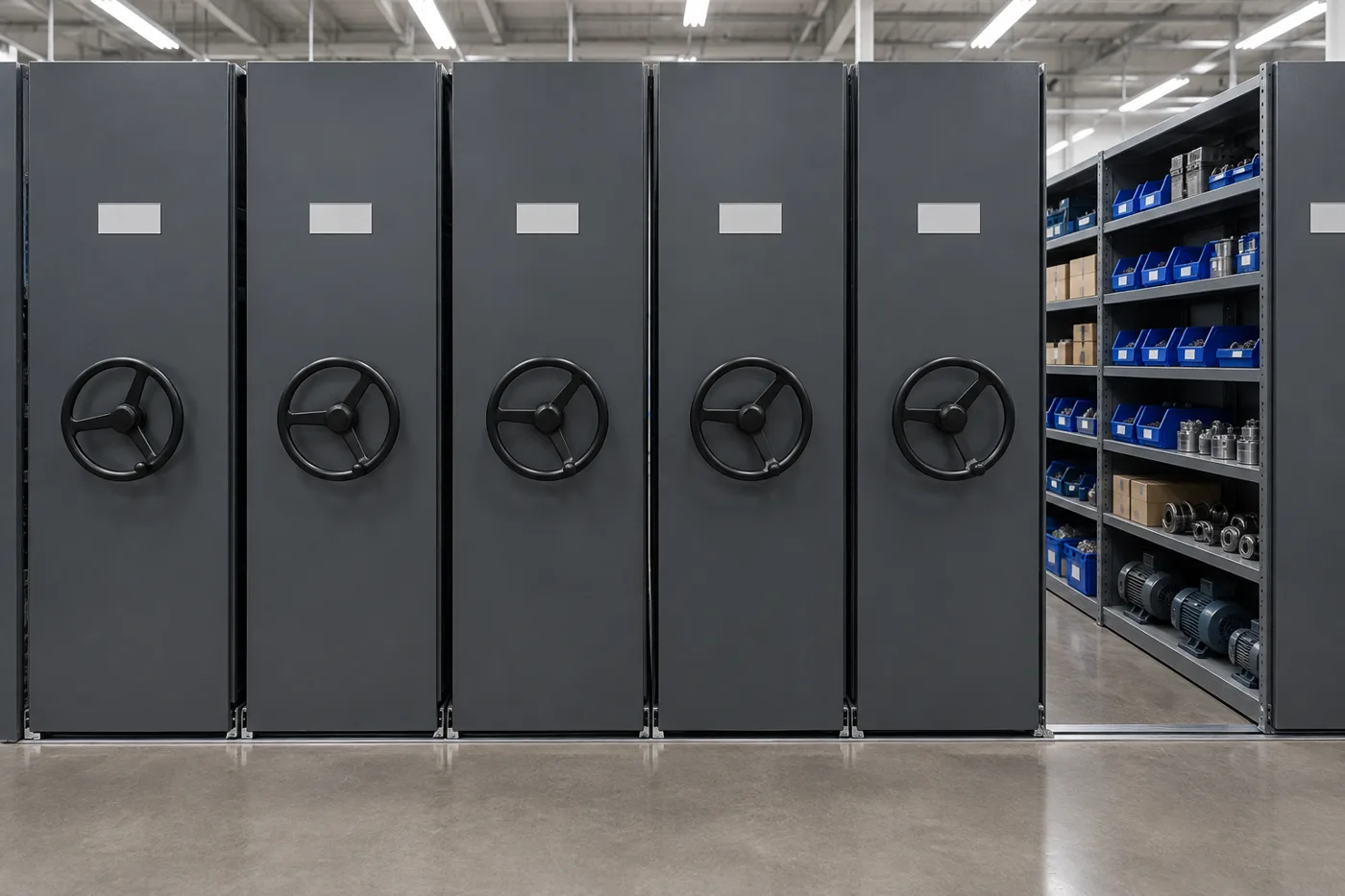
Slow and medium movers, insurance spares, bulky boxed parts
Where it does not
The busiest pick faces and the heaviest crane-handled items
A storeroom is part of maintenance, not just a place to keep parts
Every plant storeroom tells the same story over time. Critical spares get added after each painful outage, new equipment arrives with its own recommended spares list, and very little ever leaves because nobody wants to be the person who scrapped the one bearing the line needed. Eventually the storeroom is full, parts spill into hallways and maintenance shops, and technicians start keeping private stashes because they no longer trust the storeroom to have what they need.
This guide is for teams in that position. It supports our main mobile shelving and high-density storage page, which covers the systems themselves, and focuses on the maintenance side: which spare parts belong on high-density mobile carriages, which ones do not, how to keep rotating spares serviceable while they are stored, and how to lay out a storeroom so a part can be found and issued quickly at 2 a.m. when the regular storeroom attendant is not on shift.
It is written for manufacturing plants, process plants, utilities, water and wastewater facilities and similar industrial maintenance operations. Aviation repair stations have their own regulatory requirements for the parts room; see our guide to MRO and depot maintenance facility storage for that environment.
Why maintenance storerooms run out of room
Maintenance, repair and operations (MRO) inventory behaves differently from production inventory. Much of it moves slowly or not at all, yet it cannot simply be cut, because each item exists to shorten a future breakdown. Writing in Plant Services, storeroom specialist HP Slater describes storeroom parts as “converted money” invested to reduce the risk of extended downtime: when the right part is available the moment an asset needs it, parts do not add to mean time to repair.
Three things tend to push a storeroom past capacity:
- Critical and insurance spares. Long-lead motors, gearboxes, pump rotating assemblies and seal kits are held for years against a failure that may never come.
- New equipment. Each capital project adds an OEM spares list, rarely matched by retirements of the old parts.
- Bulky packaging. Many parts ship in cartons far larger than the part, and those cartons often protect the part, so they stay.
Floor space is usually the constraint, and expanding a storeroom inside a running plant is slow and expensive. That is where compacting the storage itself becomes attractive.
Sort the inventory before you choose storage
The most useful storeroom design work happens in the parts list, not on the floor plan. SDI’s guidance on maintenance storeroom layout groups the decisions around a handful of factors, and each one points to a different storage answer:
A simple export from the CMMS with part number, description, carton size, weight, annual issues and criticality ranking is enough to start. Sorted by issue frequency, most storerooms show a small group of fast movers and a long tail of slow movers and insurance spares. That long tail is the natural home for high-density storage. Our capacity sizing guide shows how to turn the volume of that tail into sections and carriages.
Planning example: contractor and service-branch stock
For a contractor’s service branch, sort boxed repair parts by both job criticality and pick frequency before assigning locations. Keep urgent breakdown stock and daily van-replenishment items in clearly labeled, immediately accessible positions, often in a static pick zone. Consider mobile shelving for less-frequently picked reserve boxes only where opening a shared aisle will not delay dispatch or competing picks. Stage planned service kits outside the moving aisles and record issues against the job. This is a workflow planning example, not a claim of a newly verified contractor installation.
Where mobile shelving fits, and where other storage wins
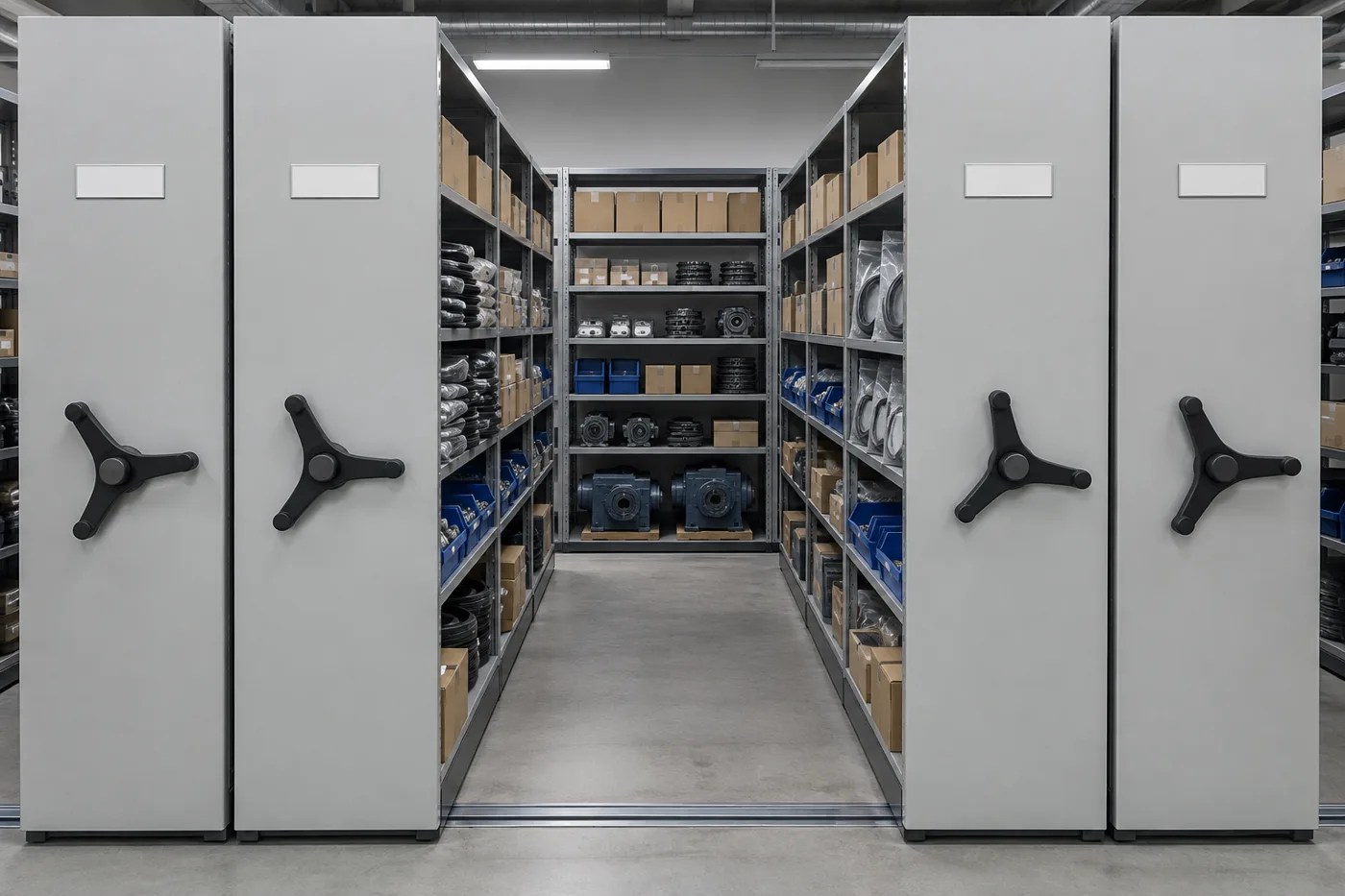
Mobile shelving mounts ordinary shelving ranges on carriages that roll along floor rails, so a group of ranges shares one moving aisle instead of each needing its own. In a storeroom, that trades a few seconds of opening an aisle for a large gain in storage in the same floor area. It is rarely the only system in a well-run storeroom. The table below is the usual division of labor:
| Storage type | Best for in a maintenance storeroom | Watch-outs |
|---|---|---|
| Static shelving with bins | Fast movers and consumables at the issue counter | Uses the most floor per item stored |
| Mechanical mobile shelving | Medium and slow movers, boxed spares, seal and gasket kits, belts, electrical components | One aisle open at a time; plan for peak demand during outages |
| Mobile carriages with heavy-duty shelving | Boxed motors, small gearboxes, pump parts within the rated load | Load ratings, floor capacity and how heavy items are lifted on and off |
| Vertical lift modules or carousels | High-value small parts with frequent picks | Throughput limited to one tray or carrier at a time |
| Pallet rack or cantilever | Large motors, pipe, shafts, crated assemblies moved by forklift | Needs forklift aisles; not a small-parts solution |
For small, high-mix parts, pouch-style systems and lifts are worth comparing; see our pages on high-density pouch storage for spare parts and vertical lift modules. For heavier warehouse-style loads on carriages, our article on industrial mobile shelving covers the heavier end of the range.
A practical rule: if several technicians regularly need the same zone at the same moment, keep that zone static. If a zone is visited a few times a day by one person, it is a strong mobile candidate.
Plan for rotating spares that need care while they wait
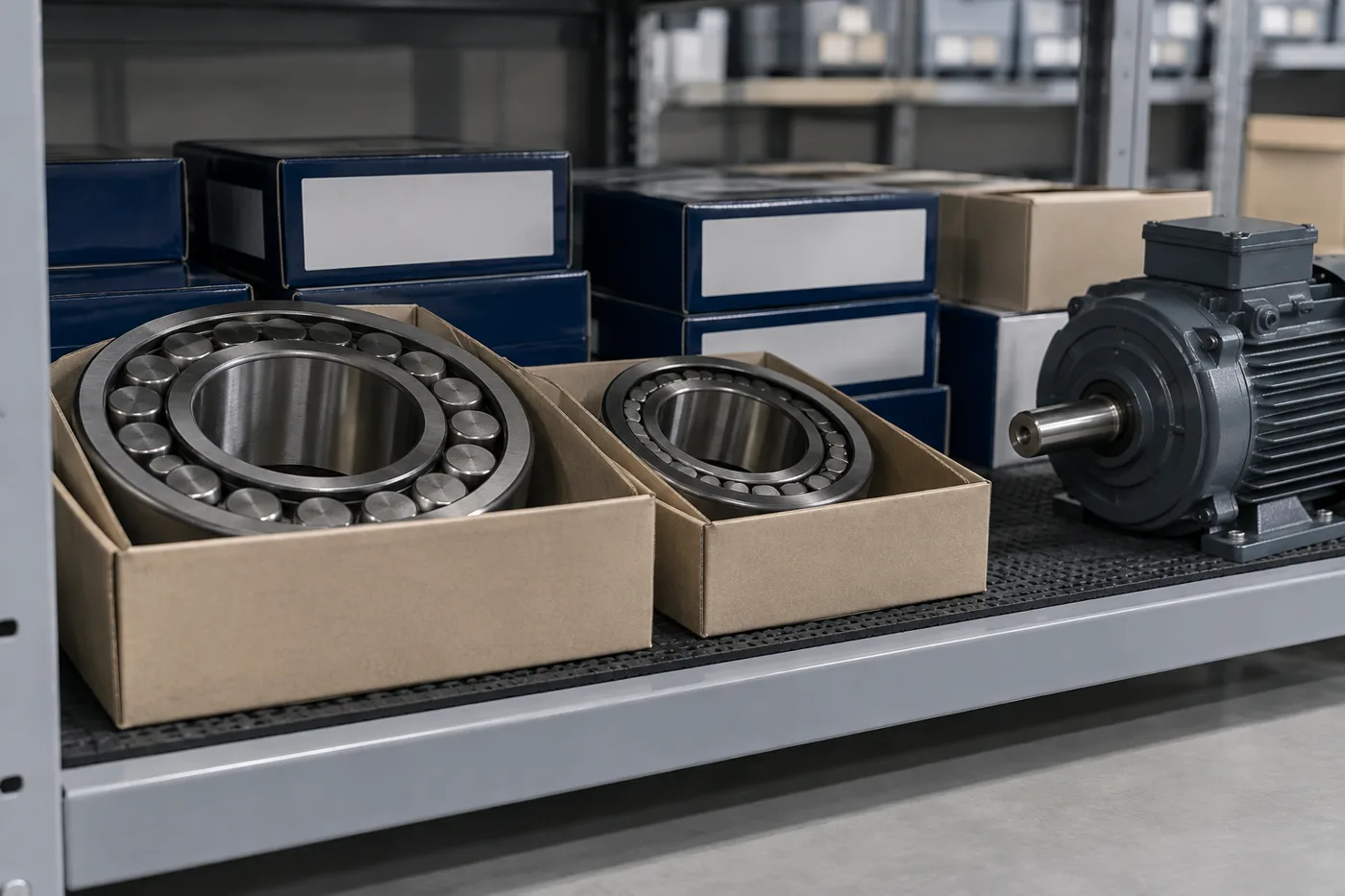
A spare that fails on installation is worse than no spare at all. Reliability Solutions, a maintenance training and consulting firm, reports that on average about 20 percent of rotating spares are already in a failed state before they are ever installed, and recommends treating the storeroom as part of the reliability program with scheduled rotation, re-lubrication, testing and inspection. Its guidance includes rotating stored spares and large bearings roughly every 90 days.
Other practitioners add detail that affects the shelving plan. Plant Services notes that bearings should be stored flat, in their sealed packaging, and on isolation pads where the area is subject to vibration. Machinery Lubrication describes issuing the oldest belts first and rotating newer stock to the back.
What that means for a mobile system:
- Put rotating spares that are on a rotation schedule where the technician doing the rounds can open the aisle and reach the shaft without unloading neighbors.
- Give large bearings flat, full-depth shelf space rather than standing them on edge to save room.
- Leave working room in front of heavy spares for the lifting aid your team actually uses.
- Plan shelf depth so first-in, first-out rotation is physically possible for belts, hoses and other aging items.
If vibration from nearby equipment is a concern in your storeroom, talk it through with your reliability team before deciding which spares go on carriages. The shelving can be arranged so that the most sensitive items sit in static zones or on isolation pads, and so that carriages are moved smoothly rather than slammed. Our page on manual, mechanical-assist and powered mobile shelving explains how the drive choice affects how easily loaded carriages start and stop.
Design the room around the receiving-to-issue flow
SDI describes a storeroom that works as a one-way flow: receiving (checking the packing list, quantity and condition against the order), stocking (moving parts to their assigned location), picking (finding and pulling each part and recording the movement), and inventory control, with slow and obsolete stock reviewed along the way.
A mobile block should sit inside that flow, not across it:
- Keep receiving, inspection and staging on open floor outside the mobile ranges, so incoming cartons never block a carriage.
- Put the issue window or counter next to the static fast-mover zone, with the mobile block behind it.
- Leave a kitting or work-order staging area so planned jobs can be picked ahead of time and carriages are not held open for hours.
- Plan main cross-aisles wide enough for the carts and hand trucks the storeroom uses.
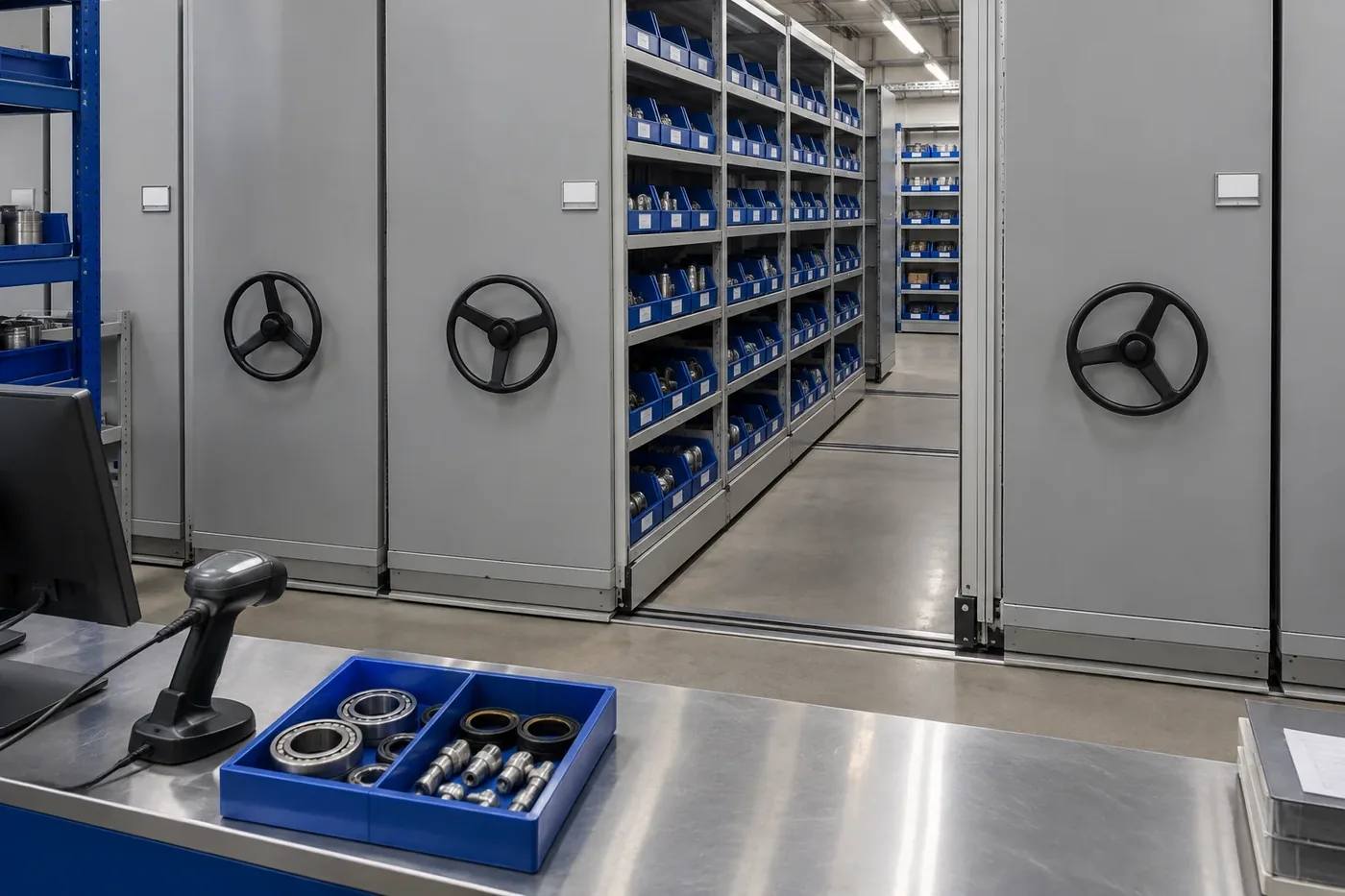
Planned work helps a mobile system most. When planners stage kits a day ahead, the storeroom opens each aisle once for a batch of picks instead of dozens of times for single parts. Emergency breakdown work still needs fast access, which is why critical spares are often kept in the first ranges of the mobile block or in the static zone even when they rarely move.
Location codes that survive carriages moving
SDI recommends labeling every aisle, shelf, tier and bin with a consistent, intuitive scheme and keeping each part’s location in the records, for example aisle, shelf and tier. Plant Services makes the risk plain: a plant that depends on one “parts expert” who knows where everything is effectively loses those parts when that person is away.
On mobile shelving, code the range, not the aisle, because aisles move. A typical scheme gives each carriage face a range number on its end panel, then section, shelf and bin within the range. The end-panel label tells a technician which aisle to open; the CMMS location tells them exactly where to reach. Keep the same numbering direction in every range so no one has to relearn the pattern. Our labeling and location coding guide covers end-panel signage, label holders and numbering conventions in more detail.
Loads, floors and rails in an industrial storeroom
Maintenance spares are heavier than most of what mobile shelving holds in offices. A few engineering questions come up on almost every storeroom project:
| Question | Why it matters in a storeroom | Where to read more |
|---|---|---|
| Shelf and carriage load ratings | Motors, gearboxes and boxed castings concentrate weight on a few shelves | Weight capacity and load ratings |
| Floor capacity | A loaded mobile block puts far more weight on the slab than scattered static shelving | Floor load requirements |
| Rail type | Carts, pallet jacks or lift tables must cross the rails without snagging | Recessed vs. surface-mounted rail |
| Shelving style on the carriage | Long items such as shafts or pipe may suit cantilever arms rather than shelves | Cantilever vs. four-post on carriages |
| Seismic anchorage | Loaded carriages are heavy and tall; anti-tip design and anchorage follow code and site conditions | Seismic anchoring requirements |
Two storeroom-specific habits help. First, keep the heaviest spares on the lowest levels, which helps both safe handling and carriage stability. Second, decide early how heavy items get onto and off the shelves, whether by hand, lift table or hoist, because that affects aisle width, shelf height and whether an item belongs on a carriage at all. Our page on mobile shelving safety features covers aisle safety devices and anti-tip design.
How a storeroom mobile shelving project gets specified
We have supplied mobile shelving for industrial parts storage, including rigging hardware for a millwright supply operation in Michigan and a cutting tool and hardware storeroom in West Valley City, Utah. The planning sequence is usually the same:
Phasing is where storeroom projects differ from most. The storeroom cannot close for a week, so installers typically work zone by zone, with parts moved to temporary locations and the CMMS updated as each range goes live. Our installation process page describes the steps, and the specification and submittal checklist lists the documents plant engineering usually asks for.
Common mistakes to avoid
- Compacting obsolete stock instead of reviewing it first.
- Putting the busiest pick faces on carriages because they happen to be in the middle of the room.
- Storing large bearings on edge or stacking heavy cartons high to fit more in.
- Coding locations by aisle rather than by range.
- Ignoring how the heaviest items are lifted on and off the shelves.
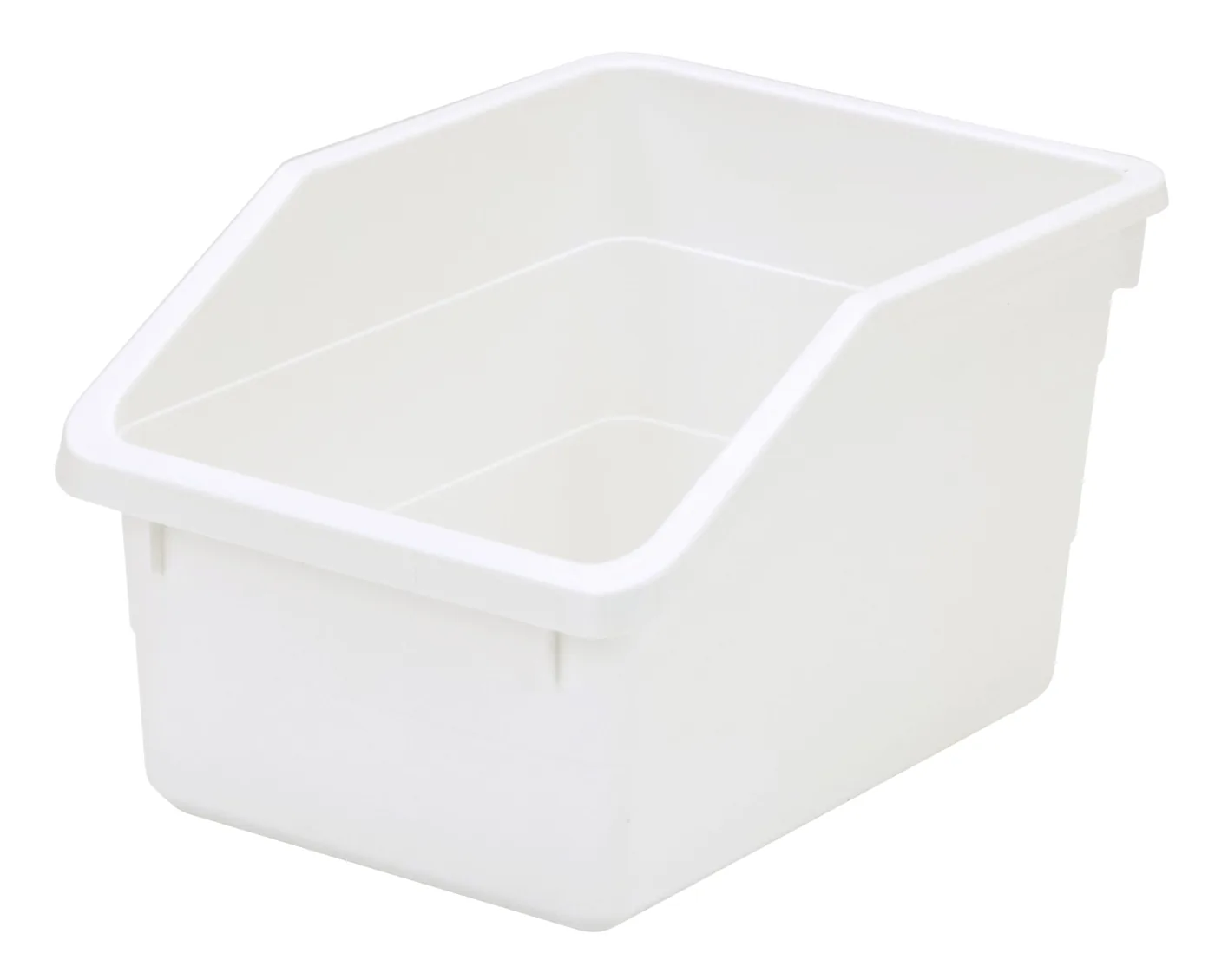
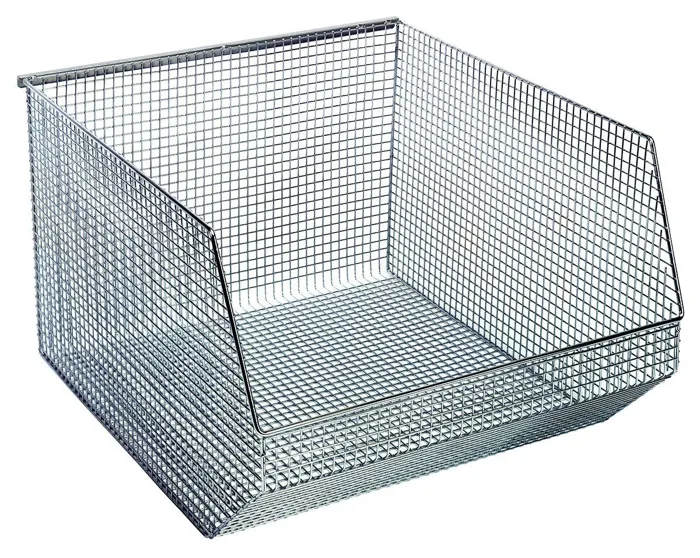
Shop Storeroom Bins and Bin Shelving Online
Buy select items directly from our online store, or request a quote for volume, custom sizes and freight-rated orders.

Get a free quote
Tell us what you are storing, the room size and your timeline. A project specialist will follow up with layout options and pricing. Prefer to talk? Call (800) 326-4403.
Frequently asked questions
Is mobile shelving a good fit for a maintenance storeroom?
Will technicians lose time opening aisles during a breakdown?
Can motors and gearboxes go on mobile carriages?
How should we store spare bearings on shelving?
Does mobile shelving work with a CMMS and barcode locations?
Can we install mobile shelving without shutting down the storeroom?
Planning more capacity for your maintenance storeroom?
Send us your room dimensions and a parts export from your CMMS, even a rough one, and we will prepare a layout drawing that zones fast movers, slow movers and heavy spares, shows capacity per zone, and flags the load, floor and rail questions to settle before you buy.