You're usually looking at boltless shelving parts when a bay gets dented, a shelf height changes, or a whole unit has to be replicated fast. The job is matching the posts, beams, connectors, and deck to the space, the load, and the existing hardware, so you don't buy a part that looks close but won't seat correctly. For buyers, the first measurements are simple, unit height, bay width, bay depth, shelf count, load per shelf, and the floor anchor method.
What a Boltless Shelving Parts Guide Actually Covers
A useful boltless shelving parts guide treats a boltless shelving system as a parts-and-fit problem, not a one-piece purchase. The core categories are posts, beams, rivet or connector hardware, and deck surfaces, but a real job usually also needs splices, wall ties, row end caps, and sometimes seismic bracing hardware. That matters because one damaged beam can force a compatibility check across the whole bay, and “boltless” only tells you how the parts connect, not whether they're interchangeable.
The best way to think about it is by measurements and use case. If you know the unit height, bay width, bay depth, shelf count, expected load per shelf, and whether the unit will be anchored, you can talk to a layout designer without guessing. If you're comparing a replacement part, decode the existing beam and post profile first, then match the connector shape and spacing before you order.
Practical rule: if you can't confirm the post profile and beam end geometry, don't assume a replacement will fit just because it came from another boltless unit.
For a quick reality check on site prep, a useful general resource is shed foundation tips and ideas, because the same discipline applies. A flat, consistent base makes every shelving system easier to align and less likely to walk later.
By the end of this guide, you should be able to decide capacity per shelf, deck material, post gauge, and the lead time trade-off that comes with each choice. That's the difference between ordering a shelf and specifying a build that installs cleanly.
The Core Parts of a Boltless Shelving System
Boltless shelving under ANSI MH28.2-2022 now covers far more than simple shop shelving. The standard explicitly includes industrial steel boltless shelving, boltless shelving on mobile carriages, multi-level systems such as pick modules, catwalks, and deck-overs, and even boltless shelving used with AS/RS. That's a big shift from the older ANSI MH28.2-2012 document, which focused on design procedures for metal frameworks with wood shelf surfaces such as particle board and plywood, and it shows how the category has matured into a broader industrial platform. ANSI MH28.2-2022 overview

Posts and beams are the frame
Posts are the vertical uprights, usually roll-formed steel with punched slots on the face. Common published specs show standard-duty angle posts at 1-1/2 in x 1-1/2 in x 14-gauge cold-rolled steel, and market-facing product lines often use 36 in to 60 in widths, 12 in to 36 in depths, 6 ft to 8 ft heights, with 1-1/2 in shelf adjustments. Beams are the horizontal members that hook into the slots and carry the shelf load.
Connectors and decks close the system
The connection is what makes the unit “boltless.” A documented assembly method uses a rivet-and-slot lock, where the beam's circular rivet enters a larger opening and drops into a narrower slot until it seats at the bottom. Boltless shelving assembly instructions Decks can be particle board, MDF, steel deck panels, wire mesh, or galvanized decking, depending on the environment and the load.

For spacing questions, a practical calculator can help you test shelf intervals before you commit to a layout. calculate shelf spacing
The label should tell you the load rating, but the beam, post, and deck together decide whether the system feels solid after installation.
That's why a submittal sheet matters. It lets you verify design load, shelf level, and deflection assumptions before a truck shows up at the dock.
Comparing Posts, Beams, and Shelf Capacities
You'll see a lot of product descriptions that sound similar until you compare the hardware side by side. The post gauge, beam profile, and deck choice drive difference between a light stockroom build and a heavier multi-tier layout. If you are still choosing a system, our boltless shelving vs pallet racking guide breaks down where each one fits. One important note from buyer guidance is that a boltless unit can carry very different shelf loads by model and size, with typical capacities ranging from 600 lbs to 1,750 lbs per shelf Speedrack West buyer guide, while commercial product lines are also commonly marketed in lower standard-duty bands or higher-rated builds. Use the stated UDL or shelf rating, not the word “boltless,” as your reference.

| Component | Common Sizes | Capacity Band | Typical Use | Pairs With |
|---|---|---|---|---|
| 2 in x 1.5 in teardrop post, 14-gauge | 72 in to 96 in columns | Light to mid-duty | Hand-loaded cartons, stockrooms | Box beam, particle board, wire deck |
| 2.5 in x 1.5 in teardrop post, 13-gauge | 96 in to 144 in columns | Mid to heavy-duty | Multi-tier builds, seismic zones, denser loads | Step beam, steel deck, bracing hardware |
| Box beam | 36 in to 120 in lengths | 400 to 900 lbs | Archive storage, lighter carton flow | Particle board or wire deck |
| Step beam | 36 in to 120 in lengths | 1,000 to 2,000 lbs | Pick modules, automotive parts, mixed cartons | Steel deck, wire deck |
| Heavy step beam | 36 in to 120 in lengths | 2,500 to 4,000 lbs | Higher-density industrial bays | Steel deck, galvanized deck |
The key point is simple. “Boltless” describes the connection method, not the capacity class. That's why two units with the same shelf count can behave very differently in service, especially once you add deck weight and repeated hand-truck traffic.
Capacity claims on a brochure don't carry much weight if the installed label, beam profile, and deck combination don't match the quote sheet.
If you're comparing quotes, ask for the exact post gauge, beam profile, and stated shelf rating in writing. That saves time later when the inspector, installer, or maintenance team needs to confirm what was delivered.
How to Size and Specify Boltless Shelving Parts
Sizing starts with the space, not the catalog. Measure the clear width between walls or columns, the clear height under sprinklers or obstructions, and the depth available for the shelf face. Then match that to the beam length and post height you need.
| Measurement Input | Part It Controls |
|---|---|
| Clear width | Beam length and bay count |
| Clear height | Post height and total shelf levels |
| Deck depth | Beam length and shelf footprint |
| Shelf load per level | Beam gauge, post profile, and deck type |
| Total levels | Post height and connector count |
| Aisle width | Bay depth and access clearance |
| Seismic zone | Anchors, bracing, and base plates |
| Pallet or carton size | Shelf spacing and clear opening |
A good spec also captures the storage medium. Carton sizes, pallet depth, and aisle width affect how far a worker can reach and whether a hand truck clears the frame cleanly. If the room has a seismic designation, note that early so the quote reflects anchorage and bracing from the start instead of adding it later.
- Measure the usable opening from side to side.
- Measure the available height at the lowest obstruction.
- Decide the deck depth you need, not the one that looks common.
- Estimate the load per shelf level with the heaviest expected storage.
- Confirm whether the unit is freestanding, wall-tied, or floor-anchored.
- Mark the aisle and access side so the bay can be drawn for the right face direction.
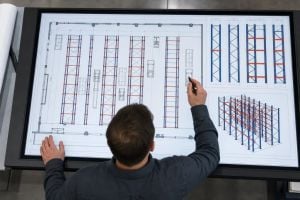
A layout drawing locks those inputs together. That's the document that keeps beam length, post height, and shelf spacing from getting interpreted two different ways on install day.
Connectors, Rivet Geometry, and Cross-Brand Fit
Boltless systems live or die by small geometry differences. The beam hook has to match the post slot, and the rivet or keyhole shape has to seat the way the manufacturer intended. In the field, the parts that look “close enough” are often the ones that stop a replacement bay from going together without forcing.
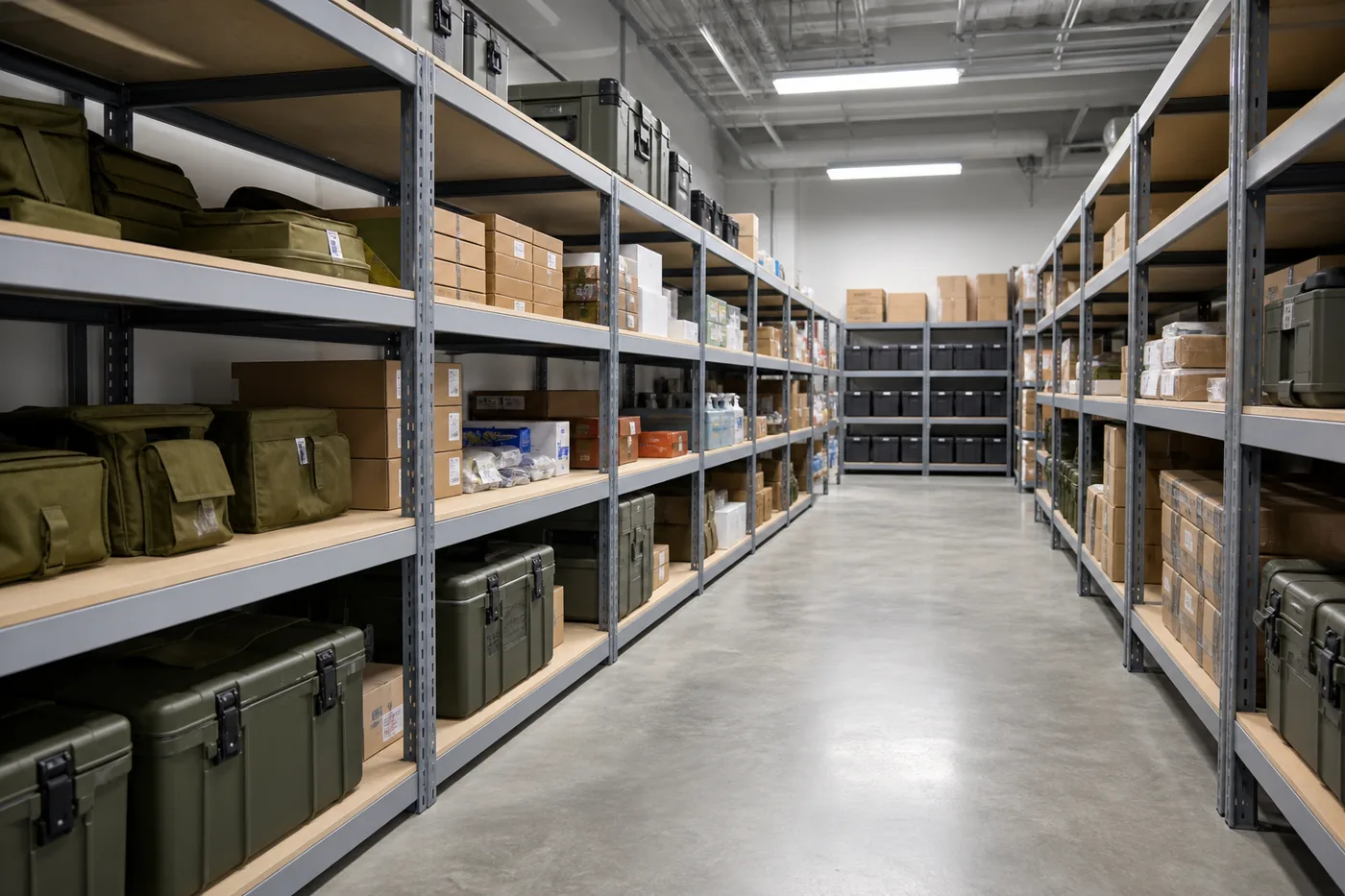
The cleanest way to decode an existing beam is to measure the rivet spacing, beam-end thickness, and beam length, then compare those numbers against the current spec sheet. That works better than guessing from a photo, because legacy slots can be tighter than current production and some hook profiles changed over time. The neutral supplier guidance on replacement fit makes the same point, specify beam length, beam depth, steel gauge, and connector type to avoid mismatches. Replacement parts compatibility guide
MH-USA boltless shelving accessories is the internal place to start when you need hardware, connectors, or replacement pieces that line up with an existing build.
Mixing brands in the same bay is risky unless the manufacturer has documented cross-compatibility.
That's especially true when the bay has been damaged, relocated, or expanded. A fit check takes less time than a failed install, and it avoids the kind of beam walk that shows up the first time a loaded cart bumps the frame.
Deck Surface Options and How They Change the Build
The deck looks simple, but it changes the whole system. A heavier surface adds dead load to every beam, which can push the build into a stronger beam and post class even when the stored product itself is light. That's why deck choice is not just about the top surface, it changes the load path.

| Deck Type | Weight | Moisture Response | Cleanability |
|---|---|---|---|
| Solid steel | Heavier | Strong in damp areas | Easy to wipe down |
| Vented steel | Heavier | Better air movement | Easy to clean |
| Particleboard | Moderate | Sensitive to moisture | Fair in dry rooms |
| Wire decking | Light to moderate | Good airflow | Good for dust control |
For dry warehouses and stockrooms, particleboard is still common where the load is moderate and the environment stays stable. For damp areas, steel and galvanized surfaces are the safer default because moisture changes board performance over time. In clean rooms or hygiene-sensitive spaces, wire or steel decks are easier to maintain because they don't trap debris the way porous surfaces can.
Decking options for boltless shelving is the right internal reference if you're comparing surfaces before a quote. Match the deck to the room first, then let the beam and post selection follow from there.
Common Boltless Shelving Mistakes Seen on US Job Sites
The same mistakes show up again and again on inspection day. Crews force posts into alignment with a hammer, mix beam hooks from two manufacturers, ignore the shelf-load decal, overload the top shelf, and skip wall or floor anchoring. Each one is avoidable, and each one creates a different kind of problem.
Common mistakes to avoid
- Forcing posts into alignment with a hammer instead of seating the beam correctly.
- Mixing beam hooks from two manufacturers without documented cross-compatibility.
- Ignoring the shelf-load decal or overloading the top shelf.
- Skipping wall ties or floor anchors on tall or freestanding units.
- Blocking aisle and exit clearance with an oversized bay.
- Reusing bent uprights, damaged beams, or cracked decks after a move or a hit.
The fix usually starts with seating the beam the right way. The rivet should drop into the slot and lock under load, not sit half-engaged because someone wanted to “make it fit.” If the beam hook profile doesn't match, the right answer is a replacement part, not more force.
Boltless shelving installation guidance is useful when you need the assembly sequence and hardware details in one place.
Snap a photo of the existing build before you order anything. Then walk the unit with a tape before the first pallet lands on it.
That habit catches bad assumptions early. It also helps when the maintenance team is trying to match a replacement after a move, a remodel, or a damaged bay.
Cost Drivers and Lead Times for Boltless Parts
A boltless quote moves up or down based on the parts, not the label on the product family. Post gauge and roll form change the material cost, beam profile matters, deck material shifts the package, and finish matters if the unit needs powder coat or galvanized protection. Full units also behave differently from replacement pieces because freight and packaging often change with quantity.
| Spec Driver | Effect on Price Band | Typical Lead Time Impact |
|---|---|---|
| Heavier post gauge | Raises material cost | Can extend sourcing time |
| Step beam versus box beam | Step beam usually costs more | May affect stock availability |
| Steel or galvanized deck | Raises package cost | Can add processing time |
| Replacement part only | Depends on exact fit | Faster if stocked, slower if matched |
| Build-to-order layout | Higher coordination effort | Usually longer than stock items |
| Single-pallet quantity | Better freight efficiency | Often easier to move quickly |
The fastest schedules usually come from a tight spec and a measured site photo. Stock items move faster than custom builds, and a clear layout cuts down on back-and-forth with the quote team. A free design tool can collapse the right-versus-wrong list into one pass before you spend time on a purchase order.
Code, Seismic, and Inspection Considerations
For broader context on heavier builds, see our industrial steel shelving overview and the warehouse shelving systems guide. Three references matter on a serious US installation. RMI's Specification for the Design, Testing, and Utilization of Industrial Steel Storage Racks informs rack-level design practice, ANSI MH28.2-2022 defines the boltless shelving category, and California Code of Regulations, Title 8, Section 3241 requires storage racks to be designed for their intended loads and never loaded beyond the manufacturer rated capacity, which is why anchoring, bracing, and legible load placards come up on serious installs. You can read the rule on the Cal/OSHA Title 8, Section 3241 page.
The inspector usually checks the same few items. Load placards need to be legible, the manufacturer's capacity chart needs to match the build, base plates and anchors need to be present where required, and the beam seating has to be verifiable. Aisle width and exit clearance also matter, and so does any bracing tied to the building's seismic category.
A clean handoff should include the layout, photos of the load placards, and the anchor torque values at sign-off. That gives the owner a paper trail for the next visit, instead of forcing a scramble after the fact. If your site also has stairs or mezzanines near the storage area, it helps to find 1910 and 1926 stair rules before the final walk.
Boltless Shelving Parts FAQ
How do I identify a replacement beam for boltless shelving
Measure the beam length, beam depth, hook shape, and rivet spacing on the existing part. Then compare those measurements to the current spec sheet before you order. A photo helps, but measurements are what keep the part from arriving close and still wrong.
Can I mix boltless shelving brands in the same bay
Sometimes, but only if the manufacturer has documented cross-compatibility. The slot geometry, hook profile, and rivet shape can differ enough to create a loose or unsafe fit. If the bay will carry meaningful load, treat brand mixing as a verification task, not a default.
Where do replacement clips and connectors fit in a boltless build
Replacement clips, connectors, and locking hardware belong in the same compatibility check as the beam and post. If the connector is wrong, the rest of the unit won't seat the way it should. That's why connector type matters as much as beam length.
Can boltless shelving be used on mobile carriages
Yes, and ANSI MH28.2-2022 now explicitly covers boltless shelving on mobile carriages. The carriage hardware changes the layout, though, so the parts must be checked against the track system and the intended load path.
How do multi-level boltless systems get retrofitted
They're usually built from compatible posts, beams, decks, and bracing hardware, then tied into a platform or catwalk structure. The main check is whether the existing parts can carry the new load and match the revised access points. Layout control matters more here than in a basic single-bay install.
Do boltless shelves meet code in California
They can, but anchorage and bracing need to be addressed correctly for the site. California Title 8, Section 3241 is often used in compliance guidance for stationary racks over 8 feet tall, so the build should be reviewed against the applicable anchoring and seismic requirements before purchase.
What should I have ready before I call for a quote
Have the clear width, clear height, depth, load per shelf, number of levels, and a photo of the existing build if you're replacing parts. If seismic or wall anchoring is involved, include that too. That short list saves time and reduces rework.
Get a Free Boltless Shelving Layout and Quote
The smartest next step is to turn the measurements into a layout. When a request comes in, the footprint and ceiling height get reviewed, post heights and beam lengths get matched to the load and aisle width, and the deck, dividers, and any anchorage details get built into the drawing before the quote goes out. That process keeps the part selection tied to the room instead of to a generic product page.
A lot of projects stall because buyers wait until the schedule is already tight. Install calendars fill, freight gets booked, and the wrong part can add another round of approvals. The better move is to lock the spec while the space is still open and the dimensions are easy to verify.
Material Handling USA can quote boltless parts, full units, mobile carriage builds, and seismic kits under one layout review, which keeps the handoff cleaner for warehouse, agency, and contractor buyers. If you already know the bay needs replacement pieces or a full redesign, start with the free design tools, then send the drawing for a quote.
Material Handling USA can help you match the right boltless parts to the space, the load, and the inspection requirements without guessing at compatibility. If you need a layout, a replacement match, or a quote built from real measurements, visit Material Handling USA and send over your dimensions, photos, and load targets so the team can turn them into a practical shelving plan.
Design it yourself, then get a quote
Use our free online design tools to configure exactly what this article describes, then send the configuration to our team for pricing:
Ready to talk it through? Call Material Handling USA and Labs USA at (800) 326-4403 for a free design consultation.
Ready to configure your boltless shelving?
Use our guided BuildQuote tool to choose the right configuration, review your parts and submit it for checkout or a formal quote.