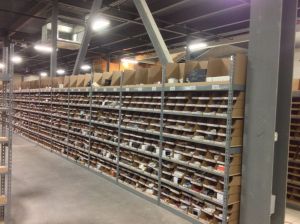
Every warehouse, stockroom, and industrial facility needs shelving — but not every shelving system is the right fit. The wrong choice leads to wasted space, damaged inventory, slow picking, and premature replacement costs. The right system turns disorganized storage areas into efficient, high-capacity operations.
This guide covers every major type of warehouse shelving system available today. We break down the pros, cons, ideal applications, and key specifications so you can match the right shelving to your exact storage needs.
Why Shelving Selection Matters
Shelving is not a commodity purchase. The type of shelving you choose affects:
- Storage density: How much inventory fits per square foot of floor space
- Pick speed: How quickly workers can locate and retrieve items
- Load safety: Whether the system handles your heaviest items without risk
- Flexibility: How easily you can reconfigure as inventory changes
- Longevity: Whether the investment lasts 10 years or 30 years
- Compliance: Whether the system meets NSF, OSHA, or industry-specific standards
Warehouse shelving represents a long-term infrastructure investment. Taking time to evaluate your options now prevents costly replacements later.
Types of Warehouse Shelving Systems
1. Steel Closed Shelving
Steel closed shelving is the traditional workhorse of industrial storage. These units feature solid steel shelves supported by steel uprights with adjustable shelf clips. Closed shelving provides full support across the shelf surface, making it ideal for small parts, bins, boxes, and heavy items that need a solid base.
Best for: Parts rooms, stockrooms, archives, maintenance shops, tool cribs
Capacity: 350–1,000+ lbs per shelf depending on gauge and span
Brands carried: Penco, Borroughs, Hallowell, Equipto, Lyon
Steel shelving is available in multiple depths (12″, 15″, 18″, 24″, 36″) and widths (36″, 42″, 48″). Units can be bolted together in rows for maximum stability and space efficiency. View our shelving solutions.
2. Wire Shelving
Wire shelving uses chrome-plated or epoxy-coated steel wire grids instead of solid shelves. The open wire design allows air circulation, light penetration, and sprinkler water flow — making it the preferred choice for food service, healthcare, and cleanroom environments. Wire shelving meets NSF standards for food contact and is approved by health departments nationwide.
Best for: Commercial kitchens, hospitals, pharmacies, cleanrooms, retail display, grow room shelving
Capacity: 300–800 lbs per shelf (static), up to 600 lbs per shelf (mobile)
Brands: Metro, InterMetro, Eagle, Quantum, Seville Classics
3. Boltless Rivet Shelving
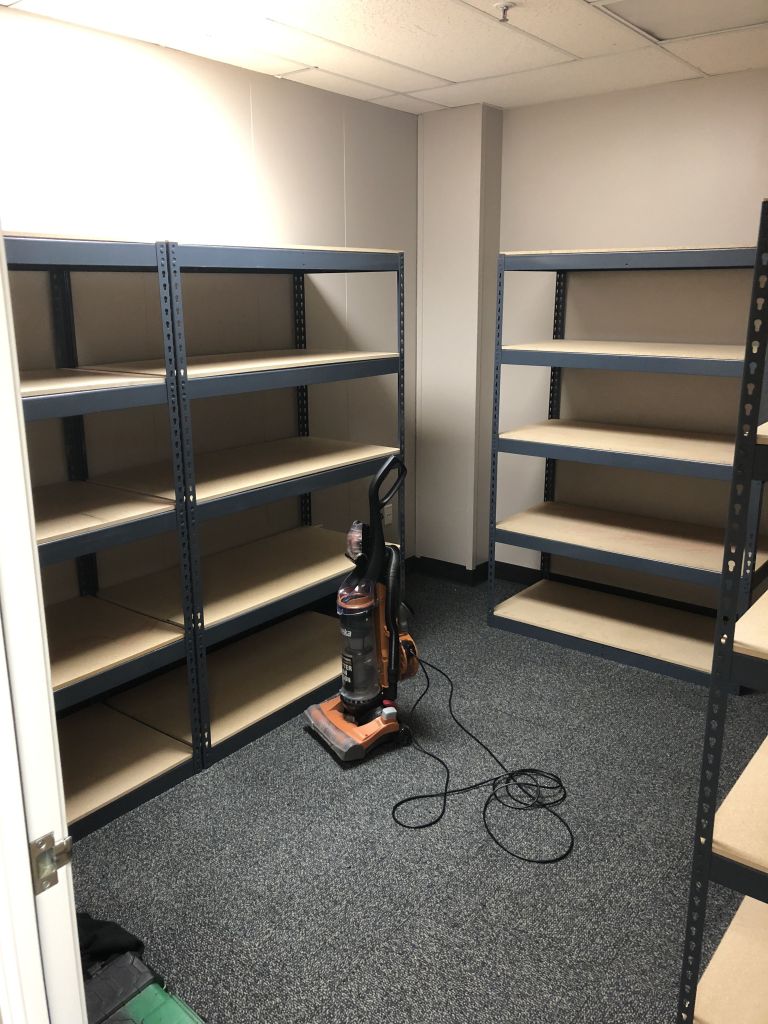
Boltless shelving (also called rivet shelving) assembles without nuts, bolts, or clips. Shelves drop into place on pre-riveted upright connections, making it the fastest shelving to assemble and reconfigure. Most units can be assembled in minutes with just a rubber mallet.
Best for: Light to medium-duty storage, retail backstock, home workshops, small warehouses
Capacity: 250–1,500 lbs per shelf depending on model
Advantage: Fastest assembly time of any shelving type — no tools required
Boltless shelving is available in single-rivet, double-rivet, and triple-rivet configurations, with increasing capacity at each level. Explore boltless shelving options.
4. Wide-Span Shelving
Wide-span shelving bridges the gap between standard shelving and pallet rack. These systems use heavier frames and beams to span 60–96 inches without center supports, creating wide-open bays for bulky items that do not fit on standard 48-inch shelving. Wide-span is commonly used for hand-stacked bulk storage where pallets are not practical.
Best for: Bulky item storage, tire storage, boxed inventory, manufacturing work-in-process
Capacity: 500–3,000 lbs per level
Key feature: Wider spans reduce the number of uprights, maximizing usable bay space
5. Mobile Shelving Systems
Mobile shelving mounts standard shelving units on wheeled carriages that roll along floor tracks. By eliminating fixed aisles (only one access aisle opens at a time), mobile shelving doubles storage capacity in the same floor area — or stores the same inventory in half the space.
Best for: Records storage, libraries, evidence rooms, museum collections, medical supply rooms, high-density file storage
Capacity: Same as the shelving mounted on the carriages (typically 350–1,000+ lbs per shelf)
Brands: Pipp Mobile Storage, Aurora, Spacesaver
Mobile systems come in manual (hand-crank), mechanical-assist, and powered electric configurations. Powered systems are preferred for heavy loads and ADA compliance.
6. Bin Shelving and Small Parts Storage
Bin shelving combines standard shelving with modular plastic bins, dividers, and drawer systems to organize small parts, fasteners, electronics, and components. Systems like the Storeganizer take this concept further by using angled bins and labeled compartments that dramatically improve pick accuracy and speed.
Best for: Hardware stores, maintenance shops, electronics assembly, auto parts counters
Capacity: Varies by bin size and shelving type
Key benefit: Reduces pick errors and search time for small item inventory
7. Modular Drawer Shelving
Modular drawer systems like Vidmar and Stanley Vidmar combine shelving height with drawer-based organization. Each drawer slides out to provide full access to contents stored in configurable compartments. These systems maximize storage density for small, high-value parts and tools.
Best for: Tool cribs, maintenance departments, aerospace parts, precision components
Capacity: 200–400 lbs per drawer, 2,500+ lbs per cabinet
Key benefit: Highest density per square foot for small parts storage
How to Choose the Right Shelving System
Step 1: Define Your Inventory Profile
Start by answering these questions about what you are storing:
- What are the dimensions and weights of your typical items?
- Are items boxed, loose, bagged, or on pallets?
- How many different SKUs do you manage?
- What is the total weight per shelf level?
- Are there special requirements (food-safe, cleanroom, corrosion-resistant)?
Step 2: Assess Your Space
Measure your available area and consider:
- Floor space (length × width) available for shelving
- Ceiling height (clear height under beams, lights, and sprinklers)
- Aisle width requirements (ADA compliance needs 36″ minimum)
- Floor load capacity (especially for mobile systems or upper floors)
- Access points (doors, docks, elevators) that affect layout
Step 3: Evaluate Operational Needs
Your shelving must support your workflow:
- Pick frequency: High-pick areas need open shelving with clear sightlines
- FIFO requirements: Food, pharma, and dated inventory may need flow-through systems
- Security: High-value items may need enclosed or lockable shelving
- Growth plans: Choose systems that expand modularly without full replacement
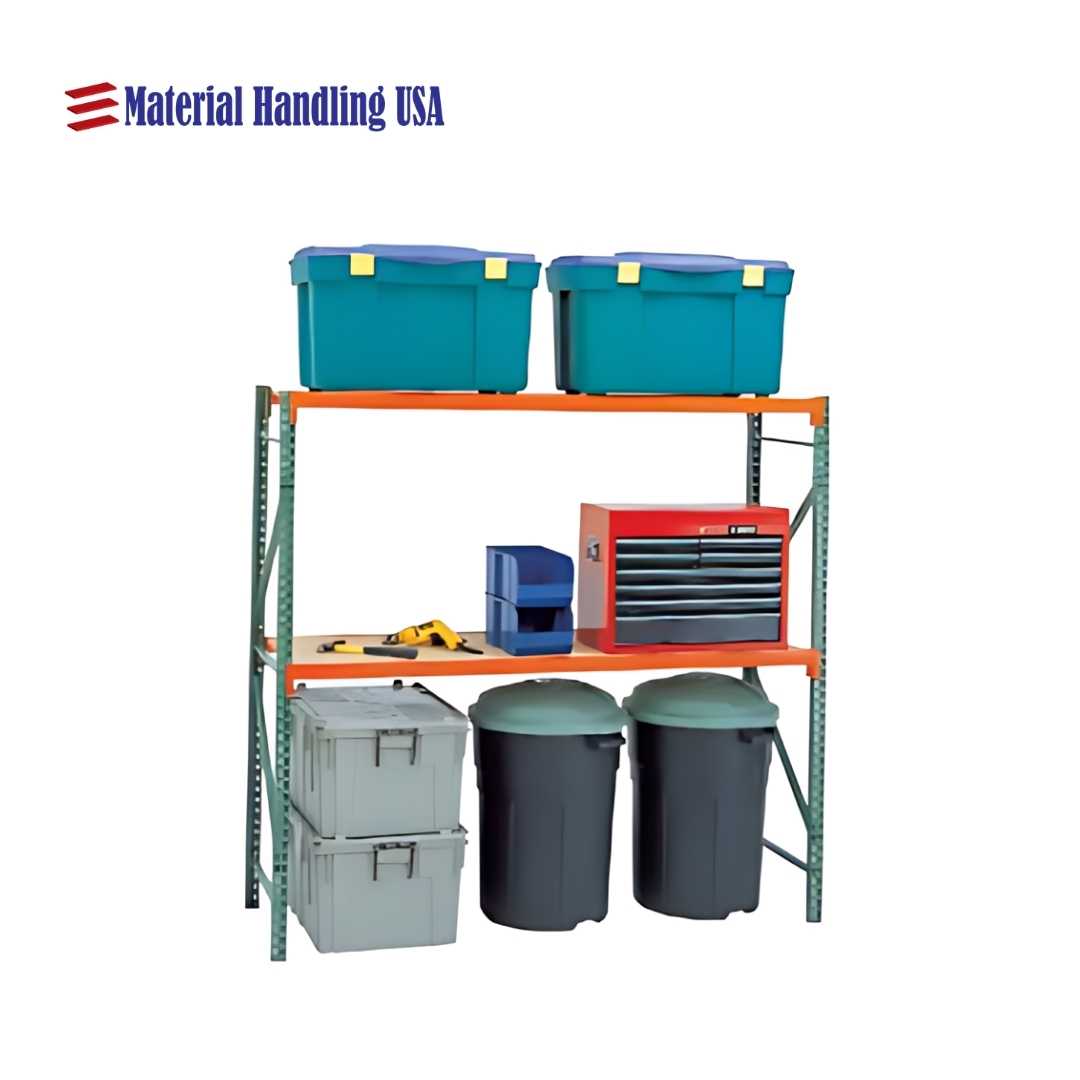
Shelving System Comparison Chart
| Shelving Type | Capacity/Shelf | Assembly | Best Environment | Price Range |
|---|---|---|---|---|
| Steel Closed | 350–1,000 lbs | Moderate (clips/bolts) | Industrial, stockrooms | $$ |
| Wire Shelving | 300–800 lbs | Easy (snap-on) | Food service, healthcare | $$ |
| Boltless Rivet | 250–1,500 lbs | Very easy (mallet only) | Light/medium storage | $ |
| Wide-Span | 500–3,000 lbs | Moderate | Bulk hand-stack storage | $$–$$$ |
| Mobile Shelving | Same as base unit | Professional install | Records, evidence, medical | $$$–$$$$ |
| Bin Shelving | Varies | Easy | Small parts, hardware | $–$$ |
| Modular Drawer | 200–400 lbs/drawer | Minimal | Tool cribs, precision parts | $$$$ |
Industry-Specific Shelving Recommendations
Healthcare and Medical Supply Rooms
Healthcare facilities require NSF-listed or antimicrobial shelving that supports infection control protocols. Wire shelving with chrome or green epoxy finish is the standard. Mobile shelving systems maximize storage in constrained hospital supply rooms. Read our medical supply room guide.
Law Enforcement and Evidence Storage
Evidence rooms demand high-density, secure shelving with individual locking compartments and chain-of-custody support. Mobile shelving with lockable carriages is the industry standard. See evidence storage design solutions.
E-Commerce and Fulfillment
Pick-and-pack operations need open-front shelving with clear bin labeling, ergonomic shelf heights, and modular configuration. Boltless shelving and wire shelving are popular choices for their flexibility and fast reconfiguration. Explore e-commerce packing station design.
Manufacturing and Industrial
Shop floors and maintenance areas need heavy-duty closed shelving that handles lubricants, fasteners, tools, and raw materials. Modular drawer systems are ideal for precision components. Oil-resistant finishes prevent corrosion in machine shop environments.
Frequently Asked Questions
What is the strongest type of warehouse shelving?
Heavy-gauge steel closed shelving (18-gauge or thicker) offers the highest capacity per shelf — up to 1,000+ lbs per level in some configurations. For bulk storage, wide-span shelving provides high capacity across wider openings. For small parts, modular drawer cabinets offer the highest weight density per square foot.
How much does warehouse shelving cost?
Basic boltless shelving starts around $80–$150 per unit. Mid-range steel shelving runs $200–$500 per section. Premium wire shelving systems cost $150–$400 per unit. Mobile high-density systems are the most expensive at $50–$100+ per square foot installed. Prices vary by size, capacity, and quantity.
Can wire shelving hold heavy items?
Yes. Commercial-grade wire shelving typically holds 300–800 lbs per shelf depending on size and manufacturer. Heavy-duty wire shelving models support up to 800 lbs per shelf. For loads over 600 lbs per shelf, steel closed shelving or wide-span systems are better choices.
What shelving is best for food storage?
NSF-listed wire shelving is the industry standard for food storage. The open wire design allows airflow, prevents moisture buildup, and enables sprinkler coverage. Chrome or polymer-coated finishes resist corrosion from cleaning chemicals. Wire shelving is required by most health codes for walk-in coolers and dry storage areas.
How do I maximize storage capacity in a small warehouse?
Mobile shelving systems can double storage capacity by eliminating fixed aisles. Additionally, use the full ceiling height with taller shelving and step stools or rolling ladders. Bin shelving organizes small parts more efficiently than open shelves. Finally, consider vertical automation like the Vidir vertical storage carousel for high-density retrieval.
How tall should warehouse shelving be?
Standard warehouse shelving ranges from 72″ (6 ft) to 87″ (7.25 ft) for hand-loaded applications. Taller units (96″–120″) require step stools, rolling ladders, or order picker lifts. Building codes require shelving tops to be at least 18″ below sprinkler deflectors. Choose heights that keep frequently picked items between waist and shoulder level for ergonomic efficiency.
Get Help Choosing the Right Shelving
Material Handling USA works with leading shelving manufacturers to provide the right solution for every application. Our team handles product selection, space planning, and professional installation for warehouses, stockrooms, and industrial facilities of every size.
Call (800) 326-4403 or request a free quote to get started.
Related Resources
Build Your Own Storeganizer Layout
Use our free 3D Storeganizer Configurator to size your columns, pick pocket sizes and textile grades, and get a price in minutes — no sales call required to see your configuration.
More on Storeganizer
Storeganizer replaces shelving for small, slower-moving inventory with vertical columns of textile pockets that hang in existing pallet rack — up to 396 pick locations per bay.
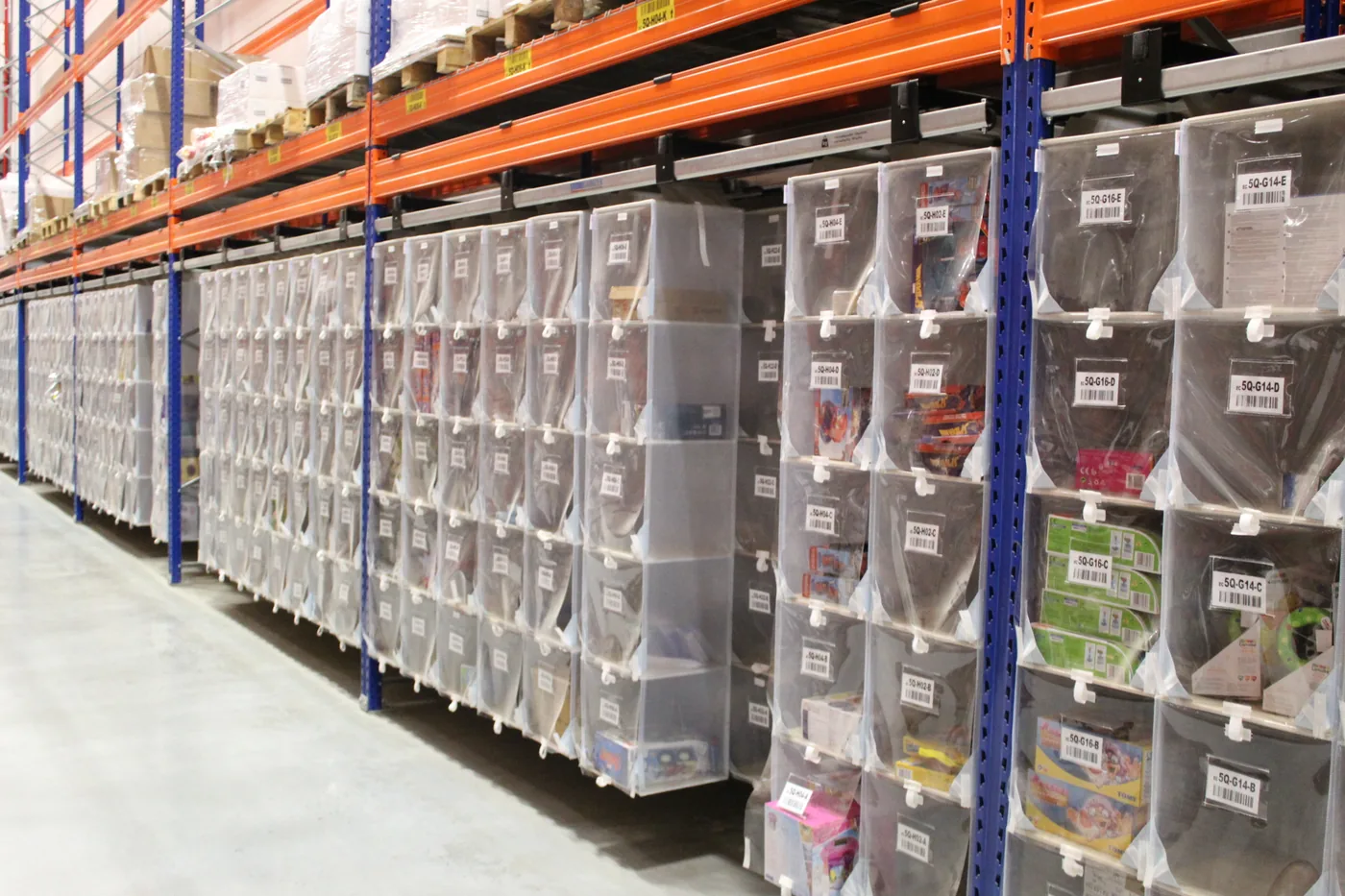 Storeganizer high-density pocket storageVertical columns of textile pockets that hang in existing pallet rack — up to 396 pick locations per bay.
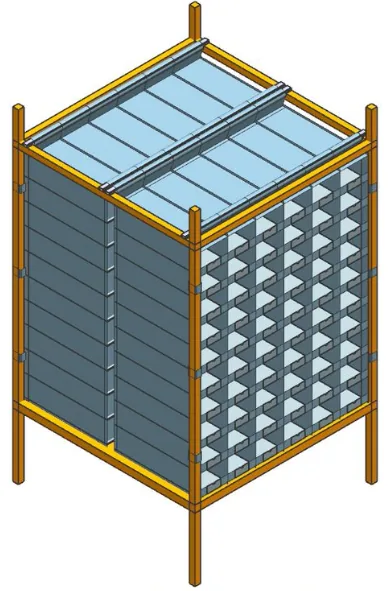 Free Storeganizer ConfiguratorConfigure bay height, pocket size, bay count and options; get a 3D layout, location count and price.
 Storeganizer vs. shelving, flow rack & automationAn honest comparison from a distributor that sells all of them.