
Bin Inventory Systems for Utah Storerooms
Bin shelving set up as an inventory system — one home per part, a location address on every bin, two-bin or min/max refills you can see from the aisle, and counts that take minutes instead of a weekend. Planned and quoted by our Salt Lake City team.
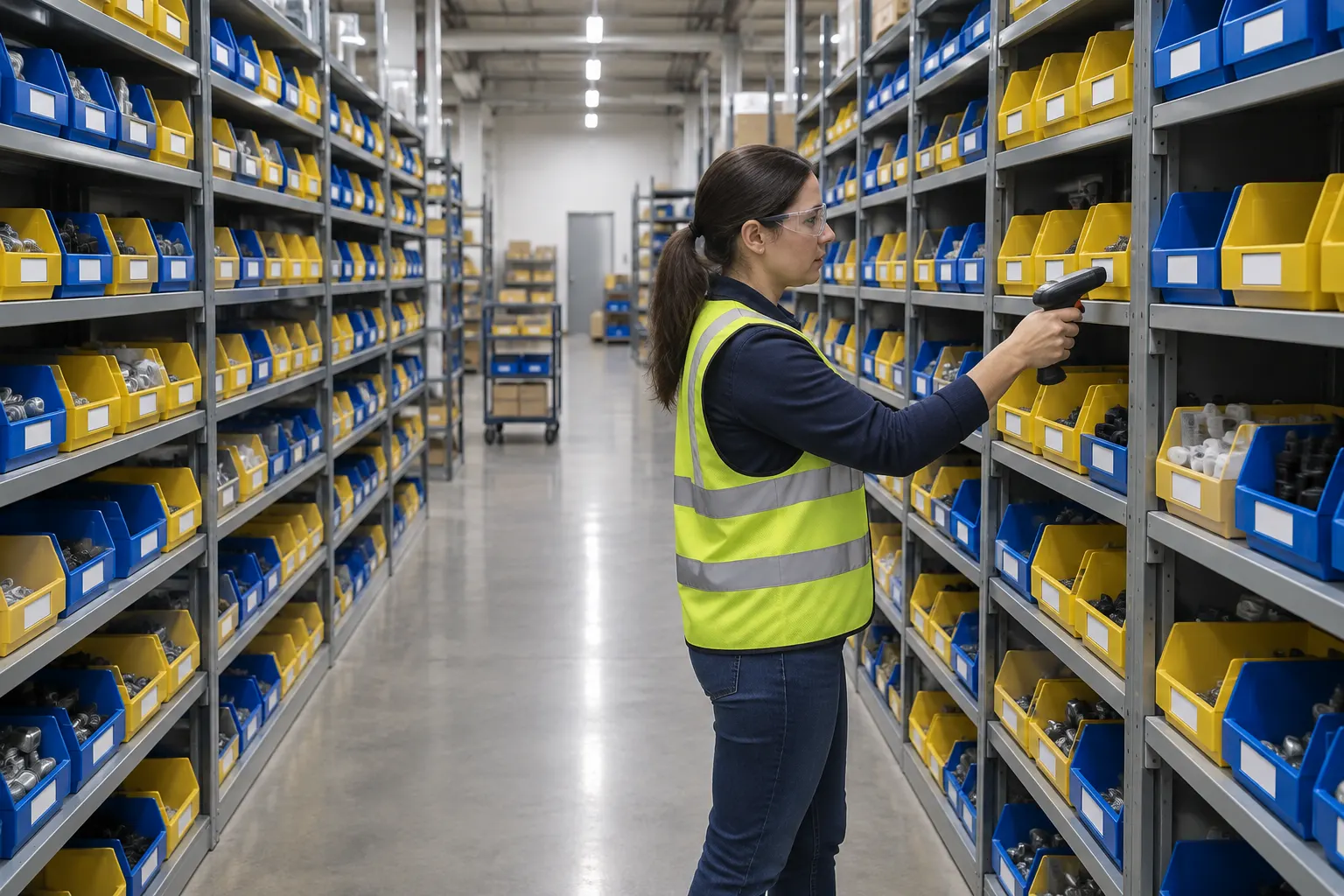
One part, one bin
Fixed home for every SKU
Two-bin or min/max
Refill rules you can see
801-328-8788
Utah project line
Statewide Utah
Logan to St. George
What an Inventory Bin System Actually Is
An inventory bin system is a storeroom where every stocked item has one assigned bin, every bin has a location address, and a simple rule tells staff when that bin needs to be refilled. The software side — an ERP, CMMS or inventory app — tracks quantities. The physical side is what makes those numbers true: bin shelving, shelf bins, dividers and labels arranged so a part is always where the record says it is.
Most inventory errors start on the shelf, not in the system. A part gets put away in the first open spot, the same SKU ends up in three places, or a bin runs empty and nobody notices until a machine is down. A well-planned bin system closes those gaps with structure people can see from the aisle.
This page covers the inventory-control side of bin shelving for Utah maintenance storerooms, manufacturing stockrooms, fleet and utility shops and parts rooms. For warehouse pick zones, see our warehouse bin shelving guide; for every Utah application, start at our Utah bin shelving page.

The four parts of a bin inventory system
- A fixed home: each SKU is assigned to one bin (or one divided section) and nothing else goes there.
- An address: a location code on the bin that matches the location field in your inventory record.
- A refill rule: two-bin, min/max or reorder point — chosen per item, visible on the shelf.
- A count routine: small, frequent cycle counts by location instead of one annual shutdown count.
Two-Bin, Three-Bin and Min/Max: Choosing the Refill Rule
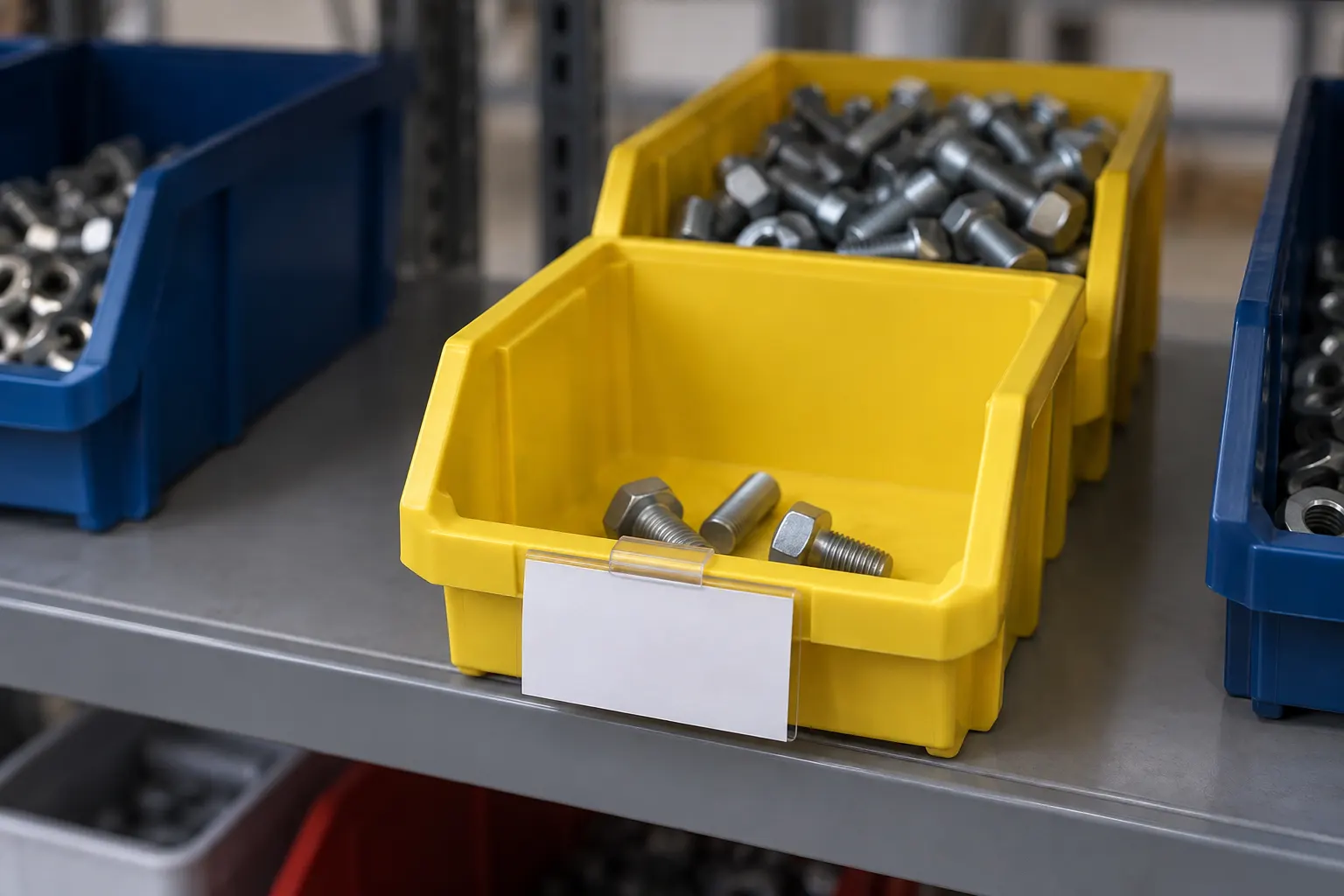
Two-bin (kanban) is the simplest bin system in inventory management. Each part gets two identical bins: staff pick from the front bin, and the rear bin holds enough stock to cover the time it takes to reorder. When the front bin empties, it goes to the reorder point (or its card is pulled), the rear bin slides forward and work never stops. Nobody has to look up a number — an empty bin is the signal.
Three-bin adds a third bin held in a central store or with the supplier, which suits very fast consumables and vendor-managed programs. Min/max uses one bin with a minimum and maximum quantity recorded on the label; when stock hits the minimum, someone orders up to the maximum. It fits larger, slower or more expensive parts where a full second bin would tie up too much money.
Refill methods compared
| Method | Best for | Shelf setup | Watch out for |
|---|---|---|---|
| Two-bin kanban | Fasteners, fittings, filters, gloves, low-cost consumables used every week | Two identical bins front-to-back, or side-by-side on shallow shelves; card or label on each | Bins must be deep enough for two, and empty bins must be returned right away |
| Three-bin | High-use consumables and supplier-managed programs | Two bins at point of use plus one in the central store or with the vendor | Needs a clear owner for the third bin |
| Min/max | Spare parts, slower movers, bulky or higher-cost items | One bin or divided section; min/max printed on the location label | Depends on someone checking levels; pair it with cycle counts |
| Reorder point (system-driven) | Items issued through a scan or work order | One bin with a scannable location label | Only as good as the transactions recorded |
Most storerooms end up with a mix: two-bin for the hundreds of cheap consumables that cause the most stock-outs, and min/max for critical spares. The shelving plan should reflect that mix — deeper bins or double-depth shelves where two-bin runs, and divided or wider sections where single min/max bins hold bulkier parts.
Bin Locations: Setting Up an Address for Every Part
A bin location code lets anyone find a part from the record alone. The best practice is to build the code from things that never move — the building structure — and never from what is stored there. Read the code left to right the way a person walks to the bin.
Zone or room
A letter for each storeroom, cage or mezzanine level (for example, M for the main storeroom).
Aisle and unit
Number aisles in walking order and shelving sections along each aisle, both on the same side every time.
Level
Count shelf levels from the bottom up, so adding a shelf on top doesn’t renumber the unit.
Position
Number bins or divided sections left to right across the level.
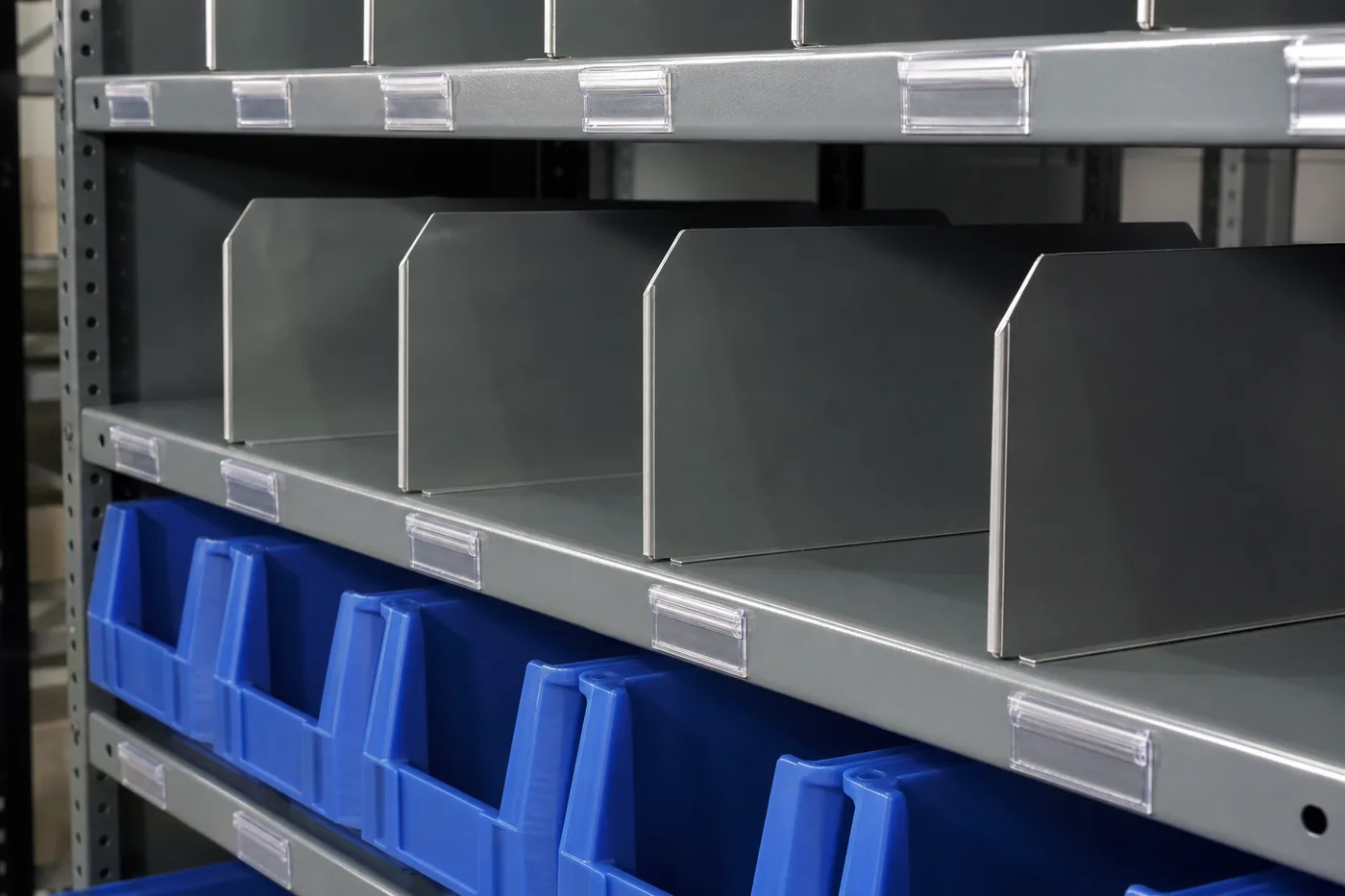
A finished code reads something like M-03-12-C-04: main storeroom, aisle 3, section 12, level C, position 4. Keep every field the same length so labels sort correctly in the system, and leave gaps in the numbering where you expect to add sections later.
On the shelving itself, that means aisle markers at the end of each run, section tags on the uprights and a label on the front of every bin or shelf lip that is readable without pulling the bin. Add a barcode if you scan issues or counts. Label materials and styles are covered in our bin location labeling guide.
Dividers matter too. On a divided shelf, each section gets its own position number, so the divider spacing should be set before labels are printed.
Sizing Bins to Usage, Lead Time and Safety Stock
Bin size is an inventory decision, not just a storage one. A bin that is too small forces overflow into a second location, which breaks the one-part-one-home rule. A bin that is too big hides excess stock and wastes shelf faces. Size each bin around how the part is actually used.
| Input | What to gather | How it shapes the bin |
|---|---|---|
| Usage | Average units issued per week (from issue history or a SKU export) | Sets how much the working bin has to hold |
| Lead time | Days from reorder to parts on the shelf | Two-bin: rear bin covers usage during lead time |
| Safety stock | Extra units for demand spikes or late deliveries | Added to the rear bin or to the min |
| Part size and pack quantity | Dimensions and how the supplier packs it | Bin width, depth and height; whether a full pack fits |
| Criticality | Would a stock-out stop a line, a vehicle or a job? | Critical spares get min/max with a higher min, or a locked location |
- Two-bin rule of thumb: each bin holds usage during lead time plus safety stock, and one full supplier pack fits in the bin.
- Match bin depth to shelf depth — 12-inch bins on 12-inch shelves, or two 12-inch bins front-to-back on a 24-inch shelf for two-bin runs.
- Standardize on a few bin sizes so bins can move when usage changes; our shelf bin guide compares common sizes.
- Leave 10–15% of positions open for new parts so they get a real home, not a spot on the floor.
- Use data when you have it: our SKU upload analyzer roughs out bin counts and sizes from a spreadsheet.
Cycle Counting by Bin Location
Once every part has one address, counting gets small and routine. Instead of closing the storeroom for a full physical inventory, staff count a few sections each day and work through the whole room on a schedule — high-value and fast-moving items more often, slow parts less.
Count by location, not by part list. Walking section by section is faster and catches parts sitting in the wrong bin, which a part-number count misses. When a count does not match, the location code points straight to the bin, the part and the last transactions to check.
Open-front shelf bins help here: a counter can see the level from the aisle and tip a bin forward without taking it off the shelf. Our inventory accuracy guide covers how to measure and report count results.
Open Stock vs. Controlled Issue
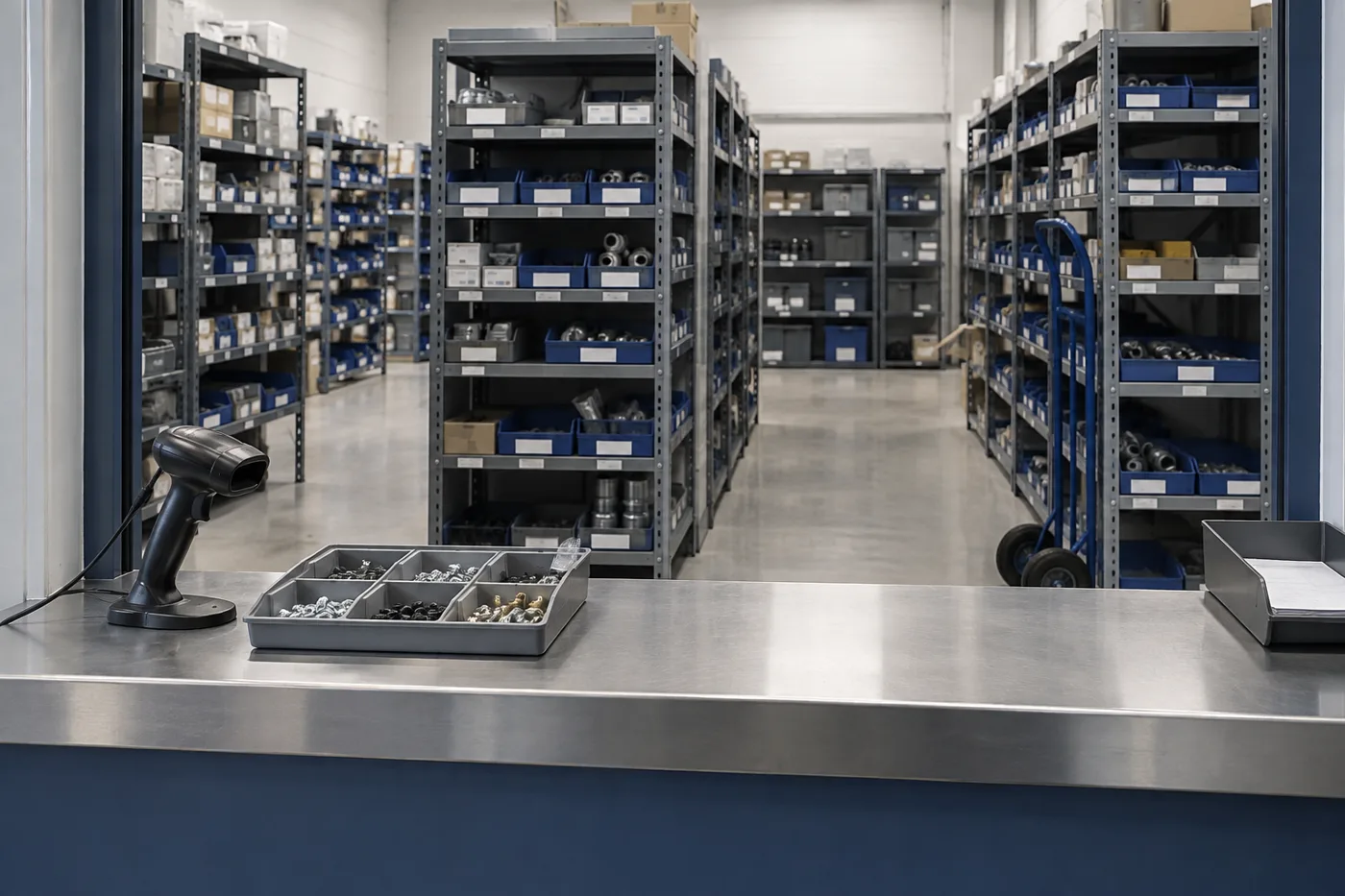
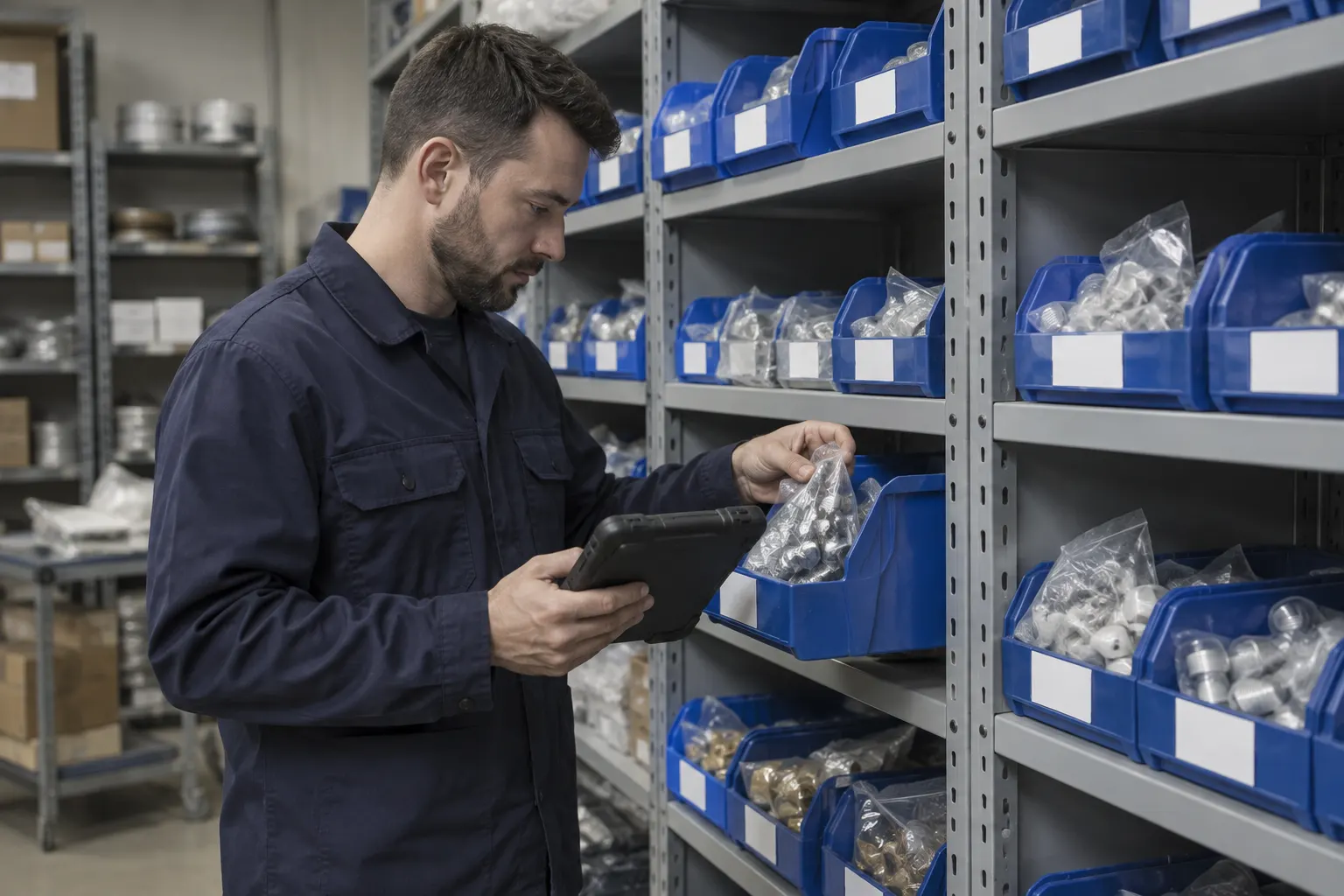
Not every part needs the same level of control. Many storerooms split inventory into open stock — cheap consumables on two-bin shelving that technicians can take freely — and controlled stock issued at a counter or window against a work order or scan.
Bin shelving works for both. Open-stock runs usually sit outside or at the front of the storeroom so techs don’t need an attendant for gloves and fasteners. Controlled spares go behind the issue counter, in locking bin cabinets or inside a wire mesh security cage. Kit staging shelves near the counter let the attendant pull parts for scheduled jobs ahead of time.
If you are laying out a full maintenance crib, our Utah tool crib and MRO shelving page covers issue windows and crib layout, and our maintenance storeroom mobile shelving page shows how to add density for slow spares.
The Shelving Behind a Bin Inventory System
The same inventory rules work on several builds. Pick the one that fits your parts, your control level and your room.
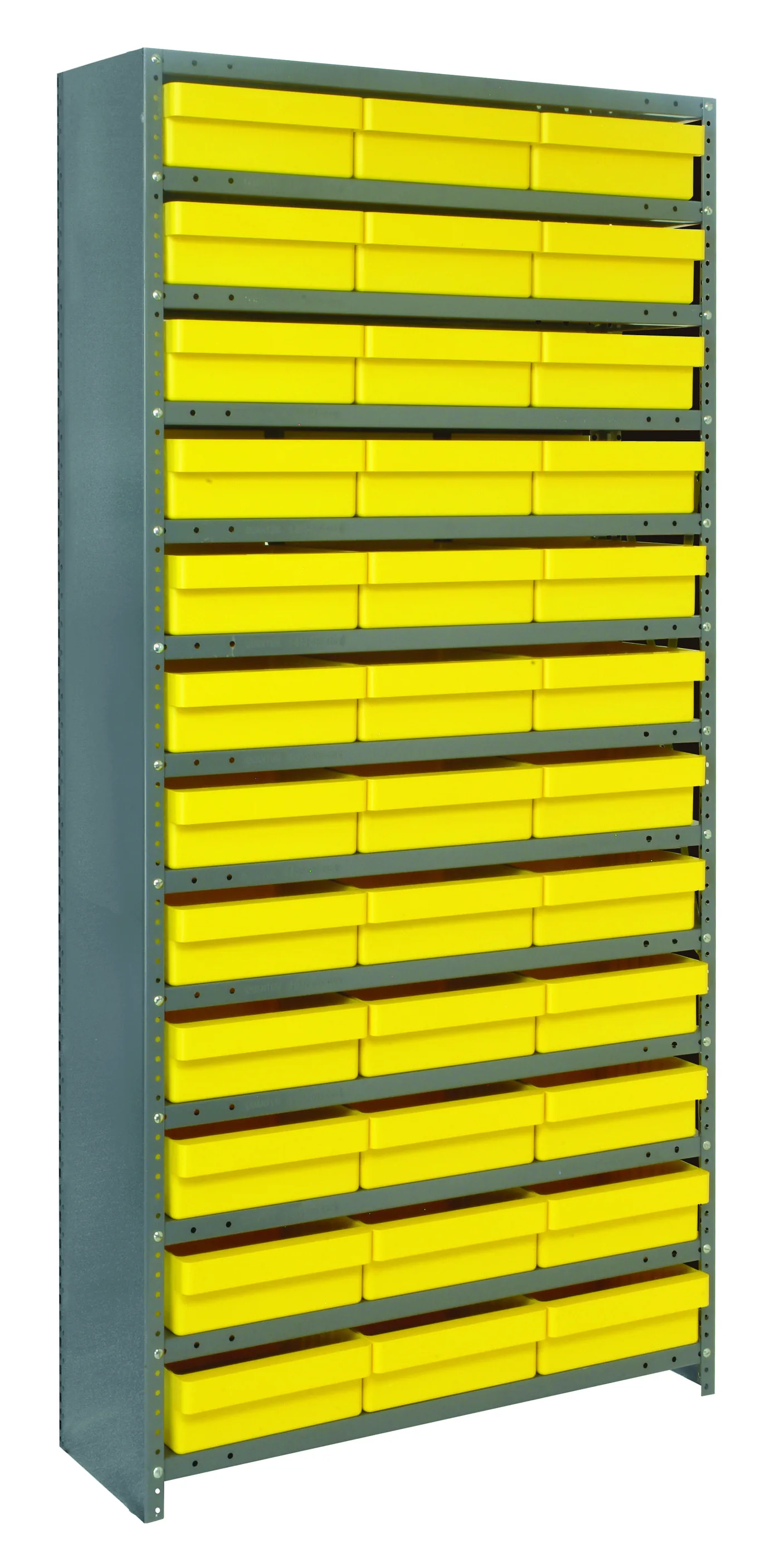 Closed steel bin shelvingMost small parts. Solid back and sides keep bins and loose parts from falling through, and many levels fit hundreds of locations in one section.
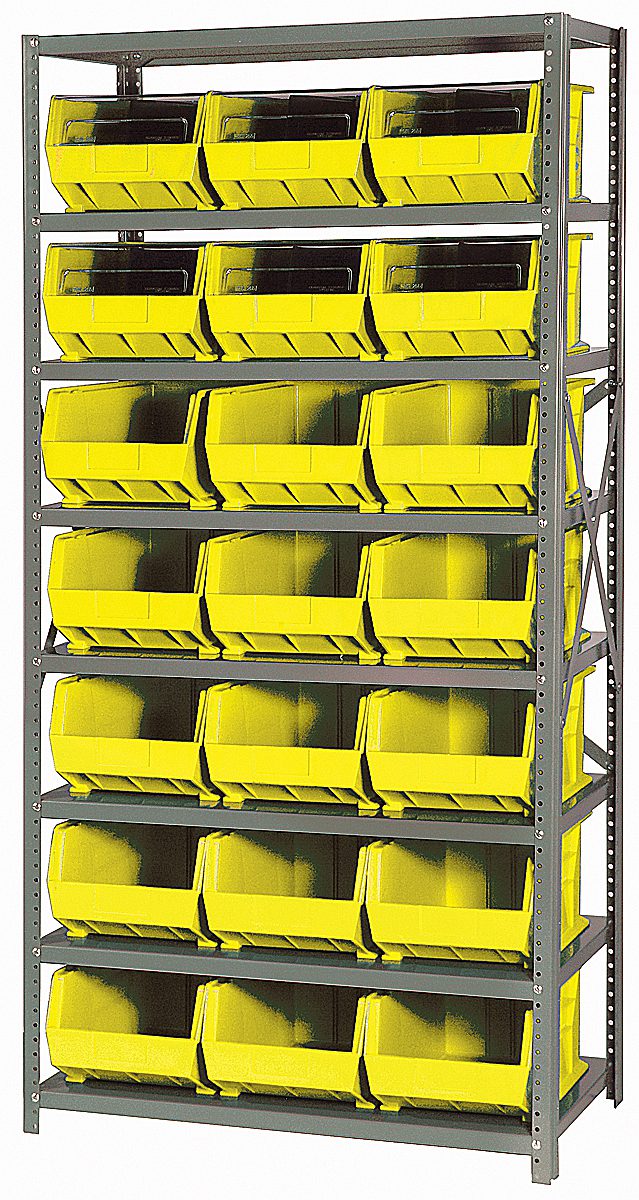
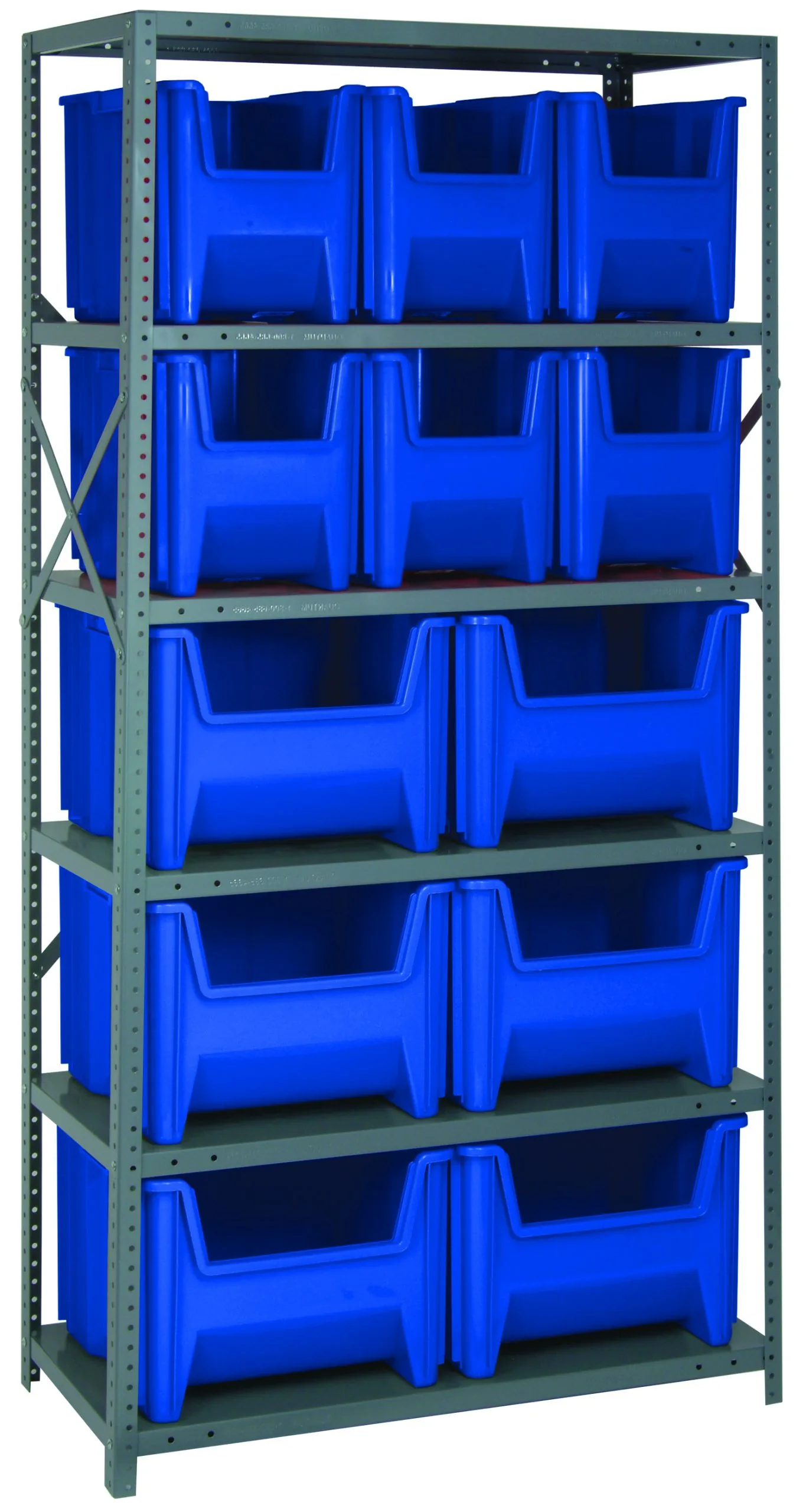
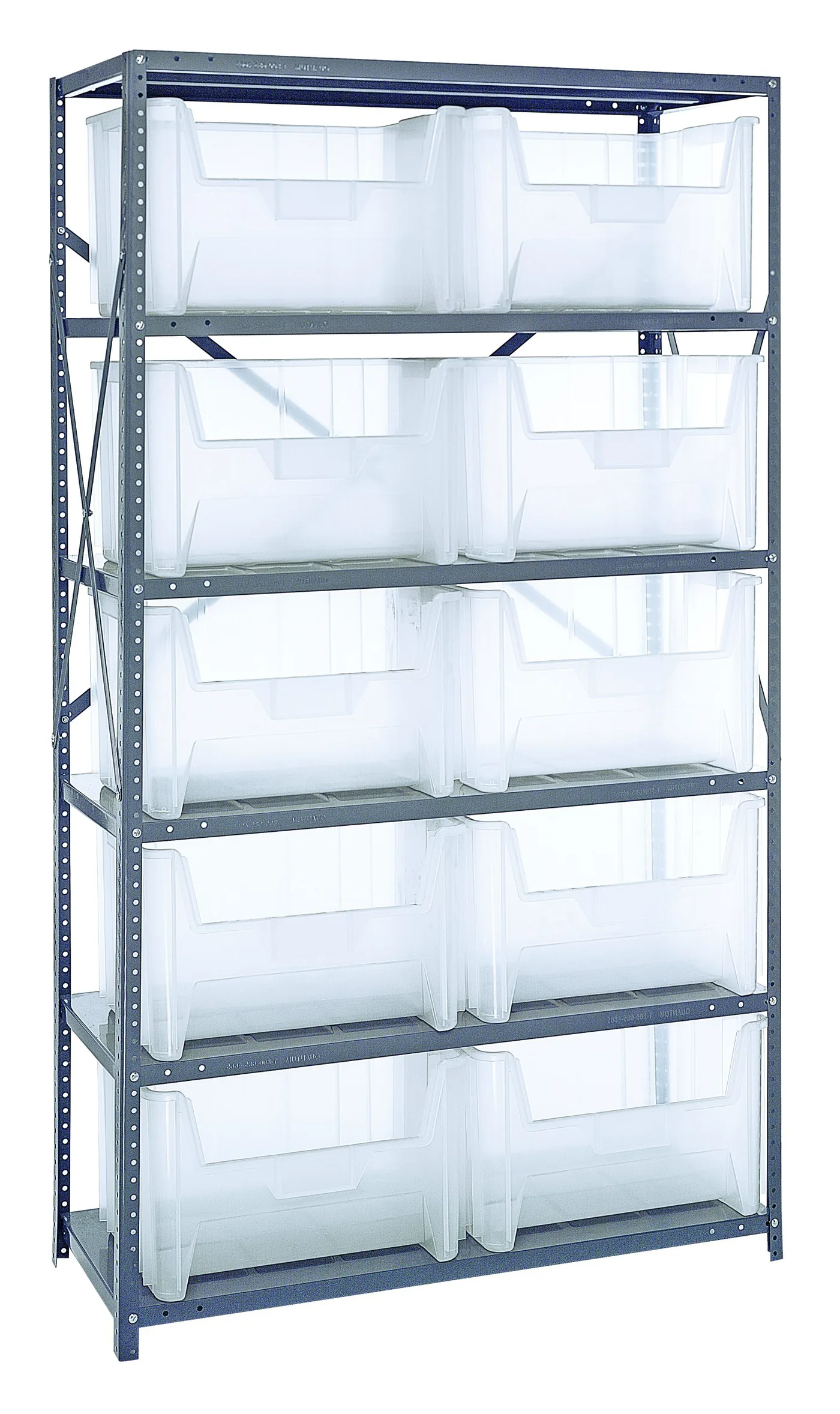
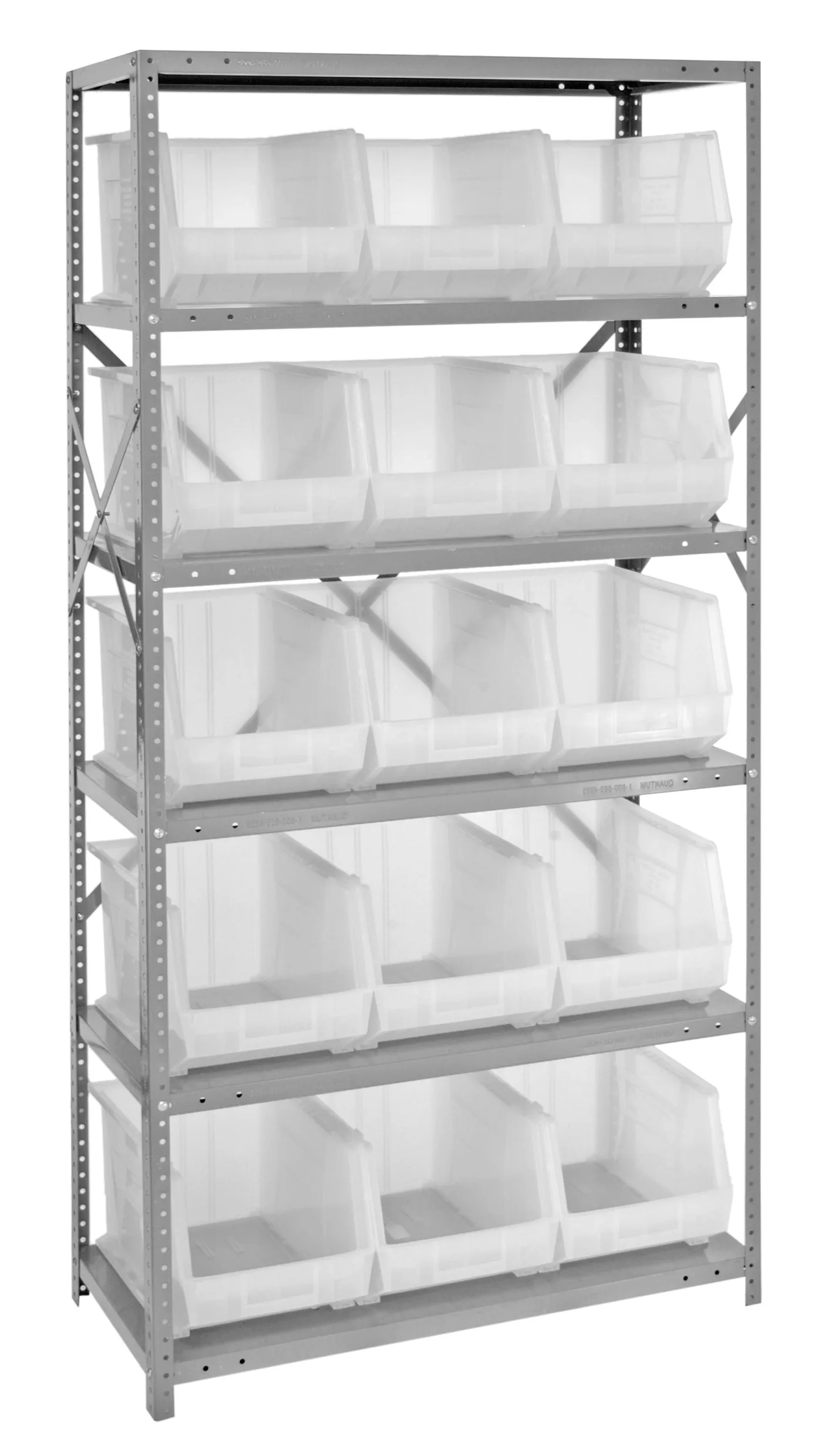 Steel shelving with large hopper binsBulkier parts and two-bin pairs. Large open-front bins hold full supplier packs and are easy to see into during counts.
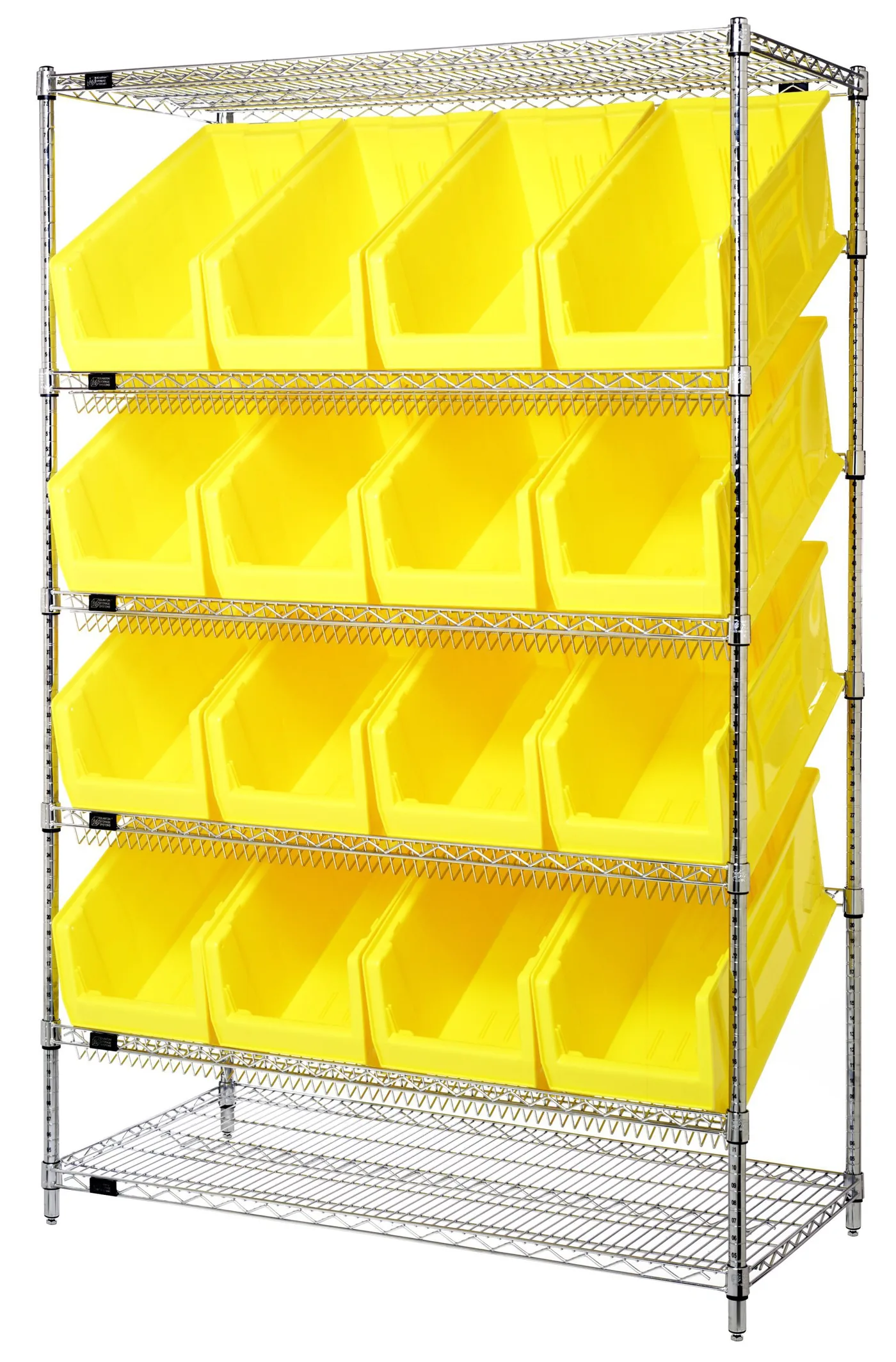 Wire bin systemsClean, visible stock. Slanted wire shelves tip bins toward the aisle, and open decks let light and sprinkler water through.
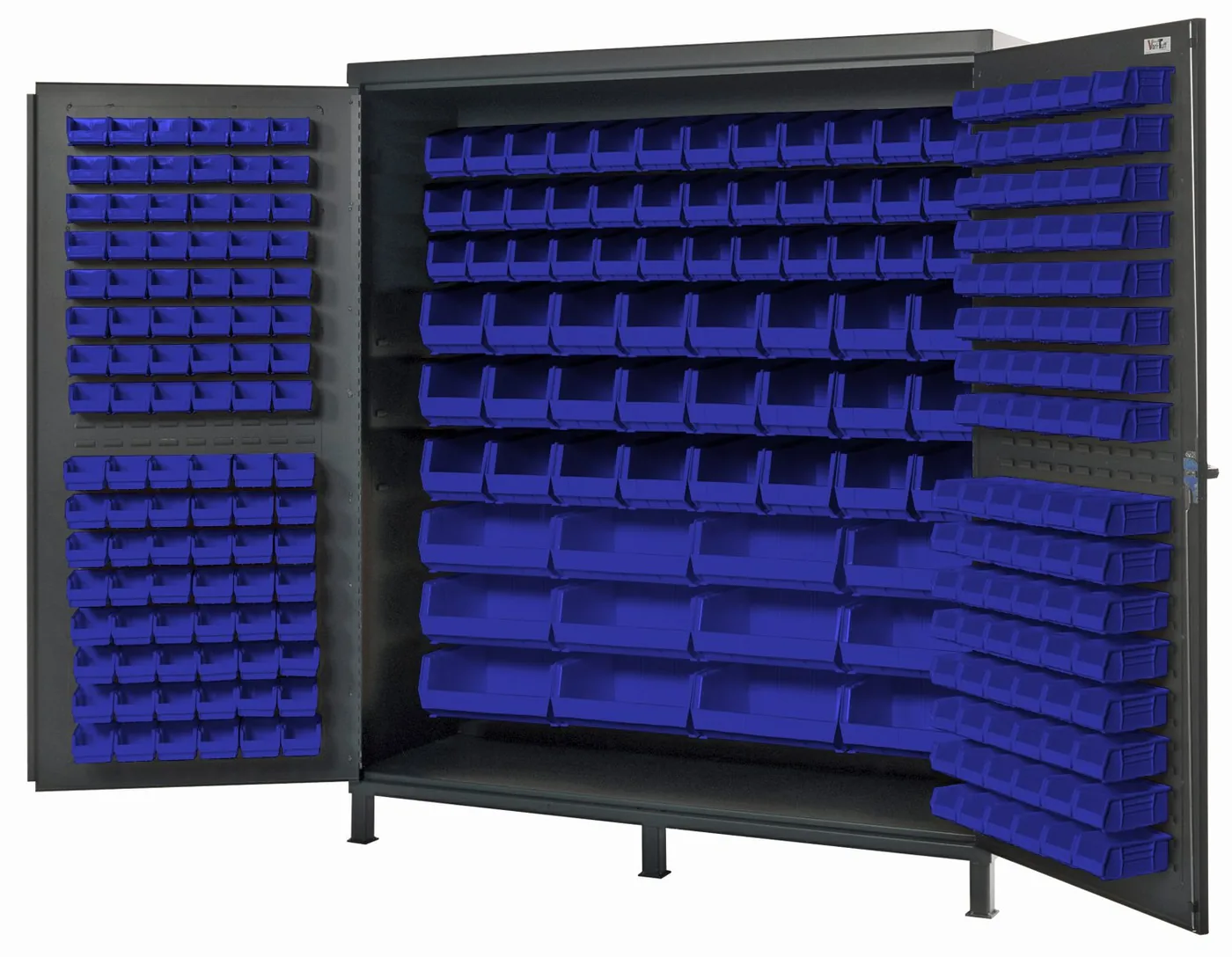 Locking bin cabinetsControlled parts. Bins mounted inside a lockable cabinet and on its doors for high-value or restricted items.
Most storerooms combine two or three of these. See the full range of builds, bin sizes and packages on our main bin shelving systems page, or general storage for the rest of the building on our Utah shelving page. For a finished example, our Salt Lake City and Sandy dealership parts room project shows closed bin shelving in daily use.
Utah Storeroom Planning Notes
We plan bin inventory systems for storerooms from Logan and Ogden through Salt Lake and Utah County to St. George — aerospace and composites plants, mines and refineries, food processors, school districts, utilities and fleet shops. A few details come up on nearly every Utah project.
- Seismic anchoring: the Wasatch Front is an active seismic area, so tall shelving runs are commonly anchored or tied together overhead. Your local building official sets the requirement; our shelving anchoring guide covers the usual questions.
- Bin retention: in a quake, open bins on high levels can slide off. Closed-back shelving, bin lips that hook over the shelf edge or shelf rails keep bins in place.
- Live storerooms: most storerooms can’t close for a changeover. We sequence delivery and setup by aisle so parts move from old locations to new ones in stages, and labels go up as each section is loaded.
- Kitting and line-side stock: manufacturers often extend the bin system to the production floor; our parts storage and kitting page covers that side.
- Availability: some common sizes are in stock at select manufacturers, subject to confirmation at quote time.
Planning a Bin Inventory System in Utah
Send the room and the parts
Room dimensions or a sketch, photos of today’s shelving, and a parts list with rough usage if you have it.
Bin and location plan
We lay out sections, levels, bin sizes and a location-code scheme, and mark which runs are two-bin, min/max or controlled.
Quote, delivery and setup
One quote for shelving, bins, dividers and label holders, delivered to your Utah site and staged so the storeroom keeps issuing parts.
Call our Utah project line at 801-328-8788 or request a quote. You can also browse every Utah application on the Utah bin shelving hub.
Shop Bin Shelving for Storerooms
Buy select items directly from our online store, or request a quote for volume, custom sizes and freight-rated orders.
Bin Inventory System FAQs
What is an inventory bin system?
How does the two-bin system work in inventory management?
What is the difference between two-bin and min/max?
How should bin locations be numbered?
What size bins do I need?
Can you convert our existing storeroom shelving into a bin system?
Does bin shelving need to be anchored in Utah?
Ready to Plan a Bin Inventory System in Utah?
Send us your storeroom and parts list for a free bin and location plan and quote.