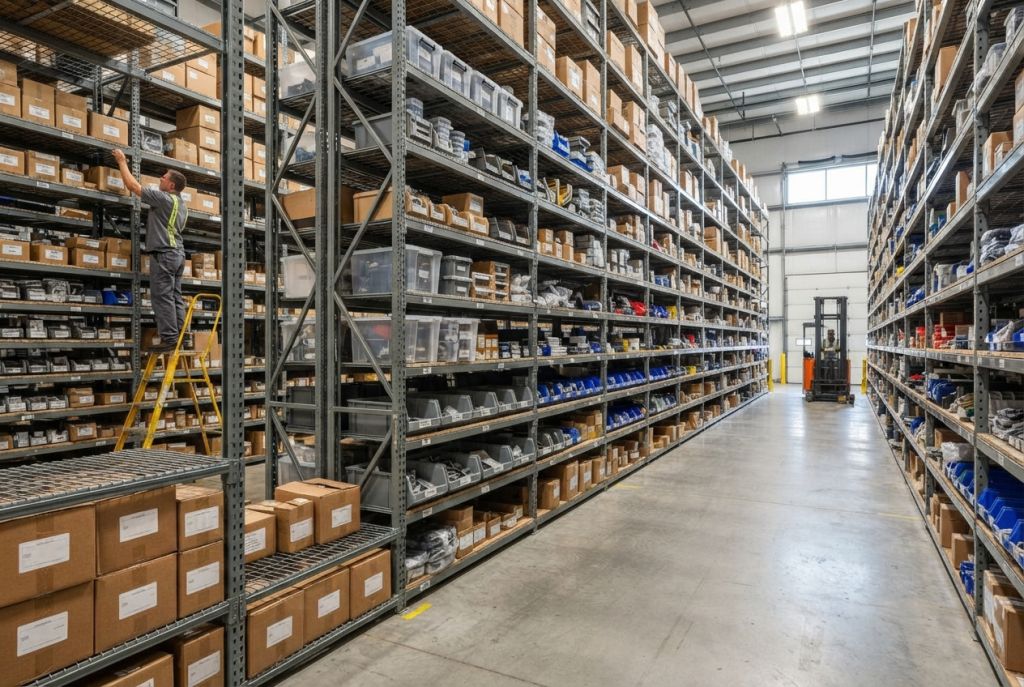
A shelving with bins system is a powerful combination of standard shelving units and removable containers. While the concept is straightforward, its impact on operational efficiency is profound. This setup is a cornerstone for organizing and managing inventory, especially for facilities dealing with a large number of small parts. It transforms static racks into a high density, grab and go system that directly boosts picking speed, improves accuracy, and maximizes your storage footprint.
For managers and buyers, this isn't just storage equipment; it's a strategic tool for creating a more efficient, organized, and profitable workspace.
How to Organize Inventory With Bins: 8 Steps
The best way to organize inventory with bins is simple: one part per bin, one address per bin, and the fastest moving parts in the easiest spots to reach. The eight steps below walk you through setting up an inventory bin system on shelving from scratch. They work for a small stockroom or a full warehouse.
- Sort and count what you have. Pull a list of every SKU or part number you plan to store. Note the size, weight and how often each item gets picked. Toss or move out dead stock first so you are not building bins for things nobody uses.
- Group items into zones. Put related items together, such as fasteners in one zone, electrical in another and packing supplies in a third. Zones make the room easy to learn and keep pickers from crossing the building for one order.
- Rank items by how fast they move. Sort your list into fast, medium and slow movers. This is often called ABC slotting. Fast movers go closest to the pick or pack area, slow movers go to the back or the top shelves.
- Pick the right bin for each item. Size each bin to the part and to how many you keep on hand. Use open front shelf bins for small parts you grab often, dividable bins for tiny parts, stackable totes for bulk and ESD safe bins for electronics.
- Choose shelving that fits the bins. Match shelf depth to your bin depth so bins sit flush and do not hang off the front. Check the rated capacity per shelf against your heaviest loaded bins. Adjustable shelving lets you set each level to the bin height and save vertical space.
- Give every bin an address. Create a location code such as zone, aisle, unit, shelf and position (for example A-03-2-C). Put the code and the part number on the bin label and on the shelf edge so a bin always goes back to the same spot.
- Set a refill rule. Decide how each bin gets restocked. A two bin system works well for cheap, steady parts. A min/max rule works for higher value items you track in software. Write the rule on the label so anyone can follow it.
- Count, review and adjust. Cycle count a few locations each week instead of shutting down for a full count. Every few months, review your slotting and move items whose demand has changed.
Want to see how many bins and shelf units your parts list needs before you buy? Our free Parts & Kitting Storage Planner turns your SKU count and part sizes into a bin and shelving plan. If you already know your bin mix, use the boltless shelving configurator to build the units around it.
Need a second set of eyes on your bin layout?
Send us your parts list and room size. Our team will suggest bin sizes, shelving and a layout at no cost. Call (800) 326-4403 or explore our bin shelving systems.
Unlocking Peak Efficiency With Shelving and Bins
In any fast paced environment, from a bustling warehouse to a meticulous manufacturing floor, every square foot and every second is valuable. Relying on traditional shelving alone can lead to disorganized piles, causing employees to waste time hunting for the right item. Integrating bins tackles this problem head on, turning potential chaos into a streamlined machine for inventory control.
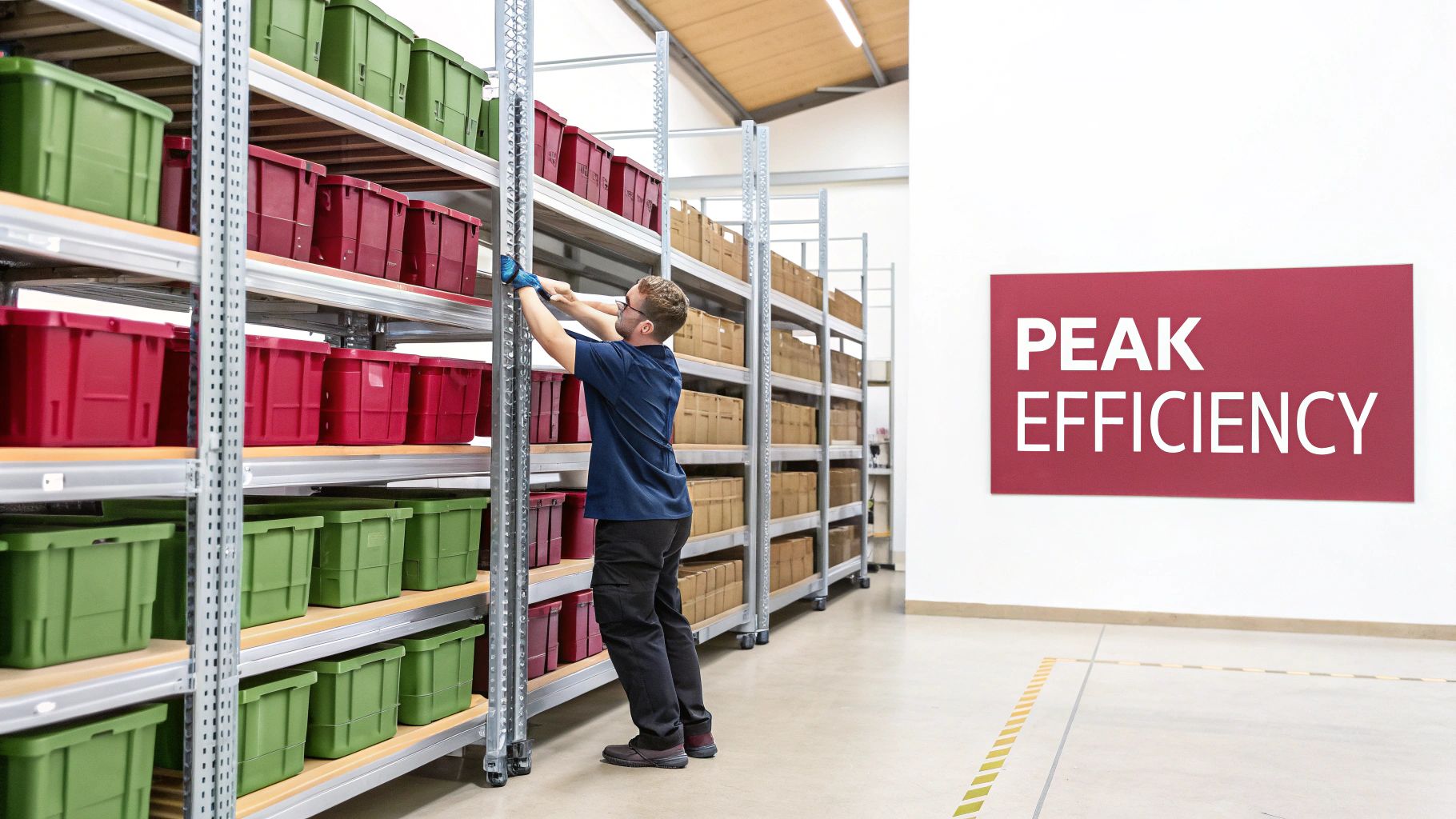
This powerful combination is engineered to solve common operational bottlenecks. When you assign specific parts to designated bins, you create an intuitive, visual system that dramatically cuts down on human error.
The Strategic Advantage of Integrated Systems
A properly implemented shelving with bins system does more than just hold inventory; it actively improves your entire workflow. For facility managers and purchasing agents, this translates into tangible benefits that positively impact the bottom line. It’s a foundational element of modern inventory management, especially with the growth of e commerce driving demand for faster, more accurate fulfillment.
The key benefits are immediate and impactful:
- Improved Organization: Small or loose items are neatly contained, which eliminates clutter and makes inventory counts far simpler and more accurate.
- Faster Picking Times: With everything in its place, employees can locate and retrieve items in a fraction of the time, directly increasing order fulfillment speed.
- Space Optimization: Bins allow you to pack small parts densely, making the most of every inch of your vertical space. If you want to dive deeper into this, check out our guide on how to maximize your cube with high density storage design.
- Reduced Errors: Clear separation and consistent labeling of items minimize the risk of picking the wrong part, a crucial win for quality control.
By transforming static shelving into a dynamic, organized system, facilities can reclaim valuable floor space and redirect labor from searching to more productive tasks. This shift is fundamental to lean and efficient operations.
Ultimately, investing in a well designed shelving and bin system is an investment in your operational excellence. At Material Handling USA, we provide the quality products and deep expertise to help you build it right the first time. With competitive pricing and free layout help, upgrading your storage is easier than you might think.
Choosing the Right Shelving System for Your Bins
The foundation of any effective bin storage system is the shelving that supports it. Selecting the right shelving is a critical decision that directly impacts safety, workflow, and the longevity of your investment. You wouldn't build a house on a shaky foundation; the same logic applies here. Don't build your inventory system on the wrong shelving.
Choosing correctly involves matching the shelving to the specific job it needs to do in your facility. The right choice for a sterile lab environment is vastly different from what a high traffic auto parts stockroom requires.
Matching Shelving to Your Environment
Different workplaces place unique demands on storage equipment. A busy warehouse needs raw durability and high capacity. A cleanroom, on the other hand, requires materials that won't attract dust or corrode. Making this distinction is the first step toward a smart purchase.
For example, a fulfillment center handling thousands of small, lightweight SKUs might be perfect for adjustable wire shelving, as its open design promotes airflow and visibility. However, a maintenance department storing heavy tools and bulky machine parts will need the brute strength of steel or rivet shelving to ensure safety and security.
Here's a quick look at the most common options and where they shine:
-
Rivet Shelving: This is a heavy duty, boltless workhorse known for its incredible strength and simple assembly. It’s a fantastic all around choice for industrial environments, stockrooms, and garages where durability is the top priority.
-
Wire Shelving: Often seen with a chrome or stainless steel finish, wire shelving is all about versatility. The open wire construction boosts visibility and air circulation, making it a go to for food service, healthcare, and electronics storage.
-
Steel Shelving: When you just need maximum strength, steel shelving is the undisputed champion. It offers the highest load capacities, making it the only real solution for storing your heaviest and bulkiest items without worry.
To help you visualize the best fit for your space, here's a simple breakdown of these popular systems.
Comparing Common Shelving Types for Bin Storage
| Shelving Type | Best For | Load Capacity | Key Advantage |
|---|---|---|---|
| Steel Shelving | Heavy industrial parts, tools, bulk storage | Highest (check the rated capacity per shelf) | Unmatched strength and durability for the heaviest loads. |
| Rivet Shelving | Stockrooms, warehouses, garages, general use | High (varies by beam and shelf size) | Excellent strength to cost ratio and fast, boltless assembly. |
| Wire Shelving | Electronics, medical supplies, food inventory | Medium (varies by shelf size) | Superior visibility, airflow, and resistance to dust buildup. |
Each type has its place, and the key is aligning its strengths with your daily operational demands. Steel is for raw power, rivet is for versatile strength, and wire is for environments where cleanliness and visibility are paramount.
Key Factors in Your Decision
Feeling overwhelmed by the options? Don't be. You can narrow it down quickly by focusing on three make or break factors. Answering these questions will point you directly to the perfect system for your needs.
-
Load Capacity: What’s the absolute heaviest load you’ll place on a single shelf? Don't guess. Exceeding a shelf's load capacity isn't just a bad idea, it's a serious safety hazard. Always pick a rating that comfortably exceeds your heaviest anticipated load.
-
Material & Durability: Will the shelves be exposed to moisture, chemicals, or the occasional bump from a cart? The material, be it powder coated steel or chrome, dictates how well it will resist rust, corrosion, and daily wear and tear, ensuring you get a longer service life from your investment.
-
Assembly & Adjustability: How often do you anticipate reconfiguring your storage layout? If the answer is "often," then boltless systems like rivet shelving are a lifesaver with their fast assembly. If your inventory sizes change frequently, easily adjustable shelves will give you the flexibility you need.
The right shelving is more than just a place to put things; it's an active component of your workflow. Investing in the appropriate system from the start prevents costly replacements and ensures a safer, more productive environment.
Our extensive collection of warehouse shelving and racks provides options for every application and budget. At Material Handling USA, we offer competitive pricing and free, no obligation layout designs to help you build the most effective system. Contact us to Request a Quote and let our experts help you make the right choice.
Selecting the Perfect Bins for Your Shelving
Once your shelving is in place, it's time to choose the bins. This is where your empty shelves transform into a high density organization machine. The key is to match the bin to the inventory it will hold. Getting this right will make a significant difference in your operational efficiency.
A smart bin choice can speed up picking times and improve inventory accuracy, delivering a strategic advantage that pays off every day.
Matching Bin Type to Inventory Needs
Not all bins are created equal. The workhorse of the industry is polypropylene, a tough plastic that can withstand the rigors of an industrial setting without cracking or failing. Beyond the material, the style of the bin defines its best use.
- Stackable Bins: These are your go to for making the most of deep shelves or for creating freestanding pick stations. They are designed to lock securely on top of each other, allowing you to build upward.
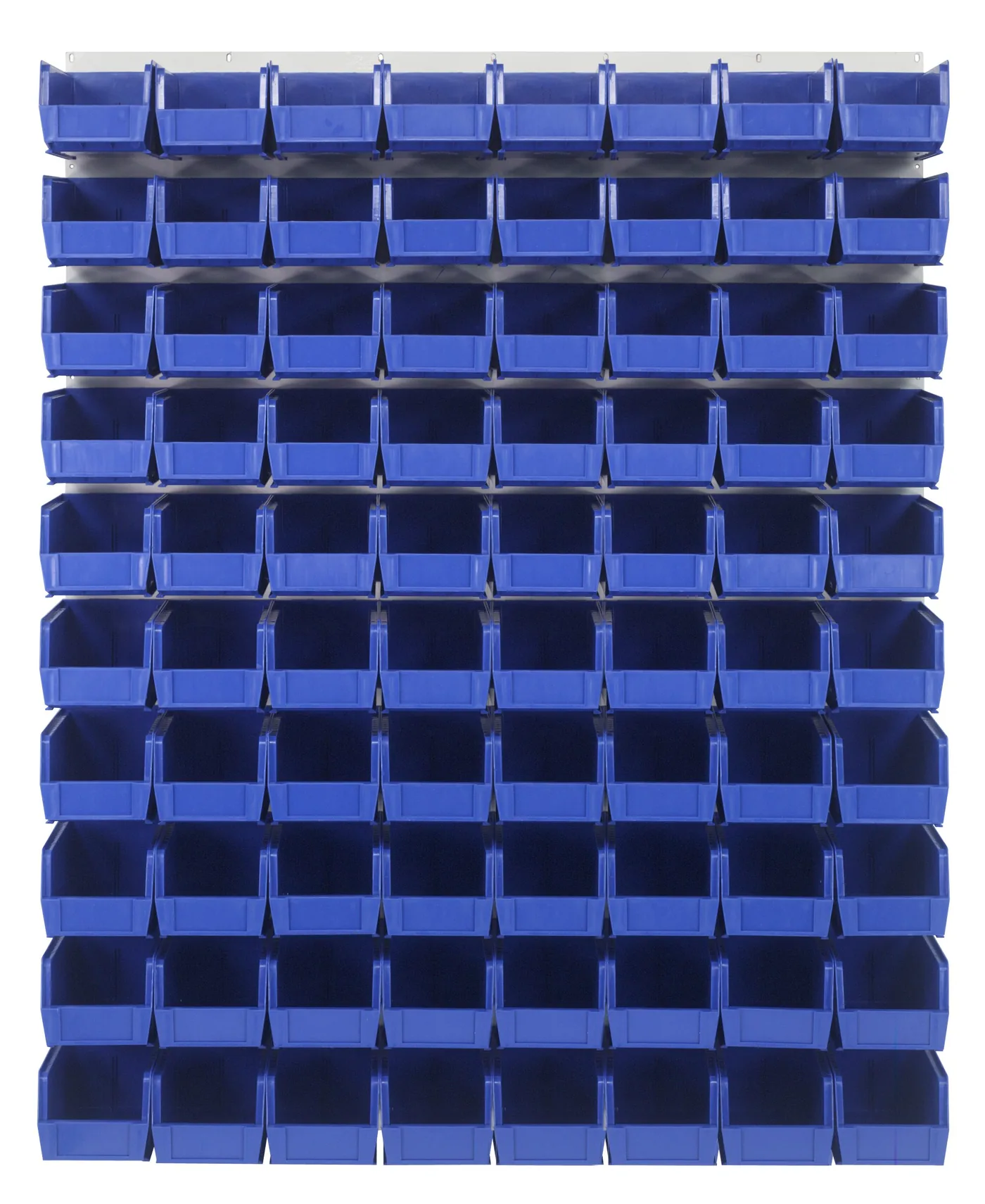
- Hanging Bins: With a built in rear lip, these bins hook directly onto louvered panels or rails. This creates a high visibility, grab and go setup that is perfect for small parts.
- Dividable Bins: When you need to maximize storage density in a small space, these are the answer. They have slots for dividers, letting you turn one bin into several smaller compartments for tiny components.
Plastic is not the only option. For slow movers, seasonal stock or a room whose layout is still changing, open-top cardboard bin boxes cost a fraction as much; our guide to corrugated bin shelving covers sizes, shelf fit and when plastic is the better choice.
Specialized Bins for Sensitive Items
For some applications, a standard plastic bin is not sufficient. If you are handling sensitive electronic components, you must protect them from electrostatic discharge (ESD), which can instantly destroy delicate microchips.
An electrostatic discharge as low as 100 volts can permanently damage a sensitive electronic component, yet humans often can't feel a shock under 3,000 volts. This means your most valuable inventory can be destroyed without anyone ever knowing it happened.
This is where conductive bins are non negotiable. Made from carbon filled materials, these specialized containers safely channel static charges away from your inventory. They are essential for electronics manufacturing, server rooms, and medical device facilities, anywhere that static is the enemy.
This decision tree helps visualize how different operational needs, from heavy industrial use to sterile environments, guide your shelving choices, which in turn influences your bin selection.
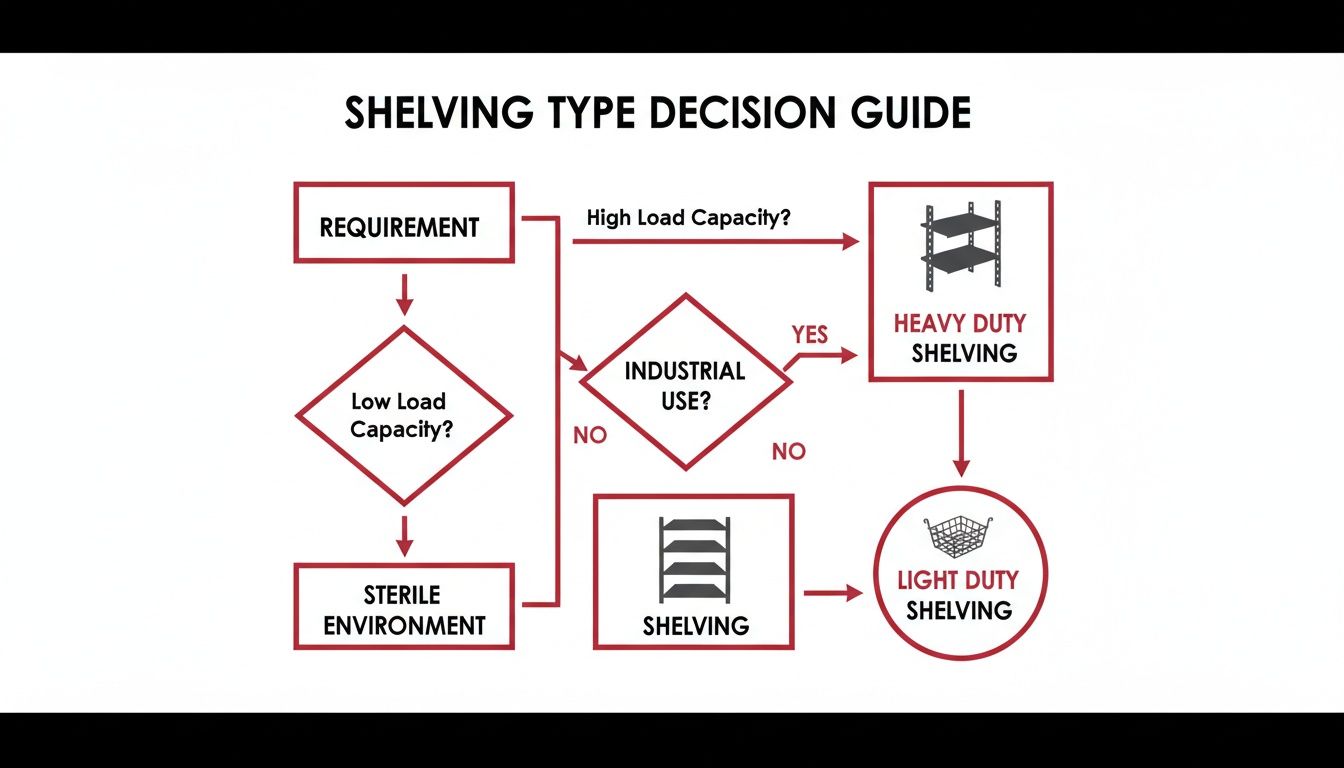
As you can see, the path totheright system always starts with defining what you need it to do, whether that's holding heavy parts, organizing light duty items, or maintaining a sterile environment.
A Practical Checklist for Bin Selection
Picking the right bin doesn't need to be a headache. Just run through this quick checklist to ensure you’ve covered all your bases.
- Look at Your Inventory: What are the actual size, weight, and shape of the items you’re storing? This is the first thing that will tell you what bin dimensions and strength you need.
- Think About Your Workflow: Do your pickers need fast, open access to parts? Hanging bins are probably your answer. Are you storing items in bulk that don't need to be accessed constantly? Stackable bins might be better.
- Use Color Coding: This is one of the easiest wins in organization. Assigning specific colors to different product types or workflow stages is a proven way to cut down search time and nearly eliminate picking errors. It’s a low cost, high impact strategy.
- Check for Special Requirements: Are you working with electronics that demand ESD safe conductive bins? Make sure you’re meeting any and all industry compliance standards to avoid costly mistakes.
By thinking through these points, you can build a highly effective shelving with bins system that feels custom made for your operation. The right setup doesn’t just get you organized; it actively boosts productivity across your entire facility. If you need assistance selecting the perfect combination, our team is here to help. Call (800) 326-4403 for a free consultation.
Inventory Bin Solutions Compared
There is no single best bin. The right inventory bin solution depends on what you store, how often you pick it and where the bin sits. Use this table to narrow it down, then browse our open front shelf bins and the full line of warehouse storage bins.
| Bin Type | Best For | Where It Works | Watch Out For |
|---|---|---|---|
| Open front shelf bins | Small parts picked many times a day | Steel, boltless or wire shelving | Bin depth should match shelf depth |
| Hang and stack bins | Parts that must sit right at a workstation | Louvered panels, rails and bench racks | Best for light parts; check panel and rail ratings |
| Dividable bins and drawers | Tiny parts like screws, washers and fittings | Shelving, cabinets and kitting carts | Too many dividers can slow picking |
| Stackable totes | Bulk stock, overflow and moving parts between areas | Lower shelves, pallet rack decks, carts | Stacked totes are slower to reach than open bins |
| Corrugated bin boxes | Slow movers, seasonal stock and layouts that still change | Shelving with dividers | Less durable in damp or rough use |
| ESD safe or conductive bins | Circuit boards and static sensitive parts | Electronics and IT spares rooms | Must be part of a full ESD control program |
| Custom molded bins and inserts | Odd shaped, fragile or high value parts | Kitting, assembly and repeat production lines | Longer lead time and harder to reuse |
When Custom Molded Bins Make Sense for Warehouses
Most warehouses never need custom molded bins. Standard sizes cover the vast majority of parts, and they are easier to replace and reorder. Custom molded bins or cut foam inserts start to make sense when:
- A part has an odd shape that tips, rolls or tangles in a standard bin.
- Parts are fragile or finished and must not touch each other.
- You build the same kit over and over, and a shaped insert shows at a glance if a piece is missing.
- The part is high value and you want a fixed spot for every unit so counts are instant.
Before you order custom bins, try a standard bin with dividers or a foam insert. If that solves the problem, you save the tooling cost and keep your layout flexible. For mixed small parts, a fabric pocket system like the one in our STOREGANIZER configurator is another option that packs many SKUs into a small footprint.
Designing an Intelligent Storage Layout
You’ve got the right shelving and the perfect bins. That's a great start, but the real magic happens when you nail the layout. How you arrange your storage directly impacts workflow, pick times, and ultimately, your bottom line. A smart layout is the difference between a high performance operation and one that creates bottlenecks.
A smart layout turns a simple storage room into the efficient heart of your operation. The goal isn't just to store things, but to create a logical flow that matches how your team actually works. This means less wasted motion, fewer bottlenecks, and more work getting done. It’s about putting your most needed items in the easiest to reach spots and keeping related products together.

Core Principles of an Efficient Layout
An intelligent layout is a complete system built to slash search times and reduce physical strain on your employees. To get the most out of your shelving with bins, you need to build on solid design principles, pulling from proven optimal space planning strategies.
A few key strategies make all the difference:
- Zoning: Group similar items together. Think of it as creating neighborhoods in your warehouse: a zone for raw materials, another for finished goods, one for your fastest moving products. This creates an intuitive flow that people learn quickly.
- Pick Path Optimization: Arrange your shelving to create the shortest possible route for pickers. This might seem like a small tweak, but shaving a few steps off each order can save thousands of hours over a year.
- Accessibility: Place your most popular items at waist level in prime locations. This simple move makes picking faster and saves your team from unnecessary bending and reaching.
A Foolproof Labeling System
Even the best layout will fail without a clear labeling system. Without it, you’re just organized to the eye, but chaotic in practice. Your labels are the GPS for your inventory; they guide employees to the exact location every time, with no guesswork.
We can help you develop a system from the ground up. For a deeper dive, check out our guide on labeling and bin location systems for efficient parts rooms.
If you want those labels to drive reordering and counts as well, our guide to setting up an inventory bin system on bin shelving covers two-bin and min/max refills, bin location codes and cycle counting.
To spec the shelving itself, including wire vs. steel, shelf depth, bin counts and complete packages, see our guide to bin shelving systems.
The combination of sturdy steel shelving and versatile bins is a cornerstone of modern logistics. Whether you are in healthcare, e commerce or manufacturing, clear bin locations cut the time people spend searching for parts.
Figuring out the perfect layout can be a headache, but you don't have to tackle it alone. At Material Handling USA, we provide free layouts and designs with no obligation. Our experts draw on years of industry experience to map out a professional, optimized plan that’s built specifically for your space and your workflow. Let us help you design efficiency directly into your floor plan from day one.
How to Organize a Warehouse Efficiently With Bin Shelving
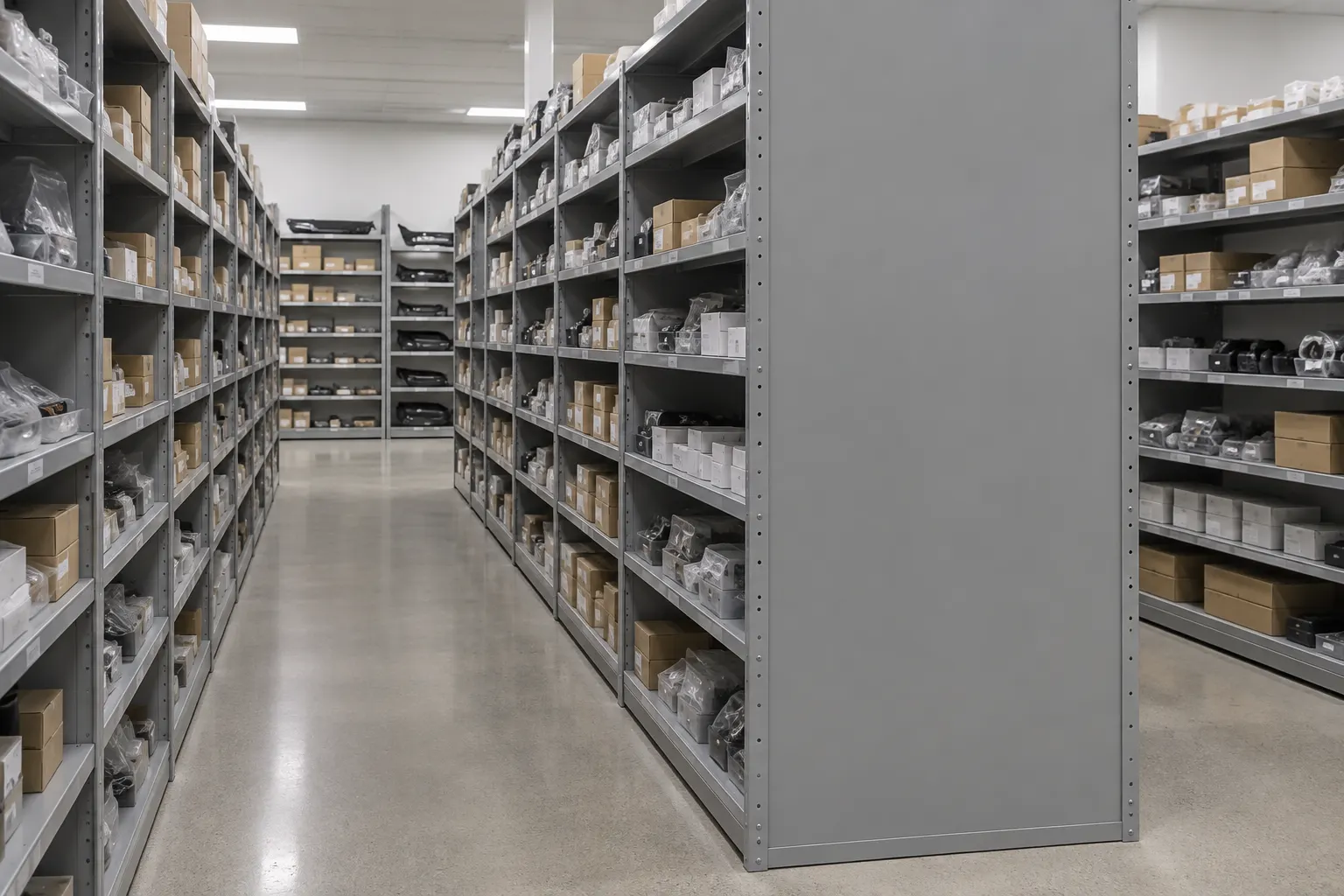
Bins solve the small parts problem. To organize a warehouse efficiently, you also need the building itself to flow. A good bin shelving system in a warehouse follows the path your products take, from the receiving dock to storage to picking to shipping.
Follow the flow of goods
Map how product moves through your building. Receiving should feed straight into putaway, and picking should end close to packing and shipping. When aisles force people to backtrack, you lose time on every single order. Sketch the flow before you place a single shelf unit.
Put the right storage in the right zone
- Pallet loads and cases: pallet rack near the dock. Our guide on how to choose pallet racking for an e-commerce warehouse covers that side.
- Each picks and small parts: warehouse bin storage on boltless shelving or industrial steel shelving close to the pack area.
- Overflow: top shelves or rack levels above the pick face, so you refill bins without a trip across the building.
Plan aisles, rack, shelf and bin together
Think of each location as a chain: aisle, rack or shelf unit, shelf level, bin. When all four are planned together, labels read in a logical order and pickers walk one smooth path. Keep main aisles wide enough for the carts or lifts you actually use, and keep them clear. OSHA requires that stored material not create a hazard and that aisles stay clear, so check the federal materials handling and storage rule (29 CFR 1910.176) when you plan.
Use the golden zone
The shelves between about waist and shoulder height are the easiest to reach. Put your fastest movers there. Heavy items go low, and light, slow items go high. This one change cuts bending and reaching and speeds up picking.
Keep it organized after day one
Most warehouses get messy because there is no rule for where things go back. Fixed bin locations, clear labels and a short weekly cycle count keep the system honest. If you are planning a bigger change, our warehouse design and layout services team can draw a full plan for your space.
What Is a Bin System in Inventory Management?
A bin system in inventory management is a way of tracking stock by location. Each item lives in its own labeled bin, and each bin has a fixed address. Because the bin holds a known part, the bin itself becomes a signal: you can see when stock is low, where a part is and whether a count is off.
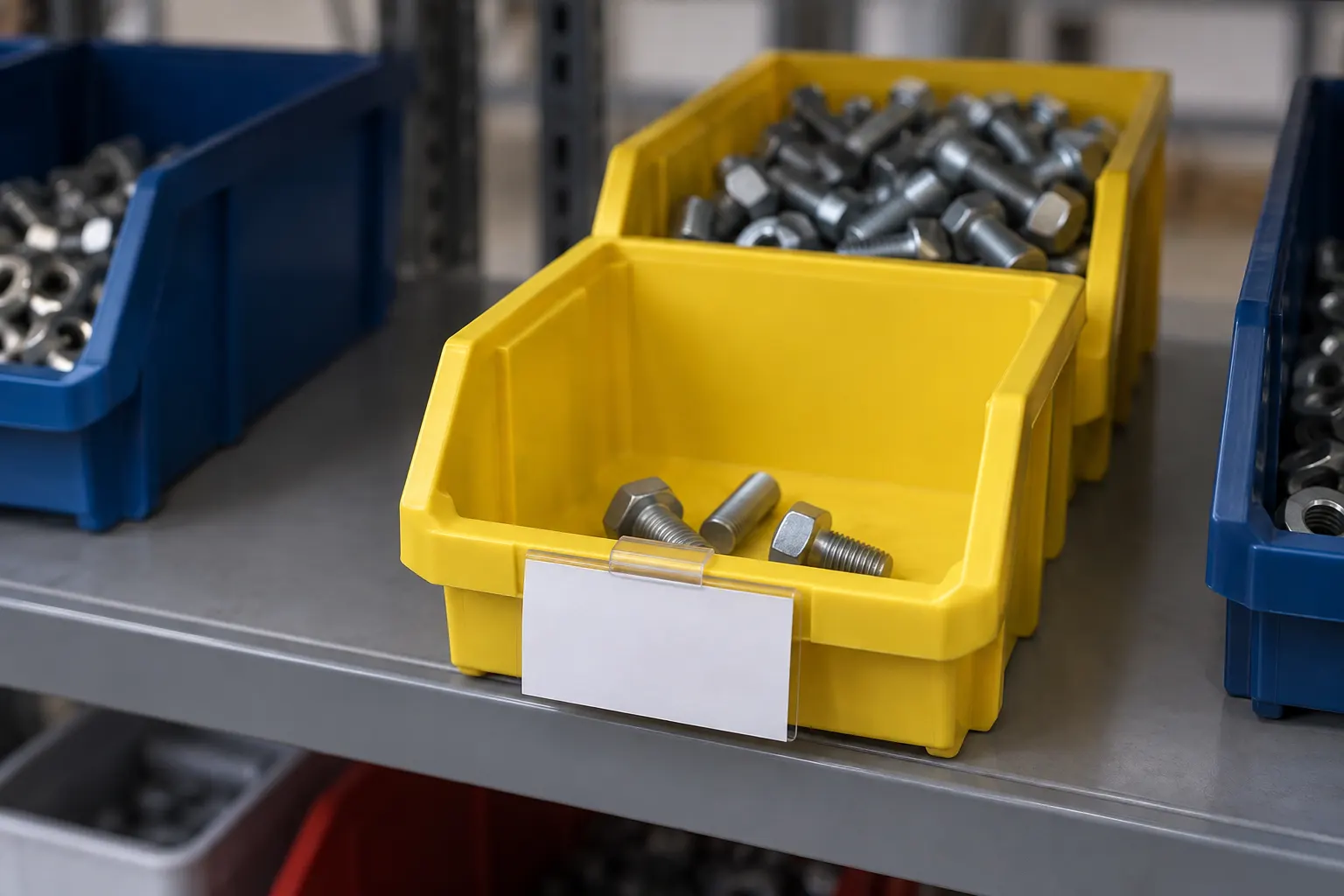
Most inventory bins systems use one of these refill methods:
| Method | How It Works | Best For |
|---|---|---|
| Two bin (kanban) | Pick from the front bin. When it is empty, pull the full back bin forward and reorder to refill the empty one. | Low cost, steady use parts like fasteners and consumables |
| Min/max | Each bin has a minimum and maximum quantity. When stock hits the minimum, reorder up to the maximum. | Higher value items tracked in software |
| Fixed locations | Every SKU always lives in the same bin. | Stockrooms, parts rooms and small teams |
| Dynamic locations | Items go to any open bin and the system records where. | Large warehouses running a warehouse management system |
Good inventory management bins share a few traits: one SKU per bin, a label with the part number and location code, a clear refill rule and a regular cycle count. For a deeper look at refill rules, location codes and counting, see our page on bin inventory systems.
Shelving With Bins in Action Across Industries
The value of a well planned system becomes clear when you see it solve real world problems. The adaptability of shelving with bins allows it to tackle specific challenges in vastly different environments. These aren't just storage upgrades; they're targeted solutions that deliver a clear return on investment.
Whether you’re in a massive e commerce center or a precision manufacturing plant, the core principles stay the same: organization, speed, and accuracy. It's the application that makes each case unique.
E Commerce Fulfillment Centers
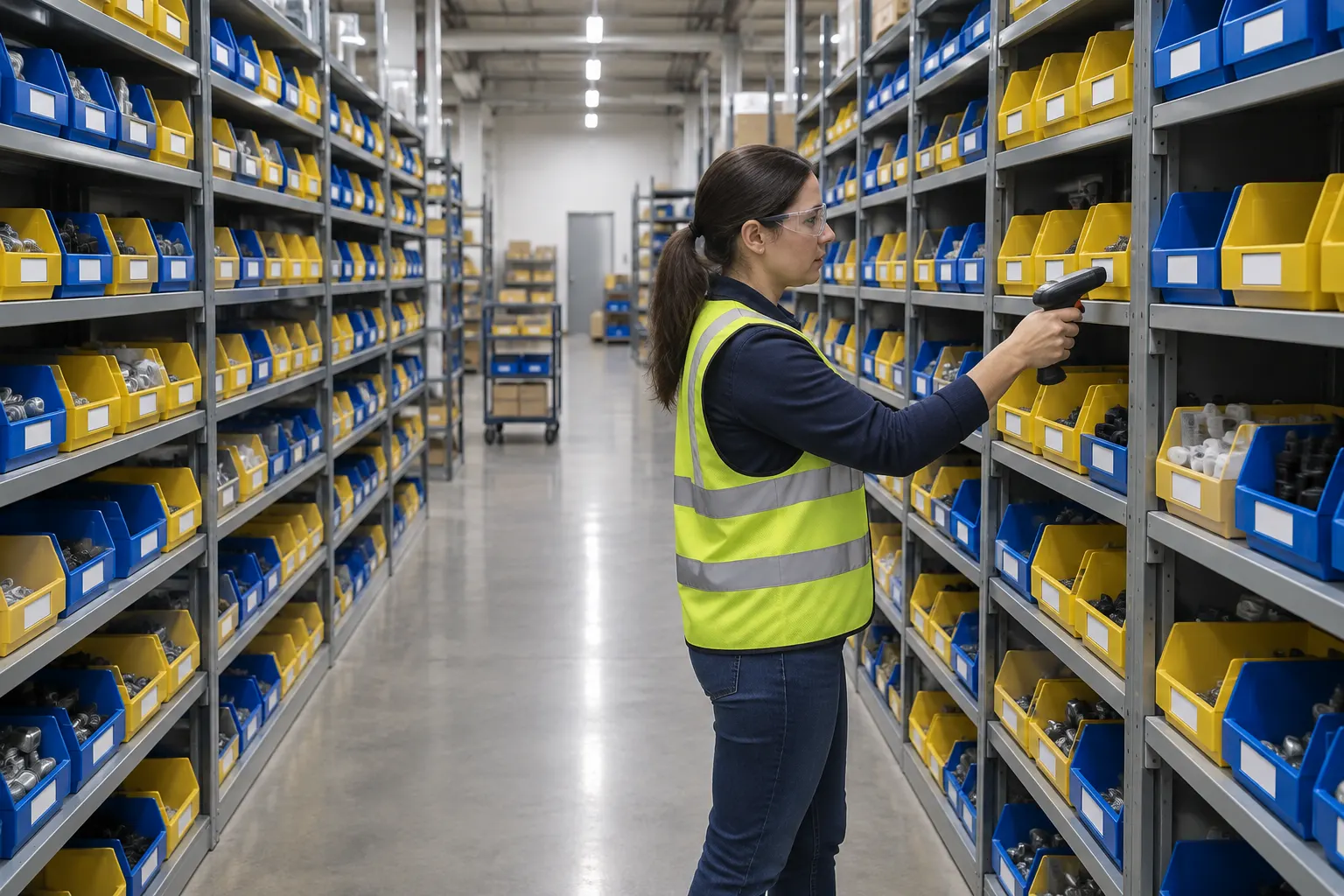
In the fast paced world of e commerce, pick and pack operations depend on efficiency. For a fulfillment center juggling thousands of small, distinct SKUs, rivet or wire shelving lined with hundreds of color coded, labeled bins becomes the backbone of the operation.
Each bin holds a specific product, creating a dense, organized grid. This setup allows pickers to move down the aisles, locate items instantly, and move on. The result? Drastically reduced order processing times and fewer costly shipping errors.
Pick and Pack Shelving and Retail Distribution Bin Systems
In a pick and pack area, shelving with bins should sit right next to the packing bench. Pickers fill a tote or cart from the bins, then pack and ship without a long walk. Put the top sellers in the bins closest to the bench and keep packing supplies in their own labeled bins at the station.
Retail distribution warehouses use the same idea at a larger scale. Full cases sit in pallet rack, and the bins on shelving hold the each picks that go out to stores or online orders. Learn more about building out these areas on our picking and packing solutions page.
Manufacturing and Assembly Lines
On a manufacturing floor, the goal is uninterrupted workflow. A system of shelving with bins is perfect for creating kitting stations right on the assembly line.
Specific bins are filled with all the necessary components for a single assembly step, such as screws, washers, and small brackets, and placed on shelves at an assembler's fingertips. This simple change eliminates the need for workers to leave their stations to hunt for parts, keeping production moving and slashing downtime. For any company serious about a cost saving, efficient operation, having an organized inventory of parts and tools is a cornerstone of an effective preventive maintenance schedule.
Law Enforcement and Secure Storage
For police departments and forensic labs, maintaining the chain of custody for evidence is absolutely non negotiable. Steel shelving units paired with lockable or tagged bins create secure, highly organized evidence rooms.
Each bin is meticulously labeled with a case number, date, and item description. This system ensures every piece of sensitive material is properly contained, accounted for, and easily retrievable, protecting the integrity of critical investigations.
Ready to Build Your Ideal Storage Solution?
We've walked through choosing the right shelving and bins, sketching out an intelligent layout, and how these systems drive real world efficiency. The next step is building the perfect shelving with bins solution that solves your unique storage challenges.
Upgrading your storage is a straightforward process. With competitive pricing and quality materials, you can get it done without the usual hassle. Best of all, you don't have to figure out the perfect configuration on your own. Our experts are here to help you get it right from the start.
Your Path to an Optimized Space
Tap into our deep industry expertise with a free, no obligation design consultation. We'll work with you to create a professional plan that shows you exactly how your space can be transformed to maximize storage density and streamline your workflow. A well designed system isn't just storage; it's a powerful asset that pays back in productivity and safety every single day.
Don't wait for storage problems to get worse. It’s time to take the next step toward a more organized, efficient, and profitable operation. Our team is ready to help you build the ideal solution.
Ready to see what's possible? Contact us today to request your free quote and a complimentary layout design.
For immediate help, give us a call at (800) 326-4403 and talk directly with one of our storage specialists.
Common Questions About Organizing Inventory With Bins
Here are straight answers to the questions we hear most about shelving with bins and inventory bin systems.
What is the best way to organize inventory with bins?
Give every part its own bin and every bin its own location code. Group related items into zones, put fast movers at waist to shoulder height near the pick or pack area, and label both the bin and the shelf edge. Then add a refill rule, such as a two bin system, and cycle count a few locations each week.
What is a two bin system in inventory management?
A two bin system uses two bins for one part. You pick from the front bin. When it is empty, you move the full back bin forward and use the empty bin as the signal to reorder. It is simple, needs no software and works well for low cost parts with steady use.
How do I figure out the right load capacity for my shelving?
Find the heaviest load you would ever put on one shelf, with every bin full. Then choose shelving with a rated capacity per shelf that comfortably exceeds that number, so you have a safety margin. Spread weight evenly and put the heaviest bins on the lower shelves.
Can I put different sized bins on the same shelf unit?
Yes. Adjustable shelving lets you set each level to fit the bins on it. Many people use large bins or totes on the bottom shelves for bulk or overflow and smaller divided bins up top for tiny parts.
When should a warehouse use custom molded bins?
Custom molded bins or foam inserts make sense for odd shaped, fragile or high value parts, or for kits you build again and again. For most parts, standard bins with dividers are cheaper, faster to get and easier to replace.
How much does color coding bins really help?
Color coding gives your team a quick visual cue. Assigning colors to zones, product types or stages helps pickers spot the right area from down the aisle and helps new hires learn the layout faster. It works best together with clear labels and location codes.
Does Material Handling USA offer free quotes and layout help?
Yes. Material Handling USA provides free, no obligation quotes and layout suggestions for bin shelving and warehouse storage projects. Call (800) 326-4403 or use our online planning tools to get started.
Do you handle delivery and installation?
Yes. Material Handling USA provides delivery and installation for shelving, pallet rack, mezzanines, security cages and other warehouse equipment. Our team can manage the project from layout to final walkthrough.
Ready to see what a truly organized space can do for your operation? The experts at Material Handling USA are here to help you design the perfect shelving and bin system. Request a Quote to start the conversation.
Who This Is For
Our shelving with bins solutions are ideal for:
- Warehouse managers
- Facility planners
- Property managers
- Government coordinators
- Manufacturing managers
- Distribution operators
Related Solutions
Need Help Choosing the Right Solution?
Material Handling USA provides free warehouse design consultations, competitive pricing, and expert project management from layout to installation.
Get a Free Quote or call (800) 326-4403
Online Store
Shop at MaterialHandling-USA.com
Shop ready-to-ship shelving units and accessories online:
Boltless Shelving
Wire & Steel Shelving
Bins & Totes
Browse 11,000+ shelving options →