
Warehouse Bin Shelving Systems in Utah
Bin shelving pick zones for Utah distribution centers, 3PLs, e-commerce fulfillment and parts warehouses — slotted by velocity, labeled by location and laid out by our Salt Lake City team so small-item orders get picked faster and counted right.

Piece-pick zones
Small items, many SKUs
Forward pick + reserve
Planned together
801-328-8788
Utah project line
Statewide Utah
Wasatch Front to St. George
Why Warehouses Use a Bin Shelving System for Small-Item Picking
Pallet rack is built for pallets and full cases. The trouble starts when a warehouse also has to ship eaches — single fittings, cosmetics, phone accessories, filters, supplements, repair parts. Those items get lost on a 42-inch pallet deck, and pickers waste time digging through open cartons to find one unit.
A warehouse bin shelving system gives each small SKU its own labeled bin face at a reachable height. One 7-foot section can present dozens of SKUs in the floor space of a single pallet position, so the walk between picks gets shorter and the order is easier to check. Cycle counts get faster too, because every item has one home instead of three half-empty cartons spread across the building.
This page is about the warehouse side of bin storage: pick zones, slotting, replenishment and pack-out. For every product type, bin size and package option, see our complete guide to bin shelving systems. For the other ways Utah businesses use bin shelving — parts departments, MRO storerooms and stockrooms — start at our Utah bin shelving page.
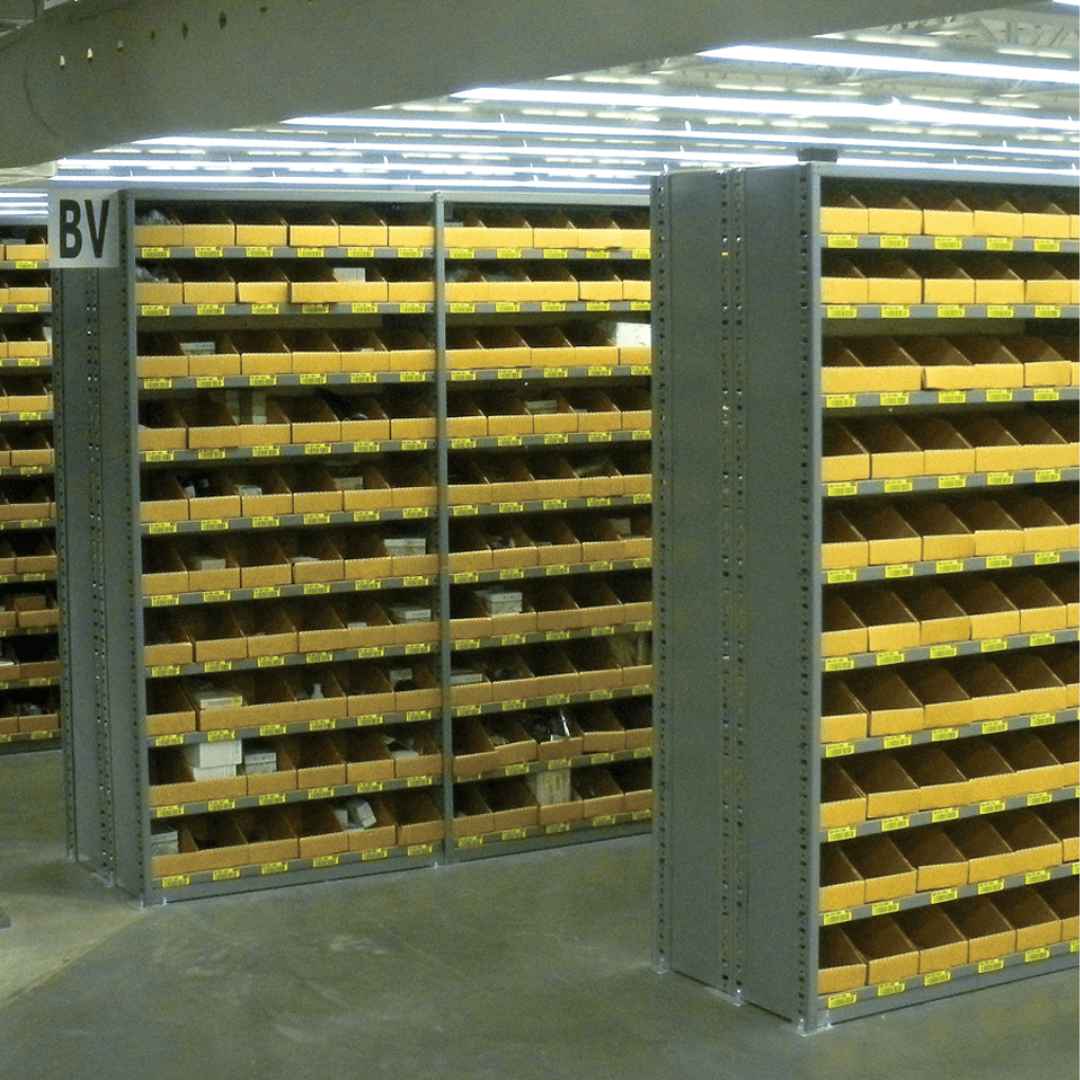
Forward Pick vs. Reserve: Where Bin Shelving Fits in the Warehouse
Most warehouses that pick eaches work best with two kinds of storage. The forward pick area holds a few days to a couple of weeks of each SKU in bins close to the pack stations. The reserve holds the rest — full cases on pallet rack or overhead levels — and refills the forward bins as they run low.
Bin shelving is the forward pick area for small, slow-to-medium movers. Keeping it separate from reserve means pickers only walk the bins, while forklift and case traffic stays in the rack aisles. It also caps how much stock sits in the pick zone, which keeps it compact.
If the reserve side of your building still needs work, our Utah team plans pallet rack in Utah alongside the bin zone. Our 3PL warehouse racking project and e-commerce fulfillment racking project show how Utah reserve storage is laid out.
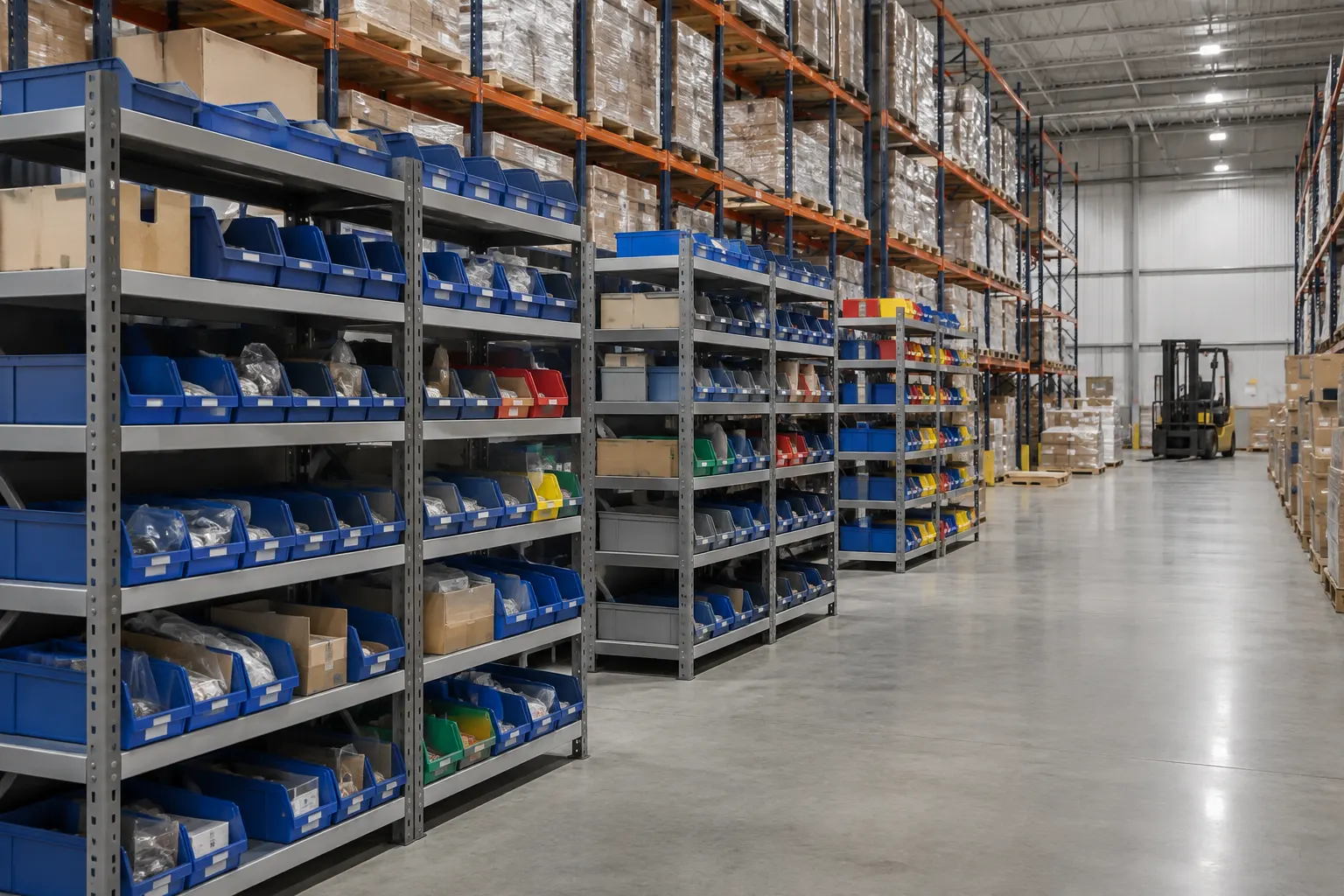
Small-item pick storage compared
| Storage type | Best for | Where it falls short |
|---|---|---|
| Bin shelving (shelf bins or divider shelving) | Thousands of small SKUs picked as eaches; slow and medium movers | Very fast movers that empty a bin every hour |
| Carton flow rack | Fast movers picked from full cases; first-in, first-out | Cost per pick face is higher; poor fit for thousands of slow SKUs |
| High-density pocket storage | Very small, slow-moving items at maximum density | Heavier or rigid items; bins are easier to relabel and re-slot |
| Pallet rack pick (ground level) | Full-case and full-pallet picks of fast movers | Wastes space and walking on small eaches |
| Bin cabinets | High-value or controlled small items that need a lock | Too slow for open, high-volume picking |
Slotting a Bin Shelving Pick Zone
Slot by velocity, not by part number. Put the SKUs picked most often between waist and shoulder height — often called the golden zone — and nearest the pack stations. Slow movers go on the top and bottom levels and at the far end of the aisle. Alphabetical or part-number order feels tidy but makes pickers walk the whole zone for every order.
Size the bin to a replenishment quantity. A bin should hold roughly what the SKU sells between refills, plus a buffer. Too small and the bin runs empty mid-shift; too big and you pay for pick-face space that holds stock nobody needs yet. Short shelf bins suit small, fast items; deeper bins hold bulkier or slower SKUs. Our shelf bin guide compares common bin heights and divider options.
Start from data. If you can export SKU counts and order lines, our SKU upload analyzer helps rough out bin sizes and shelf counts from real demand instead of guesses.
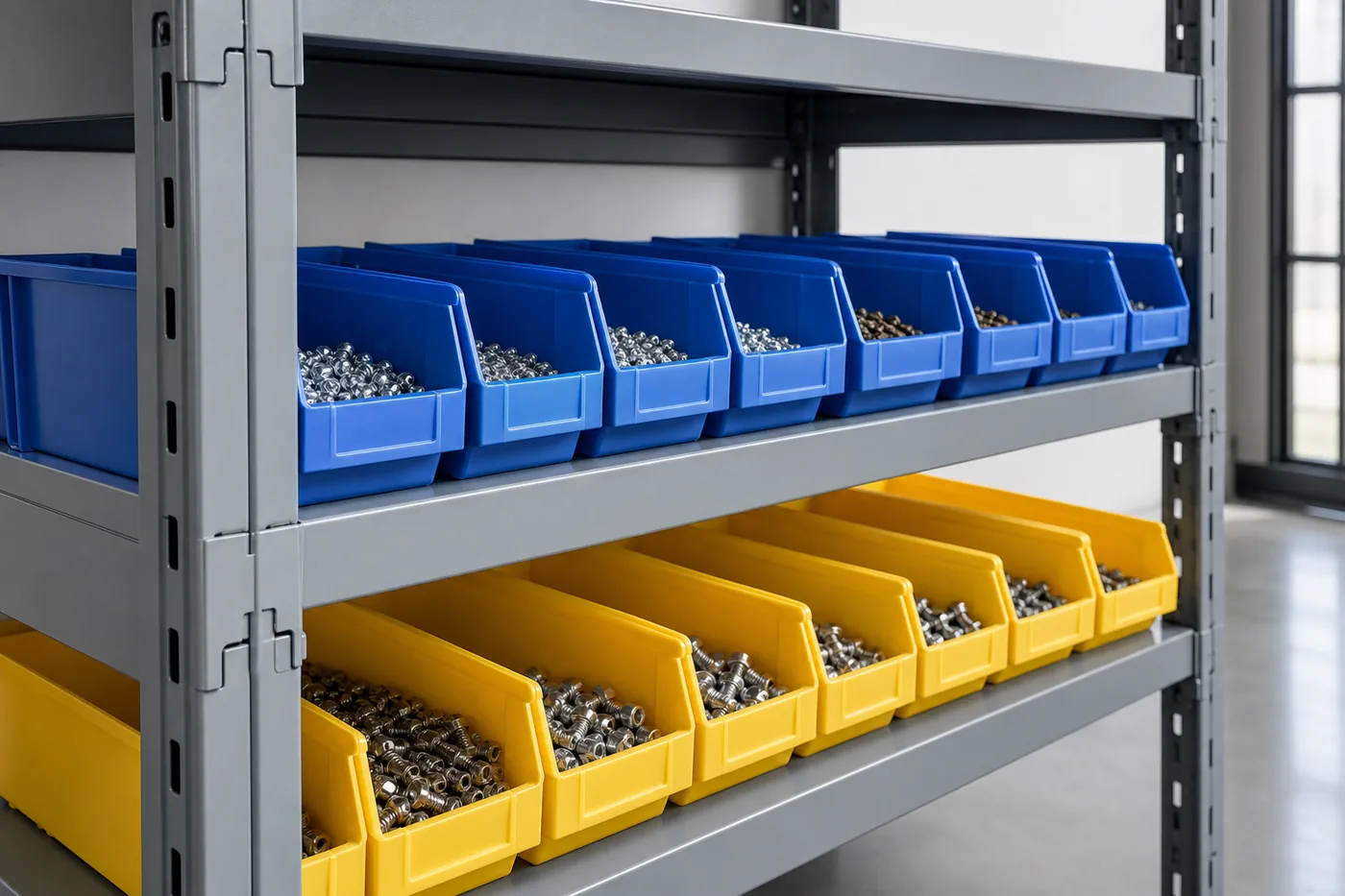
Slotting checklist for a new pick zone
- One SKU per bin face (or per divided section) so a picker never has to sort mixed items.
- Location addresses on every bin — aisle, section, level and position — matching what your WMS or pick list prints, so a new hire can find any item on day one.
- Label on the front lip, readable without pulling the bin; add a barcode if you scan to confirm picks.
- Leave 10–20% of faces open for new SKUs and seasonal items so you are not re-slotting the whole zone every quarter.
- Group items often ordered together in neighboring sections to shorten multi-line picks.
- Re-slot on a schedule — quarterly is common — as fast and slow movers change.
Aisle Widths, Shelf Heights and Pick Paths
Aisles sized for carts, not forklifts. A bin shelving pick zone is a people-and-cart area. Aisles only need to fit your pick carts and let two people pass, which is a big part of why bin zones are so much denser than rack aisles. Confirm required egress widths with your fire marshal before locking the layout.
Pick heights people can reach. Most warehouse bin shelving runs about 7 feet tall so the top bins are reachable from the floor. Taller units work when the top levels hold light, slow stock or reserve cases, and a step stool or rolling ladder is part of the plan. Above that, a mezzanine can put a second level of bin shelving over the same footprint.
One direction of travel. Serpentine or one-way pick paths keep carts moving without backtracking. Put fast movers at the start of the path and near the pack-out end so most orders finish in the first few aisles.
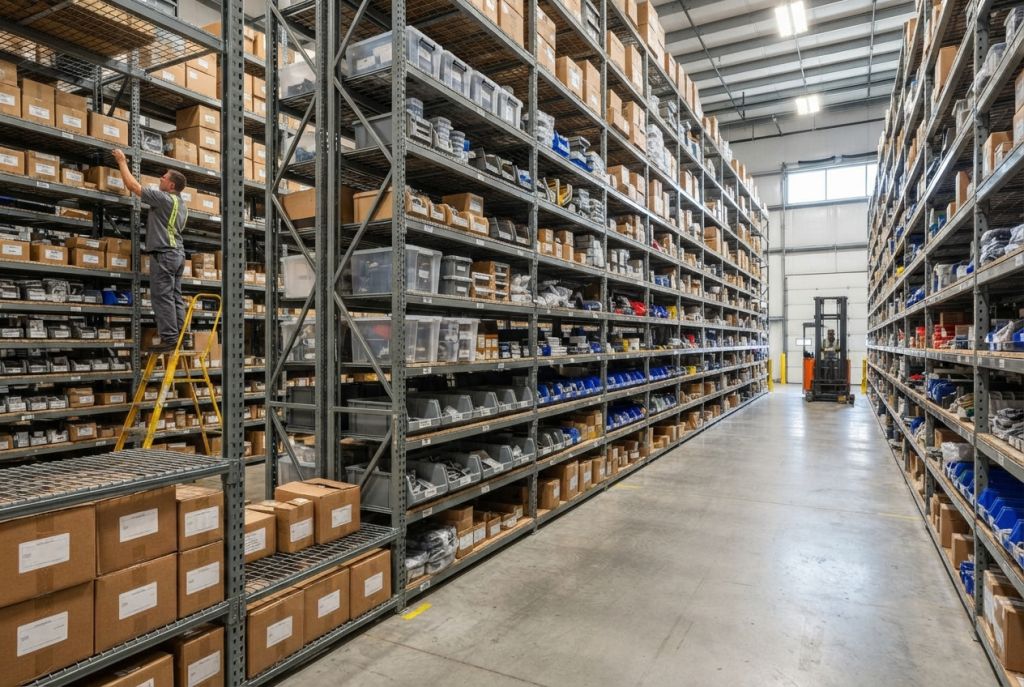
Map the flow
Receiving to reserve, reserve to forward bins, bins to pack-out, pack-out to shipping. Bins belong between reserve and pack-out.
Set the aisles
Size aisles to carts and required egress, then place fast-mover sections at the front of the pick path.
Stack the levels
Choose shelf count from bin height and reach; reserve the top level for light or overflow stock.
Replenishment, Cycle Counts and Pack-Out
A bin zone only stays fast if bins are refilled before they run empty. Set a simple min/max for each bin: when stock drops to the minimum, a replenishment task brings a case from reserve and tops the bin up to the maximum. Many warehouses run replenishment at shift start or between pick waves so refilling does not block pickers in the aisle.
Open-front shelf bins make this easy — the associate can see the level from the aisle and refill from the front without pulling the bin. For bins that hold more than one lot or date, load from the back and pick from the front.
Fixed bin locations also make cycle counting practical. Instead of a full shutdown count, staff count a few sections each day; a bin that shows a variance points straight to the SKU and location that needs attention.
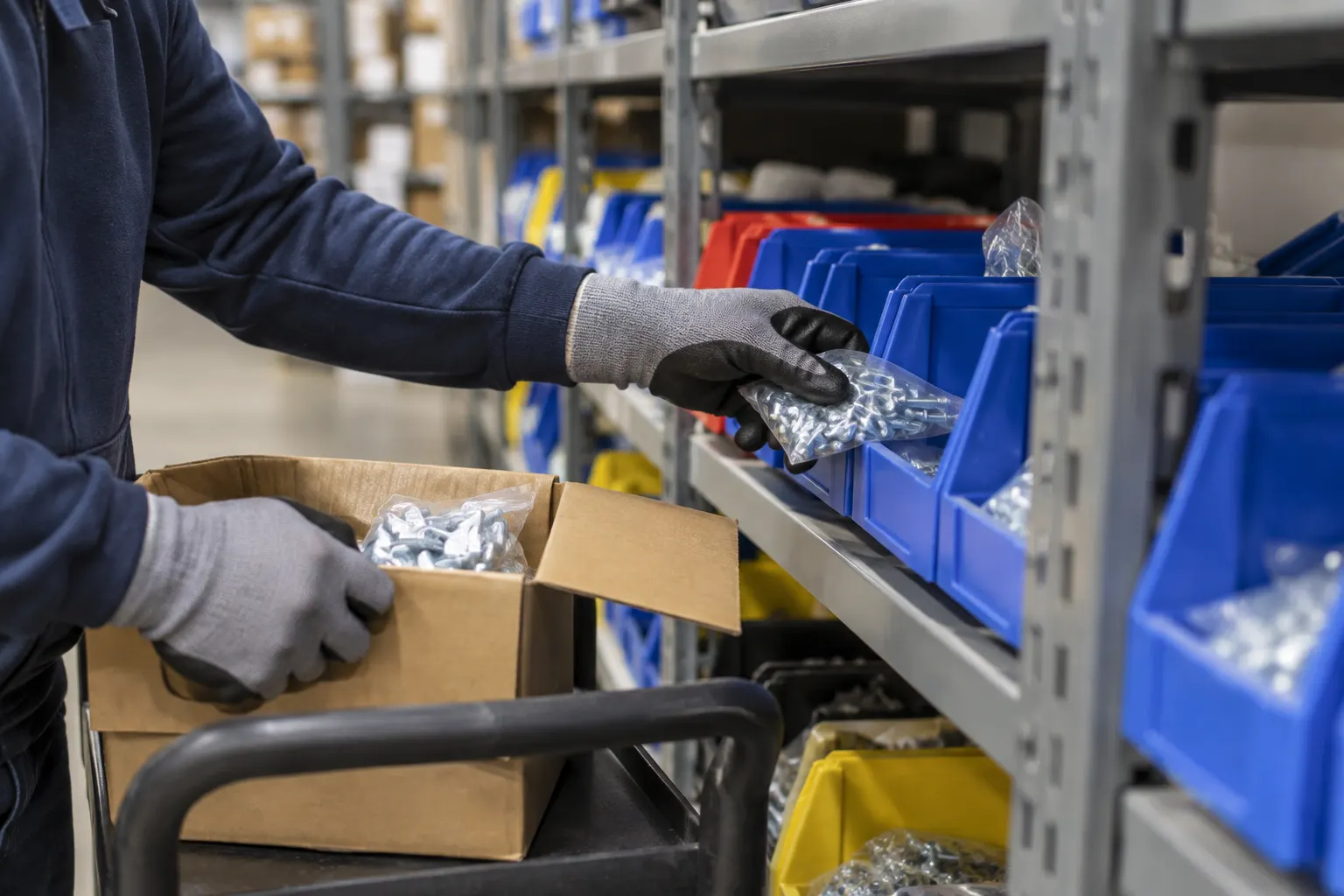
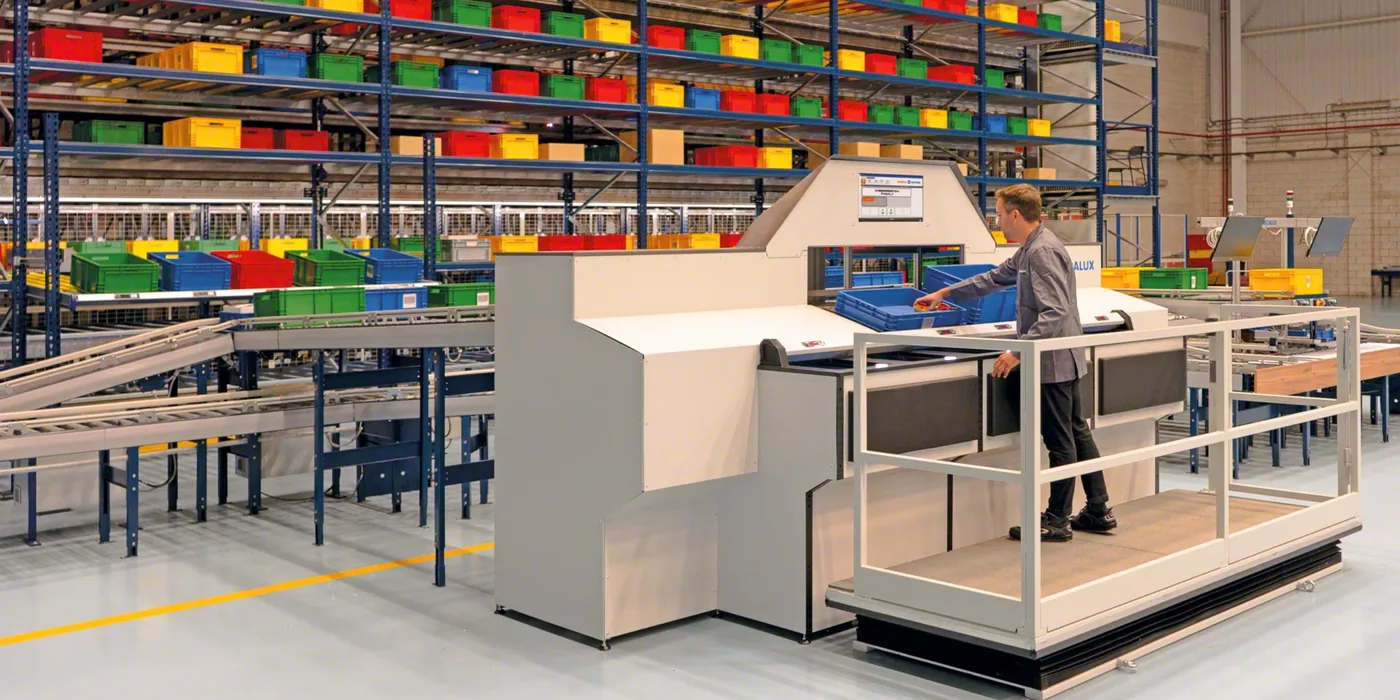
Keep pack-out close. The last step of every pick is the pack station, so the bin zone should end where orders are packed. Short runs of bin shelving at the pack benches can also hold packing supplies, inserts and the few SKUs that ship in almost every order.
Kitting works the same way. If you assemble kits before shipping, bin shelving beside the build table keeps every component in reach; our kitting storage planner helps size that area. Compatible storage bins can also be added to shelving you already own at the pack line.
Choosing the Build: Steel, Wire or Container Systems
Warehouse bin shelving comes in a few builds. They hold small parts equally well; the difference is in visibility, cleaning, load and how easily you can re-slot.
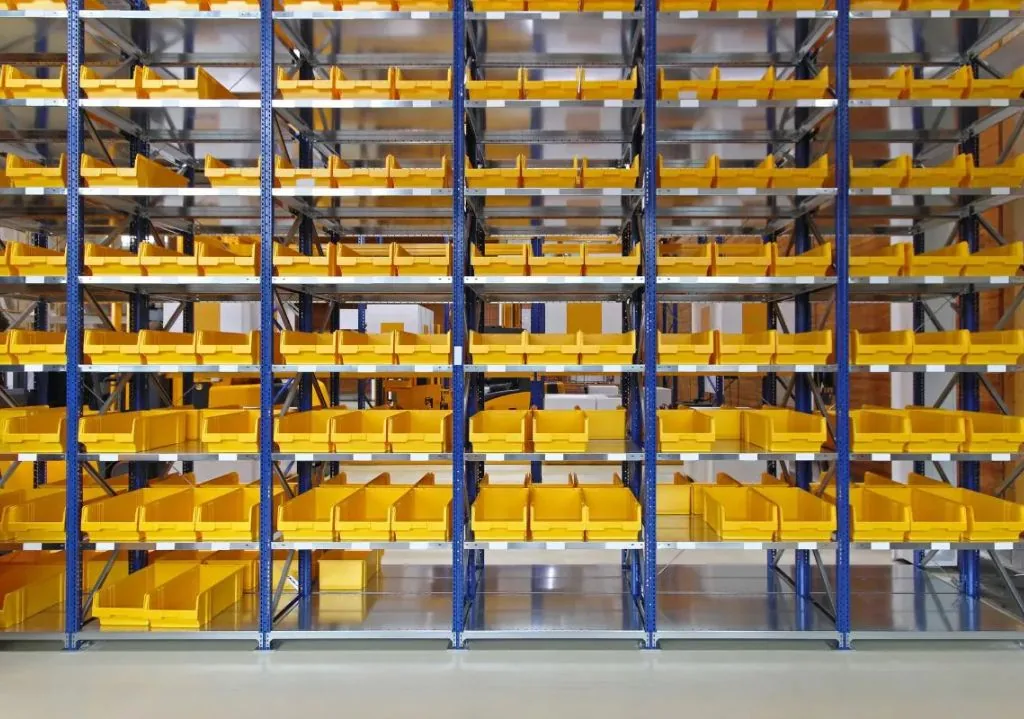
Steel shelving with plastic shelf bins is the most common warehouse build: solid decks, many levels, and bins that can move to a new location in seconds. Wire shelving with bins lets light and sprinkler water through and suits cleaner product. Boltless shelving handles bulkier boxed items next to the bin runs, and staff can re-space the levels as the product mix changes.
| Build | Best warehouse use | Watch out for |
|---|---|---|
| Steel shelving + open-front shelf bins | General e-commerce and parts picking; frequent re-slotting | Match bin depth to shelf depth to avoid overhang |
| Steel divider shelving (no bins) | Boxed items with steady sizes; fewer loose parts | Divider spacing is fixed per level, so plan the mix first |
| Wire shelving + bins | Cleaner product, visibility, sprinkler-friendly decks | Needs bins for very small loose items |
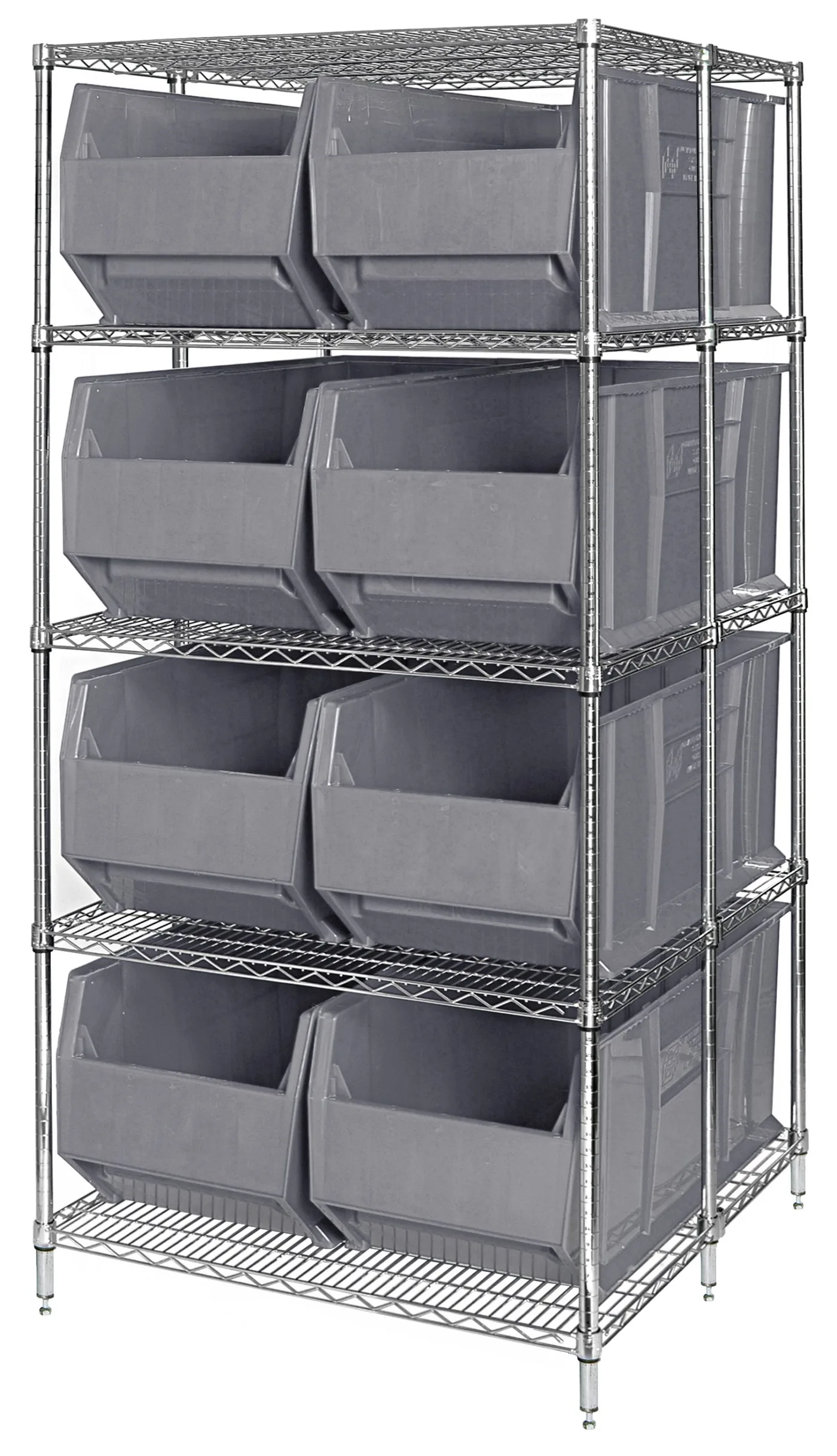
| Container wire systems (large totes) | Bulkier eaches and kits; heavy-duty tote storage | Fewer faces per section than small shelf bins |
| Mobile or cart-mounted bin units | Kitting and pack lines that move | Lower capacity than stationary runs |
Need general shelving for the rest of the building too? See our Utah shelving solutions page.
Utah Warehouse Planning Notes
Utah’s distribution base runs from Cache Valley and Ogden through Salt Lake County and Utah County down to St. George. A few details come up on nearly every warehouse bin project we plan here.
- Seismic anchoring: the Wasatch Front is an active seismic area, so tall runs are commonly anchored to the floor or tied together overhead. Your local building official sets the requirement; our shelving anchoring guide covers the usual questions.
- Sprinkler clearance: keep required clearance between the top bins and sprinkler heads, and don’t let overflow cartons creep onto the top level.
- Phased installs in live buildings: most Utah warehouses keep shipping during a changeover, so we sequence delivery and setup by aisle.
- Growth room: fast-growing fulfillment operations should leave floor space for added sections at the ends of each run.
- Availability: some common sizes are in stock at select manufacturers, subject to confirmation at quote time.
Planning a Warehouse Bin Shelving System in Utah
Send the space and the SKUs
Floor plan or dimensions, clear height, dock and pack locations, and a SKU list with rough order volume.
Pick-zone layout
We lay out sections, levels, bin sizes and aisles around your pick path and reserve storage, and flag anchoring and sprinkler questions early.
Quote, delivery and setup
One quote for shelving, bins, dividers and labels, delivered to your Utah site and sequenced so shipping keeps moving.
Call our Utah project line at 801-328-8788 or request a quote to plan your pick zone. For bin shelving in parts rooms, storerooms and stockrooms, go back to the Utah bin shelving hub; for sizes and packages, see the main bin shelving page.
Shop Warehouse Bin Shelving Systems
Buy select items directly from our online store, or request a quote for volume, custom sizes and freight-rated orders.


Warehouse Bin Shelving FAQs
What is a bin shelving system in a warehouse?
Is bin shelving better than pallet rack for small items?
How tall should warehouse bin shelving be?
How do you decide bin sizes?
Does warehouse bin shelving need to be anchored in Utah?
Can you add bins to shelving we already have?
Ready to Plan a Warehouse Bin Shelving System in Utah?
Send us your space and SKU list for a free pick-zone layout and quote.