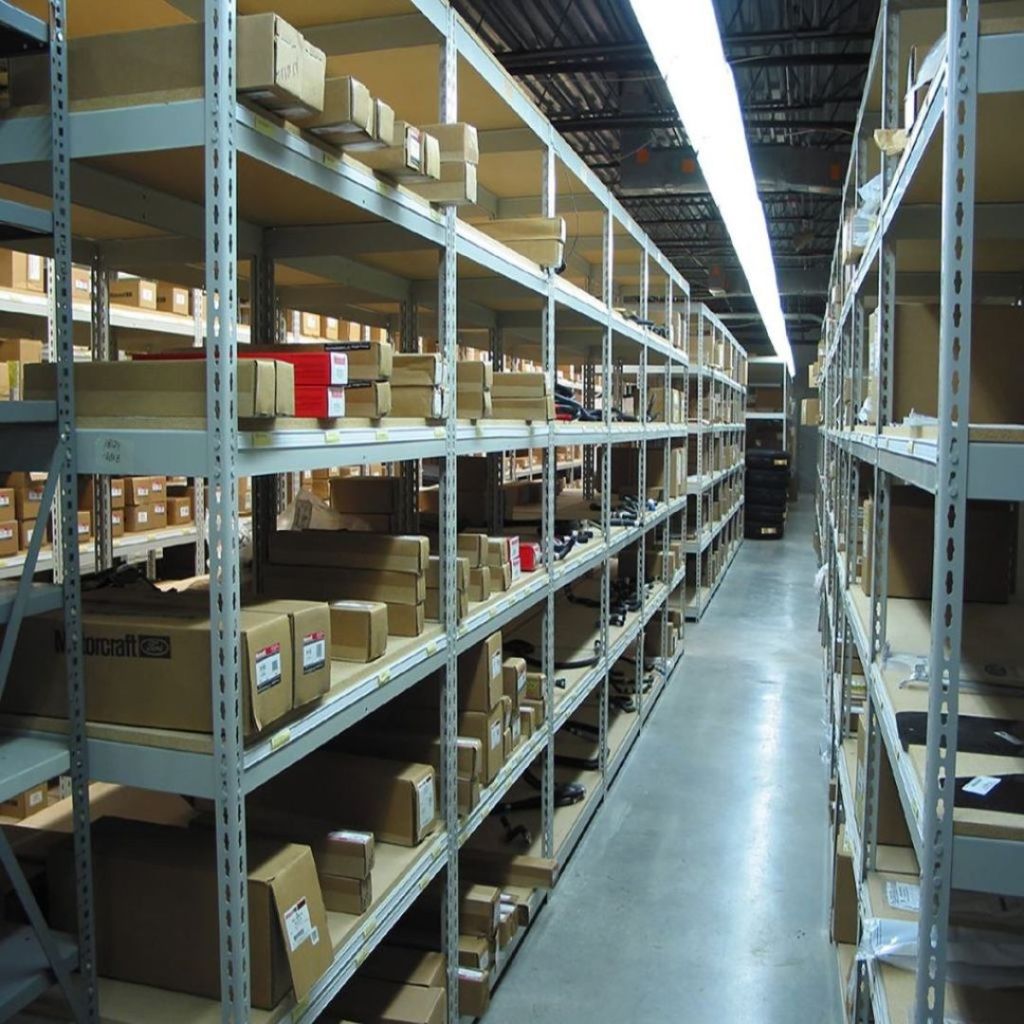
A Provo parts manager usually feels the same pressure before this kind of project. The back room is full, the fast movers are getting buried, and every extra step in the pick path slows the counter, the service desk, or the outbound truck. Auto parts distribution racking in Provo Utah is not just a rack buy. It is a storage plan for mixed SKUs, quick turnover, and a building that has to keep working while the layout changes.
That is why the first question is not “what rack do we buy.” It is “what problem is the space really solving.” In Provo, the local parts market is dense enough that inventory access and back room flow matter as much as rack price, and Utah County’s warehouse base gives that problem a real logistics footprint. The discipline you need is the same discipline that keeps inventory organized in any busy operation. The asset labeling approach described in Evright Industrial’s inventory management guidance is a useful reminder that clear identification and storage logic matter before the first upright goes in.
Quick answer
Most Provo auto parts operations end up with a mix: selective pallet rack for palletized reserve, carton flow or bin shelving for fast movers, and dense storage only for same-SKU stock like tires. The layout should be drawn from a velocity map of your SKUs and the real building, then engineered for Utah seismic loads and permitted through Provo City. You can rough out the pallet rack portion in minutes with the free MH-USA pallet rack configurator.
Practical rule: If the layout does not match pick frequency, the rack will get blamed for a storage problem that started with the inventory plan.
What Auto Parts Distribution Racking in Provo Utah Actually Solves
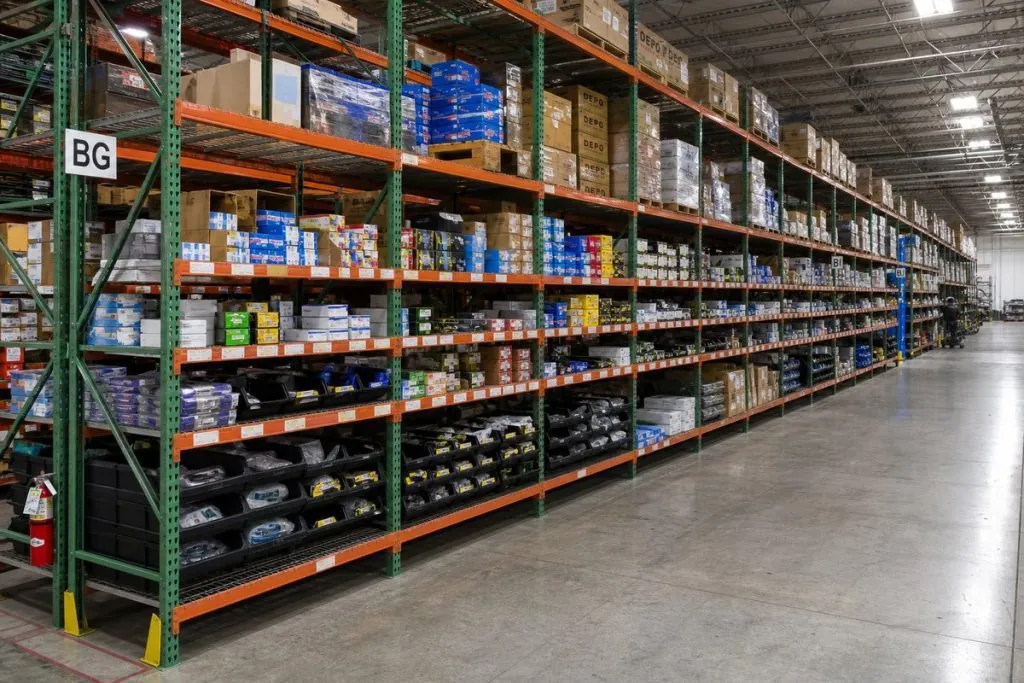
A Provo parts operation usually starts as a retail back room and ends up behaving like a small distribution center. That shift changes everything. The racks are no longer just holding parts. They are controlling speed, mis-picks, and replenishment pressure across mixed orders.
Auto parts distribution racking in Provo Utah has to handle two realities at once. First, the building stores thousands of small line items that look similar but are not interchangeable. Second, it often has to move pallets, cases, and each-pick orders in the same space without letting one flow block the other. A parts counter can tolerate a little clutter. A distribution floor cannot.
Provo also sits inside an industrial market that is still growing around warehouse and distribution use. Colliers’ Q4 2025 Utah County industrial report recorded about 2.47 million square feet under construction, a record quarter of roughly 1.36 million square feet absorbed, and direct vacancy that fell to 3.23 percent. Tight vacancy means parts distributors cannot count on simply leasing the next bay when they run out of room. The room they already have must work harder, which is exactly what a good rack layout does.
The right question is simple. Is your room acting like a counter stock area, a retail support back room, or a regional parts node? The answer drives the rack, not the other way around.
Buyers who skip the velocity map usually overspend on density and underspend on access.
One more thing matters here. Provo projects do not live in a vacuum. Slab condition, seismic design, permit path, and building clearances can all limit what looks possible on paper, so the layout has to be decided as a facility plan, not a catalog selection.
What a Provo Parts Operation Needs to Store
Auto parts inventory falls into categories that behave very differently in a rack. If you store all of it the same way, you waste space and slow the pickers down.
Use the inventory shape, not the product family
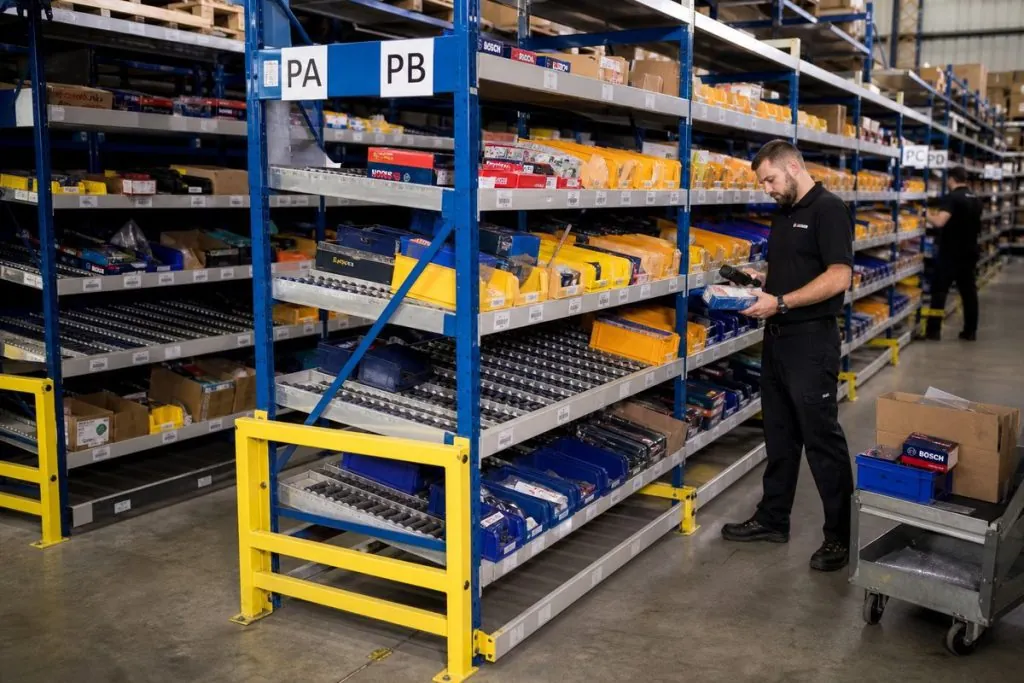
A pallet of bumpers or exhaust components wants broad beam support and easy forklift access. Fast-moving filters, brake pads, and service consumables belong close to the face of the pick zone, often in bin shelving or carton flow. High-value sensors, modules, and electronics need a controlled pick area, often behind a wire mesh security cage or in lockable bins. Tires are their own category. They are round, heavy in bulk, and sold in sets, which is why tire storage rack in Utah is usually a separate line in the plan. Long items like hoses, trim, and body pieces expose bad planning fastest because they need a storage form that fits the shape, not just the weight.
That is where velocity matters. High-turn items should sit where the picker can reach them quickly. Slow movers should move deeper into storage. In automotive fulfillment, a velocity-based layout improves cube use and pick rate because it cuts travel and keeps each location easier to verify. That is the core logic behind auto parts storage layouts built around inventory flow, and it is the same logic a Provo buyer should demand in a quote.
| SKU Category | Typical Size / Weight | Best-Fit Racking | Pick Method |
|---|---|---|---|
| Palletized bulk parts | Large cartons, mixed pallet loads | Selective pallet rack | Full-pallet replenishment |
| Fast movers like filters and pads | Small cartons, high touch | Bin shelving or carton flow | Each-pick or case-pick |
| Electronics and sensors | Small, high-value items | Security cage with shelving or lockable bins | Controlled each-pick |
| Tires | Round, bulky, sold in sets | Tire rack or deep-lane rack | Set pick and reserve replenishment |
| Long or awkward parts | Irregular length, hard to stack | Cantilever or open shelving | Manual pick and staged pull |
| Slow movers and seasonal stock | Mixed cartons, low turn | Deeper selective or dense storage | Reserve replenishment |
A good layout also protects the counter. If the fast movers sit in reserve, the staff burns time walking. If the bulky stuff sits in the pick face, the aisle gets jammed. The point is not to make every SKU visible. The point is to make every SKU easy to reach in the way it is sold.
Racking Options That Fit Auto Parts Distribution
The best rack type depends on what the building does most of the day. In a parts warehouse, that answer changes by zone.
Selective rack is the default, not the finish line
Selective pallet rack earns its place because every pallet position is reachable. That matters when the SKU count is broad and the reserve side has to stay flexible. It is the safest starting point for mixed auto parts, but it is not dense. If a building is short on space and overloaded with slow movers, selective rack alone can leave too much square footage on the floor.
Carton flow is the right choice for fast-moving piece-pick or case-pick faces. It keeps rotation clean and supports first in, first out movement for parts that should not sit forever. The trade-off is cost and depth. Use it where pick speed matters, not where every pallet needs reserve access.

Pallet flow fits higher-velocity pallet reserve. Push back rack works when several pallets of the same SKU need deeper lanes and access is still controlled. Drive-in rack is for bulk slow movers, especially seasonal or low-turn stock where density matters more than immediate selectivity. Shelving carries the small parts, the bins, and the counter work. If you are trying to fit more inventory into the same footprint, our guide to high-density pallet rack storage walks through when each dense system pays off.
| Racking Type | Access Pattern | Density | Best-Fit Use Case |
|---|---|---|---|
| Selective rack | Direct access to each pallet | Low to medium | Broad SKU reserve storage |
| Carton flow | Load from rear, pick from front | Medium | Fast movers, case-pick faces |
| Pallet flow | Rear load, front pick | High | High-velocity pallet reserve |
| Push back | Multiple pallets per lane | High | Medium-velocity bulk SKUs |
| Drive-in | Forklift enters lane | Very high | Slow movers and seasonal stock |
| Shelving | Hand access | Low | Small parts and counter inventory |
Direct advice: Do not put every part in the densest system you can buy. Dense storage is for the right SKUs, not the loudest salesman.
The buyer should compare options against the actual mix, not against each other in the abstract. A regional aftermarket DC needs different equipment than a retail back room, and a retail back room needs different equipment than an e-fulfillment node. Material Handling USA supplies and installs all of these systems across Utah, so the discussion should stay focused on the work the room has to do.
Sketch your Provo rack layout before you ask for a price
Enter your bay sizes, beam levels and load per pallet in the free pallet rack configurator, then send the configuration to our Utah team for a quote. Prefer to talk it through first? Call (800) 326-4403.
No account needed. The tool outputs a bill of materials our designers use to start your drawing.
Sizing and Layout for a Provo Distribution Floor
The building should drive the layout, not the product brochure. That sounds obvious, but it gets ignored all the time.
Measure the room before you choose the system
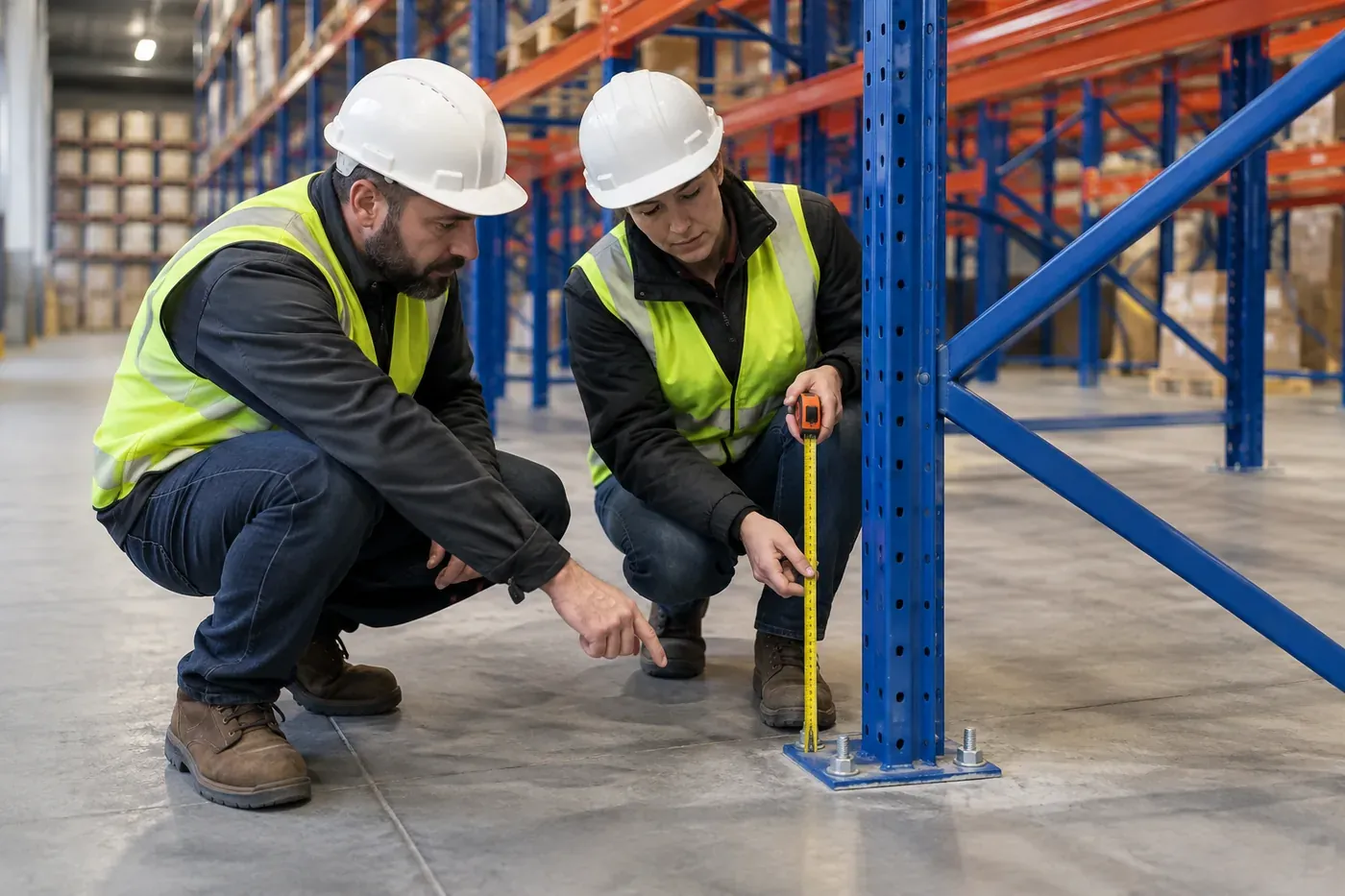
Start with clear ceiling height, column spacing, dock locations, and the footprint of the largest SKU that will ever sit on a beam. Then subtract forklift travel, turning space, and the room needed for staging. If you do that late, you end up designing a rack that fits the drawing but not the slab.
For many Provo parts spaces, selective rack works best with wider aisle centers for reach trucks or stand-up counterbalance equipment, while flow rack can compress the aisle because picking happens from the face. The exact spacing depends on truck type and column grid, which is why the layout has to be drawn around the actual equipment profile. Utah County tilt-up buildings often push buyers into bay decisions early, because column positions can determine whether you fit three or four rack rows in a block.
Eight steps to a layout that fits the building
- Pull a SKU velocity report. Rank every part number by picks per week. Split the list into fast, medium, and slow bands. This report decides where each SKU lives.
- Record the pallet and carton profile. Note the largest pallet footprint, tallest load, and heaviest pallet. Beam length, beam capacity, and upright depth come from these numbers.
- Measure the building. Clear height to the lowest obstruction, column grid, dock door positions, sprinkler heads, and floor drains. Photograph anything odd.
- Confirm the slab. Ask the landlord or builder for slab thickness and concrete strength. If no record exists, the rack engineer may require cores or a scan before anchors are specified.
- Pick the forklift first. Aisle width follows the truck. A reach truck, a stand-up counterbalance, and a sit-down counterbalance each need a different aisle, and the aisle sets how many rows fit.
- Zone the floor. Fast movers at the pick face near packing or the counter, medium movers in selective rack behind them, slow and seasonal stock in the deepest or highest positions.
- Draft the rack in a design tool. Build the pallet rack zone in the pallet rack configurator so the bay count, beam levels, and load per level are on paper before pricing starts.
- Have a designer check the drawing. MH-USA’s pallet rack design services team reviews clearances, seismic bracing, and permit needs before steel is ordered.
A few layout rules save a lot of pain later:
- Keep a cross-aisle in the plan. Emergency egress and internal movement both get easier when the layout is not a long dead run.
- Reserve dock-adjacent floor space. Receipt, inspection, and returns need their own zone or they will spill into the pick path.
- Put the fast movers near the face. The farther the picker walks, the more labor disappears into non-value travel. Our guide on rack layouts that speed up picking covers this in detail.
- Treat column locations as fixed constraints. A good drawing works around them instead of pretending they are not there.
Layout mistake to avoid: Do not size the rack from a clean sheet alone. Measure the actual building first, then design the storage around it.
The Provo pallet rack hub is the right starting point for a local layout discussion because it keeps the conversation tied to the Utah building context instead of a generic rack package.
Code, Safety and Site Considerations in Utah
Rack in Utah is not furniture. It is an engineered structure. That changes the bid, the install, and the approval path.
Treat the rack like part of the building

Utah adopts the International Building Code through the state construction code, and Provo sits near the Wasatch fault. Pallet rack systems here have to be designed for the seismic forces at the site, which means anchor bolts, base plates, and bracing are part of the design, not add-ons. The industry design standard is ANSI MH16.1, published by the Rack Manufacturers Institute, and its guidance on soils, slabs and seismic rack design explains why the engineer needs slab and soil information before the anchor pattern is set.
Most Utah jurisdictions treat storage rack as a permitted structure once it passes a height threshold or holds product above a certain level, and the local building official decides. In Provo, permits run through the Building Division of Community Development and are submitted online. The project needs stamped drawings, load documentation, and a permit before the first frame is anchored. If a bidder is vague on those points, the quote is not ready. Our page on pallet rack permits, engineering and relocation walks through what the drawing package usually contains.
The safer way to ask for a proposal is to request the design basis up front. Ask what standard the system is being engineered to, how the anchor pattern matches the slab, and whether the concrete condition was verified before the anchors were assumed. Slab thickness, concrete quality, and actual load path all affect whether the rack can be built as drawn.
You should also expect basic safety items in the scope:
- Upright protection at row ends. Impact damage belongs at the edge, not in the load path.
- Load plaques at every bay. The picker should know the capacity and the stored load, not guess.
- Clear aisles and documented inspections. Housekeeping is part of rack safety.
- Separation for sprinkler and fire clearance. The building systems still have to work after the rack is in place.
One point of confusion is worth clearing up. OSHA does not publish a rule written specifically for pallet rack. Its general material handling rule, 29 CFR 1910.176, requires safe clearances, marked aisles, and stable, secure storage. When OSHA cites an employer for a rack hazard such as a missing load plaque, it usually does so under the general duty clause and points to ANSI MH16.1 as the recognized standard. So the bid should show how the system handles load, anchorage, load plaques, and inspection, and that scope should be written down before anyone orders steel.
Installation, Lead Time and What to Ask in a Quote
A good installation is staged around the business, not around the crew schedule. That matters more in a live parts operation than in an empty shell.
Ask what is included before you compare prices
Standard selective rack often moves faster than custom flow or specialty shelving because the components are simpler. Flow rack, cantilever, and powder-coated retail-facing units usually take more coordination because rollers, finishes, and accessory parts add complexity. Some common sizes are stocked, subject to confirmation at the time of order, but the quote still needs to name what is available and what must be built. Treat any lead time that is not written in the quote as unconfirmed.
Freight also needs a clear answer. Ask whether delivery includes liftgate service, whether a forklift must be ready at the dock, and whether the installation team will sequence work so receiving can keep running on one side while rack goes up on the other. If the answer is fuzzy, the project will be fuzzy.
Best question to ask: “What exactly is included in the price, and what part of the job becomes a change order later?”
A clean quote should spell out:
- Stamped drawings for the Provo permit submittal
- Anchor pattern matched to the slab
- Permit responsibility, meaning who files and who pays
- Rack labels and load plaques
- Punch walk before final sign-off
- Install, freight, and tax shown separately
That is the kind of clarity that keeps the job from turning into a series of surprises. If you want a local design conversation that leads to a real quote, start with MH-USA’s Provo pallet rack page and ask for the layout, not just the price.
Choosing the Right Configuration for Your Scenario
The right answer changes with the buyer profile. That is where many projects go wrong, because the room is often designed for the wrong kind of work.
Match the system to the operating model

A retail back room serving one location usually needs a heavy share of shelving for hand-grabbable SKUs and a smaller selective rack block for bulky reserve items. Density matters, but pick path matters more. Our guide to dealership parts room storage solutions covers that scenario in depth. A regional aftermarket DC is different. It needs selective rack for full pallets and a fast pick face that can feed the highest-turn parts without clogging reserve. The same zoning logic shows up in our 3PL warehouse racking layout guide for Salt Lake City.
E-fulfillment parts operations care about slot count, order speed, and clean reserve separation. That often pushes the design toward selective rack with a tighter front-end pick zone and a clear backstock area, the same pattern we describe for e-commerce fulfillment racking in Ogden. EV and hybrid parts bring heavier batteries, modules, and odd shapes, so the layout may need wider clearances, cantilever, or more open rack geometry around those items. The storage shape has to fit the part, not the other way around.
Vertical modular storage solutions for auto parts rooms can help where the operation needs tighter piece-pick organization without turning the whole room into shelving. For a look at how these choices play out in a real Utah automotive project, see the Markosian Auto tire storage racking project in Tooele.
| Buyer Profile | Primary Rack | Secondary Rack | Key Driver |
|---|---|---|---|
| Retail back room | Shelving | Small selective rack block | Easy hand access |
| Regional DC | Selective pallet rack | Carton flow | Mixed pallet and case flow |
| E-fulfillment | Selective rack | Dense pick zone | Slot count and speed |
| EV and hybrid parts | Cantilever or open rack | Selective rack | Odd shapes and heavier components |
If you are planning a quote, have these items ready: SKU velocity bands, ceiling clear height, pallet dimensions, truck type, and the number of pick faces you need. That information gets the layout much closer to reality on the first pass.
Questions Buyers Ask Before They Sign
The last questions are usually the useful ones. They show up after the drawing exists and the buyer is checking for hidden gaps.
Ask about future changes before the steel is ordered
Can a selective rack layout be adapted later for pick-to-light or an AMR lane? Yes, if the design leaves room for that change. The problem is not whether the rack can move. The problem is whether the original aisle widths, column locations, and load zones were planned with that future in mind.
Buyers should also ask for the items that slow down the quote process when they are missing:
- Seismic design category for the site
- Anchor pattern and slab assumptions
- Column protection plan
- Freight, install, permit, and tax split
- Sprinkler clearance details
The quote should also show stamped drawings for the jurisdiction, a statement that the frames are designed to ANSI MH16.1, and a clear punch list with dates. That keeps the job from becoming a discovery exercise on install day.
Straight answer: The cheapest quote is usually the one that left out the permit, the drawings, or the anchorage detail.
If the building is tight, the inventory is mixed, and the timeline matters, the buyer should ask for a layout review before comparing steel prices. That is where meaningful savings show up.
Frequently Asked Questions About Auto Parts Racking in Provo
Do I need a permit to install pallet rack in Provo?
In most cases, yes. Utah uses the International Building Code, and storage rack is an engineered structure under it. Provo’s Building Division reviews permit applications through the city’s online portal. Your rack supplier should tell you whether your rack height and load trigger a permit and should provide the stamped drawings the city asks for.
Does pallet rack in Utah need seismic anchoring?
Yes. Provo is close to the Wasatch fault, and rack must be designed for the seismic forces at the site. That drives the base plate size, the anchor count and type, and the bracing. The engineer will ask for slab thickness and concrete strength before finalizing the anchor pattern.
What rack type is best for fast-moving auto parts?
Carton flow or bin shelving at the pick face is usually best for filters, pads, wipers, and other high-turn small parts. Carton flow keeps stock rotating first in, first out. Bin shelving is cheaper and works when rotation matters less than fast hand access.
Should tires go on the same rack as boxed parts?
Usually not. Tires are round and bulky and are sold in sets, so they use space poorly on a standard pallet beam. Dedicated tire rack or a deep-lane rack holds more tires per square foot and keeps them from spilling into the aisle.
How do I decide between selective rack and dense storage?
Count how many pallets of the same SKU you hold at once. If most SKUs are one or two pallets, selective rack wins because every pallet stays reachable. If you hold many pallets of the same item, push back, pallet flow, or drive-in rack can recover floor space. Most auto parts buildings need a mix.
Can I reuse rack from another building?
Sometimes. Used or relocated rack still has to be engineered for the new site’s seismic loads, slab, and product weights, and the jurisdiction may require new stamped drawings. Mixed brands and unknown capacities are the usual problem. Have the components identified and rated before you plan around them.
What should I have ready before asking for a quote?
A SKU velocity list, your largest and heaviest pallet, clear ceiling height, the column grid, dock door locations, your forklift type, and the number of pick faces you need. A drawing from the pallet rack configurator helps too.
Does MH-USA install in Provo and the rest of Utah County?
Yes. Material Handling USA is based in Utah and designs, supplies, and installs pallet rack, shelving, carton flow, and tire storage across Provo, Orem, Lehi, Spanish Fork, and the rest of Utah County. Start on the Provo pallet rack page or call (800) 326-4403.
Design it yourself, then get a quote
Material Handling USA can help you turn a crowded parts room into a usable storage plan with pallet rack, shelving, and layout support sized for your Provo operation. Use our free online design tools to configure what this article describes, then send the configuration to our team for pricing:
- Pallet rack configurator for selective rack reserve zones
- Shelving configurator for small parts and counter stock
- Cantilever rack configurator for long trim, hoses, and body pieces
- Security cage configurator for high-value electronics and modules
If you need a quote, a layout review, or a straight answer on what fits your building, call Material Handling USA at (800) 326-4403, email Sales@MH-USA.com, or use the contact page and ask for a Provo parts storage consultation.