The parts department is the engine that drives a dealership’s service revenue. When automotive parts room storage is organized and efficient, technicians get parts fast, customers experience shorter wait times, and the dealership captures more service appointments. When the parts room is disorganized — crowded aisles, mislabeled bins, hard-to-find inventory — it creates a bottleneck that costs the entire dealership money.
This guide covers everything you need to know about designing, equipping, and optimizing an automotive dealership parts room. We cover shelving types, layout strategies, vertical storage solutions, and the design principles that separate high-performing parts departments from struggling ones.
Why Parts Room Storage Matters More Than You Think
The average dealership parts department carries $200,000–$500,000+ in parts inventory. That inventory is the department’s largest asset — and how it is stored directly impacts profitability:
- Pick speed: A well-organized parts room cuts pick time from 3–5 minutes to under 60 seconds
- Lost parts: Disorganized storage leads to phantom inventory — parts that are in stock but cannot be found
- Obsolescence: Poor FIFO practices cause slow-moving parts to age out and lose value
- Space efficiency: Most parts rooms waste 30–40% of available space with inadequate shelving
- Technician satisfaction: Service techs leave dealerships where parts delays make their job harder
Parts Room Shelving Systems
Steel Closed Shelving
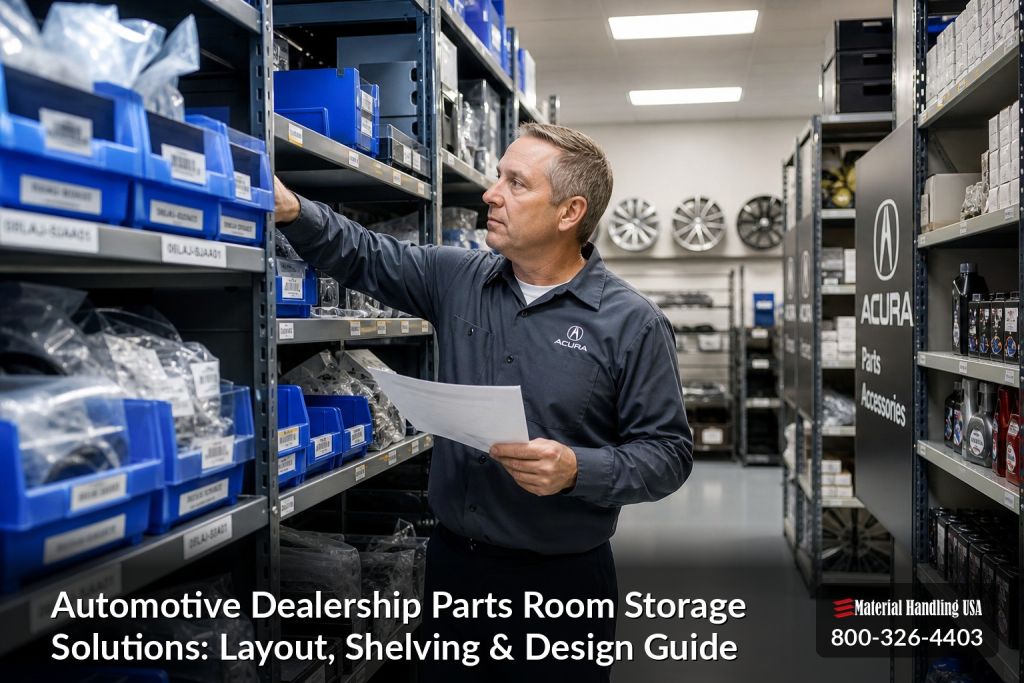
Steel closed shelving is the backbone of any parts room. Solid steel shelves provide full support for heavy automotive parts including brake rotors, starters, alternators, and fluid containers. Adjustable shelf heights let you configure each section for the specific parts it stores.
For automotive applications, choose 18-gauge or thicker steel shelves in 12″, 18″, or 24″ depths. Standard 36″ or 42″ wide units work well for most parts. Shelf capacities of 350–750 lbs per shelf handle even the heaviest OEM parts. View industrial shelving options.
Bin Shelving for Small Parts
Small parts — fasteners, clips, seals, O-rings, sensors, and electrical connectors — make up the majority of SKUs in most parts rooms but take up the least space. Bin shelving systems with labeled plastic bins turn these high-count items into fast-pick, zero-search inventory. Color-coded bins (e.g., blue for GM, red for Ford) further speed identification.
The Storeganizer system uses angled bin trays with label slots that make every part number visible at a glance. Parts room managers who switch from flat shelves to angled bin systems typically report 40–60% faster pick times for small parts.
Cantilever Shelving for Long Parts
Every parts room has inventory that does not fit standard shelving: exhaust pipes, driveshafts, trim pieces, running boards, and weatherstrip. Cantilever shelving uses open-front arms to store these long, awkward items safely and accessibly — no more leaning parts against walls or stacking them on the floor.
Pallet Rack for Bulky Items
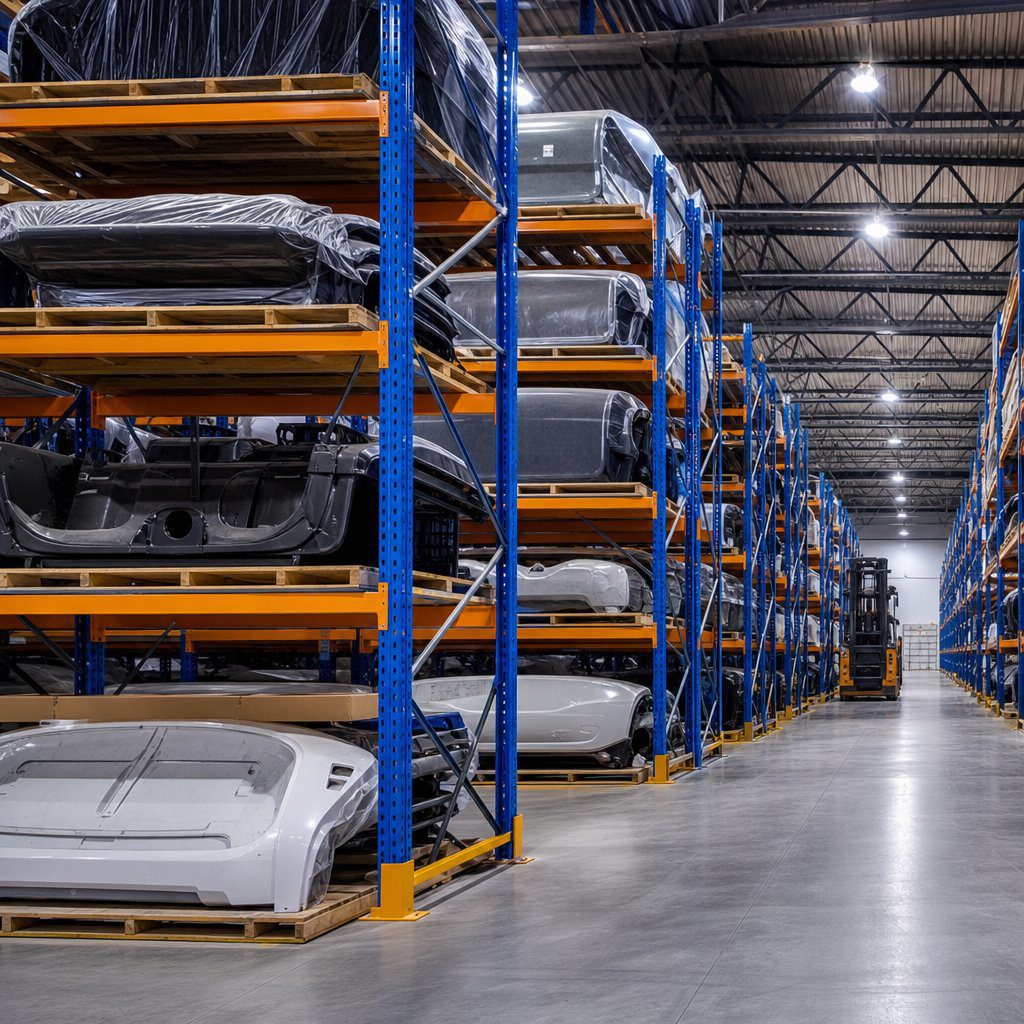
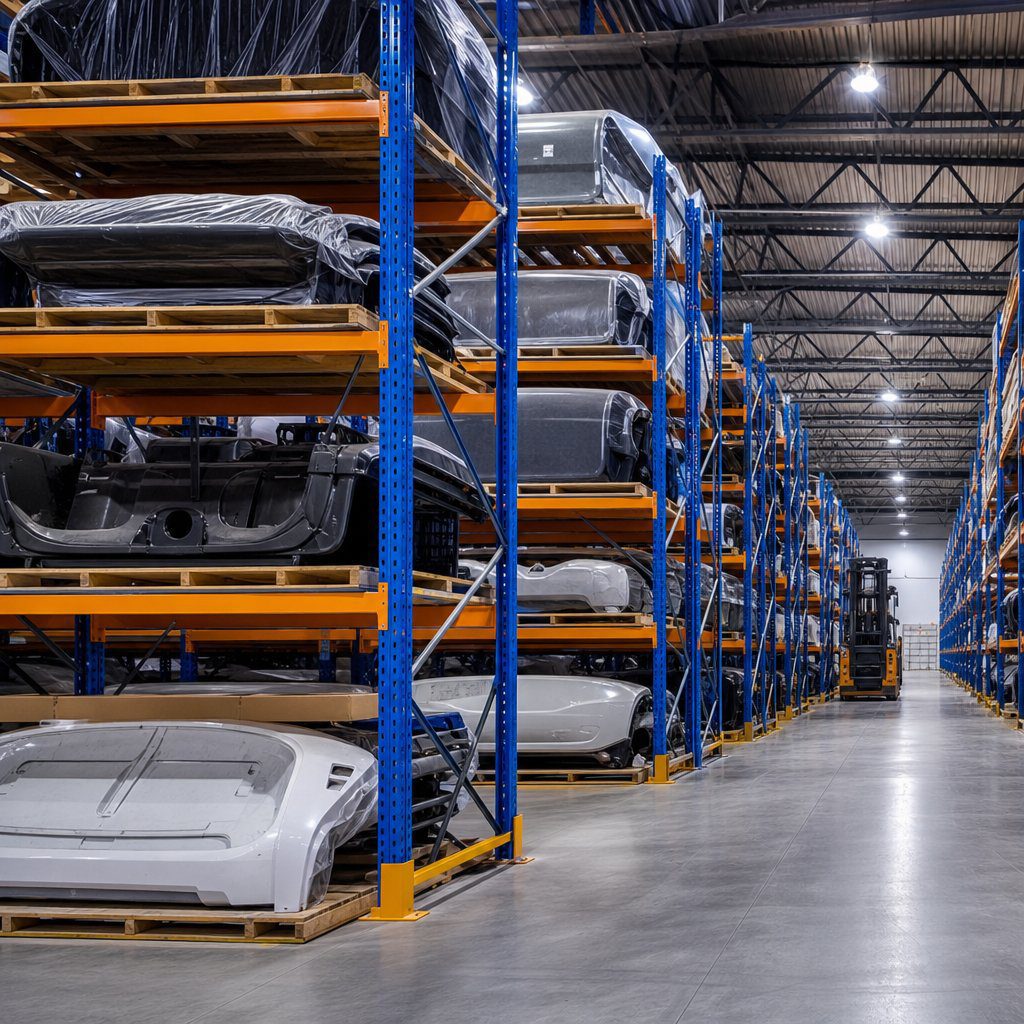
Bumpers, hoods, doors, fenders, and other large body parts need pallet rack or dedicated oversize storage. Pallet rack provides heavy-duty capacity and forklift accessibility for the largest items in the parts inventory. Place pallet rack sections at the perimeter of the parts room or in a dedicated oversize area.
Mezzanine Storage
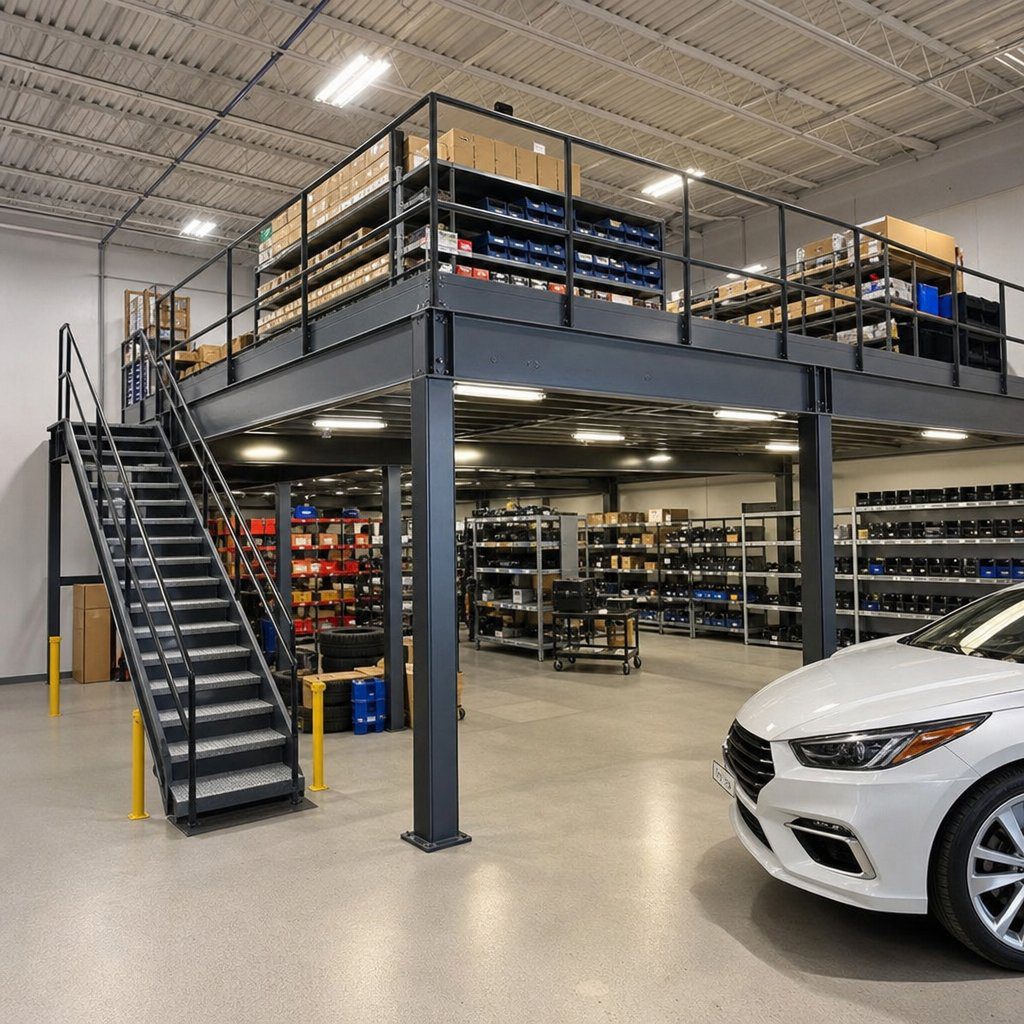
When floor space runs out, go up. A mezzanine platform above the parts counter or in a high-ceiling area can double available storage space without expanding the building footprint. Mezzanines are especially effective for storing slow-moving and seasonal inventory above the active picking area.
Vertical Storage Solutions for Parts Rooms
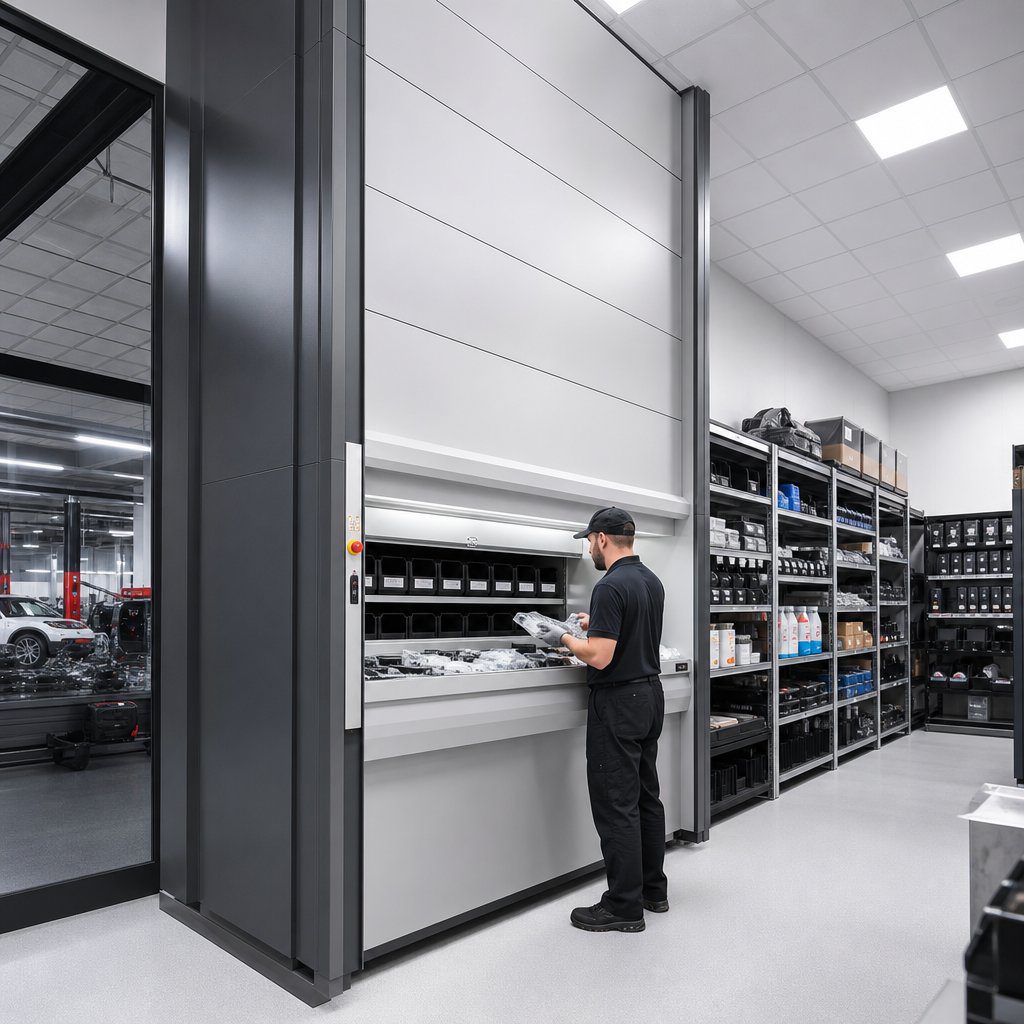
Automated vertical storage is transforming dealership parts departments. These systems bring parts to the counter person instead of sending them on a search through the shelving aisles.
Vertical Carousels
Vidir vertical storage carousels use rotating shelves inside an enclosed unit. The operator enters a bin number, and the carousel rotates to deliver that shelf to the access opening. A single vertical carousel can replace 10–15 sections of static shelving while reducing pick time by 50–70%.
Vertical carousels are especially effective for:
- High-volume A-class parts that need fast retrieval
- Small and medium parts that fit in bins or compartments
- Secure storage for high-value electronics and accessories
- Counter-adjacent placement for direct parts-to-technician delivery
Vertical Lift Modules (VLMs)
For parts rooms with high ceilings (14+ feet), vertical lift modules use an automated extractor to retrieve trays from between two enclosed columns. VLMs automatically adjust tray spacing to maximize density — if you add a small part to a tray, the VLM packs it closer to its neighbors. VLMs are ideal when ceiling height is available and the parts mix changes frequently.
Parts Room Layout Design
Zone-Based Organization
The most efficient parts rooms use a zone-based layout that places high-velocity parts closest to the parts counter:
- Zone A (Hot Zone): Top 20% of SKUs by movement frequency. Place within 15 feet of the parts counter. Use vertical carousels, bin shelving, and open steel shelving for fastest access.
- Zone B (Warm Zone): Next 30% of SKUs. Standard steel shelving in adjacent aisles. Well-labeled, easy to navigate.
- Zone C (Cold Zone): Bottom 50% of SKUs. Stored on upper shelves, mezzanines, or deeper aisles. Less accessible but space-efficient.
- Oversize Zone: Dedicated area for body parts, bumpers, glass, and items that do not fit standard shelving. Use pallet rack and cantilever.
Counter Layout
The parts counter is the nerve center. Design it with:
- A front counter facing the service department and walk-in customers
- A back counter or window facing the shop for technician access
- Adjacent vertical carousel or VLM for instant retrieval of common parts
- Computer terminals with DMS integration at every workstation
- Staging area for pulled orders and core returns
Aisle Width and Flow
Parts room aisles should be 36″–42″ wide for hand-carry traffic. Main aisles (from counter to rear wall) should be 48″+ to allow cart traffic. Design a one-way traffic flow pattern that prevents congestion when multiple parts pullers are working simultaneously.
Parts Room Optimization Tips
Label Everything
Every shelf location needs a clear, machine-readable label (barcode or QR code) that ties to your DMS. Use bin location codes (e.g., A-03-2 = Aisle A, Section 3, Shelf 2) that any team member can follow without training.
Implement FIFO Rotation
First-in-first-out rotation prevents obsolescence. Stock new parts behind existing inventory. For bin shelving, use gravity-feed dividers that automatically push older parts forward.
Regular Physical Counts
Cycle count one section per week instead of doing a full annual inventory. This catches discrepancies early and keeps your DMS inventory accurate year-round.
Manage Core Returns
Designate a specific area for core returns (alternators, starters, compressors) away from active pick shelving. Process cores weekly to prevent buildup and recover core charges.
Case Study: Parts Room Transformation
A multi-brand dealership in Utah was struggling with a parts department that had outgrown its space. Parts pullers averaged 4+ minutes per pick. Obsolete inventory occupied 25% of the shelving. Counter wait times exceeded 8 minutes during peak service hours.
MH-USA redesigned their parts room with:
- Two Vidir wire carousels at the parts counter for top 200 SKUs
- New steel bin shelving with angled trays for 3,000+ small parts SKUs
- Cantilever sections for exhaust systems and long trim pieces
- A mezzanine platform for seasonal and slow-moving inventory
- Zone-based reorganization of all remaining shelving
Results after 90 days: Average pick time dropped to 45 seconds. Counter wait times fell below 3 minutes. Obsolete inventory was reduced by 60% through the reorganization process. The parts department’s gross profit increased 18% in the first quarter.
Frequently Asked Questions
What type of shelving is best for automotive parts?
Steel closed shelving is the primary choice for most parts because of its durability and adjustable shelf heights. Supplement with bin shelving for small parts, cantilever for long items, and pallet rack for oversize body parts. Vertical carousels dramatically improve pick speed for high-volume SKUs.
How much does it cost to redesign a parts room?
A complete parts room redesign including shelving, layout planning, and installation typically runs $30,000–$100,000+ depending on room size and whether vertical automation is included. Basic shelving upgrades can start under $10,000. Vertical carousels add $15,000–$40,000 per unit but often pay for themselves within 18 months through labor savings.
How do I organize a small dealership parts room?
In small spaces, vertical storage is essential. Install shelving to the maximum safe height and use rolling ladders for upper levels. Bin shelving with labeled dividers organizes small parts in minimal space. Consider a single vertical carousel to replace 10–15 sections of static shelving. Remove obsolete inventory aggressively — every square foot counts.
What is the best layout for a parts department?
A zone-based layout with high-velocity parts nearest the counter, a clear main aisle from counter to rear wall, and dedicated areas for oversize items and core returns. The parts counter should have service-side and shop-side access points. Vertical carousels or VLMs adjacent to the counter create the fastest possible pick-and-deliver workflow.
How can I reduce parts department wait times?
Three strategies make the biggest impact: (1) Install vertical carousels at the counter for top-selling SKUs, (2) implement a bin location system so any team member can pull any part, and (3) reorganize shelving by movement frequency rather than by part number sequence. These changes routinely cut wait times from 5–8 minutes down to 1–3 minutes.
Do I need a mezzanine in my parts room?
If your parts room is at or near capacity and you cannot expand the building footprint, a mezzanine is the most cost-effective way to add space. Mezzanines work best for slow-moving and seasonal inventory. A 20×30 ft mezzanine adds 600 sq ft of storage for roughly the cost of building 150 sq ft of new construction.
Get a Parts Room Design Consultation
Material Handling USA specializes in automotive parts room design and optimization. We have equipped parts departments for single-point dealerships and multi-rooftop groups across the country. Our team handles layout planning, product selection, and professional installation.
Call (800) 326-4403 or request a free consultation today.
Build Your Own Storeganizer Layout
Use our free 3D Storeganizer Designer to size your columns, pick pocket sizes and textile grades, and get a price in minutes — no sales call required to see your configuration.
Open the Storeganizer Designer →More on Storeganizer
Storeganizer replaces shelving for small, slower-moving inventory with vertical columns of textile pockets that hang in existing pallet rack — up to 396 pick locations per bay.
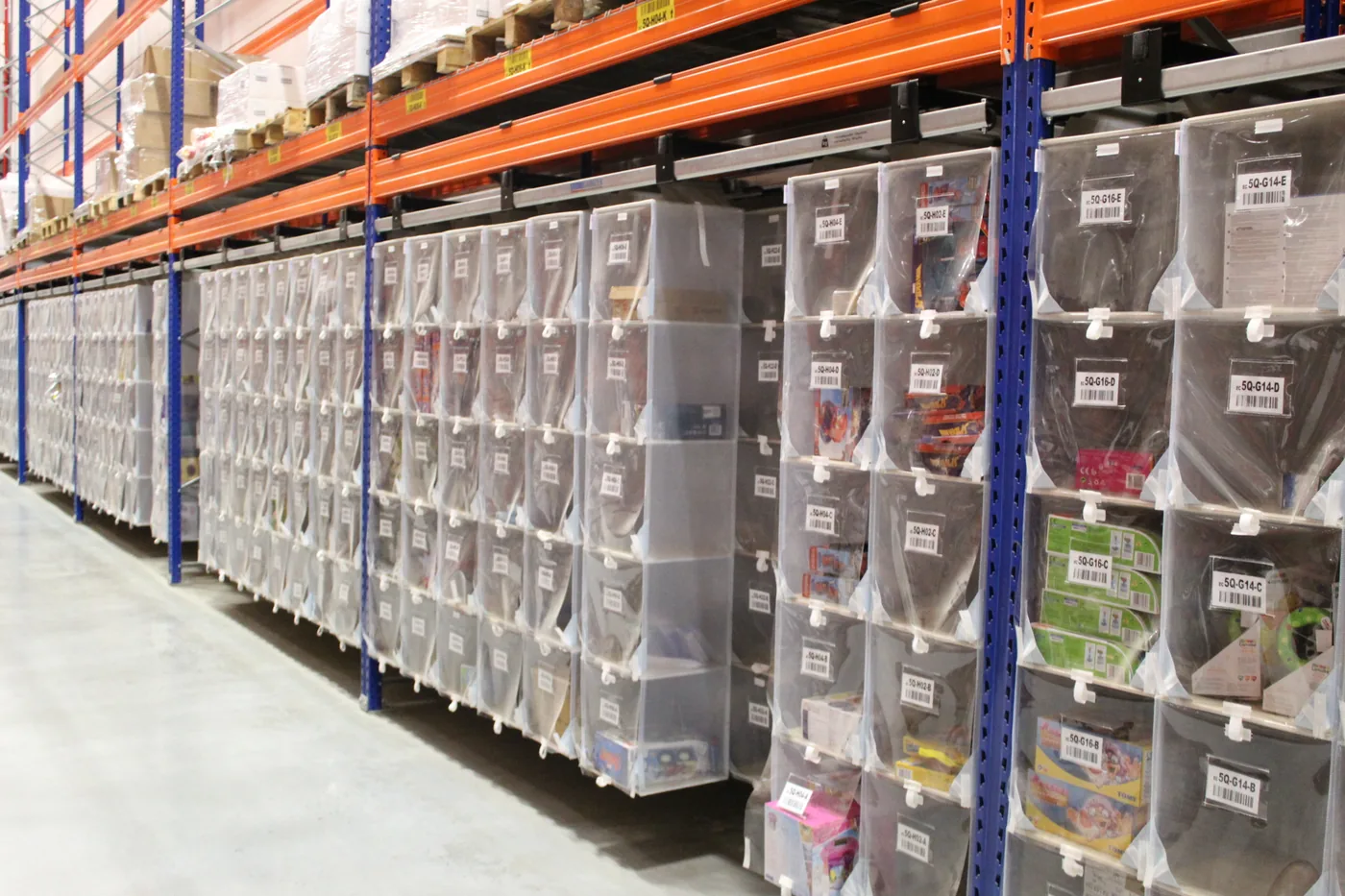 Storeganizer high-density pocket storageVertical columns of textile pockets that hang in existing pallet rack — up to 396 pick locations per bay.
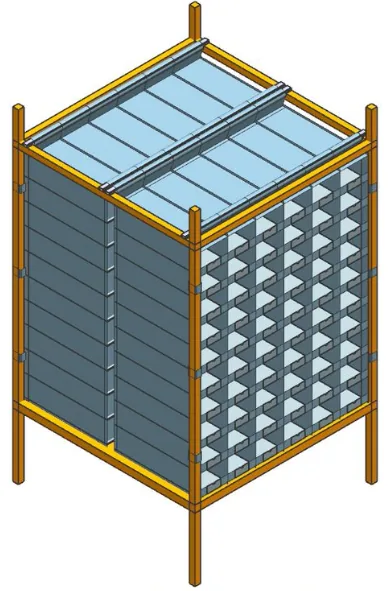 Free Storeganizer DesignerConfigure bay height, pocket size, bay count and options; get a 3D layout, location count and price.
 Storeganizer vs. shelving, flow rack & automationAn honest comparison from a distributor that sells all of them.