
How to Store Auto Parts in a Shop, Dealership or Parts Room
A practical, step-by-step guide to storing car and truck parts: sort them by part family, give each family the right shelving, bins, drawers or racks, protect parts from damage and rust, and label every location so the right part is found the first time.
Utah 801-328-8788 · Boise 208-284-2559 · Las Vegas 702-576-6093 · Nationwide 800-326-4403

Shop Auto Parts Storage Equipment
Prices below are current online prices for the lowest-priced complete unit in each category. More sizes, add-on units and options are inside each category. Freight is quoted by destination and some common sizes are in stock at select manufacturers, subject to confirmation. Planning a whole parts room? Send us your part mix and we will quote the complete system.
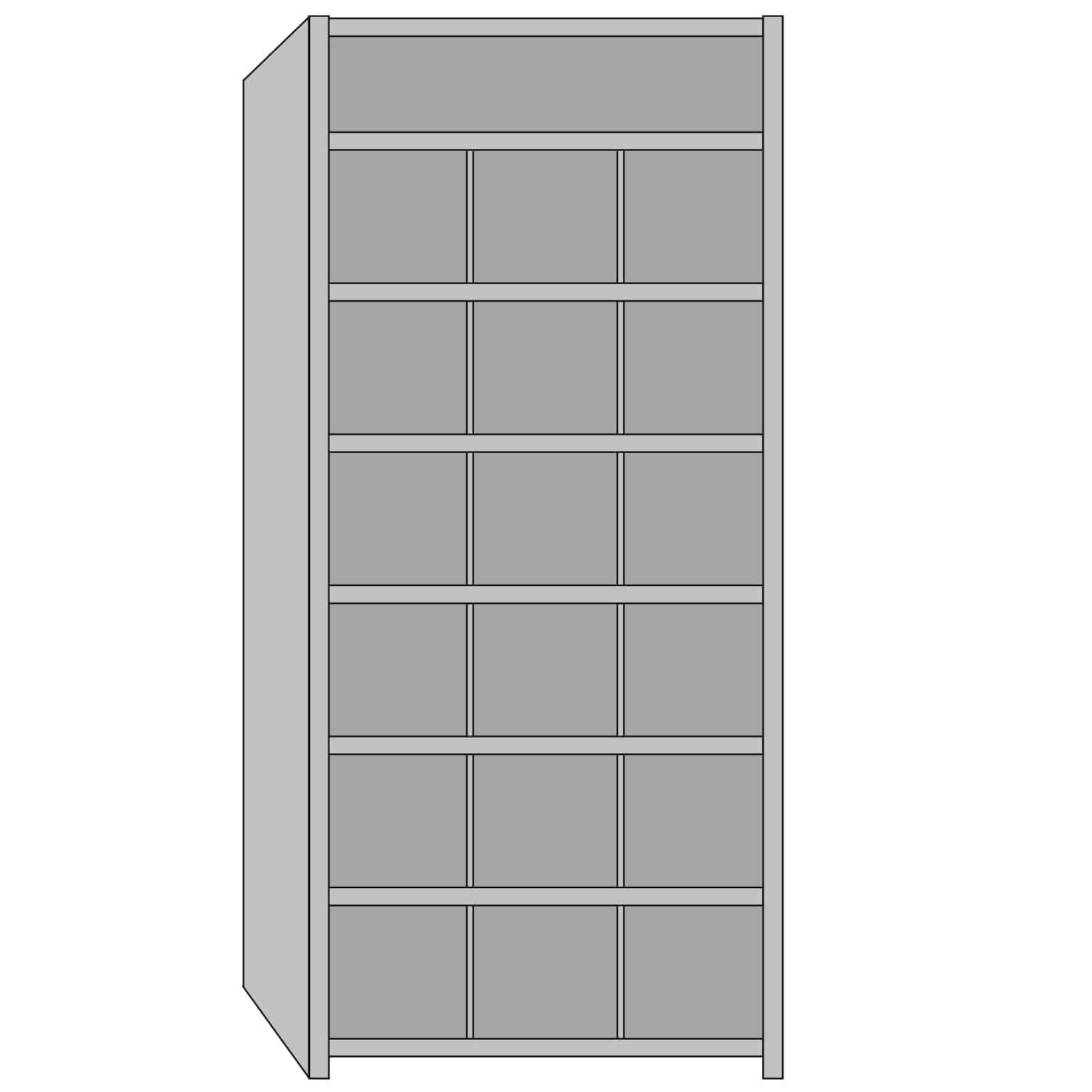


How to Store Auto Parts in 7 Steps
Whether you run a dealership parts department, an independent repair shop, a fleet garage or an auto parts store, the method is the same. Storing auto parts well is less about buying more shelving and more about giving every type of part the storage it was meant for.
Sort by part family
Group parts by type, size and how often they move before buying anything.
Shelve boxed parts
Put boxed and bagged parts on adjustable steel or rivet shelving.
Contain small parts
Give hardware and small parts bins or drawers, never loose shelves.
Rack tires and bulky parts
Use tire racks, bulk shelving and specialty racks for awkward items.
Separate batteries and fluids
Store batteries and chemicals on their own racks and cabinets.
Label every location
Give each slot a location code and keep it in your inventory system.
Protect and review
Control moisture and dust, rotate stock and clear out obsolete parts.
Looking for equipment rather than a how-to?
This page is the how-to guide. For the storage systems themselves, see our automotive parts storage page for Rivet-Span shelving, modular drawers, muffler racks and parts room planning, and our parts department shelving guide for dealership parts rooms built on Equipto V-Grip shelving, drawers and bin storage.
Step 1: Sort Auto Parts by Family and Velocity
Start with what you store, not with a catalog. Pull an inventory export or walk the room and group parts into families: small hardware and clips, boxed mid-size parts, filters and belts, long parts such as exhaust and trim, body panels and glass, tires, batteries, and fluids. Then mark how often each family moves.
Fast movers belong closest to the counter or the bays; slow movers, warranty holds and reserve stock can live farther away or higher up. This one step decides how much bin, shelf and rack space you really need.

Categorizing by type is the simplest way to stay organized: similar items together, one home per part number. Write the families down with an estimated location count for each; it becomes the shopping list for the steps below.

This parts room shows the idea in practice: tires on their own rack at the left, boxed parts on red steel shelving and small parts in drawer banks built into the same run. Each part family has the storage type that suits it, inside one connected layout.
The table below is a quick reference for matching common auto parts to storage.
| Part type | How to store it | Mistake to avoid |
|---|---|---|
| Nuts, bolts, clips, fuses, bulbs | Shelf bins, bin shelving or divided drawers | Loose parts on open shelves |
| Filters, belts, wiper blades, sensors | Steel shelving with dividers, grouped by make | Mixing makes in one slot |
| Boxed OEM parts | Adjustable steel or rivet shelving sized to the box | Shelves deeper than the boxes |
| Brake rotors, drums, heavy castings | Heavy-duty shelving low in the bay | Heavy parts stored above shoulder height |
| Exhaust, molding, hoses, trim | Long-span bulk shelving or hanging racks | Leaning long parts against walls |
| Bumpers, hoods, doors, glass | Specialty racks with padded supports | Stacking painted panels flat on each other |
| Tires and wheels | Tire racks, tires upright on the tread | Tall stacks on the floor |
| Batteries | Battery racks, upright, rotated first-in, first-out | Batteries on the floor or stacked |
| Oils, fluids, aerosols | Low shelves; flammables in approved cabinets | Chemicals above other parts |
Step 2: Shelve Boxed Parts on Adjustable Automotive Shelving

Most auto parts arrive in boxes, so most of the room is shelving. Choose modular automotive shelving with shelves that adjust on short centers; a single bay can then hold tall boxes at the bottom and many short levels of small boxes above. Modular units also grow with the business: add a bay instead of starting over.
Open steel shelving is fast to load and easy to see into. Closed units with back and side panels keep small boxes from falling through and give clean, labeled faces.
Good automotive shelving optimizes storage space, improves access and streamlines the shop: when every part has a home, service is faster and errors drop. Match shelf depth to the boxes you stock (12″ to 18″ for most boxed parts, deeper for bulky items), keep heavy parts between knee and waist height, and leave empty levels for growth. For heavier cartons and wide spans, rivet or boltless shelving is the economical choice.
Our parts shelving page compares rivet, steel, bin, drawer, wire and stainless shelving in detail, and Borroughs automotive shelving covers a line built specifically for parts rooms.
Step 3: Contain Small Parts With Bin Shelving and Drawers
Bin shelving is one of the most effective ways to store small auto parts such as nuts, bolts, screws, washers, clips and fittings. Each part number gets its own bin with a label facing the aisle, so it can be found, counted and refilled without digging. It is customizable, durable and a big step up in inventory control over loose boxes.
Key benefits of bin shelving for automotive dealers and shops
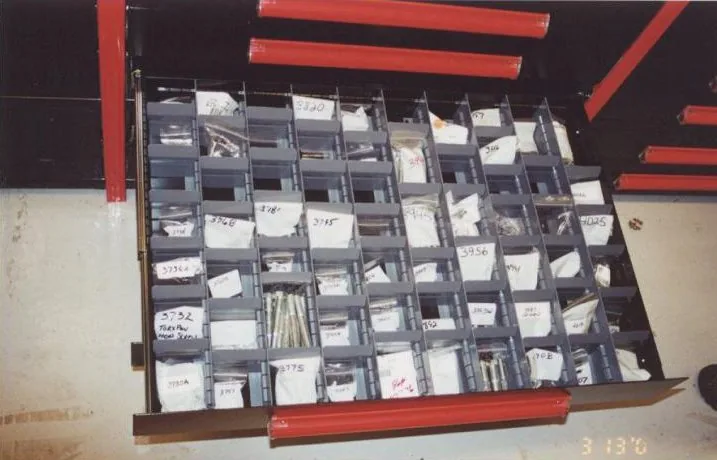
When to use drawers instead: drawers hold even more locations per bay, keep dust off and can lock. Divided drawers like this one are ideal for fasteners, clips and precision parts that would get mixed up in open bins.
Use bins for fast movers whose quantities change every week, and drawers for small, valuable or slow-changing parts. Many rooms put drawer banks inside the shelving run, near the counter.
Compare bin shelving, shelf bins, Borroughs Flexi-Bin shelving and modular drawer cabinets for parts rooms.
Step 4: Store Tires on Tire Storage Shelving
Tires take up more floor space than almost anything else in a shop. Tire storage shelving and racks keep the inventory organized, protected and easy to reach. Store passenger and light-truck tires upright on the tread, side by side, on beams or solid decks, and give every bay and level a number so seasonal and customer sets can be found without unloading a stack.
Tagged customer tire sets in numbered bays, like these, make seasonal storage a quick pick instead of a search.
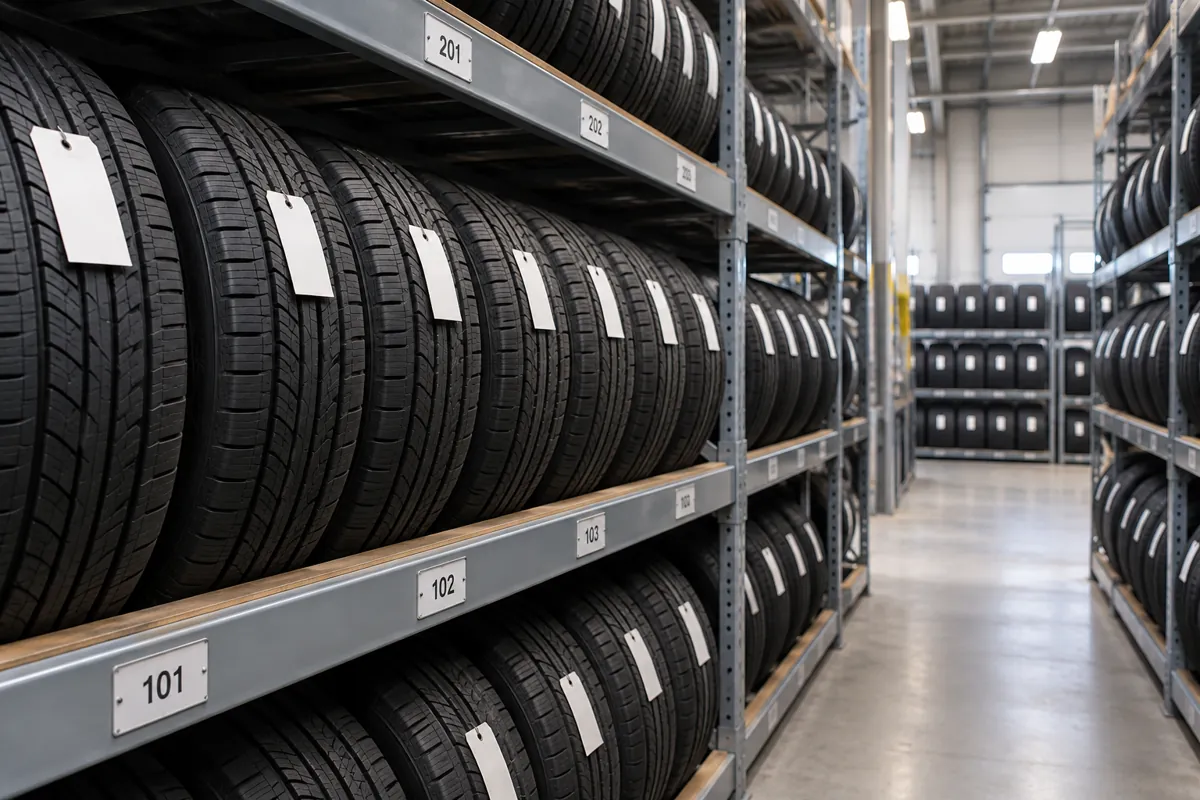
Keep tires out of direct sunlight and away from electric motors and heat sources, and avoid tall floor stacks that crush the bottom tires and are hard to unstack safely. When floor space runs out, tire racks can go taller with a lift, move onto a mezzanine or move to a vertical tire carousel. Read our full guide on how to store tires and our dealership tire storage page.
Step 5: Rack Bulky, Long and Heavy Parts
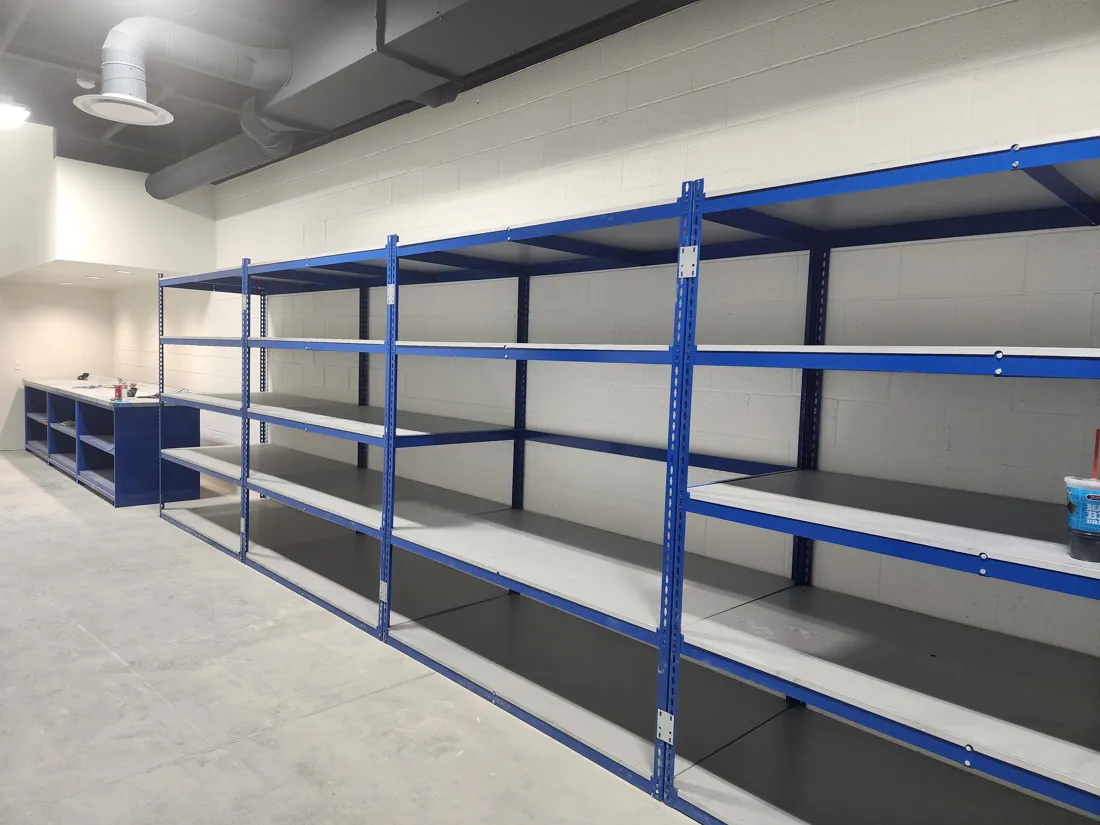
Bumpers, hoods, doors, glass, exhaust pipes, molding and hoses are easily damaged and waste space on ordinary shelves. Give them long-span bulk shelving with full decks, or specialty racks: upright glass bays, padded bumper and hood racks, and hanging racks for hoses and belts. Store long parts horizontally rather than leaning them on walls.
Bulk shelving like this Borroughs Rivet-Span run carries cartons and oversize parts along a wall.
What is an auto parts rack, and when do you need one?
An auto parts rack is any heavy-duty rack built around the shape and weight of a specific part, rather than a general shelf. Customized auto parts racks protect finished surfaces, hold awkward items securely and use space that a flat shelf would waste, which is the main advantage of using racks for automotive parts. Engines, transmissions and other heavy components need racks rated for the load; see engine and transmission storage racks.
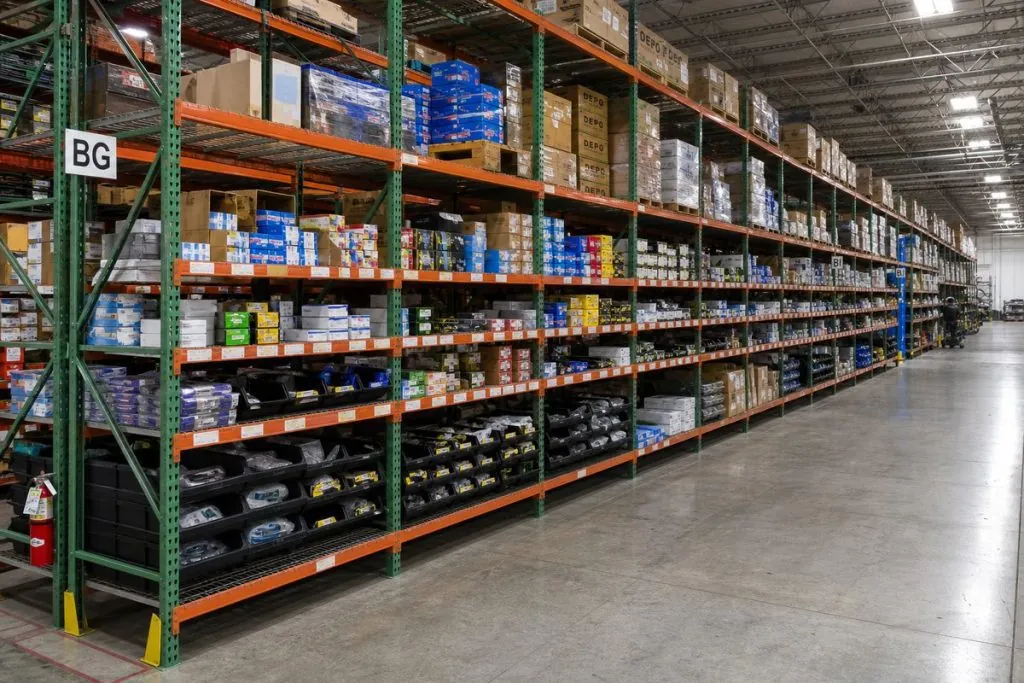
Pallet rack for warehouse-scale parts storage. When parts arrive by the pallet, or a parts warehouse serves several stores, selective pallet rack takes pallet loads on the lower beams and cartons or bins on wire-decked upper levels. It increases storage capacity in tall buildings and keeps bulk stock organized and easy to inventory.
See pallet rack and auto parts warehouse slotting.
Step 6: Separate Batteries, Oils and Chemicals
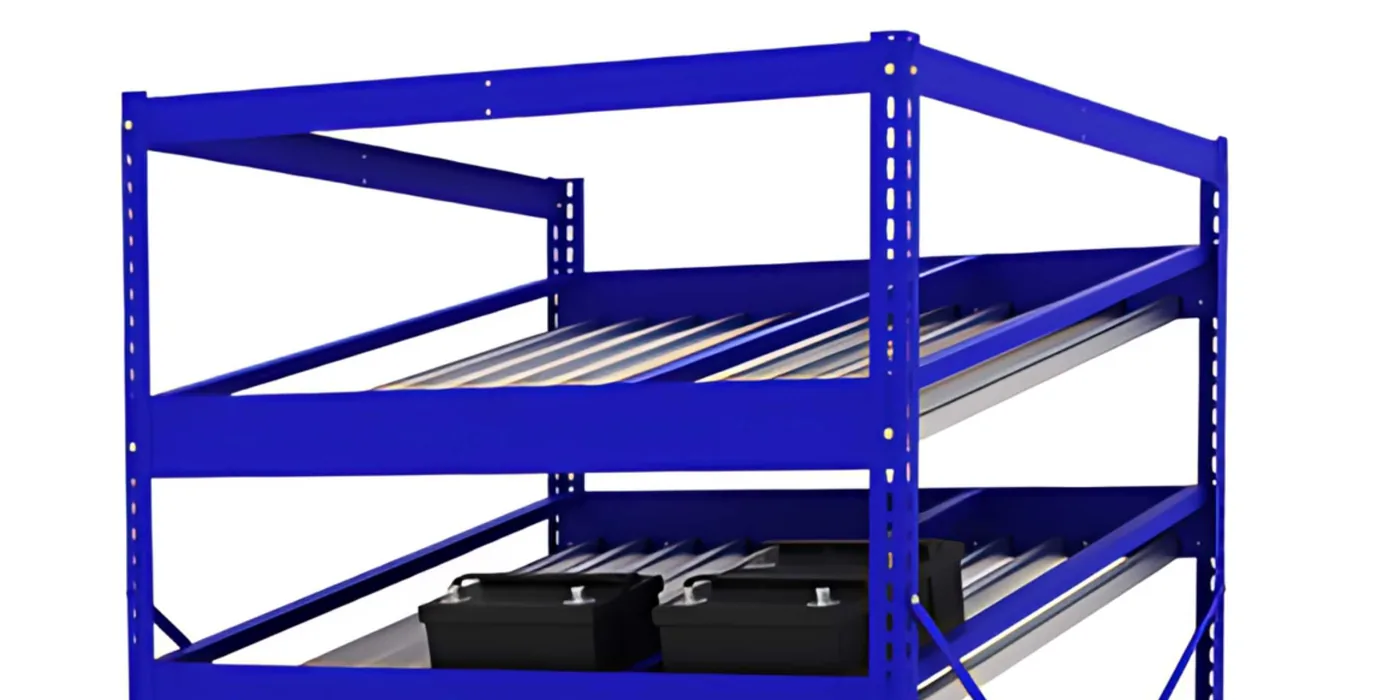
Batteries are heavy and should never sit on the floor or be stacked on each other. Store them upright on a dedicated battery rack, in a cool, dry and ventilated spot, and follow the battery manufacturer’s storage and charging guidance. Flow-style battery racks feed new stock in from the back so the oldest batteries sell first.
Keep the battery area away from the main parts shelving so a leak cannot damage other stock.
Oils, coolant, brake fluid and aerosols belong on low shelves, below other parts, so a leak cannot drip onto boxed stock. Flammable and combustible liquids go in approved flammable storage cabinets in the quantities your fire code allows; OSHA’s rules for flammable liquids are in 29 CFR 1910.106, and your local fire marshal has the final word. See our industrial storage cabinets for cabinet options.
Step 7: Label Every Location and Track It
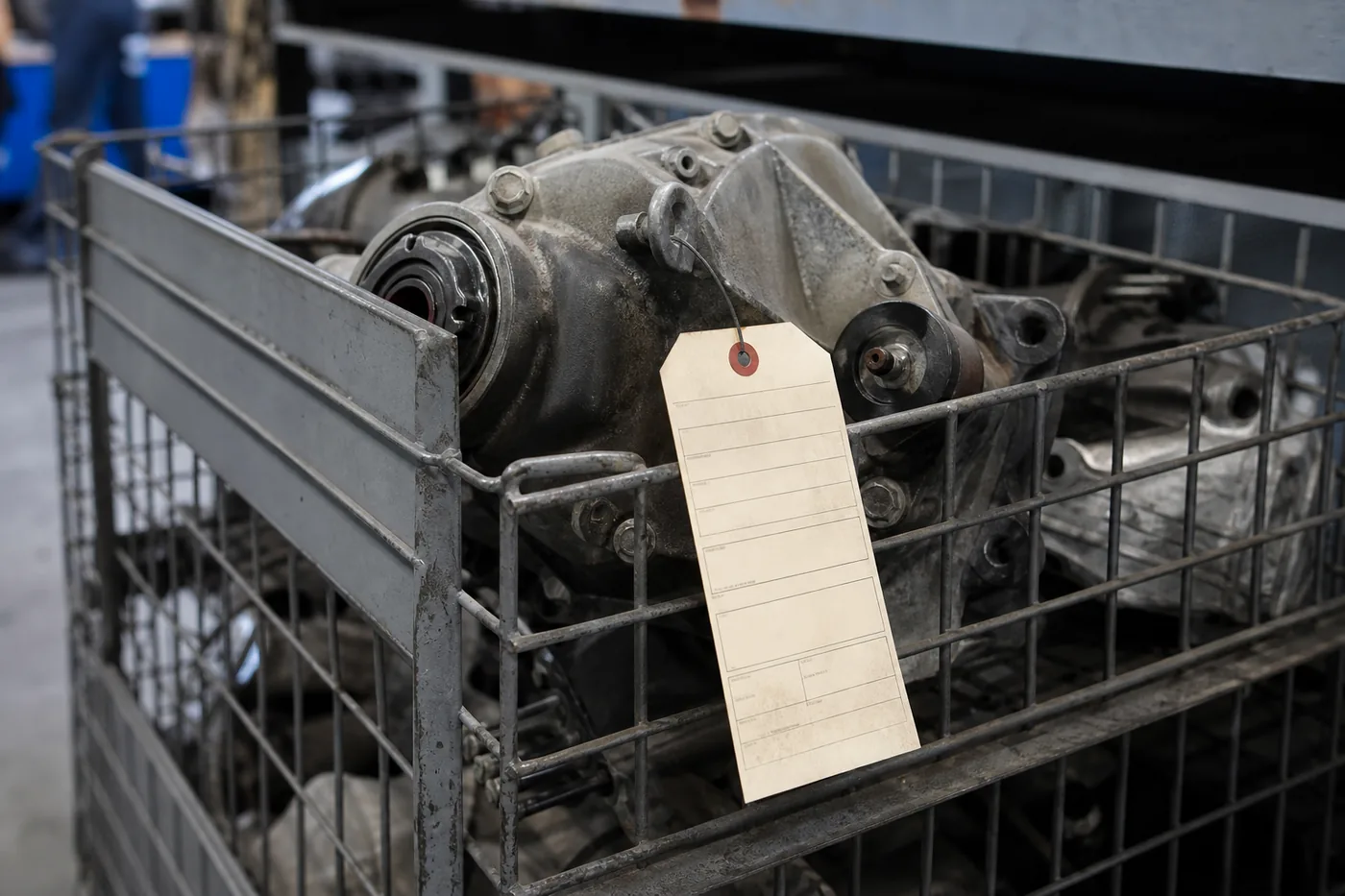
Storage only stays organized if every location has a code and every part number lives in exactly one primary location. A simple scheme such as aisle-bay-level-slot, printed on shelf-edge labels and entered in your parts or dealer management system, lets anyone find a part from the screen.
Tag parts held for a reason, such as warranty returns or cores, with a clear tag and a separate zone, so they never get picked by mistake.
- Rotate stock: first-in, first-out for batteries, fluids and anything with a shelf life.
- Cycle count: count a few locations every week instead of a full shutdown count.
- Review slow movers: move obsolete and returnable parts out of prime locations each quarter.
- Keep it clean: a tidy, regularly decluttered storage area is faster and safer.
For the full method, read our bin location and labeling guide, plus warranty parts retention storage and obsolete, returns and core storage.
Protecting Auto Parts in Storage (Short and Long Term)
Stored parts lose value when they rust, get scratched or dry out. Whether parts sit for a week or a year, a few habits keep them saleable and installable:
Rubber parts such as hoses, belts and seals last longer away from sunlight, heat and electric motors. Electronic modules are best kept in their anti-static packaging until installation. For parts rooms with humidity or corrosion problems, see our guide to parts room climate, humidity and corrosion, and for locked storage see security cages.
Workbenches and Tool Organization for Auto Shops
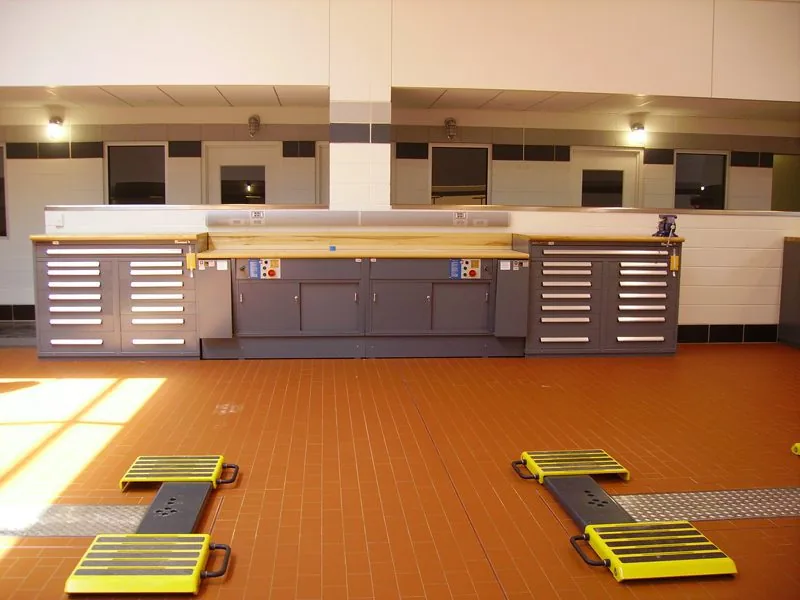
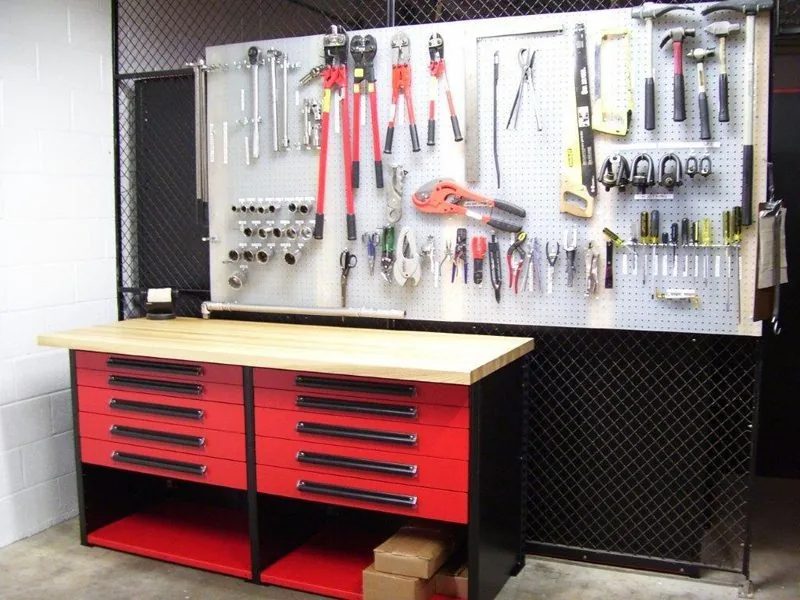
Automotive workbenches are a cornerstone of efficiency in any dealership or repair shop. Heavy-duty steel benches with drawers give technicians a solid surface to stage parts for a job, check them against the repair order and keep small hardware within reach, right beside the lift.
A row of benches with drawer cabinets along the service bay wall keeps tools and parts a few steps from the vehicle.
Auto dealership tool organization: keep tools on shadow boards or pegboard above the bench and in labeled drawers below, so a missing tool is obvious at a glance. Special service tools that belong to the dealership, not the technician, need their own controlled tool room.
See industrial workbenches and service department tool storage.
Auto Parts Storage Ideas by Type of Business
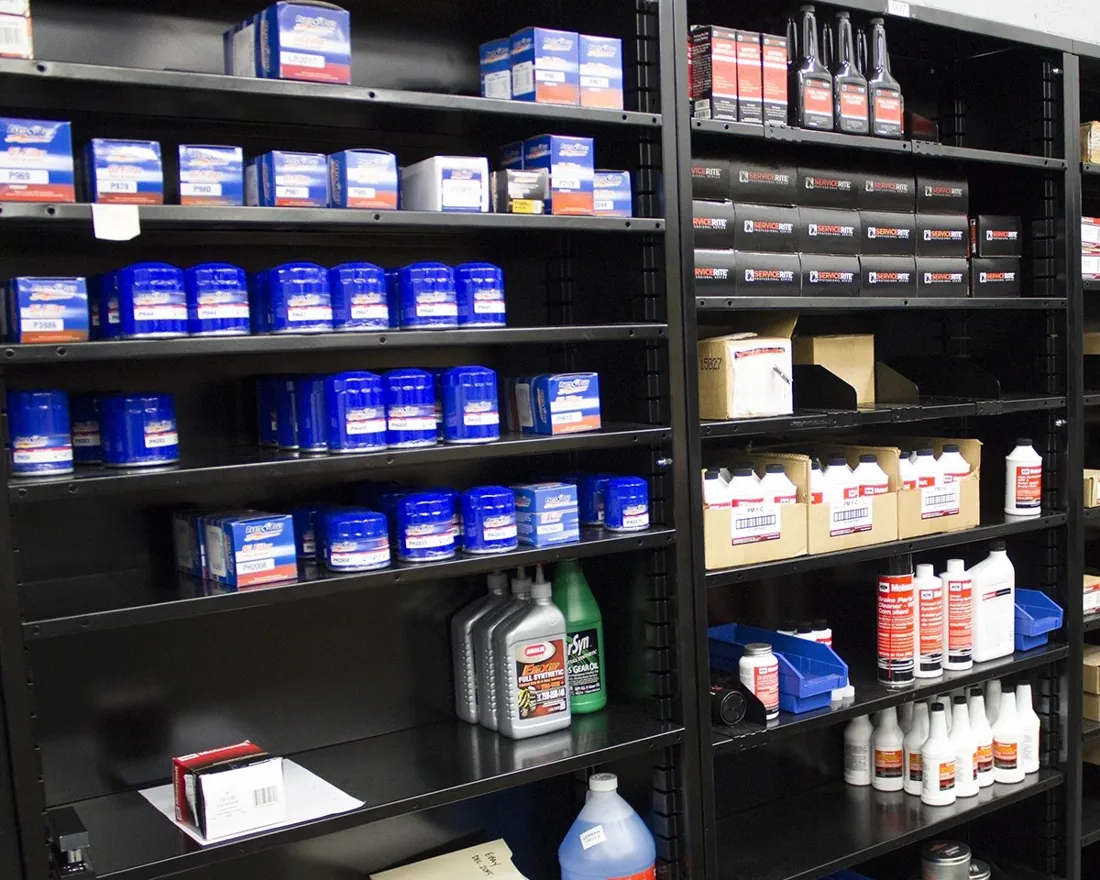
The seven steps apply everywhere, but the mix changes with the business. An auto parts store puts fast-moving oil, filters and wipers on shelving behind the counter, like these Borroughs Flexi-Bin units, with reserve stock in the back room. A dealership leans on drawers and closed shelving for thousands of OEM part numbers.
Use the cards below to jump to the guide that fits your operation.
Common Auto Parts Storage Mistakes to Avoid
- Buying shelving before sorting the inventory into part families.
- Shelves deeper than the boxes, which hides parts behind parts.
- Loose small parts on open shelves with no bins or drawers.
- Heavy parts stored high, light parts at knee height.
- Tires stacked in tall floor piles instead of on racks.
- Batteries and fluids mixed in with boxed parts.
- No location codes, so only one person can find anything.
- Obsolete stock left in prime locations year after year.
If your room has outgrown its layout, mobile shelving, a mezzanine or a full stockroom design can recover space; see mobile shelving and the parts room mezzanine guide. The automotive storage solutions hub lists every guide in this series.
How to Store Auto Parts: FAQ
How can I maximize space in my auto shop?
What’s the best way to store small auto parts?
Can shelving systems be customized for my specific needs?
How do you store car parts long term?
How should tires be stored?
How do you organize a parts department?
What is the difference between automotive shelving and an auto parts rack?
Do you install auto parts storage systems?
Get Help Organizing Your Auto Parts Storage
Send us your part mix, room size and a few photos. We will recommend shelving, bins, drawers and racks and send an itemized quote.