
Parts Room Climate, Humidity and Corrosion Protection
Why auto parts go bad on the shelf, and how to store them so they do not. Humidity, temperature, ozone and airborne contamination in dealership parts rooms and service-shop storerooms — and the storage decisions that protect the inventory.

Moisture is the driver
Corrosion follows the temperature-humidity complex, not just the average humidity
Rubber ages in storage
Heat, light and ozone shorten the useful life of seals, hoses and tires
Electronics are packaged for a reason
Moisture-barrier bags and static protection stop working once they are opened
Storage is a design choice
Location, enclosure, shelf type and stock rotation all change shelf life
The inventory that fails before it is ever installed
Every parts manager has seen it. A brake rotor with a bloom of surface rust that a customer refuses to accept.
A box of sensors that came back from a bay because the connector pins were tarnished. A rack of belts that
cracked before they were ever sold. A set of tires with sidewall crazing after a season next to an outside wall.
None of those parts were defective when they arrived. They were stored in a room that was quietly working
against them.
Parts rooms are rarely designed as controlled environments. They end up where the floor plan has room:
against an uninsulated exterior wall, over a slab with no vapor barrier, next to a wash bay, beneath a roof that
radiates heat all afternoon, or in a corner of the shop that shares air with welding and exhaust. Then the
inventory sits there for months. Slow-moving stock is exactly the stock most exposed to whatever the room does
to it, which is why environmental damage shows up disproportionately in the parts you can least afford to write
off.
This page is about the environmental half of parts storage: what actually degrades automotive inventory, what
the recognized standards say about it, and which storage and layout choices reduce the damage. For the systems
themselves — shelving, drawers, bins and rack — start with our
automotive parts storage systems overview.

What actually degrades automotive parts in storage
Four mechanisms cover nearly all of it. Knowing which one you are fighting determines whether the answer is
a different room, a different enclosure, or simply better stock rotation.
Time on the shelf is the multiplier
Every environmental mechanism on this page is a function of exposure time. A part that turns eight times a year barely notices the room; a part that has been on the shelf for three years has been exposed to every heat cycle, every humid morning and every wash-bay door opening in that period. Environmental protection and obsolescence control are the same project — see our guidance on obsolete parts, returns and core storage.
Storage conditions by part family
Different commodities in the same parts room want different things. This table summarizes the practical
requirement and the storage response for the families that most often suffer.
| Part family | What damages it | Storage response |
|---|---|---|
| Bare and lightly coated steel — rotors, drums, bare castings, fasteners | Time of wetness: condensation cycles on cool metal, humid air, and any chloride or sulfur contamination in the air. | Keep the stock off exterior walls and slabs, keep air moving gently, keep original wrapping and vapor-corrosion-inhibitor packaging intact until the part is issued, and rotate first-in first-out. Divided drawers keep small bare hardware wrapped and identifiable. |
| Small hardware, clips, terminals, plated parts | Loose bulk storage in open bins where humidity, dust and handling combine; mixed parts that cannot be rotated. | Divided drawer storage or bins with labeled locations so each part number can actually be rotated. Density is the secondary benefit; the primary one is that nothing sits unidentified for years. |
| Rubber goods — seals, O-rings, hoses, belts, weatherstrip | Heat, direct light, ozone from nearby electric motors or arc equipment, and compression or stretching in storage. | Store away from heat sources and direct sunlight, keep parts in their supplied packaging, avoid hanging that stretches parts, and follow the manufacturer’s shelf-life guidance. ISO 2230 sets out this class of control in detail. |
| Tires and mounted wheel assemblies | Sunlight, ozone, moisture from a bare slab, deformation from poor stacking, and stock that never rotates. | The U.S. Tire Manufacturers Association’s storage bulletin recommends indoor storage in a clean, dry, well-ventilated area with a minimum of circulating air, temperate and shaded conditions, tires raised off the floor on a rack or sound pallet, and using oldest stock first. |
| Electronic modules, sensors, ECUs, displays | Moisture ingress after protective packaging is opened, static discharge, dust and oil mist. | Keep modules in their supplied moisture-barrier and static-protective packaging until installation, store them in enclosed drawers rather than open shelves, and control the surrounding dust sources. Note that the packaged shelf life referenced in IPC/JEDEC J-STD-033 applies to a sealed bag, not to an opened one. |
| Batteries | Heat, which accelerates self-discharge, and deep discharge, which can allow freezing damage in cold storage. | Store cool, dry and protected from direct heat sources, keep units at a high state of charge, and give stored lead-acid batteries a freshening charge on the schedule the manufacturer publishes. Battery Council International guidance published in manufacturer storage literature uses a specific-gravity drop of 0.040 points, or roughly 12.4 volts open-circuit for a 12-volt battery, as the trigger. |
| Fluids, oils, paints and aerosols | Temperature extremes, incompatible storage, and container damage — and the compliance exposure that comes with them. | Flammable and combustible liquids follow OSHA 1910.106, including the quantity limits for approved storage cabinets. Labeling and safety data sheet obligations follow OSHA 1910.1200. Used oil containers must be in good condition, not leaking, and marked “Used Oil” under 40 CFR 279.22. |
Humidity: what to control and what not to over-engineer
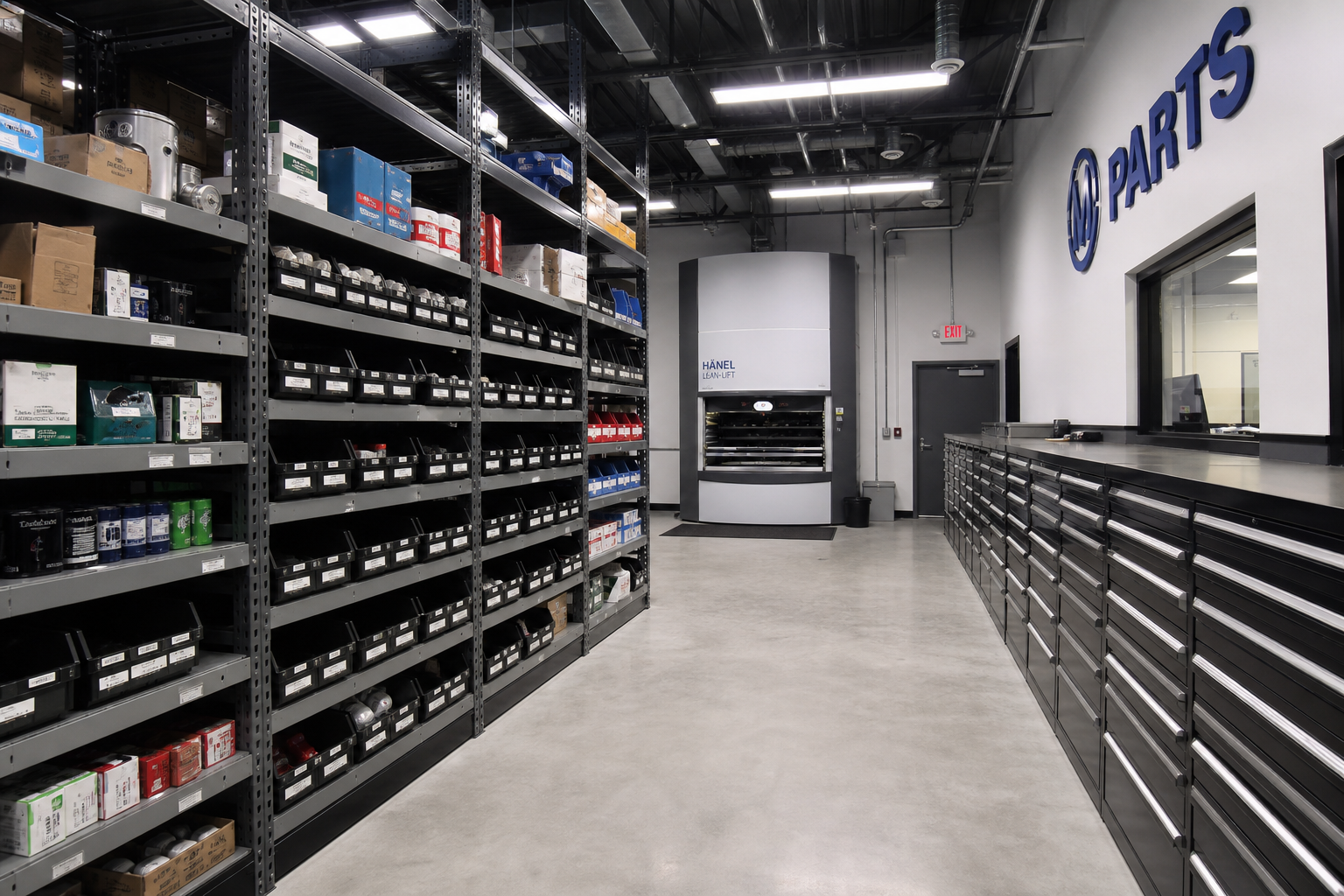
Parts departments are not clean rooms, and treating them like one wastes money. The realistic goal is a room
that stays dry, stays reasonably stable, and never lets warm humid air condense on cool metal. That is a
building and layout problem before it is an equipment problem.
- Find the moisture source first. An unsealed slab, a leaking roof detail, a shared wall with
a wash bay, a floor drain, or a door that opens directly to the shop are all more significant than the number on
a hygrometer. Fix the source before buying dehumidification. - Watch surfaces, not just air. Corrosion happens where the surface is below the dew point of
the surrounding air. Steel stored against an uninsulated exterior wall in winter is the classic case, and no
amount of average-humidity control fixes it. Move the stock inboard. - Ventilate gently. Stagnant, humid corners are where damage concentrates. Modest, even air
movement is the goal; a fan blowing directly on tires or rubber goods is not. - Measure before you specify. Inexpensive logging sensors placed at the coldest wall, the
highest shelf and the middle of the room for a few weeks tell you far more than a single spot reading, and they
give you a defensible basis if a building change is needed. - Keep packaging intact. Manufacturer packaging — vapor-corrosion-inhibitor wrap,
moisture-barrier bags, desiccant, static bags — is engineered protection you already paid for. Opening
parts early to “make them easier to find” is a labeling problem being solved with an inventory-damage tool. - Do not store sensitive stock on the top shelf near the roof. That is the hottest, most
cyclic space in the room. Reserve it for packaged, insensitive bulk.
Where the stock sits changes how long it lasts
Most of the protection available in a parts room is free. It comes from deciding what goes where.
Map the room’s real conditions
Identify exterior walls, roof exposure, doors to the shop and to outside, wash-bay and paint-area adjacency, floor drains, and any known slab moisture. Log temperature and humidity at several points before making decisions.
Zone by sensitivity, not only by velocity
Slotting normally follows pick frequency, and it should. Overlay a second rule: environmentally sensitive families go to the most stable interior zones, and packaged insensitive bulk absorbs the exposed perimeter and high bays.
Enclose what needs enclosing
Modules, sensors, plated hardware and small bare-metal parts belong in closed drawer cabinets or bins with lids rather than open shelves. Rubber goods belong away from heat, light and motors.
Separate the aggressors
Batteries, solvents, paints, aerosols and used-oil containers get their own compliant storage, away from parts inventory and clear of egress. Body-shop sanding and welding zones do not share air with electronics.
Build rotation into the location scheme
FIFO only happens if the newer stock physically cannot be picked first. Location depth, bin sizing and labeling determine whether that is true.
Re-check after any building change
New HVAC, a new roof, a relocated door, or a shelving reconfiguration all change airflow and surface temperatures. Conditions that were fine last year are not automatically fine now.
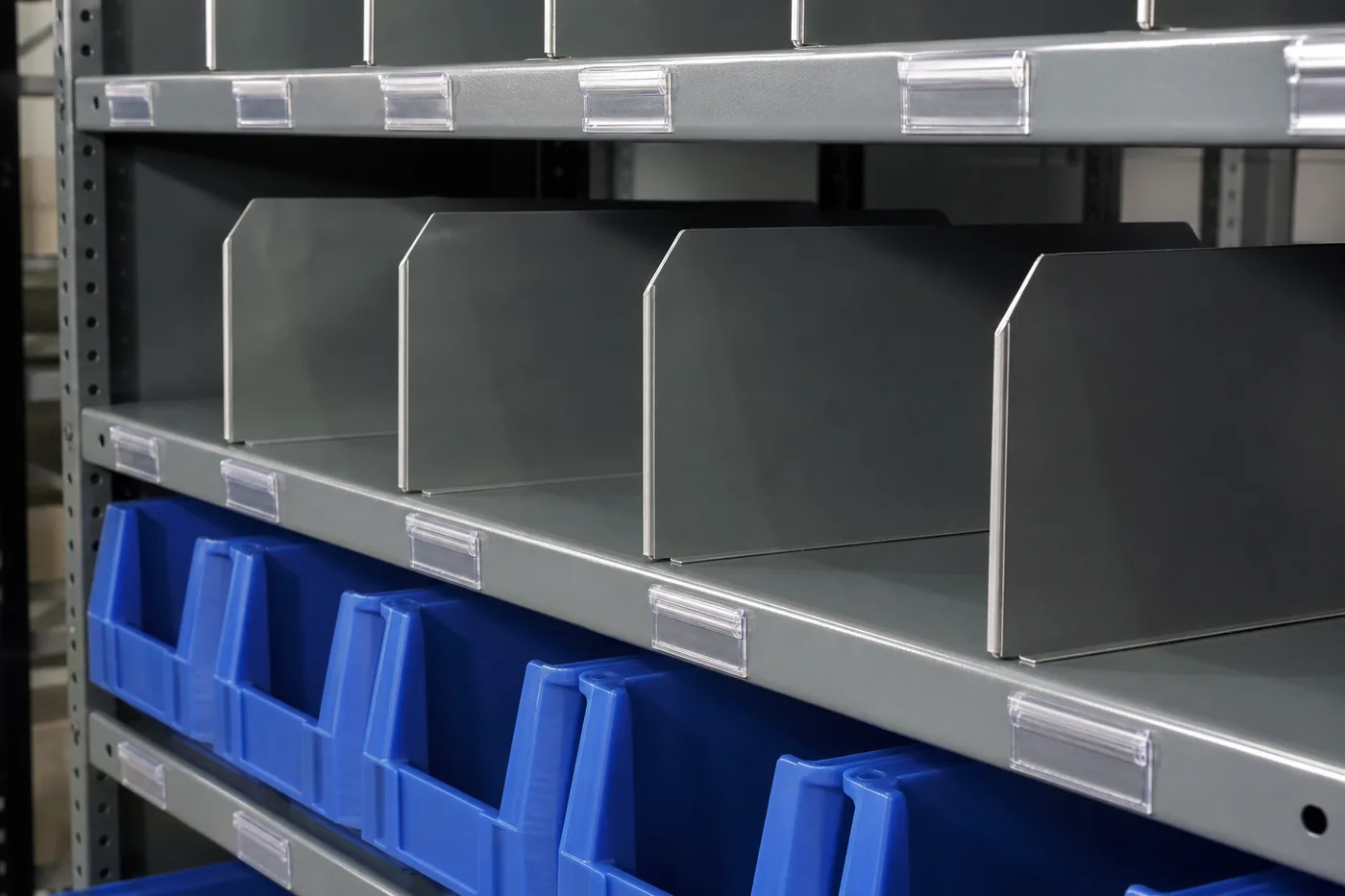
Storage equipment choices that help — and what they do not fix
Equipment cannot substitute for a dry, stable room, but the right equipment measurably reduces exposure.
What equipment cannot fix
A leaking roof, an uninsulated wall, a slab without a vapor barrier, or a door that dumps humid outside air onto cold steel. If the conditions log shows a building problem, the answer is a building fix — storage equipment placed into a wet room simply becomes wet equipment.
The rules that apply to a parts room, and the ones that do not
There is no federal regulation that sets a temperature or humidity range for a dealership parts room. There
are rules about how you store the hazardous part of the inventory, and about keeping the room safe.
| Source | What it covers | Practical effect in a parts room |
|---|---|---|
| OSHA 1910.176 | Handling and storage of materials: storage secured against sliding or collapse, aisles and passageways kept clear. | Applies to every shelving run and rack bay in the room, regardless of environment. |
| OSHA 1910.106 | Flammable liquids, including approved storage cabinets and quantity limits. | Governs how brake cleaner, solvents, paints and aerosols are stored inside the building. |
| OSHA 1910.1200 | Hazard communication: labels and safety data sheets. | Applies to the chemical inventory a parts room carries, including decanted containers. |
| 40 CFR 279.22 | Used oil container management. | Containers in good condition, not leaking, and marked “Used Oil”. |
| ISO 9223 | Classification of atmospheric corrosivity for metals. | A neutral technical basis for treating time of wetness — not average humidity — as the corrosion driver. |
| ISO 2230 | Guidelines for storage of rubber products, including temperature, humidity, light, radiation and ozone. | The reference point for how seals, hoses and elastomer goods should be packaged and stored. |
| IPC/JEDEC J-STD-033 | Handling and storage of moisture-sensitive electronic devices. | Explains why module packaging is sealed and why an opened bag changes the rules; the standard’s sealed-bag shelf life does not apply once opened. |
| U.S. Tire Manufacturers Association storage bulletin | Industry recommendations for storing unmounted and mounted tires. | Indoor, clean, dry, ventilated with minimal circulating air, temperate and shaded, off the floor, oldest stock first. |
Planning guidance, not engineering approval
Everything on this page is planning guidance for storage layout and equipment selection. Building envelope work, HVAC design, fire protection changes and anything requiring a permit belong to the licensed design professionals and the authority having jurisdiction for your site.
Tires, rubber and the parts room’s worst storage habits
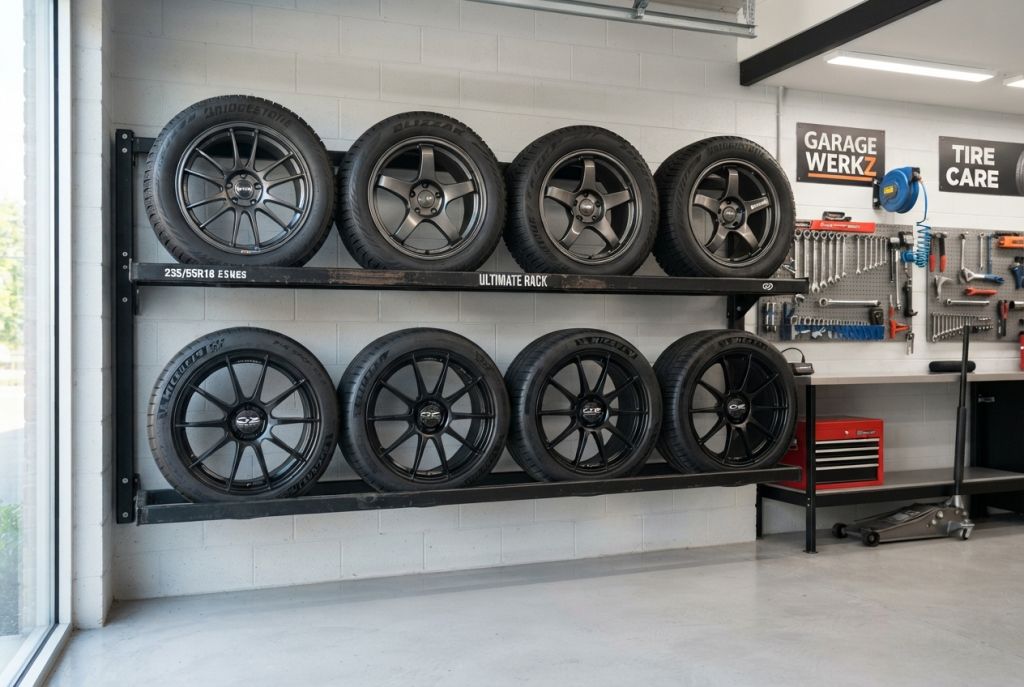
Rubber goods and tires are where storage damage is most visible and most avoidable. The failure modes are
well documented and the fixes are mostly free.
- Off the floor. Tire industry guidance is explicit that tires should be raised off the
storage surface on a rack or a sound, flat pallet — damaged pallets and grated surfaces can mark a
sidewall over time. - Out of the sun. Shaded, temperate, indoor storage is the recommendation. A row of tires
against a sunlit roll-up door is the opposite of it. - Away from ozone sources. Electric motors and arc equipment generate ozone, which attacks
elastomers. Do not store rubber goods or tires next to them. - Ventilated, but not in a draft. The published guidance asks for clean, dry, well-ventilated
storage with a minimum of circulating air — still air is bad, a constant blast is also bad. - Oldest first, every time. Using the longest-held stock first is part of the same guidance,
and it is a slotting and labeling decision, not a discipline problem. - Do not hang or compress elastomers. Storing seals and hoses stretched, kinked or under
load deforms them well before their nominal shelf life expires.
A short environmental audit you can run this week
None of this requires a consultant. Two hours with a tape measure, a flashlight and three logging sensors
will tell you whether your parts room is quietly damaging inventory.
- Walk the perimeter and list every exterior wall, door, drain and known leak. Note what inventory currently sits against each one.
- Place logging temperature/humidity sensors at the coldest exterior wall, the top shelf level and the middle of the room; leave them for at least two weeks including a weekend shutdown.
- Pull ten of your oldest slow-moving part numbers and inspect them for rust bloom, tarnished terminals, cracked elastomer and damaged packaging.
- Check whether module and sensor packaging is being opened before issue; if it is, find out why (usually labeling or bin sizing).
- Verify tires and rubber goods are off the floor, out of direct light and not adjacent to electric motors or welding.
- Confirm flammable liquids are in approved cabinets, containers are labeled, and used-oil containers are marked and sound.
- Confirm aisles and egress are clear and shelving is secured against sliding or collapse.
- Cross-check the environmental problem list against the obsolescence report — the overlap is usually where the write-offs come from.
Want the conditions problem solved with the layout?
MH-USA designs parts room storage for dealerships, service shops, distributors and fleet garages across Utah, Idaho, Nevada and the Mountain West — including where the sensitive stock should live and what should enclose it.
What humidity should a dealership parts room be kept at?
Why do brake rotors rust on the shelf?
Where should electronic modules and sensors be stored in a parts room?
How should tires be stored in a service department?
Does a parts room need a dehumidifier?
Can storage equipment protect parts on its own?
How does obsolete inventory relate to storage damage?
Design a parts room that protects the inventory
MH-USA plans and installs parts room shelving, drawer cabinets, bin systems, tire storage and rack for dealerships, repair shops, distributors and fleet garages. Tell us the room and the inventory, and we will lay out where everything should live.