
Auto Parts Warehouse Shelving, Bin Storage and Slotting
How aftermarket parts distributors and jobber warehouses store 30,000 SKUs that range from a clip to a bumper — bin shelving, rack, slotting by velocity, pick-path design and the storage decisions that set your cost per line.

A/B/C
Velocity classes that should drive every pick face
1
Address per SKU, from bin to pallet position
2–5″
Typical carton depth wasted per bay when bins are not divided
42″
OSHA guardrail height ±3″ on pick platforms and mezzanines
The auto parts warehouse storage problem
An aftermarket parts distributor has a harder storage problem than almost any other wholesaler. In one building you hold electrical connectors and terminals measured in grams, boxed hard parts, filters and gaskets, brake rotors and drums that are heavy but small, glass and body panels that are light but enormous, fluids by the case and pallet, and a slow tail of coverage SKUs that may sell twice a year but must be in stock when they do. Nothing about a single storage type serves all of that.
Then the demand pattern makes it harder. Wholesale parts is a same-day business: multiple delivery runs a day, order lines arriving continuously, small line counts per order, and a hard cut-off for each route. That combination punishes travel distance more than it punishes storage density. A warehouse that stores beautifully but forces a picker to walk the building for a three-line order will lose to a warehouse with average density and a disciplined pick path.
The good news is that this is a solvable engineering problem, and the solution is mostly shelving, rack and slotting rather than automation. This page walks through how to size the storage media to the product profile, how to slot by velocity, and how to lay out a pick path that keeps cost per line down. It sits alongside our broader automotive parts storage systems guidance for dealership and service operations.
Start with a product and movement profile, not a rack quote

Before anyone draws a bay, build two simple tables from your own system. They will decide the entire design and they take an afternoon to produce.
The cube profile. For each SKU: carton dimensions, weight, and on-hand quantity. Sort by volume. In most parts warehouses a surprising share of SKUs occupy less than a shoebox of space, which means they belong in divided bin shelving or drawers, not in a full shelf opening. The oversize tail — body panels, bumpers, exhaust, glass — is small in SKU count but drives your rack and cantilever decisions.
The movement profile. For each SKU: order lines picked over the last twelve months, not units shipped. Lines drive labor; units drive replenishment. Sort descending and mark the cumulative percentage. The classic A/B/C split falls out immediately, and it is normal for a small minority of SKUs to account for the majority of lines.
With those two tables you can answer the questions that actually cost money: how many bin positions do we need, how much rack, how many pick faces belong within the golden zone, and how much of the building should be reserve rather than pick. Guessing at these produces the two classic failures — a warehouse of half-empty shelf openings, or a fast-mover aisle so congested that pickers queue.
Matching storage media to the parts catalog
A parts distributor typically runs four or five storage media in the same building. The goal is to put each SKU in the cheapest medium that still presents it correctly at the pick face.
| Product class | Storage medium | Why it wins |
|---|---|---|
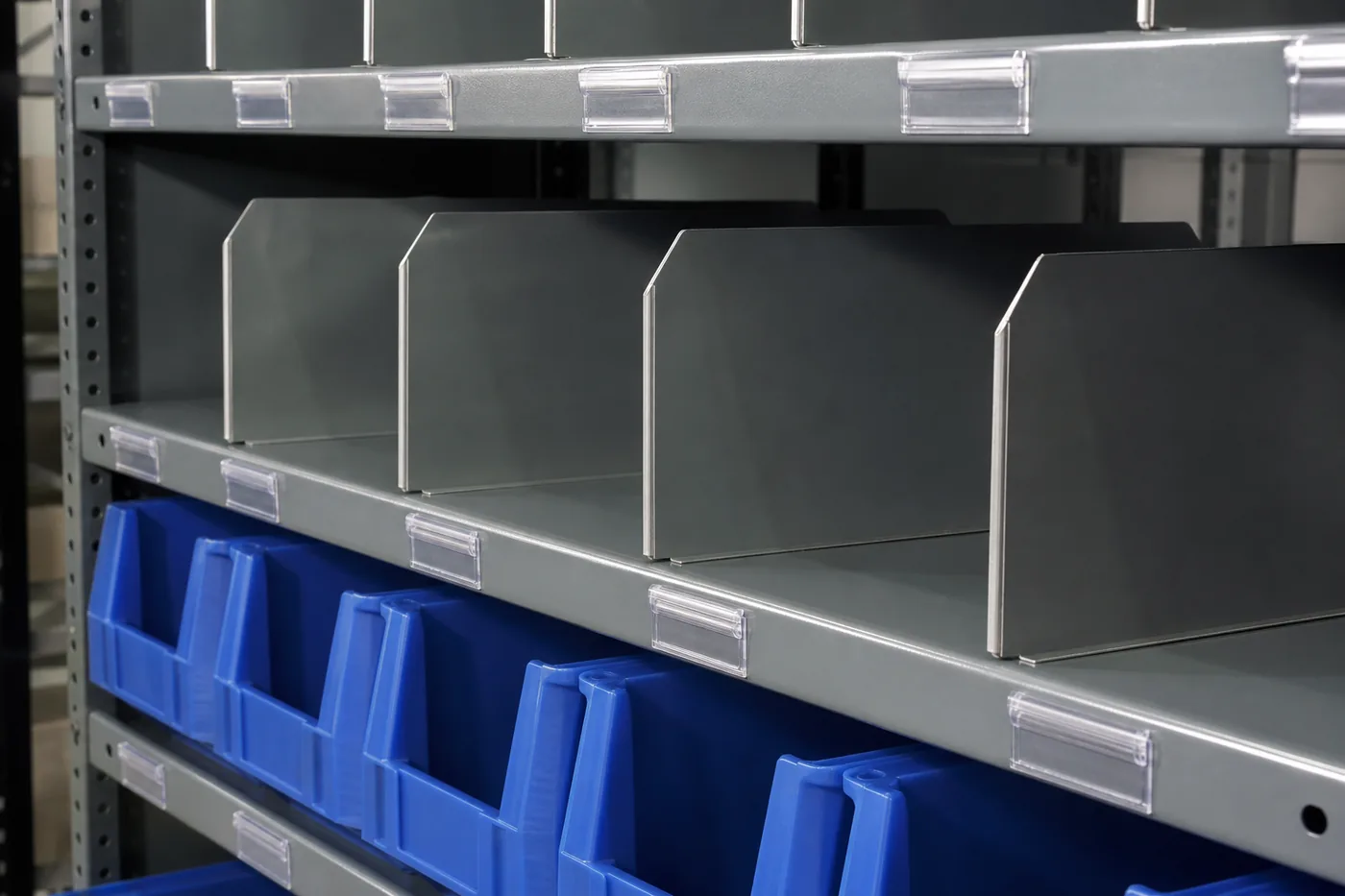
| Small hardware, clips, terminals, seals, sensors | Divided bin shelving or modular drawers | Turns one shelf opening into dozens of addressable positions; stops small parts from disappearing at the back of a deep shelf. |
| Boxed hard parts, filters, gaskets, pumps | Wide-span or boltless shelving with solid decks | Cheapest cubic foot for the boxed middle of the catalog; shelf pitch adjusts as the catalog changes. |
| Heavy but compact: rotors, drums, batteries | Heavy-duty shelving low, or rack beam levels at floor and knee height | Keeps weight out of overhead positions and off long reaches. |
| Case-lot fluids, oil, antifreeze, chemicals | Pallet rack with floor-level pick and reserve above | Pallet in, case out; replenishment is a let-down rather than a trip to another zone. |
| Long and oversize: exhaust, trim, bar stock | Cantilever rack or long-span bays | Uprights stop obstructing the load; overhang is engineered rather than improvised. |
| Panels, hoods, bumpers, glass | Vertical or A-frame body storage, protected bays | Damage cost dominates — storage design is really packaging protection. |
| High-theft and high-value: electronics, converters | Security cage or lockable module inside the pick zone | Controls access without pulling the SKU out of the pick path. |
Slotting: velocity, then cube, then compatibility

Slotting is the discipline of deciding which SKU occupies which position. In academic and applied warehousing literature, slotting is consistently paired with ABC classification as one of the highest-return, lowest-capital ways to raise picking productivity, because it attacks travel and reach time rather than adding equipment.
The practical sequence for a parts warehouse:
- Rank by lines picked. Class A gets the shortest travel and the best ergonomics.
- Put A items in the golden zone — roughly waist to shoulder height — near the start of the pick path or the packing station, depending on your route sequence.
- Size the position to about a week of stock for fast movers, so replenishment is predictable but the pick face is not a bulk storage location.
- Keep families together where the catalog is queried that way. Counterpeople and pickers both benefit when a brand or product group stays contiguous, as long as it does not fight velocity.
- Separate look-alikes. Adjacent part numbers that differ by one digit and look identical are the single most common mis-pick. Split them physically or break the pattern with color or bin size.
- Re-slot on a schedule. Parts velocity shifts with vehicle population and season. An annual or semi-annual re-slot of the A and B classes keeps the gains.
Slotting also decides how much you need to build. Every fast mover that moves closer to the pack station reduces travel on thousands of lines a year; every slow mover that moves out of prime space frees a position you would otherwise buy.
Designing the pick path and the counter interface
Most parts warehouses run a mix of will-call counter demand, route delivery orders and stock transfers through the same aisles. Design the flow before the shelving.

Define the routes and cut-offs
Delivery runs and their cut-off times are the real production schedule. Everything upstream — pick sequence, staging lanes, packing — should be built backwards from them.
Sequence the aisles
Number bays so a pick list sorts into one continuous walk with no backtracking. The addressing scheme is a productivity decision, not a labeling detail.
Separate will-call from route picking
Counter demand is interrupt-driven. Give it its own fast-mover face near the counter so it does not collide with batch picking in the main aisles.
Give replenishment its own window
Let-downs and putaway in the pick aisle during peak picking is how congestion is manufactured. Schedule it, or design reserve above pick so the let-down is vertical.
Stage by route, not by order
Dedicated staging lanes per run keep the dock honest and make a missing tote visible before the truck leaves.
Close the loop on returns and cores
Cores and warranty returns need a defined receiving position and a physical boundary from sellable stock.
Want your parts warehouse laid out before you buy steel?
Send us your building dimensions, a SKU cube-and-movement export and your route schedule. We will propose the storage media mix, the slotting plan and a bay-by-bay layout, then quote it as one project.
Getting more out of the building you already have

Very few distributors get to design a greenfield building. The realistic question is how to add capacity inside an existing shell without hurting the pick path.
- Re-pitch the shelving. Most shelf openings are set once and never revisited. Measuring actual carton heights and tightening the pitch often recovers a full shelf level per bay.
- Push reserve upward, keep pick low. Rack over the pick face converts vertical air into reserve without adding a step to the picker’s walk.
- Add a storage mezzanine over slow-moving stock. A second level over the C-class aisles is usually cheaper per square foot than leasing more building, provided floor loading, egress and clear height check out.
- Split the deep shelf. Deep bays hide inventory. Dividers, half-depth positions and front-to-back sequencing keep the back of the shelf countable.
- Consolidate the long tail. Slow-moving SKUs rarely need a full carton footprint; dense small-parts storage recovers whole aisles of prime space.
Every one of those moves is reversible and incremental, which matters when the catalog changes every model year. Our auto parts warehouse pallet rack project shows how the rack layer and the small-parts layer get combined in a working distribution building.
Accuracy, damage and safety in a parts distribution warehouse

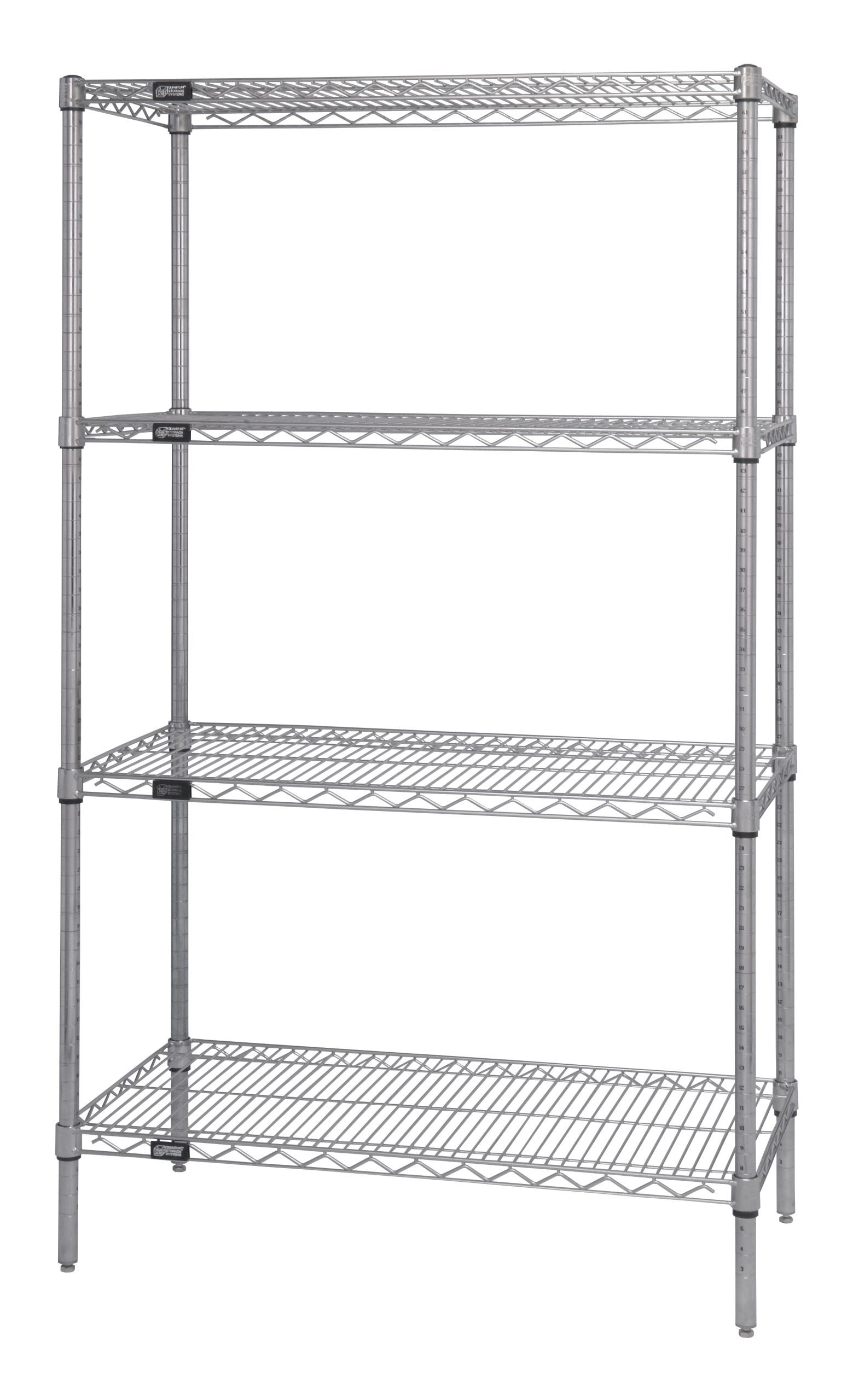
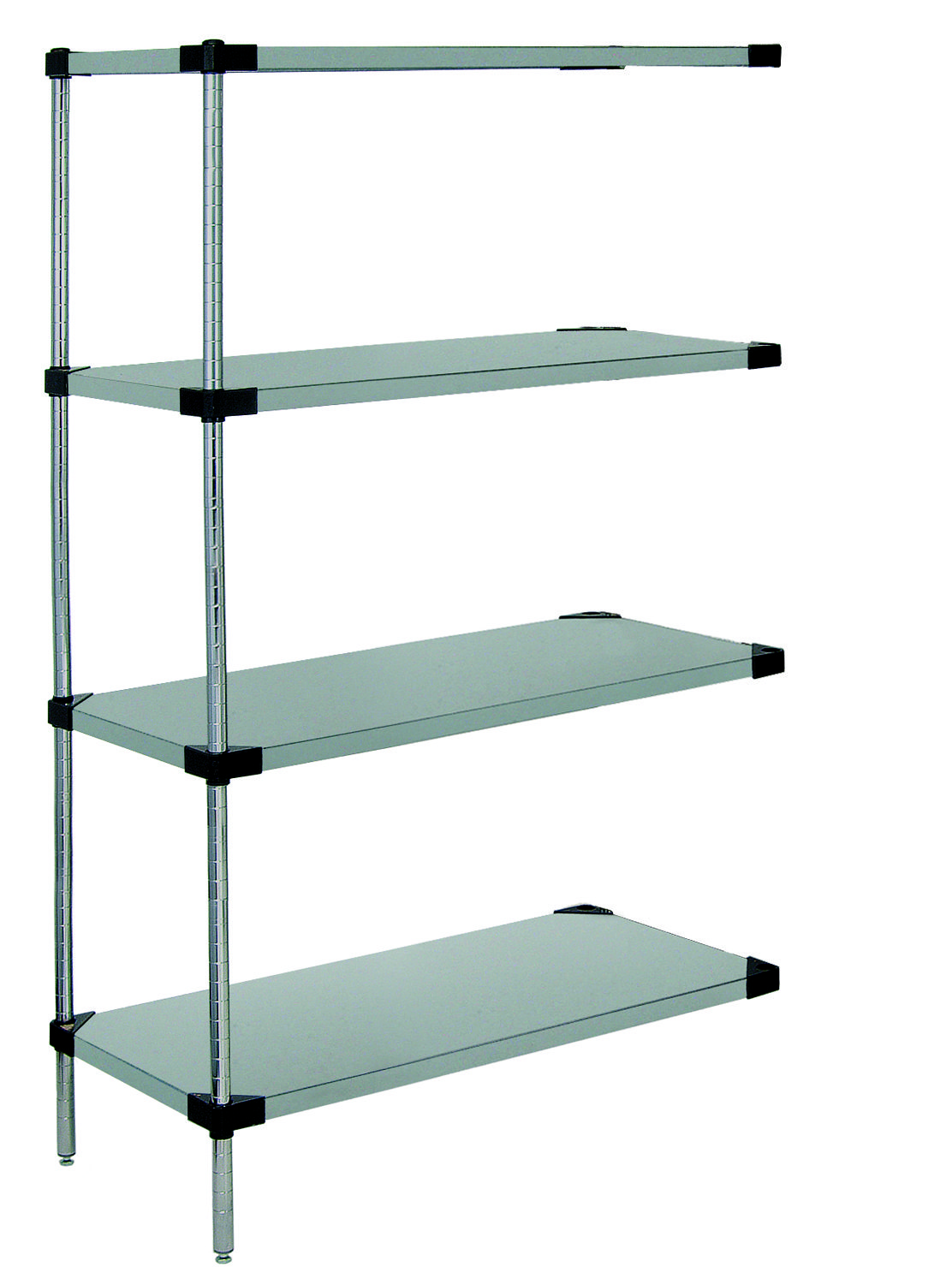
Shop Shelving Kits Online
Buy select items directly from our online store, or request a quote for volume, custom sizes and freight-rated orders.

Get a free quote
Tell us what you are storing, the room size and your timeline. A project specialist will follow up with layout options and pricing. Prefer to talk? Call (800) 326-4403.
Auto parts warehouse storage FAQs
What shelving is best for an auto parts warehouse?
How do I slot an auto parts warehouse?
How wide should aisles be in a parts distribution warehouse?
Should I automate before I re-slot?
How do I store bumpers, panels and glass without damaging them?
Can I add a mezzanine over my slow-moving stock?
How much of my inventory should be at the pick face?
Design your auto parts warehouse around the pick, not the shelf
Material Handling USA lays out, supplies and installs shelving, rack and small-parts storage for aftermarket distributors, jobbers and parts warehouses.