
EV and Hybrid Service Parts Storage for Dealerships and Repair Shops
How to plan storage for electric and hybrid service work — where high-voltage battery packs and modules can be staged, how to separate them from flammables and traffic, and what changes in the parts room when half the service drive is electrified.
50V
Voltage above which industry guidance limits battery handling to qualified, trained persons
1,000–2,000 lb
Published weight range for large-format EV traction battery packs
1 year
Federal universal waste accumulation limit for handlers, per 40 CFR 273
60 gal
OSHA cabinet limit for Category 1–3 flammable liquids kept nearby
Electrification changes the parts room before it changes the shop
The first thing an electrified service mix does to a parts department is not electrical. It is dimensional. A traction battery pack, a battery module, an inverter, a charging harness and a coolant assembly are all larger, heavier and more awkward than the parts they replace, and they arrive with handling instructions that the room was never laid out to satisfy. Meanwhile nothing leaves: internal-combustion coverage still has to be stocked for the vehicles already on the road, so electrification adds inventory categories rather than swapping them.
The second thing it does is add adjacency rules. A pack awaiting installation, a pack pulled for diagnosis and a pack identified as damaged are three completely different storage problems, and the third one is the reason this page exists. Guidance published for dealers by insurers and by supplier-industry groups consistently points the same direction: keep high-voltage battery work and battery storage isolated from high-traffic areas and from operations involving flammable liquids, welding or cutting, keep it accessible to responding fire services, and follow the vehicle manufacturer’s own procedures as the governing instruction.
What follows is the storage and layout side of that problem: what to designate, how to build it out of standard industrial storage products, and where the line sits between planning guidance and engineered or regulatory approval. It supports our broader automotive parts storage systems planning work, and it assumes you are already running a conventional parts room well.
Get the boundary right before you buy storage
Storage decisions for high-voltage components sit inside a framework you do not control. Three sources govern, and a shelving supplier is none of them:
- The vehicle manufacturer. OEM service information is the primary authority on handling, de-energizing, packaging, storing and returning a specific pack. Published dealer guidance is explicit that OEMs are the best source for battery handling and storage requirements, and OEM instructions frequently supersede general advice.
- Your authority having jurisdiction and insurer. Fire officials and building departments decide what a dedicated battery area in your building must be, including separation and fire protection. Insurance carriers publish their own dealership requirements and inspect against them.
- Federal rules on people, waste and transport. Training, waste handling and shipping are regulated independently of how you store anything — the summary table below lists the ones that most often apply.
Inside that framework, our part is narrow and practical: rack, shelving, cabinets, containment, secure enclosures and layout that let you carry out the plan those authorities approve. We will tell you what is buildable and what it will cost. We will not tell you a storage product makes you compliant, because no product does.
The published requirements that shape an EV parts area
These are the citations that come up most often when a dealership or independent shop plans storage for electrified service work. Read them as the boundaries of your design, and verify current text and local amendments before you build.
| Source | What it says | What it means for storage |
|---|---|---|
| OSHA 29 CFR 1910.305(j)(7) | Provisions shall be made for sufficient diffusion and ventilation of gases from storage batteries to prevent the accumulation of explosive mixtures. | A battery holding area needs real ventilation, not a closed closet. It also rules out stacking packs in an unventilated room because the shelving happened to fit. |
| OSHA 29 CFR 1910.332 and NFPA 70E | Training requirements for employees who face a risk of electric shock; industry guidance applies a 50-volt threshold above which only qualified persons should handle batteries. | Who may move, place and retrieve a pack is a training question. Design the area so unqualified staff have no reason to enter it. |
| OSHA 29 CFR 1910.106(d)(3) | Not more than 60 gallons of Category 1, 2 or 3 flammable liquids, or 120 gallons of Category 4 liquids, may be stored in a single approved cabinet. | Fluids, aerosols and solvents belong in rated cabinets, and those cabinets belong away from the battery area rather than in the same rack run. |
| OSHA 29 CFR 1910.176(a) and (b) | Aisles and passageways kept clear and in good repair with no obstruction; storage stacked, blocked, interlocked and limited in height so it is stable and secure against sliding or collapse. | Heavy packs on pallets or in shipping frames must be stored stably at a height the equipment can reach safely, with clear aisles for a pallet truck or lift. |
| 49 CFR 173.185(f) | Damaged, defective or recalled lithium cells and batteries must be individually placed in non-metallic inner packaging that completely encloses the cell, surrounded by non-combustible, electrically non-conductive, absorbent cushioning, in specified outer packaging, and may move by highway, rail or vessel only. | A damaged pack is a shipping problem as much as a storage problem. The staging area needs room for the specified packaging and a documented outbound path. |
| 40 CFR part 273 (universal waste) | EPA recommends businesses manage used lithium batteries as universal waste; handler requirements cover container condition, labeling and a one-year on-site accumulation limit. | End-of-life batteries need a labeled, dated, contained location with a real disposition schedule — not the corner of the parts room. |
| 40 CFR part 266 subpart G | Spent lead-acid batteries being reclaimed are subject to their own separate requirements. | Conventional battery cores are governed differently from lithium end-of-life batteries. Keep them separate and label both. |
Planning guidance, not approval
The citations above are summarized from published federal rules and industry guidance so you can plan a layout and a budget. They are not a compliance determination, they change over time, and your state, local fire official and insurer may impose additional or stricter requirements. Confirm applicability with those authorities and with your OEM service information before you store any high-voltage component.
Four storage states, four different areas
The mistake that causes most of the trouble is treating “EV batteries” as one storage category. In a working shop there are four, and only one of them looks like ordinary parts storage.
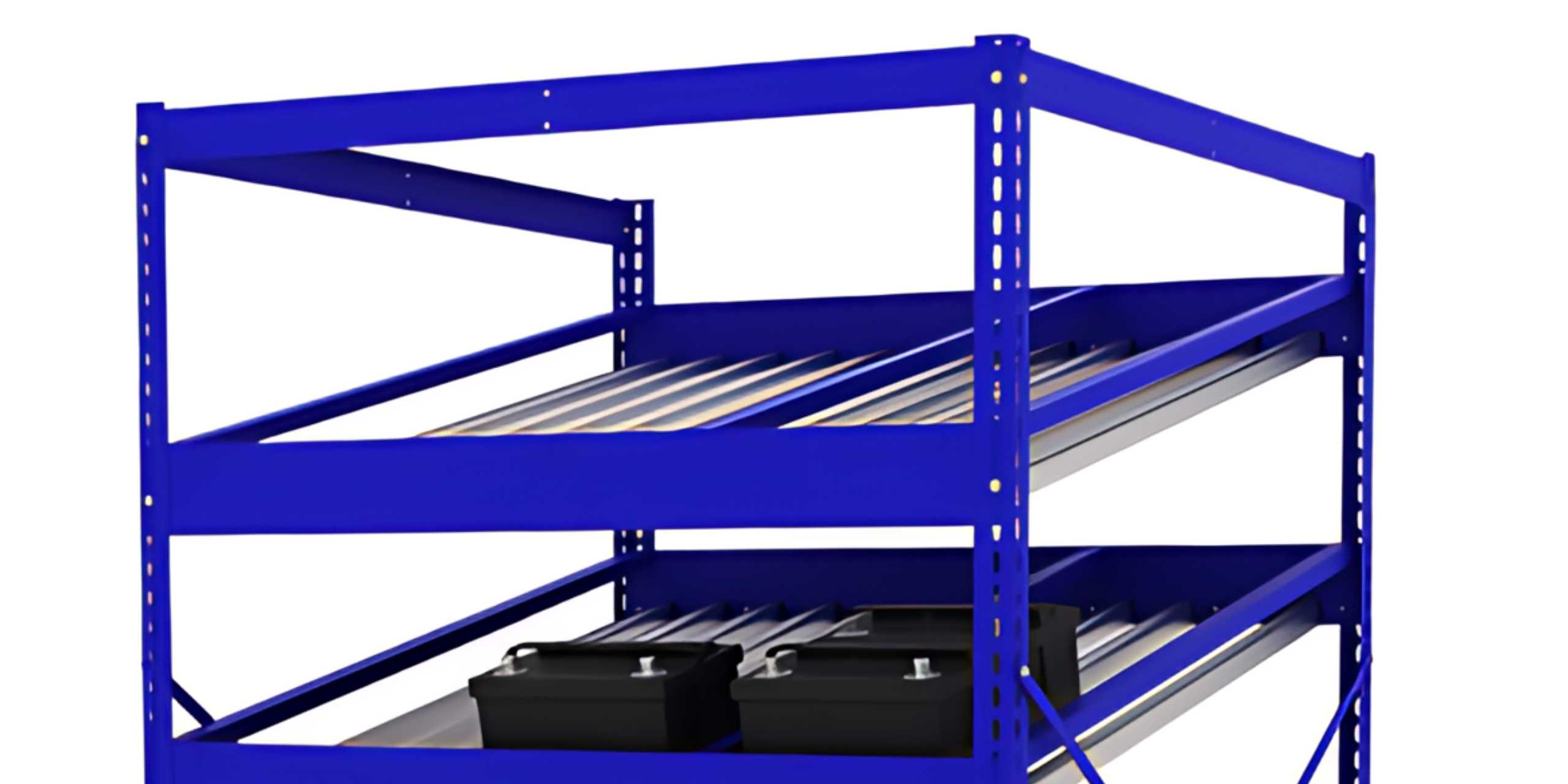
 1. New packs and modules awaiting installationSealed, undamaged, in the manufacturer’s transport packaging. This is a heavy-load storage problem: floor-level or single-elevation heavy-duty rack sized for the crate footprint, positioned where a pallet truck or fork truck can reach it without threading the parts aisles. Store on the level the equipment can safely place and retrieve.
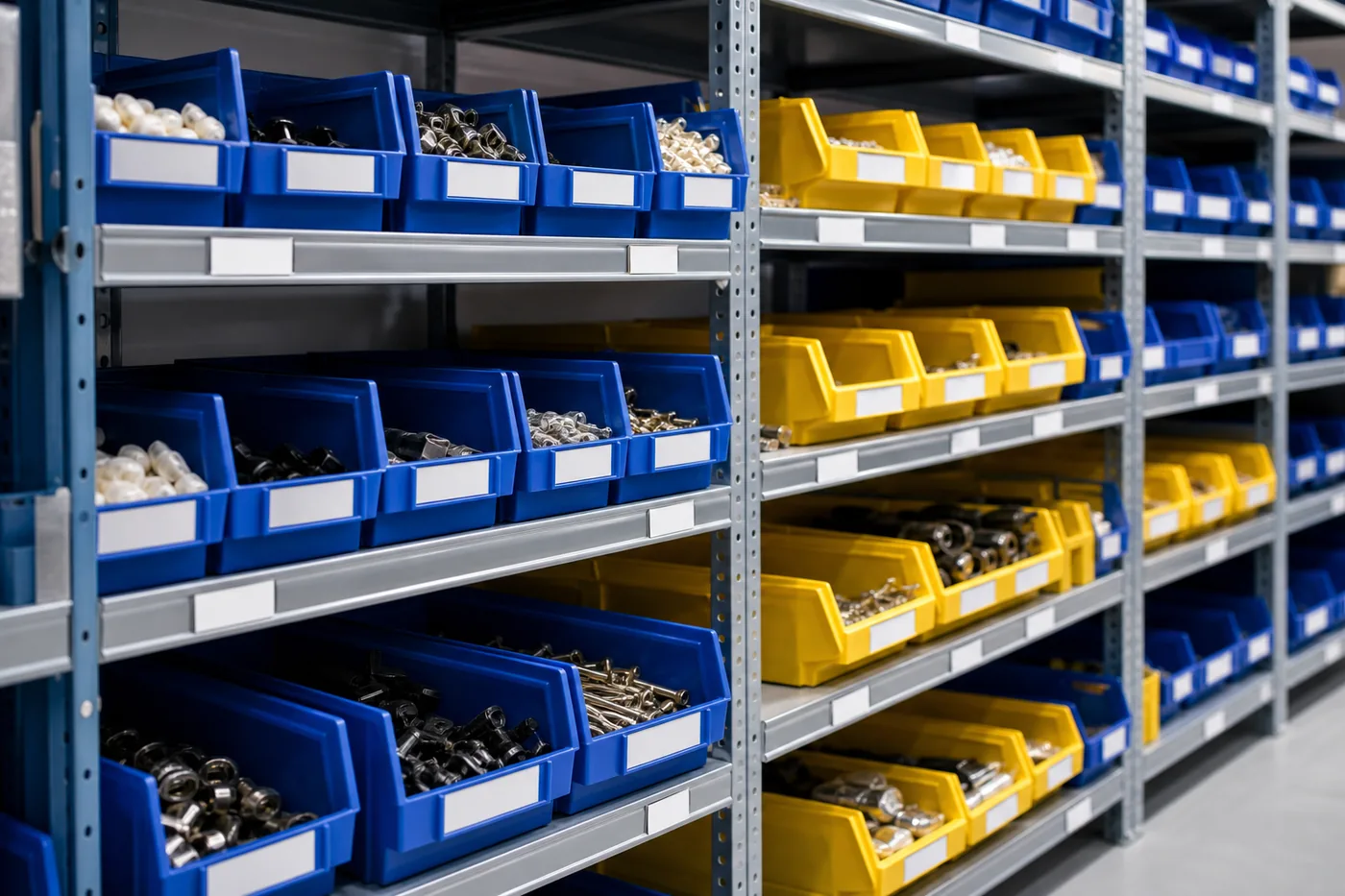
 2. Everything else electrified service consumesHigh-voltage connectors, seals, coolant assemblies, insulation, service disconnects, calibration hardware and personal protective equipment. These are ordinary shelving, bin and drawer items — but they belong in a dedicated, labeled zone so a technician gowning up for high-voltage work is not hunting three aisles for a glove kit.
 3. Packs pulled for diagnosis or awaiting a decisionEnergized, unknown state of health, and often the highest-value single item in the building. A separated, access-controlled area keeps it away from general traffic, keeps unqualified staff out, and makes the inventory count honest. Ventilation, monitoring and fire protection for this area are decided with your fire official and insurer.
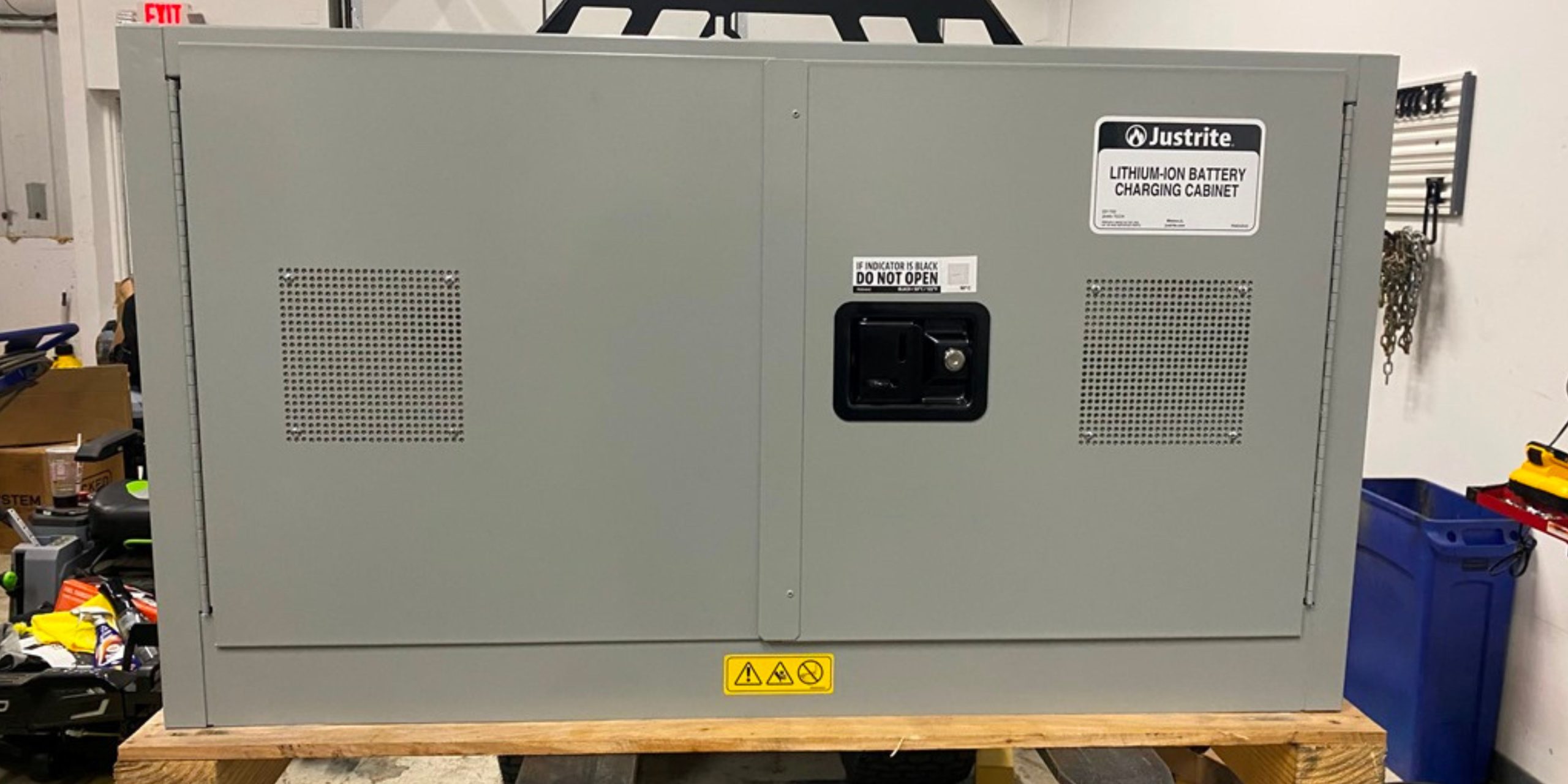 4. Damaged, defective or end-of-life batteriesThe category with the strictest handling. It needs an isolated location, specified packaging before any transport, waste labeling and dating, and a disposition path measured in weeks, not years. Treat the space as temporary staging with a scheduled exit, not storage.
Where the area goes in the building
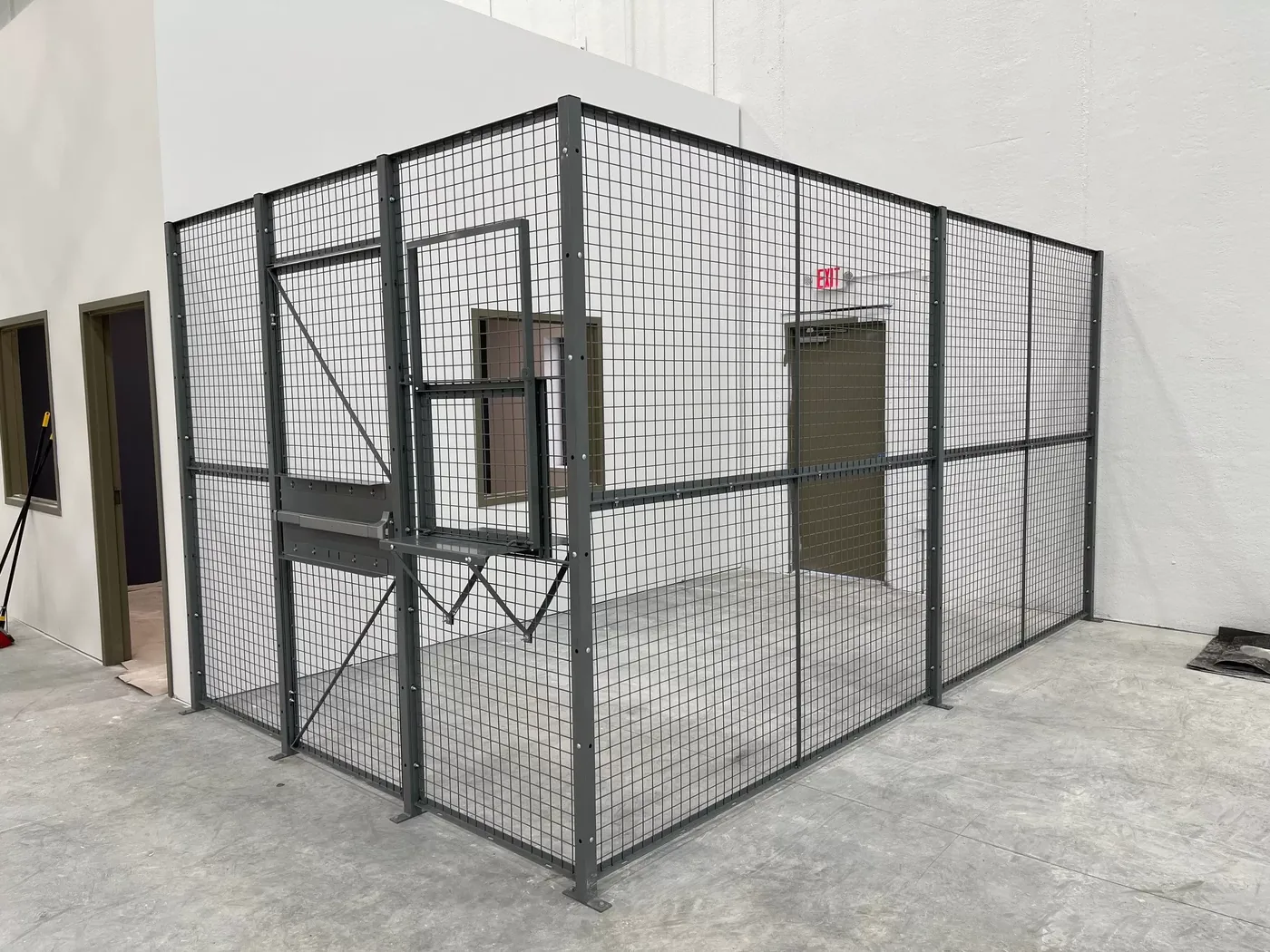
Published dealer risk guidance is consistent about siting: put electrified work and battery storage where it is isolated from high-traffic activity and from hazardous operations such as welding, cutting and flammable liquid transfer, and where responding fire services can reach it directly — typically close to an overhead door or exterior exit. Some guidance goes further and recommends fire-rated separation from adjacent occupancies. Whether that applies to you is a question for your fire official and carrier, not for a storage catalog.
Three practical layout consequences follow, and they are all cheaper to solve on a drawing than after installation:
- Do not put the battery area at the back of the parts room. Anything that has to travel the full depth of the parts department to reach a door is in the wrong place, and it puts a heavy pallet move through your pick aisles several times a week.
- Keep the flammable cabinets somewhere else. Oils, aerosols, solvents and adhesives are part of every shop, but the whole point of the separation is that they are not adjacent to battery storage. Plan those cabinets into the shop supply zone instead — see our repair and body shop storage guidance.
- Leave aisle width for the equipment, not for a person. A pack that weighs a thousand pounds or more moves on a pallet truck, a lift table or a fork truck. Size the aisle and the door path for that equipment, loaded, with turning room.
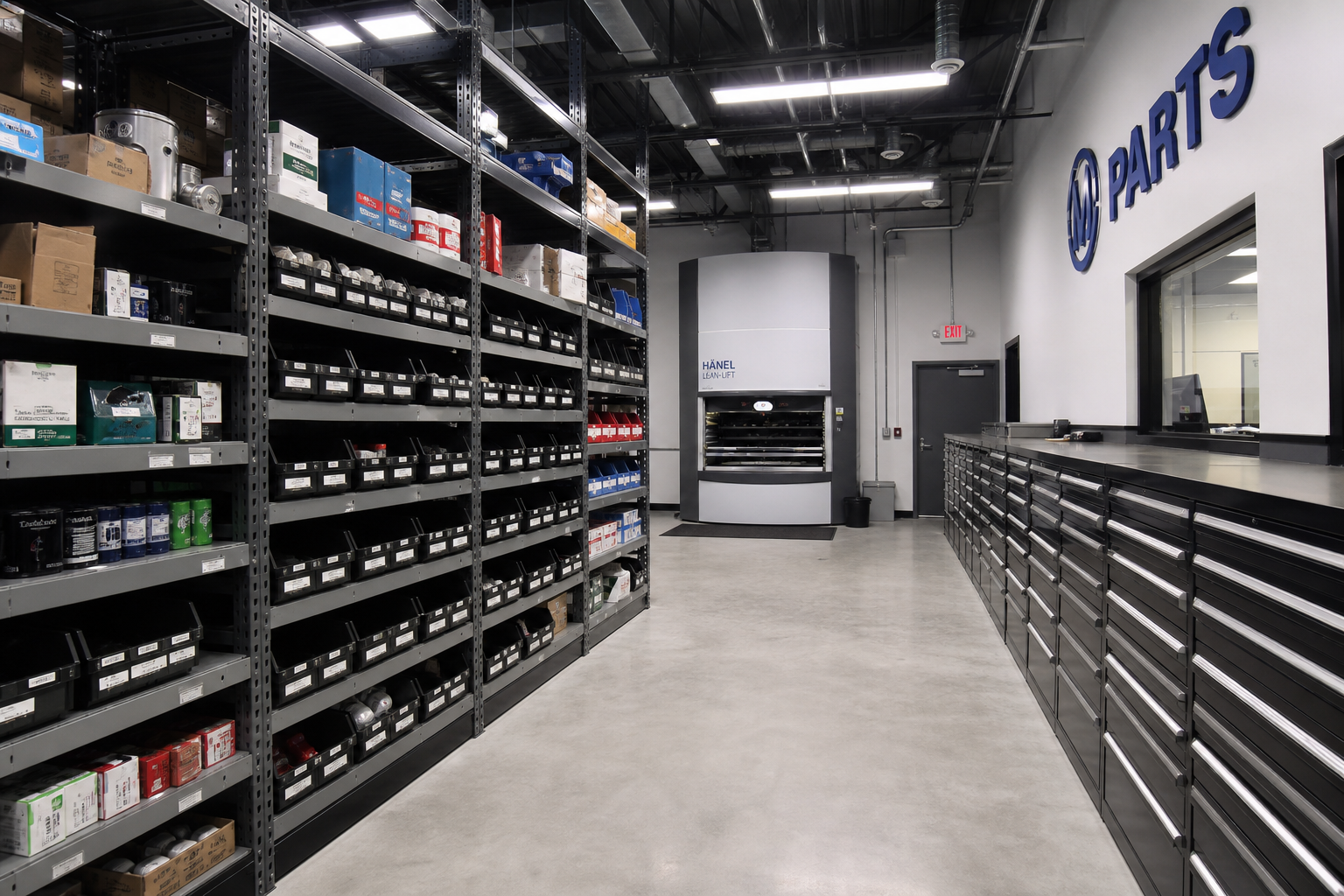
Everything else on the storage side is standard industrial product: heavy-duty rack or battery racking with containment for the heavy items, shelving and bins for the consumables, wire partitions and security enclosures to separate and control access, and rated cabinets for the fluids that stay in the building.
Planning storage for an electrified service mix?
Send us your floor plan, your clear height and what your OEM program requires. We will lay out a parts room that keeps high-voltage staging separated from your pick aisles and your flammables, and price it as one project.
Request a Layout and Quote See all automotive storage solutions Call (800) 326-4403
What changes in the rest of the parts room
Electrification does not only add a battery area. It quietly reshapes the ordinary parts department, and the changes are easy to miss until the room stops working.
Independent shops and fleets have the same problem at a different scale
A franchise dealership gets OEM procedures, program equipment lists and a facility standard. An independent repair shop, a collision center or a municipal fleet garage taking on electrified work usually gets none of that, and has less floor area to work with. The planning path is the same, compressed:
- Decide what you will actually keep. Many independent operations will handle high-voltage components without ever holding a spare pack. If nothing sits overnight, you need a controlled staging position, not a storage program.
- Designate before you equip. Mark the position, keep it clear of flammables and traffic, confirm it with your fire official and insurer, then buy the rack, containment or enclosure that fits it.
- Write down the exit. The single biggest failure mode in a small shop is an out-of-service battery with no scheduled disposition. Know your outbound path, packaging requirement and recycler before the first one arrives.
- Reuse the storage you already own. Heavy-duty rack, mesh partitions and rated cabinets are standard products. Very little of this needs custom equipment.
Fleet and municipal operations should read this alongside our fleet and municipal garage parts storage guidance, since their stocking logic is driven by vehicle availability rather than counter sales.
Shop Bin Storage Systems Online
Buy select items directly from our online store, or request a quote for volume, custom sizes and freight-rated orders.
EV and hybrid service parts storage FAQs
Can we store EV battery packs on our existing parts shelving?
Does a special cabinet make our battery storage compliant?
Where should the high-voltage staging area go?
What do we do with a damaged or defective battery while it waits for pickup?
How long can end-of-life batteries stay on site?
Do we need a separate room, or is a marked area enough?
Who is allowed to move a pack in and out of storage?
Will electrification shrink our parts inventory?
Can you design this as part of a full parts room project?
Plan an EV-ready parts department
Material Handling USA designs, supplies and installs shelving, rack, drawer cabinets, secure enclosures and workstations for dealership parts departments, service facilities and fleet garages — including the separated staging areas electrified service work needs.