
Lithium-Ion Battery Charging Safety Cabinet
A lithium-ion battery charging safety cabinet should be selected around the batteries, chargers and operating conditions at your facility. Material Handling USA can help evaluate the Justrite 231703 cabinet and organize the product information needed for a responsible purchase. Begin with a defined inventory and the current manufacturer instructions, then review how the cabinet fits your workplace program.
Define what the cabinet needs to accommodate
Start by identifying the battery systems used at the site. Cordless tools, handheld devices and large equipment batteries are not interchangeable applications. A benchtop cabinet should not be assumed suitable for forklift traction batteries, vehicle packs or a stationary energy-storage system.
List each battery model and its approved charger, the quantity present and the number expected to be connected at one time. Include spare units and anticipated purchases. This gives the supplier a specific requirement instead of a general request for battery storage.
Separate the operating situations
- Normal charging of suitable batteries.
- Temporary storage within the product’s intended use.
- Equipment awaiting assessment or service.
- Damaged, recalled or end-of-life batteries.
Do not combine those situations into one cabinet plan without reviewing the relevant instructions and facility procedures. A product intended for ordinary charging is not automatically an approved solution for damaged batteries or disposal.
Ask the responsible safety and operations staff to review the intended use before purchase. The cabinet is one equipment choice within a larger program that includes the battery, charger, workplace conditions and how people use them.
Keep a record of assumptions about daily use. If the facility later changes battery models or adds another shift, the original selection should be reviewed against the revised requirement.
Build an inventory that supports a useful comparison
Record the manufacturer and model from the battery and charger documentation. Batteries with similar housings can have different electrical characteristics, while chargers that look alike may be intended for different systems. Purchasing decisions should follow the documented combinations.
Provide dimensions, weight and the stated energy information for each battery. Include the charger footprint, connector orientation and cable arrangement. A cabinet’s internal volume alone does not tell you whether the equipment can be positioned and used as intended.
Include the actual shift pattern
- How many batteries arrive for charging together?
- Who returns them and retrieves them?
- Where are charged units kept before use?
- How are unsuitable units identified and escalated?
The answers affect both the equipment request and the operating plan. A large quantity of batteries used over a day does not necessarily mean the same quantity will be connected simultaneously. Equally, a short shift change can create a peak requirement that an average daily count hides.
Do not treat receptacle count as a guaranteed battery count. Physical fit, manufacturer limits and electrical requirements all need to be satisfied. Have the proposed combination reviewed rather than filling every available space because it appears unused.
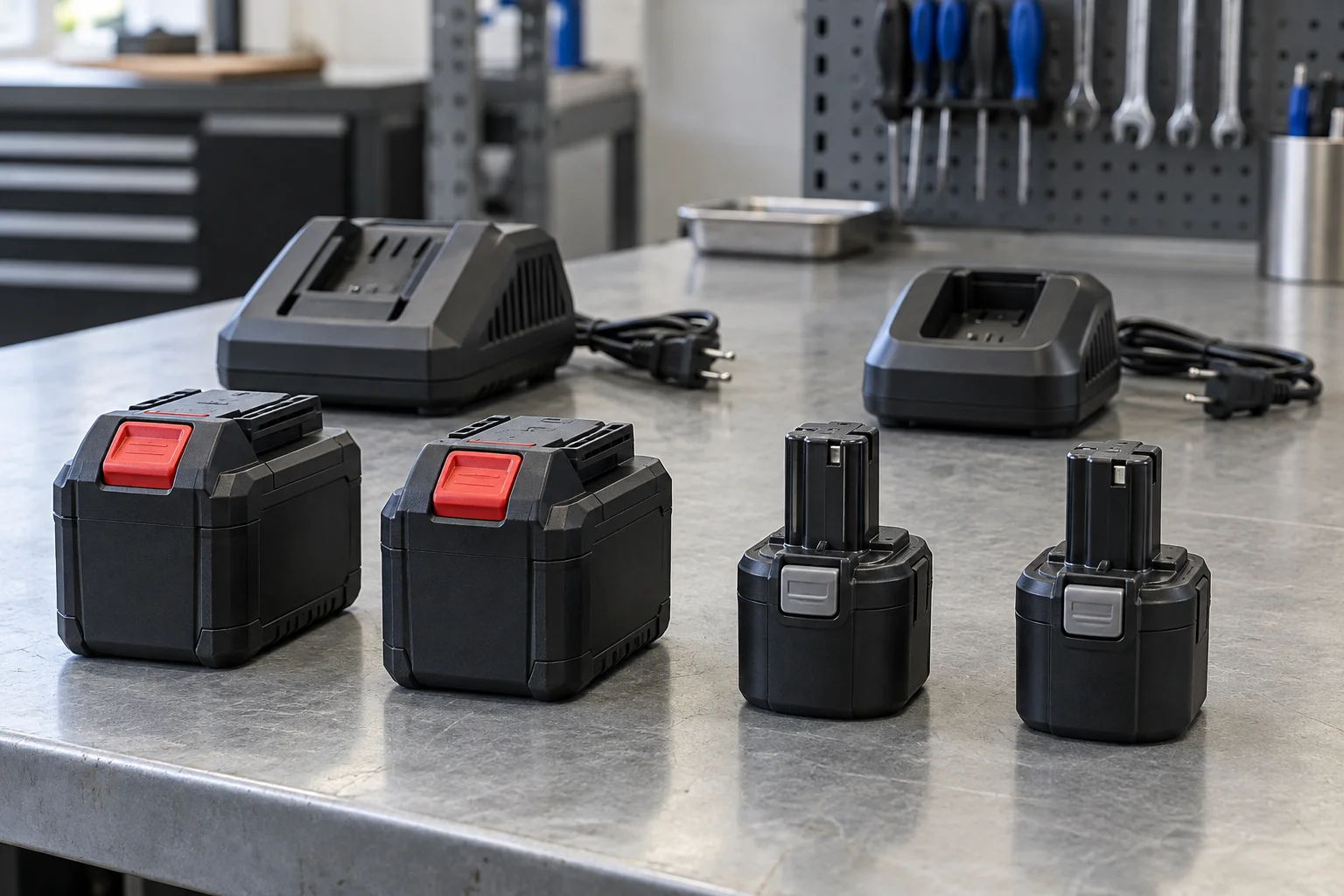
The accompanying image is a conceptual inventory view. It does not identify approved batteries or chargers for the Justrite cabinet; compatibility must be established from the real equipment records.
Include equipment used only occasionally, such as seasonal maintenance tools or spare devices brought out during peak activity. A review based solely on the items present during one walk-through can miss these additions. Ask supervisors from each relevant shift to check the inventory and identify anything that belongs to a separate charging or storage process.
Review the published Justrite 231703 specification

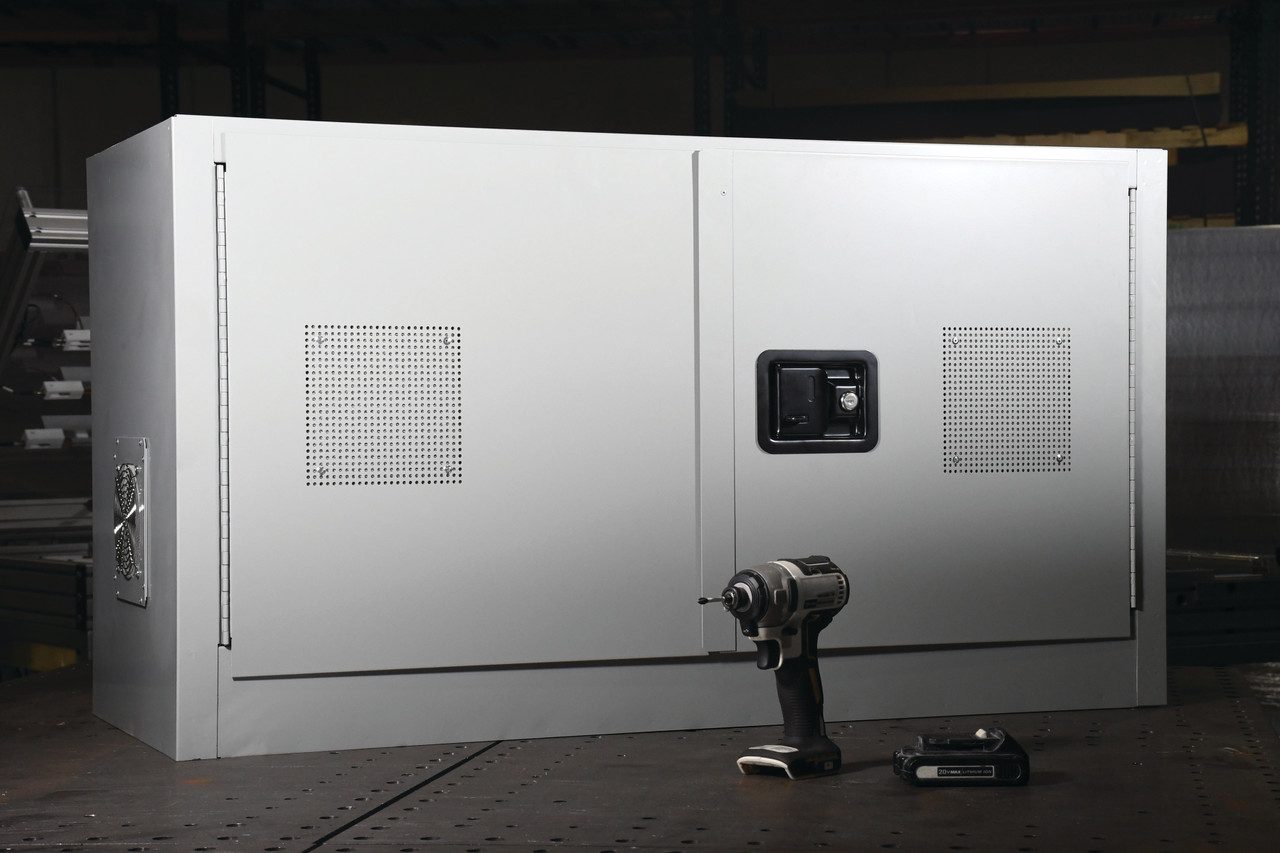
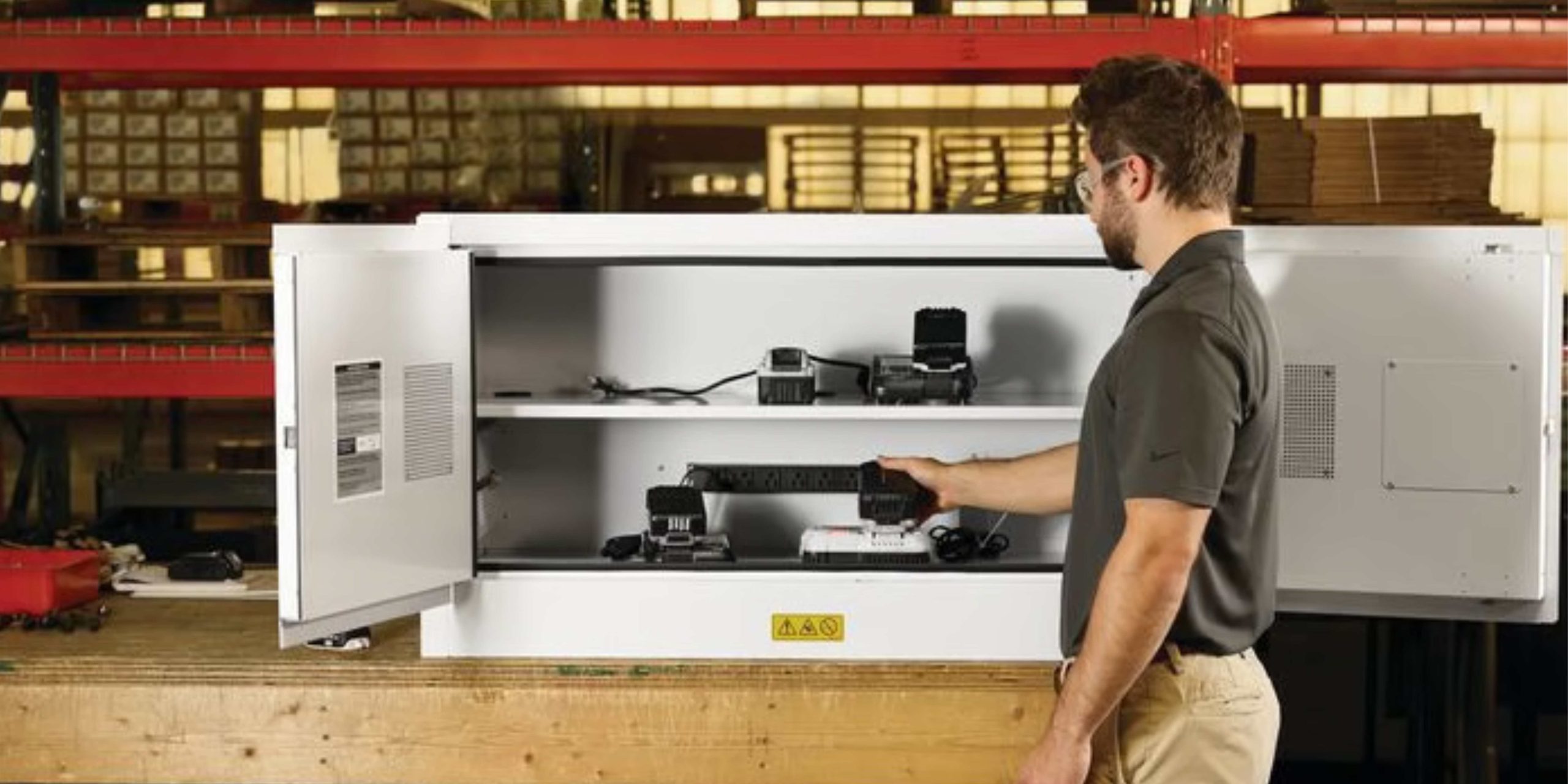
Justrite identifies model 231703 as a lithium-ion battery charging cabinet with ChargeGuard technology. Its current product data lists a 4 kWh TECR maximum total capacity, eight receptacles, two manual-close doors and one fixed shelf. The listed exterior dimensions are 43 inches wide, 18 inches deep and 24 inches high. For the rest of the brand’s safety cabinets and containers, see our Justrite page.
| Published item | What to review |
|---|---|
| 65 lb shelf rating, evenly distributed | Check the complete proposed shelf load and arrangement. |
| 18-gauge steel construction | Confirm the supplied model and condition at delivery. |
| Dedicated 120 VAC / 60 Hz GFCI supply | Have the electrical requirements reviewed for the location. |
| Supply cord not included | Assign responsibility for the correctly specified connection. |
Confirm these details against the current documents supplied with the order. A stored screenshot or older listing may describe a different revision. Request the installation and operating instructions alongside the quotation.
Read performance claims within their scope
A cabinet does not make every battery or charging practice acceptable. Ask for the documentation supporting the performance required by your facility, including the conditions and limits under which it applies. Do not substitute a general marketing statement for the project’s review.
Buying this cabinet does not by itself establish compliance with every workplace, electrical or fire requirement. The applicable requirements and acceptance of the installation must be addressed by the responsible facility professionals and authorities.
Choose the location as part of the purchase

A convenient empty bench is not enough to establish an appropriate charging location. Review the proposed position with facilities, operations and the people responsible for the site’s safety program. Include adjacent storage, traffic, access and the activities performed nearby.
Provide photos and a measured sketch of the location. Show doors, routes, nearby equipment and available services. The cabinet’s footprint is only one part of the space required to install, access and maintain it.
Resolve the site questions early
- What supports the cabinet and its contents?
- Can its doors and service areas be accessed?
- Who reviews the electrical supply and connection?
- What surrounding conditions affect the proposed use?
Follow the current cabinet instructions for placement and operation. Avoid modifying the cabinet, obstructing openings or improvising connections to make an unsuitable location work. If the proposed position creates a conflict, resolve the location or scope before installation.
Consider normal movement around the area. Battery pickup and return should be reviewed alongside pedestrian and vehicle routes. A floor marking can help communicate an established arrangement, but it does not replace the underlying location assessment.
Our warehouse safety and productivity planning page covers related questions about storage, access and movement through a facility.
Make equipment ownership and instructions clear

A shared charging area needs an identified owner. Decide who maintains the approved equipment list, keeps instructions available and reviews proposed changes. Without that responsibility, additional chargers or unfamiliar batteries can gradually change the original arrangement.
OSHA’s lithium-battery safety guidance emphasizes following manufacturer instructions, using suitable batteries and chargers, recognizing signs of damage and training workers. Those principles support an operating program; they do not certify a particular cabinet installation.
Keep a useful equipment record
- Cabinet model and current instructions.
- Approved battery and charger combinations.
- Inspection and maintenance responsibilities.
- How staff report a concern or request a change.
Keep charging instructions distinct from emergency-response instructions. Staff should know the facility’s process for reporting abnormal conditions and responding to an incident. A procurement page cannot replace training or the site’s emergency action plan.
If a battery shows an abnormal condition, follow the established response procedure and the relevant manufacturer guidance. Do not use the cabinet as a reason to continue charging questionable equipment or to handle a failing battery without the appropriate training.
Review the program when new tools, contractors or operating hours are introduced. A controlled equipment list is useful only if it reflects what is actually being used.
Plan delivery, orientation and ongoing review

Confirm receiving and handling arrangements with the supplier before delivery. Ask for the packaged dimensions, handling requirements and the intended installation sequence. A benchtop format does not mean staff should improvise lifting or relocation.
Compare the delivered model and documentation with the order. Inspect for shipping damage through the agreed receiving process and resolve discrepancies before the cabinet is released for use. Keep installation responsibilities clear between the supplier, facility and any relevant trades.
Make handover practical
- Confirm the ordered configuration and included components.
- Complete the location and connection review.
- Make operating instructions available to users.
- Assign maintenance and issue-reporting responsibility.
Orientation should cover the actual equipment and procedures at the site. Include people who return batteries as well as those who collect them. A written process that only one shift understands is incomplete.
Schedule review around the manufacturer’s requirements and the facility’s program. Record changes, service actions and recurring problems so the team can determine whether the arrangement still fits the workload.
Do not promise a fixed productivity gain simply because charging is centralized. If improved availability is an objective, agree on how the facility will observe it, such as fewer unlocated chargers or a clearer record of which equipment is ready for use.
Request a cabinet proposal with clear limits
Send the inventory, photographs and proposed location with the request. State whether the goal is normal charging, temporary storage or another use that requires separate evaluation. Include expected changes in equipment so the discussion is based on a realistic scope.
Ask the proposal to identify the exact model, included components, required site work and documents supplied. Clarify delivery, installation, connection and training responsibilities. Compare alternatives using the same battery list and operating assumptions.
Questions to resolve before ordering
- Has the proposed battery and charger combination been reviewed?
- Which manufacturer limits apply to that arrangement?
- Who accepts the location and electrical provisions?
- What remains outside the supplier’s scope?
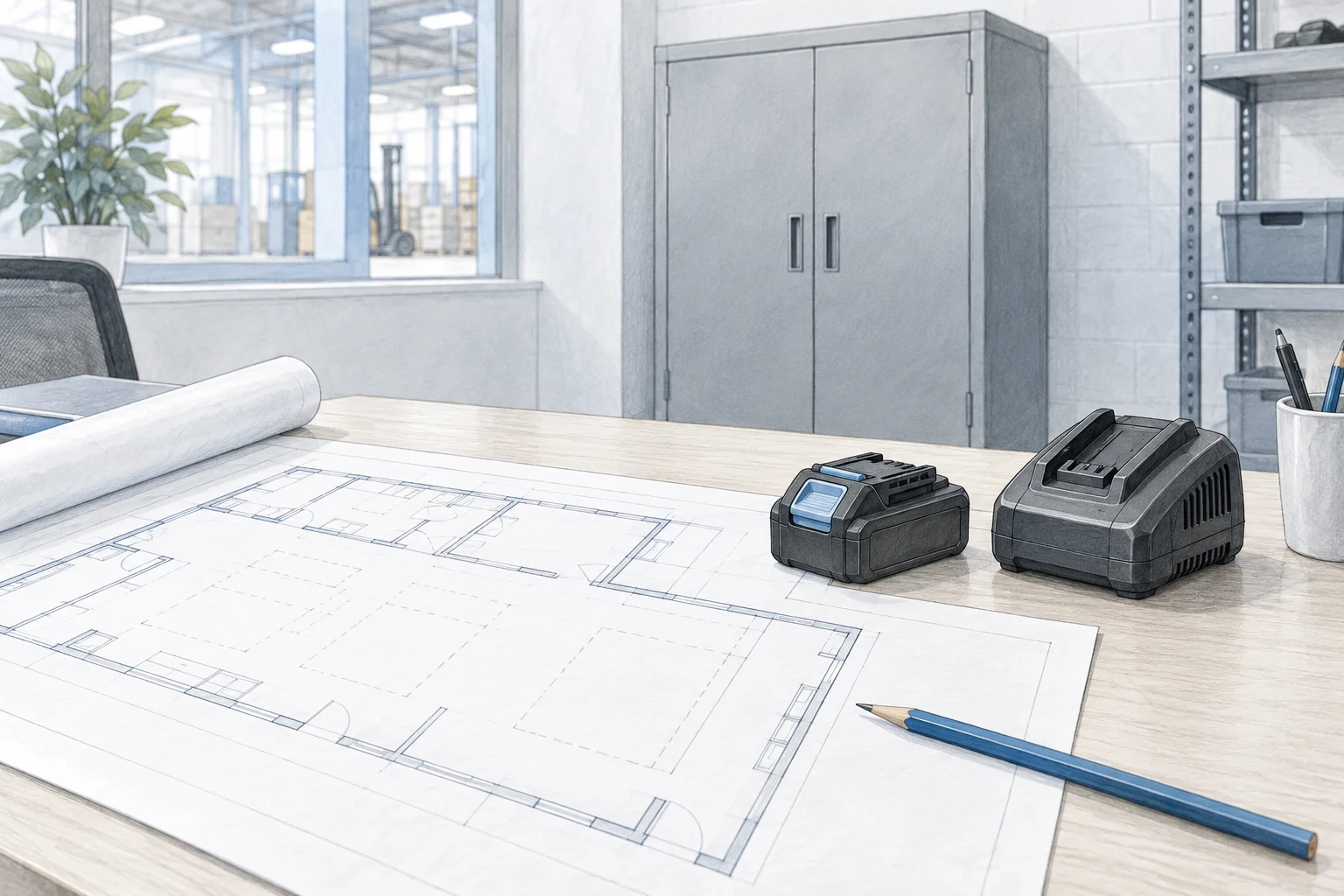
The illustration is a planning aid and does not depict the internal construction of the Justrite cabinet. Real product photos and current manufacturer documents should be used when approving the model and configuration.
Material Handling USA can help gather the product information for your review and define the equipment purchase. Where the application falls outside this cabinet’s intended use, establish the correct equipment category before proceeding rather than stretching a benchtop solution to cover a different battery system.
Retain the approved scope with the equipment record. A future replacement order should be checked against current needs and current product documentation, even when the model number appears unchanged. This is especially useful when the original purchasing contact has moved to another role.
Frequently asked questions
Is this cabinet suitable for every lithium-ion battery?
No. Review the actual battery and charger models, dimensions, loads and intended use against the current Justrite instructions. Do not assume a benchtop cabinet is suitable for forklift batteries, vehicle packs or stationary energy-storage systems.
Do eight receptacles mean we can charge any eight batteries?
No. Receptacle count is only one consideration. The proposed batteries and chargers must also satisfy fit, electrical and manufacturer limits. Have the complete arrangement reviewed before use.
Does a charging cabinet guarantee that a battery cannot catch fire?
No. Cabinet selection is one part of a workplace battery program. Suitable equipment, manufacturer instructions, maintenance, training and the facility’s response procedures remain necessary.
Can damaged batteries be placed inside for normal charging?
Do not treat damaged or suspect batteries as normal charging inventory. Follow the facility’s established response process and relevant manufacturer instructions. Confirm the equipment intended for any separate damaged-battery or disposal application.
What site information is needed for a quote?
Provide the battery and charger inventory, expected simultaneous use, photos, a measured location sketch and available services. Identify who will review placement, electrical requirements and operating procedures.
Is this a direct replacement for a flammable-liquid cabinet?
Do not assume the two products are interchangeable. A cabinet must be selected for its intended contents and use. Compare the actual manufacturer documentation and the requirements of the facility.
Evaluate a charging cabinet for your actual inventory
Send the battery and charger models, quantities and proposed location. We can help organize the Justrite product information and purchasing scope for review by your facility team.