
Obsolete Parts, Returns and Core Storage for Parts Departments
Dead inventory, wholesale returns, cores and uninstalled special orders occupy the shelf space your fast movers need. How to give each category a controlled location, a disposition schedule and a storage plan that shrinks it instead of hiding it.

12 months
The no-sale window published dealer parts guidance uses to identify obsolescence
4
Distinct categories that get lumped together as “dead stock”
1 year
Federal universal waste accumulation limit for handlers, per 40 CFR 273
3
Inventory controls published guidance treats as essential: bin checks, physical count, reconciliation
Dead inventory is a storage problem long before it is a write-off
Every parts department has a shelf, a bay, a mezzanine corner or a back room that everyone quietly agrees not to look at. It holds parts nobody has sold in years, wholesale returns that came back after the sale was reversed, special orders that were never installed, cores waiting for a credit, and a few boxes whose contents nobody can identify. It is the most expensive storage in the building, because it is prime space occupied by inventory generating no turns.
Published dealer parts-management guidance treats obsolescence as one of the core measures of inventory health, alongside days’ supply, level of service and lost sales, and it defines the problem in a way that makes it measurable: parts with no sales activity over a defined window, commonly twelve months. The same guidance names the usual causes plainly — uninstalled special-order parts and accessories, high volumes of parts returned by wholesale accounts, and parts ordered in error or after an incorrect diagnosis.
What that guidance does not cover is where the physical product goes while you deal with it. That is the gap this page fills. It is a storage and process plan for the four categories that get lumped together as dead stock, and it sits alongside the rest of our automotive parts storage systems planning work.

Four categories, four different storage answers
Treating these as one pile is what makes the pile permanent. Each has a different owner, a different exit path and a different storage requirement.
| Category | What it is | Storage answer | Exit path |
|---|---|---|---|
| True obsolescence | Part numbers with no demand over the review window, still saleable, still on the books. | Compressed, high-density storage away from the pick face — upper levels, an upper deck, or right-sized pocket storage. It should never occupy prime shelf openings. | Manufacturer return allowance where the franchise offers one, inter-dealer trade, discounted retail, then disposal. |
| Wholesale and customer returns | Product coming back into the building, often after the sale and gross were reversed. | A dedicated receiving and triage position with a work surface, not a shelf beside the counter. Returns need inspection before they are restocked or rejected. | Restock to bin, return to manufacturer, credit and scrap. Same-day decision is the goal. |
| Cores | Exchangeable units held against a core charge — often heavy, dirty and fluid-bearing. | Segregated, contained, addressed floor or rack positions away from clean inventory, sized for the crate or pallet they ship on. | Outbound on the next core return shipment. Cores held past the credit window are pure loss. |
| Uninstalled special orders | Parts ordered for a specific repair order that was never completed. | An addressed work-in-progress location per open job, aged and reviewed weekly, never mixed into general shelving. | Installed, returned within the manufacturer’s window, or converted to stock deliberately — not by default. |
This is a storage and workflow plan, not accounting advice
Return allowances, credit windows, core charges and write-down treatment are governed by your franchise agreements, your accounting policy and your manufacturer’s programs. The storage guidance here is designed to support whatever those programs require — confirm the commercial details with your parts management and your manufacturer representative.
Build a returns and triage station, not a pile
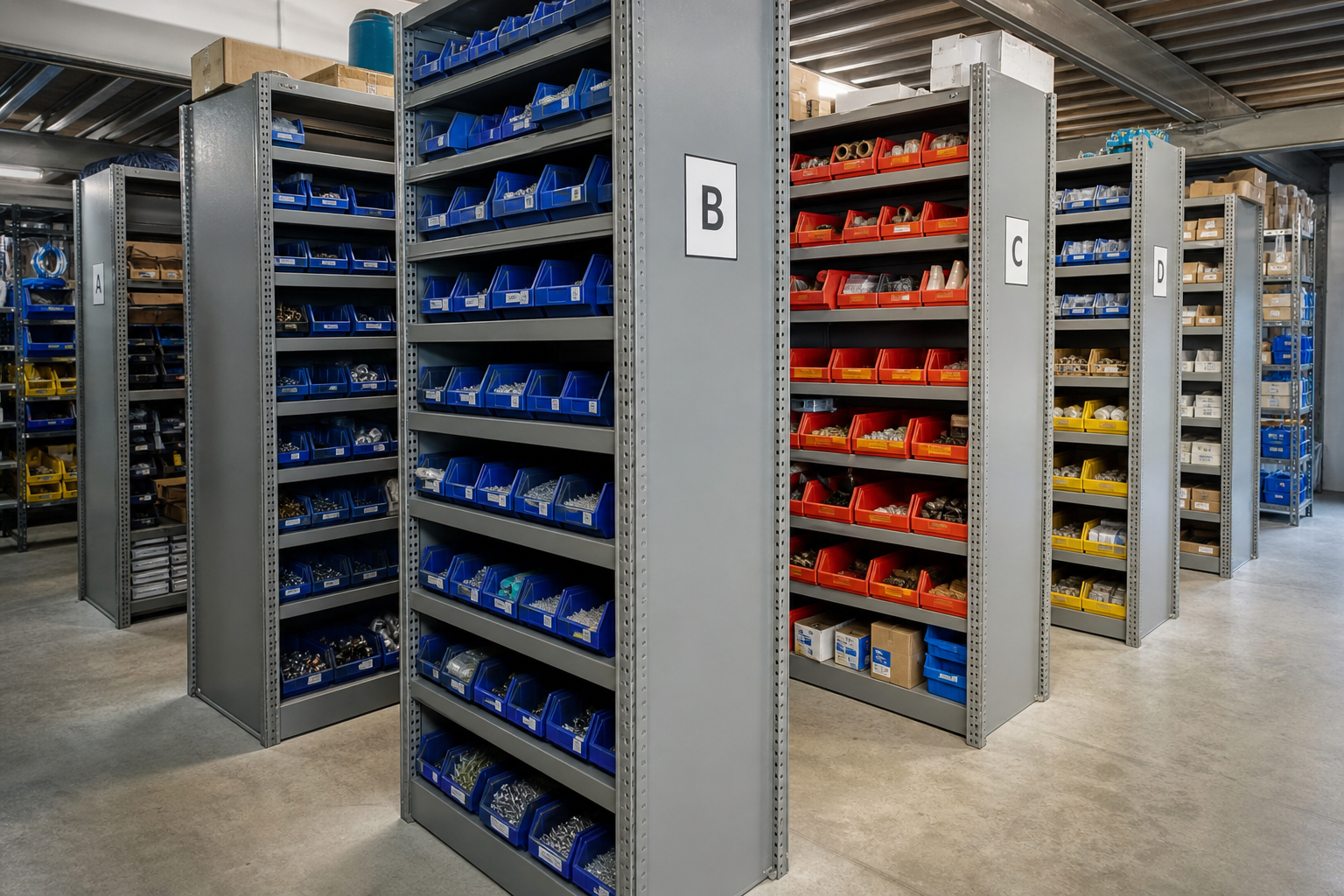
The single change that does most to control this problem is physical: give returns a designed station with a work surface, and require every returned item to pass through it before it goes anywhere. A pile forms because there is nowhere for a returned part to be processed, so it gets set down — and a part set down without a decision has entered dead storage.
- Work surface first. Inspection, comparison against the ticket, repackaging and labeling all need a bench at working height with light, not the end of a counter.
- Four labeled destinations, visible from the bench. Restock, return to manufacturer, core outbound, and scrap. If a destination is missing, product defaults to the floor.
- Aged, addressed holding. Anything that cannot be decided immediately goes into a labeled, dated position — not a nameless shelf. Bin and shelf labeling is the same discipline you already apply to stock; there is no reason returns should be exempt.
- Keep it out of the pick aisle. OSHA requires permanent aisles and passageways to be kept clear and unobstructed, and staged returns on the floor are the most common way a parts room fails that.
Where the department also does distribution volume, the same logic scales up into a proper returns lane with its own receiving position — see our auto parts warehouse shelving and slotting guidance for the layout side of that.
Where dead and slow inventory should physically live
Obsolescence you are still working to recover has to be stored somewhere. The rule is simple: it may occupy volume, but never prime pick face. These are the four moves that free the good space.
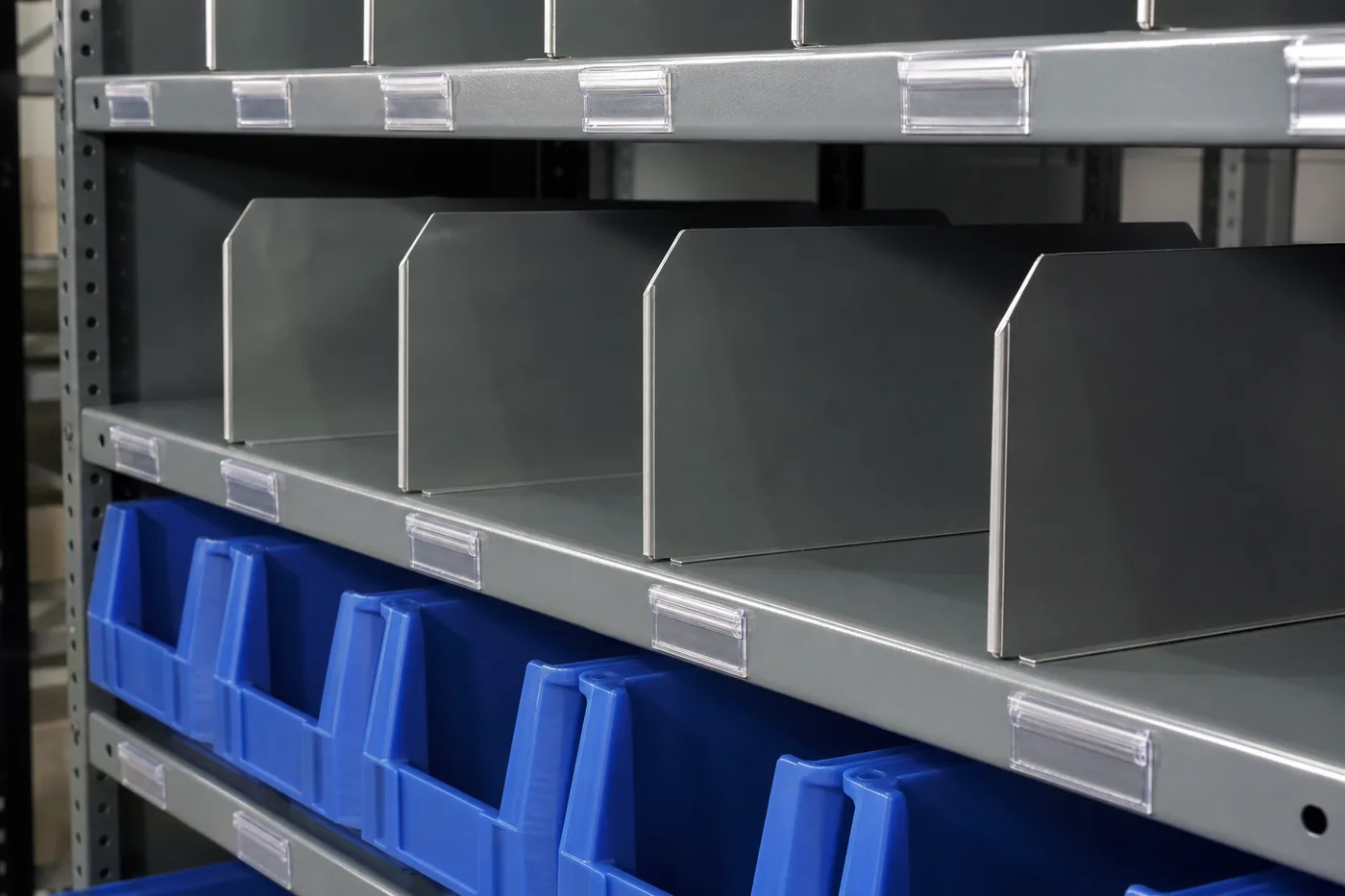
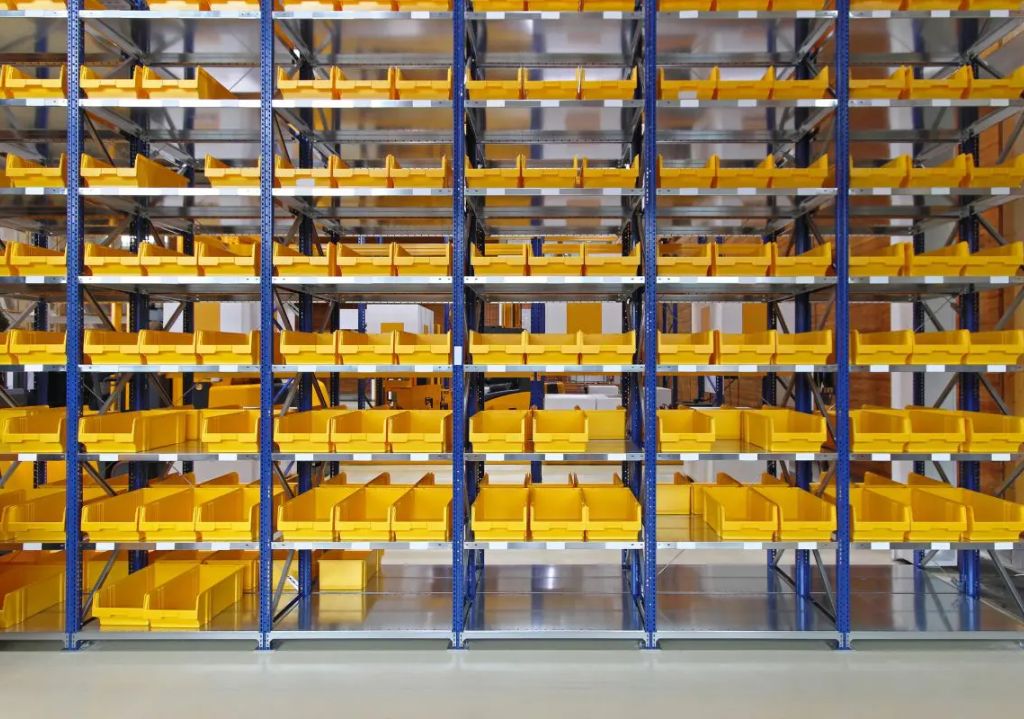 Right-size the location to the partSlow-moving parts sitting in full-height shelf openings waste most of the cube they occupy. Dividers, shelf bins and right-sized pocket storage compress the same inventory into a fraction of the footprint while keeping every item individually addressable.
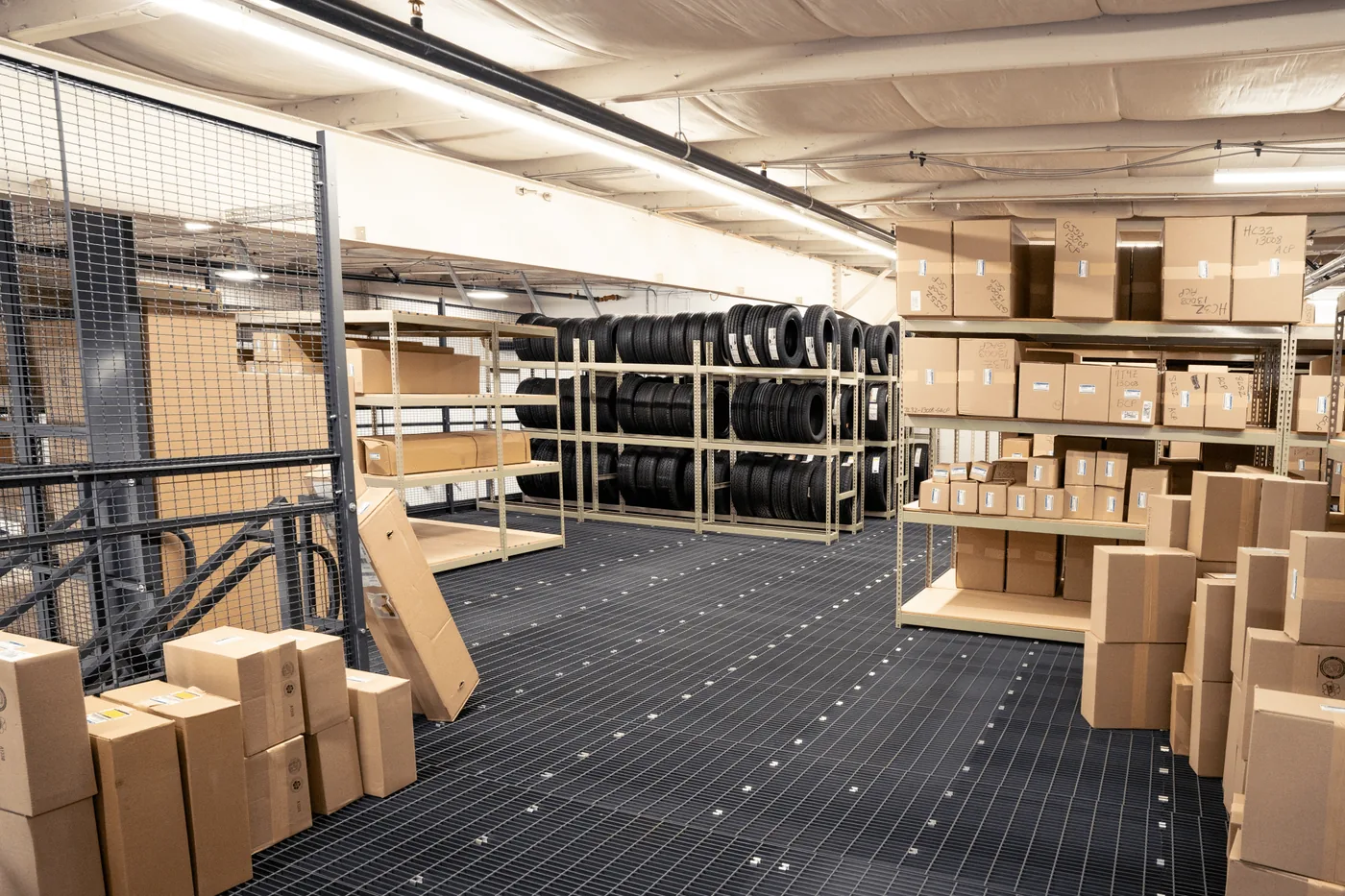 Send it up, not outSlow coverage stock, seasonal inventory and obsolescence pending disposition are ideal upper-level candidates because they are picked rarely. A second level converts unused clear height into the space the fast movers need downstairs.
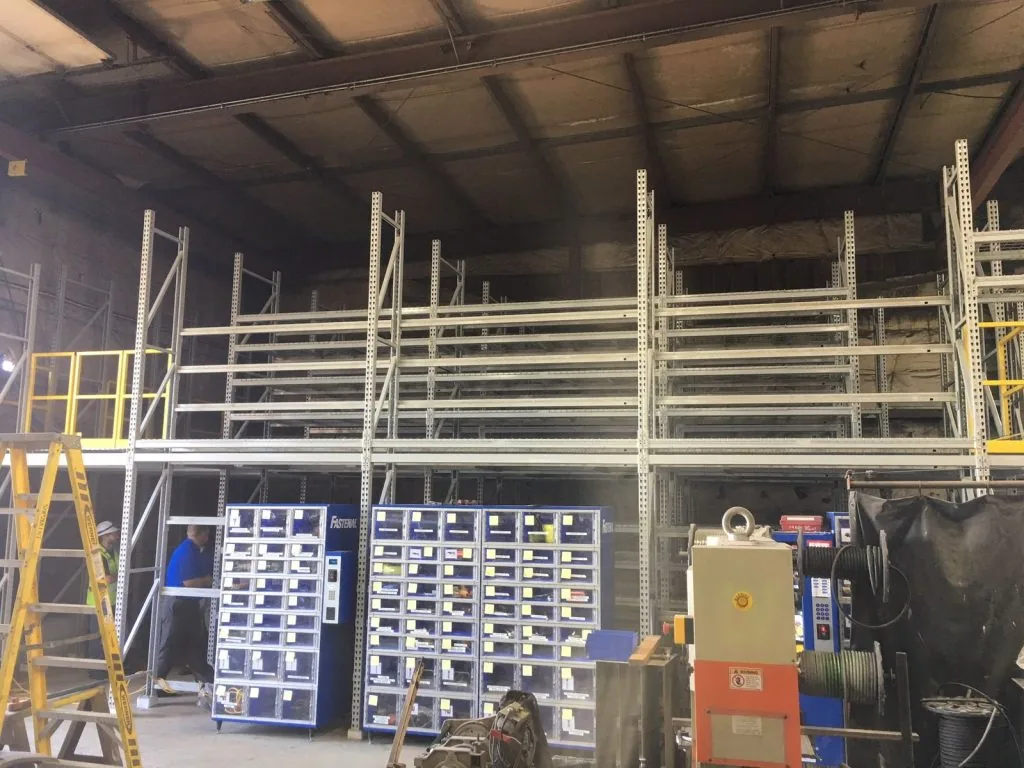 Reserve and bulk overheadCase-lot and bulky slow inventory belongs above a pick level on rack, not in a shelving aisle. That single change usually recovers more pick-face shelving than any reorganization of the shelving itself.
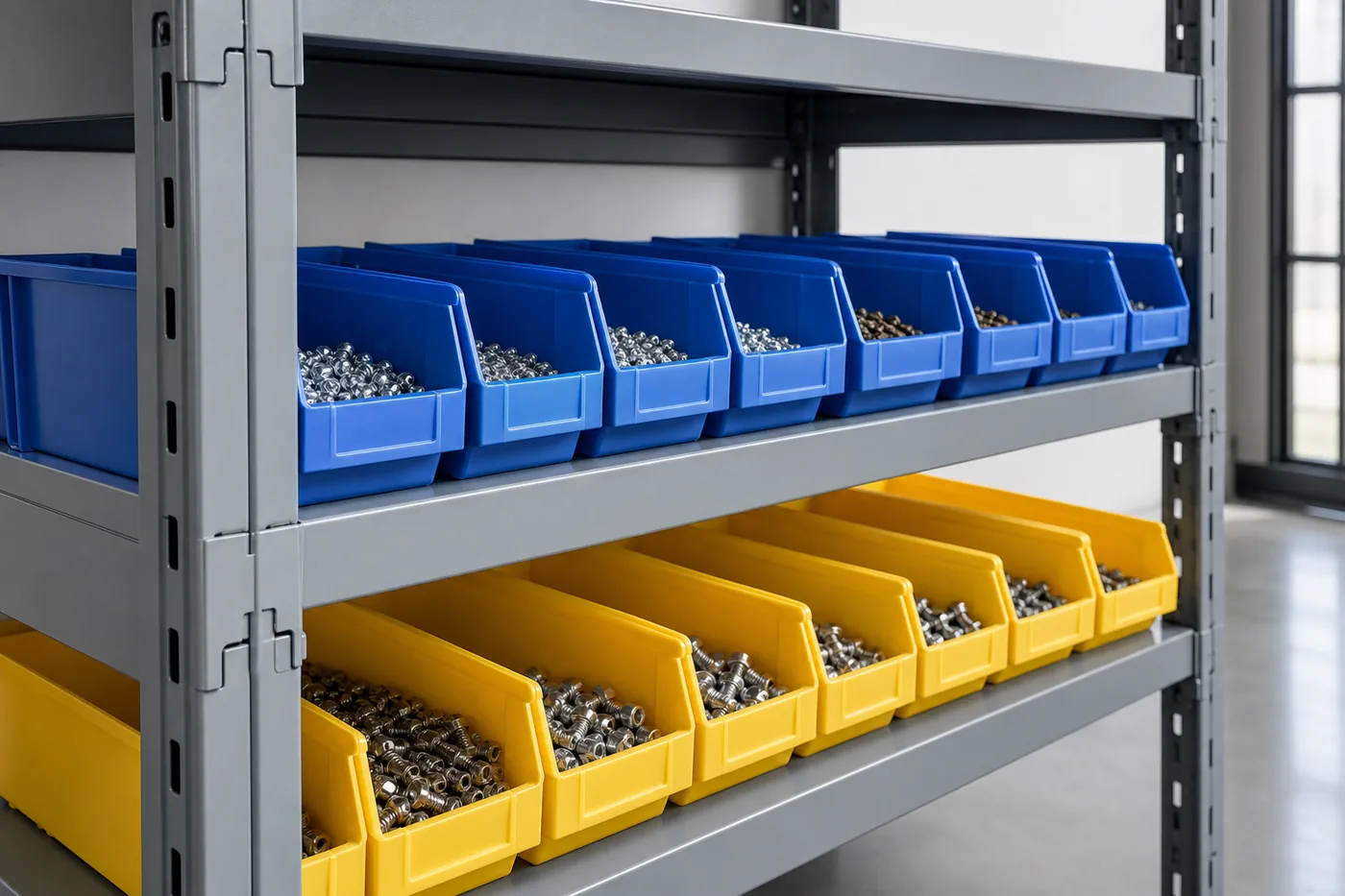 Address everything, including the dead stockUnaddressed inventory cannot be reported on, counted or sold, so it is never recovered. Every obsolescence and core position needs a bin location in the system, the same as active stock — that is what makes the monthly review possible.
Recovering the space dead inventory is holding?
Send us a floor plan and a rough profile of your slow and dead stock. We will show you what compressing it into right-sized locations, rack reserve or an upper deck actually frees in your pick face, and quote the change as one project.
Request a Parts Room Layout See all automotive storage solutions Call (800) 326-4403
Cores, fluids and end-of-life items have rules of their own
Core storage is where a housekeeping problem turns into a compliance one, because a large share of cores are dirty, fluid-bearing or classified as waste once the exchange fails. A few published requirements shape the storage design: Warranty parts awaiting a claim decision or an OEM audit release need the same disciplined separation before they ever reach this disposition stage — see dealership warranty parts retention and hold-area storage.
- Used oil containers. Federal rules for used oil generators require containers and tanks to be in good condition, not leaking, and labeled or marked clearly with the words “Used Oil.” Fluid-bearing cores staged without containment are the usual way that gets missed.
- Spent lead-acid batteries. Batteries being reclaimed are subject to their own separate federal requirements, distinct from other waste streams. Keep them segregated, contained and clearly identified.
- Lithium batteries at end of life. Federal guidance recommends managing used lithium batteries as universal waste, with container condition, labeling and dating requirements and a limit — generally one year — on how long a handler may accumulate them on site.
- Flammables near cores. Solvents, aerosols and cleaners used in the same area belong in rated cabinets, which are limited by rule to 60 gallons of Category 1–3 flammable liquids, or 120 gallons of Category 4 liquids, per approved cabinet.
- Secure, stable storage. Storage must be stacked and limited in height so it is stable and secure against sliding or collapse, with aisles kept clear — a real constraint when cores arrive in mismatched crates.
Practically, that means a defined core area with containment, labeling, segregation by stream and a scheduled outbound shipment — and, where cores have resale value or walk, a mesh enclosure around it. Shops handling their own fluids and consumables should read this with our repair and body shop storage guidance.
The review cycle that keeps it from coming back
Report before you move anything
Pull a no-sale report over your review window — commonly twelve months — by part number, quantity, value and location. Published dealer guidance treats awareness as the first step, because obsolescence you cannot measure cannot be reduced.
Split the report into the four categories
True obsolescence, returns, cores and uninstalled special orders behave differently and exit differently. One list produces one bad plan.
Take the manufacturer returns first
Where a franchise offers obsolete-parts return allowances, that window is the highest-value exit and it is time-limited. Work it before you consider discounting or scrapping.
Relocate what stays, and address it
Everything remaining moves out of the pick face into compressed, upper-level or reserve positions — with a bin location in the system. Unaddressed stock is stock you will write off twice.
Fix the inflow, not just the pile
Tighten special-order procedures so parts get installed, set wholesale return policies deliberately, and address ordering and diagnostic accuracy. Published guidance names those three as the leading causes.
Keep the three inventory controls running
Consistent bin checks, an annual physical inventory and a monthly book-to-system reconciliation are the controls published dealer parts guidance treats as essential stewardship. They are also what stops the corner reforming.
What the recovered space is actually worth

The reason to do any of this is not tidiness. Prime pick-face shelving is the most productive storage in the building, and every bay of it occupied by dead stock is a bay unavailable to the coverage that wins service work. When a department clears and re-slots that space, three things usually follow. Old stock is also the stock most exposed to the room itself — see parts room climate, humidity and corrosion protection.
Fill rate improves without buying a bigger building. The space taken back is exactly where additional coverage lines can be stocked, and coverage is what keeps a technician working and a customer from returning a second time for the same repair.
Picking distance falls. Fast movers can be consolidated near the counter and the technician window instead of being spread around obstacles. That shows up immediately in counter wait times.
Capital projects get deferred. Departments frequently price a mezzanine or a lease expansion while a fifth of the room holds inventory with no demand. Purge and compress first; if the room is still full afterwards, the shortage is real and a parts room mezzanine or automated vertical storage becomes a justified investment rather than an expensive way to store dead stock.
Obsolescence, returns and core storage FAQs
How do we define obsolete parts?
Where should obsolete inventory be stored while we work it off?
What is the right way to handle cores?
How long can we keep end-of-life batteries on site?
Should returns be restocked immediately?
Is a mezzanine a good way to solve a dead-stock problem?
How do we stop the pile from coming back?
Can you help plan the physical side of this?
Take the space back from inventory that is not selling
Material Handling USA plans, supplies and installs shelving, bin systems, drawer cabinets, rack, triage workstations, secure enclosures and mezzanines for dealership parts departments, service facilities and parts warehouses.