You are probably looking at three quotes, a deadline, and a security director who wants a decision before the week is out. That is exactly when a guard booth buyers guide earns its keep. The booth at your gate is not a shed. It is a working checkpoint that shapes security, traffic flow, guard comfort, and every upgrade you make later.
Buy it wrong and you pay twice, once at purchase and again in retrofit work, utility changes, and downtime. Buy it well and you get a checkpoint that supports your access-control plan, keeps staff comfortable on long shifts, and leaves room to grow without tearing out a new installation. This guide walks through the decisions in the order that works: job first, size and construction second, systems third, then codes, process, and total cost.
Why a Guard Booth Decision Matters More Than Most Buyers Expect
Treating the booth as a small accessory purchase is the costliest shortcut in this project. The booth is the first point of contact between your operation and every vehicle, vendor, contractor, and visitor. The choice affects daily security, traffic flow, and how well the entrance performs when a line of trucks is waiting.
A booth that looks fine on paper can still fail in the field. Cramped interiors, poor sightlines, weak electrical planning, and a climate system that was never sized for real occupancy all turn into expensive fixes once the unit is set and wired.
The market is moving the same way. One industry report valued the prefabricated security booth market at $0.38 billion in 2025 and projects $0.63 billion by 2034, a 5.8% CAGR, according to the Dataintelo prefabricated security booth market report. Buyers are treating these units as durable infrastructure, not disposable boxes.
Practical rule: If the booth will be occupied, monitored, or wired for access control, specify it like a small building, not a portable accessory.
What gets missed in a rush decision
Rushed purchases ignore the site, the users, and the equipment the booth has to support over time. The result is a unit that fits the footprint but breaks the workflow.
Facility managers, security directors, and operations teams usually make this call during a new build, a renovation, or a capacity crunch. Get it right the first time and you protect budget, schedule, and the security posture you are trying to build. If you want a quick primer on the product category before you go deeper, start with our guard booths overview.
Defining What a Guard Booth Really Does at a Checkpoint
A guard booth has to do more than keep weather off the guard. It has to work as a workplace, an observation post, a technology enclosure, and a customer-facing part of the entrance. That mix is why the details matter.
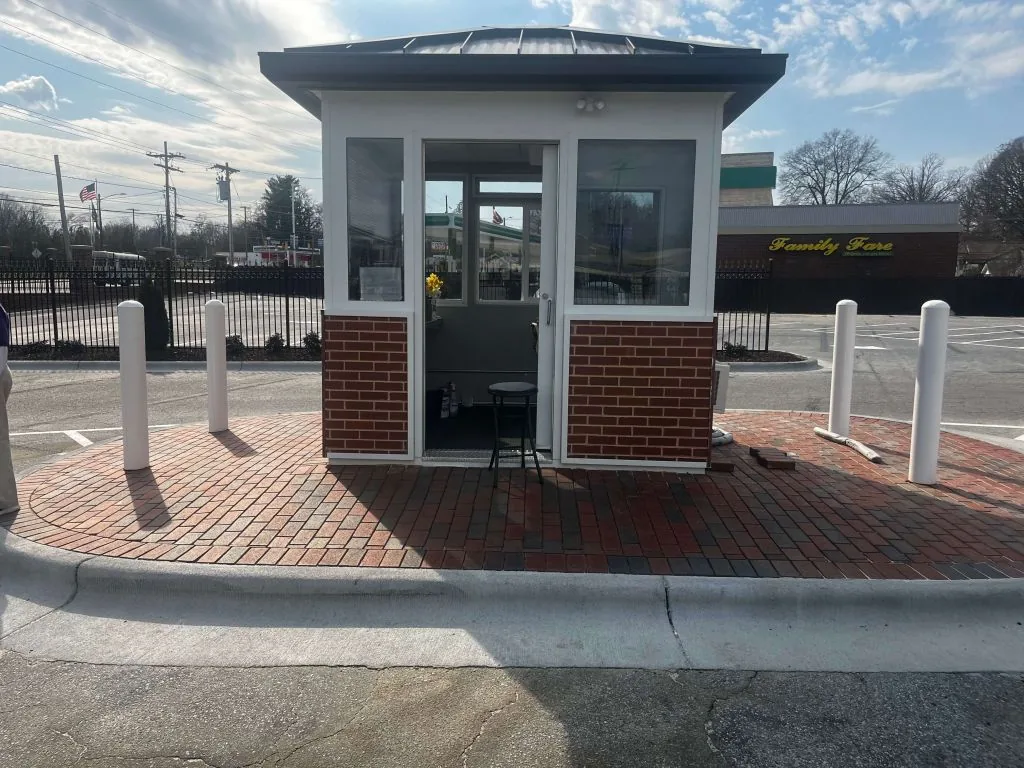
Guardhouses have a long history as staffed sentry posts, and modern use still carries that security function forward. Current compliance thinking treats an occupied booth like a workplace, so structural stability, electrical compliance, fire protection, ventilation, climate control, and emergency exits all come into play guardhouse.
Rank the job before you rank the products
Start with site conditions. Then define throughput, occupancy, compliance, and future flexibility. If the booth will serve one officer, one lane, and minimal equipment, your spec can stay lean. If it needs to support visitors, cameras, badge readers, radios, and remote monitoring, the booth becomes a small control room.
That is where many buyers drift off course. They compare finishes before they define function, then wonder why the final unit feels cramped or underpowered. The correct order is simple. First define what the booth must do, then spec the shell around that job.
A booth that cannot support the staff, equipment, and traffic pattern at your gate is not a checkpoint solution. It is a space problem in a security wrapper.
The other thing buyers miss is that the booth shapes the visitor experience. Window height, transaction access, lighting, and counter placement affect how drivers are processed and how professional the entry feels. For a parking lot or paid entrance, a parking booth or attendant station layout with a sliding transaction window is often a better fit than a standard security booth.
Sizing, Materials, and Construction Options Worth Comparing
Size drives comfort, cost, install complexity, and how easy the booth is to relocate later. If you expect to move it, compare portable guard shacks and mobile guard booths built on forklift-liftable steel bases. A single-occupant booth can stay compact. A two-person booth needs room for swing space, equipment, and safe movement around the door and counter.

How big should the booth be?
Prefabricated guard booths from Material Handling USA run from about 4 by 6 feet for a single attendant up to 12 by 24 feet and larger for multi-officer guard houses. Quick-ship models are usually stocked in the most common small footprints (4 by 6, 5 by 8, and 6 by 8 feet). Use the table below to match the footprint to the job, then confirm interior clearances on the shop drawing before you sign.
| Booth Size | Typical Footprint | Who It Serves | What to Add for Full Integration |
|---|---|---|---|
| Compact | 4 by 6 or 5 by 8 feet | One officer, one lane, basic shelter and transaction use | HVAC, pre-wired panel, sliding window, exterior light |
| Mid-size | 6 by 8 feet and up | One or two officers with monitors and a desk | Network drops, camera monitors, access-control hardware |
| Large or custom | Up to 12 by 24 feet and larger | Multi-officer posts, dispatch, visitor processing, restroom | Full operator systems, expanded electrical service, plumbing |
Compare the construction types
The construction choice matters just as much as size. Steel is the right answer when security risk and impact exposure matter more than weight and portability. Lighter or specialty materials win when relocation, corrosion, or maintenance drives the decision.
| Construction Type | Best Fit For | Security Level | Weight / Install | Typical Service Life |
|---|---|---|---|---|
| Welded Steel | High-security sites and impact-prone entrances | High | Heavy, usually more complex to set | Longer service life, with corrosion protection needed in harsh climates |
| Aluminum | Roof installs, lighter foundations, or moves where weight matters | Medium | Light, easier to handle | Long service life, but more dent-prone |
| FRP Panels | Coastal or chemical environments with low maintenance needs | Low to medium | Moderate, often practical for specialty sites | Durable, with lower upkeep demands |
| Modular Prefab (insulated panel on steel frame) | Most checkpoints, fast deployments, and future relocation | Configurable, up to ballistic-rated | Arrives assembled, set with a forklift or crane | Flexible, with easier future expansion |
For a closer look at shell options and standard features, see our prefabricated guard booths and security shacks line. Modular builds make sense when the project needs speed, repeatability, or easier future expansion.
Match the build to the risk profile
Security booths and guard shacks commonly use insulated steel or aluminum panel construction over a steel frame, with aluminum window frames and safety or impact-resistant glazing sized to the application guard booths and shacks. That split between structure and envelope is what keeps the booth functional instead of just durable. The frame carries the load, and the finish package handles weather, visibility, and daily use.
Insulation is not decorative. Industry sources describe sandwich-panel construction with strong thermal performance, and that matters because a booth that holds temperature is cheaper to run all year security booths and shelters. Our standard booths use insulated wall panels rated at least R-11, and better insulation usually means less HVAC strain and fewer comfort complaints.
Match the material to the site, not to a catalog photo. High-risk gates call for heavy steel or a ballistic-rated build. FRP or standard modular construction wins where maintenance, relocation, or climate exposure drives lifecycle cost.
Designing the Booth for Power, Climate, and Access Control
The booth interior deserves the same discipline as the frame. Weak power, poor climate control, or a sloppy access-control layout turns a well-built booth into a daily nuisance.
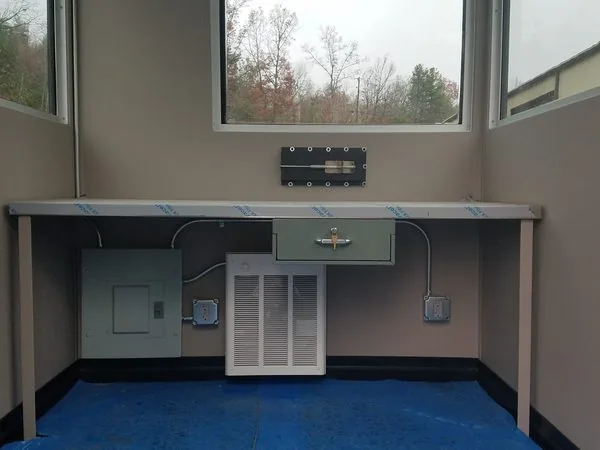
Every booth needs three things written into the base specification: a frame that carries the structural load, an insulated wall and roof envelope, and glazing matched to the threat level. Published prefabricated booth specs show what that package looks like in practice. One example pairs structural steel framing with insulated panels and laminated glazing prefabricated guard booths, and the same spec lists the heater, the load center, and the electrical cabinet as part of the base build prefabricated guard booths. The lesson is not the exact wattage. It is that power distribution belongs in the original spec, not in a retrofit order.
Specify the systems up front
Write the electrical package, HVAC requirements, glazing, and door hardware into the booth spec before fabrication starts. If you wait until installation, you end up cutting finished surfaces and adding awkward add-ons that never fit cleanly. Our guides to modular building electrical systems and HVAC options for modular buildings cover the questions to settle before you approve drawings.
For long shifts, one security-booth design reference recommends interior conditions around 73 to 79°F (23 to 26°C) with relative humidity near 40 to 60%. It also notes that outside truck-noise levels of 75 to 85 dBA may require about 30 to 40 dB of transmission loss to reach a 40 to 48 dBA interior target guard booth ergonomic workstation. The same reference ties that performance to 8 to 10 mm laminated glass, insulated panels, and diffused supply air so draft speed stays below about 0.25 m/s in summer guard booth ergonomic workstation.
If the booth will hold cameras, intercoms, badge readers, or alarm tie-ins, build in a clean raceway plan and spare electrical capacity. For buyers comparing how access hardware fits into the broader system, the complete 2026 access control systems guide is a useful planning reference.
Treat wiring paths, network drops, and equipment mounting as part of the original booth design. Retrofits cost more, take longer, and look improvised.
Try it before you spec it. The free modular building configurator lets you set booth dimensions, wall system, doors, windows, HVAC, and electrical in a step-by-step wizard, then sends the configuration to our team for pricing. Prefer to talk it through? Call (800) 326-4403.
Codes, Permits, and Ballistic Ratings You Cannot Skip
Three compliance questions come up on almost every guard booth project. Settle them early, because each one can change the spec, the schedule, or both.
The 120-square-foot permit myth
Many buyers assume a booth under 120 square feet needs no permit. The exemption in IBC Section 105.2 covers one-story detached accessory structures used as tool and storage sheds, playhouses, and similar uses. An occupied, powered security checkpoint is not a storage shed, so most building officials will still want a permit for the installation, the foundation, and the anchorage. Even where the building permit is waived, the electrical permit generally is not. Our modular building permits and code compliance guide and the Utah guard booth permit and code page walk through the approval sequence and who inspects what.
Codes the booth itself should meet
- Structural: IBC structural requirements, plus local snow, wind, and seismic design criteria. Ask for the anchor plan and confirm it matches your pad. Our foundation and anchoring options guide explains the common approaches.
- Electrical: NEC-compliant pre-wired panel with GFI outlets, with the service connection permitted and inspected locally.
- Accessibility: ADA considerations for the door, threshold, and any public transaction window.
- Life safety: An outward-swinging exit door and smoke detection for 24/7 occupied booths. One guidance source calls for a door at least 900 mm (about 36 inches) wide guard booth thermal insulation.
When you need a ballistic rating
If the threat assessment includes armed intrusion, specify a booth tested to UL 752, the standard for bullet-resisting equipment. UL 752 groups ratings into levels by weapon type and round, from handgun through rifle and shotgun. The rating has to apply to the whole assembly (panels, glazing, and door), not just the glass. Read the UL 752 ballistic ratings guide to pick a level, then see the ballistic guard booth buyer’s explainer for how it changes the build.
A Step-by-Step Buying Process for Guard Booths
A guard booth purchase goes smoother when procurement, security, and facilities follow the same sequence. Skip the sequence and you invite change orders.
-
Survey the site. Measure lane width, sightlines, utility runs, slab conditions, and any setback restrictions. If the booth will not sit cleanly on the pad or cannot be anchored correctly, stop there and fix the site plan first.
-
Define the operating profile. Decide how many officers will use the booth, what shifts it must support, how much traffic it will process, and what technology it must house. A booth for one attendant is a different project from a booth that handles visitors, screens deliveries, and monitors cameras.
-
Write the spec. Put size, materials, HVAC, electrical, glazing, ballistic level (if any), and finish requirements in priority order. Do not bury the critical items under a long wish list.
-
Request comparable quotes. Ask for shop drawings, lead times, freight terms, and anchor plans from each vendor. Three clean bids beat six vague ones every time.
-
Normalize the offers. Compare inclusions, exclusions, and warranty terms, not just the headline price. The cheapest quote often leaves out the things you will need later.
-
Lock the schedule. Confirm site prep, delivery, crane or forklift access, and utility installation before you release the order. Good projects fail when the booth arrives before the trades are ready.
-
Coordinate the final hookup. Electrical, data, and access-control work should land in one mobilization whenever possible. That keeps the booth from becoming a half-finished shell.

The procurement timeline below is a practical way to keep the project moving without forcing decisions too early. For what drives fabrication and delivery timing, see our modular building lead times and delivery guide.
| Procurement Stage | Typical Duration | Key Deliverable |
|---|---|---|
| Site survey and scope definition | Short planning window | Measured conditions and a written use case |
| Quote gathering and review | Depends on vendor response | Comparable proposals and shop drawings |
| Permits, site prep, and utility work | Varies by jurisdiction and contractor | Approved permit, ready pad, power, and access path |
| Delivery and installation | Often a single mobilization | Set booth, connected utilities, final test |
For teams comparing gate entry options and equipment planning, cellular gate access system buyer's guide is a companion reference because the booth and gate controls usually have to work as one system. To see how this sequence played out on a real project, read the PC Construction guard booth case study.
Total Cost of Ownership vs the Cheapest Quote
The lowest bid is rarely the lowest cost after the booth goes into service. Buyers who think in five to ten year terms usually make better decisions because they see the full cost of operation, not just the purchase price.

First cost includes the booth, freight, site prep, electrical hookup, and commissioning. Lifecycle cost includes HVAC runtime, lighting, finish wear, seal replacement, warranty visits, and the cost of moving or removing the booth if the site layout changes later.
What actually changes the budget over time
A cheaper booth becomes expensive if the insulation is weak, the HVAC package is undersized, or the materials wear too fast for the environment. Heavy-gauge steel and FRP can extend repaint and seal cycles, while lighter aluminum can dent in high-abuse settings and push replacement earlier than expected.
Future flexibility is the line item most buyers miss. A modular booth that can be lifted, re-anchored, and repurposed protects the original investment when a gate shifts or a site expands.
Decision rule: Compare proposals as cost per operating year, not as a one-time purchase. That simple shift usually exposes the real value gap.
If you are weighing ownership against temporary use or a phased project, our guard shack rental vs buying cost breakdown frames the trade-off without guessing. It is the right question when schedules are tight or the site is still changing.
Frequently Asked Questions About Buying a Guard Booth
What should I budget for a guard booth?
Budget depends on size, material, glazing, HVAC, ballistic level, and how much integration you need. Treat the quote as a package of booth shell, utilities, and operating features, not as a sticker price. The fastest way to get a real number for your site is an itemized quote against a written scope.
How long does a booth take to get on site?
Lead time depends on the configuration, approvals, fabrication, and site readiness. Stocked quick-ship sizes move fastest. Ballistic-rated and custom units take longer. If the pad, power, and access path are not ready, the booth sits in limbo while the site catches up, which is a planning problem, not a manufacturing problem.
Do I need a permit for a small guard booth?
Usually yes. The IBC exemption for structures under 120 square feet applies to storage sheds and similar uses, not to an occupied, powered checkpoint. Expect a building permit for placement and anchoring and a separate electrical permit for the service connection. Confirm with your local building official before you order.
What usually goes wrong?
The repeat offenders are undersized HVAC, poor sightlines, single-point electrical service, and glazing that does not match the use case. These are design misses, not minor options. Fix them before you sign.
Do I need fire and life-safety items in a booth?
Yes, if the booth is occupied. Plan for an outward-swinging exit door, smoke detection for 24/7 use, and emergency lighting if the booth is staffed at night. Confirm any extra requirements with the local fire marshal.
Is steel always the right choice?
No. Steel makes sense where strength matters most, but aluminum, FRP, and insulated modular panels each have a place. Pick the material based on risk, climate, and how often the booth may need to move or be repurposed.
When do I need a ballistic-rated booth?
When your threat assessment includes armed intrusion. Specify a UL 752 level that matches the expected weapon type, and make sure the rating covers the panels, glazing, and door as a complete assembly.
Can one vendor help with layout and quote review?
Yes. Material Handling USA provides free layout consultation, drawings, and spec review for guard booth projects, along with itemized quotes that make vendor comparison easier.
Plan Your Guard Booth Project With Material Handling USA
The right booth starts with the right priorities. Match construction to the risk profile, size the systems for actual occupancy, settle permits early, and judge the proposal on lifecycle cost instead of headline price.
If you are planning a new checkpoint, renovating an old one, or replacing a booth that no longer fits the site, Material Handling USA can help you pressure-test the scope before you commit capital. Use the free layout review, request itemized pricing, and compare the spec against your other bids with a specialist who understands guard booth planning.
The fastest way to avoid rework is to define the booth as a long-term operational asset from the start. If you want a quote package, site review, or design help, request a guard booth quote or call (800) 326-4403 and ask for a guard booth review.
Design it yourself, then get a quote
Use our free online design tool to configure the booth this article describes, then send the configuration to our team for pricing:
- Modular building configurator (guard booths, in-plant offices, and enclosures)
- All Material Handling USA design tools
Ready to talk it through? Call Material Handling USA at (800) 326-4403 for a free design consultation.