
Ballistic Ratings Guide — UL 752 Levels Explained
Understanding UL 752 ballistic protection levels for guard booths, security buildings, and ballistic-rated modular structures. Which level do you need?
Call (800) 326-4403 or Email Sales@MH-USA.com
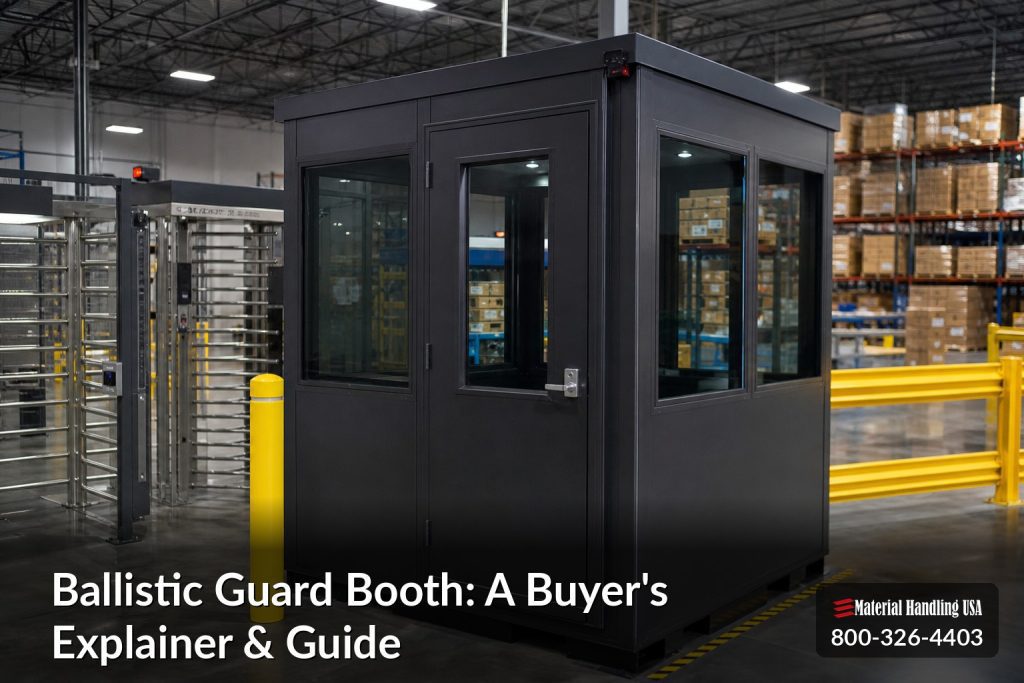
What Is UL 752 Ballistic Protection?
UL 752 is the industry standard for ballistic-resistant building materials — the same standard used for bank teller windows, embassy construction, and courthouse security. It defines eight levels of protection based on the type of firearm and ammunition the barrier must stop. Understanding these levels helps you specify the right protection for your modular guard booth, security building, or ballistic enclosure.
Material Handling USA builds modular structures rated to UL 752 Levels 1 through 8. Every ballistic-rated building is a complete system — walls, glazing (windows), doors, frames, and transaction fixtures are all rated to the same level. A Level 3 building doesn’t have Level 3 walls with Level 1 windows — every component meets the rated protection level.

UL 752 Protection Levels
Each level specifies the firearm and ammunition the barrier must stop in laboratory testing.
Level 1 — 9mm Handgun
Stops 9mm full metal jacket (FMJ) at 1,175 ft/s. Minimum protection level for general security applications. Suitable for retail, parking booth, and low-threat guard station applications.
Level 2 — .357 Magnum
Stops .357 Magnum jacketed soft point at 1,250 ft/s. Moderate handgun protection. Common for commercial guard booths and checkpoint buildings.
Level 3 — .44 Magnum
Stops .44 Magnum lead semi-wadcutter at 1,350 ft/s. The most commonly specified level for security guard booths, military checkpoint buildings, and high-security commercial applications.
Levels 4–5 — .30 Caliber Rifle
Level 4 stops .30-06 rifle at 2,540 ft/s. Level 5 stops 7.62mm NATO at 2,750 ft/s. Required for military, government, and critical infrastructure applications facing rifle-caliber threats.
Levels 6–8 — High-Power Rifle
Level 6: 9mm submachine gun burst. Level 7: 5.56mm NATO rifle. Level 8: 7.62mm NATO rifle (5 rounds). Maximum protection levels for military installations, embassy security, and critical defense applications.
Complete Ballistic System Design
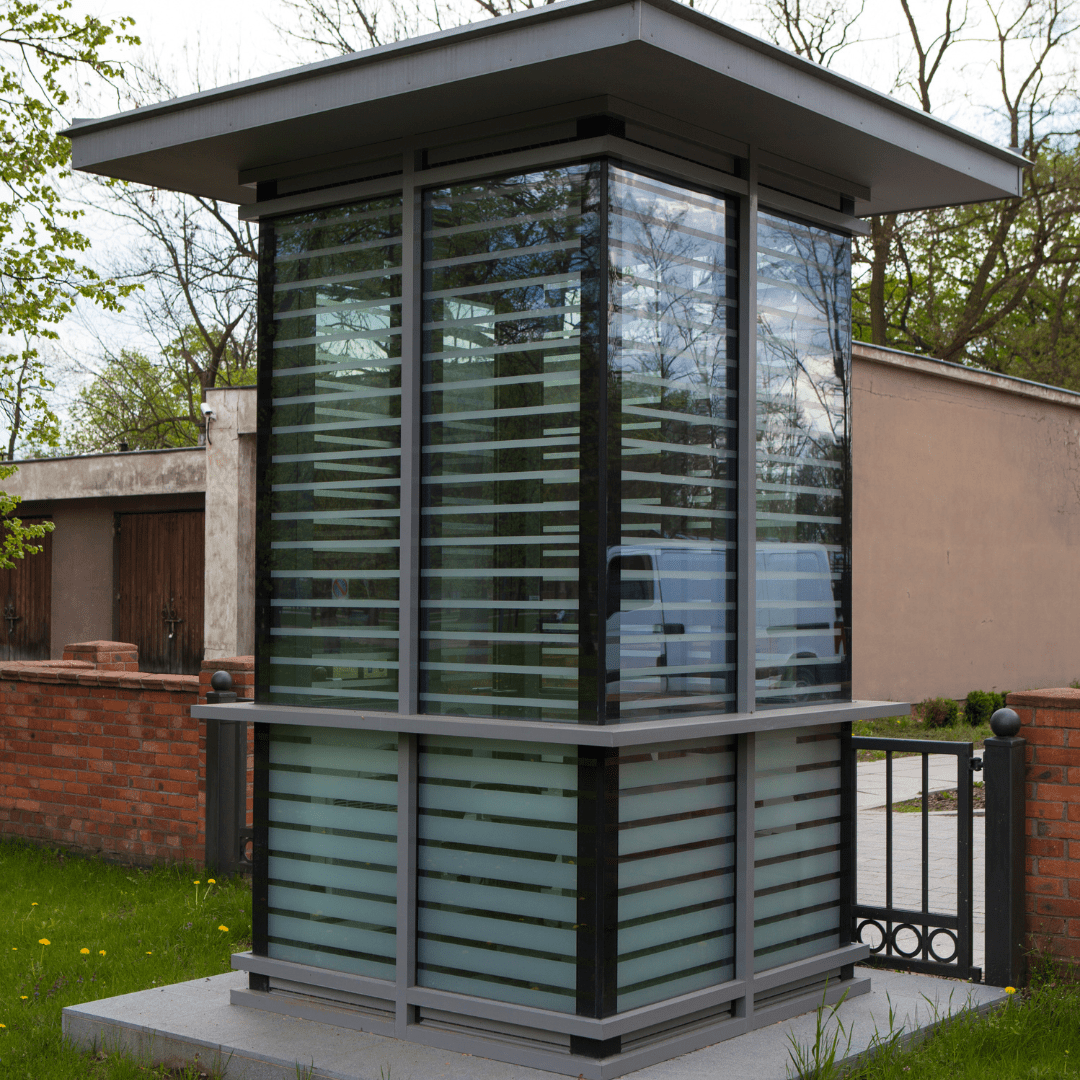
A ballistic-rated modular building is only as strong as its weakest component. If Level 3 wall panels are paired with unrated door frames, the building doesn’t provide Level 3 protection — it provides no reliable protection at all. Our ballistic buildings use a complete system approach: wall panels, glazing (bullet-resistant glass or polycarbonate), door assemblies, door frames, transaction fixtures, and penetration seals are all rated to the specified UL 752 level.
Ballistic glazing is the most technically challenging component. UL 752 Level 3 glass is approximately 1.25 inches thick — significantly heavier than standard glazing. Level 8 glass can exceed 2.5 inches thick. Frame design must account for this weight while providing ballistic overlap (the glazing extends behind the frame) to prevent penetration at the glass-frame junction. Our engineering team specifies and coordinates all ballistic components as an integrated system.
Benefits of Ballistic Modular Buildings

Frequently Asked Questions
Explore More Modular Building Solutions
Specify Ballistic Protection
Material Handling USA builds UL 752-rated modular structures from Level 1 through Level 8 — contact us for ballistic building options.
Related Features & Specs: