
HVAC Options for Modular Buildings: Heating, Cooling and Ventilation
Wall-mounted units, mini-splits, ducted and rooftop systems, ventilation and filtration: how to choose and size HVAC for modular offices, guard booths and controlled rooms.
Call (800) 326-4403 or email Sales@MH-USA.com
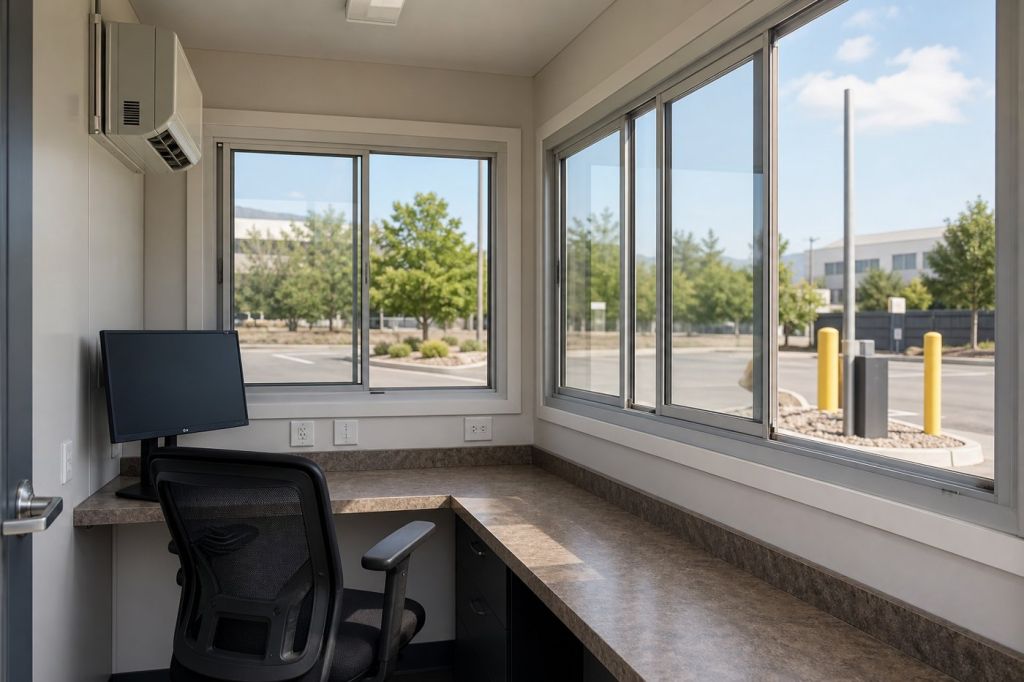
Wall-Mounted
Most Common Unit
Mini-Split
Quiet Offices
Positive Pressure
Keeps Plant Dust Out
Sized
To Your Heat Load
Heating and cooling a modular building
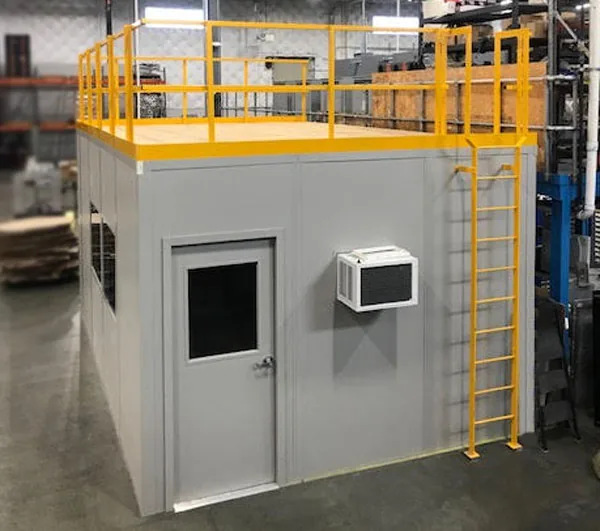
Most modular offices and booths have their own self-contained HVAC unit, so they stay comfortable no matter what the plant around them is doing. The right unit depends on the room size, how many people and computers are inside, how much glass faces the sun or the plant floor, and the heat, dust and noise outside the walls.
An office beside an extrusion press and a booth at a desert gate need very different capacity from a quiet room in a heated warehouse.

This guide compares unit types, explains sizing and ventilation, and covers controlled rooms. For the building range, visit the in-plant buildings hub and the in-plant offices page.
HVAC options for modular buildings
| System | How it is installed | Best for | Trade-offs |
|---|---|---|---|
| Wall-mounted packaged unit | One unit through or on the wall, heat and cool | Single offices, booths, small rooms | Simple and serviceable; some fan noise |
| Ductless mini-split | Indoor head plus outdoor or remote condenser | Quiet offices, conference rooms | Needs a condenser location and line set |
| Ducted split or packaged unit | Unit on the roof deck or beside the building with ducts | Multi-room offices, larger buildings | More coordination, even distribution |
| Rooftop unit | Packaged unit on an exterior building’s roof | Exterior buildings | Roof structure and curb required |
| Precision cooling | Close-control units for steady temperature and humidity | Server, control and test rooms | Higher cost to buy and run |
| Cleanroom air handling | Filtered supply, often fan filter units in the ceiling | Cleanrooms, clean assembly | Designed to the cleanliness class |
| Heat only | Wall heater or unit heater | Unconditioned plants in cold climates | No cooling |
Sizing: what sets the capacity
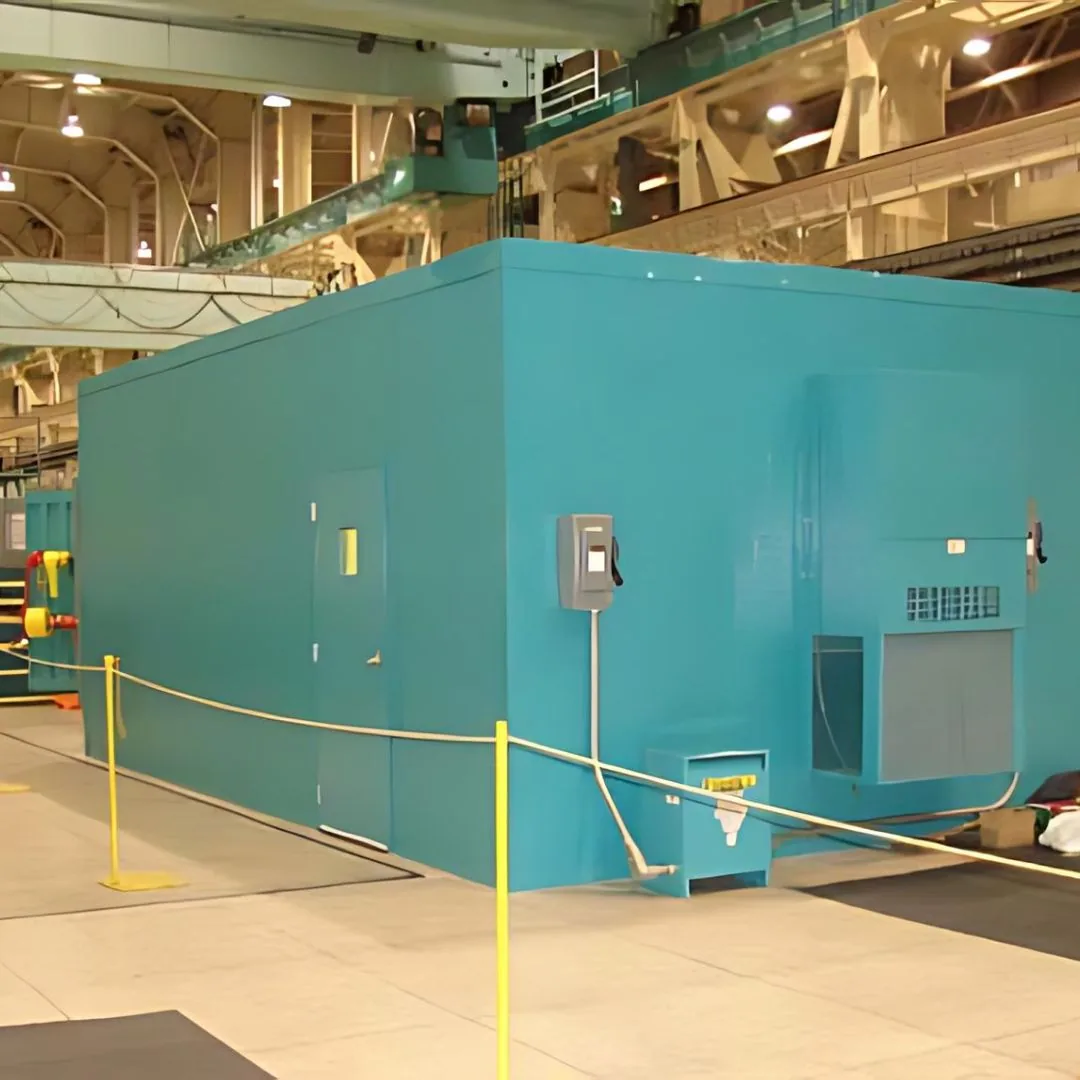
Capacity is set by the heat the room gains or loses. Inside a plant, the biggest swing factor is often the environment outside the walls: a hot process area, an unheated warehouse in winter or a freezer next door. Outdoors, sun on glass and the local climate dominate.
See how one plant handled it in in-plant offices in a high-heat metal plant.
Ventilation, filtration and dust
Occupied rooms need fresh air as well as heating and cooling. Ventilation rates come from the mechanical code and the number of people inside. In dusty plants, bringing in filtered air so the office runs at slight positive pressure keeps dust from leaking in around doors and joints.
Choose filters the unit can handle and that your maintenance team will actually change. Our maintenance guide covers filter intervals.

- Outside air: sized to occupancy per the mechanical code; ducted from a clean source when the plant air is dirty.
- Pressure: slight positive pressure for dusty plants; negative pressure only for rooms that contain a contaminant.
- Noise: mini-splits and remote condensers keep conference and supervisor rooms quieter.
- Condensate: plan where the drain goes, especially on upper levels and storage roofs.
- Service access: leave room to change filters and reach the outdoor unit.
Booths, exterior buildings and controlled rooms
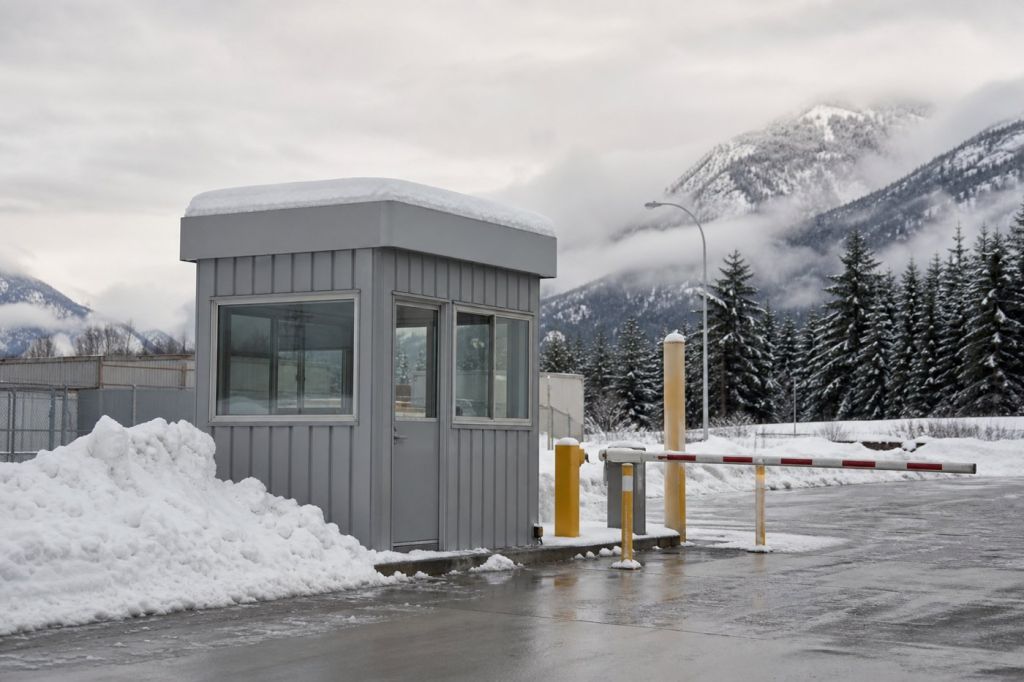
Guard booths
A booth is a small room with a lot of glass, often in full sun or wind, with a door that opens all day. Units are sized for that, and placed so they do not block the view or the transaction window. Desert sites need extra cooling and shade; cold sites need reliable heat at the window.
See park booths built for desert sun and our guard booths.
 CleanroomsFiltered supply air, pressure control and air changes set by the cleanliness class.
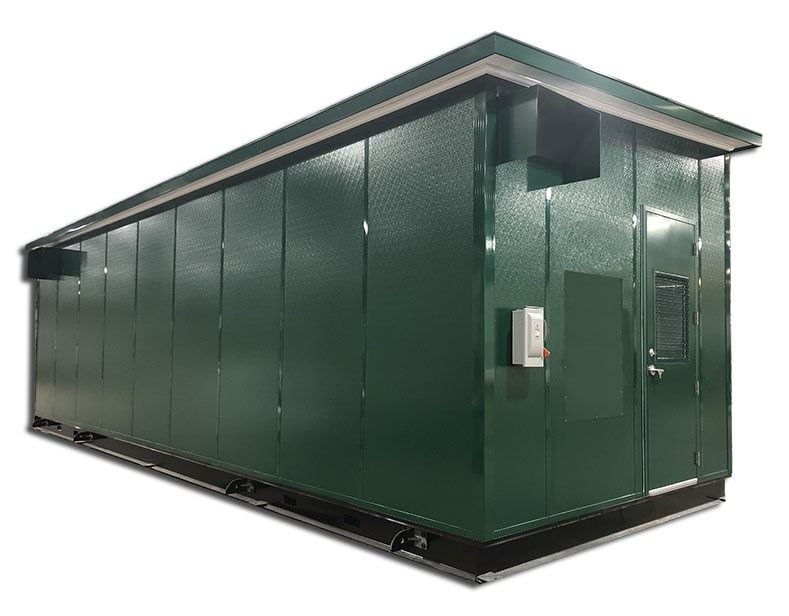 Electrical housesCooling sized for equipment heat to keep switchgear and drives in range.
 Temperature-controlled roomsTighter control for labs, test rooms and rooms inside cold or hot plants.
Related guides: electrical and wiring (dedicated HVAC circuits), roofing (rooftop units), fire suppression and the buyer’s guide.
Common HVAC problems in modular buildings and how to avoid them
| Problem | Usual cause | How to avoid it |
|---|---|---|
| Office too hot in summer | Unit sized for a standard office, not for glass, sun or a hot process next door | Size for the real heat load; shade or tint sun-facing glass |
| Dust inside the office | Negative pressure pulls plant air in around doors and joints | Supply filtered outside air; seal doors; keep the office slightly positive |
| Noisy room | Wall unit fan and compressor in the same room as meetings | Choose a mini-split or remote condenser for quiet rooms |
| Frozen or icy unit | Heat pump struggling in a cold, unheated warehouse | Choose equipment rated for the surrounding temperature or add heat |
| Water on the floor | Blocked or poorly routed condensate drain | Plan the drain route and clean it in spring |
| Uneven temperatures | One unit serving several rooms without ducting | Duct larger offices or add a unit per zone |

Two-story offices and storage roofs
Upper rooms gain heat from the warm air near the warehouse ceiling, so they usually need more cooling than the room below. Each level normally gets its own unit or zone. On storage roofs, keep stored material clear of condensers and exhaust, and plan where the condensate drain runs.
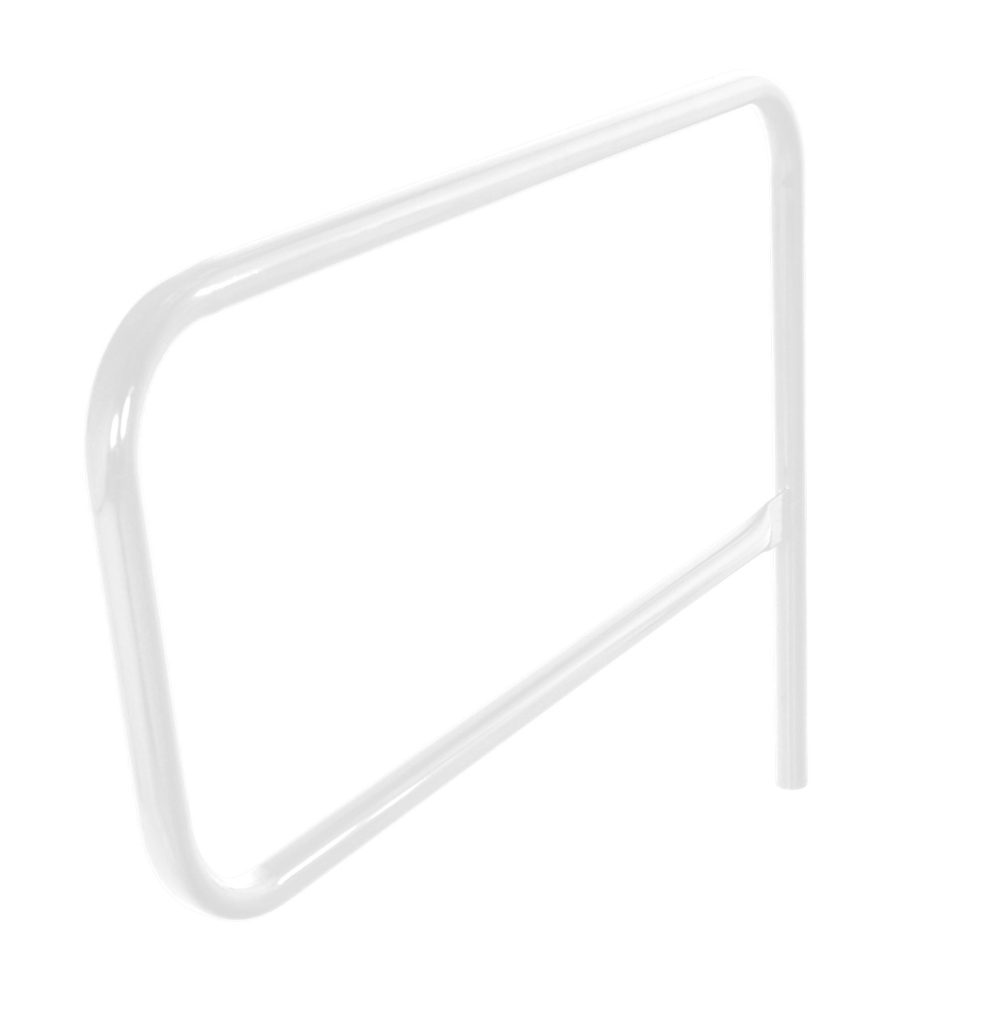
Protect the Unit: Bollards and Railing
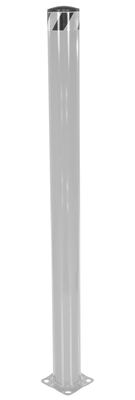
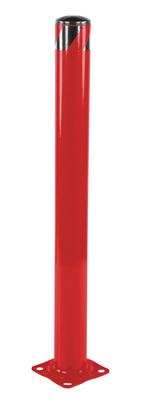
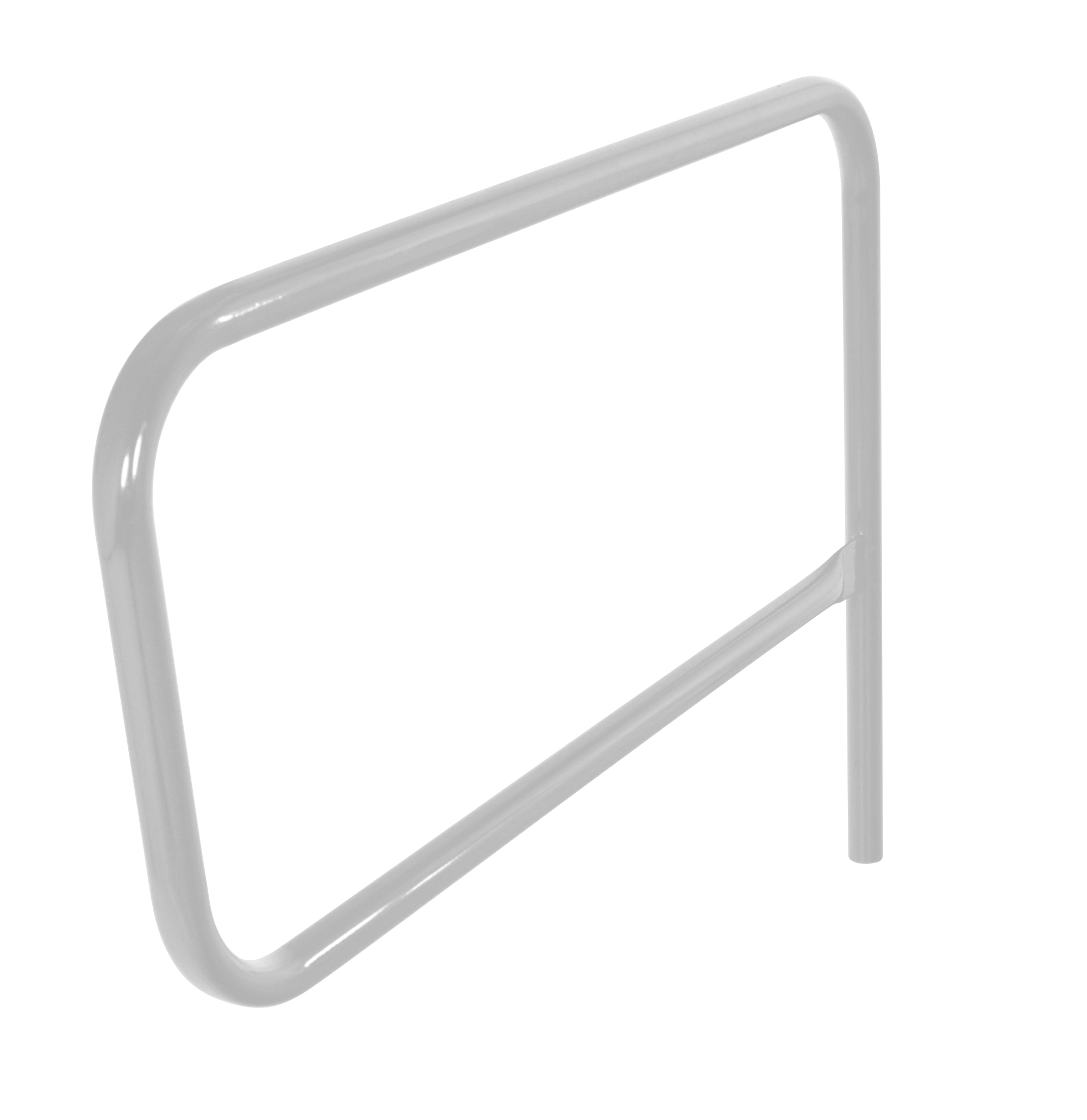
Outdoor condensers and wall units are easy targets for forklifts and trucks. Steel pipe bollards and safety railing gates can be ordered online.
Frequently asked questions
What HVAC is used in a modular office?
How is the HVAC sized?
Can the modular office use my plant’s HVAC?
How do I keep plant dust out of the office?
What HVAC do cleanrooms and server rooms need?
Who installs and starts the HVAC?
Get HVAC sized for your building
Tell us the room size, use, glass and what surrounds the building. We will size the unit and include it in your quote.