
Ballistic-Rated Buildings and Enclosures, Ground-Level or Elevated
Guard booths, gate houses, equipment enclosures and elevated tower cabs with walls, glass, doors and roof built to a UL 752 protection level.
Call (800) 326-4403 or email Sales@MH-USA.com

UL 752
Protection Levels
Booths & Cabs
Ground or Elevated
Fully Rated
Every Component, Same Level
Nationwide
Delivery & Installation
What is a ballistic-rated building or enclosure?
A ballistic-rated building is a prefabricated booth, building or enclosure whose walls, glass, doors and roof are built to resist specific firearm threats. Protection is described by a level under UL 752, the U.S. standard for bullet-resisting equipment, from handgun threats at the lower levels to rifle threats at the higher levels.
The level is chosen from your threat assessment, and every component should carry it. A rated wall with an unrated window or door gives only the protection of the weakest part.
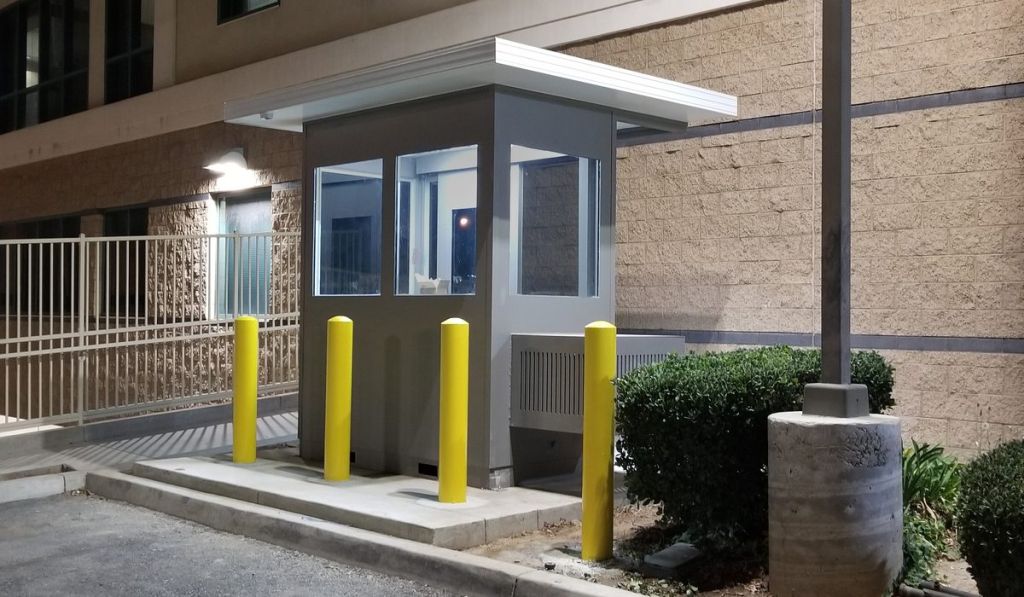
Ballistic buildings are part of our in-plant and industrial modular buildings range. Level-by-level detail is in our ballistic ratings guide; standard booths are on guard booths.
Ballistic building types
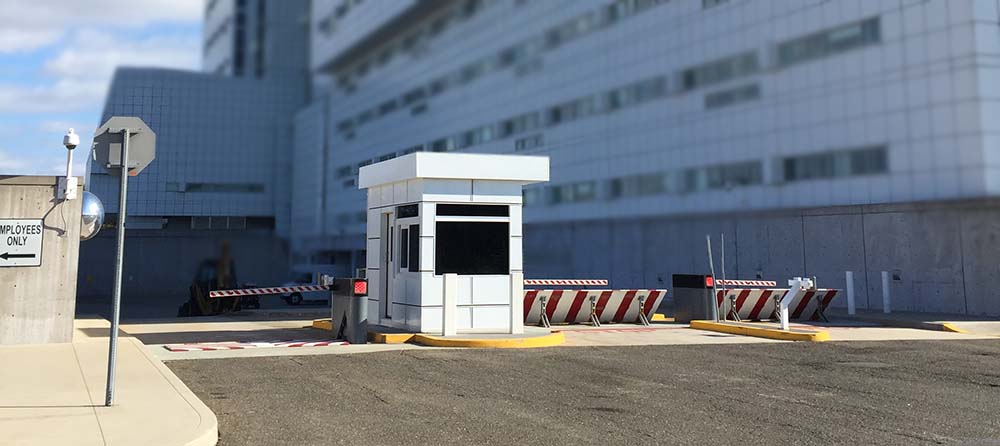 Ballistic guard boothsBooths at entrances and vehicle gates with rated walls, glass, transaction windows and doors.
 Gate houses and checkpointsLarger buildings at controlled entrances, with room for several officers and equipment.
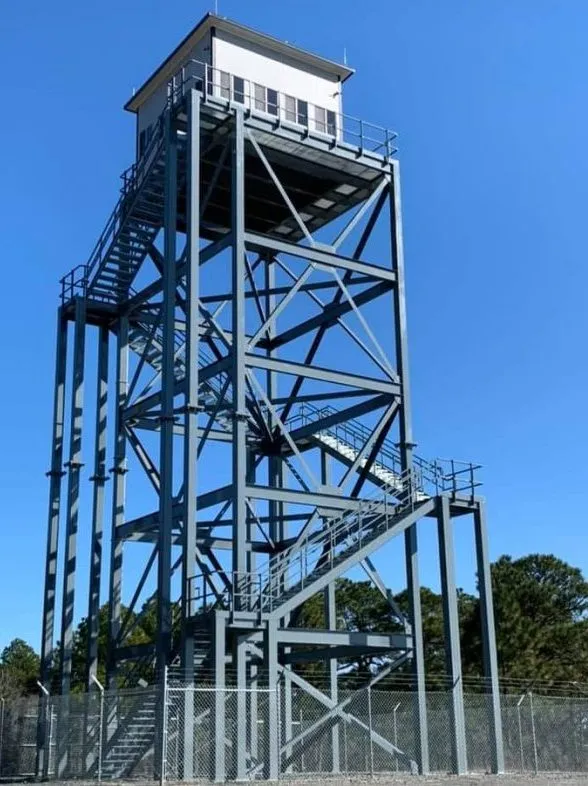
 Elevated ballistic enclosuresRated cabs on steel towers or platforms for perimeter and range observation.
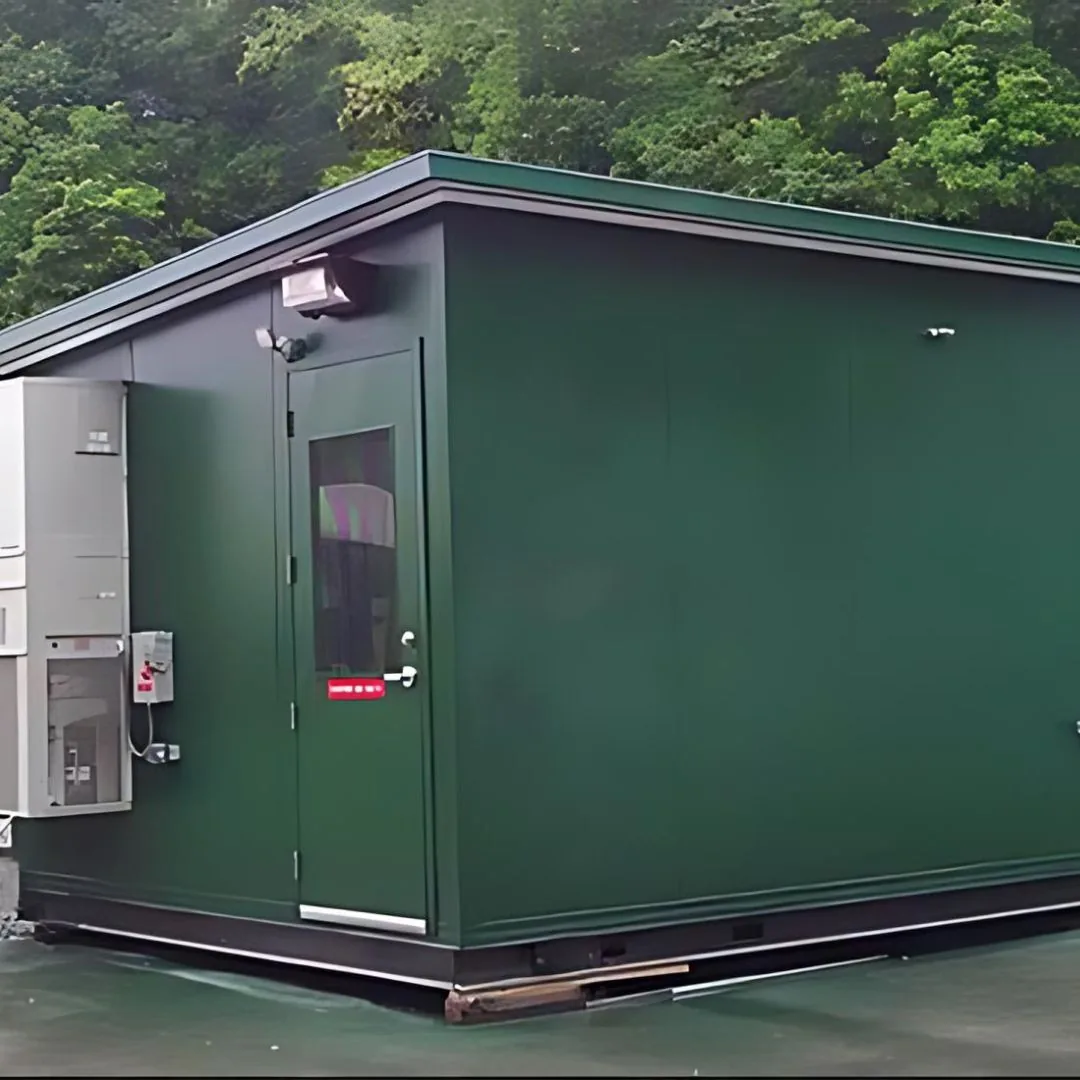 Ballistic equipment enclosuresRated enclosures that protect critical equipment from damage or attack.
 Security buildingsFreestanding security buildings with architectural cladding and rated components.
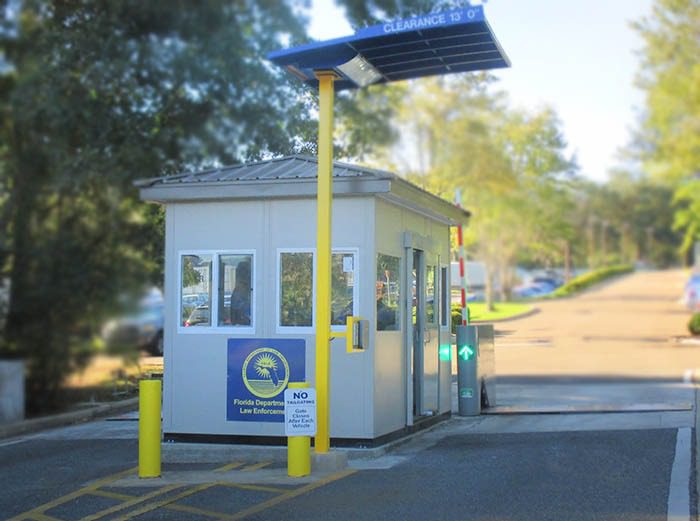 Transaction and cashier boothsBooths where staff handle cash or credentials, with rated glass and deal trays.
Elevated and tower ballistic enclosures
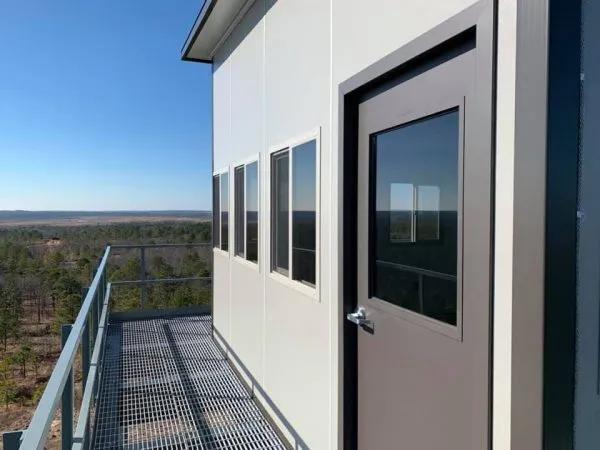
Perimeter security, correctional yards and training ranges often need protection and height at the same time. An elevated ballistic enclosure is a rated modular cab on a steel tower or platform, with rated glass on the sides that face the threat, a rated door to the landing and a rated floor where the threat can come from below.
The tower structure is engineered for the heavier cab, wind and seismic loads at the site. Mobile and relocatable options exist for temporary posts. See guard towers and observation towers for heights and access.
| Planning item | What to decide |
|---|---|
| Protection level | From your threat assessment, applied to walls, glass, door, roof and floor |
| Height and sightlines | What must be seen and from how far away |
| Cab size | Number of officers, consoles and equipment |
| Access | Stair or ladder, landing size, rated door |
| Structure | Tower designed for the cab weight and site loads; foundation from soil data |
| Relocation | Permanent, bolt-together or mobile |
Tower height, stairs and landings
Height is set by what the officer must see: a fence line, a yard, a range or a road. Taller towers carry switchback stairs with intermediate landings and guardrail on every run, and the cab landing needs room to open a rated door outward without stepping back toward the stair.
A tower elevated ballistic rated enclosure is heavier than a standard cab, so the tower, the anchor bolts and the footing are designed together from the cab weight, wind exposure and soil data at your site.
Mobile and elevated mobile ballistic rated enclosures

Temporary posts, construction phases, events and changing perimeters call for protection that can move. Ballistic booths can be built on a road trailer, on a skid with forklift pockets, or with roof lifting lugs so a crane can pick them up and set them on a new pad.
An elevated mobile ballistic rated enclosure adds height to that idea: a rated cab raised on a relocatable tower or a trailer-integrated frame. Whether a mobile elevated layout works depends on the protection level, the cab size and the height you need, so send those three items first.
| Mobility option | How it moves | What to plan |
|---|---|---|
| Trailer-mounted booth | Towed to the post and leveled | Tow vehicle, leveling and stabilizers, shore power or a generator, steps |
| Skid with forklift pockets | Lifted by forklift and trucked | Forklift capacity for the rated weight, a level pad, anchoring at each site |
| Crane lugs on the roof | Picked by crane, set on a pad or tower | Crane access, rigging, utility disconnect and reconnect points |
| Relocatable elevated cab | Cab and tower sections moved separately | Tower re-erection, anchorage and footing design at the new site |
Non-rated trailer booths for lease roads and temporary gates are on our mobile guard booths page.
Choosing a protection level
UL 752 levels are defined by the weapon and ammunition tested and the number of shots. In general terms:
For the exact weapons, rounds and shot counts at each level, see the ballistic ratings guide. Forced-entry resistance is a separate requirement and can be added for high-security sites.
Ballistic standards compared: UL 752, NIJ, forced entry and blast
Specifications often mix several standards. Each one measures something different, so a booth that meets one is not automatically rated for another.
| Standard | What it measures | How it is expressed | Where you see it |
|---|---|---|---|
| UL 752 | Resistance of bullet-resisting equipment (armor, glazing, doors) to specific firearms | Levels 1 to 10 plus shotgun ratings; recent revisions add handgun (UL-HG) and rifle (UL-RF) designations | Most U.S. booth, building and glazing specifications |
| NIJ 0108.01 | Ballistic-resistant protective materials | Levels I to IV; Level III is 7.62mm rifle, Level IV is .30-06 armor-piercing | Some government and law enforcement projects |
| ASTM F3038 and SD-STD-01.01 | Forced-entry resistance against a team using hand tools | Minutes of delay before an opening is made (for example 5, 15 or 60 minutes) | Embassies and high-security federal sites |
| Blast design loads | Response to an explosion | Design pressure and impulse from a blast analysis; DoD sites follow UFC 4-010-01 | Military entry control points and process plants |
| ASTM F2656 | Vehicle barriers stopping a test vehicle | Crash rating of the barrier, not the building | Bollards and barriers in front of gates |
Where specs list a standard you do not see here, send it with your request. The level-by-level threat table is in our UL 752 ballistic ratings guide.
Blast vs. ballistic: what blast ballistic enclosures require
- Different threat, different engineering. Ballistic armor stops bullets at a point. Blast loads push on the whole building at once, so the frame, connections, doors, glazing and anchorage must all be designed for the pressure.
- Blast ratings come from an analysis, not a label. Your security engineer or the facility’s blast study sets the design loads. Military blast resistant buildings follow the criteria in the project’s antiterrorism requirements.
- We do not call anything blast proof. Send the stated loads and we will tell you whether our manufacturer partner can engineer a design to meet them, with documentation.
- Process plants are their own case. Occupied buildings near refinery or chemical process units are sited under facility siting studies. See modular oilfield and energy buildings and prefabricated control buildings.
How ballistic buildings are built
Rated walls use armor materials such as steel plate or ballistic fiberglass inside the panel, between interior and exterior finishes. Rated glass is laminated glass-clad polycarbonate or similar, thicker at higher levels. Doors have armored leaves and frames, and transaction windows and deal trays are rated too.
Joints, corners and penetrations are lapped or backed so there is no gap in protection. Ballistic components are heavier, so structure, hinges, anchorage and the foundation are designed for the weight.

| Component | What to confirm |
|---|---|
| Walls | Rated material and level; how joints and corners are covered |
| Glass | Rated level, size and visibility; spall protection on the protected side |
| Doors and frames | Rated leaf, frame and hardware |
| Transaction windows and trays | Rated to the same level as the walls |
| Roof and floor | Rated where the threat can come from above or below |
| HVAC and penetrations | Baffled or protected openings |
Inside a ballistic booth: ports, counters and ballistic millwork
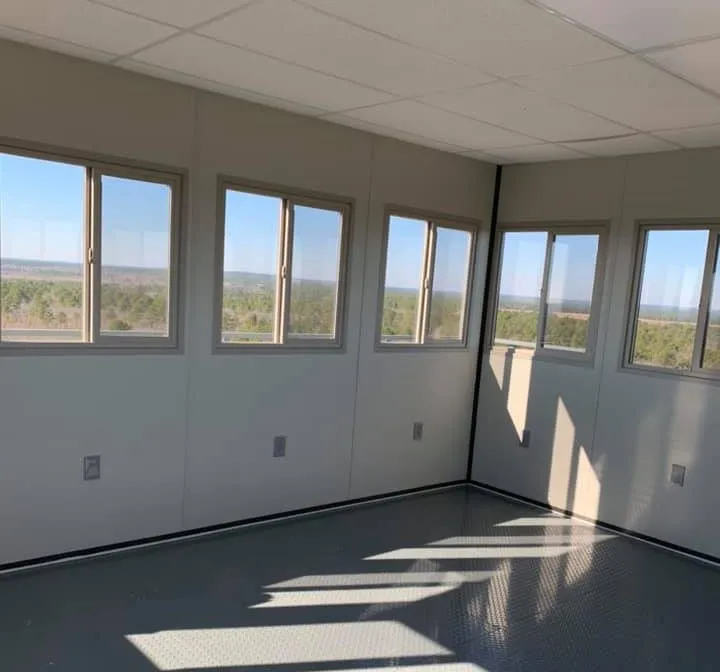
The interior is where protection meets daily work. Officers sit and stand at counters below rated glass, pass documents through deal trays and talk through speak-through ports, so each of those points is rated to the same level as the walls.
Rated counter fronts and the wall area below transaction windows, often called ballistic millwork, protect a seated officer. Military and corrections posts may add rated firing ports. HVAC units mount through the wall behind ballistic shrouds or baffles.
Who uses ballistic buildings
- Government and military: entry control points, gate houses and inspection booths. See government and military modular buildings.
- Land ports and vehicle inspection: booths at inspection lanes.
- Utilities and energy: gate booths and equipment enclosures at critical infrastructure.
- Corrections: elevated observation cabs and sally port booths.
- Corporate and data center campuses: entrance booths and visitor screening. See data center modular buildings.
- Cash handling: parking, toll and cashier booths.
Ballistic protection for control buildings and existing booths
Operators in control rooms at utilities, water plants and other critical infrastructure can be protected without turning the whole building into a vault. A common approach is rated walls and glazing on the sides that face a road, fence line or public area, and standard construction elsewhere, set by the threat assessment. Control building ballistic protection is coordinated with the room’s consoles, windows and HVAC so nothing breaks the rated envelope; see prefabricated control buildings for layout and siting.
Existing booths are harder. Adding armor means replacing panels, glass, doors and frames, and the joints between new and old parts are difficult to make reliable, so a purpose-built booth is often the cleaner answer. See a ballistic-rated guard shack example and standard options on our guard booths hub.
Planning the site: approach, barriers and sightlines

Bullet resistant buildings work best as part of a layered site. Decide how vehicles approach, where they stop, and what stands between the lane and the booth wall. Steel bollards protect against everyday vehicle strikes; crash-rated barriers tested to ASTM F2656 are a separate, engineered product for sites that must stop a deliberate attack.
Place the booth so officers can see the approach, the barrier arm and the vehicle cab, with glass oriented to the lanes and away from low sun where possible.
- Vehicle path: lane widths, turning radius for trucks, and where a vehicle stops for inspection.
- Standoff: distance from the lane to the booth wall, and bollards or curbs in between.
- Sightlines: what the officer must see from a seated and a standing position.
- Utilities: power, data and conduit routes into the rated envelope.
- Foundation: pad or footing sized for the rated building’s weight and anchorage.
How a ballistic building project runs
Tell us the use
What happens inside the ballistic building, how many people or what equipment, where it sits and when you need it.
Layout and drawings
We return a layout and drawings with doors, windows, HVAC and electrical shown, plus a quote with exclusions listed.
Fabrication
After drawing approval, lead times are typically 4 to 8 weeks, subject to confirmation, for fabrication and freight.
Delivery and install
Panels or finished units arrive by truck and are assembled or set in place, then your trades make the final connections.
What to send us for a quote
- Protection level from your threat assessment, and any forced-entry requirement.
- Building type: booth, gate house, enclosure or elevated cab, with size and headcount.
- Glass layout and transaction windows.
- Site: pad or tower, wind and seismic location, utilities.
- Timeline and purchasing method.
Specifying a booth or building for a plant or industrial gate? Compare prefab guard booths for plants and industrial sites and the government and military modular buildings page, and use the modular building buyer’s guide to organize the request.
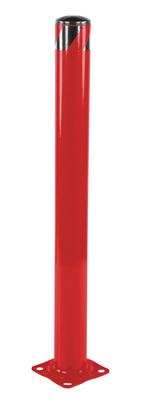
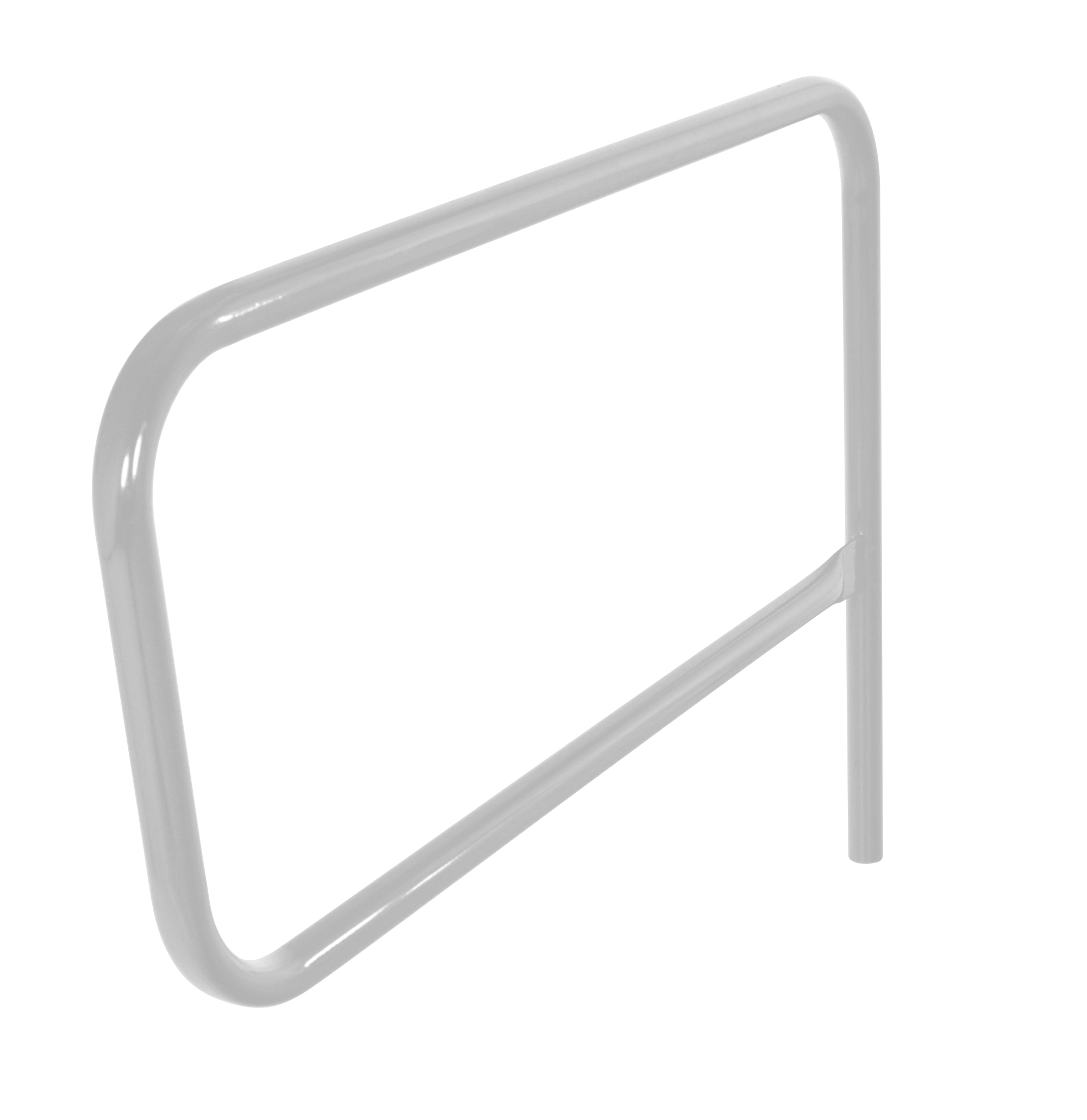
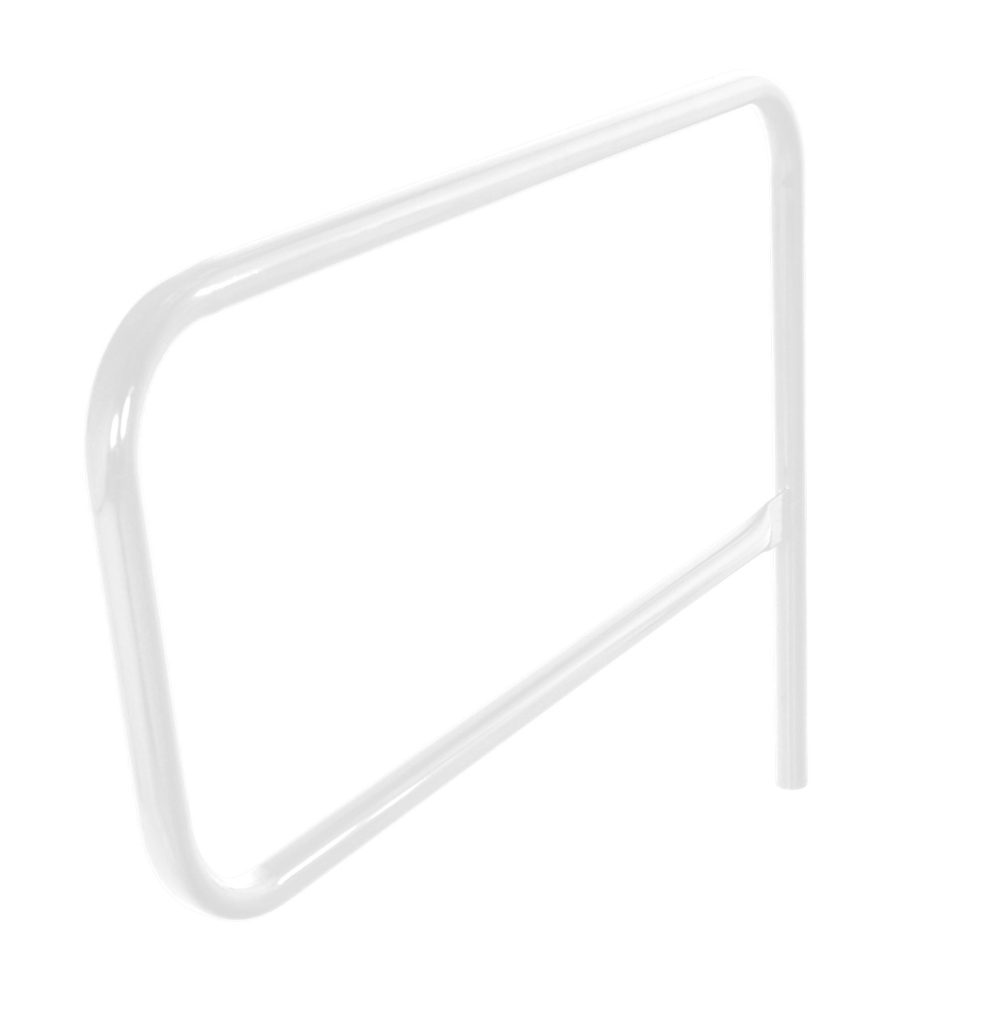
Add Vehicle Protection: Bollards and Railing
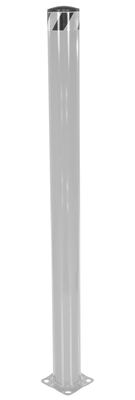
Ballistic buildings are quoted per project. Steel bollards and pipe safety railing that keep vehicles away from booths and enclosures can be ordered online.
Frequently asked questions
What is a ballistic-rated enclosure?
Can a ballistic enclosure be elevated on a tower?
Which UL 752 level do I need?
Are the windows and doors rated too?
Can you add forced-entry resistance?
How long does a ballistic building take?
What is a tower elevated ballistic rated enclosure?
What is an elevated mobile ballistic rated enclosure?
Are ballistic buildings blast resistant?
What is the difference between UL 752 and NIJ ratings?
What is ballistic millwork?
Can a control building get ballistic protection?
Plan a ballistic-rated building
Send the protection level, building type and site. We will return drawings and a quote with every component rated.