
Modular Equipment Enclosures and Machine Rooms
Panel-built enclosures that house machines, controls and test equipment, indoors or out, with doors, ventilation and power laid out around the equipment.
Call (800) 326-4403 or email Sales@MH-USA.com

Any Site
Indoor or Outdoor Enclosures
Wide Doors
Roll-Up & Double Door Service Access
4 to 8 Weeks
Typical Lead Time, Subject to Confirmation
Relocatable
Panel or Skid Construction
What is a modular equipment enclosure?
A modular equipment enclosure is a panel-built room or building that houses machinery, controls, test equipment or stored materials. It protects equipment from dust, heat, weather and damage, protects people from moving parts and noise, and gives technicians a lit, conditioned space for service.
Enclosures can stand inside a plant around a machine or process, or outside on a pad or skid as a small building. Doors, windows, ventilation and power are laid out around the equipment. For ovens, furnaces and other hot processes, see our heat-resistant equipment enclosures.
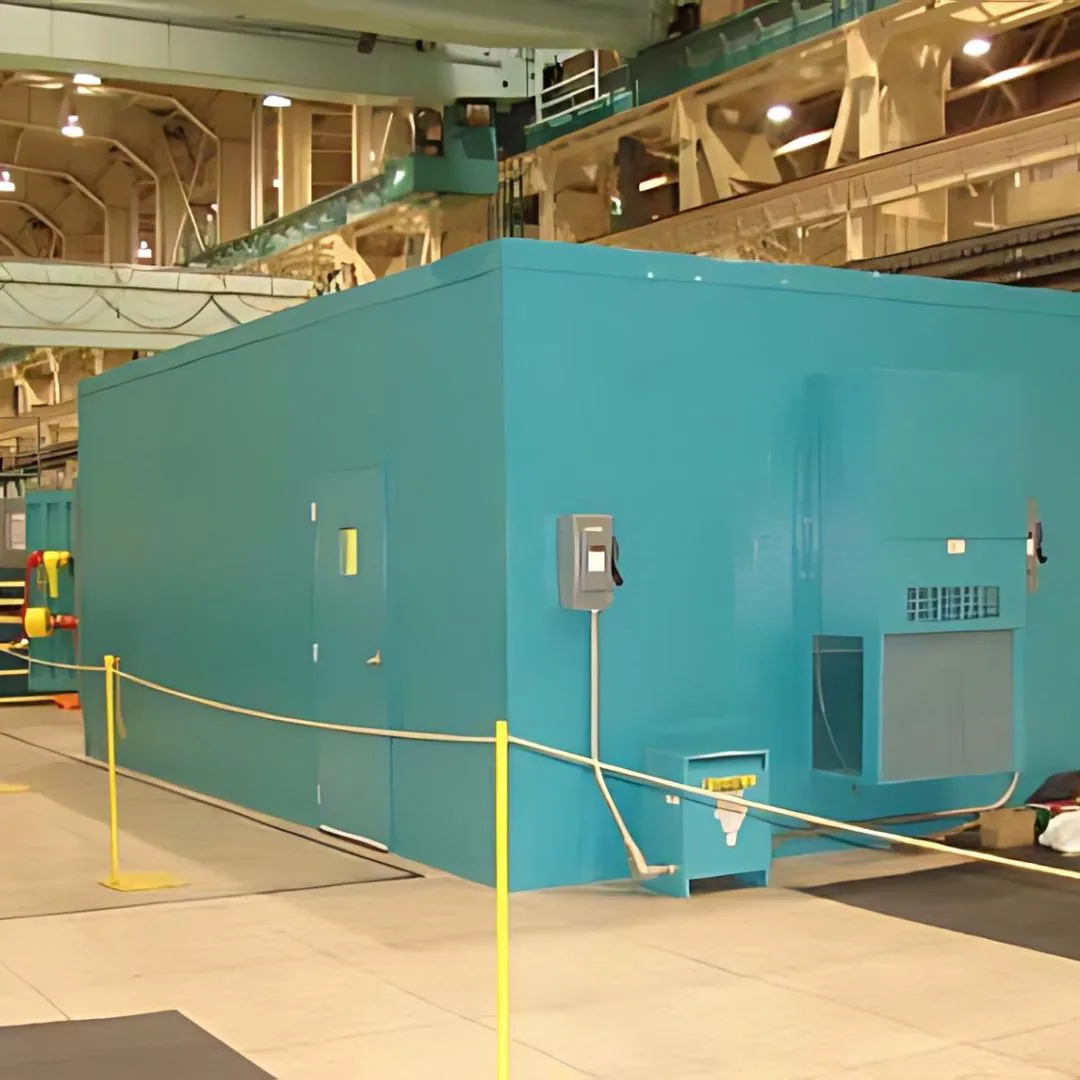
Equipment enclosures are part of our in-plant and industrial modular buildings range. When noise is the main problem, see modular sound enclosures; for electrical gear, modular electrical houses; for people, modular in-plant offices.
Enclosure types
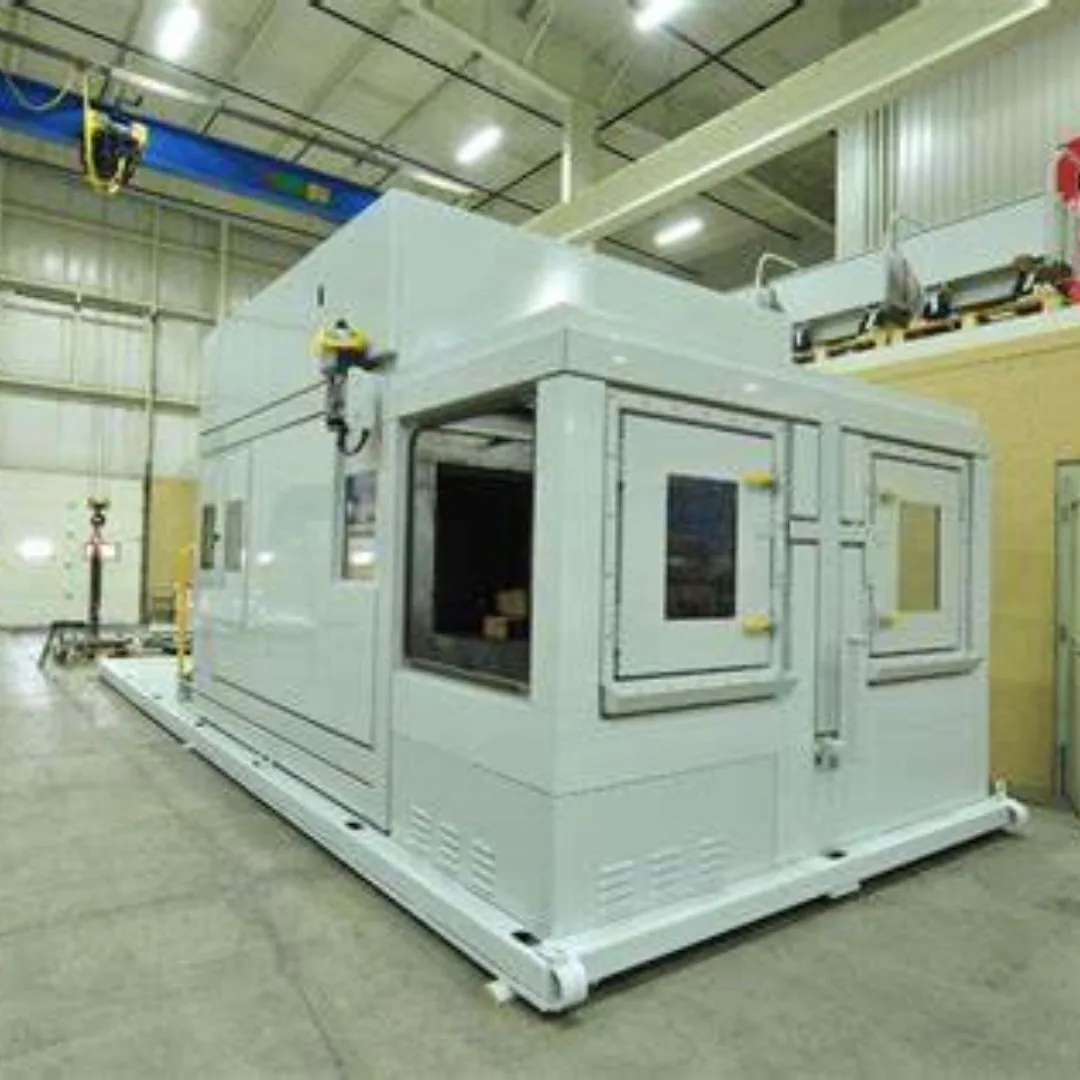 Machine enclosuresEnclosures around machines and cells, with windows to watch the process and doors for access.
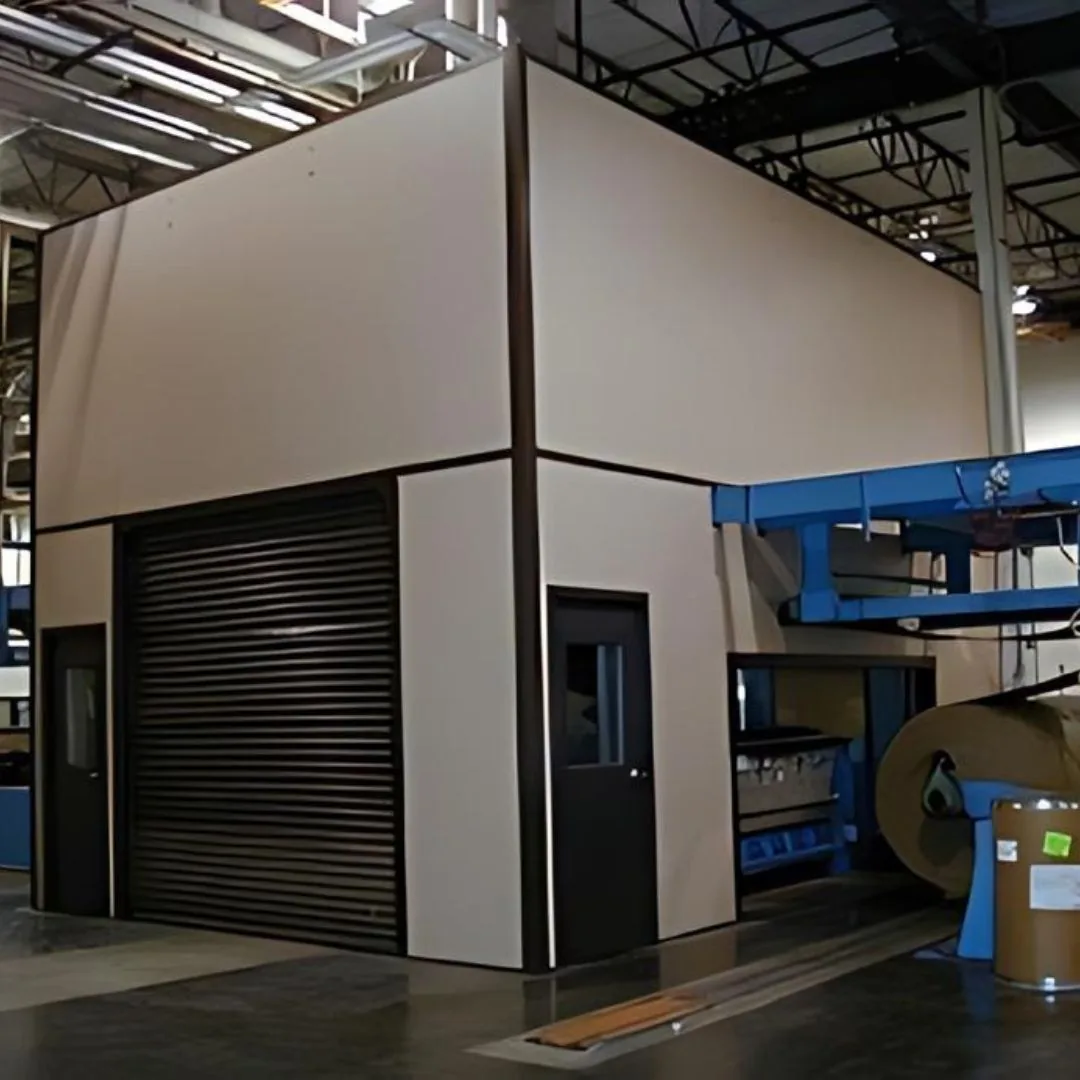
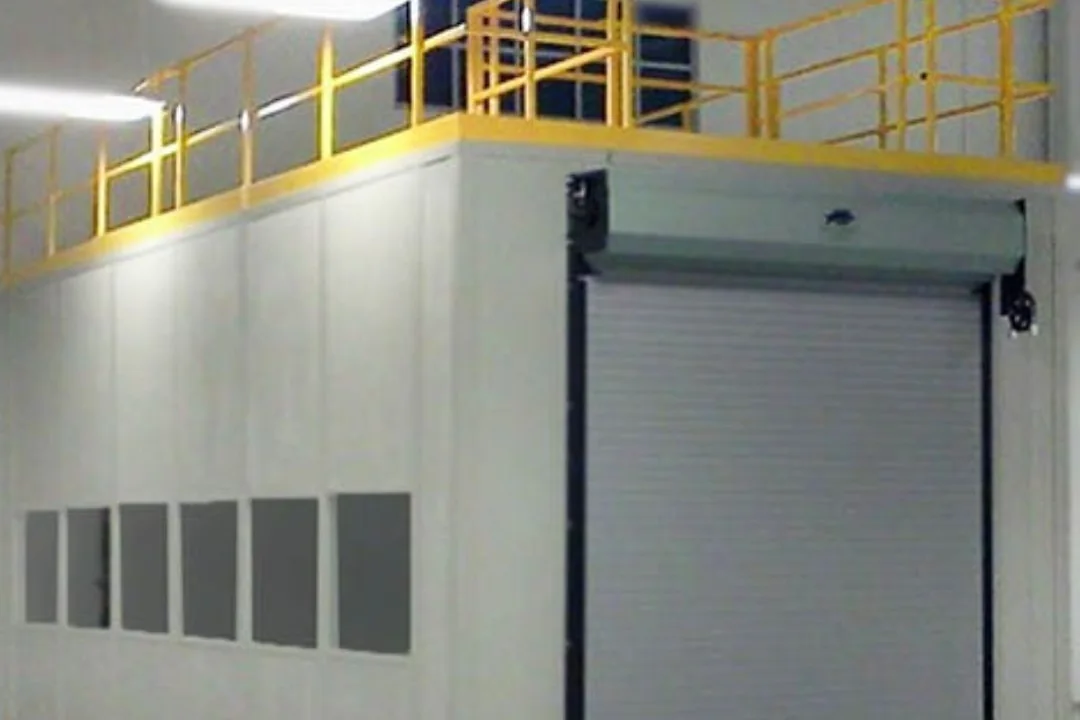
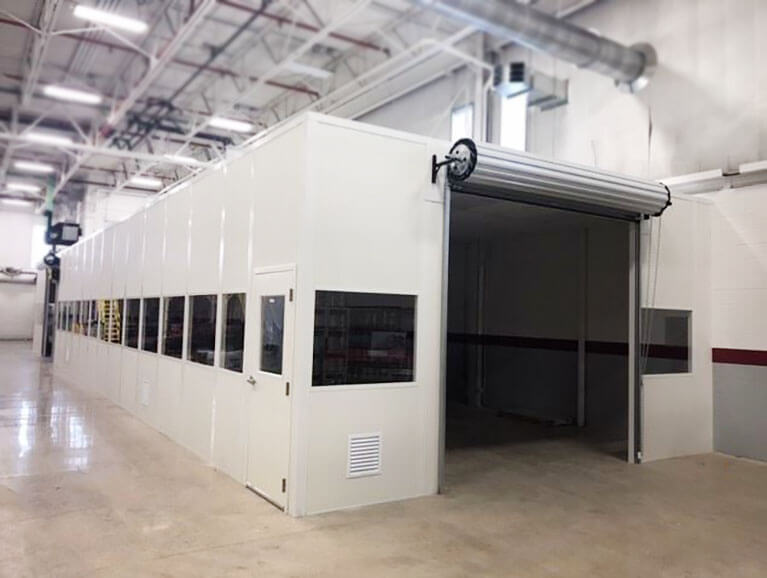 Large process enclosuresLong enclosures with roll-up doors around lines, ovens or test areas.
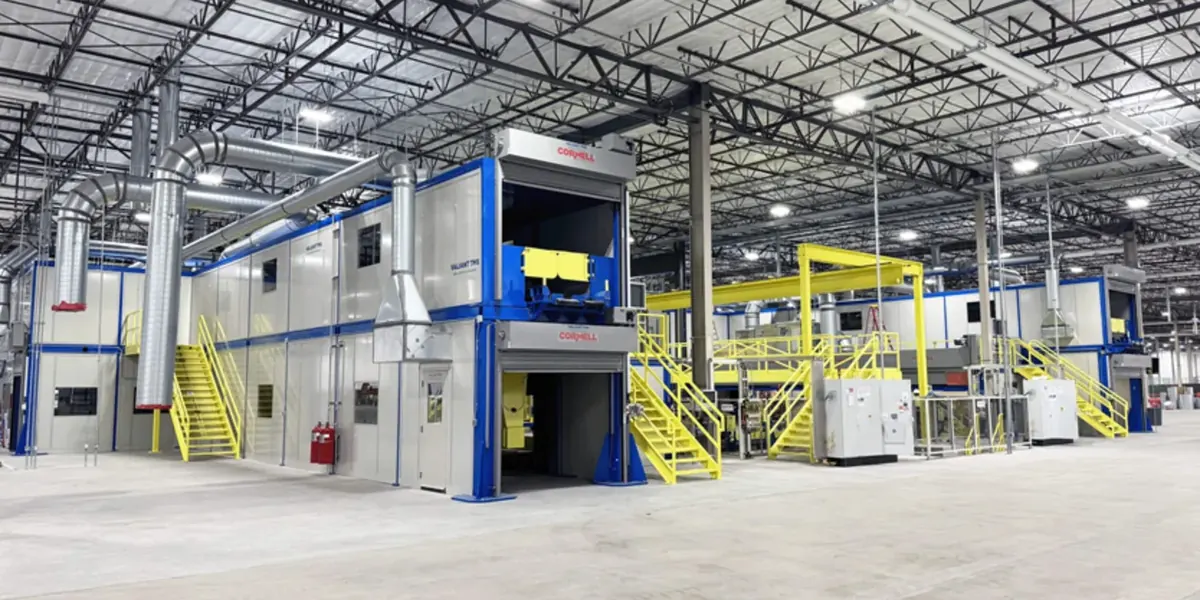 Heat-producing equipmentEnclosures with platforms and ventilation for hot processes inside large plants.
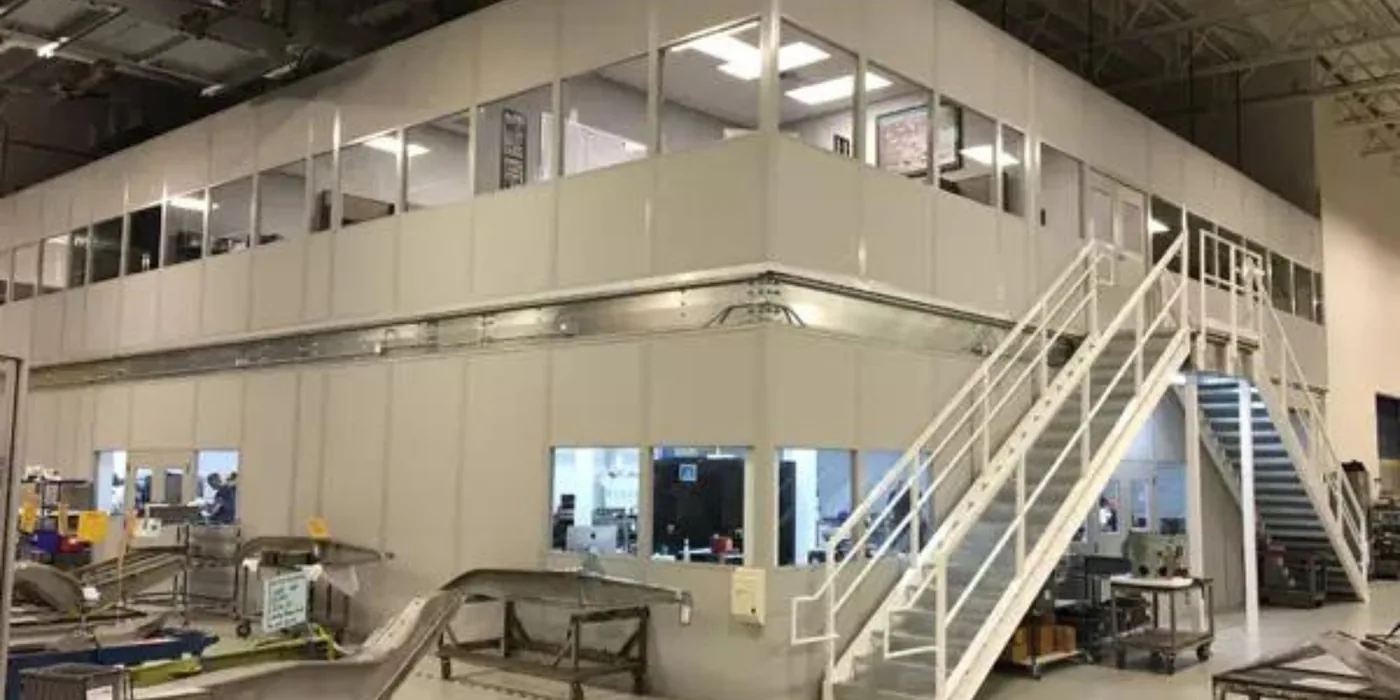 Two-level enclosuresStacked enclosures with stairs when the process or controls need two levels.
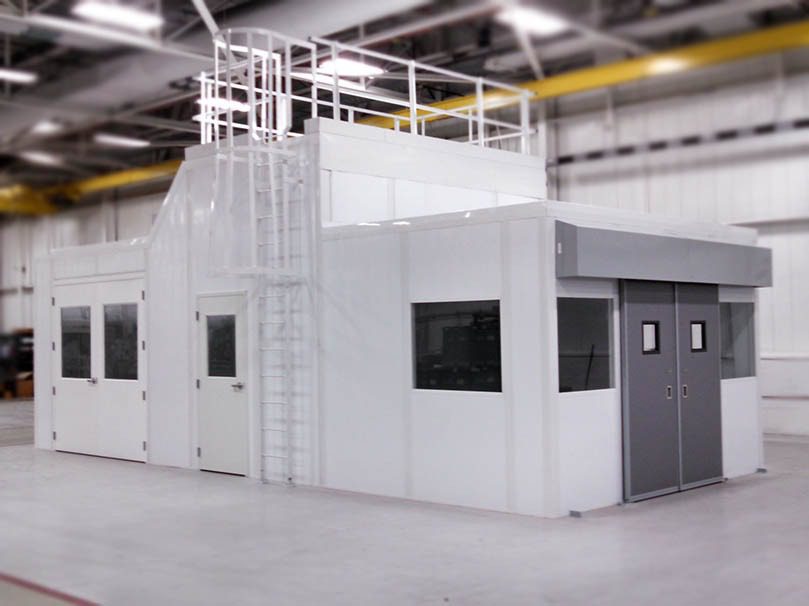 Equipment buildings with roof accessEnclosures with a ladder and roof deck for service or storage above.
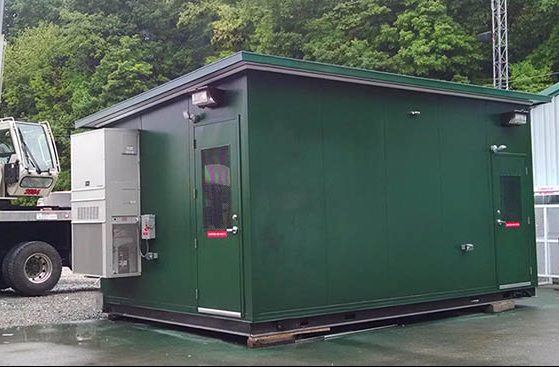 Outdoor and skid-mounted enclosuresWeather-tight enclosures delivered complete and set by crane.
Designing around the equipment
Start with the equipment: its dimensions, service clearances, heat output, utilities and how material moves in and out. The enclosure is sized around that, with doors big enough to remove the largest component.
Then decide what the enclosure has to keep in or out: heat, noise, dust, moisture, people. Each one changes the panels, doors, ventilation and seals.
| Design question | What it changes |
|---|---|
| Equipment size and service clearance | Enclosure footprint and height |
| Largest component to remove | Door type and size: double doors, roll-up doors, removable panels |
| Heat output | Ventilation or HVAC capacity |
| Noise level | Panel assembly, door seals, silenced ventilation |
| Dust, washdown or corrosion | Finishes, seals and filtration |
| Material flow | Conveyor openings, tunnels or doors |
| Indoor or outdoor | Roof, skins, anchorage and weather protection |
Ventilation, heat and access
Roof decks and storage above
A load-bearing roof with guardrail and a ladder or stair turns the top of an enclosure into storage or a service platform. Loads are set on the drawings. See roofing options.
Outdoor equipment enclosures
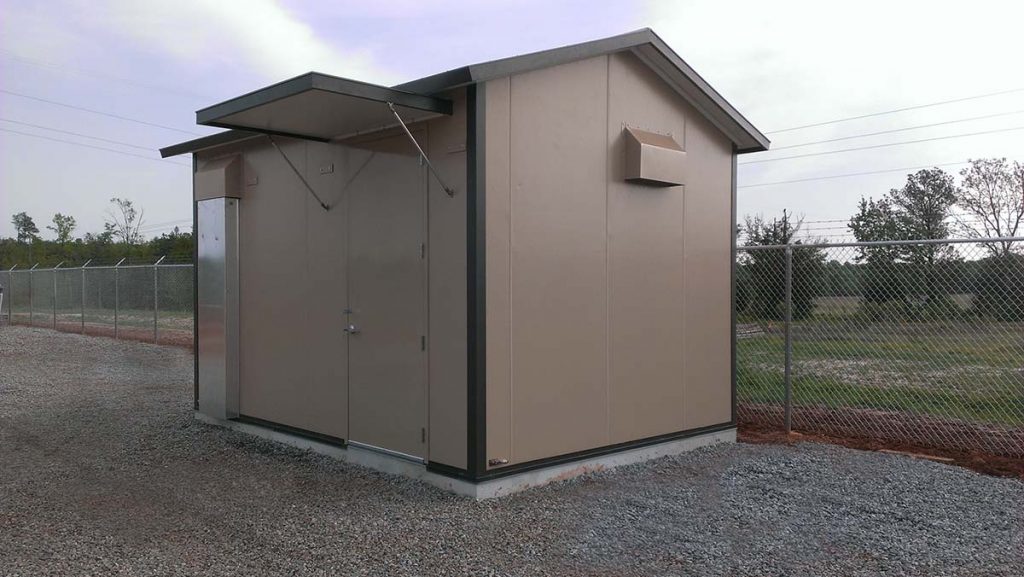
Outdoor enclosures protect pumps, compressors, generators, controls and stored materials from weather. They add a weather roof, exterior skins, louvers with weather hoods and anchorage designed for local wind, snow and seismic loads.
Small enclosures ship complete and are set by crane on a pad or skid. See prefabricated exterior buildings and foundation options. Enclosures protecting critical equipment can also be built with rated walls and doors; see ballistic-rated buildings and enclosures.
Modular enclosure vs. a site-built room
| Question | Modular enclosure | Site-built room |
|---|---|---|
| On-site work | Assembly from finished panels | Framing, drywall, finishing |
| Dust and disruption | Small work zone | Longer construction near equipment |
| Changes | Panels can be removed for equipment swaps or moves | Demolition |
| Best fit | Equipment that may change or move | Permanent rooms in new construction |
See also modular building cost guide and lead times.
How an enclosure project runs
Tell us the use
What happens inside the enclosure, how many people or what equipment, where it sits and when you need it.
Layout and drawings
We return a layout and drawings with doors, windows, HVAC and electrical shown, plus a quote with exclusions listed.
Fabrication
After drawing approval, lead times are typically 4 to 8 weeks, subject to confirmation, for fabrication and freight.
Delivery and install
Panels or finished units arrive by truck and are assembled or set in place, then your trades make the final connections.
What to send us for a quote
- Equipment dimensions, service clearances and heat output.
- Problem to solve: heat, noise, dust, weather, security or separation.
- Access: doors, material flow and forklift routes.
- Location: indoors or outdoors, with photos.
- Timeline and any shutdown window.
Related projects
In-plant buildings and test areas in power equipment, metal and packaging plants.
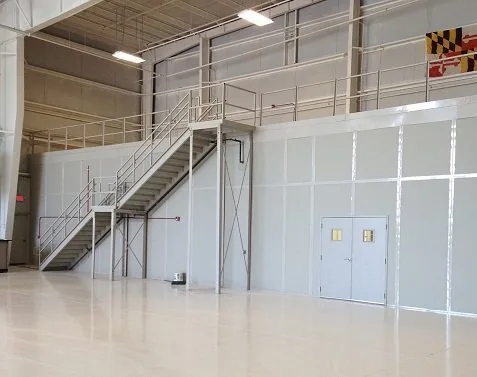 Trystar: power equipment plantIn-plant offices and test-area buildings for an electrical power equipment manufacturer.
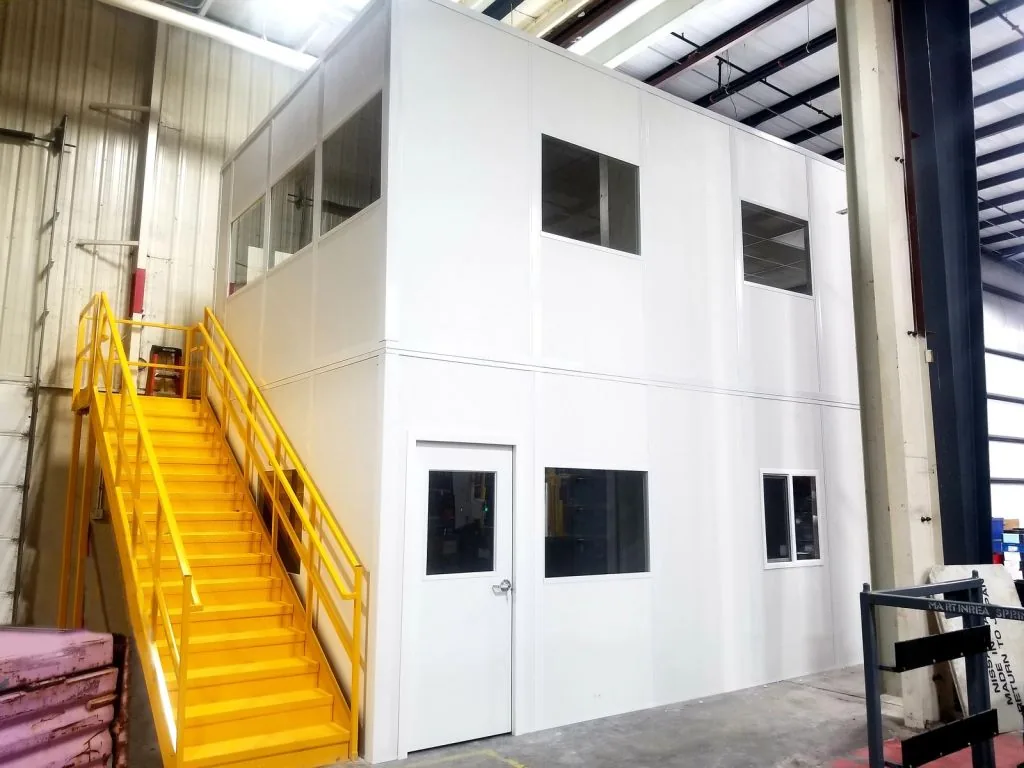 Hydro Extrusions: high-heat metal plantIn-plant offices in a high-heat aluminum extrusion plant: heat load, HVAC and protection.
 Packsize: offices in a packaging plantIn-plant offices in a corrugated packaging plant: acoustics, paper dust and material flow.
Protect the Enclosure: Bollards and Railing
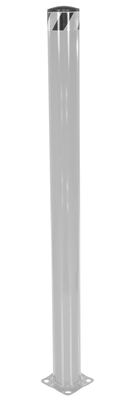
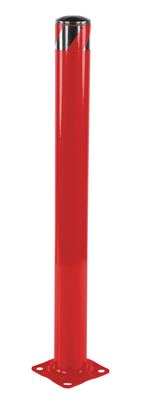
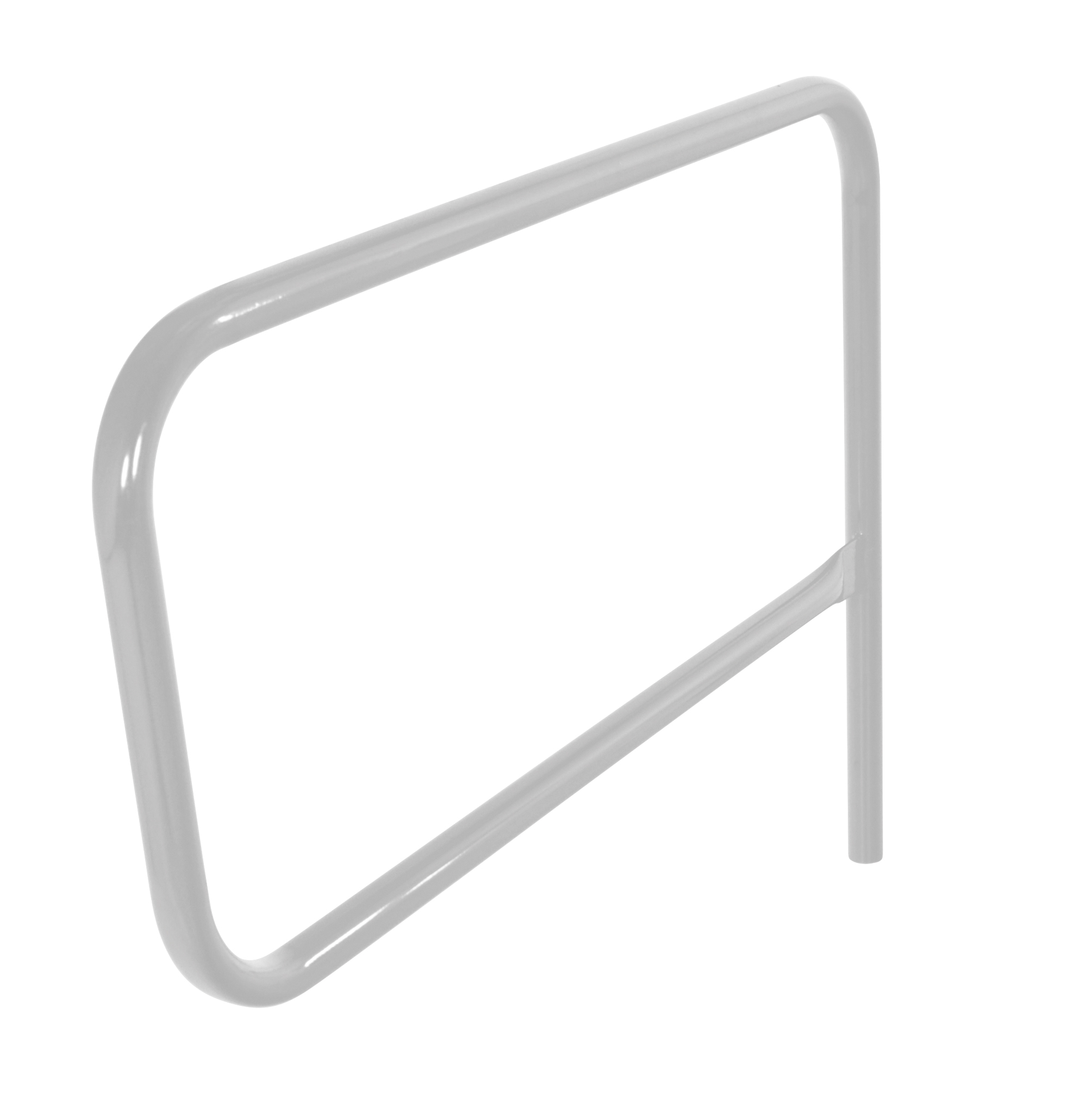
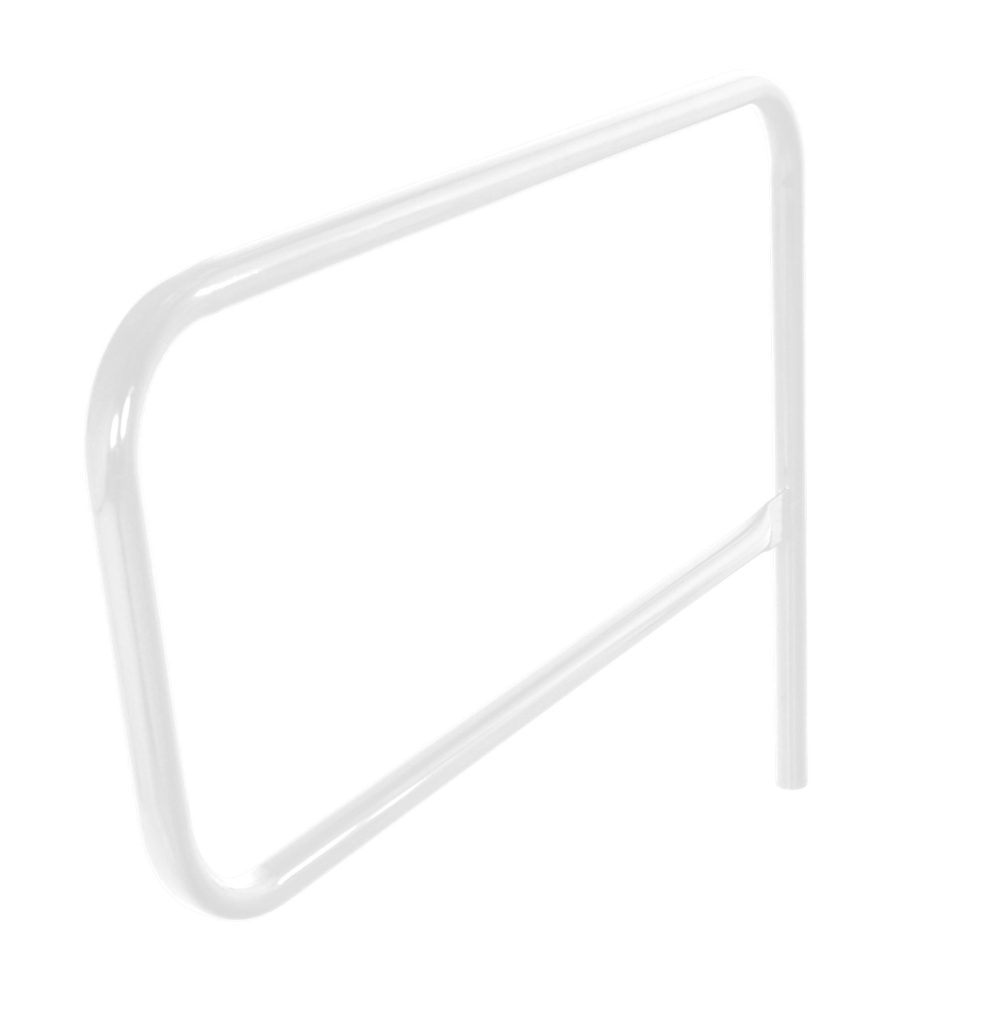
Enclosures are quoted per project. Steel bollards and pipe safety railing that protect enclosure walls, doors and equipment from forklifts can be ordered online.
Frequently asked questions
What can a modular equipment enclosure house?
How do you keep an enclosure from overheating?
Can a forklift drive into the enclosure?
Can an enclosure also reduce noise?
Can enclosures go outside?
How long does an equipment enclosure take?
Plan an equipment enclosure
Send the equipment details, the problem to solve and the location. We will return a layout, drawings and a quote.