
Modular Sound Enclosures & Acoustic Barriers
Reduce industrial noise levels 25–50 dB with prefabricated sound-attenuating enclosures. Protect employees, meet OSHA exposure limits, and eliminate noise complaints — without shutting down equipment.
Call (800) 326-4403 or Email Sales@MH-USA.com
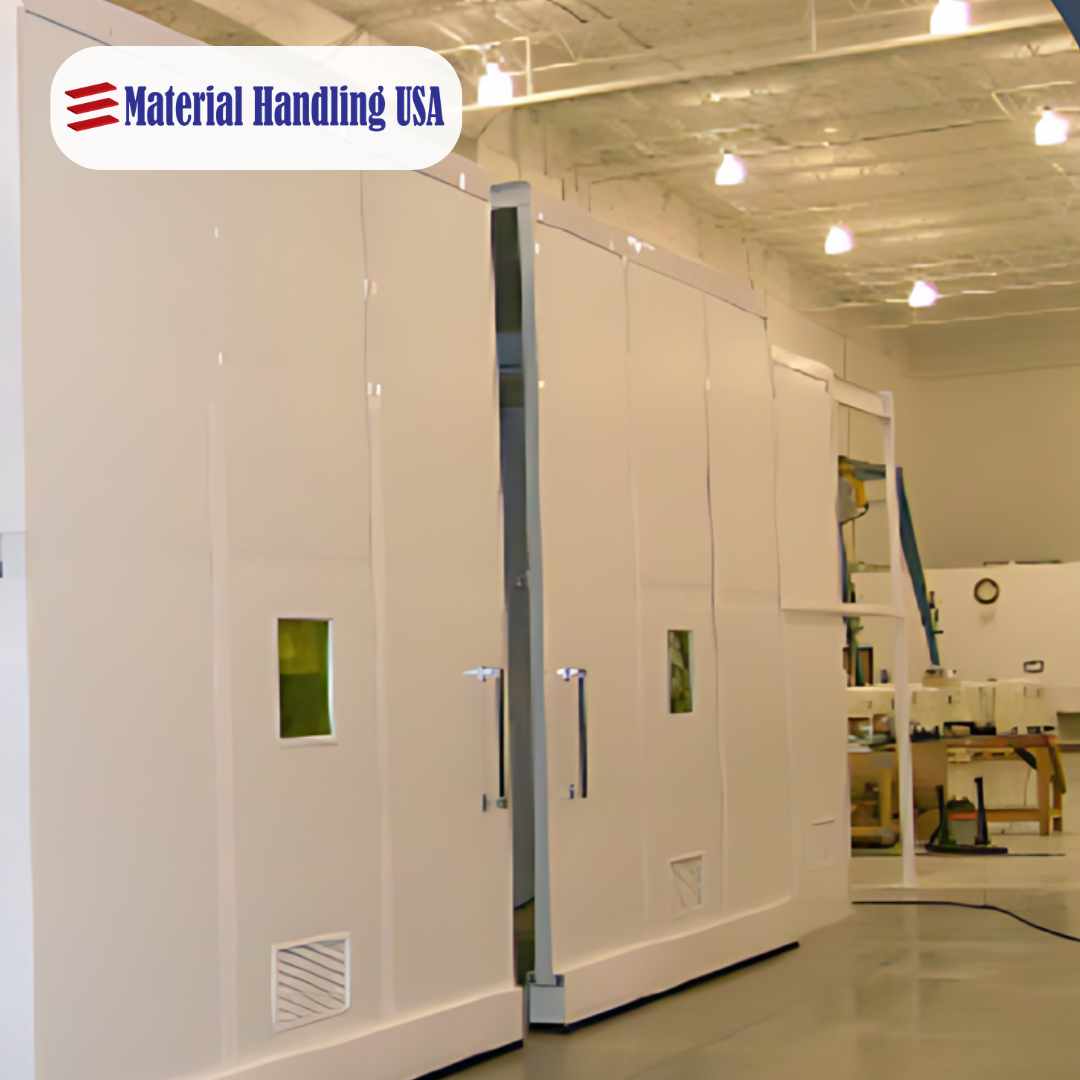
Why Industrial Noise Control Matters
OSHA’s permissible exposure limit (PEL) for occupational noise is 90 dBA over an 8-hour time-weighted average. Above this threshold, employers must implement engineering controls, administrative controls, and hearing conservation programs. At 85 dBA, OSHA requires a hearing conservation program including monitoring, audiometric testing, and hearing protection. The most effective engineering control is enclosing the noise source — which is exactly what modular sound enclosures do.
Where the goal is a quiet place for people rather than containment of a machine, the specification changes. Our case study on in-plant offices in a corrugated packaging plant works through the acoustic assembly as a whole — panel, door, glazing and mechanical unit — alongside combustible paper dust and material flow, behind a Packsize project.
Beyond regulatory compliance, excessive noise reduces worker productivity, increases error rates, interferes with communication, and creates long-term hearing damage liability. Modular sound enclosures address the problem at its source by surrounding noisy equipment with acoustically engineered panels that absorb and block sound transmission — reducing noise levels 25–50 dB at the enclosure boundary.
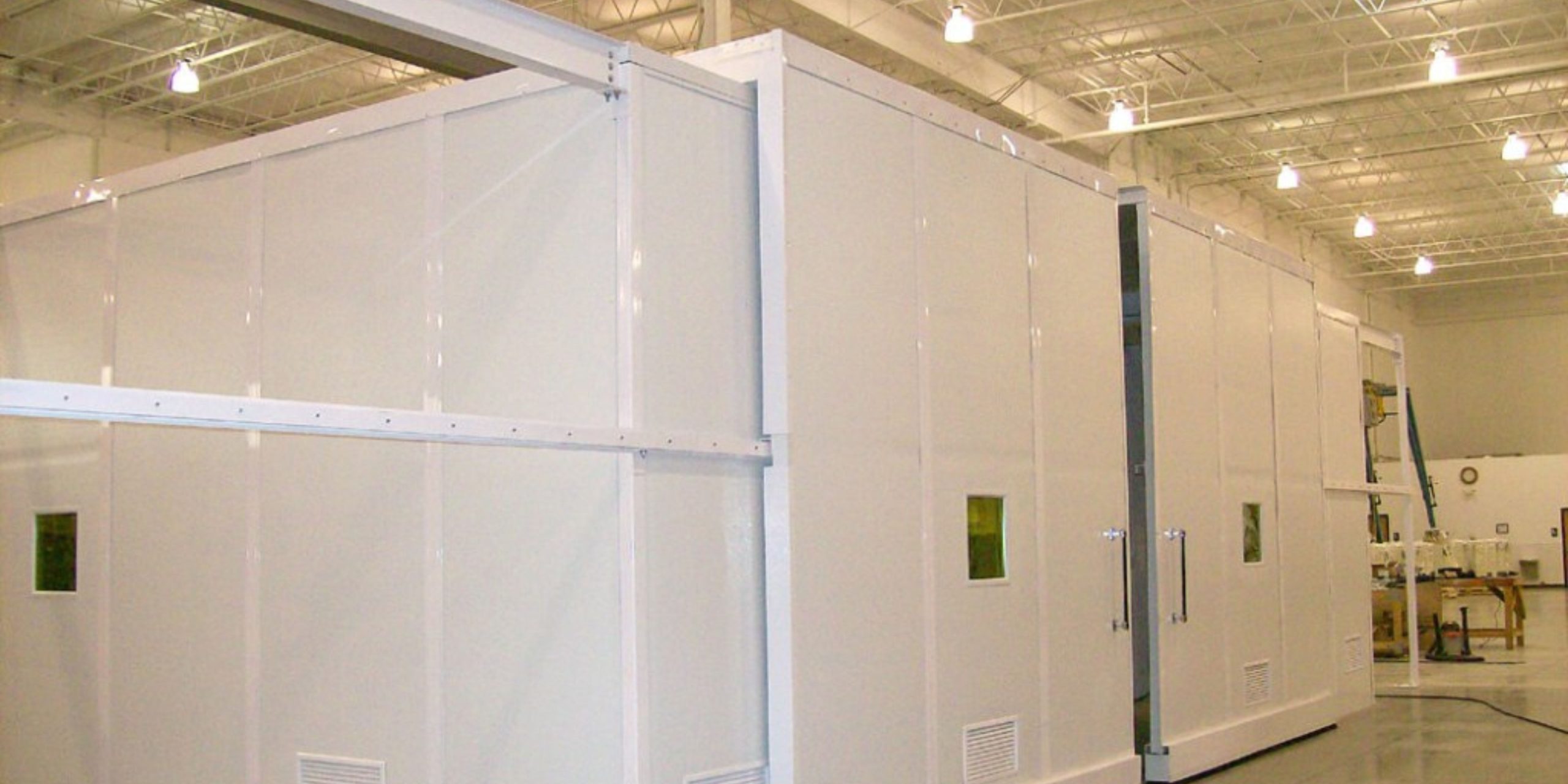
Sound Enclosure Applications
We engineer acoustic enclosures for any equipment or process generating excessive noise in industrial, commercial, or institutional environments.
Compressor & Blower Enclosures
Air compressors, vacuum blowers, and pneumatic systems often generate 95–110 dBA. Our enclosures reduce noise to 65–75 dBA at 3 feet with integrated ventilation and maintenance access panels.
Generator Sound Enclosures
Diesel and natural gas generators produce 85–105 dBA. Sound-attenuating enclosures with exhaust silencers reduce noise to neighborhood-compatible levels — essential for backup power at hospitals, data centers, and urban facilities.
Manufacturing Equipment Enclosures
Stamping presses, grinders, saws, and automated machining centers produce impulse and continuous noise. Custom enclosures reduce exposure at operator stations while maintaining material access and production visibility.
Testing & Quality Control Rooms
Quiet rooms and acoustic test chambers for product testing, audiometric screening, and quality measurements requiring controlled background noise levels. Designed to achieve NC-25 to NC-35 background ratings.
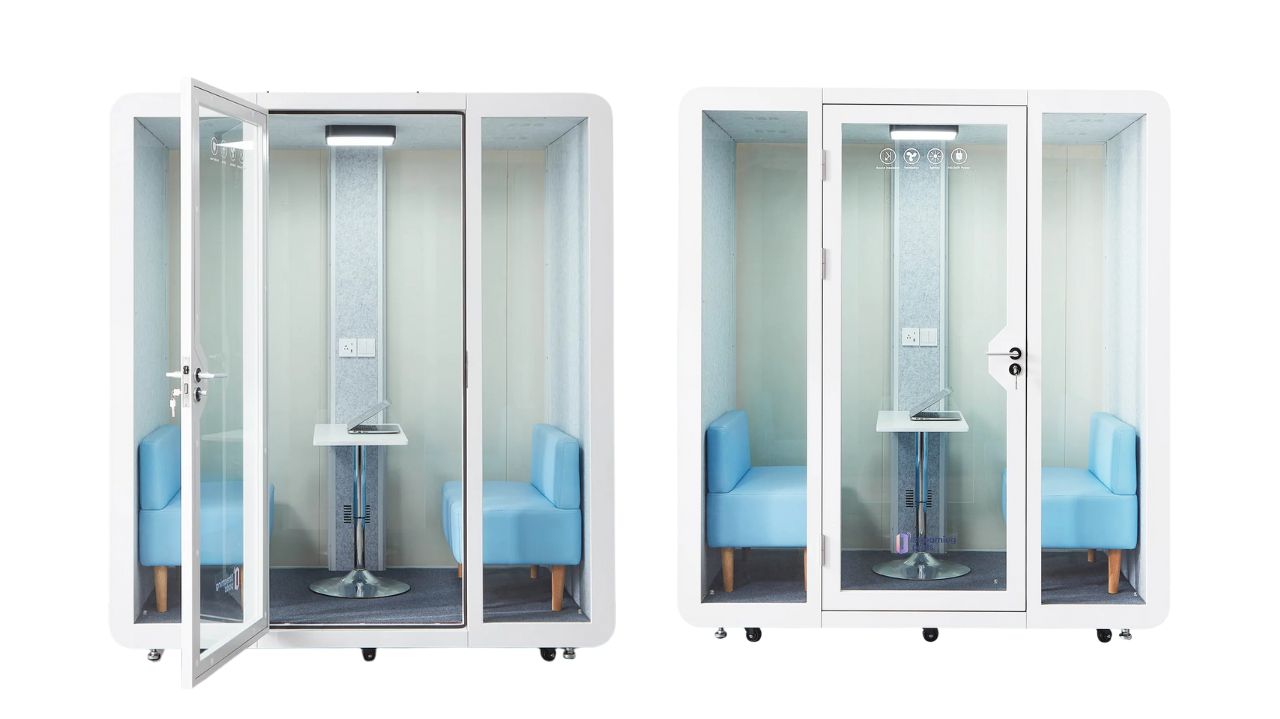
Office & Personnel Sound Barriers
Acoustic barriers between production floors and office spaces, break rooms, or meeting areas. Reduce transmitted noise to comfortable conversation levels (55–65 dBA) without relocating personnel.
Acoustic Panel Technology
Modular sound enclosure panels use a composite construction combining mass, absorption, and decoupling to achieve maximum noise reduction. The outer skin provides mass to block airborne sound transmission. An inner layer of acoustic absorber material (fiberglass, mineral wool, or melamine foam) captures and dissipates sound energy. The facing material protects the absorber from damage and provides a cleanable, durable interior surface.
Standard panels achieve STC (Sound Transmission Class) ratings from 35 to 55, with noise reduction coefficients (NRC) of 0.70–0.95. Panel thickness ranges from 2 inches for moderate noise applications to 6 inches for severe noise environments. Every enclosure design includes acoustic modeling to predict actual noise reduction and verify compliance before manufacturing begins.
Benefits of Modular Sound Enclosures

Frequently Asked Questions
Explore More Modular Building Solutions
Silence the Noise — Protect Your Workers
Get a free acoustic assessment and quote for modular sound enclosures — engineered and installed by Material Handling USA.