
Mobile & Portable Guard Booths › Rent vs. Buy Cost
Guard Shack Rental vs. Buying: Cost Break-Even and Total Cost
Rentals run roughly $200–$500 a month. New booths run roughly $5,500–$30,000. Here is the break-even math, the costs neither price tag includes, and the site conditions that decide which one is actually cheaper.
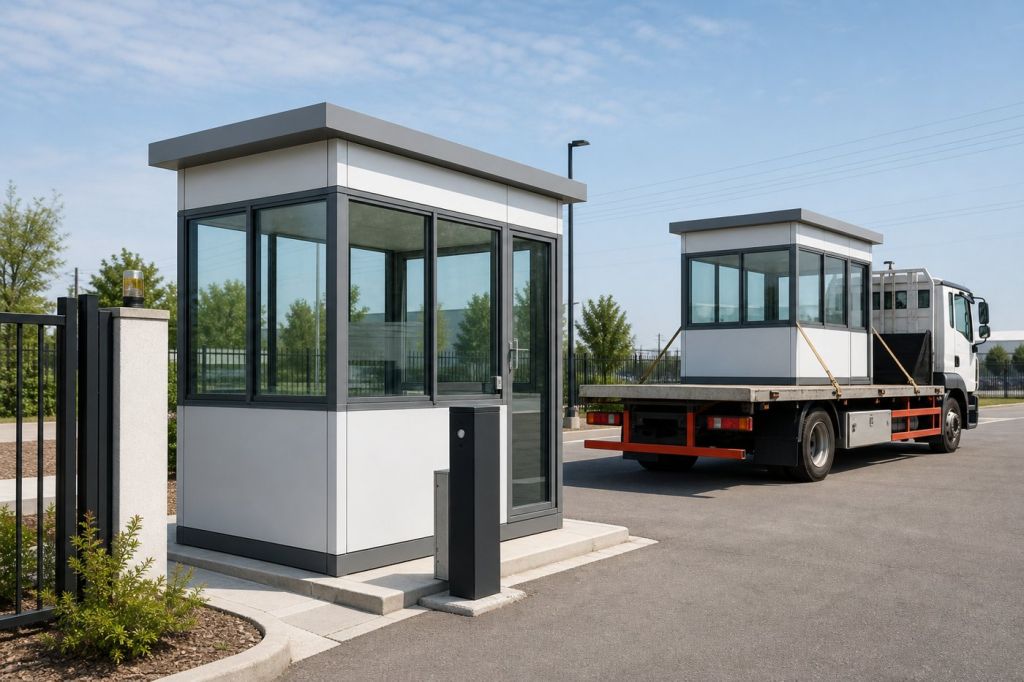
Renting Is Not Cheaper. It Is Cheaper Until a Certain Month.
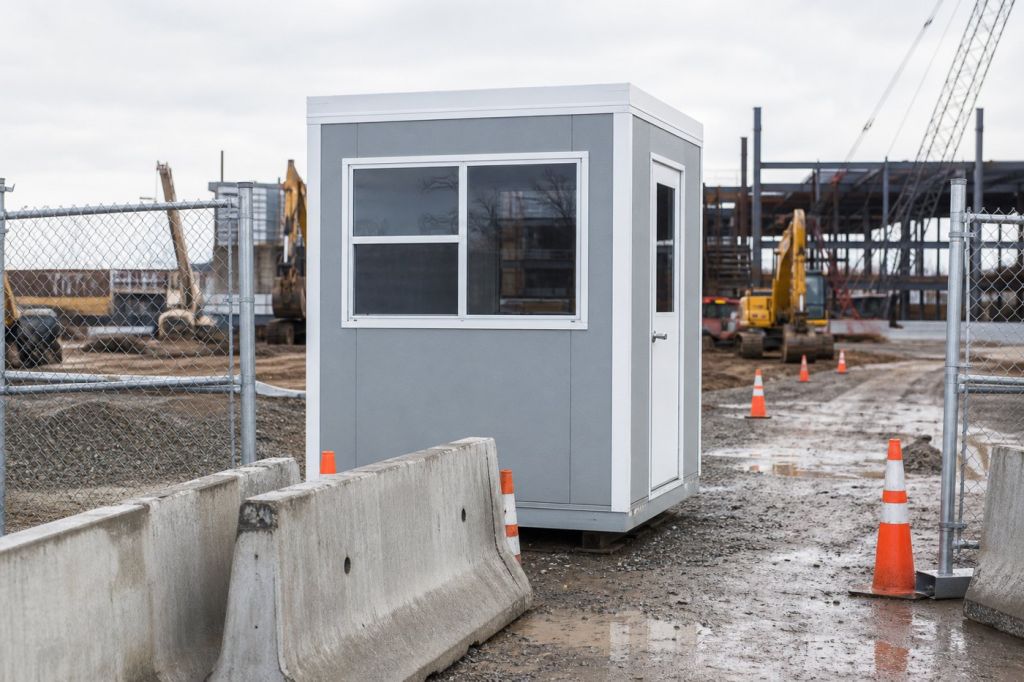
Almost every vendor page in this category answers “should I rent or buy a guard shack?” the same way: renting is flexible, buying is cost-effective long term, call us. That is true and useless. The decision is arithmetic, and the arithmetic is not hard — it just needs the numbers laid next to each other, including the ones that never appear on either quote.
A portable guard booth is unusual among site assets because the rental and purchase markets are both mature and both public. Rental fleets publish monthly rates. Manufacturers publish list prices by footprint. So you can calculate the crossover month for your own site instead of guessing, then check that answer against three things the spreadsheet does not know: how long the post really lasts, who is responsible when the booth gets damaged, and whether you need a booth nobody rents.
This page walks that calculation with published market pricing as of September 2026, then covers the freight, pad, power, permit and teardown costs that decide close calls. If you would rather skip to configurations, sizes and features, that all lives on the main mobile and portable guard booth page.
The short version
At typical market rates, a rented booth passes the cost of an equivalent purchased booth somewhere between month 18 and month 40. Under a year, rent. Over three years, buy. Between one and three years, the decision is decided by the secondary costs on this page — not by the monthly rate.
What a Guard Shack Rental Actually Costs
Rental rates cluster tightly for standard prefabricated booths. Published market rates, September 2026:
| Unit | Published rental rate | What it typically includes | Source |
|---|---|---|---|
| Small portable booth, 4×6 ft with interior lighting | About $260 per month | Booth only; delivery, power and modifications quoted separately | Mobile Office Trailer published rate |
| Temporary security booths, general range | $200–$500 per month | Varies with new vs. used, features and contract length | Mobile Office Trailer / Mobile Office Deals |
| 10 ft prefab guard shack, mid/upper feature set | About $450–$500 per month | HVAC, insulation, wired electrical, security bars; delivery extra | Dry Box / market surveys |
- Billing is usually a 30-day cycle, not a calendar month. A 100-day project is four billing cycles, not three and a bit.
- Delivery and pickup are separate line items at both ends and are frequently the largest single charge on a short rental. Ask for round-trip freight in writing before comparing monthly rates.
- Availability drives lead time more than manufacturing does. Fleets with regional yards quote one to three days to site; a specific size or feature package may not exist in your region at all.
- Modifications on a rental unit are limited. Rented booths come as the fleet configured them. Ballistic glazing, custom counters, elevated sight lines and a restroom package are purchase-side options.
- Damage and restoration land on you. Rental agreements bill wear beyond normal use at return — the reason a booth on a busy construction gate can end a rental more expensively than it started.
What Buying a Guard Booth Costs
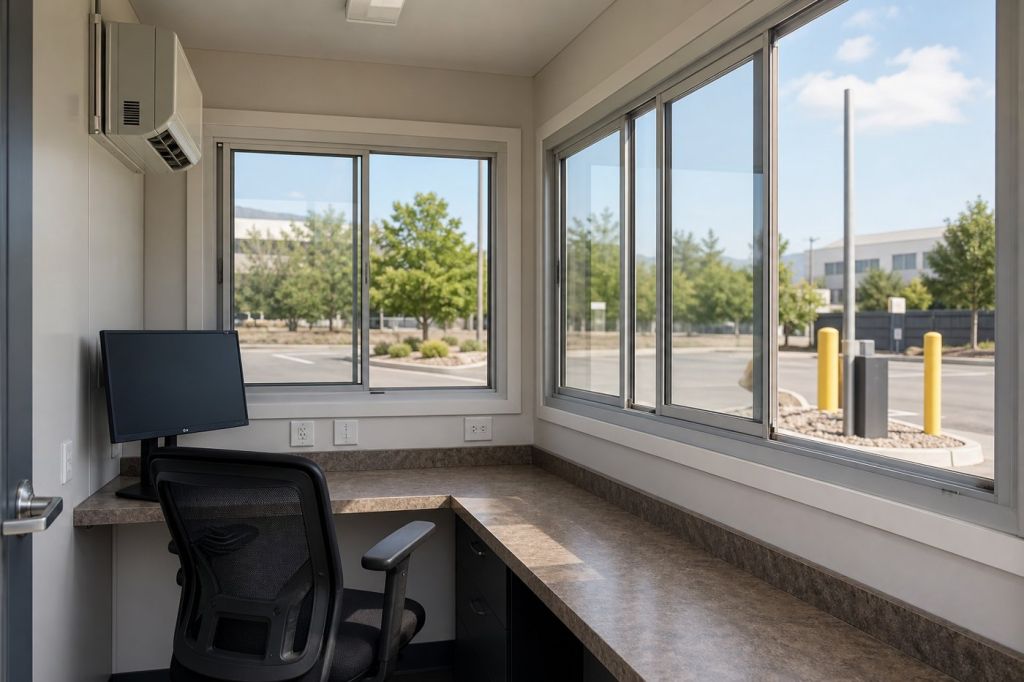
Purchase pricing spans a wide band because the category runs from a bare economy steel shell to a bullet-resistant, climate-controlled building. Published list pricing in September 2026 puts a new 4×6 ft economy steel booth with no electrical or HVAC around $5,500, a fully equipped 4×6 ft prefabricated guard house with HVAC and a 100-amp panel around $9,550, and a 6×8 ft equivalent around $10,050. Larger prefab footprints such as 6×10 ft and 8×8 ft sit near $10,700–$10,800. General market surveys put the typical purchase band at roughly $2,500–$13,000 for standard prefabricated booths.
The pattern matters more than any one number. The jump from a bare shell to a fully equipped booth — HVAC, electrical panel, receptacles, counter, lighting — is roughly $4,000 on a small footprint, and it is the difference between a booth an officer can work in year-round and a metal box. The jump from a small footprint to a large one is comparatively small: about $500 between a 4×6 and a 6×8. Buy the size you will still want in three years; you are mostly paying for equipment, not square feet.
Above that band sit the specification-driven builds: ballistic glazing and armor packages, hurricane-rated construction, elevated sight lines, restroom packages, and architectural finishes to match a campus. Those are quoted per project and are effectively unavailable in rental fleets, which is why a security specification — not a budget — is often what settles the rent-versus-buy question.
| Configuration | Typical published price | Best read as |
|---|---|---|
| 4×6 ft economy steel booth, no electrical or HVAC | About $5,500 | Entry point; plan to add power, lighting and climate |
| 4×6 ft prefab guard house, HVAC + 100A panel + receptacles | About $9,550 | The realistic cost of a working one-officer post |
| 6×8 ft prefab guard house, same equipment level | About $10,050 | The most common size; room for gear and a second officer briefly |
| 6×10 ft / 8×8 ft prefab | About $10,705 / $10,775 | Two-officer posts and equipment-heavy checkpoints |
| Ballistic, hurricane-rated or custom builds | Quoted per project | Specification-driven; not a rental-fleet product |
Prices above are publicly listed figures from booth manufacturers and rental fleets, gathered September 2026, and exclude freight, site work and taxes. They are here so you can build a defensible budget range — not as a Material Handling USA quote. Sizes, glazing, wind ratings and equipment change the number materially, which is why we quote per site.
The Break-Even Math
Divide the purchase price by the monthly rental rate for a comparable unit and you get the crossover month — the point after which renting has cost more than owning. Using the published figures above:
| Comparison | Purchase price | Rental rate | Crossover |
|---|---|---|---|
| Small booth, economy shell vs. small rental | $5,500 | $260/mo | About 21 months |
| Small booth, fully equipped vs. small rental | $9,550 | $260/mo | About 37 months |
| Fully equipped booth vs. mid-market rental | $9,550 | $350/mo | About 27 months |
| 6×8 ft booth vs. upper-range rental | $10,050 | $500/mo | About 20 months |
- Crossover lands between roughly 20 and 40 months for standard prefabricated booths. That is the number to argue about, and it is remarkably stable across the market.
- Both sides of the ledger need freight added. Purchase break-even moves later once you add one-way delivery; rental break-even moves earlier once you add delivery and pickup, plus any redelivery when the post relocates.
- Owning ends with an asset. A steel booth that is maintained keeps meaningful resale and redeployment value at the end of a project. Renting ends with a pickup ticket. If the booth moves to the next job, ownership wins earlier than the table suggests.
- Renting ends with an exit. If the post disappears with the project, the flexibility is worth real money — nobody has to store, insure, maintain or resell a booth that is no longer needed.
Rule of thumb that survives the details
Under 12 months: rent. Over 36 months, or the booth follows you to the next project: buy. Between 12 and 36 months: run the numbers below, because freight, pad work and restoration charges — not the monthly rate — are what decide it.
Rent-to-Own, Used Booths and the Middle Ground
The rent-or-buy framing hides two options that often beat both, particularly in the 12-to-36-month zone where the math is close.
Rent-to-own
Several fleets offer arrangements where monthly payments convert to ownership after an agreed number of periods. It fits a project with a real chance of extending: you keep the exit early and stop paying rent forever if the post becomes permanent. Ask what the total paid comes to versus the outright price, and what happens if you exit early.
Used and refurbished booths
Fleets sell retired units, and a steel booth ages slowly. A used booth typically lands between the economy-shell and fully-equipped price points with the equipment already in it. Inspect glazing, door and window operation, floor structure and the electrical panel — those are the expensive repairs.
Rent now, buy the permanent booth later
A common and sensible pattern: rent a stock unit to staff the post immediately, and use the rental period to finalize the specification for the permanent booth — sight lines, glazing, HVAC sizing, access-control integration — which typically has a lead time. You pay a few months of rent to avoid buying the wrong booth.
Buy small now, add later
Because most of a booth’s price is equipment rather than size, buying a modest footprint with the full electrical and HVAC package usually beats buying a larger bare shell you plan to finish yourself.
Not sure which side of the line your project falls on?
Tell us how long the post lasts, what the officers need inside, and where the power comes from. We will quote the booth and say plainly when a short-term rental is the better answer for your timeline.
Request a Quote See booth models and sizes Call (800) 326-4403
Which One Wins, by Scenario
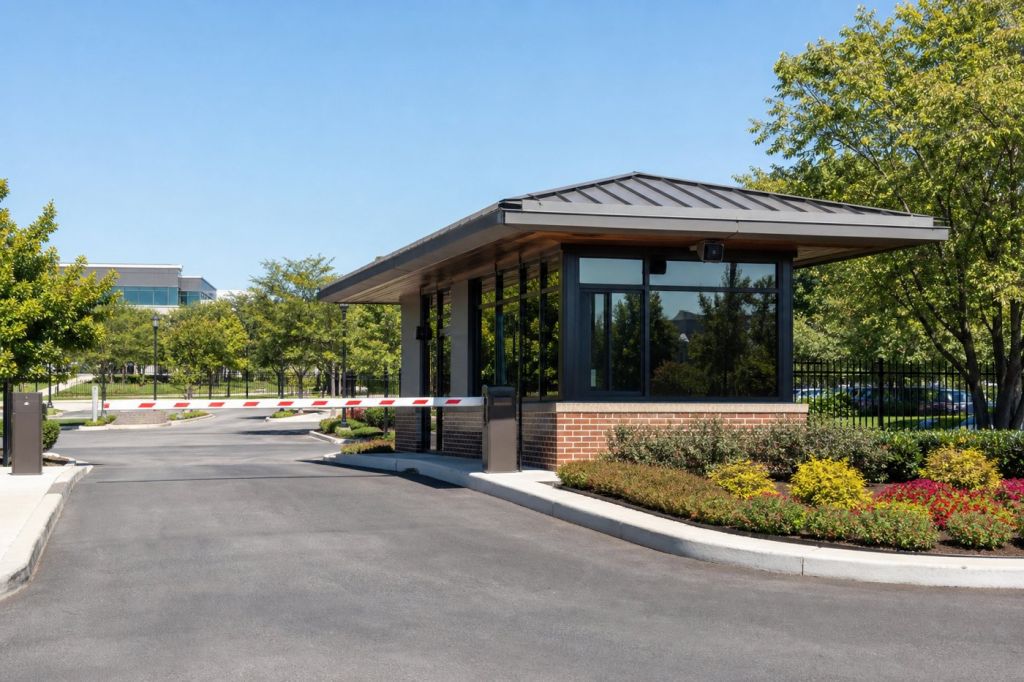
The crossover month is the starting point, not the decision. Duration certainty, specification and who bears damage risk move the answer more than the monthly rate does.
Construction site, 6 to 18 months. Rent, in most cases. The post ends with the project, the booth takes abuse from dust and traffic, and the fleet carries maintenance. Buy instead if your company runs continuous projects and the booth simply moves to the next gate — then it is a piece of equipment, not a project cost, and it pays for itself across two jobs.
Special events and seasonal parking. Rent. Weeks-long posts never approach break-even, and event work is exactly what fleet inventory exists for.
Corporate campus or manufacturing plant main gate. Buy. The post is permanent, appearance matters, and campus checkpoints usually need specification items — matching finishes, elevated sight lines, access-control integration, HVAC sized for a full shift — that rental fleets do not stock.
Distribution yard or truck gate. Usually buy, sized for two officers. These posts outlive every timeline anyone gives them, and the booth typically has to work through winter with real heat.
Waiting on a permanent booth. Rent for the gap. This is a standard fleet use case and it beats staffing a checkpoint out of a pickup truck for a quarter.
Ballistic, hurricane-rated or agency-specified booths. Buy. These are built to a specification, and the specification is the whole point.
| Scenario | Typical duration | Better answer | Why |
|---|---|---|---|
| Special event or seasonal lot | Days to weeks | Rent | Nowhere near break-even |
| Construction project, single job | 6–18 months | Rent | Post ends with the project; fleet carries wear |
| Contractor with continuous projects | Booth moves job to job | Buy | Utilization across jobs beats repeated rental cycles |
| Bridging until a permanent booth arrives | 2–6 months | Rent | Standard fleet use case; keeps the post staffed |
| Campus or plant main gate | Indefinite | Buy | Permanent post plus specification and appearance needs |
| Distribution or truck gate | 3+ years | Buy | Well past crossover; needs real HVAC and durability |
| Ballistic or hurricane-rated post | Any | Buy | Not a fleet product; built to specification |
Questions That Change the Answer
Ask these before you sign either agreement. Each one has flipped a decision that looked settled on price alone.
- What is round-trip freight? Delivery in, pickup out, and redelivery if the post moves. On a six-month rental this is often the single largest number.
- Is the billing cycle 30 days or calendar-monthly, and what is the minimum term? Short projects get billed for periods they did not intend to use.
- What counts as normal wear at return? Get the return standard in writing if the booth sits on a construction gate.
- Does the unit carry the state modular label my jurisdiction requires? Third-party design approval and inspection are commonly required for modular buildings, and confirming it after delivery is far worse than before.
- Does the local building department require a permit, and does anchoring change that? Unanchored booths under 120 square feet are often treated differently from anchored structures.
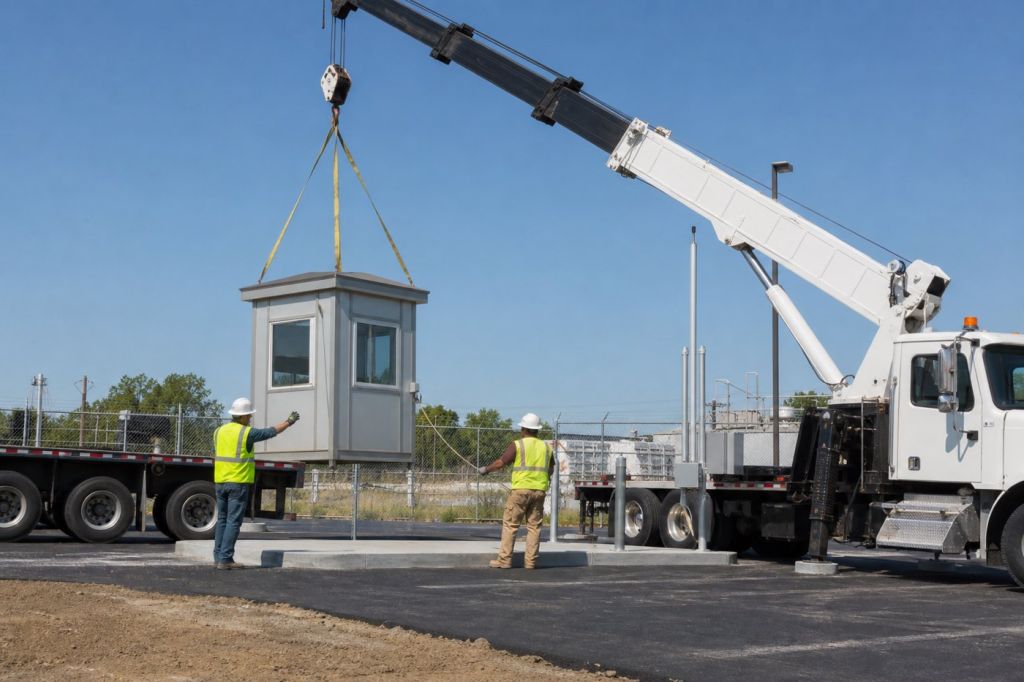
- What is the shipping weight, and can we place it with equipment already on site? A forklift-movable booth can save a crane mobilization.
- What is the lead time for the size and package I actually want? If a stock unit is 12 weeks out, a short rental may be bridging cost rather than an alternative.
- What is the residual worth if we buy? Redeployment or resale value pulls the crossover month earlier than the raw division suggests.
Power, Pad and Placement — Identical Either Way
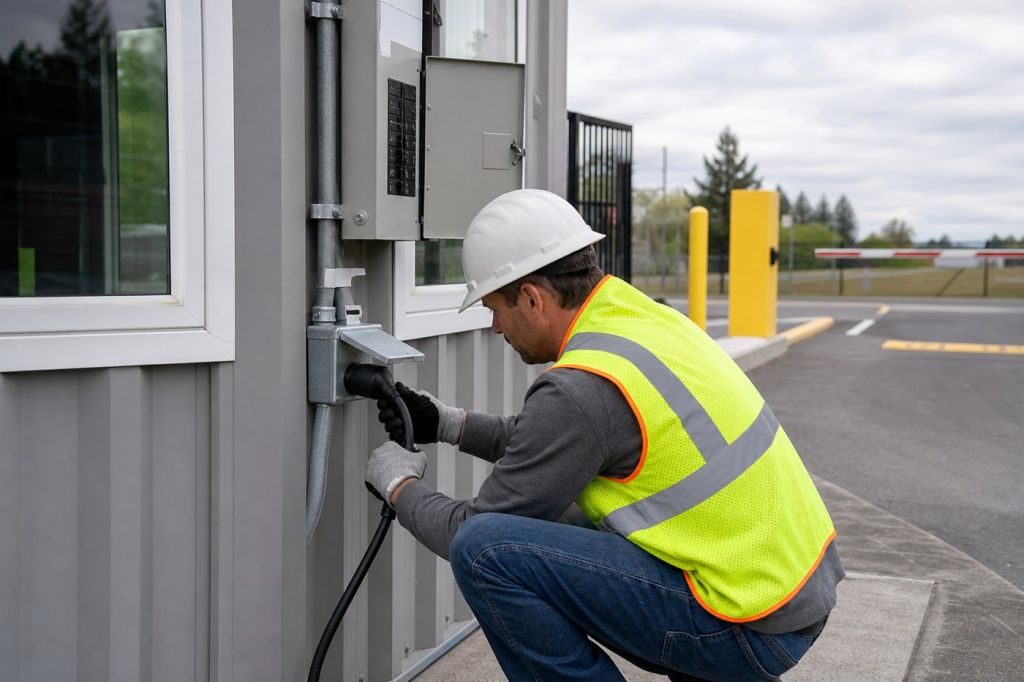
One reason the rent-versus-buy debate produces bad decisions is that people assume renting avoids site work. It does not. A rented booth needs the same level pad, the same power drop and the same placement planning as a purchased one, and those costs are incurred on day one of a rental you may only keep for four months.
Plan for a firm level surface, a 30A or 50A circuit with a licensed connection, sight lines that let an officer see the approach lane without leaning out of the window, and enough apron for a vehicle to stop clear of traffic. In exposed yards, anchor or ballast the booth — a tall, flat-sided box has real sail area, and its own wind rating is not a restraint plan.
All of that is covered in more depth on the mobile and portable guard booth page, along with deployment sequence, power and climate options, and permits. If the booth has to travel between sites on public roads, the chassis and towing rules are on our towing and site setup guide, and Utah-specific placement and lead times are on the Utah guard booths page.
Checkpoint Supplies, Shipped
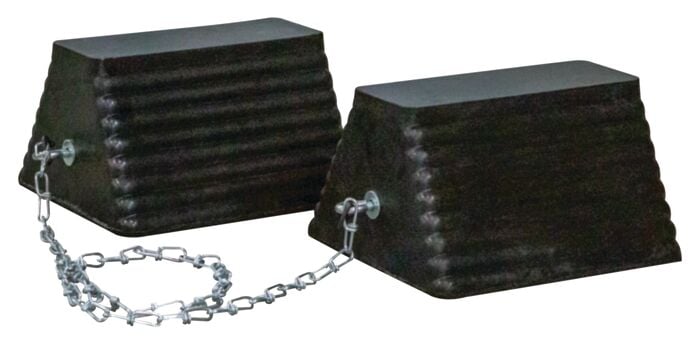
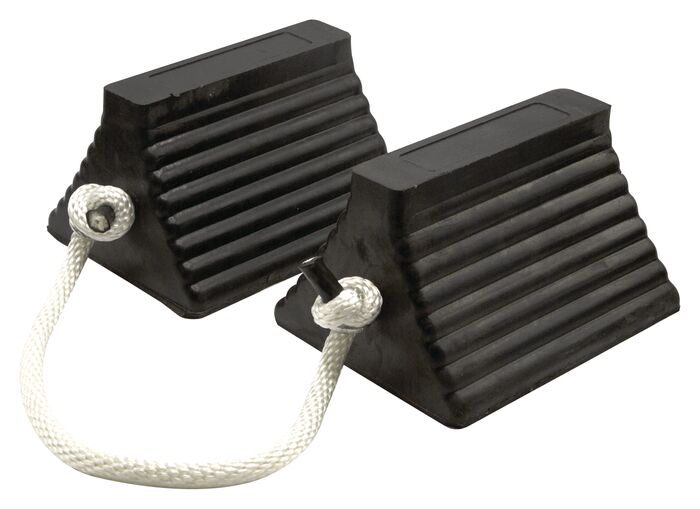
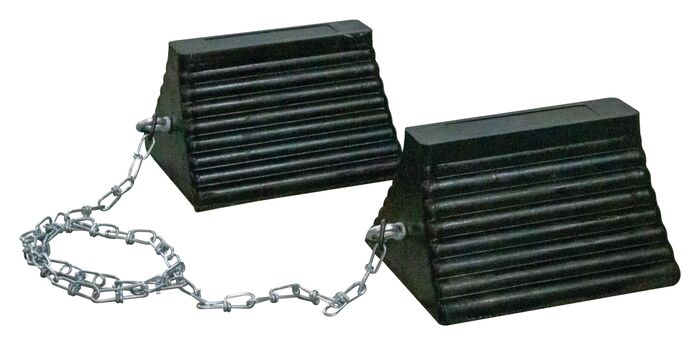
Cones, barricades and chocks for the traffic side of a new checkpoint ship from our online store. Booths themselves are quoted per site — call us.
Guard Shack Rental and Purchase Cost FAQs
How much does it cost to rent a guard shack per month?
How much does it cost to buy a guard shack?
At what point does buying a guard shack become cheaper than renting?
Does a guard shack rental include delivery and setup?
Can I rent a bullet-resistant or hurricane-rated guard booth?
Is rent-to-own a good option for a guard booth?
Do I need a permit or state approval for a rented guard shack?
What size guard booth should I get?
Does Material Handling USA rent guard booths?
Get a Guard Booth Quote With the Site Costs Included
Material Handling USA has been outfitting Intermountain West facilities since 1997. Tell us the post, the duration and the power situation, and we will quote a booth — freight, placement and lead time included — so you can compare it against a rental honestly.