Utah museums rarely run out of ideas. They run out of safe, organized space. A registrar can inherit a mix of archaeology boxes, specimen trays, framed art, and oversize objects, then find that the room was never planned for the weight, clearances, and climate those items need. That is why artifact and collections storage shelving for Utah museums is a facility decision, not just a furniture order.
This guide walks through what each type of collection needs, how cabinets, open shelving, mobile shelving, and flat files compare, the aisle widths and safety rules the National Park Service recommends, and what Utah adds to the list: earthquakes, dry air, and older buildings. If you want a second set of eyes on a room, our Utah museum shelving team can review it with you.
Key points for Utah museum storage planners
- Pick storage by object type. Small, sensitive items go in sealed steel cabinets. Large, stable items go on open steel shelving.
- Use powder-coated steel or anodized aluminum. Conservation guidance warns against wood shelving because it gives off harmful acids.
- The NPS recommends aisles at least 48 inches wide, cabinets no more than two high, and shelving raised 4 to 6 inches off the floor.
- Utah is earthquake country. Anchor shelving, add shelf-edge restraints, and have an engineer check floor loads for mobile systems.
- Start a layout in the free Mobile Shelving Layout Planner or ask for a free floor plan review.
Planning Artifact and Collections Storage Shelving for Utah Museums
Picture a storage room after a busy year. Boxes sit on the floor. A cabinet leans against an outside wall. A shelf holds more weight than anyone checked. None of this is easy to fix once the shelving is bolted down. Good planning looks at three things together: the objects, the room, and the building.
Start with the collection, not the catalog
List what you hold, how big it is, how fragile it is, and how often staff pull it. A small stone figure needs a very different shelf than a box of paper records. Framed paintings, insect drawers, plant specimens, and boxed artifacts each need their own depth, support, surface, and access. Guidance on compact stone Buddha care shows why shape, surface, and support have to be planned together, even for one heavy object.
Practical rule: if an object can bend, shed, rust, or collect dust, pick its shelf and its box or enclosure as one system.
The room and the building set the limits
Shelving pushes its full loaded weight into the floor. Before you approve a layout, check the slab, the anchor points, the walls, the ceiling height, and the sprinkler heads. A dense mobile system can add a lot of capacity in the same room, but it also packs weight into a smaller area. Open shelving makes objects easy to see and reach, but it leaves them open to dust and light.
That is why collections planning, room design, and equipment choice should happen at the same time. Our museum design services help when storage affects traffic flow, building work, or climate control. The museum storage cabinets page is useful too, because cabinet choice changes clearances, aisle widths, and how well the room protects what is inside.
What Utah Collections Typically Need to Store
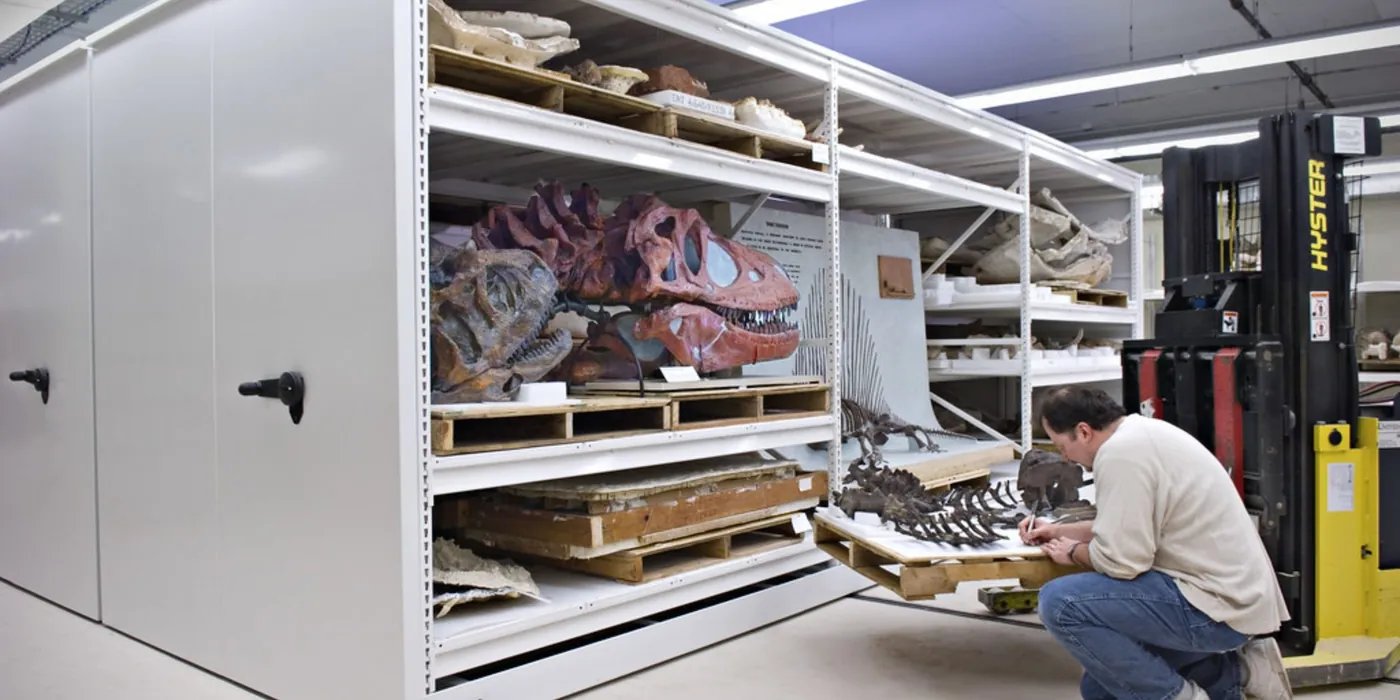
Many Utah museums store archaeology, natural history, art, and history collections under one roof. Those collections do not ask the same things of a shelf. The scale can be large. The Natural History Museum of Utah’s archaeology collection spans about 11,000 B.C. to the historic period, represents 5,300 known sites, and fills more than 9,600 cubic feet of storage (Natural History Museum of Utah). Across all departments, the museum cares for nearly 2 million objects.
Most of any museum’s collection lives behind the scenes, so the storage room really is the collection. Anthropology artifacts, insect and plant specimens, mammal and shell specimens, fossils, rocks, and minerals each need different shelf depths, supports, and access. One shelving spec for everything leads to wasted space, unstable stacks, and risky handling.
Here is how one large Utah collection handles it. The museum’s 2024 collections plan says it keeps collections in secured, alarmed, climate-controlled storage, inside sealed metal cabinets, or on powder-coated metal shelving and racking for oversized material (Natural History Museum of Utah CMP). That split, cabinets for small and sensitive items and open steel for big ones, is a good model for most rooms.
Material type drives the storage format
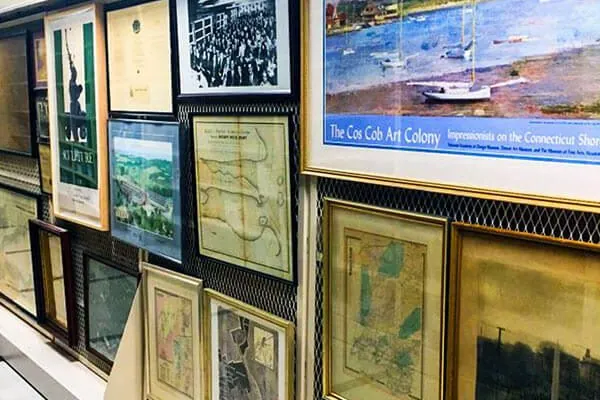
- Paper, maps, and photographs need full, flat support and protection from light and dust.
- Textiles need room so folds do not crush and surfaces do not rub.
- Framed art stores best hanging on screens or standing in padded bins, not leaning in stacks.
- Small specimens and artifacts are safer in labeled trays or boxes that stop them from sliding.
- Oversized objects may need open heavy-duty shelving or racking, with padding, a clear load path, and seismic restraint.
The storage format also changes how well the room protects objects. Closed cabinets cut down on dust, light, pests, and quick climate swings. Open systems are easier to see and reach. For packing ideas that apply before an object reaches the shelf, the artwork packing tips from Get n Go are a helpful read. Steady support and less handling should start at the packing table.
Museum Shelving Options and Trade-Offs
The real question is not “shelving or cabinets.” It is how much exposure each group of objects can handle, and what the room can safely hold over time.
Steel, powder coat, and why wood is out
The Texas Historical Commission’s preservation guide says museum-specific storage units are best. The next best choice is sturdy steel shelving or cabinets with a powder coating, or anodized aluminum. It warns that wood shelving is a poor choice because it can give off harmful acids and other substances, and it suggests lining shelves with acid-free paper or barrier board (Texas Historical Commission). That is a simple rule for any Utah museum replacing old wood shelves.
Open shelving and sealed cabinets do different jobs

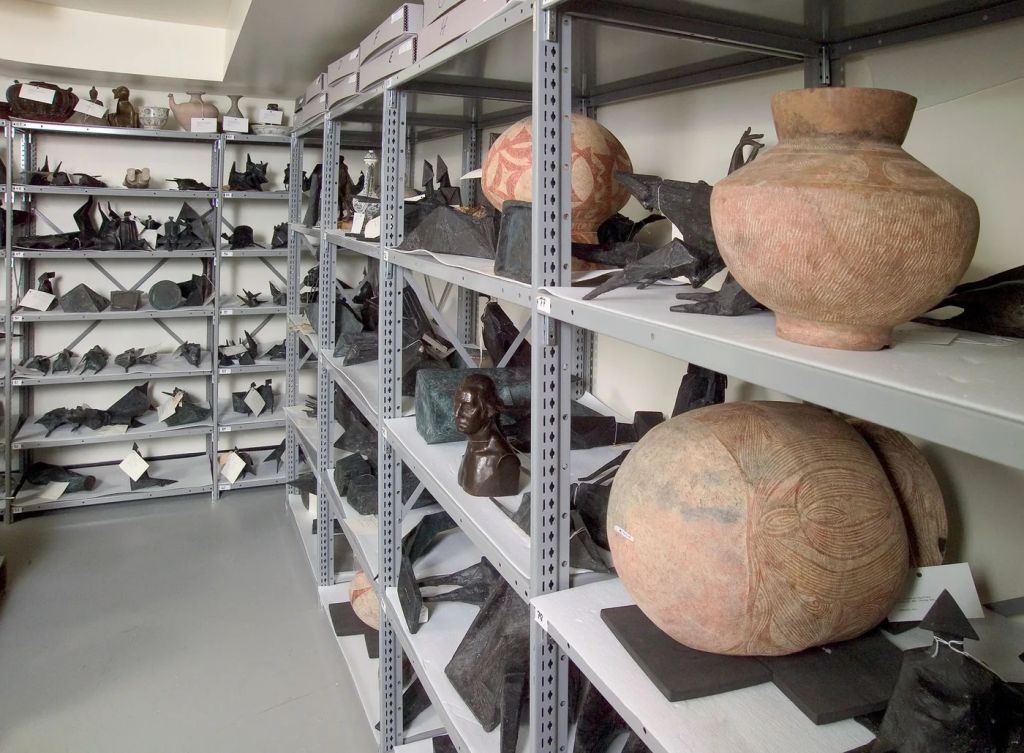
Open shelving works well for oversized items, boxed material, and objects staff pull often. Sealed steel cabinets with gaskets are better when objects need a buffer from dust, light, pests, and climate swings. Most Utah museums end up with both: cabinets for sensitive material and open shelving for large, stable objects. Compare cabinet styles on our museum storage cabinets page, and see boxed-record setups on our archive shelving page.
Mobile shelving for collections that keep growing
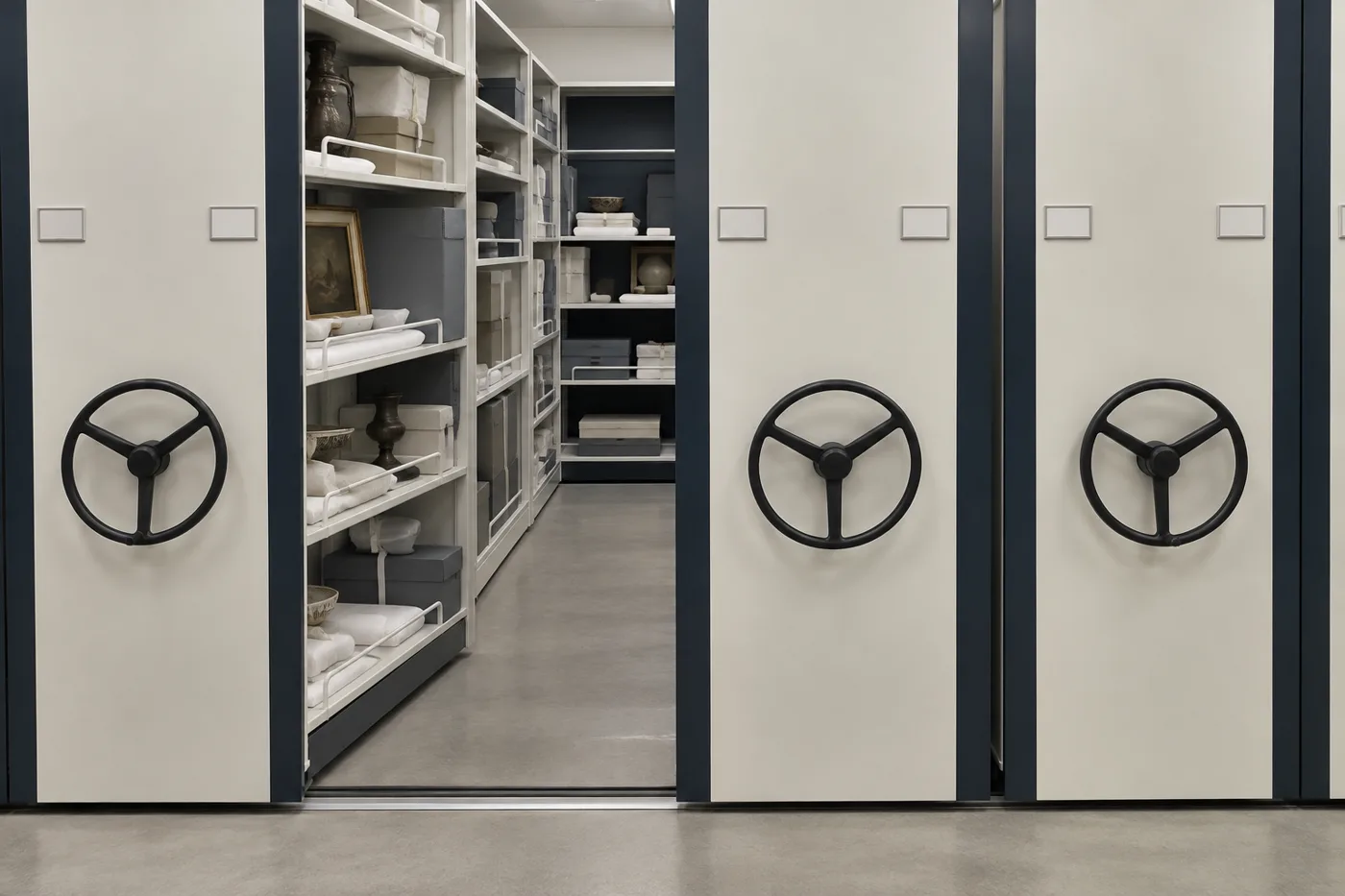
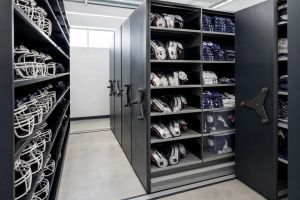
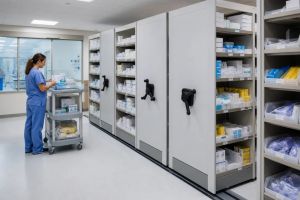
A museum collection only grows. Mobile shelving, also called compact or high-density shelving, puts shelving units on carriages that roll on rails. You open one aisle at a time instead of keeping an aisle between every row. That can add a lot of storage in a room that is already built. The ultimate guide to mobile shelving explains the basics, and our museum and archival collections mobile shelving page covers museum layouts.
The trade-off is weight and planning. Mobile systems put more load on the floor, need rails set level, and need clear rules for who opens which aisle. For a Utah example, see how a state park museum in Blanding, Utah converted its collections room to mechanical mobile shelving on a sub-floor with wood decking and reused the shelving it already owned.
Flat files and art screens for flat and framed works
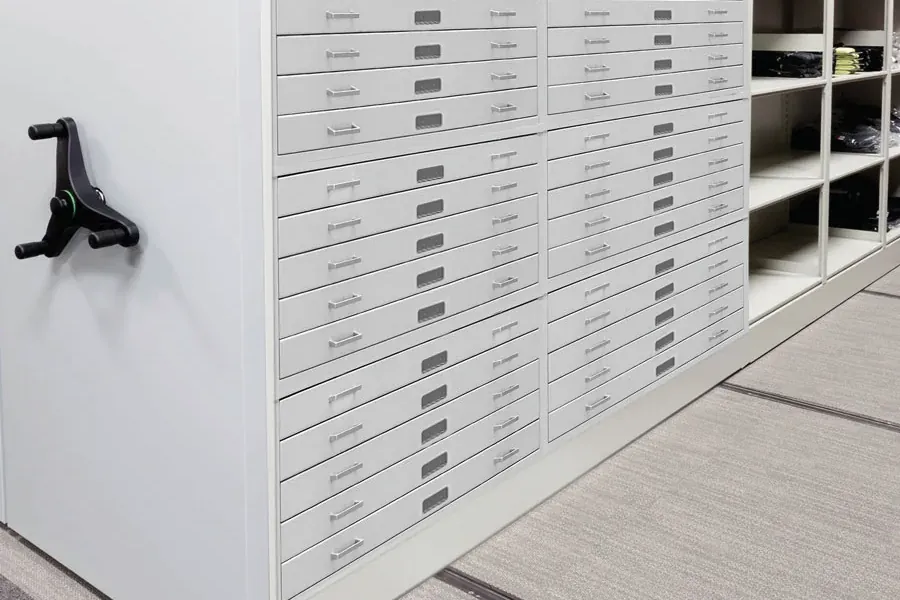
Maps, posters, architectural drawings, and large prints should lie flat in shallow drawers, not roll or fold. Framed works hang on mesh art screens. Both can sit on fixed bases or on mobile carriages. See our flat files and art storage options for drawer and screen setups.
Quick comparison
| Storage type | Best for | Protection level | Plan for |
|---|---|---|---|
| Sealed steel cabinets | Specimens, small artifacts, textiles, light-sensitive items | High. Gaskets limit dust, pests, and quick climate swings. | Door swing and drawer pull-out space, drawer weight limits, stacking no more than two high |
| Open steel shelving | Boxed collections, oversized and stable objects, items pulled often | Low on its own. Relies on boxes, covers, and padding. | Anchoring, shelf-edge restraints, acid-free liners, dust covers |
| Mobile (high-density) shelving | Growing collections in a fixed room, boxed archives, records | Medium. Closed ranges block light and some dust. | Floor load review, level rails, aisle safety rules, seismic design |
| Flat files | Maps, prints, drawings, posters, works on paper | High for flat items. Full support and darkness. | Drawer depth, room to fully open drawers, a nearby work table |
| Art screens | Framed paintings, prints, and mirrors | Medium. Stops frames rubbing, but faces stay open. | Hanging hardware, aisle room to lift frames, light control |
Trade-off to remember: the most open system is the easiest to inspect, but it is also the least forgiving in a dusty, busy, or poorly controlled room.
Usable space depends on more than how many shelves you can count. Even outside the museum world, guides on how to optimise warehouse layouts for ROI make the same point. Every aisle, clearance, and enclosure choice changes what the room can really do.
Want to see how much your room can hold?
Enter your room size in the free Mobile Shelving Layout Planner for a first layout, or call (800) 326-4403 and our team will review your collections room with you.
Sizing, Layout, and Aisle Widths
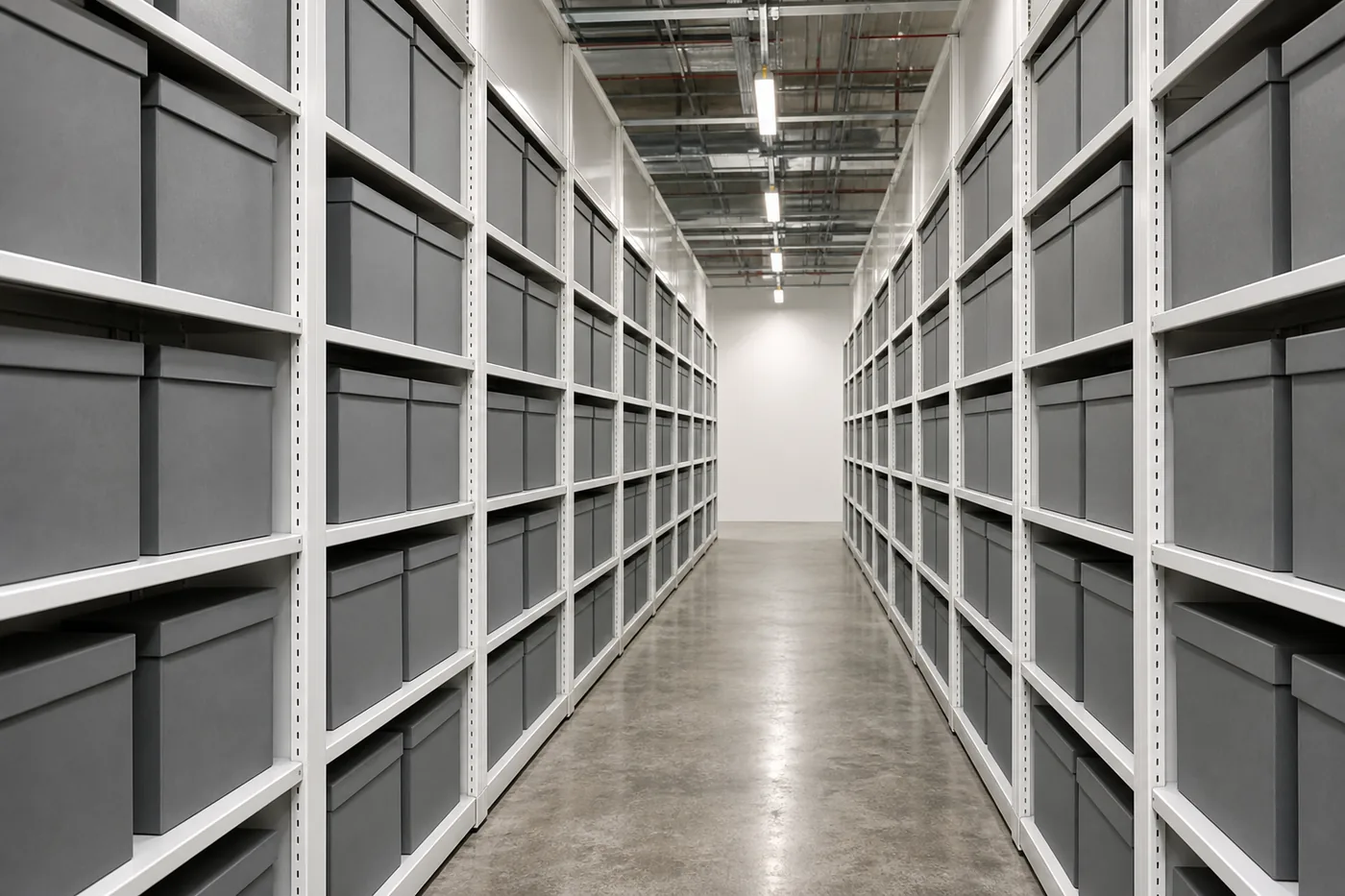
A room can have the right equipment and still fail every day. Tight aisles, blind corners, and bad cart routes create handling risks. The National Park Service gives clear targets. Allow at least three feet between rows of cabinets. Use four-foot aisles so staff can open cabinets and move objects safely. Aisles between large shelving units need four feet, and six feet is recommended when furniture and large objects have to be moved onto the shelves (NPS space-planning guidance). The NPS Museum Handbook storage chapter also calls for aisles at least 48 inches wide between rows of equipment.
How to plan a museum storage room layout
- Inventory the collection. Group objects by type, size, weight, fragility, and how often staff use them.
- Measure the room. Record length, width, ceiling height, doors, columns, outside walls, windows, sprinkler heads, lights, and HVAC paths.
- Find the largest object and cart. Measure the object, the cart, any lift, and the team that moves it. Use those sizes for aisle widths and door openings.
- Assign a storage type to each group. Cabinets, open shelving, mobile shelving, flat files, or art screens.
- Keep storage off outside walls. The NPS suggests a “room within a room” that keeps collections away from the outside of the building, where temperature and moisture swing more.
- Check the floor. Have a structural engineer confirm the slab can carry the loaded shelving, especially for mobile systems.
- Plan seismic anchoring. Mark anchor points, bracing, and shelf-edge restraints on the drawing.
- Mark clearances. Sprinkler clearance, exit paths, fire equipment, electrical panels, and data logger locations.
- Walk the move path. Tape out the layout or use a cart to test doors, turns, and aisles before anything is ordered.
Separate receiving, temporary holding, long-term storage, and work areas. That cuts down on how often objects travel through busy spaces. It also gives labeling, inspection, and access rules a clear physical home.
A shelving layout should follow the path objects travel, not just the walls of the room.
Seismic, Flood, and Fire Safety in Utah

A layout can meet every capacity goal and still fail in an earthquake, a flood, a fire, or a long HVAC outage. Utah adds its own risks. The Utah Geological Survey reports that Utah has had 17 earthquakes greater than magnitude 5.5 since 1847, including the March 2020 magnitude 5.7 Magna earthquake (Utah Geological Survey).
Seismic restraint changes the equipment spec
In a museum, earthquake restraint is not an add-on. The NPS Museum Handbook says open shelving should be bolted to the floor, wall, or nearby equipment so it cannot tip, and that restraining bars or cords should be added to shelf edges, especially in earthquake zones (National Park Service storage chapter). Tall shelving, mobile carriages, cabinets, and the objects inside all need anti-tip and retention measures matched to the building. For mobile systems, our guide to earthquake-ready mobile shelving in Utah covers rails, anchoring, and anti-tip parts in more detail.
The floor needs its own check. Mobile and tightly packed shelving can put more weight on a slab than a simple “pounds per square foot” number suggests. That check may change bay spacing, unit placement, or the choice between fixed and mobile shelving.
Flood and fire basics
The NPS recommends locating collection storage outside the 100-year floodplain, keeping water and sewer pipes out of the room, and raising cabinets and shelving 4 inches off the floor, preferably 6 inches (NPS storage and hazard guidance). Raised storage protects objects from minor flooding and makes floors easier to clean and inspect for pests.
Fire codes commonly require at least 18 inches of clear space below sprinkler deflectors (NFPA 13). Keep the top shelf below that line everywhere, and confirm the rule for your building with your fire marshal. Our page on sprinklers, lighting, and HVAC above mobile shelving explains how to coordinate the ceiling.
NPS storage checklist (from the Museum Handbook, Chapter 7)
- Do not stack museum cabinets more than two high.
- Do not load cabinet drawers past the maker’s weight limit. The NPS suggests keeping drawer loads below 50 pounds.
- Raise cabinets and shelving 4 inches off the floor, preferably 6 inches.
- Bolt open shelving to the floor, wall, or nearby units, and add shelf-edge restraints.
- Do not crowd or stack objects. Pad, mount, or tray anything that could shift.
- Keep aisles at least 48 inches wide between rows of equipment.
Climate Control and Environmental Monitoring
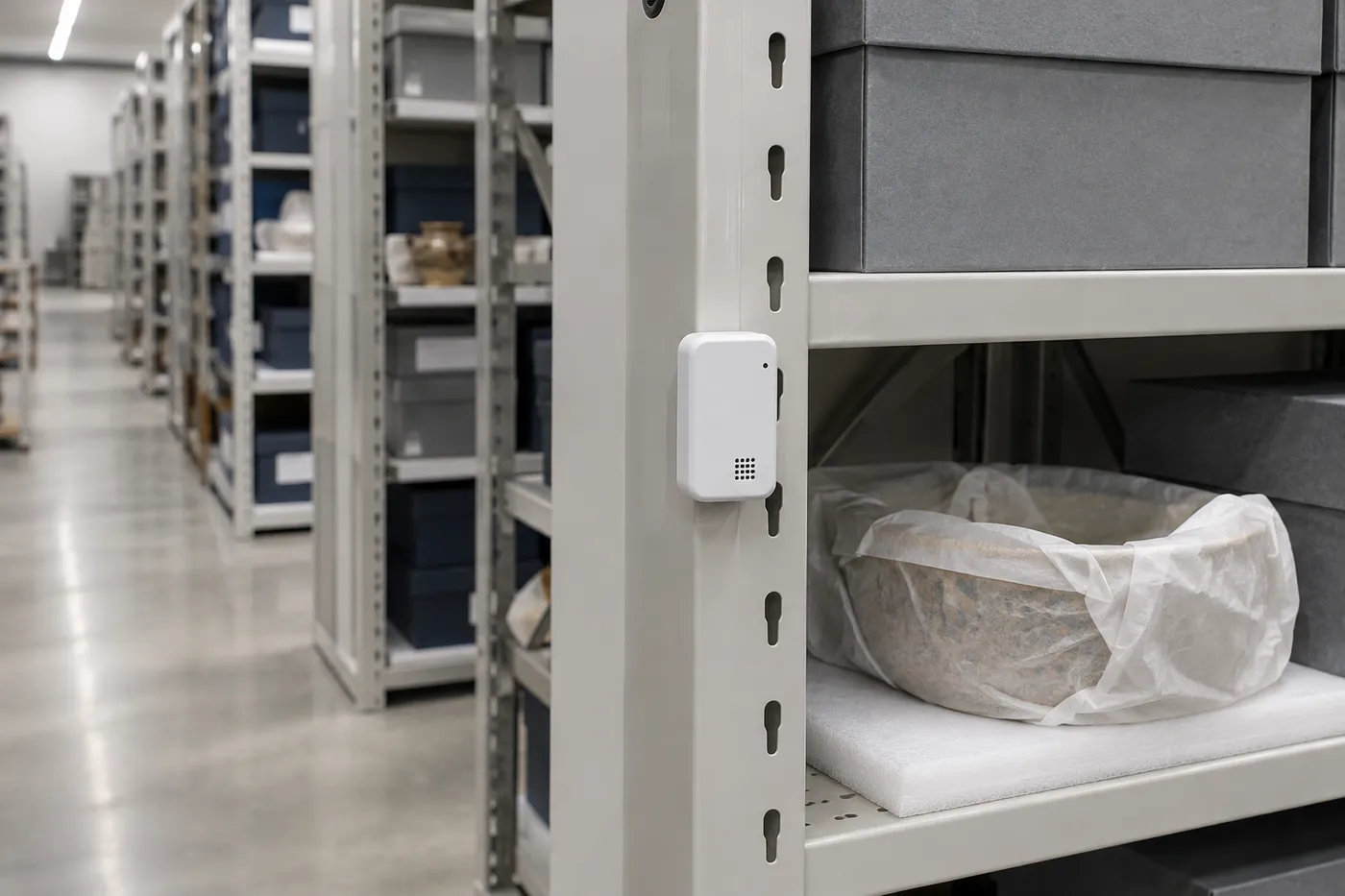
Many small Utah museums still lack basic controls. The 2006 Utah Museums Survey from the Utah Division of Arts & Museums found that 80% of responding museums had no humidity controls, 49% had no temperature controls, 65% did not monitor light levels, and 43% did not monitor for pests. It also found that 57% had objects stored on the floor (Utah Division of Arts & Museums survey). When the building cannot hold steady conditions, the storage equipment has to do more of the work. Sealed cabinets can buffer objects from quick changes, but they also change air movement, so check conditions inside them too.
Plan for records, not just a setpoint. The Natural History Museum of Utah records environmental readings with data loggers and keeps those records for at least three years (Natural History Museum of Utah CMP). Start logging when the new shelving goes in. That gives you a baseline and proof when conditions drift. Our guide to climate-controlled storage covers the facility side.
Installation, Lead Time, and Service
Shelving can arrive on time and still sit in boxes if the room is not ready. Finish the structural review, layout approval, utility work, and collection move plan before delivery. Lead time depends on the manufacturer, the size of the system, and options like special finishes, drawers, or custom sizes. Ask for a lead time in writing with your quote.
For reference, here are two Utah museum projects we have completed. The Blanding state park museum system was installed in coordination with the site manager and curator on a four to six week lead time. At the Natural History Museum of Utah, we supplied a closed-door, high-density filing system for records, bought on the State of Utah cooperative contract, on about a four week schedule (read the Salt Lake City case study). Many Utah public institutions use that contract instead of running a separate bid, so ask us whether your project qualifies.
Install checks that protect the collection
- A structural engineer confirms slab capacity for the loaded system.
- Installers verify every anchor point and record the final layout.
- Mobile rails are set level, and carriages are tested with stops and safety features working.
- Sprinkler clearance, exit paths, and panel access are checked after shelves are loaded.
- Data loggers are placed and started so you capture a baseline from day one.
Our mobile shelving installation and service team handles this work across Utah.
Service after the room opens
Shelving needs regular checks. Adjustable shelves can shift, labels can fall off, and collections change. Staff should know how to move shelves without going over the approved load plan, loosening anchors, or blocking sprinklers. A service plan should name who inspects the system, who records changes, and how to get parts.
What to Ask For in a Museum Shelving Proposal
A small historical society may need a few sealed cabinets, archival liners, and aisles wide enough for safe handling. A larger museum may need cabinets, open shelving, flat files, and mobile shelving, with busy items kept apart from long-term holdings. Renovations are often the hardest, because old floors, walls, and utilities limit what fits.
The cheapest shelf is expensive if it forces a retrofit later.
Ask every bidder to show how the room will work after install. A good proposal includes:
- A scaled layout that shows the storage type for each collection group
- Shelf and drawer load ratings, and the structural assumptions behind the layout
- Seismic anchoring and shelf-edge restraint details
- Aisle widths, door swings, and drawer pull-out space
- Finish, liner, and enclosure options that are safe for collections
- Room to grow, and how the layout can change later
- Delivery, installation scope, training, and service terms
A product list alone cannot tell you whether the system will fit the room or support daily handling. Compare full proposals against your real collection mix. You can also learn the planning basics in our free AIA museum storage course.
Frequently Asked Questions
What is the best shelving for museum artifacts?
There is no single best type. Most museums use sealed steel cabinets for small, sensitive objects and powder-coated steel shelving for large, stable objects. Flat files work for maps and prints, and art screens work for framed works. Avoid wood shelving, which can give off harmful acids.
Is wood shelving safe for museum collections?
Conservation guidance says no. The Texas Historical Commission warns that wood shelving can give off harmful acids and other substances. Steel with a powder coating or anodized aluminum is the safer choice. If you must use existing wood, line it with a barrier such as acid-free board.
How wide should aisles be in a museum storage room?
The National Park Service recommends at least three feet between cabinet rows, four-foot aisles for opening cabinets and moving objects, and four to six feet between rows of large shelving units. Size aisles around your largest object and cart.
How high off the floor should museum shelving be?
The NPS recommends raising cabinets and shelving at least 4 inches off the floor, and preferably 6 inches. This helps protect objects from minor flooding and makes floors easier to clean and inspect for pests.
Does museum shelving need seismic anchoring in Utah?
Yes. Utah has had 17 earthquakes greater than magnitude 5.5 since 1847. The NPS says open shelving should be bolted to the floor, wall, or nearby units, with restraining bars or cords on shelf edges in earthquake zones. Have an engineer set the anchorage for your building.
Is mobile shelving a good fit for museum collections?
Often, yes, for boxed collections, records, and objects that are not pulled every day. It can add storage in a room that is already built. It needs a floor load review, level rails, seismic design, and clear rules for opening aisles.
Should museum cabinets be stacked?
The NPS says not to stack museum cabinets more than two high, and not to load drawers past the maker’s weight limit. It suggests keeping drawer loads below 50 pounds.
Can Utah public museums buy shelving without a separate bid?
Many Utah public institutions buy storage equipment through the State of Utah cooperative contract instead of running their own bid. Contact Material Handling USA to confirm whether your museum and project qualify.
Plan Your Museum Storage Room With Material Handling USA
Material Handling USA helps Utah museums plan artifact and collections storage shelving around the room, the collection, and the building. Start with the Utah museum shelving page, request a free layout and quote, or call (800) 326-4403 to talk through your collection and room. The right next step is a coordinated storage plan, not just the lowest price.
Design it yourself, then get a quote
Use our free online planning tools to lay out the storage this article describes, then send the result to our team for pricing:
- Mobile Shelving Layout Planner for high-density collections storage
- Shelving configurator for fixed steel shelving and archive box storage
- Free floor plan review for a full collections room with cabinets, flat files, and art screens
Ready to talk it through? Call Material Handling USA at (800) 326-4403 for a free design consultation.