
Museum Collections Storage Mobile Shelving Case Study: Blanding, Utah
How a southern Utah state park museum added collections storage capacity inside an existing building by converting its collections room to mobile shelving and reusing the shelving it already owned.
Customer
A Utah state park museum in Blanding, Utah
Location
Blanding, San Juan County, Utah
Product
Mechanical mobile shelving on a sub-floor with wood decking
Application
Museum collections storage
About the project
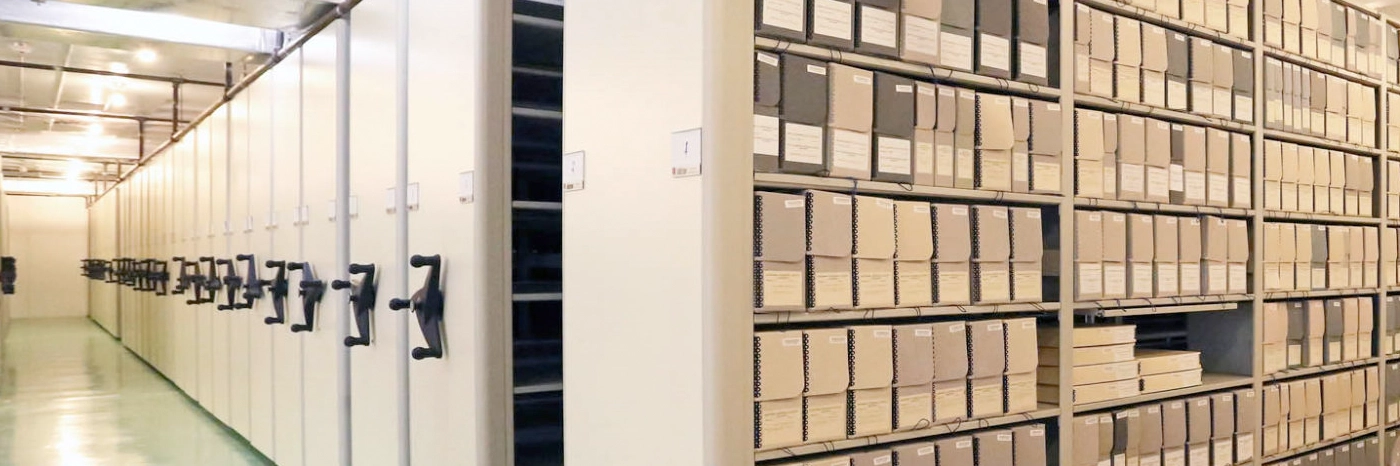
This project supplied a mechanical mobile shelving system for the collections storage area of a state park museum in Blanding, Utah. Museums in this part of the state hold large, long-term collections in comparatively small buildings, and this project was about getting more usable collections storage out of a room that was already built.
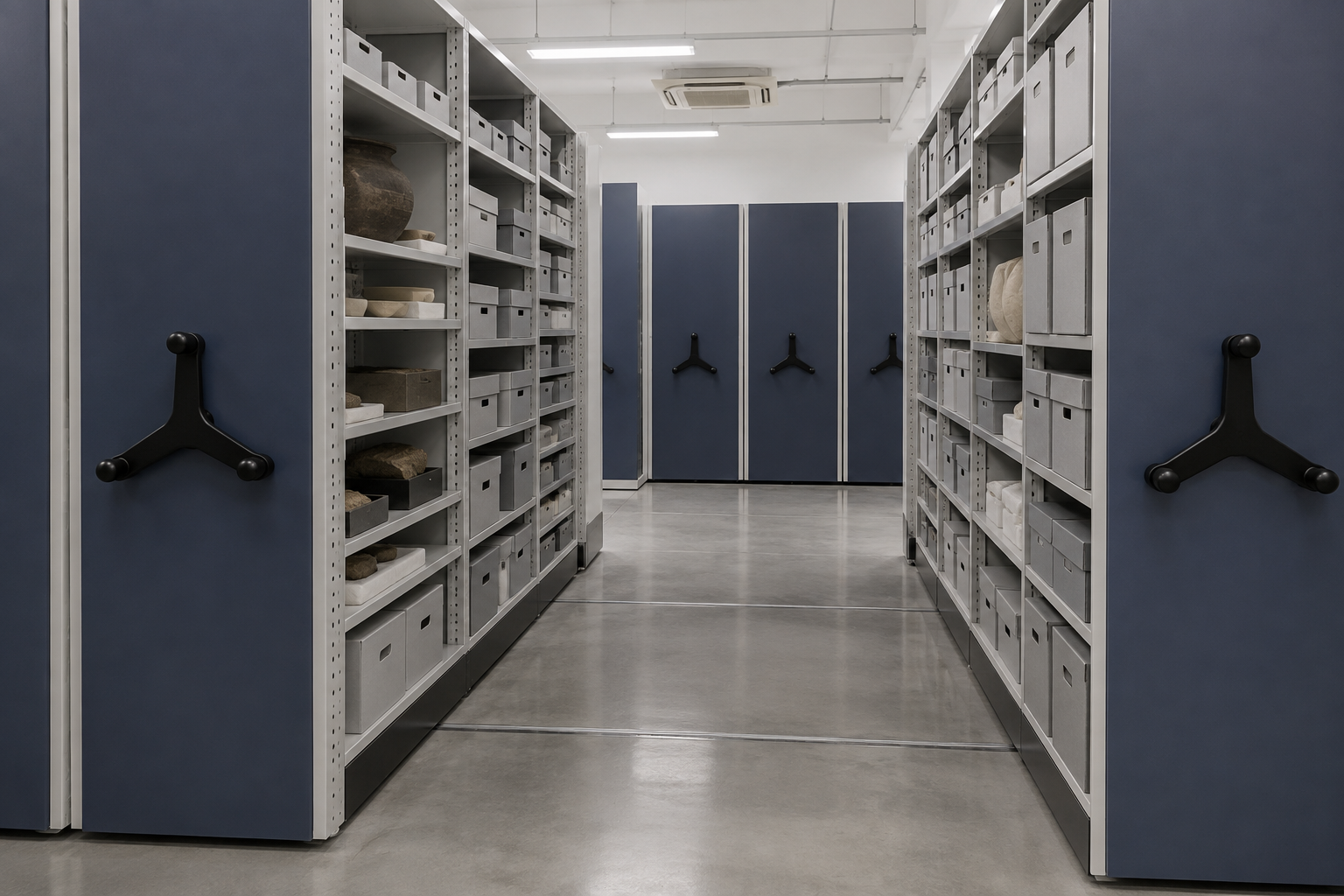
Material Handling USA supplied a mobile shelving system laid out to the collections room drawing, with five shelf levels, a sub-floor with wood decking, and reuse of the museum’s existing shelving components. The project closed in December 2018 and was installed in coordination with the museum’s site manager and curator on a four to six week lead time.
The situation
A museum collection only moves in one direction: it grows. Accessioned material stays with the institution permanently, so the storage room has to keep absorbing new objects, boxes and files decade after decade while the building around it stays exactly the same size.
The collections room here was already fitted with static shelving. Static ranges need a permanent walking aisle between every pair of ranges, which means a large share of a small room is committed to empty floor rather than to storage. Once those ranges were full, the museum had two options: find more building, or get rid of the fixed aisles.
There was a second consideration specific to museums. The shelving already in the room was serviceable and paid for. Throwing it out to buy an all-new system would have spent budget on hardware the museum already had, when the real problem was the aisles, not the shelves.
What Material Handling USA supplied
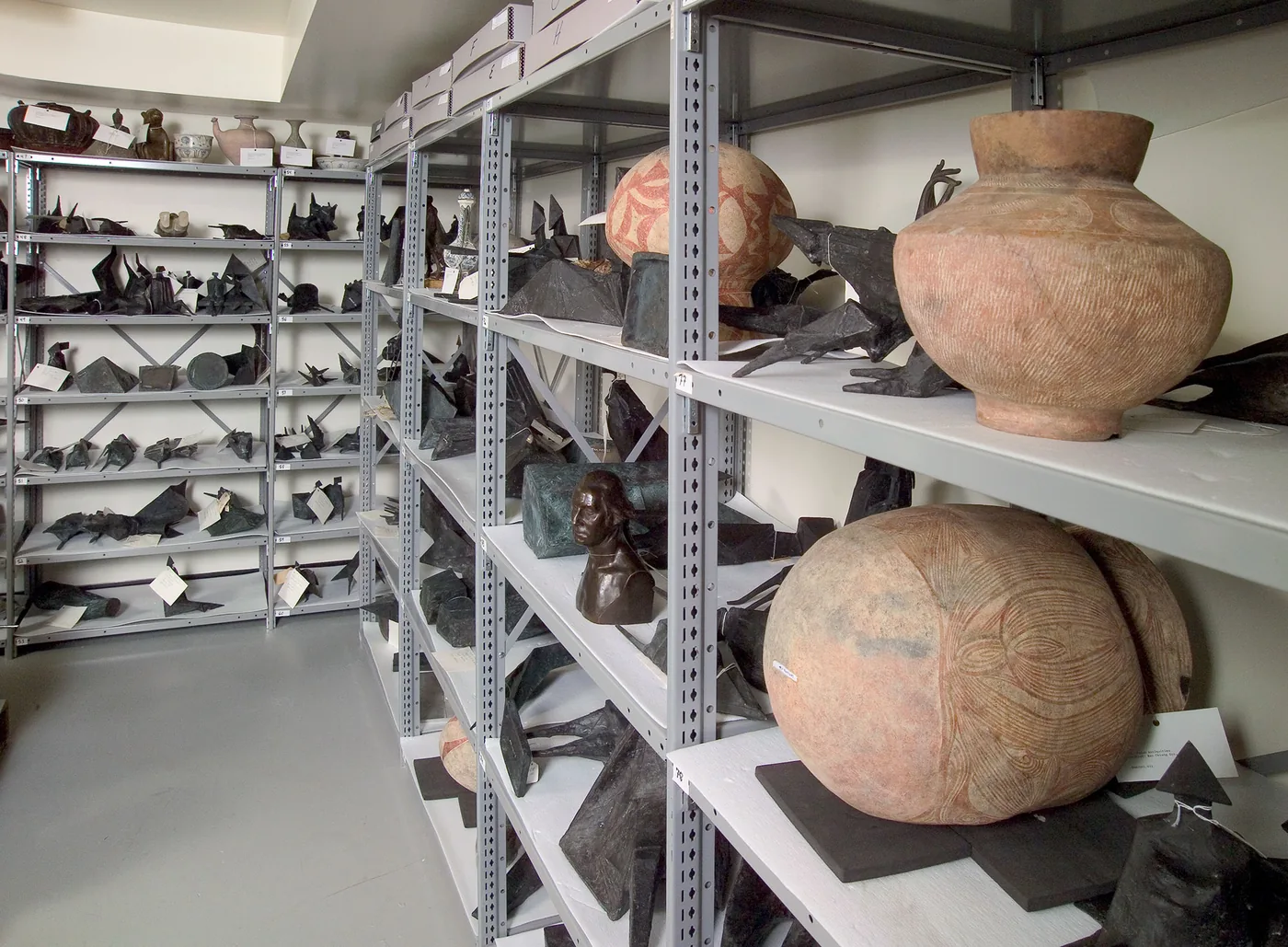
We supplied a mechanical mobile shelving system sized to the collections room drawing, running on a sub-floor with wood decking, with five shelf levels per section and the museum’s existing shelving components carried into the new system.
The carriage and rail options behind this design are covered on our recessed vs. surface-mounted rail and museum and archival collections mobile shelving pages.
Reusing shelving the museum already owned
Reusing existing shelving is one of the least-known options in a mobile shelving project, and for public institutions with fixed budgets it can be the difference between a project happening and a project waiting another budget cycle.
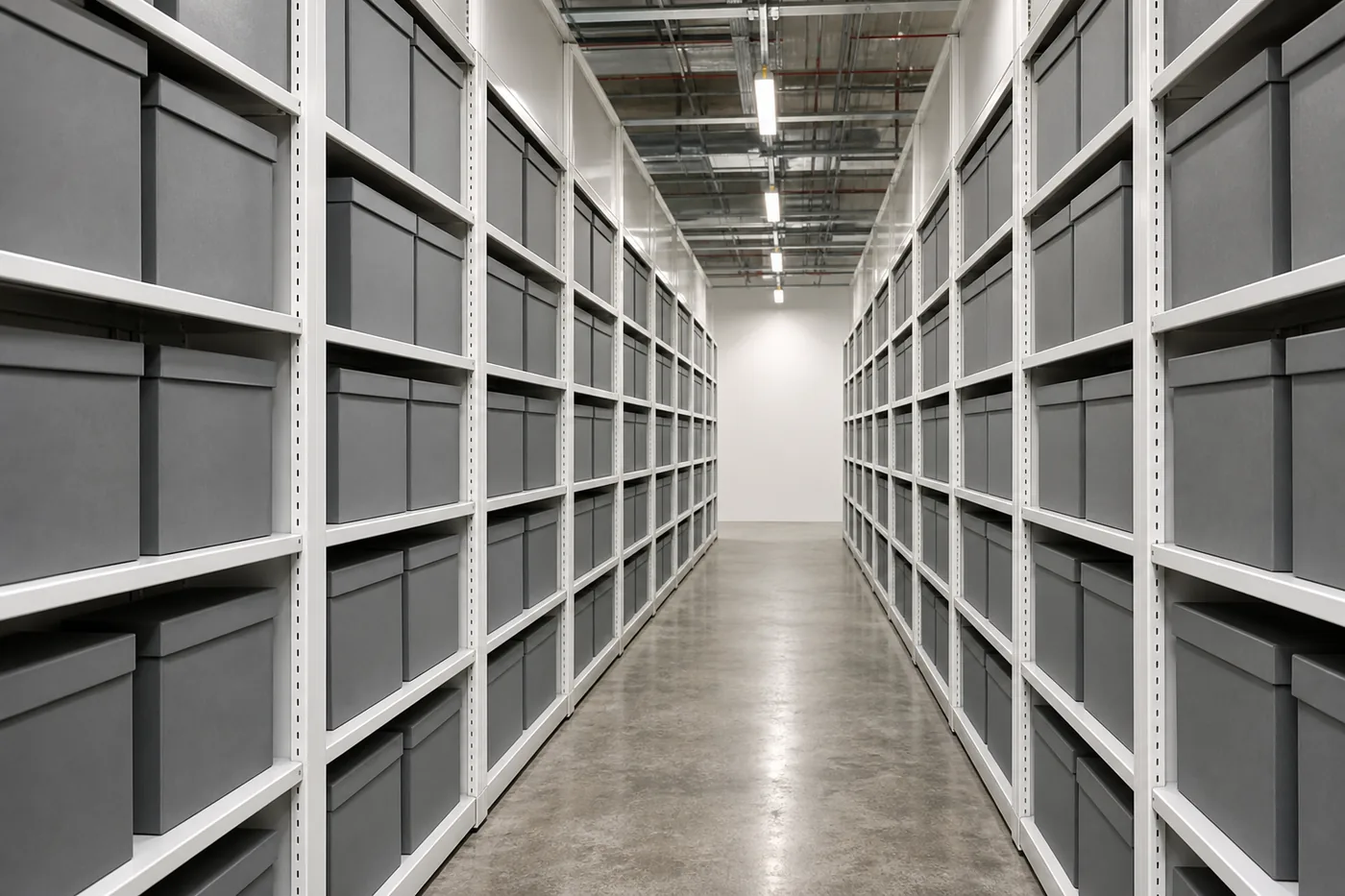
Mobile shelving is really two systems stacked together: the moving base (rail, carriages and drive) and the shelving that rides on it. When the shelving on hand is structurally sound and dimensionally consistent, it can often be mounted onto new carriages instead of replaced, so the spend goes into the part that actually creates the capacity gain.
On this project the museum’s existing shelving components were carried into the new system, with additional shelving supplied where the layout needed it. The result is a single, uniform collections system rather than a mix of old static ranges and a separate new island of mobile shelving.
The catch is that reuse has to be confirmed before the layout is finalized, because carriage widths follow the shelving dimensions. That check belongs in the measurement stage, not after the order.
Why this project used a sub-floor with wood decking
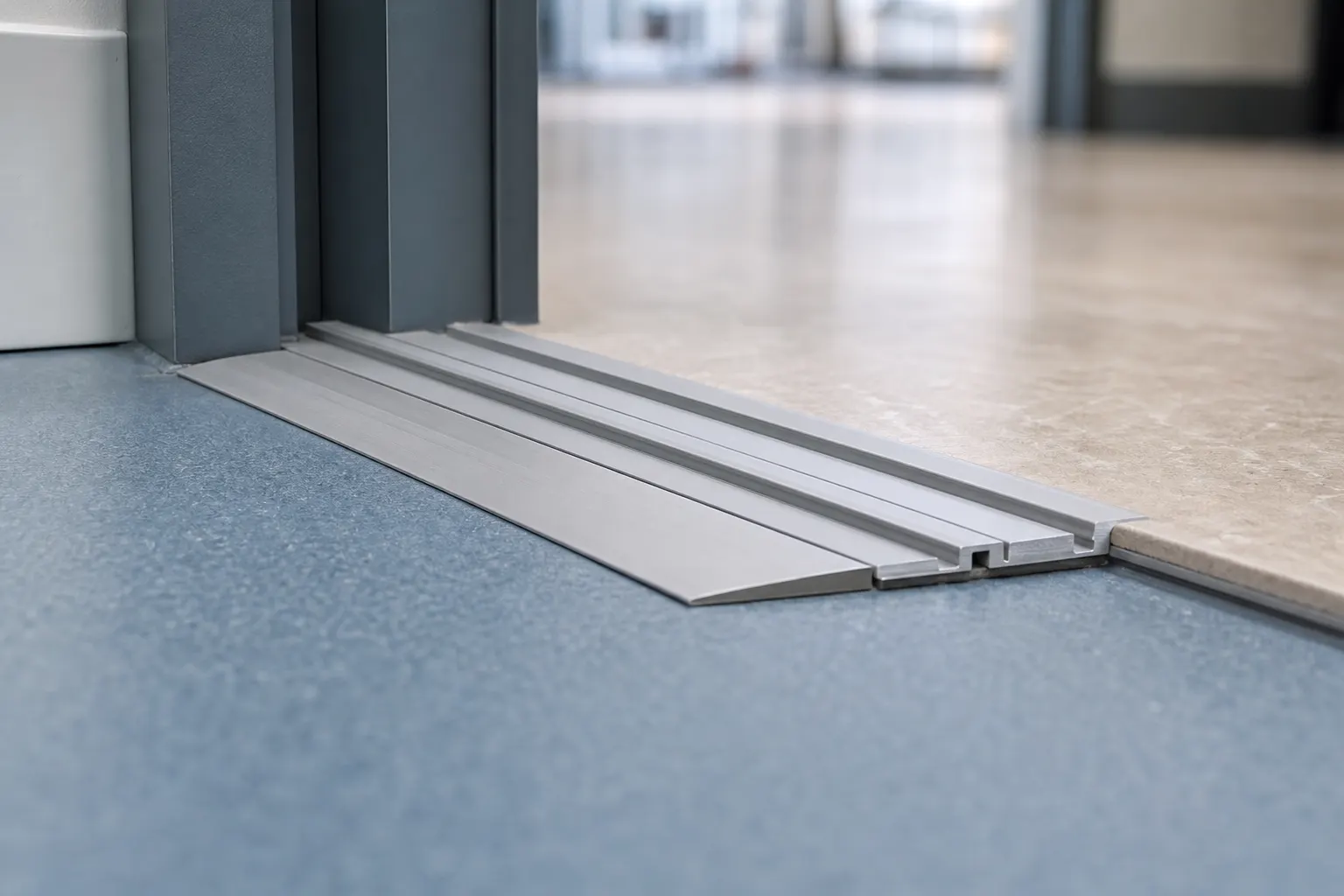
Every mobile shelving system needs rail for the carriages, and the rail has to end up flush with the walking surface. There are two ways to get there: build the floor up around the rail with a sub-floor and decking, or leave the rail on the surface and ramp up to it.
This collections room used a sub-floor with wood decking. The deck carries the rail and finishes level with it, so the whole footprint of the system becomes one continuous flat surface. For a collections room where staff push loaded carts and move fragile objects between ranges, a single uninterrupted surface is easier and safer to work on than a ramp at each aisle opening.
A sub-floor also keeps the original floor slab untouched: the deck is built up on top of it rather than cut into it. In an older museum building, that matters.
We compare the sub-floor and surface-mounted ramp approaches in detail on the rail comparison page, and the trade-off shows up in almost every museum, archive and library retrofit we quote.
Benefits the collection gained
More collections capacity in the same room. Collapsing the fixed aisles into one moving aisle turned floor that had been walkway into floor that holds collections.
Budget spent where it created capacity. Reusing existing shelving components put the investment into the mobile base rather than into replacing shelves that still worked.
A flat, cart-friendly working surface. The sub-floor with wood decking finishes level with the rail across the whole system footprint.
Shelf levels matched to a mixed collection. Five levels per section allow material to be separated by size and type rather than stacked on one generic spacing.
No electrical work in the collections room. A mechanical assist drive needs no power, no controls and no service contract.
Room to keep growing. Ranges can be added or re-shelved later as the collection accessions new material.

How the project ran
The sequence on this project is the one we run on most museum and archive collections rooms.
Our installation process page covers what to expect from measurement through anchoring and hand-off.
Museum collections storage across Utah and the Mountain West
Material Handling USA is based in Salt Lake City and has supplied mobile shelving to museums, archives, libraries and state agencies throughout Utah, including this state park museum in Blanding in the southeast corner of the state. Blanding sits in San Juan County at the heart of a region with a deep pioneer and Native American history, which is part of what the museum’s own collection preserves. Public-sector museum projects in Utah can often be purchased through a state cooperative contract, which is how this system was bought.
The storage problem repeats almost everywhere: a purpose-built collections room fills up, the collection keeps growing, and the building cannot. Converting the room to mobile shelving is usually the fastest capacity gain available, and reusing serviceable shelving keeps it affordable.
If you are planning something similar, start with our museum and archival collections mobile shelving page, then see mobile shelving cost and budget drivers and the installation process.
Call (801) 328-8788 to plan collections storage for a Utah museum, archive or library.
Frequently asked questions
Can a museum reuse its existing shelving in a new mobile shelving system?
What is a sub-floor with wood decking on a mobile shelving system?
Sub-floor or surface-mounted rail with a ramp: which is better for a museum?
Does mobile shelving in a collections room need electrical power?
How many shelf levels should a museum collections room use?
How much extra capacity does converting to mobile shelving add?
Can Utah public museums buy mobile shelving on a state contract?
How long does a museum mobile shelving project take?
Planning collections storage for a museum, archive or library?
Send us the collections room footprint and what you store, and we will lay out a mobile shelving system that fits the room, including whether your existing shelving can be reused. Utah and nationwide delivery and installation.