Walk most Utah aerospace floors and you will find racks full of parts that all matter but do not all behave the same way. Some items are ready to issue. Some are waiting on outside processing. Some have to stay separated so the wrong part never gets scanned into the wrong job. That is where aerospace parts storage racking for Utah manufacturers stops being a generic rack purchase and becomes a layout decision tied to traceability, access, and seismic restraint.
For Utah facilities, the question is rarely “Can we fit more?” It is “Can we store the right parts in the right condition, reach them fast, and keep the system compliant when the workload shifts?” A good rack plan supports that workflow instead of forcing operators to work around it. This guide walks through what aerospace storage has to do, how the main rack configurations compare, what to measure before you ask for a quote, and the Utah seismic and FAA rules that shape the design.
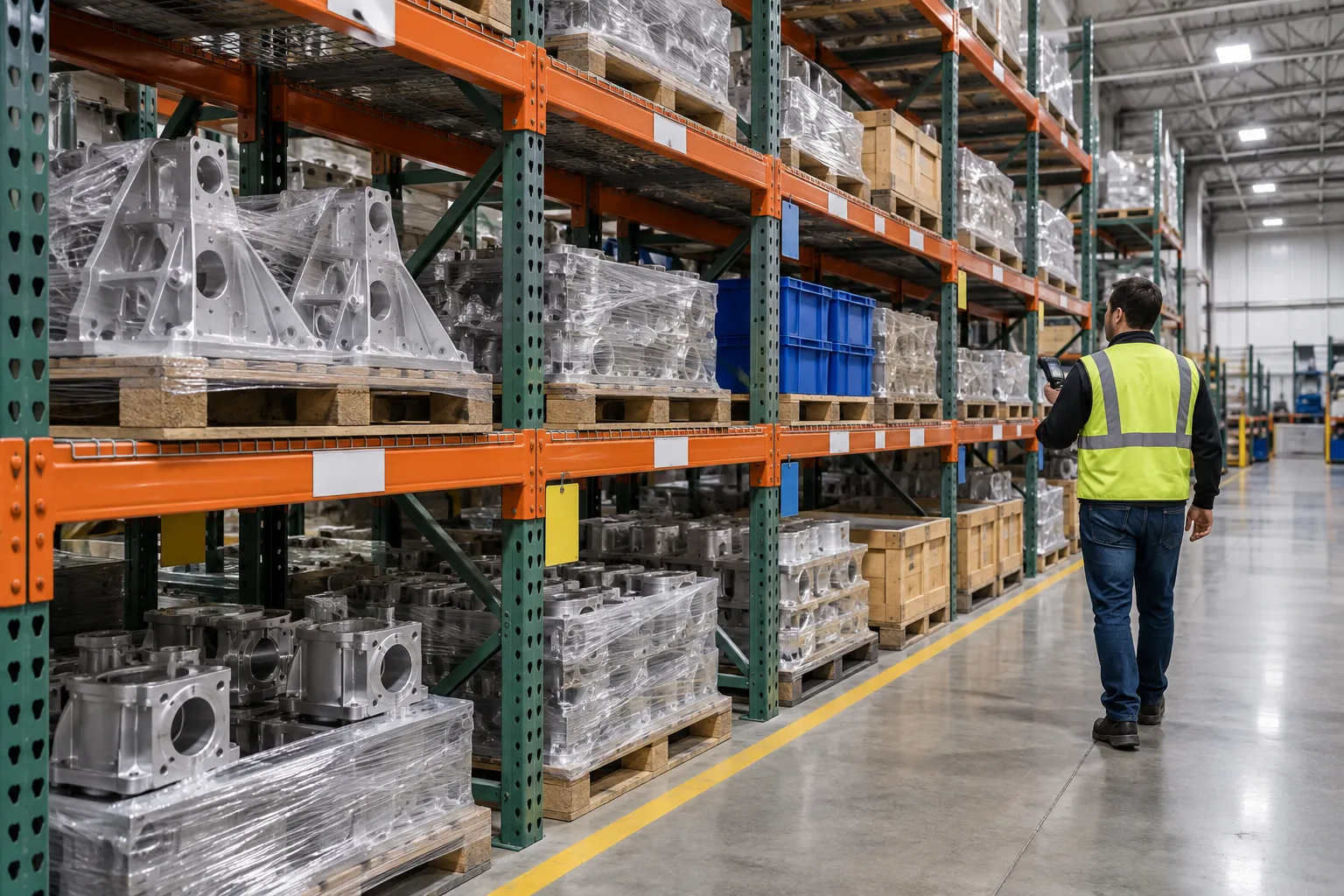
Why Utah Aerospace Facilities Need Application-Focused Storage Planning
Utah’s aerospace and defense base did not appear overnight. The region’s roots go back to 1957, when Thiokol Chemical Corporation opened its solid rocket plant and test range west of Brigham City and its rocket headquarters in Ogden, followed by the Minuteman missile assembly and recycle plant at Hill Air Force Base in 1960 (Utah aerospace and defense reference). That history built a manufacturing culture where storage, movement, and control have been part of daily operations for decades.
By 2020, Utah had 944 aerospace establishments and 31,390 employees, and PwC ranked the state No. 4 nationally for aerospace manufacturing attractiveness. The Aerospace Industries Association’s Utah state data now counts 38,183 jobs supported by aerospace and defense, 121 facilities, and $8.135 billion in GDP contribution, or 2.57% of total state GDP. At that scale, storage decisions are not generic warehouse choices. They shape how parts move through the plant.
Why the buyer’s job is harder than it looks
Aerospace parts move through mixed conditions. Incoming stock, released kits, parts waiting on outside processing, post-heat-treat returns, and inspected stock cannot sit together and be sorted later. Once those conditions mix, traceability gets fuzzy and count errors start showing up.
Practical rule: if a part’s status matters, the storage location has to show that status physically, not just in the ERP.
That is why local support matters. A Utah-focused layout review accounts for how a plant stages work, not how a catalog photo looks. If you are comparing equipment paths, start with the broader aerospace material handling solutions overview and then narrow it to the parts room or production cell that needs the most help.
What Aerospace Parts Storage Operations Typically Handle
Aerospace storage is not one inventory type. It is a stack of different behaviors sharing the same building, and each one puts a different demand on the rack. A good plan starts by separating those behaviors before anyone talks about beam spacing or bay count.
The items that create the most friction
Incoming material wants quick receiving access and short staging. Released kits need one-pick, one-location discipline so the job traveler and the physical part agree. Parts awaiting outside processing need their own zone so they do not get picked early. Post-heat-treat returns need clear identification so they do not look like fresh stock by accident.
Inspected stock is especially sensitive. It is the inventory everyone trusts, so it has to stay clearly separated from anything still in process. In aerospace environments, that separation is a workflow control as much as a storage choice. Quality systems built on AS9100 expect identification, traceability, and physical control of nonconforming product, and the rack layout is where those expectations either hold up or fall apart.

Oversized components, sensitive hardware, serialized kits, and small parts all behave differently too. Long or rigid material often belongs somewhere other than standard pallet rack. Small serialized items need dense, labeled locations that support scan-to-part accuracy. That is where the right storage media matters more than adding more rack.
For an example of how these systems get assembled around real aerospace work, see the aerospace parts storage system case study. The Robins Air Force Base security cage case study shows the same separation logic applied to a defense storage area.
Storage mistake to avoid: do not let “temporary” overflow become a permanent mixed-status zone. That is where counts drift and parts get reissued from the wrong condition.
Security also matters in this environment. If you are building a controlled area around high-value inventory or parts with access restrictions, the security cage configurator lets you lay out a lockable enclosure around existing rack or shelving. The logic behind CCTV and access control for warehouses is useful context when physical separation and electronic oversight need to work together.
Comparing Aerospace Parts Storage Racking Configurations
The right configuration starts with the part mix, handling pattern, and traceability needs. In aerospace, the trade-off is usually access versus density. Layout choices depend on how often operators touch the inventory and how tightly each location must tie back to controlled records.
The main configurations side by side
| Configuration | Load Type | Density | Access | Best Application |
|---|---|---|---|---|
| Selective pallet rack | Palletized parts, kits, mixed SKUs | Moderate | Direct, every pallet reachable | High-SKU storage with fast retrieval and clear location control |
| Drive-in rack | Uniform loads with limited variety | High | Lane-based, last in first out | Bulk storage where access order matters less than cube efficiency |
| Mobile rack | Lower-turnover parts and controlled inventory | Very high | Compacted, movable aisles | Heritage parts, archives, and low-frequency inventory that still needs protection |
| Cantilever rack | Long stock, tube, bar, oversized components | Moderate | Open front access | Material that will not fit cleanly in pallet bays |
| Secure small-parts storage | Serialized, high-count, hand-pick items | High | Pick-face driven | Fasteners, fittings, repair parts, and kitted components |
Selective pallet rack is the most flexible choice for Utah aerospace facilities that need visibility and quick access. It works well for mixed SKUs and palletized kits, and it keeps location control straightforward during audits and cycle counts. You can lay out bays, beam levels, and aisles in the free pallet rack configurator and send the result to our team for pricing. Drive-in rack makes sense only when the load is uniform enough that lane storage will not create picking confusion. It gives higher cube use, but access is sequential, so it fits bulk inventory better than fast-moving parts.
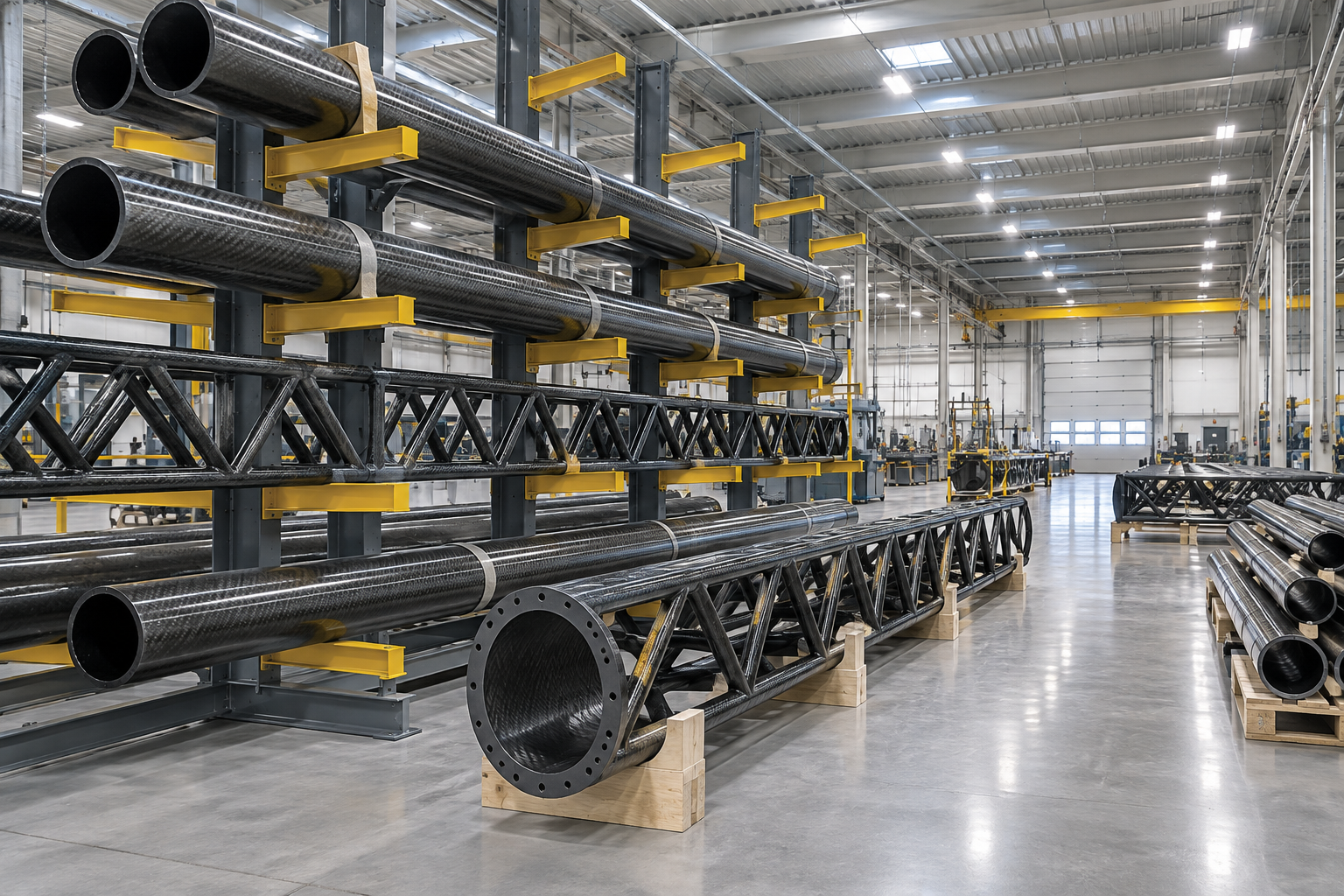
Mobile rack pushes density further, but it adds movement logic and more dependence on consistent procedures. That suits controlled inventory, heritage parts, and lower-turnover stock, where access is predictable and the cost of aisle space is hard to justify. Cantilever rack serves a different job. Long stock, bar, tube, and oversized components do poorly in standard pallet bays if they create overhang or unsafe loading. The cantilever rack configurator lets you set column height, arm length, and arm spacing around your longest material.
Secure small-parts storage is often the better fit for serialized items and hand-picked components. In those zones, the design has to support scan-to-part accuracy, not just storage volume. Hanging pocket systems like Storeganizer in Utah turn a pallet rack bay into hundreds of labeled small-parts locations, and tool crib and MRO storeroom shelving handles the hand-pick side of a repair station. For buyers comparing rack and dense enclosed storage, the Utah pallet rack hub is a regional starting point, and the vertical carousel vs. vertical lift module comparison helps when the decision shifts toward compact, enclosed storage.
How to Size an Aerospace Rack Layout Before You Ask for a Quote
Sizing a Utah aerospace rack layout starts with the parts, not the aisle. If you do not measure the inventory profile first, the quote will almost always miss something important, usually access or clearance. Work through these steps in order.
- Measure the extremes. Record the longest, widest, and tallest items in the zone, plus the largest pallet or container. Then note the smallest item that still needs its own dedicated location.
- Sort by load type. Separate pallets, totes, cartons, long stock, and loose hand-pick items. Each group points to a different storage medium.
- Weigh the loads. Get the heaviest unit load per position and per pallet. Beam capacity, upright capacity, and anchor design all depend on it.
- Match the access method. Note which items are forklift-served and which are picked by hand. Check the lift truck’s aisle width and turning needs so the crew can move without clipping upright frames.
- Map the aisle paths. Mark where people, carts, and lift trucks cross the same space, and where receiving, inspection, and issue points sit.
- Assign condition zones. Keep incoming, released, WIP, awaiting outside processing, and inspected inventory physically apart, and decide how each zone will be labeled.
- Slot by velocity. Put fast-moving parts in easy reach and slower items higher or deeper, as long as the access method still fits the picking pattern.
- Leave growth room. Reserve space for future part families or new kits so the layout does not need a rebuild after the first program change.
If the layout forces a forklift to do hand-pick work, or a hand-pick operator to reach for forklift stock, the plan needs another pass.
Good layouts are measured, not guessed. The best rack plan is the one that matches actual part flow, not the one that simply fills the room.
Want a second set of eyes on the layout? Build a first pass in the pallet rack configurator, then call Material Handling USA at (800) 326-4403. We will review your inventory list, check the seismic inputs, and turn it into a bay layout and quote for your Utah facility.
Utah Safety, Seismic, and Regulatory Requirements
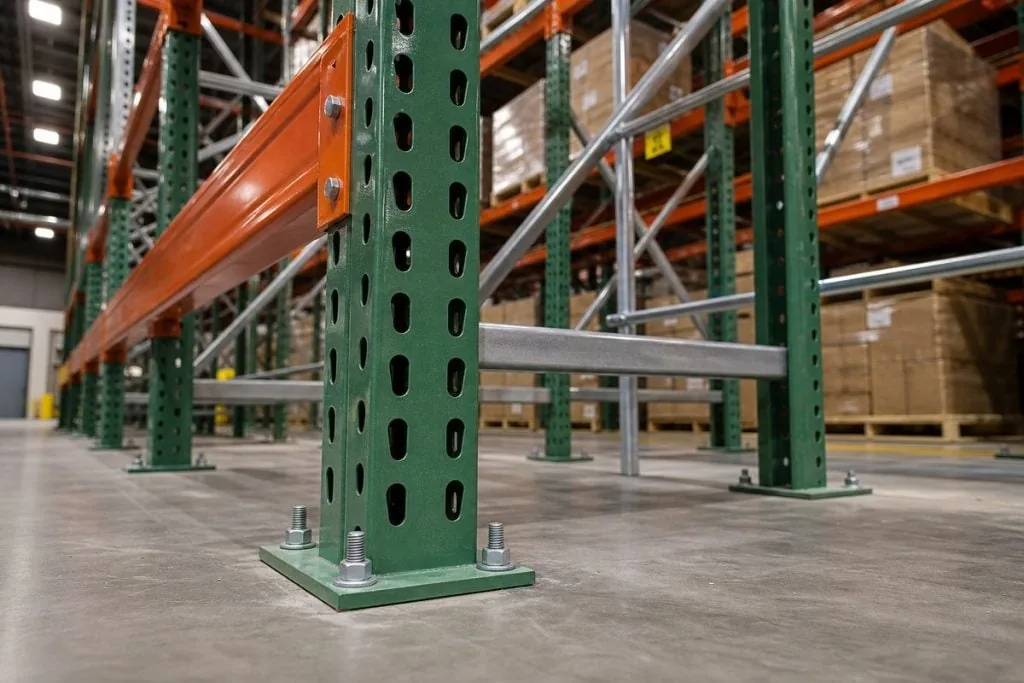
Utah rack installations are engineered structures, not freestanding fixtures. Rack engineers design to ANSI MH16.1, the industrial steel storage rack standard referenced by the International Building Code. The Rack Manufacturers Institute lists the main seismic inputs as the total weight of the loaded structure, the seismicity at the site, the thickness of the concrete slab, and the soil classification under it. On the Wasatch Front, anchorage is a core part of the design rather than an afterthought. A Utah school district rack project shows how those inputs play out on a real install.
Permits, stamped drawings, and the slab
Most Utah jurisdictions treat storage rack as a permitted structure. Salt Lake City’s racking permit guidance, for example, requires a building permit for racking taller than 5 feet 9 inches and notes that the entire city sits in seismic design category D or E, which triggers special inspections. The Greater Salt Lake Municipal Services District racking permit guide asks for structural plans and calculations stamped by a Utah-licensed structural engineer, with seismic design per ASCE 7 Section 15.5.3. Check the rules for your own city or county early, because they affect the schedule. Our pallet rack permits, engineering, and relocation page explains how we handle drawings and stamping.
If the slab is thin, uneven, or undocumented, the rack design has to account for it. If the building has seismic requirements, the anchorage, bracing, and row behavior all become part of the quote and the install plan. This is the stage where a storage project either stays orderly or gets expensive in revision work.
FAA segregation requirements for repair stations
For repair stations and MRO-type storage, FAA 14 CFR 145.103 requires sufficient work space and areas for the proper segregation and protection of articles. It names suitable racks, hoists, trays, stands, and other segregation means for storing and protecting articles undergoing maintenance, and it requires enough space to separate stocked parts from articles still being worked on (eCFR, 14 CFR 145.103). Our MRO and depot maintenance storage page covers how that translates into rack and shelving layouts. The rack has to do more than hold weight. It has to enforce physical separation between serviceable inventory and in-work articles.
Callout: In aerospace storage, separation is part of the compliance strategy, not a housekeeping preference.
That matters for location planning, bay labeling, and the physical shape of the storage zone. If a serviceable part can drift into the wrong area, the layout has failed even if the rack is structurally sound. Utah buyers should treat seismic design and regulatory segregation as the starting point for the conversation, not the finish line.
Installation, Lead Times, and Design Support
The fastest projects are the ones that come in with good measurements, a clear inventory scope, and a site that is ready for the crew. When those pieces are missing, even a simple rack project can stall while people sort out beam heights, floor conditions, or pallet sizes.

What slows a project down
Engineering drawings take time if the layout is not defined. Structural stamping adds a step when the jurisdiction requires it, which in Utah is common. Freight coordination gets harder when the delivery path, dock access, or staging area is not clear. None of that is unusual, but it does mean quote quality matters early.
Lead time depends on the configuration. Standard teardrop uprights and beams in common sizes usually ship faster than custom heights, heavy structural rack, or specialty components, but the only way to know is to confirm with the quote. The best outcome is a system that lands in stages, gets commissioned without disrupting production, and starts carrying the correct loads right away. Experienced installers matter most when the operation cannot shut down a whole aisle or wait through a long rework cycle.
What to verify before approval
- Load limits: Confirm the safe working load for the unit load, the beam pair, and the bay from the manufacturer’s data and the applicable storage standard, and make sure load plaques will be posted.
- Layout drawings: Check aisle widths, aisle direction, and any obstructions before sign-off.
- Site readiness: Verify slab condition, anchor points, and access for install equipment.
- Install sequencing: Decide which bays go in first so production does not get trapped behind the work.
For buyers who want a broader product path, the manufacturing material handling solutions page ties rack choices back to the rest of the plant. If the project is more about a quote and a layout conversation, a call is the simplest next step.
Practical Buyer Decisions for Different Aerospace Scenarios
A small MRO shop usually needs visibility first. Selective rack, labeled zones, and a clean divide between serviceable parts and anything still in process make day-to-day picking easier. Dense storage helps only after the part categories are sorted, because a compact layout can hide mistakes faster than it saves space.
A midsize production facility often needs a mixed approach. Long material may belong on cantilever rack, fast-moving kits on selective rack, and controlled hand-pick items in secure small-parts storage. The layout should follow the job flow, not the catalog family, because aerospace work rarely fits one storage type cleanly.
A larger assembly operation tends to care most about zone discipline and service access. That usually means tighter bay labeling, stronger location control, and earlier review of seismic and anchorage details. If the facility handles serialized components or mixed-condition stock, the rack plan should start with physical segregation and then work toward density.
What to ask for in the quote request
- Layout review: Ask for a drawing tied to actual inventory profiles.
- Configuration comparison: Request more than one rack option if the part mix is still changing.
- Load and seismic inputs: Provide slab notes, building height, and any known restrictions.
- Support path: Ask who handles design, engineering, permitting, installation, and follow-up.
For related Utah projects, see how a 3PL warehouse racking layout in Salt Lake City handled seismic design, and how material handling for drone manufacturers deals with a similar mix of composites, electronics, and serialized parts.
Frequently Asked Questions About Aerospace Parts Storage Racking in Utah
Do I need a permit to install pallet rack in Utah?
In most Utah cities and counties, yes. Salt Lake City, for example, requires a building permit for racking taller than 5 feet 9 inches, and jurisdictions along the Wasatch Front typically ask for structural drawings stamped by a Utah-licensed engineer because the area sits in a high seismic design category. Check with your local building department before ordering.
What rack type works best for aerospace parts?
Selective pallet rack is the most common starting point because every pallet is directly accessible and location control is simple. Cantilever rack handles long stock and oversized components. Secure small-parts storage, such as pocket systems or bin shelving inside a cage, works best for serialized hand-pick items. Most aerospace plants end up with a mix.
How does FAA 14 CFR 145.103 affect rack layout?
The rule requires certificated repair stations to provide space and means, including racks, trays, and stands, to segregate and protect articles during maintenance, and to keep stocked parts separate from articles being worked on. In practice, that means dedicated, labeled zones for serviceable, in-work, and quarantined items rather than one shared rack.
Why does seismic design matter so much for Utah racking?
Much of northern Utah sits in seismic design category D or E. Rack in those areas has to be designed under ANSI MH16.1 and ASCE 7 for earthquake loads, which affects upright selection, base plate size, anchor count, and slab requirements. Skipping that step risks a failed inspection and, in a real event, a rack collapse.
How do I keep inspected and in-process parts from mixing?
Give each inventory condition its own physical zone with clear labels, and make the zones look different at a glance, for example with color-coded beam tags or a lockable cage for quarantined stock. Then make sure the ERP location codes match the physical layout so a scan always points to one place.
Can existing pallet rack be adapted for small aerospace parts?
Often, yes. Hanging pocket systems, wire decking with dividers, and bin shelving can be fitted into standard pallet rack bays to create hundreds of small-parts locations without adding footprint. The rack still has to be rated for the new load pattern, so confirm capacities before converting bays.
What information do I need before requesting a rack quote?
Bring the dimensions and weights of your largest and heaviest loads, a rough count of pallet positions or SKUs, the lift equipment you use, ceiling height, slab thickness if known, and a sketch of the space showing doors, columns, and traffic paths. With that, a layout and quote can be turned around quickly.
Conclusion and Next Steps
Aerospace parts storage in Utah works best when the rack plan follows the operation’s real conditions. That means separating mixed inventory states, choosing storage that fits the part type, and treating seismic and regulatory details as part of the layout, not an add-on. The right system helps operators find parts faster, protects traceability, and reduces the chance that a storage shortcut turns into rework later.
For Utah manufacturers, the strongest projects start with a clear inventory review and a layout conversation tied to the actual floor. That is especially true when the operation handles serialized parts, MRO stock, or parts that need physical segregation for compliance. Move that step earlier and the rest of the project goes more smoothly with fewer revisions.
Call Material Handling USA at (800) 326-4403 to request a quote and talk through your rack options, or contact us online for a free layout review customized for your Utah aerospace operation.
Design it yourself, then get a quote
Use our free online design tools to configure exactly what this article describes, then send the configuration to our team for pricing:
- Pallet rack configurator for selective rack bays, beam levels, and aisles
- Cantilever rack configurator for long stock, tube, and oversized components
- Storeganizer configurator for dense small-parts pockets inside pallet rack
- Security cage configurator for controlled and quarantine zones