
Home → Case Studies → Aerospace Parts Storage System
Aerospace Parts Storage System Case Study: SNC + Storeganizer
How Sierra Nevada Corporation improved parts retrieval speed, storage density, and inventory accuracy using Storeganizer pocket storage within existing pallet rack bays.
1 SKU
Per labelled pocket location
Fast
Parts Retrieval
Up to 4
Rows of pockets deep per bay
0
Rack modifications required
Situation: Aerospace Inventory Needs Fast, Reliable Access
Sierra Nevada Corporation (SNC) manages thousands of aerospace parts across multiple programs. Their existing storage used standard shelving and bins, leading to wasted vertical space, inconsistent part locations, and time-consuming searches during production.
Why This Matters in Aerospace
- Production delays from slow part retrieval directly affect program timelines
- Misplaced or mislabeled parts create quality risks and rework costs
- High part counts across multiple programs require organized, scalable storage
- Temporary staging areas consume permanent floor space

Solution: Storeganizer Aerospace Parts Storage System
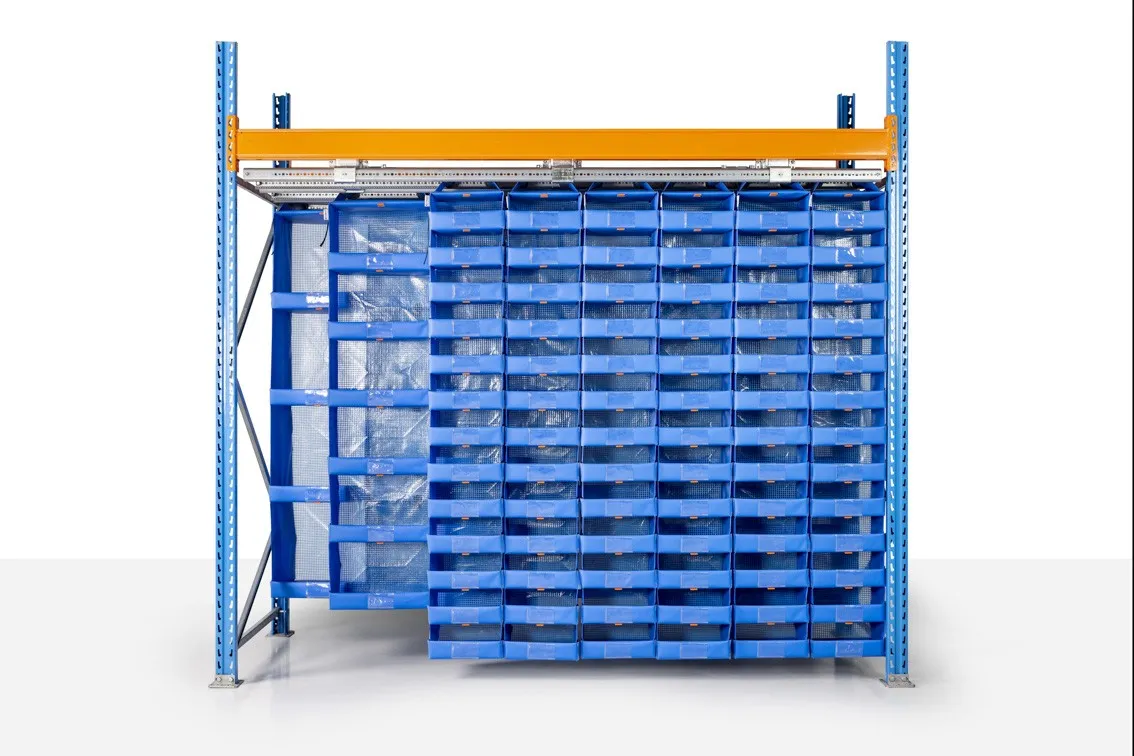
SNC selected the Storeganizer system — a pocket-based storage solution that installs inside existing pallet rack bays. Each pocket holds parts in a dedicated, labeled location that is easy to access without tools, ladders, or equipment.
The system fits within standard 42″ deep rack bays and uses the full vertical height of each bay level, dramatically increasing storage density without additional floor space.
Features
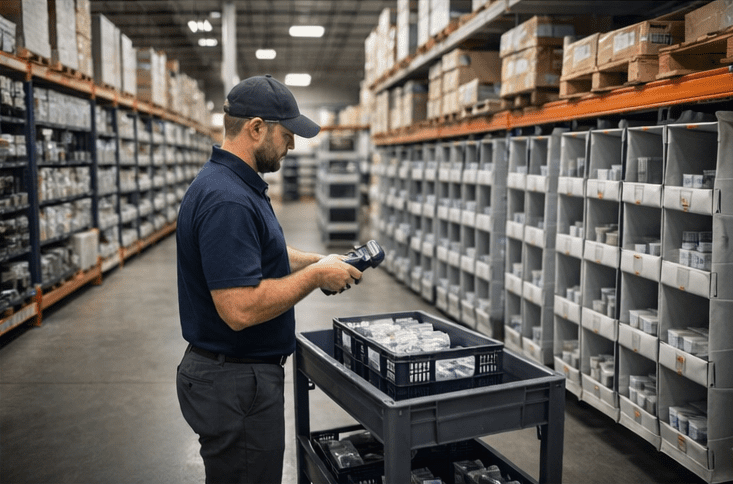 High-Density Pocket StorageIndividual pockets inside existing rack bays maximize vertical space. Each pocket holds parts in a consistent, labeled location.
 Consistent LocationsEvery part has a dedicated pocket with clear labeling, supporting inventory accuracy and reducing search time across shifts.
 Scalable LayoutAdd or reconfigure pockets as programs change. The modular design adapts to new part counts without replacing the entire system.
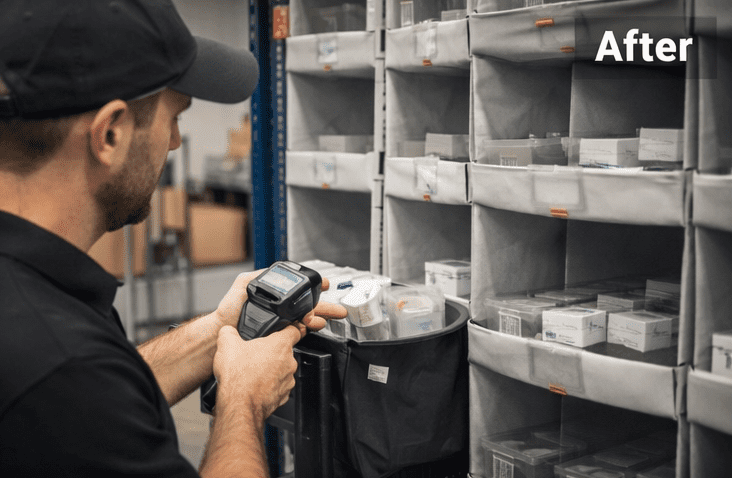 Easier AuditsClean, organized storage with visible part locations makes physical inventory counts and audits faster and more accurate.
Advantages
Comparison: Common Small Parts Storage Approaches in Aerospace
| Approach | Density | Accuracy | Cost |
|---|---|---|---|
| Standard Shelving + Bins | Low | Low | Low |
| Modular Drawer Cabinets | High | High | High |
| Vertical Lift Modules | Very High | Very High | Very High |
| Storeganizer | High | High | Moderate |

Related Aerospace Storage Solutions
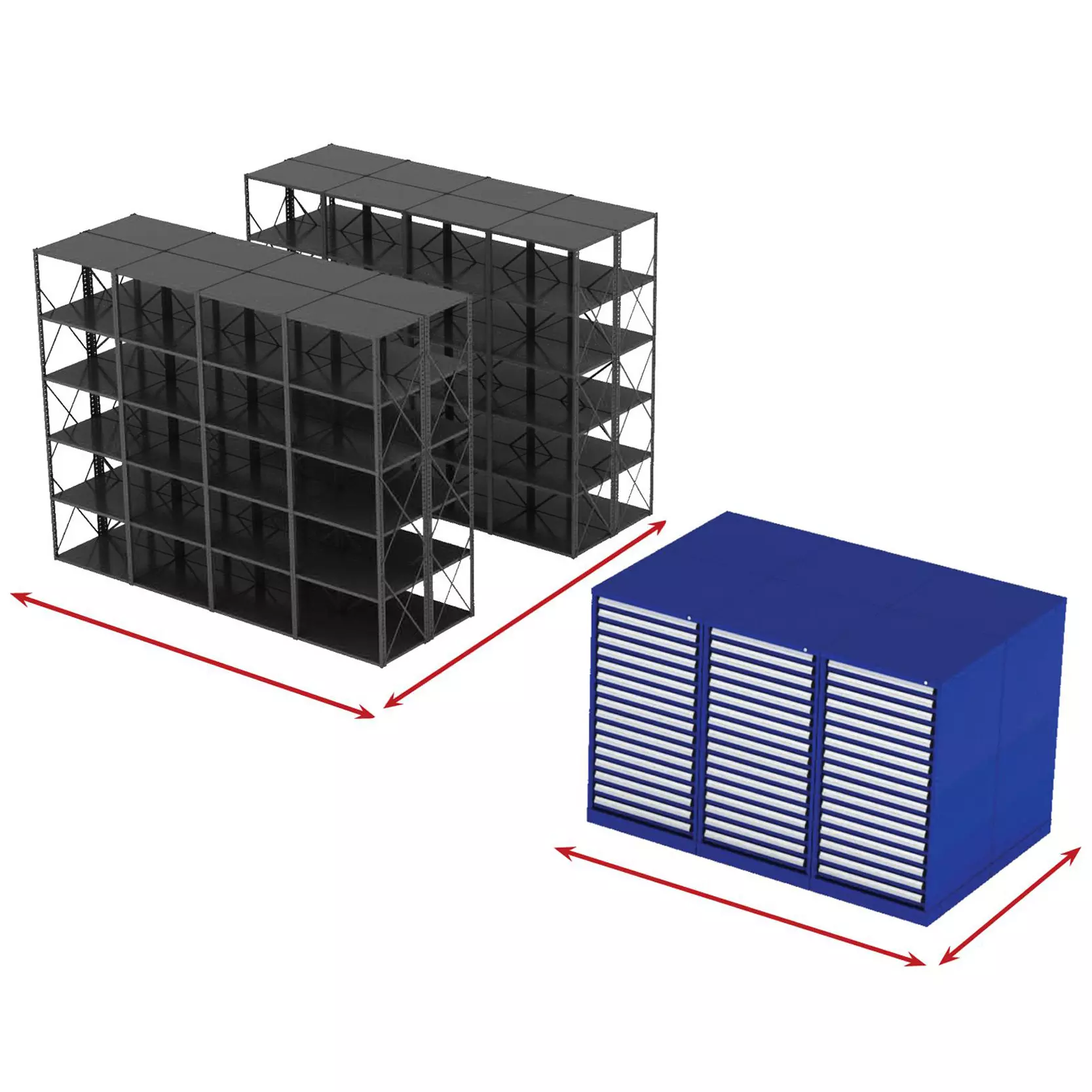 Modular Drawer CabinetsHigh-density drawer storage for small components requiring organized, labeled compartments.
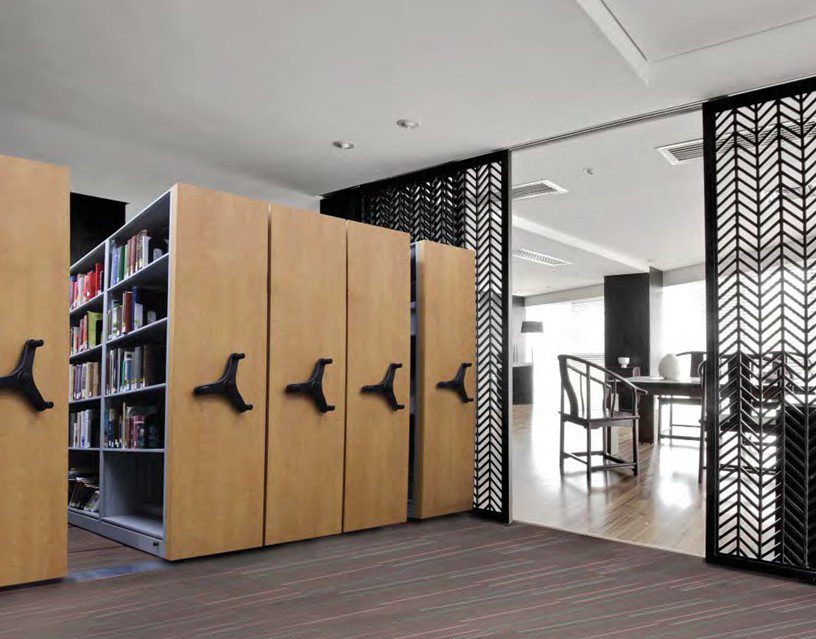 Mobile Shelving for PartsCompact shelving systems that maximize floor space for parts libraries and MRO inventory.
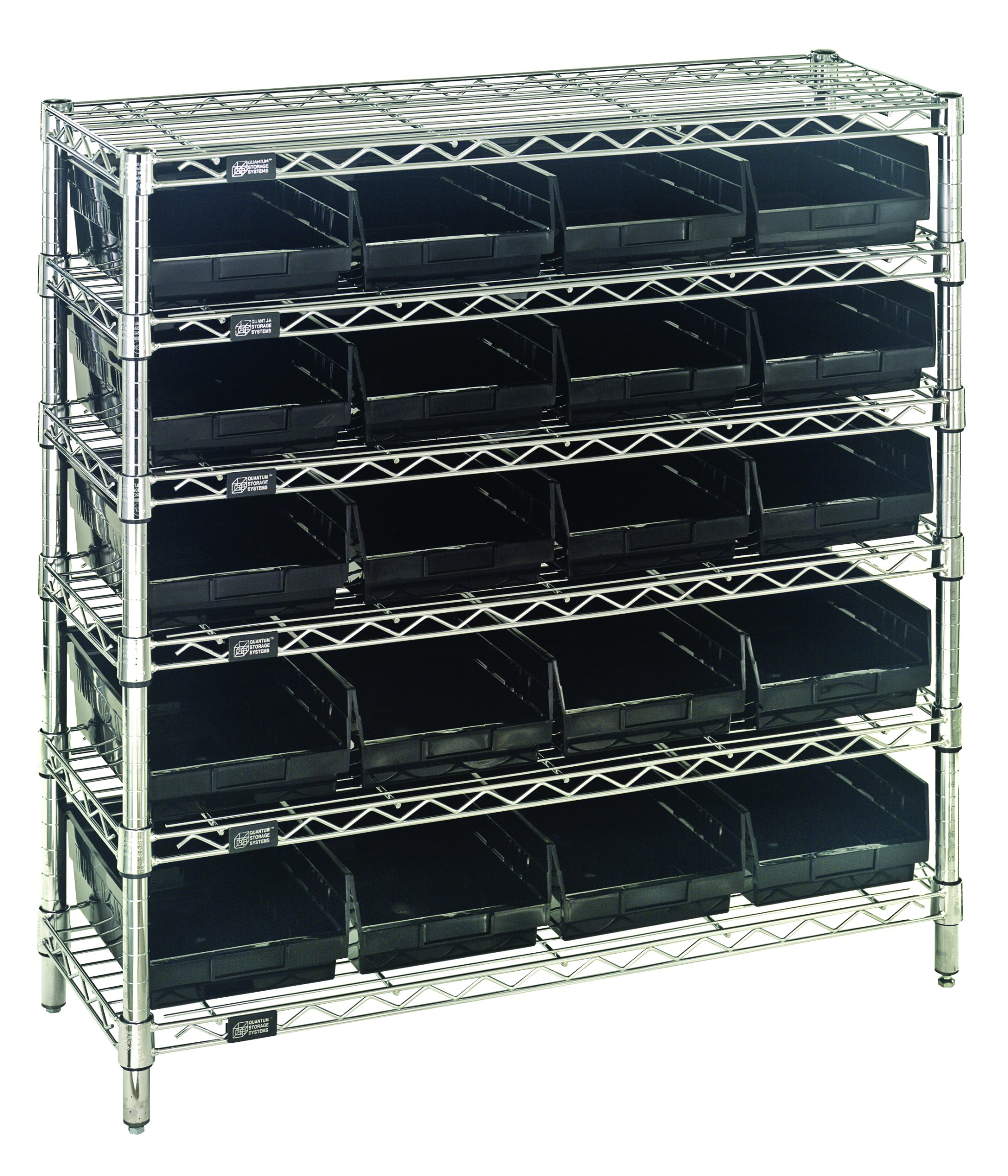
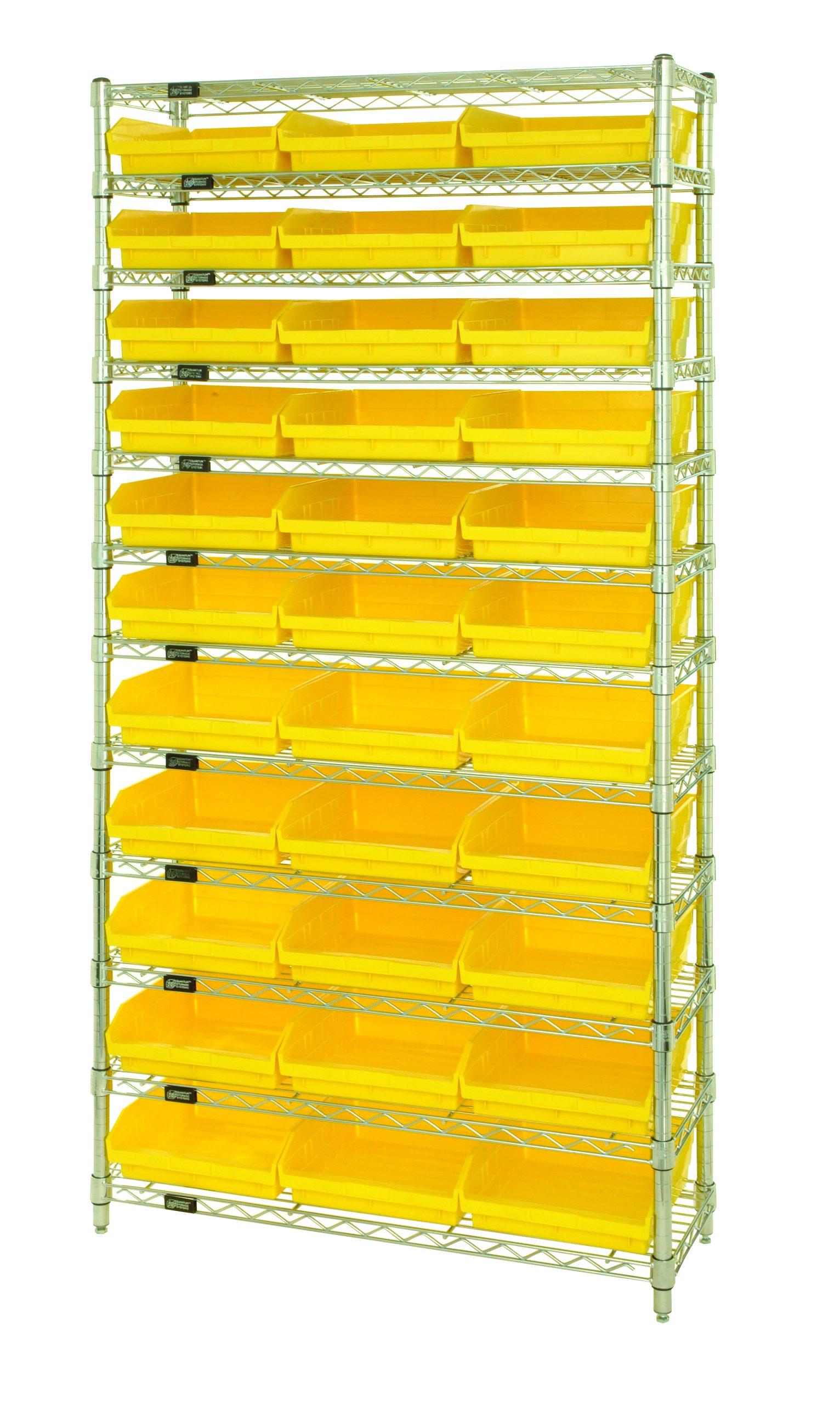
Shop Bin Storage Systems Online
Buy select items directly from our online store, or request a quote for volume, custom sizes and freight-rated orders.
See storage systems by type of aerospace operation on our aerospace material handling solutions page.
Frequently Asked Questions
What is Storeganizer?
Does Storeganizer require replacing existing pallet rack?
What types of parts work best with Storeganizer?
Can Storeganizer integrate with inventory tracking systems?
How does Storeganizer compare to vertical lift modules?
What the configuration looks like in practice

An aerospace parts room is an unusually good match for pocket storage, and it is worth being specific about why. The inventory profile is thousands of part numbers with one or two pieces of each, most of them small, most of them boxed or bagged, and almost all of them attached to a documentation trail. Shelving handles that profile badly: a shelf level sized for the largest fitting on the programme leaves every other location mostly empty, and several similar parts end up sharing a level with one label between them.
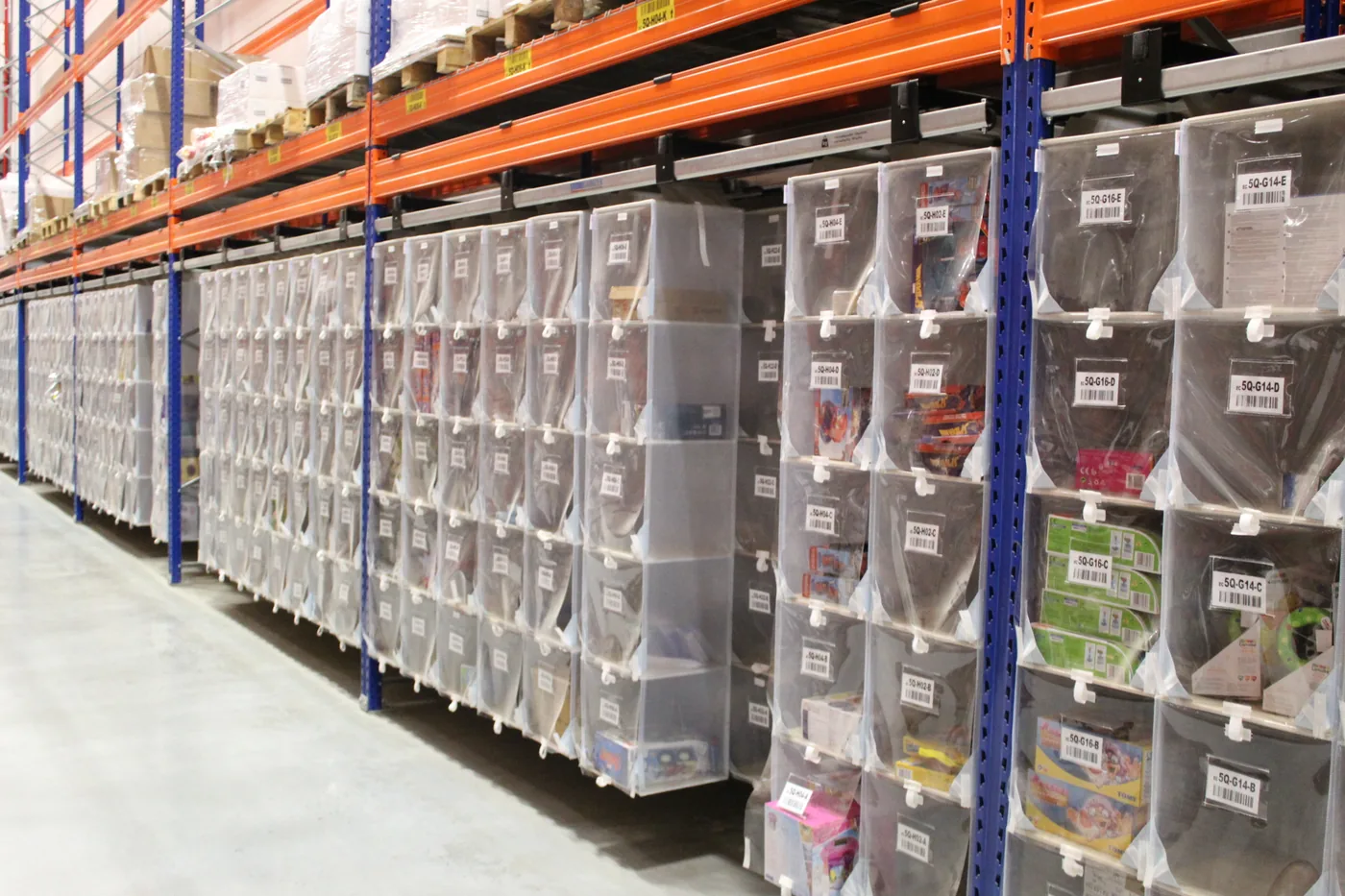
Pocket columns invert that. Each part number gets a textile pocket sized close to the part, the columns stack vertically inside a standard 42-inch deep rack bay, and pockets hang up to four rows deep front to back. The front columns are light enough to roll sideways by hand even when loaded, so the rows behind stay reachable without a ladder, a step or a lift. Depending on the pocket style, one bay yields between 28 and 396 discrete, individually labelled pick locations.
The five standard US pocket styles run from 12" x 12" x 6" up to 24" x 20" x 18", and mixing sizes within a single bay is standard practice rather than an exception. Where a programme’s parts do not suit any standard size, pockets are made to order after a survey of the actual items. Textile grades run from light Tiger fabric up to heavy-duty PC380 rated to around 500,000 abrasion cycles, which is the grade specified where machined parts have exposed edges.
Nothing structural, nothing powered
The columns hang from the existing beams on a universal top suspension bar. There is no drilling, welding, anchoring or electrical work, no permit drawing, no software to integrate and no service contract. That is the reason a change of this size could be made inside a live operation: bays are commissioned one at a time, so picking continues out of the old shelving until the new pick face is stocked and labelled.
What we would tell another aerospace or defense customer
Sort the catalogue by consequence, not just by movement
The parts that stop a build are not always the parts that move most. Class the catalogue by consequence of stockout first, and put the line-stopping items in the front row at comfortable working height regardless of how rarely they are issued.
Design the location scheme before anything is hung
Every pocket carries a label holder. Decide the aisle-bay-column-row-pocket scheme, in the format your ERP or MES already uses, before installation. Retro-fitting a scheme onto a stocked face is a job nobody wants to do twice.
Do not oversize the pockets
Specifying one size up “just in case” recreates the half-empty shelving you are replacing. Mix in a row of larger pockets for the handful of bigger items instead of sizing the whole bay up.
Pair density with access control where it is needed
Pocket columns record a location; they do not lock it. Where parts must be secured as well as located, the bay goes inside a rack security enclosure, or issued tooling and consumables move to smart lockers.
Measure the before and after
Square feet released, locations created and search time per part. Those three numbers are what funds the next phase, and they are much harder to reconstruct after the shelving has gone.
The system behind this installation
Storeganizer is manufactured by KTP conTeyor in Belgium and supplied and installed in the United States by Material Handling USA. Independent research carried out at the University of Leuven measured an average 40% gain in usable storage space, a 42% reduction in operator travel time and a 26% gain in order-picking efficiency against conventional rack and shelf storage. Columns are rated by the manufacturer at up to 220 lb (100 kg) each with up to a 10-year rip-and-crack warranty, and the exact rated load is confirmed on every quote.
Full specifications — the five standard US pocket sizes, pick-location counts per bay height, the four textile grades and the rack dimensions we need to quote — are on the Storeganizer specifications page.
 Storeganizer hubThe system, options, installation process and results.
 Aerospace & defense parts storageConfiguration notes for traceable, controlled parts rooms.
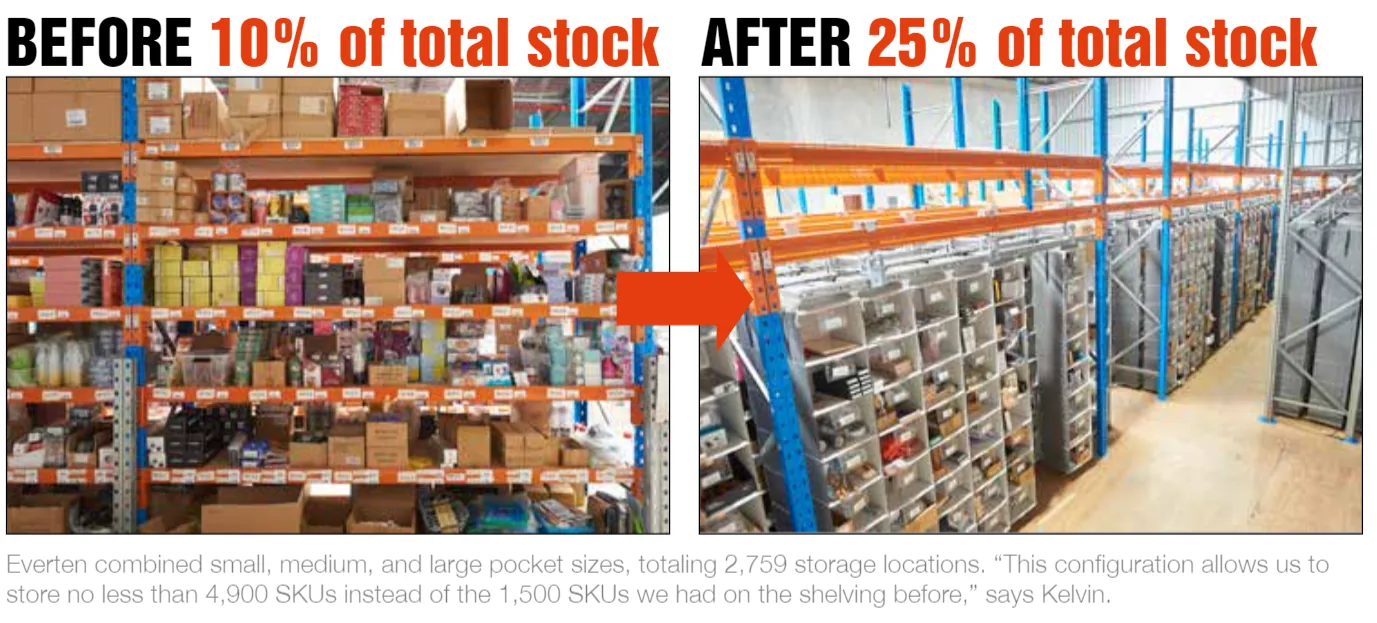 More case studies & resultsAttributed before-and-after figures from other operations.
Explore Storeganizer for Your Facility
Contact our team for a free assessment of how Storeganizer can improve parts storage density and retrieval speed in your operation.
Build Your Own Storeganizer Layout
Use our free 3D Storeganizer Configurator to size your columns, pick pocket sizes and textile grades, and get a price in minutes — no sales call required to see your configuration.