
Home | Storeganizer | Aerospace & Defense Parts Storage For the racking side of the same problem — dense raw material, kitted work in process and traceable locations — see our aerospace manufacturing warehouse racking case study.
Aerospace and Defense Parts Storage With One Location Per Part Number
Very high part counts, one or two pieces per part number and a paper trail on everything. Storeganizer pocket columns give each part number its own labelled, barcodable location inside the pallet rack you already have — up to 396 per bay.

High-value small parts, in a room that cannot grow

Aerospace and defense parts rooms have an unusual profile: very high part counts, very low quantity per part number, high unit value, and a documentation trail attached to almost everything. The physical result is a room full of shelving holding one or two items per location, where the shelf level was sized for the largest fitting in the programme and everything else floats in the middle of it.
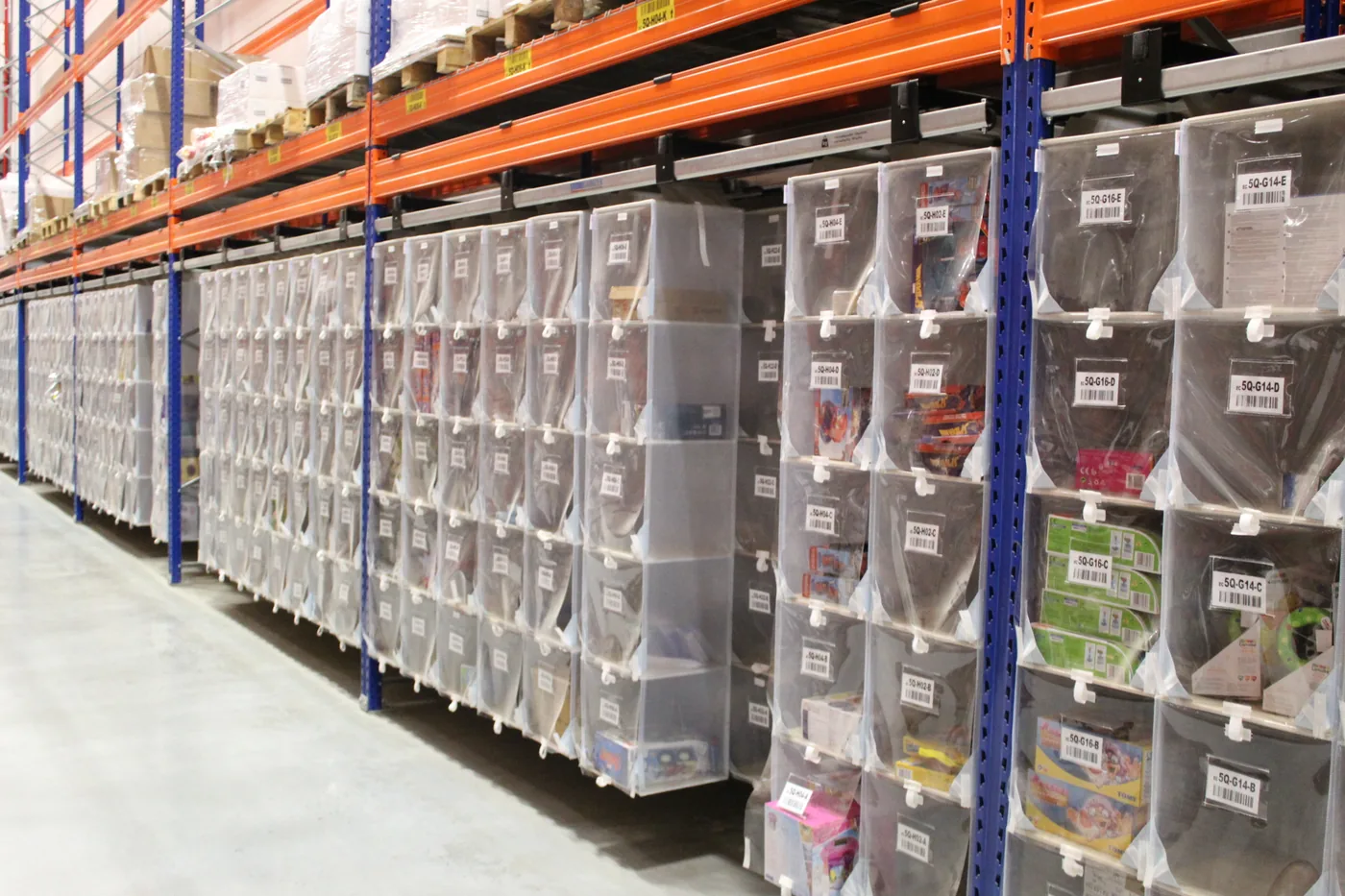
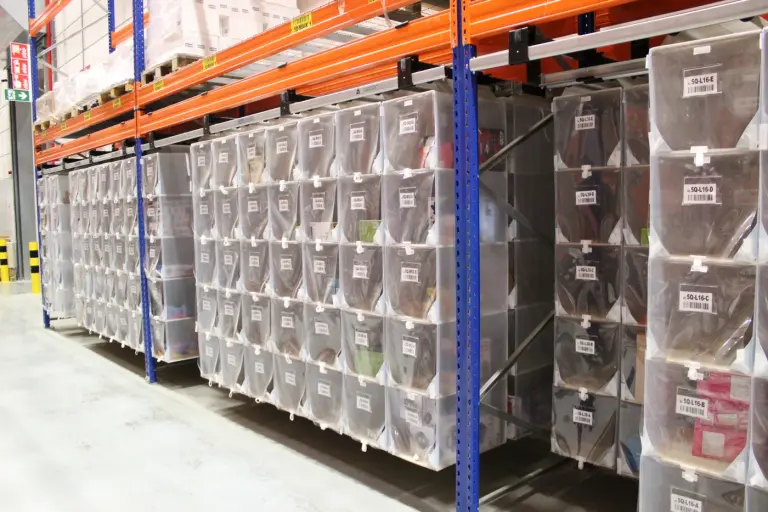
You cannot solve that with more shelving, because the constraint is the room. Storeganizer solves it by replacing shelf levels with vertical columns of right-sized textile pockets hung in the existing pallet rack — up to four rows deep, and up to 396 individually labelled locations in a single bay. Each part number gets one pocket, one label and one barcode, which is exactly the structure a traceable inventory wants.
An aerospace installation we delivered
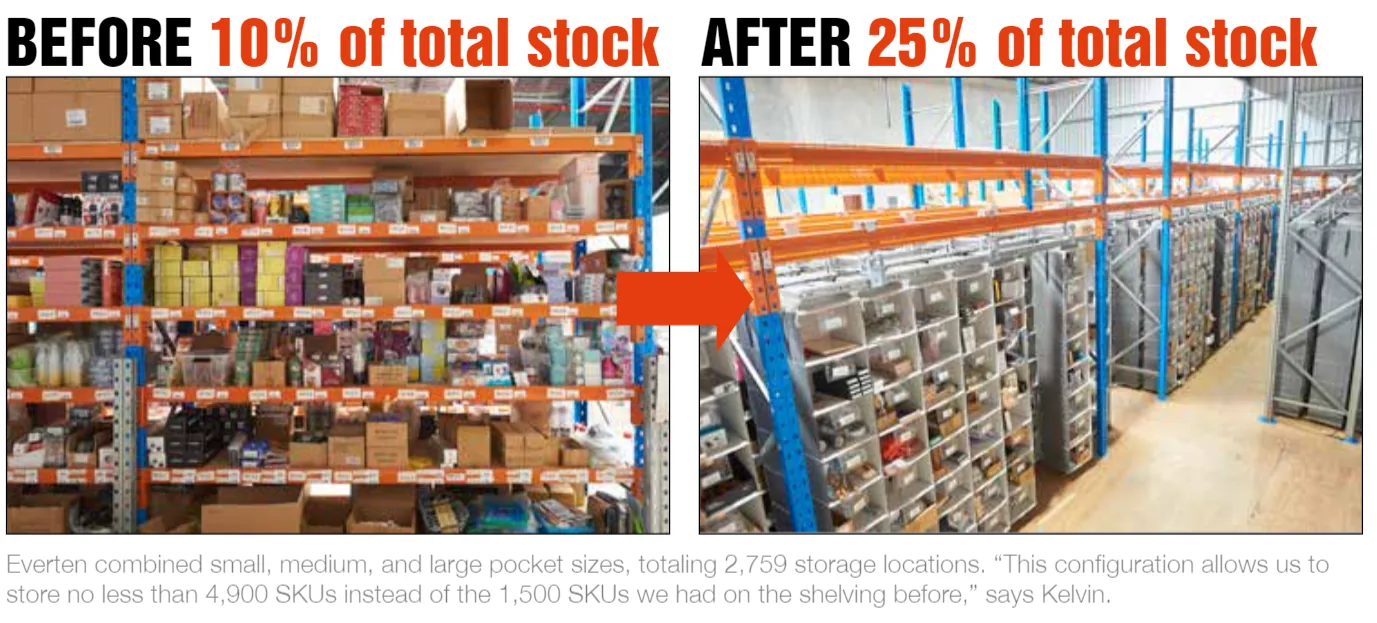
MH-USA installed Storeganizer pocket columns in place of static shelving in an aerospace parts room, working around a live operation. The full write-up — the before condition, the configuration chosen and what changed afterwards — is documented in our case study.
The pattern it follows is the one we see repeatedly in aerospace and defense work: the density gain is large because the starting point was so inefficient, and the accuracy gain matters more to the customer than the space gain, because a mis-pick on a controlled part is a paperwork problem as well as a production one.
Configuration notes for aerospace and defense
Configure a parts-room bay
Set your bay height and the pocket size your parts need, and the free Storeganizer Configurator returns the location count per bay and a bill of materials you can attach to a requisition.
What else usually belongs in the same project
A parts-room rebuild in this sector is rarely only about pockets. The other elements we are commonly asked to specify alongside them:
- Security cages and rack enclosures for controlled and high-value inventory
- Smart lockers and industrial vending for issued tooling and consumables
- High-density mobile shelving for documentation, tooling and heavier items
- Pallet rack and cantilever rack for tooling, fixtures and long stock
- Mezzanines and work platforms where the only remaining space is vertical
- Full warehouse and stores design including layout drawings
MH-USA has delivered storage projects for aerospace, defense and government customers including work documented in our Northrop Grumman mobile shelving case study, and holds GSA contract vehicles for applicable product lines.
Classify spares before you store them
Storage layout is downstream of a decision most stores have never formally made: which spares matter. Before a single pocket is specified, we ask maintenance and engineering to sort the catalogue three ways. It takes an afternoon and it changes the configuration completely.
By consequence of stockout
Class A spares stop a production line, a pump station or a fleet vehicle within hours. Class B degrade performance or force a workaround. Class C are convenience items. Class A parts belong in the front row at working height, ideally with a visible min level, regardless of how rarely they are issued. It is common to find genuinely line-stopping spares stored on a top shelf behind three boxes because they are only issued twice a year.
By issue frequency
Pull 24 months of issues. The result in most stores is heavily skewed: a small group of consumables and wear parts accounts for the majority of transactions, and a long tail has never been issued at all. The tail is where pocket columns pay best, because it is the tail that currently occupies the most shelf space per pick.
By physical handling
Weight, size, packaging and cleanliness decide whether a part can go in a pocket at all. Bagged and boxed parts are straightforward; bare, oily or sharp-edged items need a heavier textile grade or front covers, and heavy assemblies stay on shelving or rack. Sorting on this axis is also what stops a well-intentioned project from putting a 60 lb gearbox somewhere it does not belong.
The output is a simple matrix: high-consequence and high-frequency parts in the golden zone at the front, dormant low-consequence parts compressed into small pockets high and deep, and the physically unsuitable minority kept on parts room shelving. That matrix is what we configure the bays around, and it is what we hand over with the installation so the logic survives staff turnover.
Explore the Storeganizer cluster
 Storeganizer hubWhat the system is, specs, options, process and results.
 Small-parts warehouse storageRight-sizing pick locations for fasteners, fittings and boxed components.
 3PL & e-commerce fulfilmentMore SKUs per square foot when the footprint cannot grow.
 Spare parts & MRO storageCritical spares findable in seconds without a parts-room expansion.
 Pallet rack space optimizationRecover the cube you already pay for before leasing more building.
 Order-picking efficiencyCutting travel and mis-picks by rebuilding the pick face.
 Aviation & MRO partsOne part number per traceable pocket, and what belongs in cantilever instead.
 How Storeganizer worksThe suspension system, pocket columns, four rows deep, and installing into existing rack.
 SKU slotting & rack ROIUsing SKU size, stock volume and order frequency to maximise rack-space return.
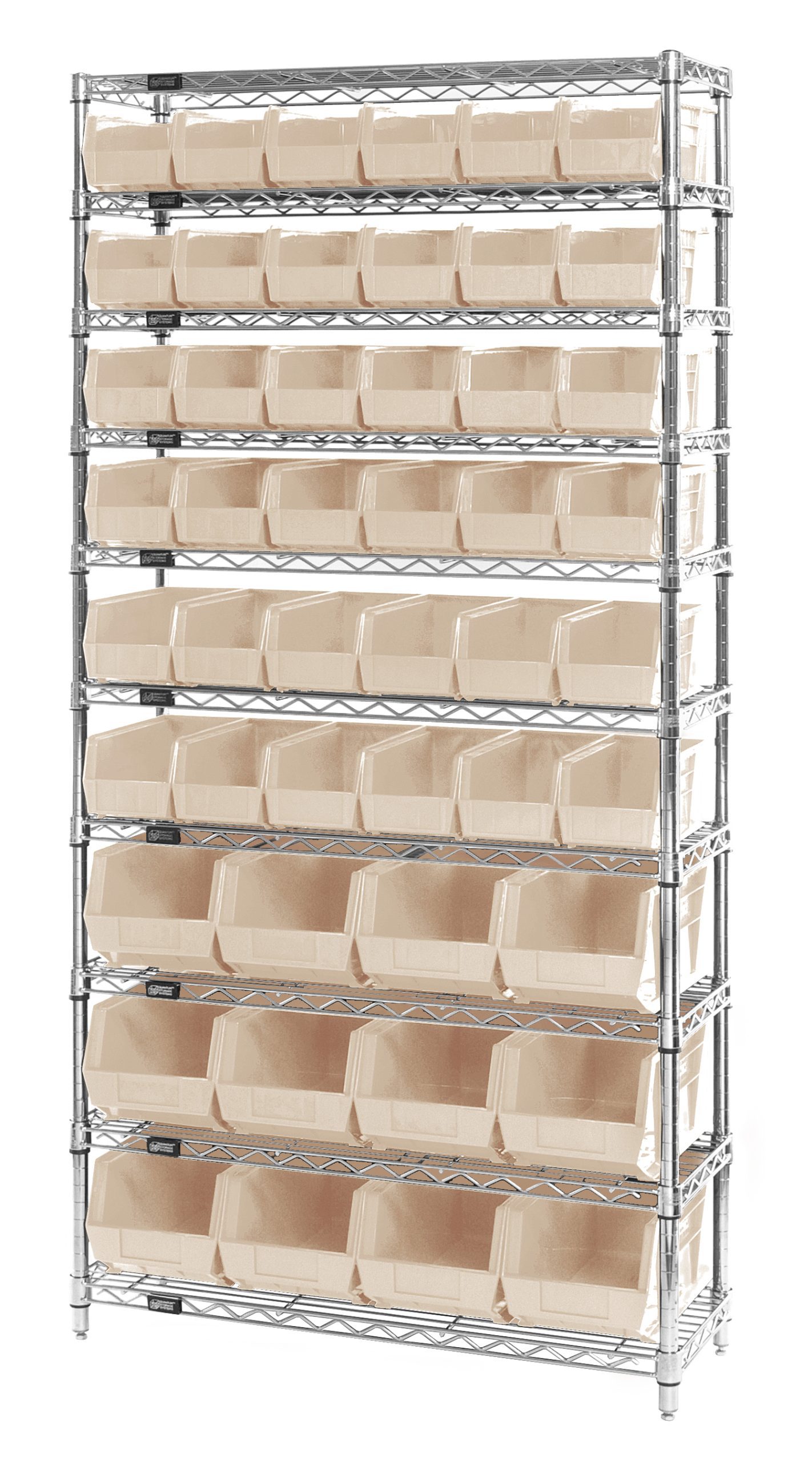
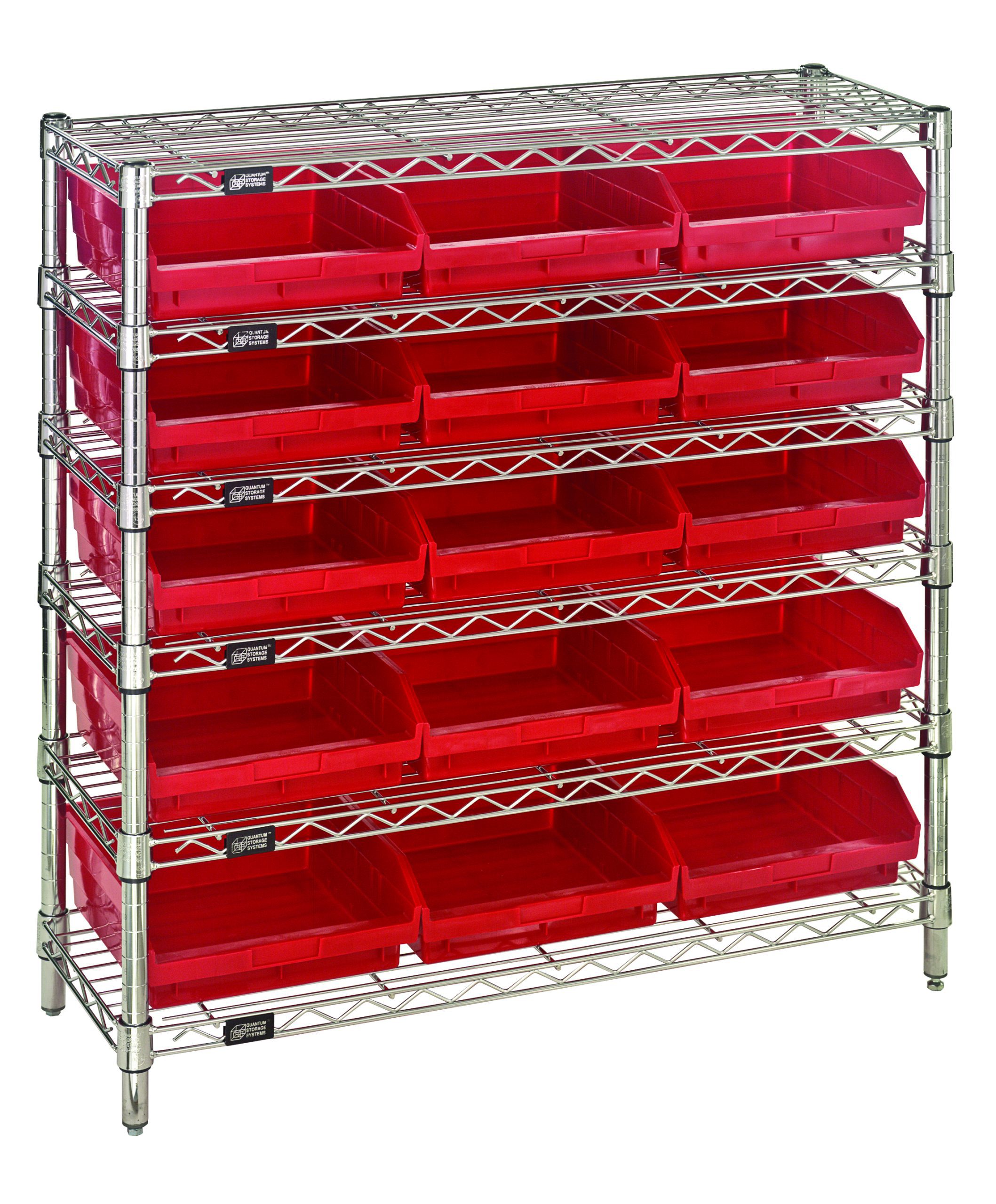
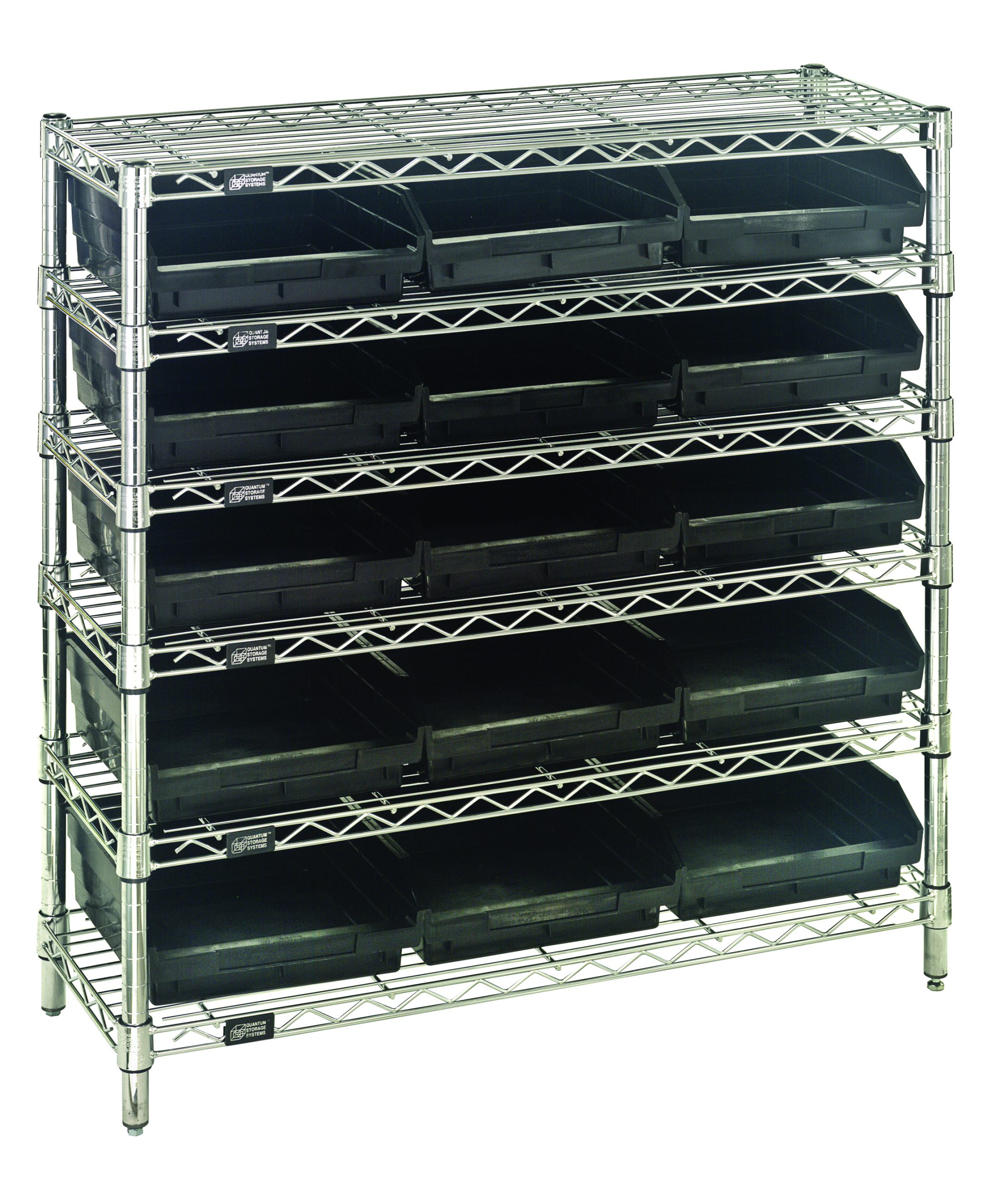
Shop Bin Storage Systems Online
Buy select items directly from our online store, or request a quote for volume, custom sizes and freight-rated orders.
Frequently asked questions
Is Storeganizer suitable for a controlled aerospace parts room?
Can we keep serial and lot traceability?
Are there FOD (foreign object debris) considerations?
What about ESD-sensitive electronics?
Can it hang in the rack we already have in the parts room?
Traceability, shelf life and controlled access
Aerospace and defense parts storage is rarely just a density problem. The same bin that has to be found quickly also has to be auditable, and in many cases the part inside it has a shelf life, an export-control classification or a serialized history that has to survive the trip from receiving to the aircraft.
What pocket columns do well here
- One SKU, one address. Look-alike fasteners, seals, O-rings and connectors stop sharing a bin. Discrete addressing is the single biggest reduction in mispicks available without automation.
- Barcode-ready pick faces. Every pocket takes a label or barcode holder, so scan-verified picking works the same way it does on a rack beam.
- Visible stock levels. An open pocket shows what is in it. Cycle counting a wall of pockets is faster than opening drawers, and shelf-life rotation is visible rather than remembered.
- Front covers for sensitive parts. Where dust, light or handling is a concern, covers and front stops are specified per pocket size rather than for the whole bay.
Where it needs help from something else
Pockets are open storage. Anything requiring physical security, chain of custody or environmental control needs a boundary around it: a pallet rack security enclosure around the converted bays, a tool or bonded cage for controlled items, or smart lockers where individual accountability is the requirement. Those combine well — the density lives inside the enclosure.
For heavy or long items — skins, extrusions, tooling — the answer stays cantilever rack or selective pallet rack. Pockets carry up to 44 lb (20 kg) each and 220 lb (100 kg) per column, which covers most small-parts inventory and none of the structural work.
Rebuild the parts room without expanding it
Send us your bay dimensions and a part-number profile. We will show you the location count, what comes off the shelving and how the install phases around a live programme.