
Home | Storeganizer | Small-Parts Storage
Small-Parts Warehouse Storage That Uses the Whole Bay
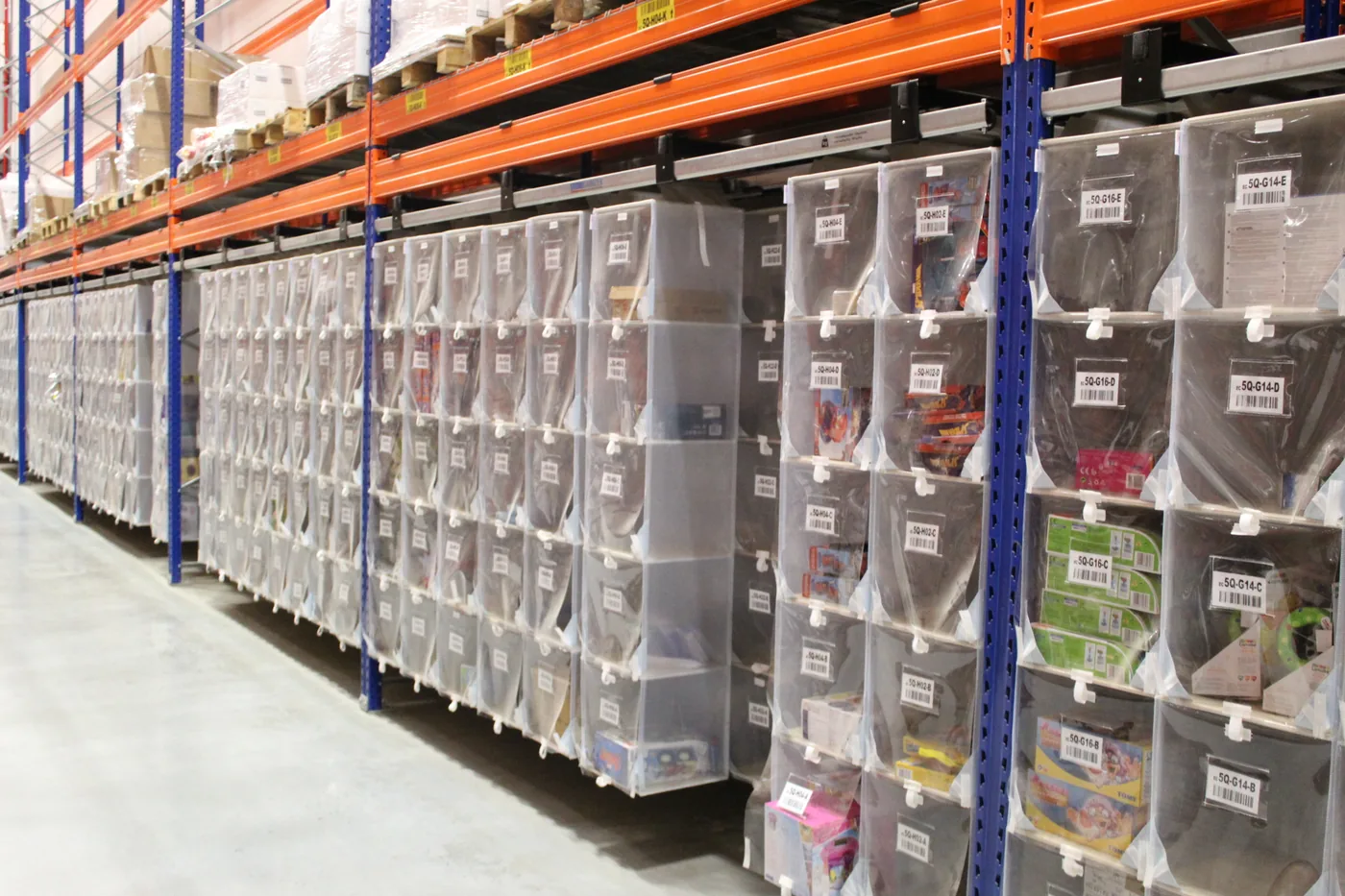
Fasteners, fittings, boxed spares and slow-moving components do not need a 42-inch shelf each. Wholesale supply branches feel this most at the counter — see Storeganizer for electrical, plumbing and HVAC distributors. Storeganizer pocket columns — a hanging pocket storage system that suspends high-density textile pockets from standard rack beams — turn one pallet rack bay into as many as 396 right-sized small-parts pick locations, installed in the rack you already own.

Most small-parts storage wastes most of its cube

Walk any warehouse small-parts area and you will find the same pattern: a shelf 42″ deep and 18″ tall holding a single carton of fittings, another holding three bags of fasteners, another holding one box turned on its side because nothing else fits. The shelf level was sized for the largest thing it might ever hold, so almost every location is mostly air. Multiply that by a few hundred locations and the wasted cube adds up to bays — sometimes to an entire mezzanine.
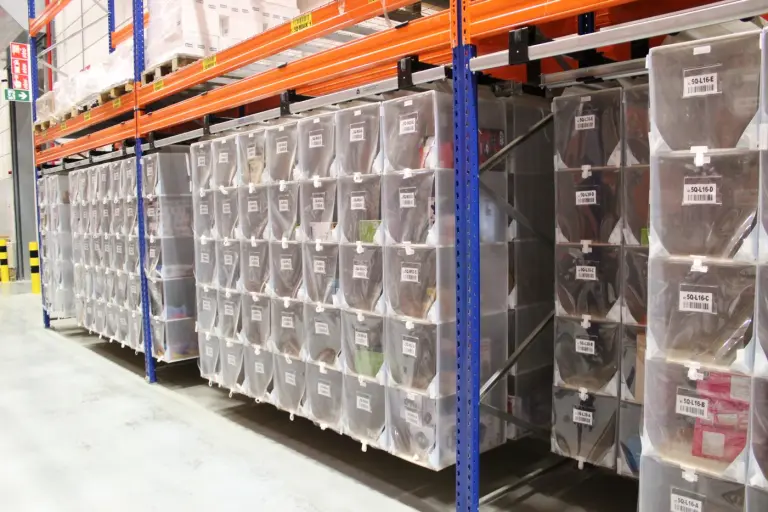
Storeganizer attacks the problem from the other direction. Instead of a shelf sized for the worst case, each SKU gets a textile pocket sized close to the part, and the pockets stack vertically in columns that hang from your existing rack beams. Pockets are suspended up to four rows deep in the bay, and because a loaded column is light enough to roll sideways by hand, the back rows stay reachable. The same bay that held a handful of cartons on shelves now holds between 28 and 396 individual pick locations depending on pocket size.
Choosing the pocket size for your parts
Pocket size is the single most important decision in a small-parts configuration, because it sets both the density you get and whether pickers can work comfortably. These are the standard US styles we quote from.
| Pocket style | Opening (W x D x H) | Locations per 96″ bay | Locations per 144″ bay | Suits |
|---|---|---|---|---|
| Extra Small | 12″ x 12″ x 6″ | 252 | 396 | Fasteners, washers, connectors, seals, sachets |
| Small | 12″ x 12″ x 12″ | 126 | 198 | Boxed spares, fittings, valves, PPE, singles |
| Medium | 18″ x 12″ x 14.5″ | 65 | 110 | Cartons, hoses, repair kits, polybagged goods |
| Large | 18″ x 20″ x 14.5″ | 45 | 75 | Bulkier cartons, moulded parts, sub-assemblies |
| Extra Large | 24″ x 20″ x 18″ | 28 | 44 | Large cartons, bagged goods, light bulky returns |
Do not oversize
The commonest mistake is specifying one pocket size larger than the parts need “just in case”. That is the same reasoning that produced the half-empty shelving you are replacing. Where a handful of SKUs really are bigger, mix a row of larger pockets into the configuration rather than sizing the whole bay up. In-pocket dividers can also split a pocket when two very small SKUs can share one.
See the location count for your own bays
Enter your bay height and pocket size in the free Storeganizer Configurator and it returns the number of pick locations per bay, the total for your project and a bill of materials.
Warehouse storage solutions for small items, compared
Small items such as fasteners, electronic components, spare parts and accessories usually end up in one of five storage types. We sell all of these, so this is not a sales pitch for one product. It is how we decide which one to quote.
| Option | Locations per bay footprint | Handles weight | Reconfigurable | Where it wins |
|---|---|---|---|---|
| Storeganizer pocket columns | Very high (28-396) | Light — tens of pounds per pocket | Yes, add or change bays any time | A long tail of small, light, low-quantity SKUs |
| Boltless / rivet parts shelving | Low to moderate | Heavy | Shelf levels adjust | Mixed-size and heavy items, work surfaces |
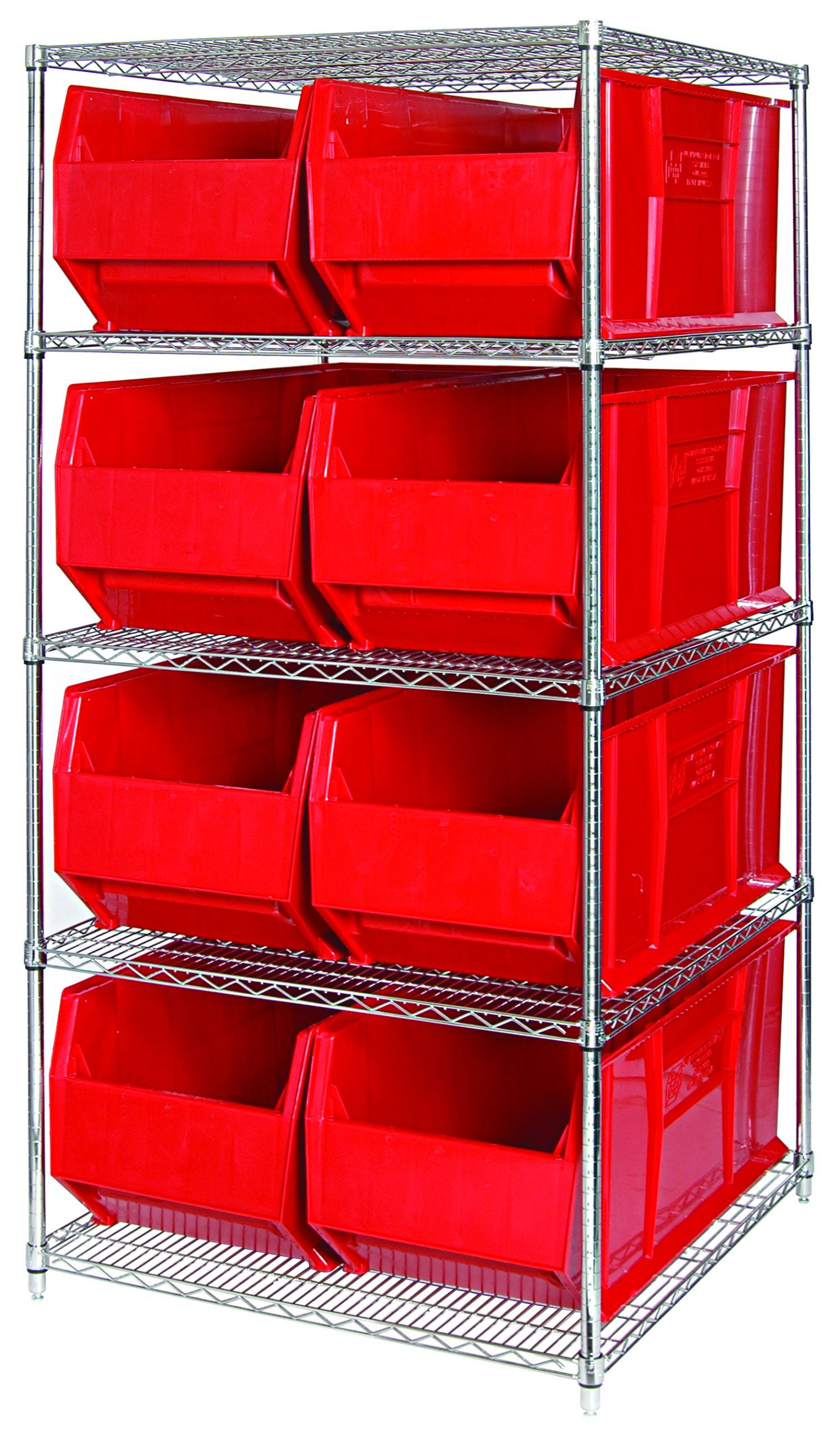
| Steel bin shelving with plastic bins | Moderate | Moderate | Bins swap easily | Standardised bin sizes and modest SKU counts |
| Carton flow rack | Moderate for cases | Cases | Lanes re-pitch | Full-case picking of fast movers with FIFO |
| Vertical carousels and VLMs | Highest | Moderate to heavy | Trays reconfigure | Throughput, security and goods-to-person |
The full breakdown, including cost profile and maintenance, is on our Storeganizer vs. shelving, bins, flow rack and automation page.
What changes on the floor
How an MH-USA small-parts project runs
SKU profile
We review dimensions, weight, velocity and quantity on hand to separate the items that should move into pockets from the ones that should stay on shelving or rack.
Measure
Bay inner width, depth and usable height plus beam height and depth. Where parts need custom pocket dimensions, the manufacturer’s Quantisizer survey measures the actual items.
Configure
Pocket styles, columns per bay, rows deep and which SKUs land in the golden zone — the same decisions you can preview in the Storeganizer Configurator.
Install & slot
Columns are hung in your rack, locations are labelled or barcoded and SKUs are slotted by velocity. Bays can be commissioned in stages so picking never stops.
Slotting a pocket bay so the density actually pays
A dense pick face that is badly slotted is just a compact version of the same problem. Nearly all of the productivity gain reported by Storeganizer users comes from what goes where, not from the pockets themselves — so this is where we spend the design time. New to the term? Our pick faces guide explains what a pick face is and compares every way to add more.
Height bands
Treat the bay as three bands. The middle band, roughly between mid-thigh and shoulder height, is the golden zone: it needs no bending, no reaching and no ladder, and it should hold the SKUs that generate the most picks per day. The band below it takes the medium movers and anything heavy enough that you would rather lift it from low than from high. The top band takes the dormant tail — the parts picked a few times a year, where a step stool once a month costs nothing.
Do this once, using real pick history rather than intuition, and revisit it after three months. Velocity in most operations is far more concentrated than people expect: it is common for 15-20% of SKUs to generate 80% of the lines. Those SKUs are the only ones that really need the golden zone.
Rows deep
Pockets can hang up to four rows deep, and the front columns roll sideways by hand to expose the rows behind. Maximum density means four rows, but every roll-aside is a small movement cost. For the fastest-moving SKUs we usually specify two or three rows and take the density hit; for the dormant tail, four rows is free performance.
Labels, barcodes and the location scheme
Every pocket carries a label or barcode holder on its face. Decide the scheme before installation, not after: aisle, bay, column, row and pocket position, in the same format your WMS, ERP or CMMS already uses. Scan-verifying picks is what turns one-SKU-per-pocket from a tidiness improvement into a measurable accuracy improvement, and retro-fitting a location scheme onto a stocked face is a job nobody enjoys twice.
Replenishment
Pockets hold less per location than a shelf level, which is the trade-off for having far more locations. In practice that means replenishment frequency rises for the fastest SKUs. Two things keep it under control: put the highest-volume items in larger pockets rather than in the smallest ones that will physically hold them, and use in-pocket dividers only where two genuinely slow SKUs can share. If a SKU needs replenishing more than once a shift, it probably belongs on carton flow instead.
Explore the Storeganizer cluster
 Storeganizer hubWhat the system is, specs, options, process and results.
 3PL & e-commerce fulfilmentMore SKUs per square foot when the footprint cannot grow.
 Spare parts & MRO storageCritical spares findable in seconds without a parts-room expansion.
 Aerospace & defense partsTraceable, high-value small parts in a controlled parts room.
 Pallet rack space optimizationRecover the cube you already pay for before leasing more building.
 Order-picking efficiencyCutting travel and mis-picks by rebuilding the pick face.
 How Storeganizer worksThe suspension system, pocket columns, four rows deep, and installing into existing rack.
 SKU slotting & rack ROIUsing SKU size, stock volume and order frequency to maximise rack-space return.
 Cost & ROIWhat drives price, why cost per pick location beats cost per square foot, and payback.
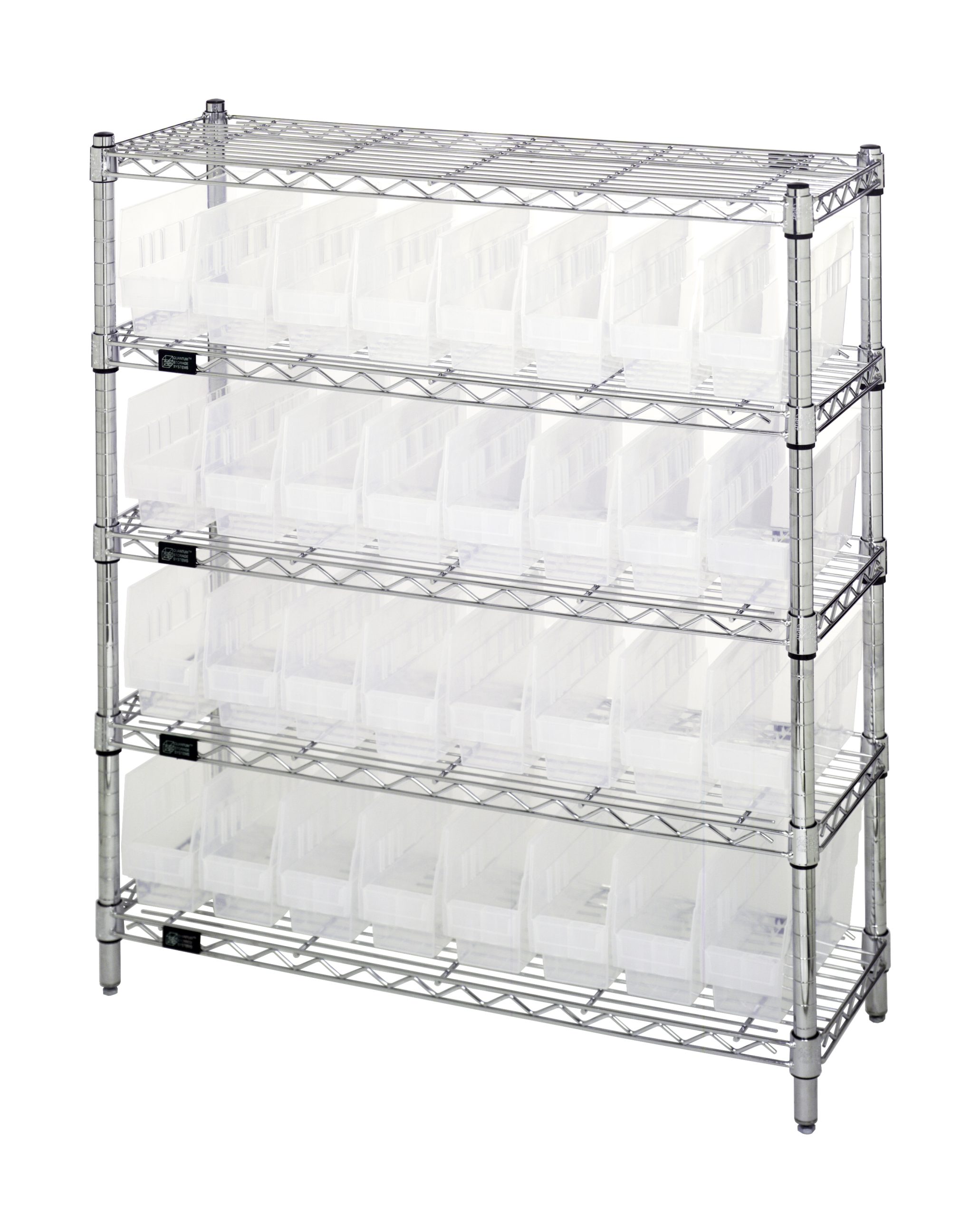
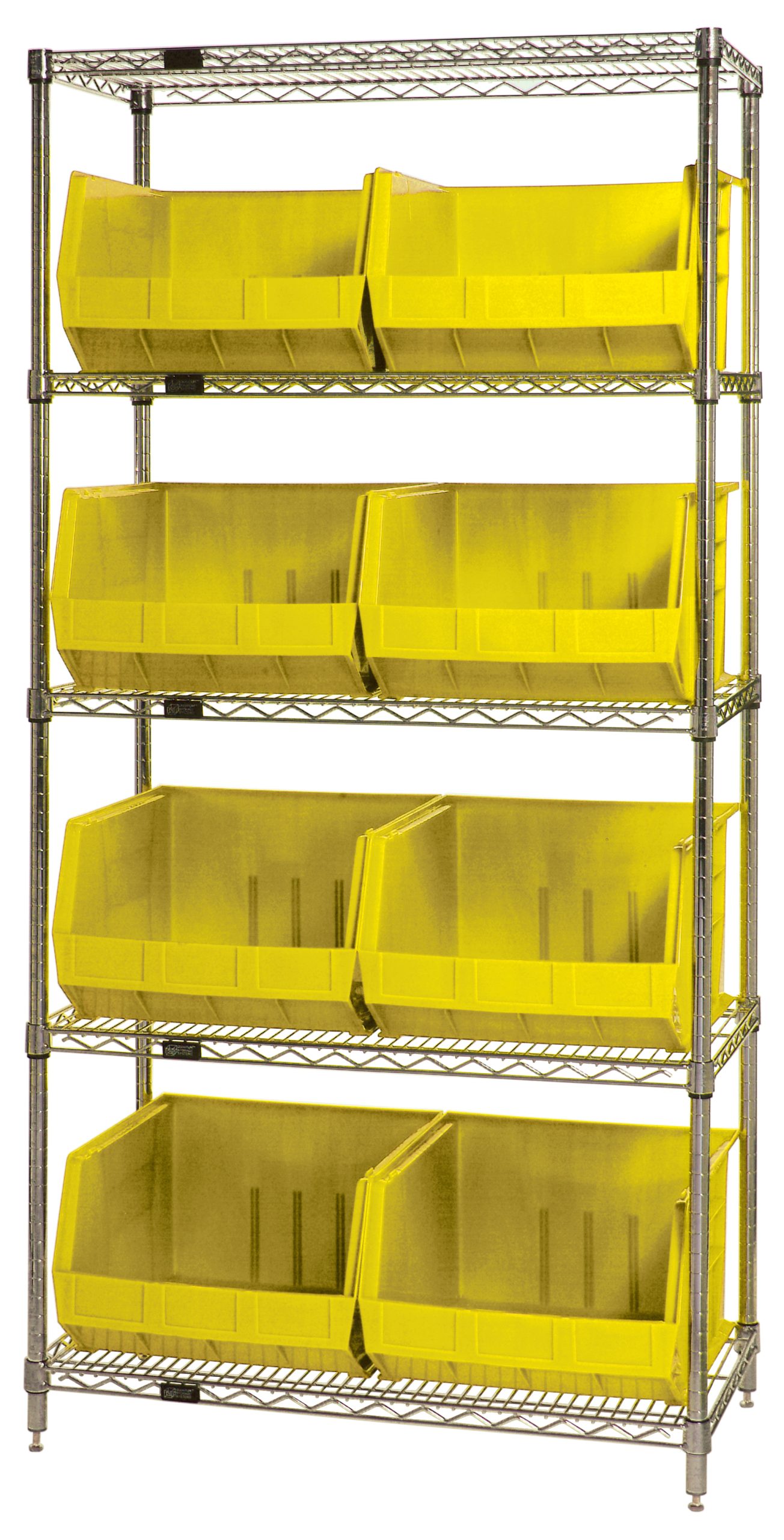
Shop Bin Storage Systems Online
Buy select items directly from our online store, or request a quote for volume, custom sizes and freight-rated orders.

Get a free quote
Tell us what you are storing, the room size and your timeline. A project specialist will follow up with layout options and pricing. Prefer to talk? Call (800) 326-4403.
Frequently asked questions
What counts as a small part for this kind of storage?
Is this better than bin shelving for small parts?
How many small-parts locations will I get?
Do I need to re-label or re-slot everything?
Can I mix pocket sizes in one bay?
How many small-parts locations is your rack hiding?
Send us your bay sizes and a SKU list and we will tell you what a Storeganizer configuration would give you — in locations, in square feet released and in picks per hour.