
Home › Storeganizer › Cost & ROI
Storeganizer Cost and ROI — What Drives Price and What It Replaces
An honest look at what a pocket-storage conversion costs, what it is actually competing against, and how to build a payback case that survives a finance review.
4
cost drivers
$0
ongoing maintenance
10 yr
textile warranty
Weeks
not months, to install
High-density storage cost: what actually drives the price
A Storeganizer quote is built from four variables. None of them are surprising, and knowing them in advance makes the conversation faster:
| Driver | What it means | How to influence it |
|---|---|---|
| Number of bays | The unit of purchase. Cost scales close to linearly with bays converted. | Convert the zone with the worst location-to-item mismatch first, then extend. |
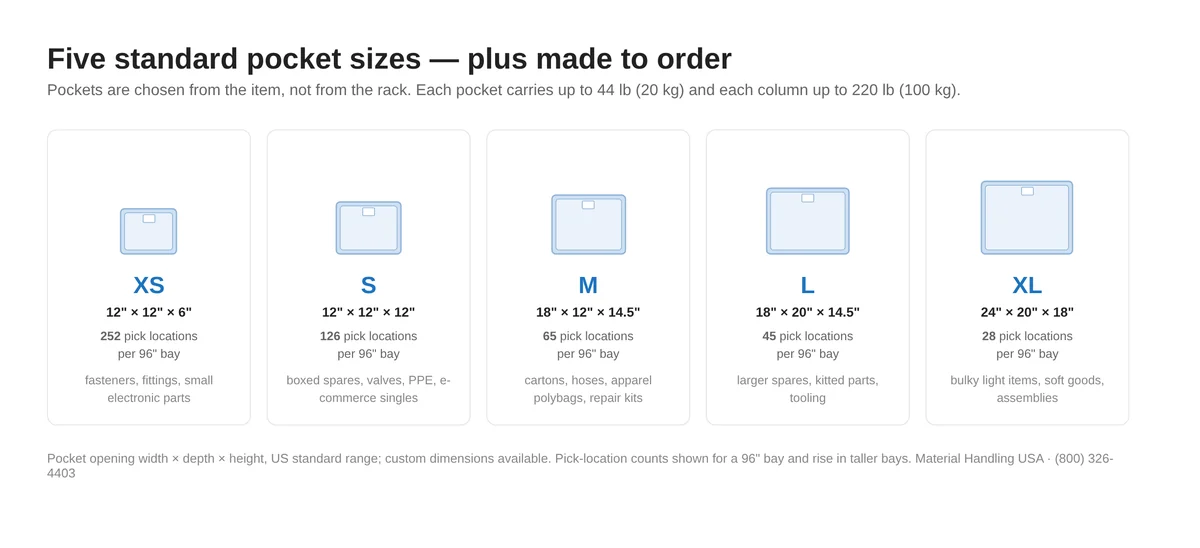
| Pocket sizes | Smaller pockets mean more pockets per bay. Size follows the item, not the budget. | Group SKUs by geometry so you buy the sizes you need, not a compromise size. |
| Textile grade | Grades differ in abrasion resistance, rated in abrasion cycles — not in load capacity. | Match the grade to pick frequency and part sharpness. A weekly-picked polybag does not need the heaviest grade. |
| Options | Dividers, front covers, front stops, label and barcode holders, specified per pocket size. | Specify per pocket group rather than across the whole installation. |
Cost per square foot is the wrong metric
Price the addresses, not the area
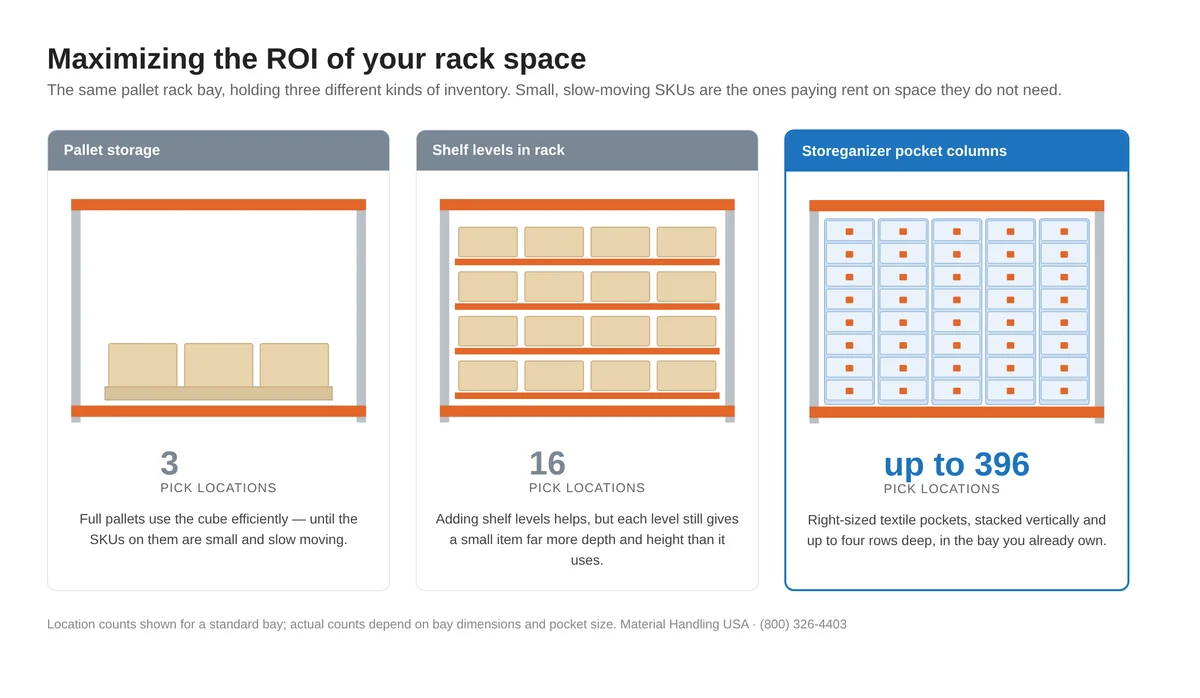
Storage systems get compared per square foot because that is easy. For small parts it produces the wrong decision, because the thing you are short of is not floor — it is distinct places to put a distinct SKU.
Divide the system cost by the number of pick locations it creates and the comparison inverts. A shelving bay might cost less than a converted bay and still cost several times more per address, because it delivers a fraction of the addresses in the same cube.
That single change of denominator is usually what settles an internal debate about whether pocket columns are “expensive”.
Do this before you request a quote
Count the discrete pick locations in one representative bay today. Then configure the same bay in the Storeganizer Configurator. The ratio between those two numbers is the number every cost conversation should start from.
What the conversion is really competing against
Almost no one buys high-density storage instead of nothing. The real alternatives are more space or more labour, and both are more expensive than they look on a spreadsheet — we compare the three big options head to head on Storeganizer vs. a mezzanine or a building expansion:
| Convert existing bays | Lease additional space | Add more shelving | |
|---|---|---|---|
| Up-front | System plus modest install labour | Deposit, fit-out, racking, moving costs | Shelving plus install |
| Recurring | None | Rent, utilities, taxes, insurance — for the lease term | None |
| Lead time | Weeks | Months | Weeks |
| Effect on travel | Falls — SKUs get closer together | Rises — the operation spreads out | Rises — more aisle to walk |
| If your needs change | Columns unhook and rehang elsewhere | Committed for the term | Steel to dismantle and re-erect |
| Structural work | None | New rack, permits, possibly seismic | Depends on height and seismic zone |
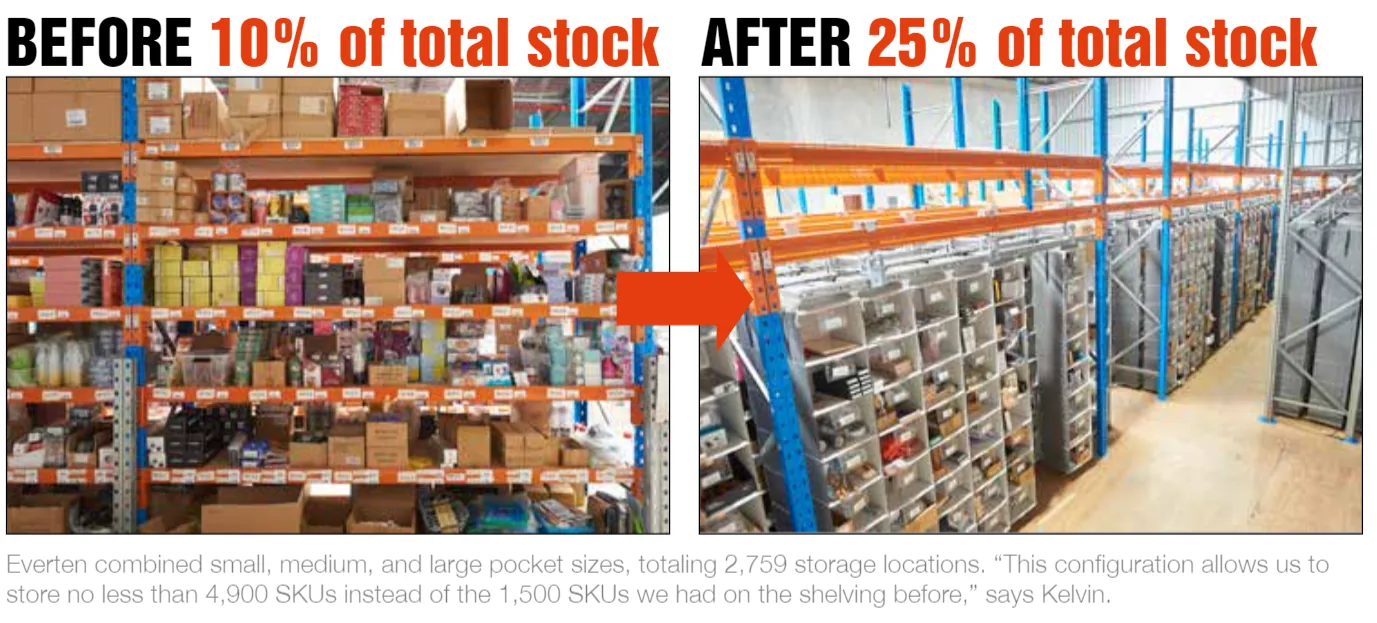
One reference operation makes the point better than a table: Everten Supplies was actively exploring a move out of its 1,056 m² warehouse, then absorbed continued growth by converting 50 m² into 2,759 storage locations instead. The relocation was postponed — which is a cost avoided rather than a saving claimed. Full case study.
Building a payback case that holds up
Three components, and it is worth calculating all three rather than leaning on whichever one is largest:
What not to put in the model
Leave out anything you cannot source. Do not model the manufacturer’s average percentages as though they were your building — use them as evidence that the mechanism works, then calculate your own location counts from your own bay dimensions. A business case built on measured inputs survives scrutiny; one built on brochure averages does not.
Total cost of ownership over ten years
What is not in the running cost
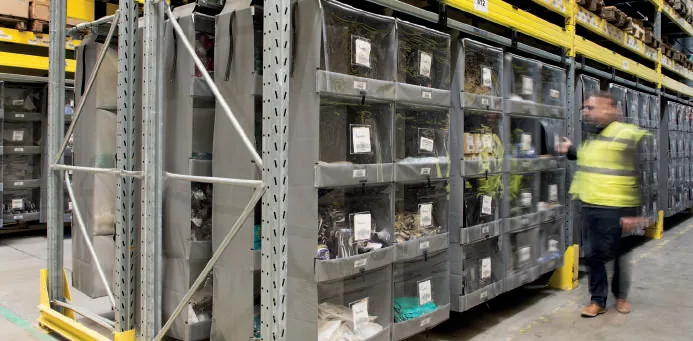
- No service contract. There are no moving parts to service and no annual inspection tied to a warranty.
- No power. Unlike carousels and vertical lift modules, nothing draws electricity or needs a controls upgrade.
- No software. Nothing to license, integrate or upgrade; labels and barcodes work with the WMS you already run.
- No consumables or spares inventory.
- No stranded asset if you move. The system relocates with you.
This is where pocket columns separate from automation on cost rather than on capability. A carousel or VLM will out-pick them in the right application and should be considered seriously — our comparison page sets out where. But automation carries a decade of service, power and integration cost that a textile pocket does not, and that gap belongs in the comparison alongside the throughput figures. For a broader framework, see our total cost of ownership guide.
Why there is no price list on this page
Because any number we published would be wrong for most readers, and we would rather be useful than easy to compare on a search results page. The suspension hardware is manufactured to your beam profile; the pocket sizes depend on your SKUs; the textile grade depends on your pick rates. A single headline price implies a standard product, and this is a configured one.
What we can do without a sales conversation is give you the physical answer for free. The Storeganizer Configurator takes bay dimensions and a pocket size and returns columns, pockets and total pick locations, with no login and nothing to submit unless you want to. Take that number into your own cost comparison before you speak to anyone — including us.
Storeganizer cost and ROI — FAQs
How much does Storeganizer cost?
What drives the cost of a Storeganizer system?
Are there installation costs?
What are the ongoing costs?
How does the cost compare with shelving?
What is a realistic payback period?
Do you offer a way to estimate before talking to sales?
Related reading
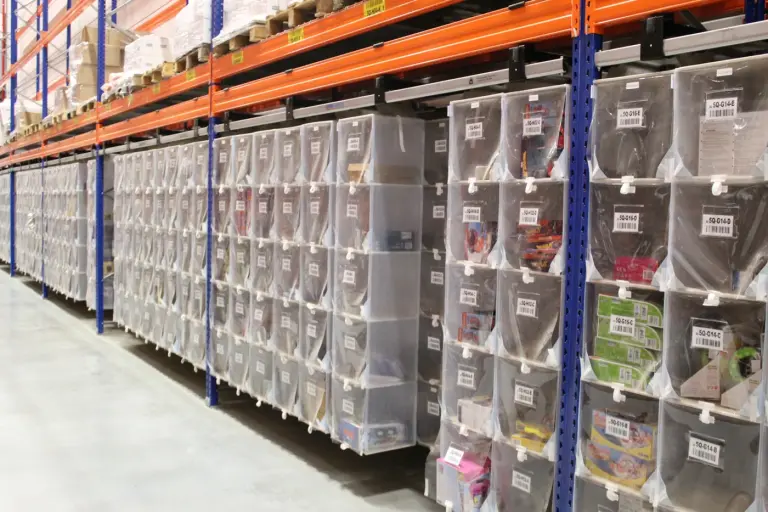 Storeganizer high-density pocket storage overviewStoreganizer turns unused pallet rack into hundreds of small-parts pick faces – 40% more usable space, 42% less…
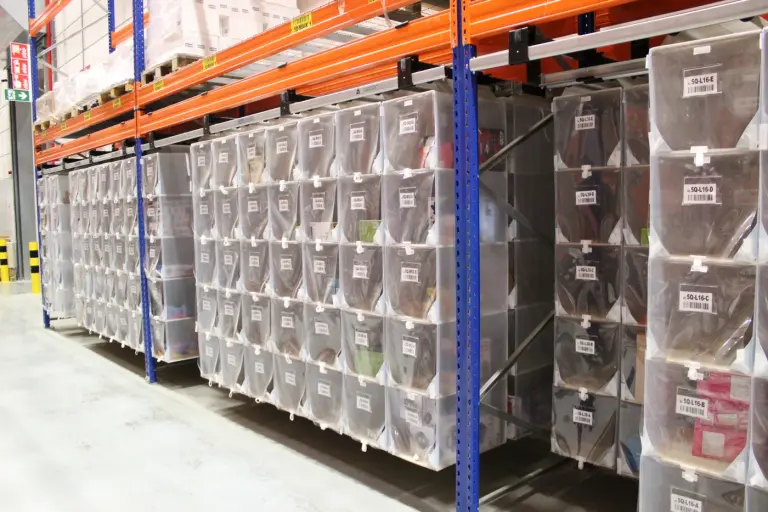 SKU slotting and rack-space ROIHow to slot SKUs for high-density pocket storage: size, stock volume and order frequency, the locations-per-bay…
 Storeganizer vs shelving, bins, flow rack, carousels and VLMsAn honest comparison from a distributor that sells all of them – density, weight, cost profile, install time, and…
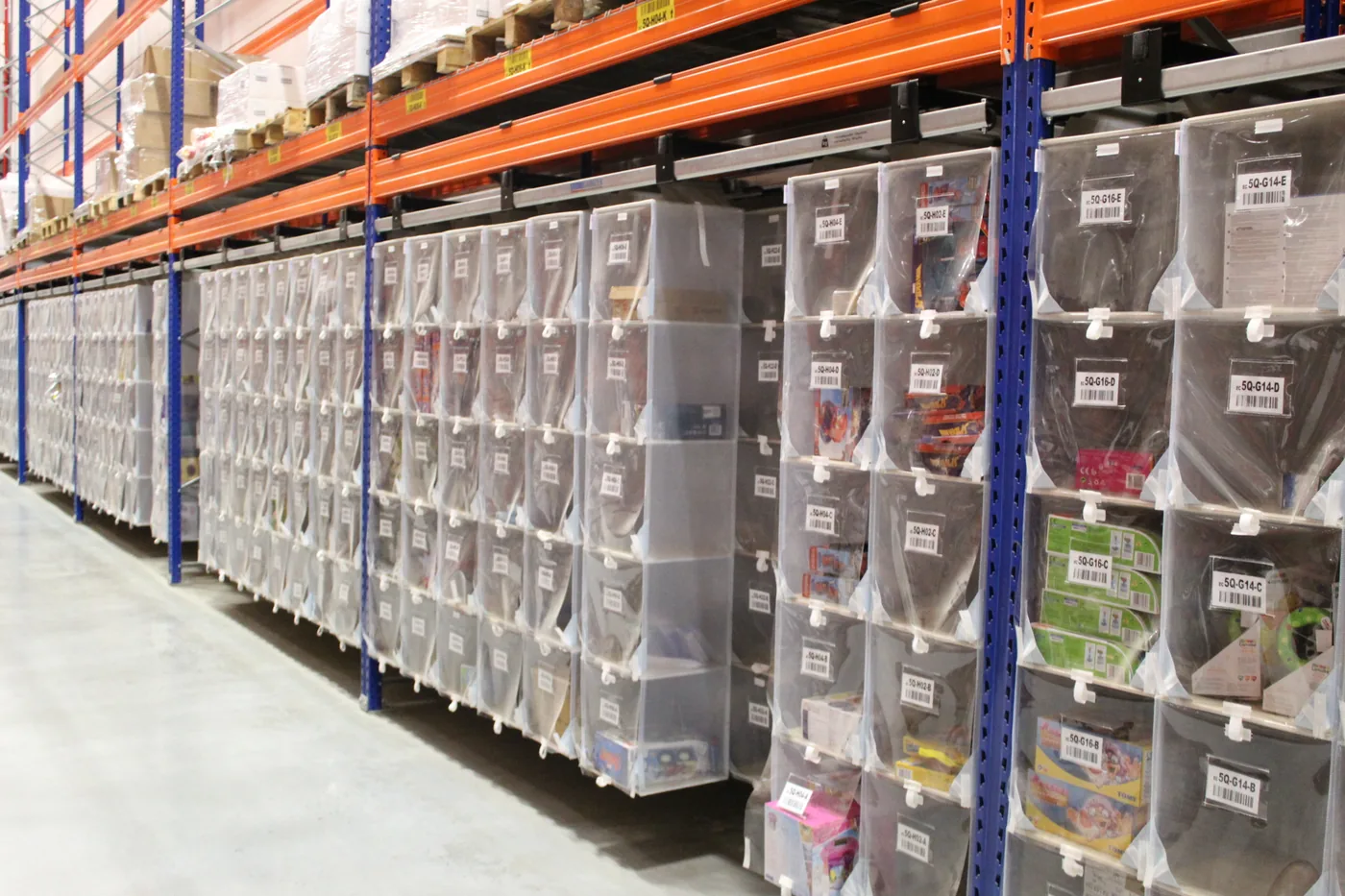 Pallet rack space optimizationRecover the wasted cube in your small-item rack bays. Storeganizer converts half-empty shelving into up to 396 pick…
 Case studies and measured results8,611 sq ft consolidated into 1,335. Picking from 25-30 to 60-80 lines per hour. 4,000 SKUs in 16 bays. Attributed…
 Storeganizer Configurator — configure a bay onlineConfigure Storeganizer high-density pocket storage free online. Enter your pallet rack bay dimensions, choose a…
Get a configured quote, not a guess
Send bay dimensions and the SKUs giving you trouble. You will get pocket sizes, a location count, a firm price and a straight view of the payback.