
Pick Faces: What They Are and How to Add More Without Expanding
A pick face is a location a picker can reach by hand. Most warehouses run out of them long before they run out of floor. Here is how pick faces work, how to count them, and the ways to add more inside the rack you already own.
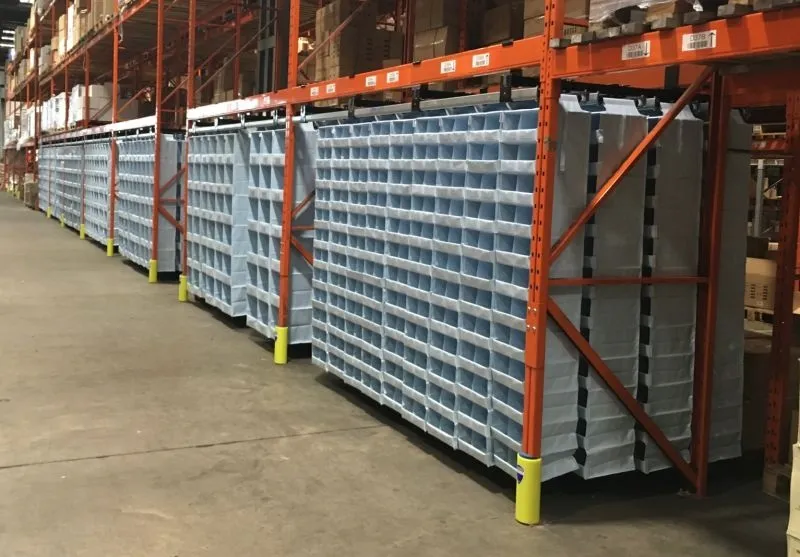
Up to 40%
more usable space (Leuven, 2013)
42%
less picker travel (Leuven, 2013)
252
pocket faces per 96″ bay at XS size
4 rows
of pockets deep per rack bay
Shop Pick-Face Equipment Online
Ready-made pick faces you can order today: sloped pick racks with bins and carton flow. Storeganizer pocket systems are designed and quoted per bay.
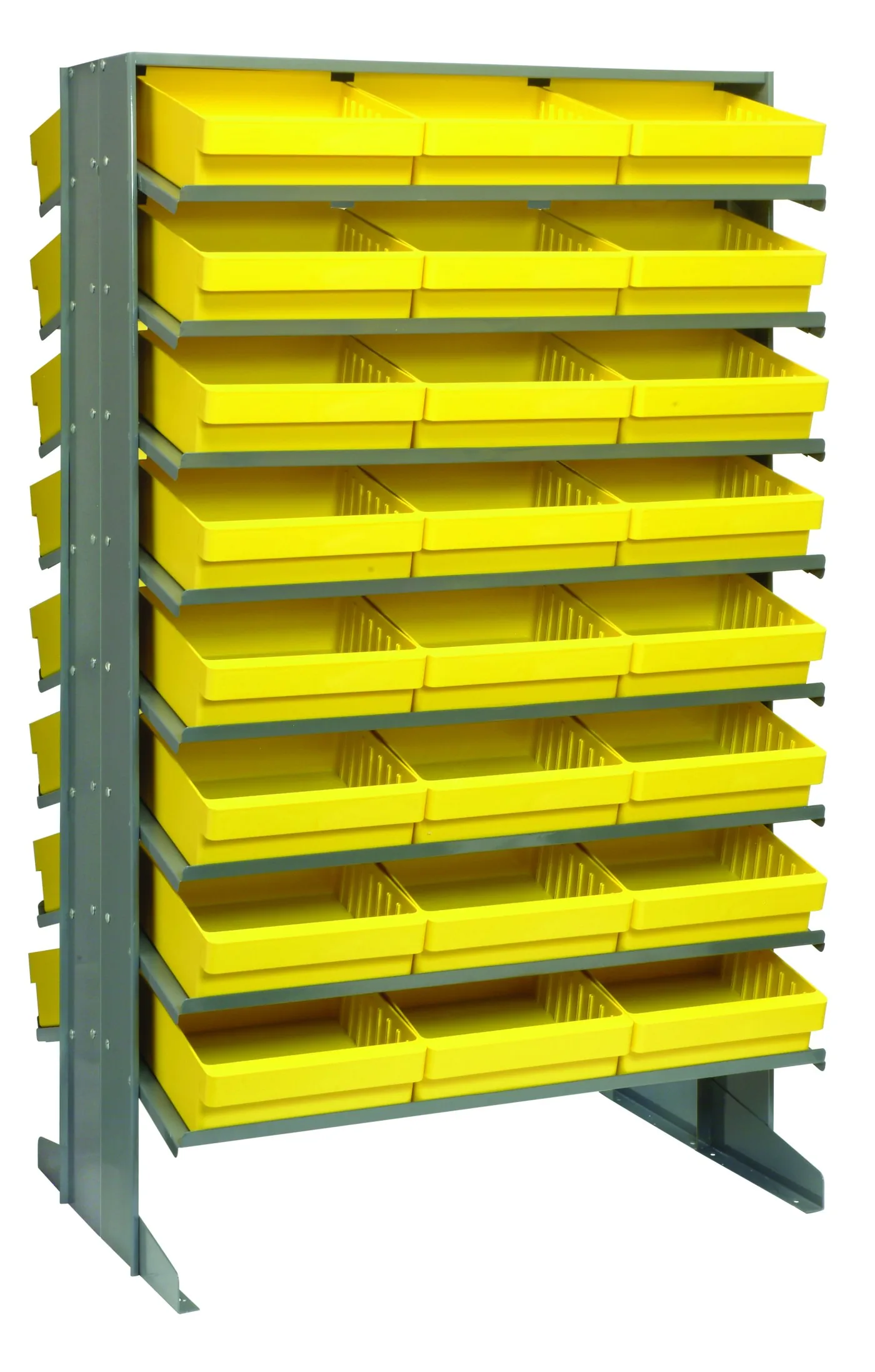
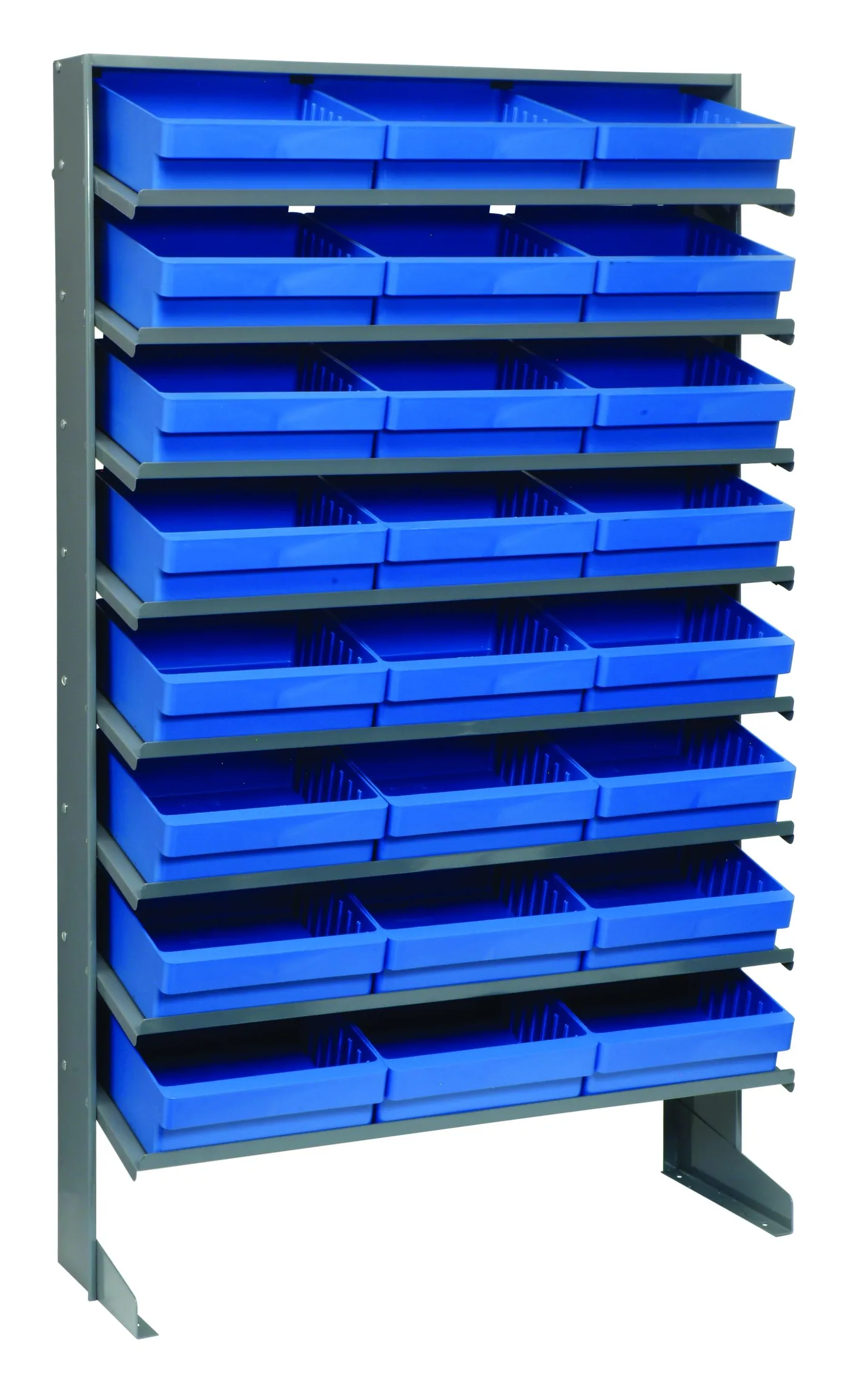
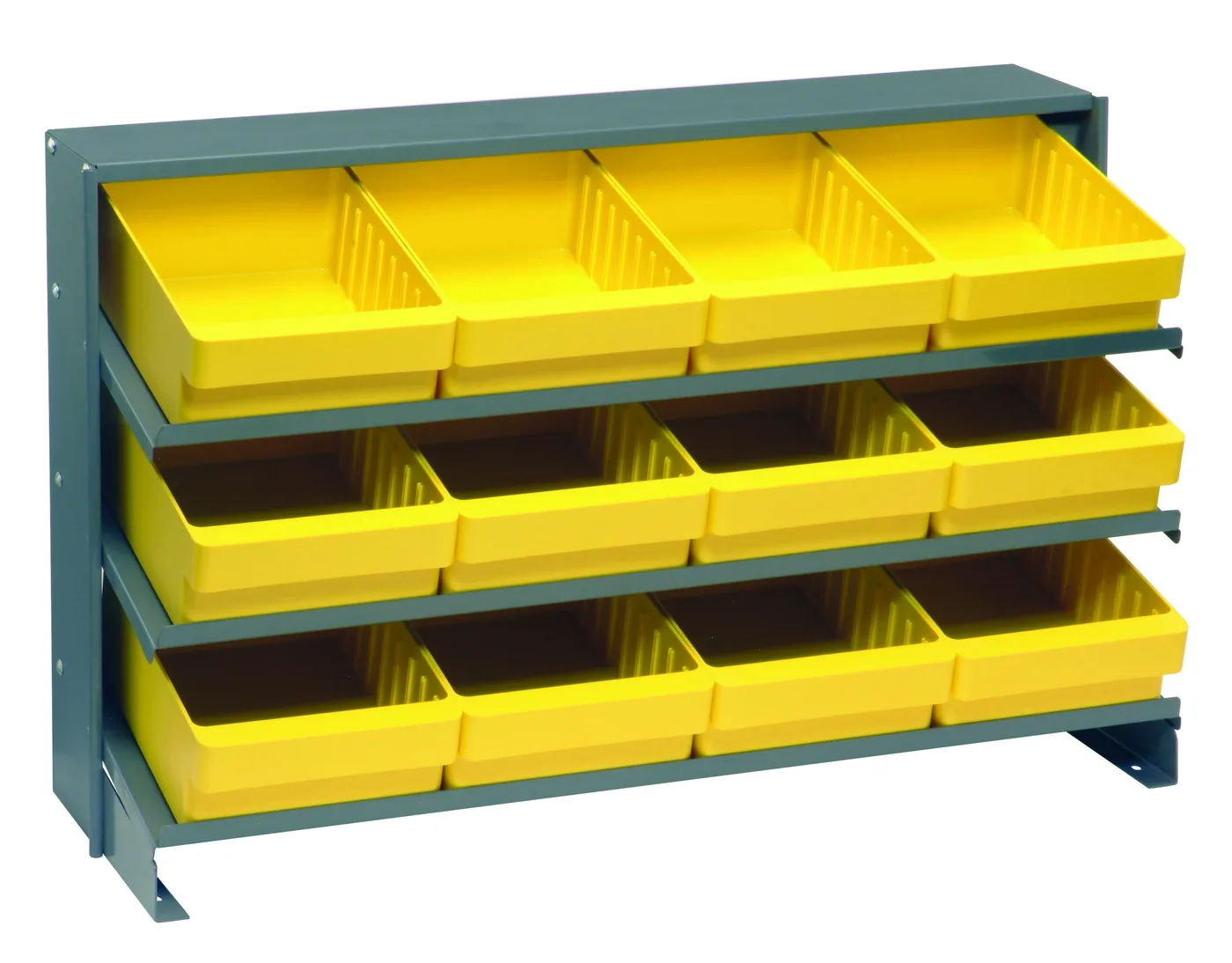

Sloped pick racks and carton flow ship as standard units; Storeganizer is designed and quoted per bay. More on pick racks with bins and carton flow rack systems. Some common sizes are in stock at select manufacturers, subject to confirmation.
What is a pick face?
A pick face is the open front of a storage location that an order picker takes product from by hand. It holds a working quantity of one SKU, sits within easy reach, and is refilled from reserve or bulk storage when it runs low. You will also hear it called a forward pick location, a pick slot or simply a pick location.
In a warehouse management system each pick face is a location ID with a SKU assignment and a minimum and maximum quantity. Physically it can be a ground-level pallet, a lane of carton flow, a shelf bin or a single labelled pocket. What makes it a pick face is the job it does, not the equipment: it is where picking happens, separate from where stock is stored.

That separation is the reason pick faces matter. Reserve storage can be high, deep and dense, because a forklift visits it occasionally. Pick faces have to be reachable, labelled and close together, because a person visits them hundreds of times a shift. The number of good pick faces you have decides how many SKUs you can pick efficiently.
The three kinds of pick face
| Pick face type | What is picked | Typical equipment | Usual home |
|---|---|---|---|
| Pallet pick face | Full cases or layers from a pallet | Ground-level selective rack, pallet flow | Fast, bulky A-movers near shipping |
| Case pick face | Whole cases or inner packs | Wire-decked rack levels, carton flow lanes | Medium to fast movers picked in case quantity |
| Split-case / each pick face | Single units, small packs | Shelving with bins, sloped pick racks, Storeganizer pockets | The long tail of small SKUs, e-commerce and spare parts |
Why warehouses run out of pick faces before they run out of space
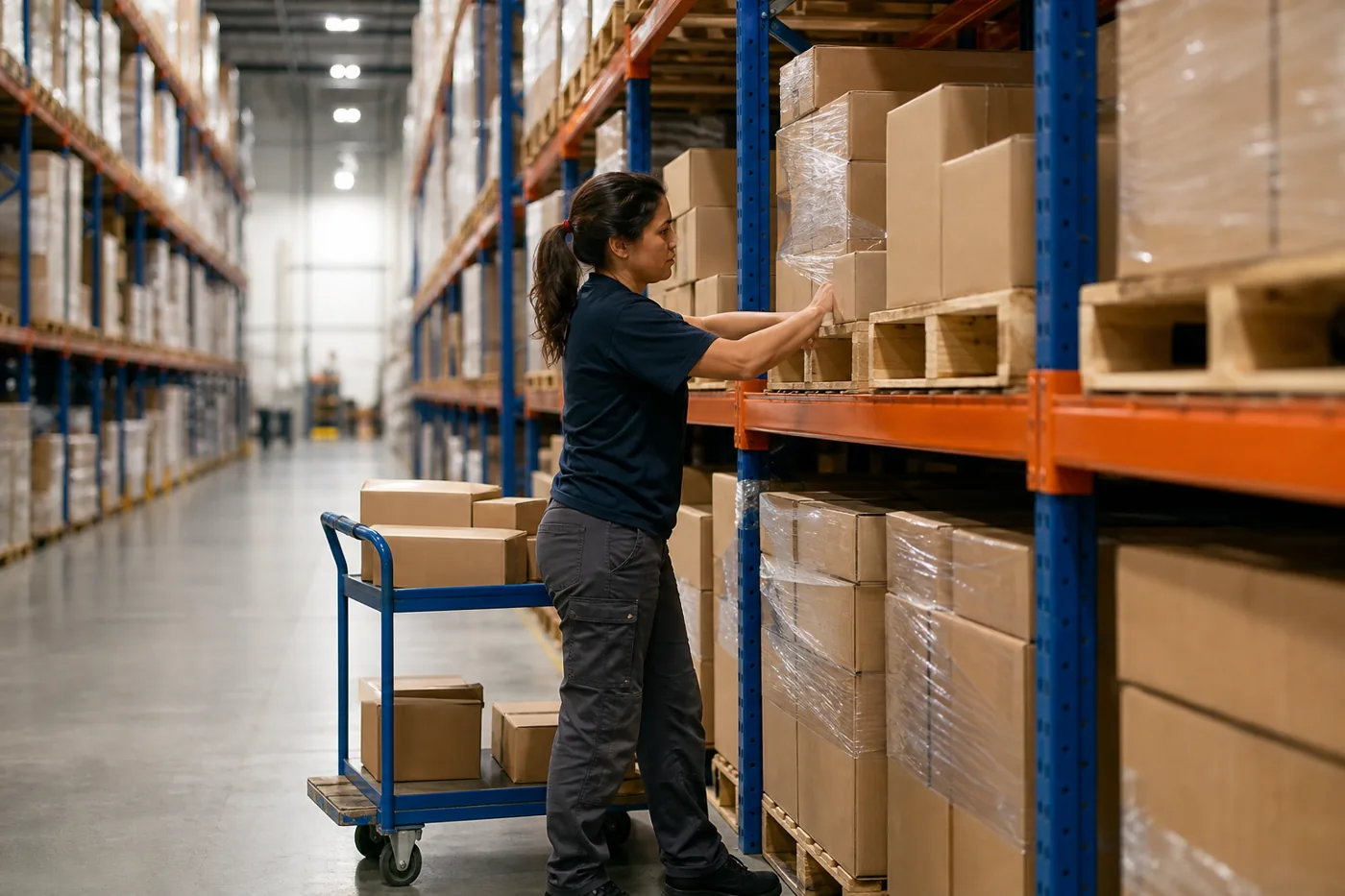
SKU counts rarely jump overnight. They creep: a new supplier, a colour variant, a service kit. Each one needs a pick face, and the easiest place to put it is the next empty pallet position or shelf. A few years later, a bay that could hold dozens of small items holds three, and the building feels full while most of its cube is air.
The usual culprits are faces sized for the container instead of the demand, shelf pitch set by the tallest bin, slow movers parked in prime waist-height spots, and two SKUs sharing one face because there was nowhere else to put the second.
Signs you are short of pick faces
- New SKUs go into overflow locations, on the floor or at the end of an aisle.
- Pickers walk long routes for one or two small items per order.
- Mis-picks cluster around shared or unlabeled locations.
- Half-empty pallet positions and shelf bins hold a handful of small parts each.
- Someone has already priced a mezzanine or a bigger building.
How to count pick faces per bay (and why it beats square feet)
The useful measure is not square feet; it is pick faces per bay and pick faces per foot of aisle. Take one standard selective rack bay and fit it out three ways.
As pallet storage, each beam level holds two or three positions. With shelves, the same bay holds dozens of bin locations. With pocket columns hung from the beam, it can hold hundreds, depending on pocket size: Storeganizer publishes 28 locations per 96" bay at its largest standard pocket and 252 at its smallest.
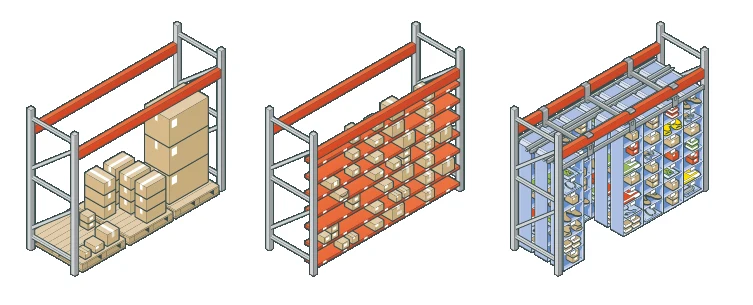
Count your own faces the same way: list every bay, note what it holds and how many SKUs it serves, then compare that with the number of small SKUs you actually stock. The gap is your pick-face shortage. Our SKU slotting and rack-space ROI page walks through the same audit bay by bay.
Eight ways to add pick faces in the same footprint
Roughly in order of cost and disruption, lowest first. Most operations end up using several, matched to different SKU families.
Pick-face options compared
MH-USA sells, designs and installs all of these, so this comparison is written to match the method to the SKU, not to push one product. The deciding factors are item size and weight, how fast it moves, and whether it is picked by the case or by the each.
| Option | Pick faces it creates | Best fit | Replenishment | Watch-outs |
|---|---|---|---|---|
| Re-slotting only | Frees existing faces | Every warehouse, first | Unchanged | Needs order history and discipline to maintain |
| Wire decking + case picking | Several case faces per level instead of one pallet | Case-pick SKUs | From the front or above | Hand-stacking labor; deck load ratings |
| Shelving or bins in rack | Dozens of bin faces per bay | Small items, moderate SKU count | From the pick aisle | Fixed shelf pitch wastes height above small items |
| Sloped pick racks with bins | Up to dozens of hopper-bin faces per unit | Parts rooms, kitting, assembly | From the pick aisle | Floor-standing; bins set the face size |
| Carton flow lanes | One face per lane, many lanes per level | Fast, full-case or tote SKUs | Rear-loaded, first-in first-out | Needs a rear replenishment aisle; best for uniform cases |
| Storeganizer pocket columns | Hundreds of pocket faces per bay (size-dependent) | Small, slow-to-medium SKUs up to 44 lb per pocket | From the pick aisle | Not for heavy or fast case movers |
| Multi-level pick module | Multiplies faces by the number of levels | High SKU count + high volume | Forklift or conveyor feed | Largest cost, permits, fire protection, lead time |
Carton flow: many case faces across one level
Carton flow lanes slope toward the picker, so each lane presents one SKU at the front and is loaded from a rear aisle. It is the strongest option for fast cases and totes of a fairly uniform size, because replenishment never crosses the pick path. It needs that rear aisle and a depth of rack to work. Details: carton flow rack systems.

Sloped pick racks: small bins at the point of use
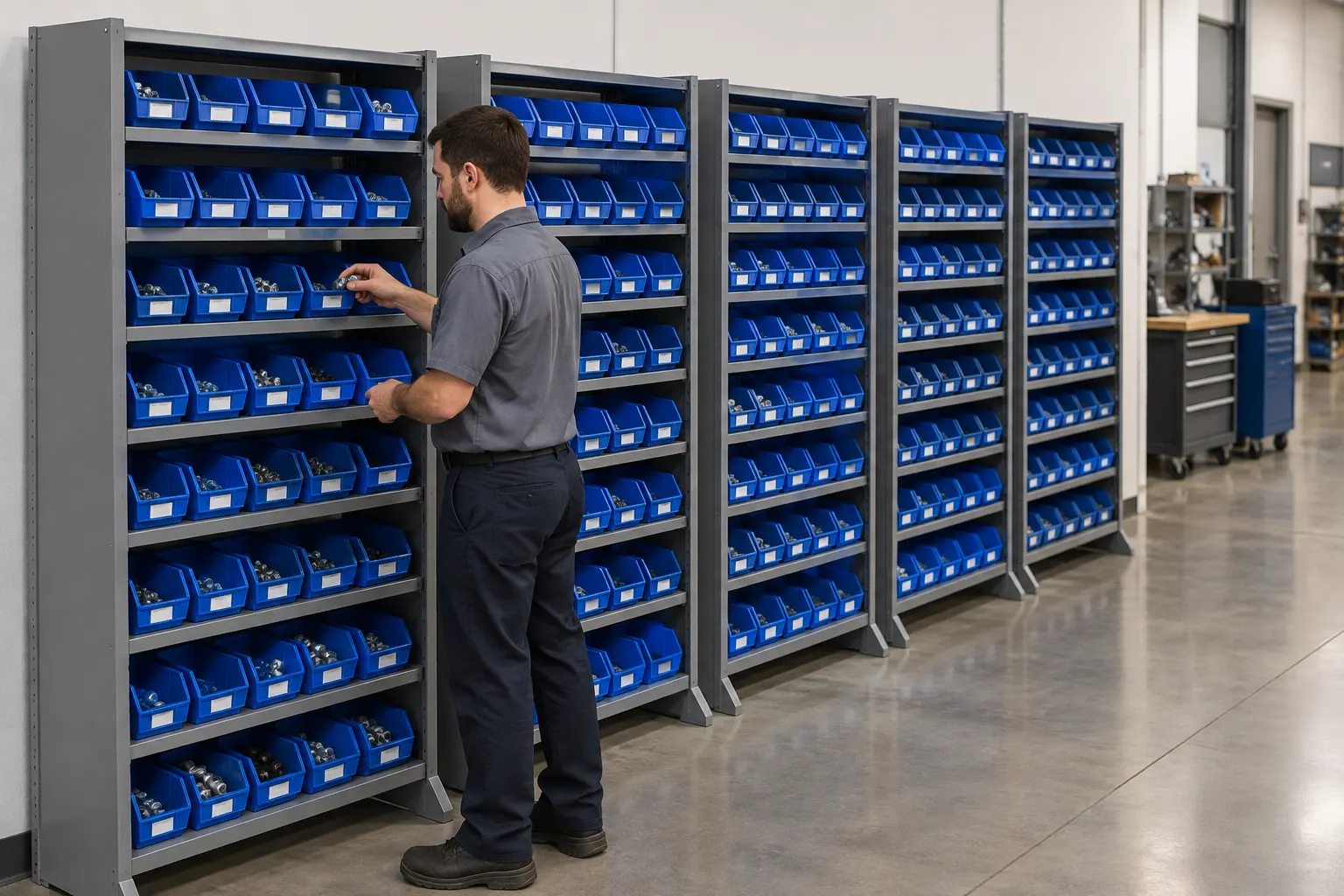
A pick rack is a freestanding frame of sloped shelves holding hopper-front bins, single or double sided. It suits parts rooms, kitting and assembly lines where hundreds of small, cheap parts need a face each near the work. The bin sets the face size, so very small and very bulky items both waste space. See pick racks with bins.
Pick modules: more levels of pick faces
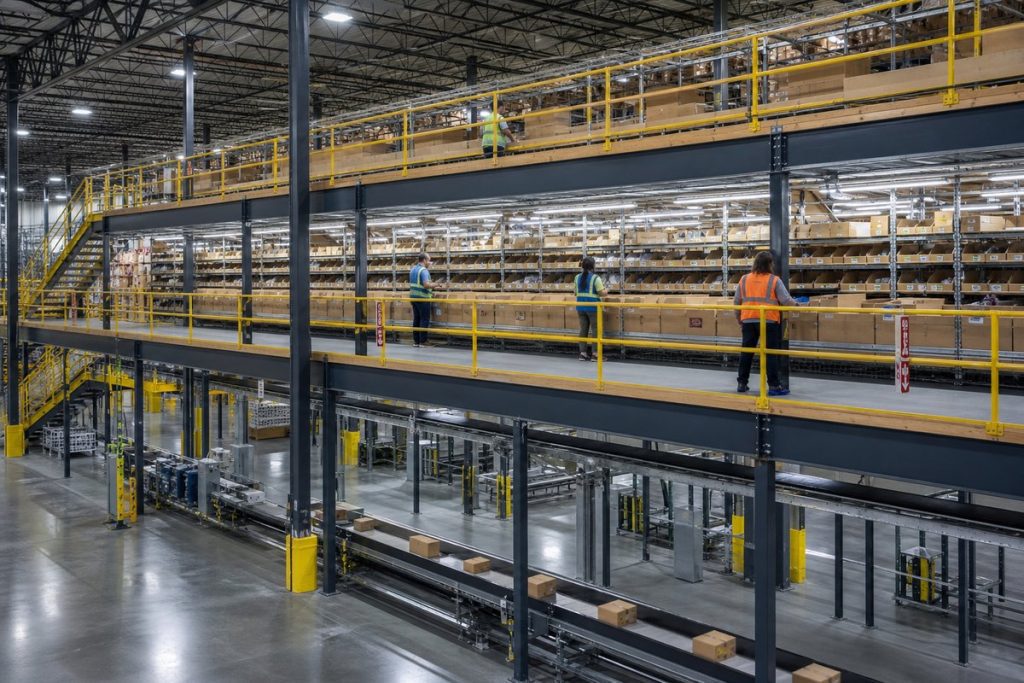
A pick module stacks picking aisles on rack-supported walkways, usually with carton flow on each level and a conveyor to carry orders away. It multiplies faces by the number of levels and is the right answer for high SKU count plus high volume. It is also the largest project on this page, with stairs, fire protection and permits. Our rack layouts that speed up picking page covers when one pays off.
Where Storeganizer pocket storage multiplies pick faces
Storeganizer is a textile pocket system made by KTP conTeyor in Belgium. Columns of pockets hang from a universal suspension rail on the beam of a standard pallet rack bay, up to four rows deep. The front columns roll aside by hand, so a picker reaches the back rows from the same aisle without a ladder or lift.
Each pocket is one labelled pick face for one SKU. Because pockets are sized to the item rather than to a shelf or a bin, the bay stops wasting the air above small parts. The standard US range runs XS to XL, with each pocket rated to 20 kg (44 lb) and each standard column to 100 kg (220 lb).
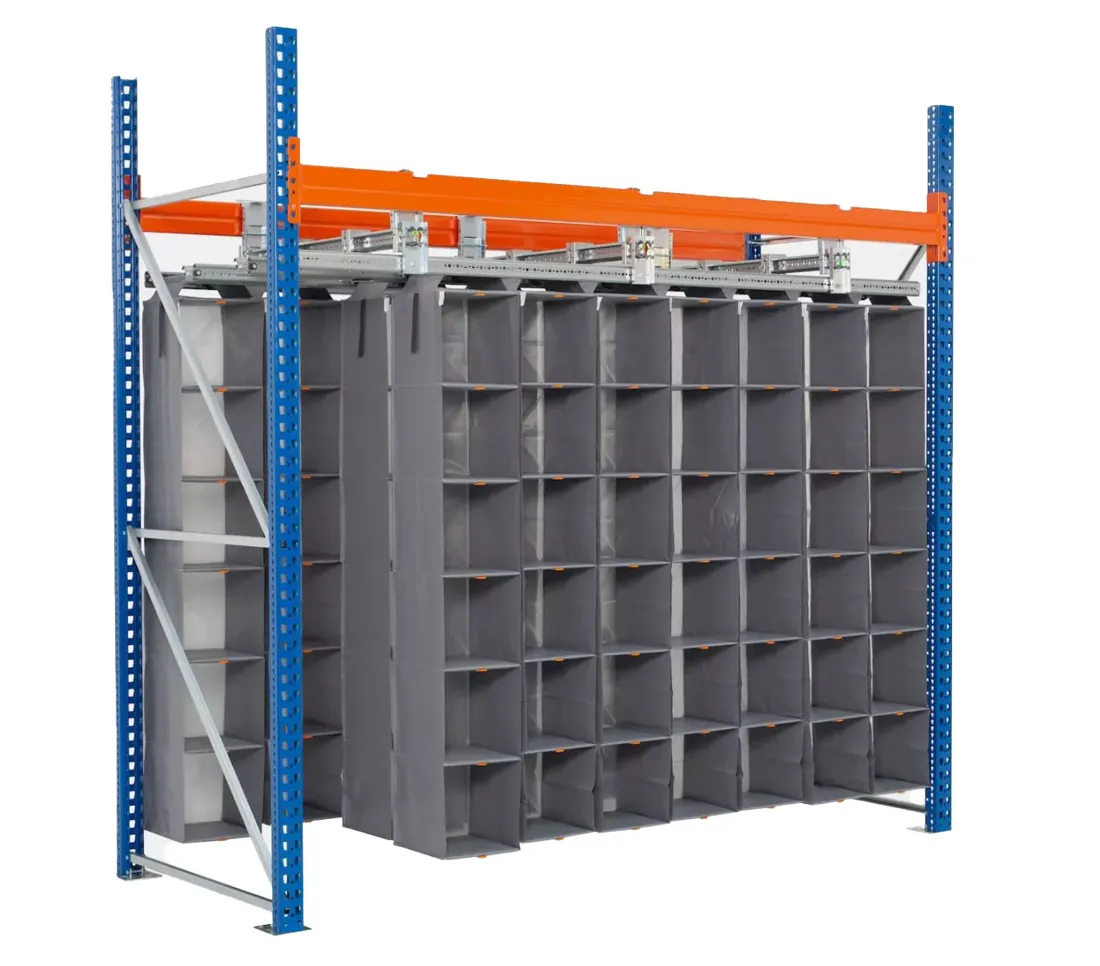

The manufacturer cites independent research from the University of Leuven, Belgium (2013): up to 40% more usable space, 42% less travel time and 26% better picking efficiency compared with conventional small-parts shelving. Published customer results tell the same story in pick faces:
- Everten Supplies: 18 bays created 2,759 locations in 50 m², and that footprint went from 10% to 25% of stock lines.
- Chalhoub Group: 46 bays, three rows deep and six columns high, gave 828 pick modules and replaced 8,611 sq ft of mezzanine shelving with 1,335 sq ft.
Where pockets are the wrong pick face
Heavy items, long goods and fast full-case movers do not belong in pockets. If the heaviest item in a family is past hand-pick weight, or it ships by the case all day, carton flow or a ground-level pallet face is the better answer, and we will say so before quoting. The full head-to-head is on Storeganizer vs. shelving, bins, flow rack, carousels and VLMs.
Options that matter at the pick face: label and barcode holders on every pocket, front covers for loose small items, dividers and front stops. Each pocket becomes an ordinary WMS location, so scan-verified picking works the same way it does on shelving.
For the full system overview, see the Storeganizer high-density pocket storage hub, or Storeganizer for small-parts warehouse storage for SKU selection.

Count the pick faces in your own bay
Enter bay width, height and pocket mix in the Storeganizer Designer and see how many pick faces one bay of your rack would hold.
Request a Quote Open the Storeganizer Designer Call (800) 326-4403
Slotting: deciding which SKU gets which pick face
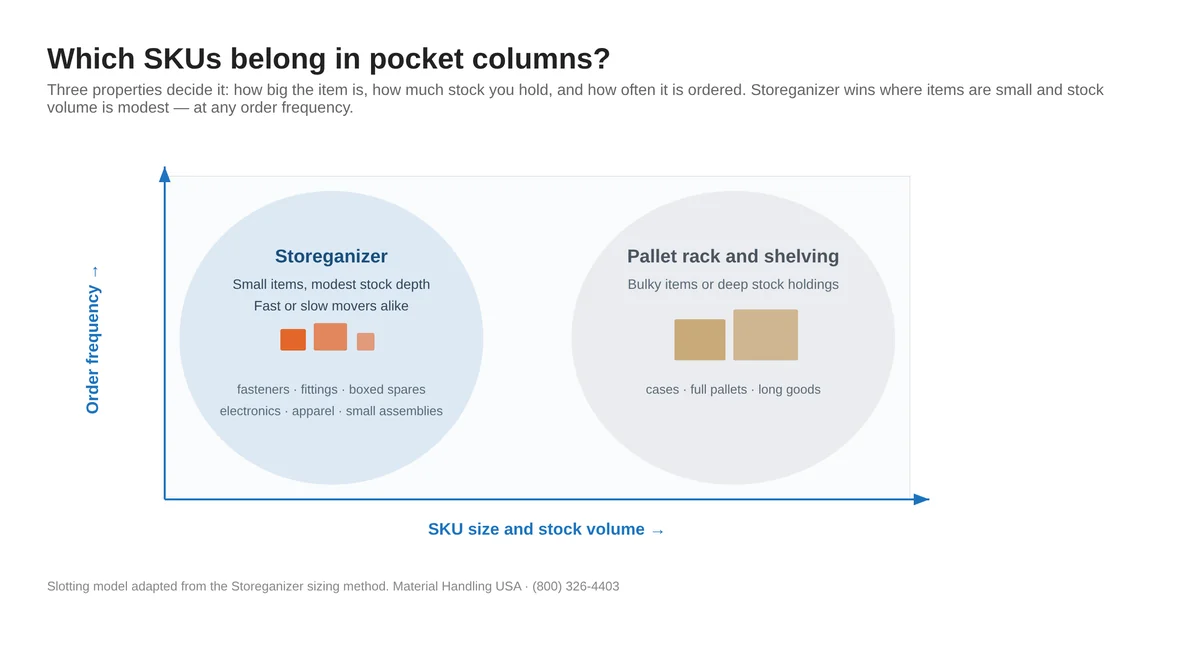
Adding pick faces only pays if the right SKUs land in them. Slotting uses three facts per SKU: size (cube per unit), stock volume (how much must sit at the face) and order frequency (how often it is picked).
Fast movers get the golden zone, roughly waist to shoulder height, nearest packing. Small, slow to medium movers are where dense faces such as pockets or bins earn the most. Bulky fast movers stay on pallet or carton flow faces.
- Run an ABC (velocity) analysis on 6–12 months of order lines, not on stock value.
- Give one SKU one face; shared faces are where mis-picks start.
- Group items that ship together so one stop picks several lines.
- Re-slot seasonal and promotional SKUs into prime faces for the peak, then move them back.
- Review slotting at least twice a year; demand drifts faster than layouts do.
For the method in depth, read our guide to warehouse slotting optimization, and for the labour side, how to improve order-picking efficiency.
Sizing and replenishing a pick face

A face that is too large wastes locations; a face that is too small creates a replenishment trip every hour and stock-outs at the worst moment. A practical starting point is to size each face for a fixed number of days of average demand, or one replenishment unit such as a case or inner pack, whichever is larger.
Then set a minimum that triggers a top-up early enough for the replenisher to arrive before the face is empty, and a maximum the face can physically hold.
- Front-loaded faces (shelving, bins, pockets) are refilled from the pick aisle; schedule top-ups outside peak picking.
- Rear-loaded faces (carton flow, pallet flow) keep replenishment out of the pick path and rotate stock first-in first-out.
- Cycle-count pick faces more often than reserve: A-items weekly or better.
- Keep a buffer location close to dense faces so a top-up is a short walk, not a forklift trip.
How MH-USA plans a pick-face expansion
Profile the SKUs
Order lines, unit cube and weight per SKU, from your WMS or ERP export.
Audit the bays
Faces per bay today, beam elevations, aisle widths and forklift access.
Match method to family
Pallet, carton flow, bins, pick racks or pockets, family by family.
Slot on paper
Which SKU goes in which face, with min/max levels, before anything is ordered.
Install in phases
Bay by bay inside a live operation; locations are relabeled as each goes live.
Measure and adjust
Faces per bay, picks per hour and mis-picks against the old layout.
We design and install pallet rack, carton flow, shelving, pick racks and Storeganizer across the USA, so one proposal can cover every SKU family instead of forcing all of them into one product.
Related reading
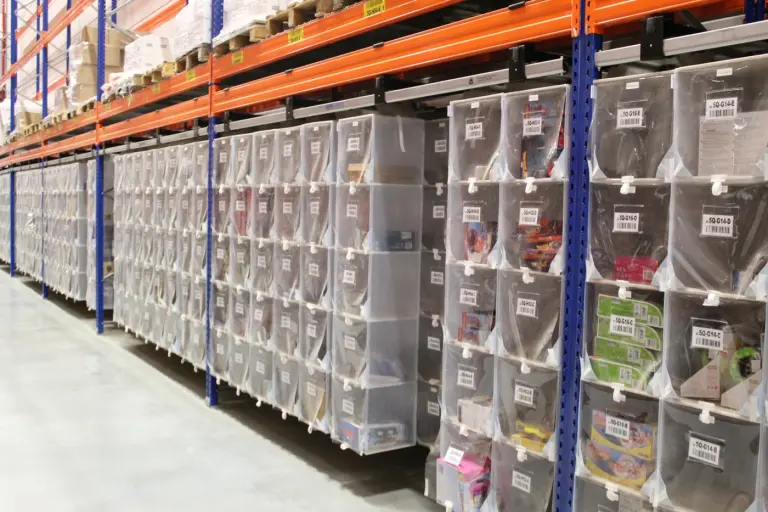 Storeganizer High-Density Pocket StorageThe system overview: how pocket columns hang in rack and where they fit.
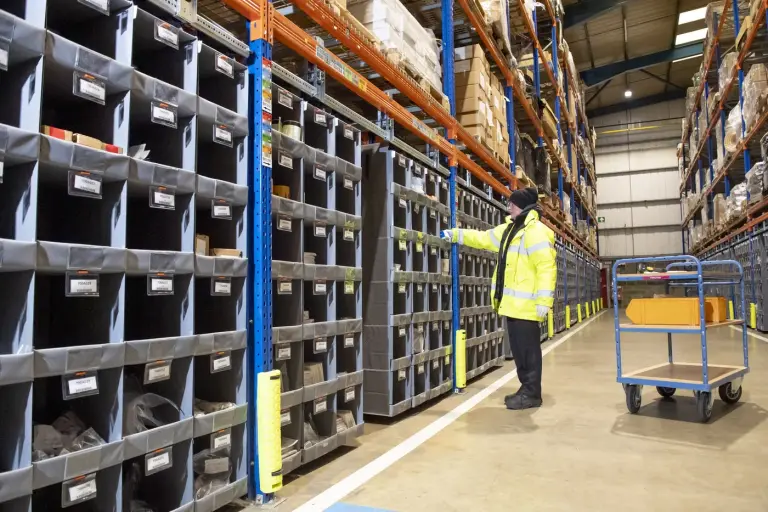 How to Improve Order-Picking EfficiencyLines per hour, travel and the five levers that move them.
 Storeganizer vs. Shelving, Bins and Flow RackAn honest equipment comparison from a distributor that sells all of them.
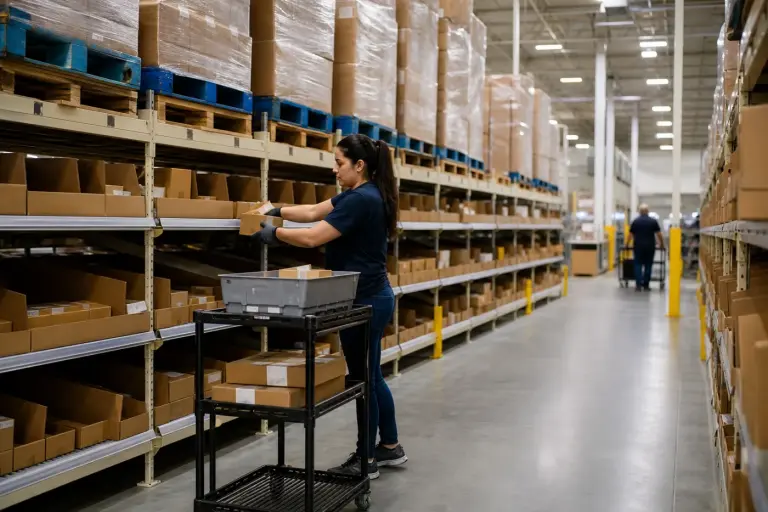 Rack Layouts That Speed Up PickingCarton flow, pallet flow, golden-zone slotting and pick modules.
Get a free quote
Tell us what you are storing, the room size and your timeline. A project specialist will follow up with layout options and pricing. Prefer to talk? Call (800) 326-4403.
Pick face FAQs
What is a pick face in a warehouse?
What is the difference between a pick face and a pallet position?
How do I increase pick faces without expanding the building?
How many pick faces fit in one rack bay?
What is a pick module, and do I need one to add pick faces?
How big should a pick face be?
Does Storeganizer work with a WMS and barcode picking?
Find the pick faces your rack is hiding
Send us a SKU list and bay dimensions and we will show you how many pick faces the same footprint can hold, or model a bay yourself in the Storeganizer Designer. Call (800) 326-4403.