
Home › Storeganizer › Aviation & MRO
Aviation and MRO Parts Storage — High-Density Storeganizer Pockets
Aviation spares are the extreme case: tens of thousands of part numbers, shallow stock depth, and full traceability required for every one. Convert existing rack into individually addressed, scannable pocket locations.

1 part no.
per labelled pocket
44 lb
per pocket
4 rows
deep per bay
No drilling
installs into existing rack
Why aviation spares defeat conventional shelving
An MRO stores function holds a range that almost no other industry matches for breadth: consumables, standard hardware, seals, bearings, electrical parts, avionics units and rotables across multiple fleets and multiple configurations of the same aircraft. Most of those part numbers move rarely, and are held one, two or three deep. Every one of them still needs its own controlled, traceable location.
Locations, not cube, is the constraint
- Part-number count is enormous; depth per line is tiny. Dedicating a shelf level to a line held two deep is indefensible, so lines get combined.
- Combined locations are a traceability risk in an environment where segregation and identification are not optional.
- Stores spread out as fleets are added, so travel per pick rises without any increase in volume stored.
- Expanding the stores footprint is expensive and, inside a hangar, often simply unavailable.
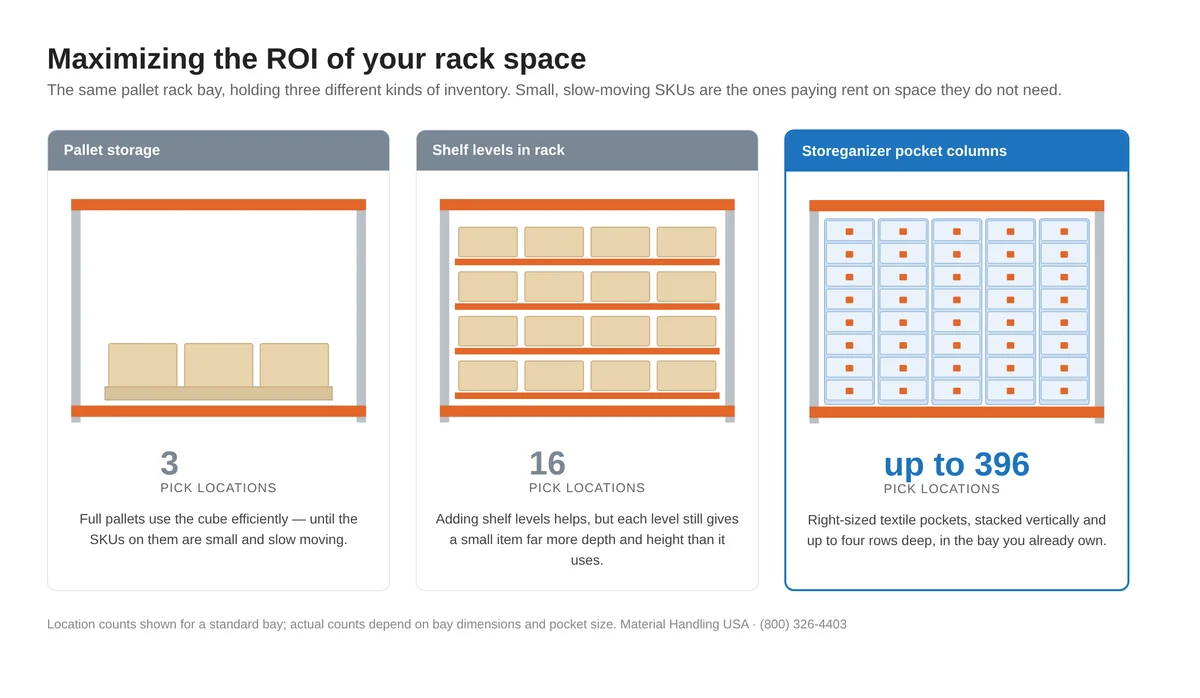
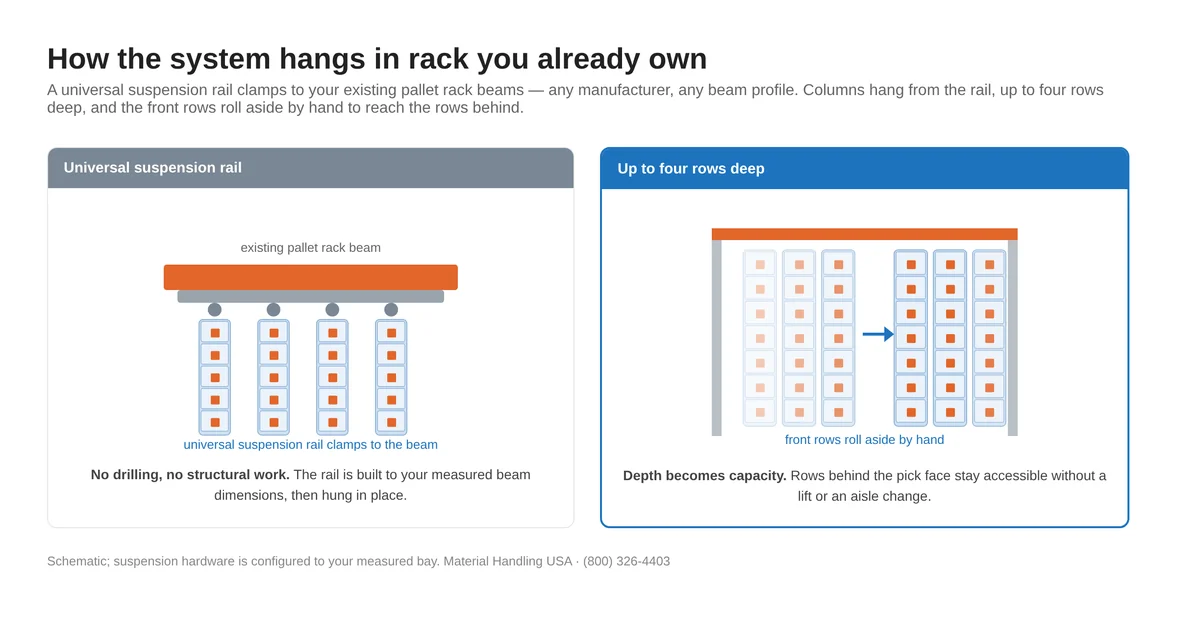
Hanging textile pocket columns from existing beams multiplies addressed locations inside cube that is already paid for. Up to four rows deep per bay, with the front columns rolled aside by hand to reach the rows behind. The mechanism is set out in how Storeganizer works.
One part number, one address, one barcode

Physical segregation instead of procedural segregation
The reason address count matters in aviation is that identification and segregation are physical requirements, not filing conventions. When a stores area runs short of locations, the pressure is to put similar part numbers together — and the audit finding follows.
A pocket per part number, labelled and barcoded, converts that discipline back into a physical arrangement. Where a serialised or lot-controlled item needs its own address, it gets one, because addresses stop being scarce.
Nothing to license, nothing to integrate: pockets become locations in the WMS you already operate. Dividers are available where two small part numbers must share a pocket under control, and front covers where dust or FOD is the concern.
Line stores, hangar stores and central spares
Our sector page for this work is aerospace and defense parts storage, and the broader maintenance-inventory argument is on spare parts and MRO storage.
Convert one bay before you commit to a stores project
Enter real beam width, depth and clear height in the Storeganizer Configurator and compare the location count against what that bay holds today. That ratio, from your own dimensions, is more persuasive internally than any manufacturer average.
What belongs somewhere else
Pocket columns are excellent for a specific part of an MRO inventory and wrong for the rest. Being clear about the boundary is how a stores conversion succeeds:
| Inventory type | Recommendation |
|---|---|
| Consumables, hardware, seals, bearings, electrical parts | Ideal. High line count, shallow depth, hand-picked — the core case for pockets. |
| Boxed avionics and small units under 44 lb | Good fit in M, L or XL pockets, in their existing packaging. |
| Long items — control cables, extrusions, tubing, blades | Not pockets. Use cantilever or long-span shelving; send the outliers with your list and we will say so. |
| Heavy rotables and assemblies over the pocket rating | Keep in rack, on pallets or in their dedicated cradles and containers. |
| Items needing protective cradles, tooling or ATA containers | Keep the container. Use pockets for the consumable range around it. |
| Hazmat, flammables, secured or bonded stock | Use the compliant storage your regulations require; pockets can serve the adjacent general range. |
Reference: ID Logistics, aviation spare parts
A contract logistics site storing aviation spares in pockets
ID Logistics operates a Paris-area site handling aviation spare parts, and uses Storeganizer pocket columns for the small-parts range. Jérôme Mellerin, the Site Manager, has spoken positively about the system’s fit for that inventory; we have not been given verified percentage figures for this site, so we do not publish any.
That is a deliberate choice. Where measured numbers exist — CEVA Logistics, Chalhoub, Everten, DSV, Gates — we publish them and attribute them. Where they do not, the reference is qualitative and we say so.
Read the write-up: ID Logistics aviation spare parts. Our own US project write-up is at aerospace parts storage system.

The independent University of Leuven research (2013) associated with the system measured around 40% more usable storage in the same footprint, about 42% less travel time and approximately 26% better picking efficiency across the systems studied. Treat those as evidence that the mechanism works, then calculate your own location count from your own bays — the method is on SKU slotting and rack-space ROI.
Aviation and MRO parts storage — FAQs
Is Storeganizer used for aviation spare parts?
Can each pocket be a traceable location?
What weight can a pocket carry?
Does it suit rotable and repairable stock?
Can we install it without disrupting the stores?
What happens when the fleet or contract changes?
Related reading
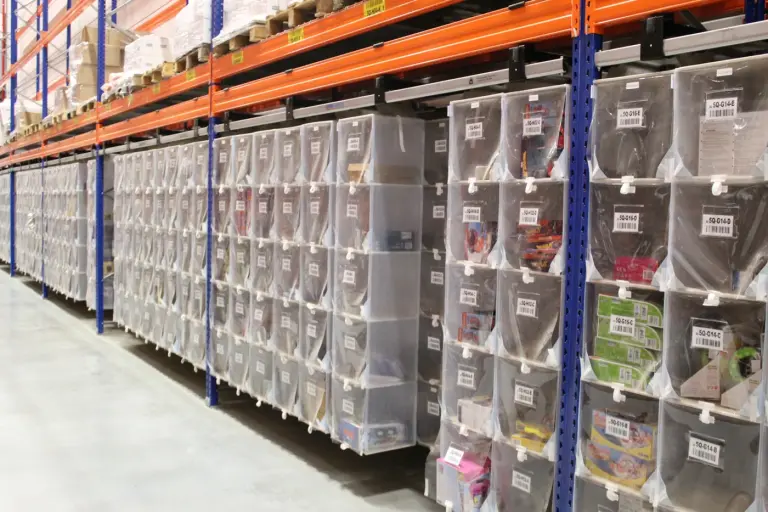 Storeganizer high-density pocket storage overviewStoreganizer turns unused pallet rack into hundreds of small-parts pick faces – 40% more usable space, 42% less…
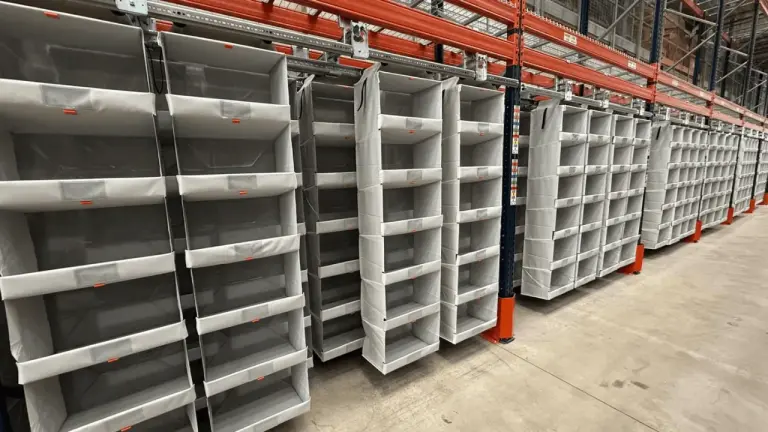 Aerospace and defense parts storageOne labelled, barcodable location per part number – up to 396 per pallet rack bay. Storeganizer pocket storage for…
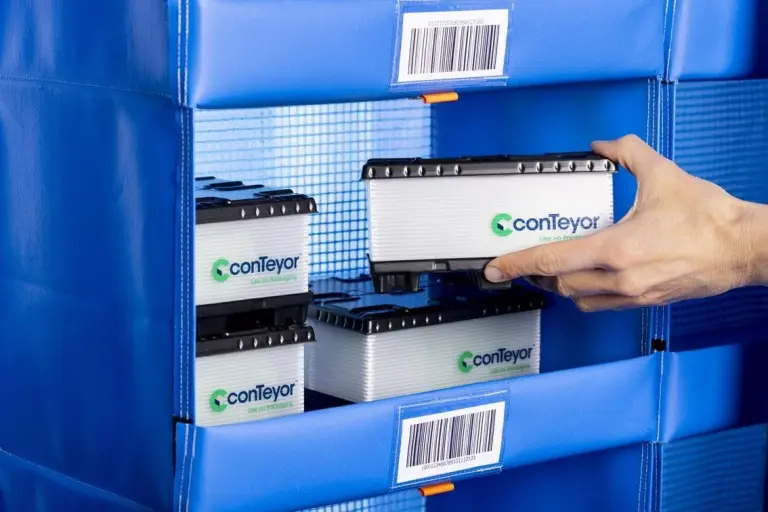 Spare parts and MRO storageGive every spare its own labelled pocket – up to 396 per pallet rack bay. Cut search time, duplicate purchasing and…
 How Storeganizer worksHow Storeganizer high-density pocket storage works: universal rack suspension, up to four rows deep, pocket sizes…
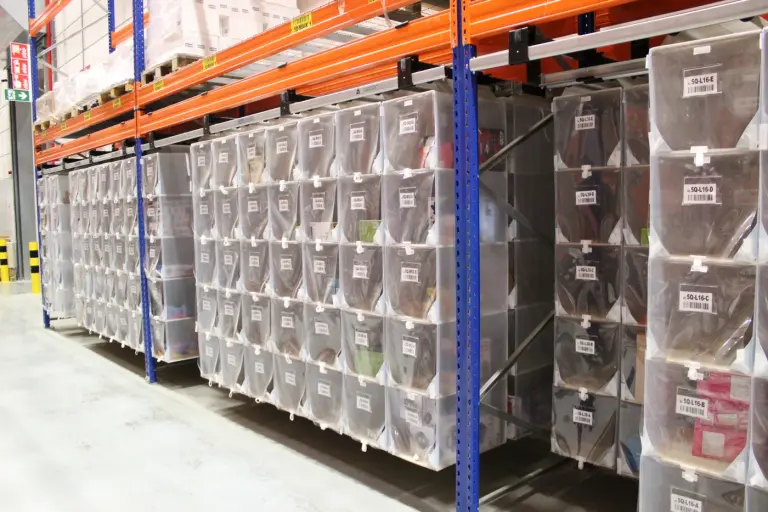 ID Logistics — aviation spare partsWhy ID Logistics uses Storeganizer for aviation spare parts storage, and what makes high-SKU-count, low-volume…
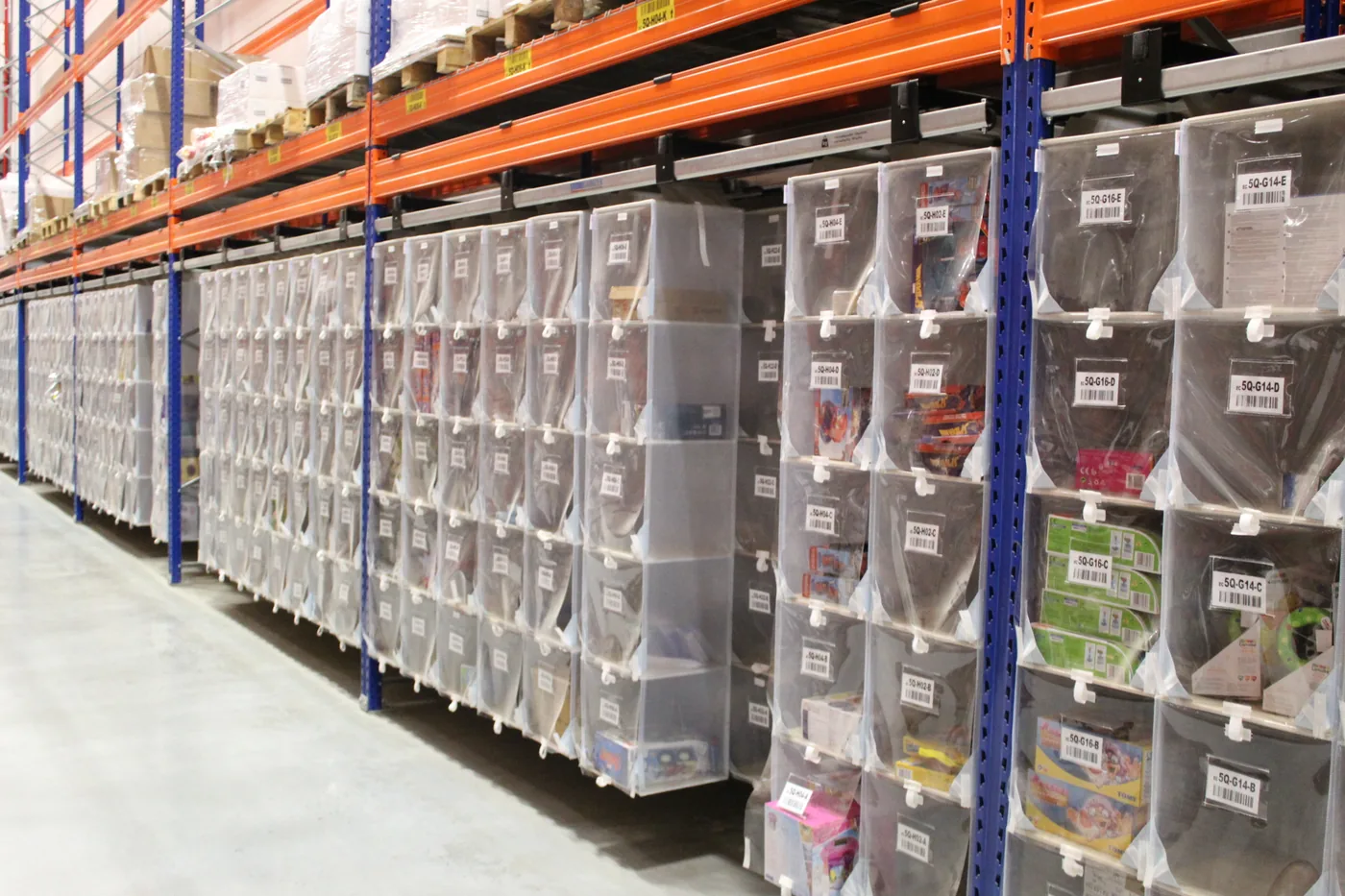 MH-USA case study: aerospace parts storage systemHow Sierra Nevada Corporation replaced shelving with Storeganizer pocket storage inside existing 42-inch pallet rack…
Configure your stores area
Send bay dimensions and a part-number profile. You will get a pocket mix, a location count, and a straight view of which lines should stay in shelving or cantilever.