
E-commerce Apparel Fulfillment Racking: SKRE
Direct-to-consumer apparel is a picking problem wearing a storage problem’s clothes. Thousands of size and colour variants, single-unit orders, and a peak season that arrives all at once. Where product is bulky but weighs almost nothing, the whole design changes — see our racking for bulky, light product case study. A specialty retailer selling boards alongside apparel faces an added twist on that same pick challenge — see our specialty retail warehouse racking case study.
2023 & 2024
Years SKRE worked with us on rack
E-commerce apparel
Direct-to-consumer technical hunting gear
Pallet rack
Product category we supplied
Units, not pallets
Orders leave one piece at a time
Plan your layout before you buy
Configure upright height, beam width, bay count, and load levels in our free 3D Pallet Rack Configurator, then get an instant bill of materials and request a quote.
The project
SKRE is a Utah-based direct-to-consumer brand selling technical hunting apparel. Material Handling USA supplied pallet rack for the company in 2023 and again in 2024. The client, those years and the product category supplied are the only project details we publish.
An apparel e-commerce operation looks deceptively simple from the outside — light product, small cartons, no cold chain, no hazardous goods. The difficulty is entirely in the numbers. A single garment becomes a dozen or more sellable variants once size and colour are counted, most orders are one or two units, and a large share of the year’s volume can land in a few weeks. Storage design is therefore judged by one measurement above all others: how many seconds it takes to pick a unit, and how many of those seconds are spent walking.
Below is how we plan pallet rack systems, pick faces and reserve storage for an apparel fulfillment operation, and where the real efficiency is found.
Why apparel fulfillment is its own storage problem
Six characteristics separate direct-to-consumer apparel from case-pick distribution, and each one changes the layout.
| Characteristic | What it means on the floor | Design consequence |
|---|---|---|
| Variant explosion | One style becomes many size and colour SKUs | Huge number of small pick locations, not big pallet faces |
| Single-unit orders | Most orders are one or two pieces | Travel time per order dominates everything else |
| Light, soft product | Polybagged garments, low weight, compressible | Volume-led storage; weight is rarely the limit |
| Severe seasonality | Peak can be several times normal volume | Reserve capacity and surge pick faces designed in advance |
| High return rate | Apparel returns are the norm, not the exception | A designed returns area with real locations, not a corner |
| Frequent range change | New season, new styles, old ones retired | Re-slottable, adjustable storage rather than fixed installations |
The second row is the one that governs the design. In a single-unit operation, walking is the cost. A layout that adds ten seconds of travel to an average pick adds hours per day across a peak week, and no amount of storage density compensates for it.
Designing the pick face
The pick face is the productive surface of the whole building. Everything else exists to keep it full.
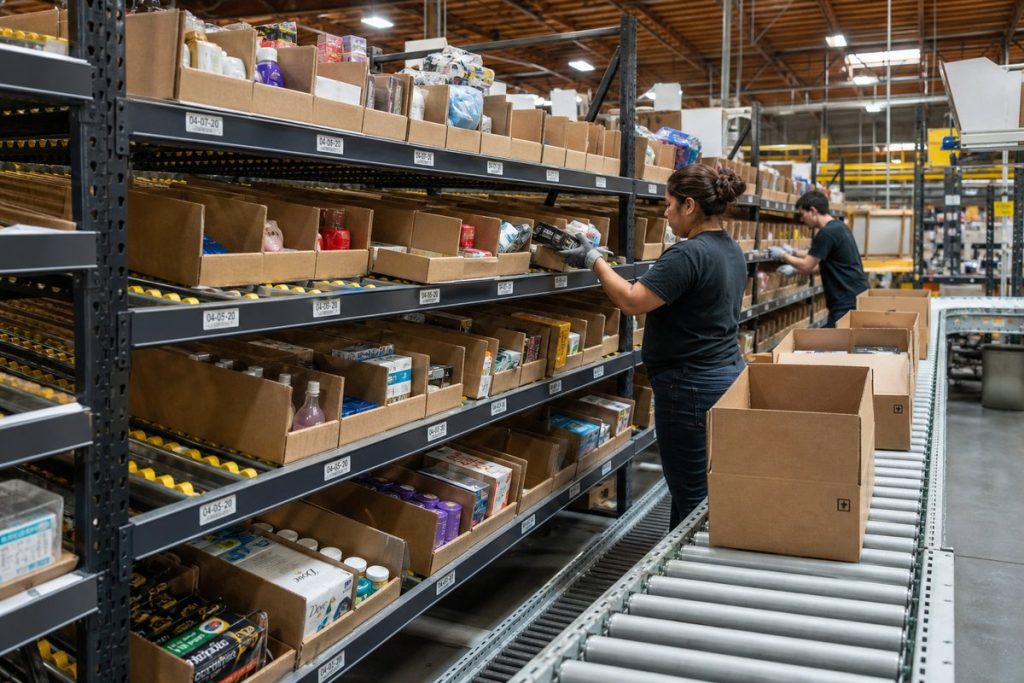
Small locations, densely arranged. A garment variant does not need a pallet position; it needs a bin, a shelf segment or a flow lane. Packing many small locations into a short run of aisle is what shortens the pick path.
Keep picks in the golden zone. Between roughly knee and shoulder height, a picker works without bending or reaching. Fast movers belong there; slow movers can take the top and bottom locations.
Carton flow rack for the fastest movers. Cartons are replenished from behind and picked from the front, so the pick face is compact and always presented, and replenishment never interrupts picking. For a small number of very high-volume variants this is the most productive metre of storage in the building.
Shelving and bins for the long tail. Most apparel SKUs are not fast movers. Shelving with dividers, or bin fronts, gives many addressable locations per bay at low cost and is easy to re-slot each season.
Consider a second level. Where floor area is the constraint and product is light, a mezzanine or pick module puts a second pick face over the first. It is a bigger commitment — egress, lighting, fire protection and material transfer all have to be designed — but for a variant-heavy operation in a fixed building it is often the difference between staying and moving.
Designing a pick face?
We build carton flow, shelving and selective rack combinations around your real order profile.
Reserve storage: the other 90 per cent
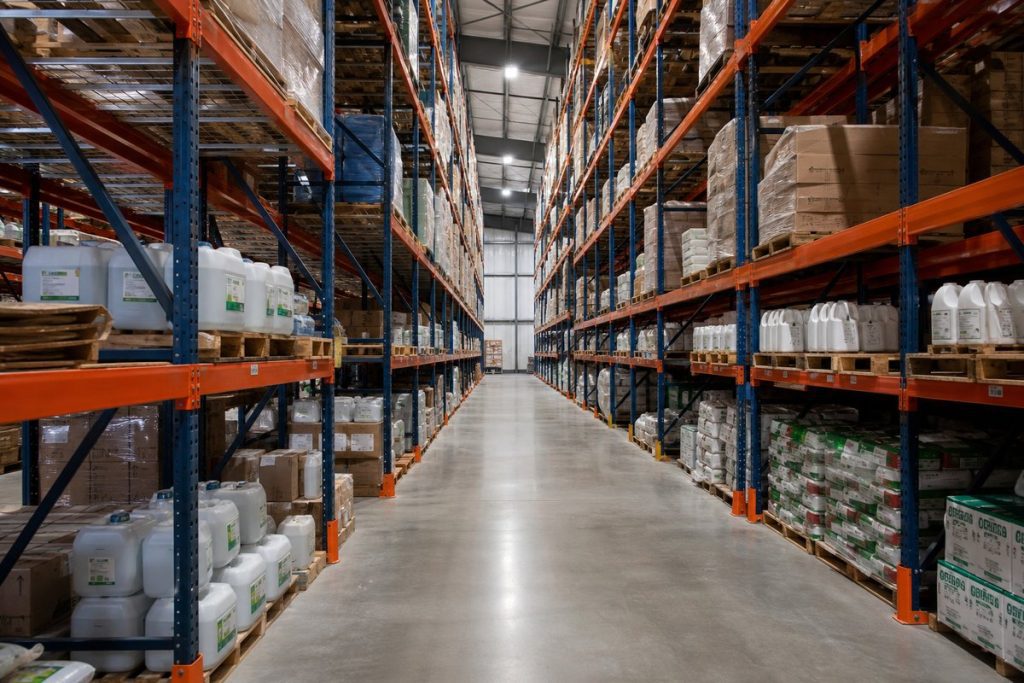
Behind every metre of pick face sits the bulk inventory that keeps it full. In apparel this is usually palletized cartons from a container or a production run, and it is where pallet racking does its work.
Put reserve directly above the pick. The cheapest replenishment in any warehouse is a let-down from the level above the pick location. It requires no travel, no staging and no separate transaction.
Selective pallet rack is usually right for reserve in a variant-heavy operation, because you need to reach any pallet without moving others. Density systems save floor area but cost access, and access is what a thousand-SKU range needs.
Narrow aisle where floor area is scarce. Narrower aisles with suitable trucks convert aisle space into storage. The trade is that a disabled truck blocks an aisle, and that the trucks and the floor flatness specification both become more demanding.
Push-back or pallet flow for the few deep items. Most apparel ranges have a handful of core items that ship in genuine volume all year. Those — and only those — justify deep-lane storage.
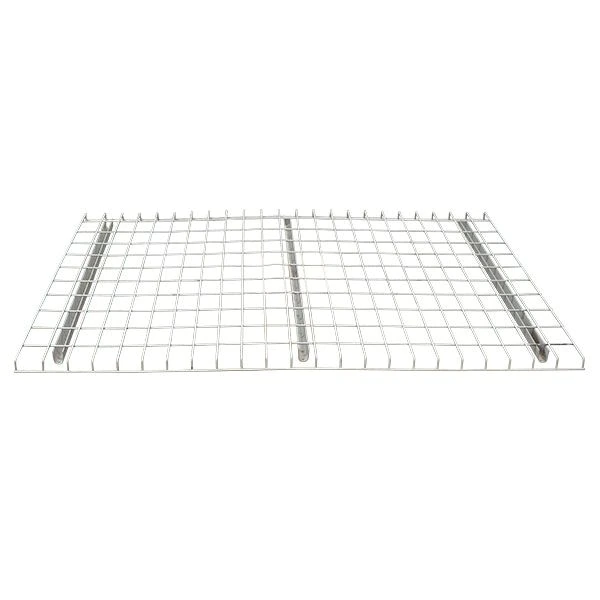
Deck the levels. Light cartons, part pallets and odd footprints are constant in apparel. Wire decking makes those positions safe and stops product dropping into the aisle below.
Our guide to choosing pallet racking for an e-commerce warehouse covers the selection logic in more depth.
Slotting is where the savings actually are
Racking sets the ceiling on productivity; slotting decides how close you get to it. In a single-unit apparel operation, slotting decisions typically outperform equipment decisions.
- Slot by pick frequency, not by style, colour or catalogue order — the fastest movers belong closest to the pack bench and at golden-zone height.
- Keep size runs of the same style together so a picker’s hand travels a few inches between the most commonly confused locations, and label sizes unmistakably.
- Re-slot every season. An apparel range that changes twice a year cannot keep a slotting plan built for last year’s bestsellers.
- Give the top and bottom levels to slow movers, oversize items and seasonal overflow.
- Match location size to unit velocity: a location that needs replenishing three times a shift is too small, and one refilled monthly is too big.
- Measure before optimising — a week of pick data beats an afternoon of opinion about which items are fast.
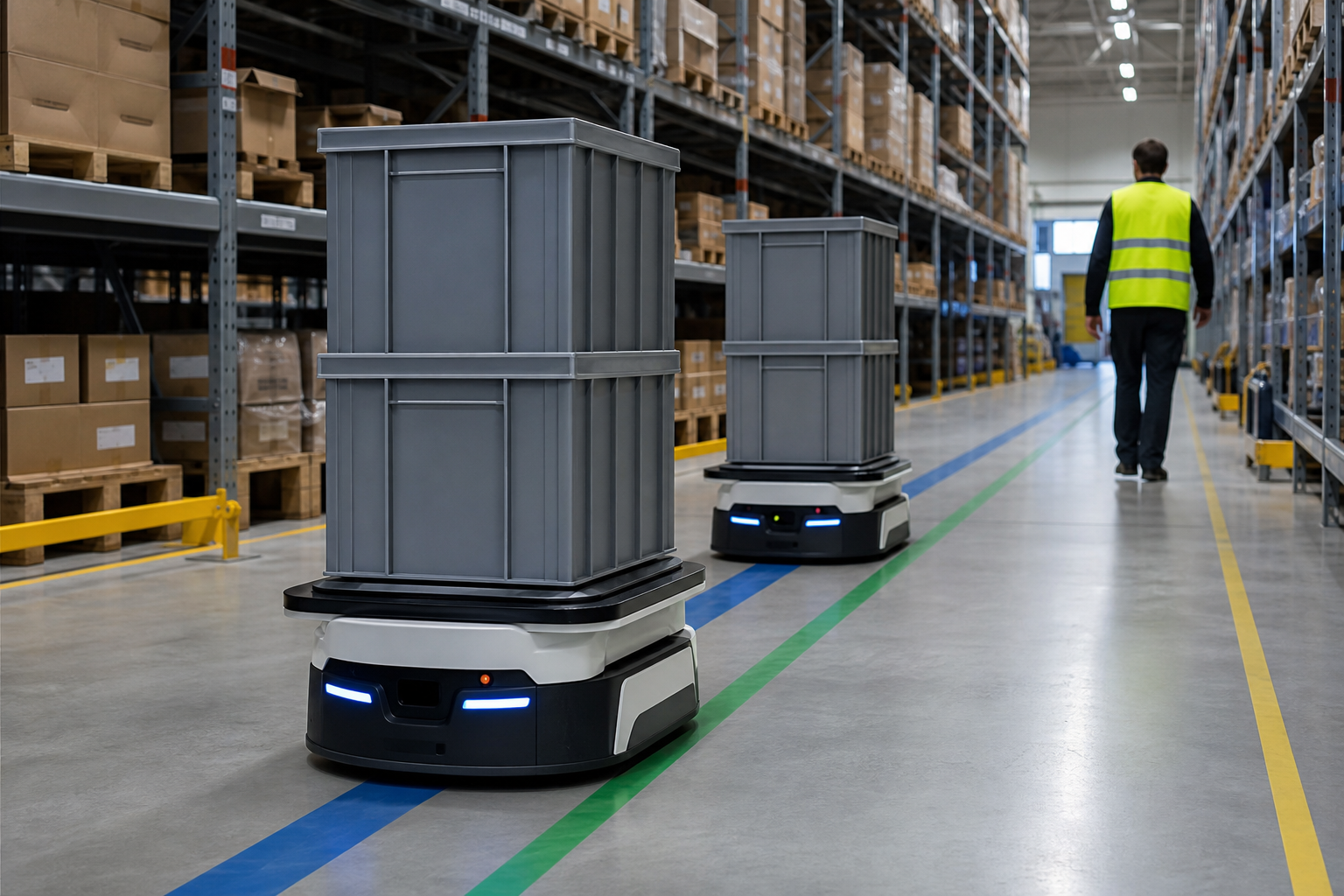
This is also where automation becomes a genuine question rather than a fashion. Where travel dominates and volumes justify it, goods-to-person systems, autonomous mobile robots or zone-picking with conveyor transport remove the walking rather than optimising it. All of them still need conventional reserve racking behind them, and all of them impose their own layout constraints — floor flatness, charging areas, transfer points and clear travel lanes — that are much cheaper to design in than to retrofit.
Packing, returns and surviving peak
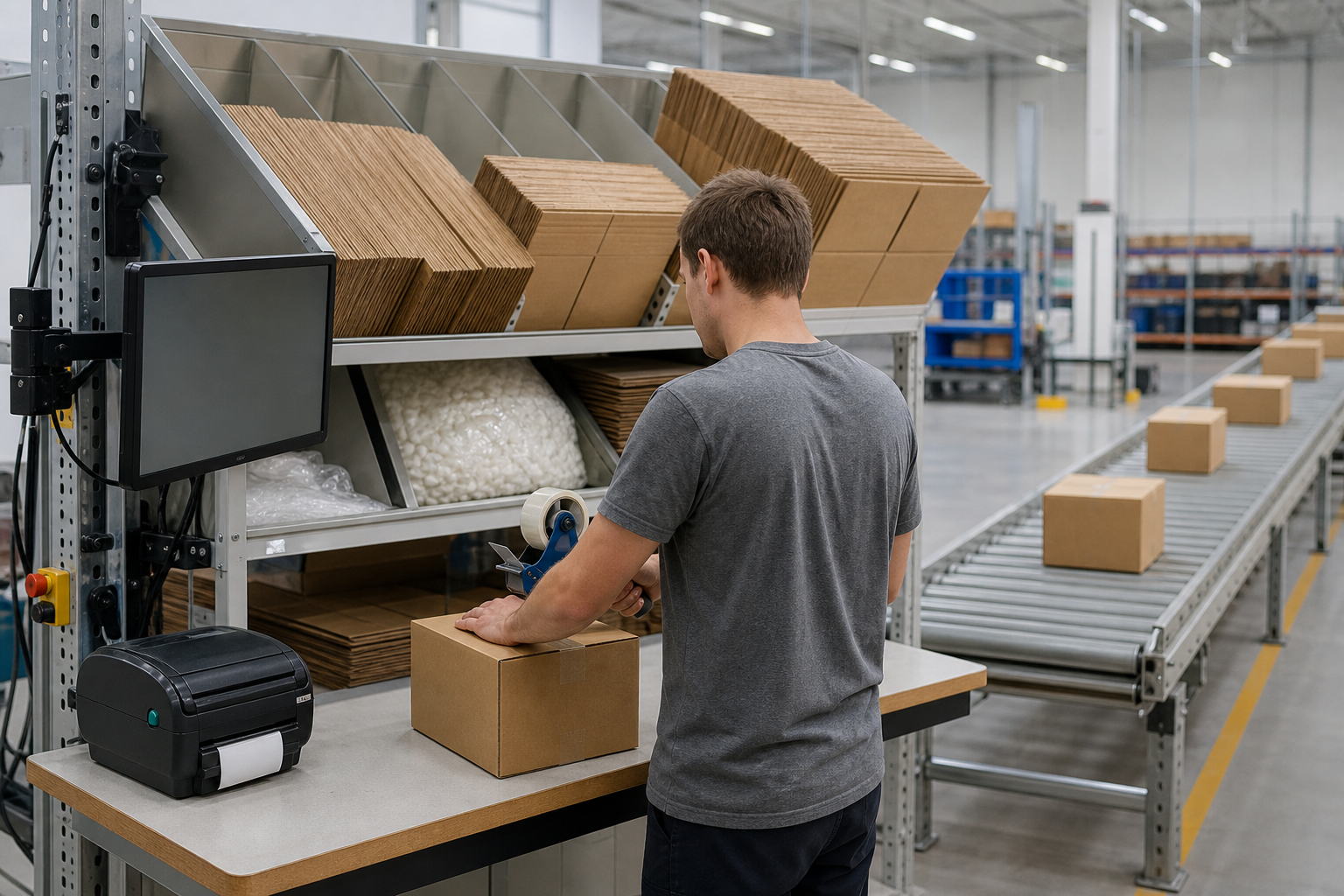
Pack benches are part of the storage design. Carton sizes, void fill, labels and consumables all need presented storage at the bench, replenished from behind so a packer never leaves the station. Our packing station design guide covers the ergonomics; the storage point is simply that a pack bench without designed supply storage becomes a floor-stack.
Returns need real locations. Apparel return rates make returns processing a permanent department, not an exception handler. It needs receiving positions, inspection space, addressed hold locations for items awaiting a decision, and a clean route back into pickable stock. Returns handled on a folding table beside the dock is how inventory accuracy quietly collapses.
Design peak in advance. A seasonal business should know before the season where the extra pallets will go, which additional pick faces open, and where temporary pack benches sit. Buying capacity in November is expensive; designing where it goes in June is free.
Keep the aisles clear. The single most common peak failure is storage overflowing into the aisles that the operation needs to move. Defined overflow locations — even simple marked floor positions with addresses — keep the building working when it is full.
Safety, code and installation
Light product does not mean light duty. Apparel reserve pallets are light, but the racking still has to be engineered, anchored and rated. The most common mistake in light-goods warehouses is treating racking as furniture: unanchored frames, improvised beam levels and no posted capacities.
Post the capacities per level and per bay for the as-built configuration, and re-post them if levels are moved — which in a re-slotted apparel warehouse happens often.
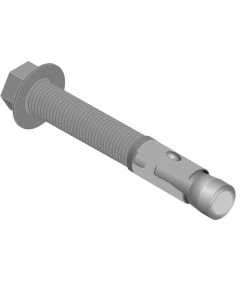
Seismic design. Storage racks above a defined height are non-building structures with seismic design requirements under the International Building Code as adopted locally, with rack design to ANSI MH16.1. Anchor type, size, embedment and count come from the rack engineer’s drawings for the actual slab and configuration — a live consideration for any Utah operation.
Fire protection. Rack layouts preserve transverse flue spaces at the uprights and a longitudinal flue between back-to-back rows. Packaging matters: polybagged apparel and plastic components affect commodity classification, and adding a level or raising storage height can move an installation outside its sprinkler design basis.
Pedestrians and trucks. Fulfillment floors mix walking pickers with powered equipment more than almost any other operation. Marked walkways, controlled crossings and column guards and end-of-row protection at aisle ends and transfer points are basic requirements, not extras.
Installation and inspection. Plumb columns, verified beam engagement, correct anchor torque and a documented handover with posted capacities are what a professional rack installation delivers; a documented inspection interval and rack repair that restores engineered capacity keep it there.
What we publish
We publish the client, the years we worked together and the product category supplied. We never publish facility layouts, room dimensions, order or inventory volumes, or contract values.
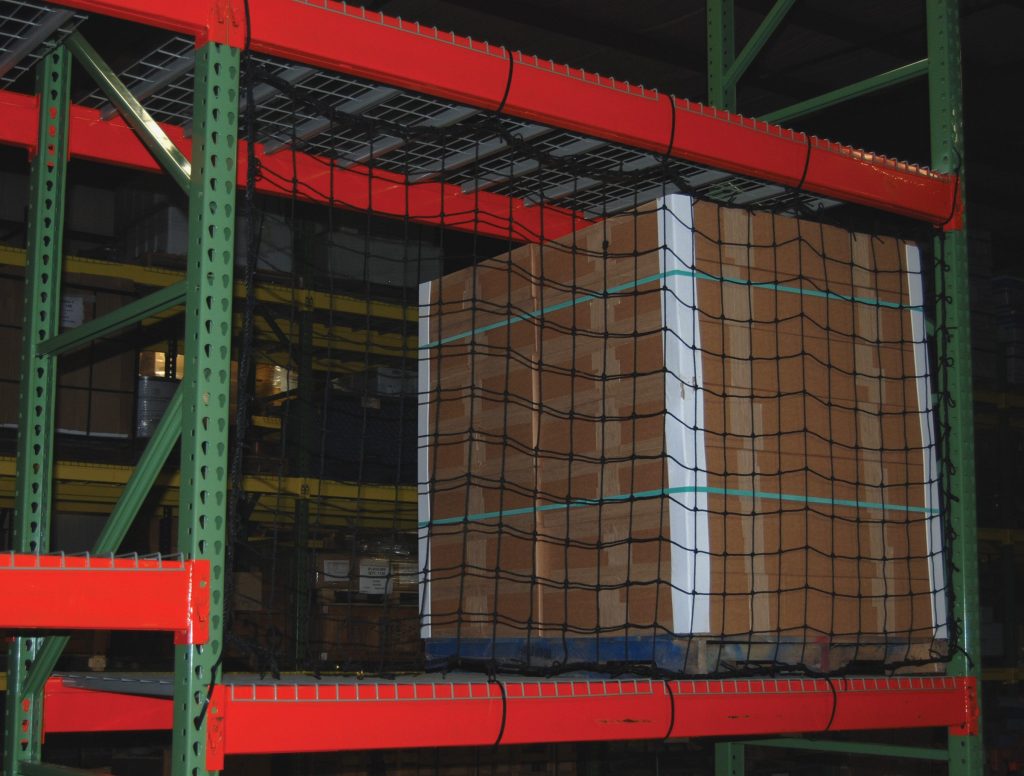
Shop Pallet Rack Accessories Online
Protect and finish your pallet rack installation with these in-stock accessories, or request a quote for custom-sized rack, freight and volume pricing.

E-commerce fulfillment racking FAQs
What racking suits an e-commerce apparel warehouse?
How do you reduce picking time in a single-unit operation?
What is the golden zone and why does it matter?
Is carton flow rack worth it for apparel?
How should a fulfillment warehouse prepare for peak season?
Where should returns be processed?
Does light product mean racking can be installed casually?
Building or re-laying out a fulfillment operation?
We design, supply and install carton flow, selective and narrow aisle systems across the Intermountain West, including Utah.
Utah pallet rack project: This case study supports our Utah pallet rack design and installation guide and, at the top level, our main pallet rack systems hub.
Fulfillment Storage That Cuts the Walk
Material Handling USA designs, supplies and installs pick faces, shelving and pallet rack for e-commerce and direct-to-consumer operations across Utah and the Intermountain West.