
Racking for Bulky, Light Product: Cariloha
Most rack designs are limited by weight. Bedding, soft goods and other cube-heavy products are limited by air — and that changes almost every decision in the layout.

2022
Year Cariloha worked with us
Pallet rack
Product category we supplied
Bedding & soft goods
Application
Cube, not weight
The real design constraint
Plan your layout before you buy
Configure upright height, beam width, bay count, and load levels in our free 3D Pallet Rack Designer, then get an instant bill of materials and request a quote.
The project
Cariloha is a Utah-based retailer and distributor of bamboo bedding and soft goods. Material Handling USA supplied pallet rack for the company in 2022. The client, the year and the product category are the only project details we publish — not layouts, bay sizes, volumes or contract values.
We are writing this one up because it is the mirror image of most racking case studies. Battery pallets, drums and steel force you to think about capacity. Bedding, pillows, apparel, packaging and similar goods weigh almost nothing per cubic foot, so weight stops being the constraint and volume takes over. That sounds easier. In practice it produces its own set of design mistakes, and it is a different conversation about pallet rack systems than the one a heavy manufacturer needs.

Cube-limited versus weight-limited storage
The pallet runs out of room before it runs out of capacity. A pallet of compressed bedding or boxed soft goods can be built as high as handling and stability allow and still sit far under any sensible beam rating. That means the value of an extra beam level is high and the risk from weight is low — the opposite of a dense-goods warehouse.
Vertical space is the asset. When each pallet is light, the way to store more is to go up, and to reduce the number of wasted inches between the top of a load and the beam above it. Two or three inches per level, multiplied across a whole warehouse, is real capacity.
Overhang and footprint drive the bay, not the load chart. Bulky product often overhangs a standard pallet. Bay width, upright depth and the placement of the front and back beams all have to reflect the actual footprint, not the nominal pallet size.
Beware the assumption that light means safe. Light loads still fall, still get hit by forklifts, and still need correct decking, safety pins and anchorage. Nothing about a light product reduces the need for a properly engineered frame — see pallet racking weight capacity for how frame and beam ratings interact.
Where the density actually comes from
In a cube-limited warehouse there are only four real levers, and they are worth pulling in this order:
| Lever | What it does | What it costs you |
|---|---|---|
| More beam levels | Uses vertical space you have already paid rent on; usually the cheapest capacity in the building | Needs adequate clear height, sprinkler clearance and a lift that can reach the top level safely |
| Tighter level spacing | Removes dead air above each load; a few inches per level compounds across the site | Requires knowing real load heights, and leaves less tolerance for a badly built pallet |
| Deeper storage (double-deep or lanes) | Removes aisles, which are the largest single consumer of floor area | Handling gets slower, and every lane must hold like product to avoid honeycombing |
| Narrower aisles | Converts aisle area into storage area | Ties you to specific trucks; a reach truck or narrow-aisle machine is a long-term commitment |
The mistake we see most often in light-goods warehouses is jumping straight to deep lanes because they look dense on a drawing, when the same building would gain more from another beam level and tighter spacing — with no change to trucks or process. Our warehouse layout guide walks through the sequence in more detail.
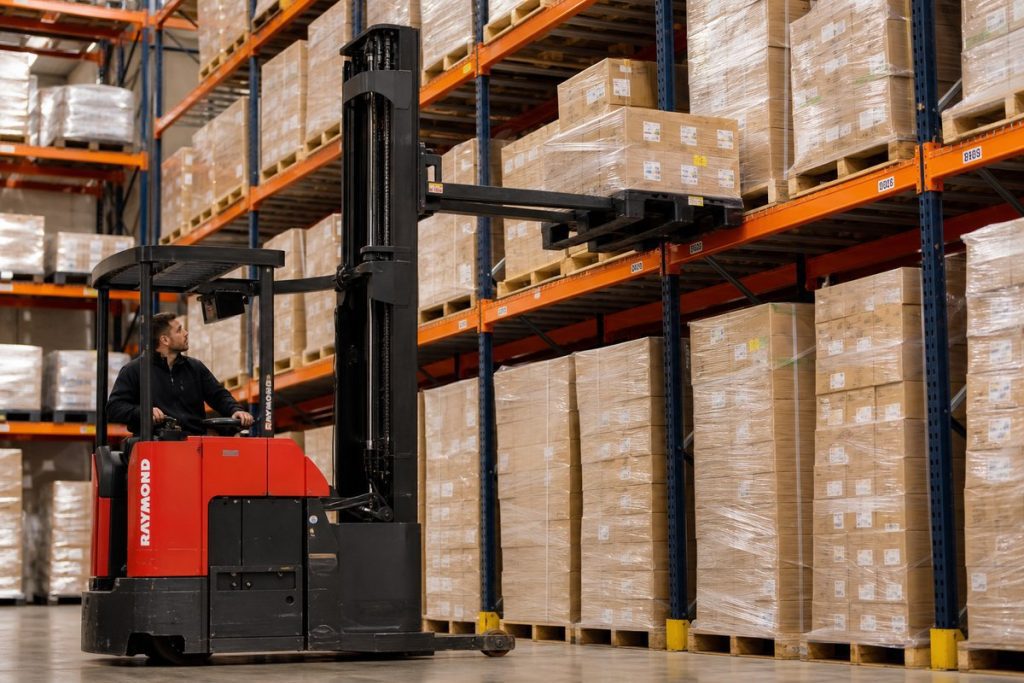
Rack type selection for light, bulky goods
Selective rack remains the default for high-SKU soft goods: every pallet is reachable and reslotting is a label change. If the SKU count is high and the pallets-per-SKU count is low, density schemes actively cost you positions.
Double-deep rack is the natural first step up in density when product arrives two pallets at a time in the same SKU. It needs a reach truck and disciplined putaway, but it removes a large share of aisles.
Push-back rack gives two to four deep density from a single aisle and suits fast-moving, non-dated goods. Bedding and soft goods are a good fit because last-in-first-out sequence rarely matters.
Drive-in rack is the densest option for a handful of very high-volume SKUs, but forklift entry into the lane makes damage more likely — and light product does nothing to protect the frame from the truck.
Cantilever rack handles the genuinely awkward items: rolled goods, long or unpalletized bulk that will not sit sensibly on a beam level.
Narrow aisle layouts are worth modelling once the building is otherwise optimised, especially in a leased building where floor area is the expensive part.
Carton crush, stability and decking
Light product creates one problem heavy product never does: the load cannot support itself.
- Cartons carry their own weight badly. Compression strength drops as cartons take on humidity and as they sit stacked over time. A pallet that was stable on receipt can slump after months in a high bay.
- Tall light pallets are unstable pallets. The higher the load and the lighter it is, the more it relies on wrap, banding and a square build. Set a maximum load height and enforce it at receiving rather than at the rack face.
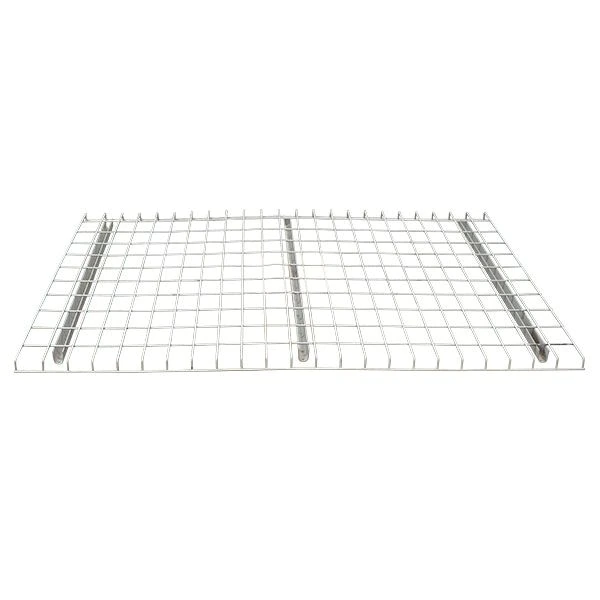
- Decking is not optional just because the load is light. Small or irregular items fall through beams. Wire decking catches them and gives fire sprinklers a path; solid deck suits items that would snag on mesh.
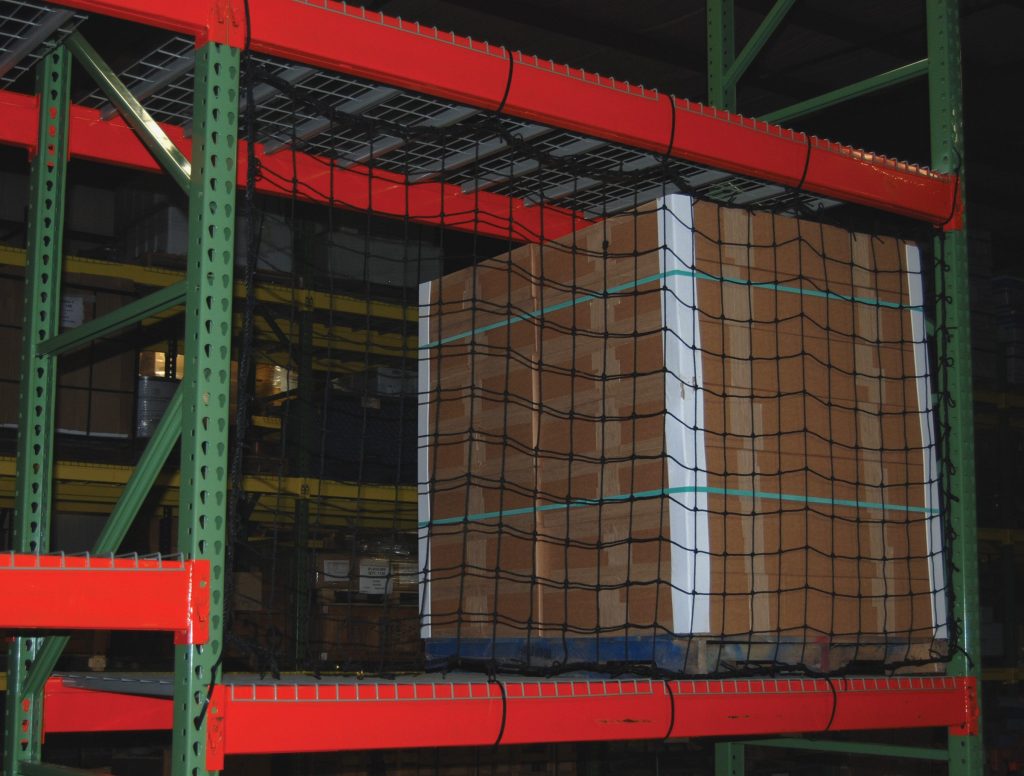
- Consider netting where loads face an aisle or walkway. A light carton falling from the fourth level is still an injury — rack safety netting is cheap protection.
- Do not overhang the beam face into an aisle. Bulky loads overhang; the answer is a bay sized for the real footprint, not a load hanging into traffic.
- Keep pallet quality in scope. Light loads are often shipped on lighter, cheaper pallets. A broken stringer in a deep lane is a bad afternoon.
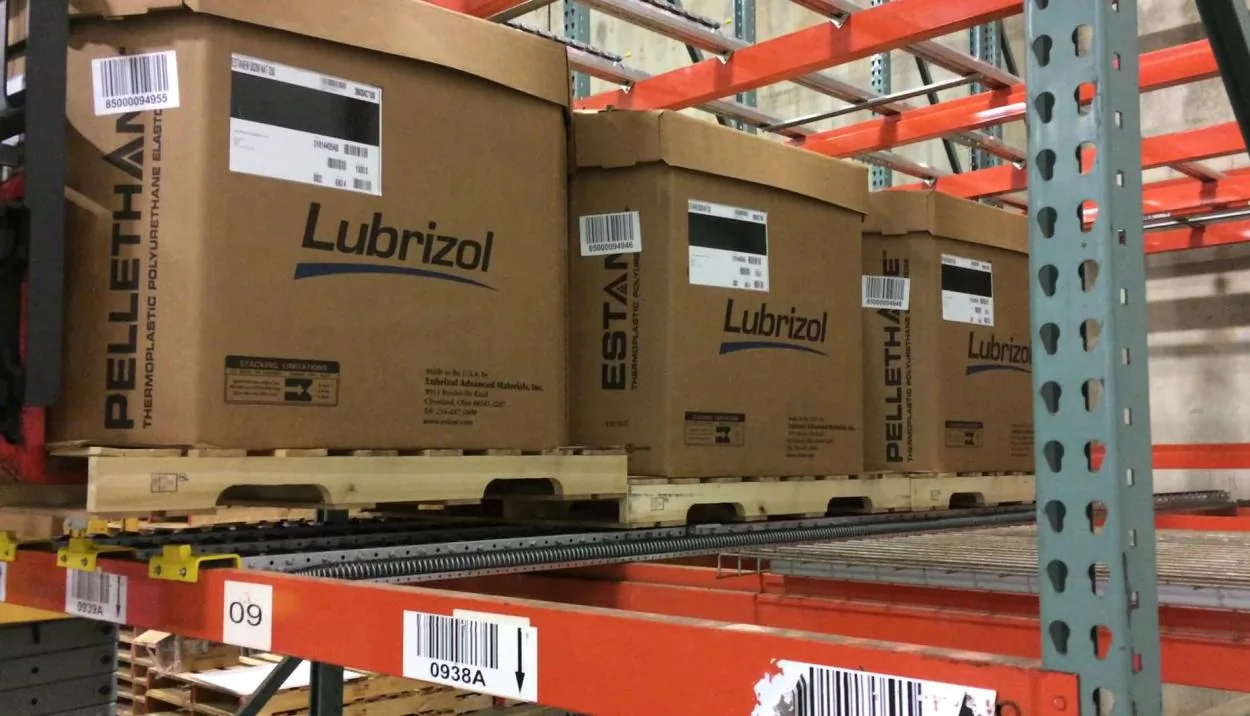
Slotting a light-goods warehouse
With weight off the table, slotting is driven by pick velocity, cube and handling ergonomics.
Fast movers at pick height, everything else up. The bottom two levels are the expensive real estate in a manual operation, because that is where the labour is. Reserve them for the SKUs that actually turn.
Match level height to load height by zone. Rather than one universal beam spacing, group SKUs into two or three height families and set beam levels per zone. This is where most of the "free" capacity in a light-goods warehouse hides.
Keep replenishment above the pick face. Storing a SKU’s reserve pallets directly above its pick position makes replenishment a lift, not a trip.
Plan for seasonal swing. Soft goods and bedding are seasonal. Leaving a defined overflow zone — rather than letting peak stock colonise the aisles — is what keeps peak from becoming a safety issue.
Reslot deliberately, not continuously. Every move costs labour. A quarterly review with real pick data beats constant tinkering.
Our e-commerce fulfillment racking page and our apparel fulfillment case study cover the pick-face side of the same problem.
Building limits: height, sprinklers and seismic
Going up is the cheapest capacity, right up until it collides with the building.
| Limit | What to check before adding height |
|---|---|
| Clear height to the lowest obstruction | Sprinkler heads, lights, ducts and joists set the real ceiling, not the roof deck |
| Required sprinkler clearance | Fire codes require clearance between the top of storage and sprinkler heads; the top beam level has to respect it |
| Commodity classification | Soft goods, foam, plastics and packaging can classify higher than expected, which changes sprinkler design and permitted storage height |
| Flue spaces | Longitudinal and transverse flues let sprinkler water reach a fire in the rack; they are not spare inches to reclaim |
| Forklift lift height and stability | The truck has to place a load at the top level safely, including reach and residual capacity at height |
| Seismic design | Seismic demand scales with stored mass, so a light warehouse is favourable — but frame design and anchorage still have to be engineered for the installed height |
Because storage height and commodity classification interact with fire protection, this is the part of a light-goods project most worth checking with the local fire authority before ordering steel. Primary sources are worth reading directly: the National Fire Protection Association for storage and sprinkler standards, and the Rack Manufacturers Institute for ANSI/RMI MH16.1.
Safety and damage in a light-load warehouse
The one genuine hazard of light product is complacency: because nothing feels heavy, the rack gets treated as furniture.
- Anchor and pin everything. Light loading does not reduce the need for correct anchorage, safety pins and plumb frames.
- Protect the uprights. Damage in soft-goods warehouses is almost always forklift impact, not overload — rack guards and column protectors pay for themselves at aisle ends and lane entries.
- Deep lanes take more hits. Push-back and drive-in lanes concentrate truck movement into a narrow entry. Expect impact there and design for it.
- Inspect on a routine. A bent upright under a light load is still a compromised frame — see rack inspection and repair.
- Post the ratings anyway. Warehouses change use. The bay that holds pillows today may hold something dense next year, and the plaque is what stops that becoming an incident.
- Keep aisles clear at peak. Seasonal overflow stored in aisles is the most common safety failure in this kind of operation.
We design and install these systems across the region — see Utah pallet rack for local service, or selective pallet racking for the baseline configuration most soft-goods warehouses start from.
Shop Pallet Rack Accessories Online
Protect and finish your pallet rack installation with these in-stock accessories, or request a quote for custom-sized rack, freight and volume pricing.

Frequently asked questions
What racking is best for bulky but lightweight products?
Can we just add more beam levels because the product is light?
How does light product change seismic design?
Is double-deep racking worth it for light goods?
Do light loads still need wire decking?
What limits how high we can store?
How do we handle seasonal peaks without blocking aisles?
Utah pallet rack project: This case study supports our Utah pallet rack design and installation guide and, at the top level, our main pallet rack systems hub.
Storing bulky, lightweight product?
We design cube-efficient rack layouts for bedding, soft goods, packaging and e-commerce operations.