
Specialty Retail Warehouse Racking: Daddies Board Shop
Skateboards, longboards and snowboards don’t fit on a standard shelf the way boxed apparel does — a specialty board-sports retailer needs storage built around the board, not the carton. Not every recreation-equipment storage problem is a retail warehouse — a nonprofit adaptive recreation program stores a varied fleet of specialized gear that goes out and comes back with every participant; see our adaptive sports equipment storage case study.
Specialty retail
Client sector
Board sports
Product category
Pallet rack
Product category supplied
Mixed hardgoods & apparel storage
Application
Plan your layout before you buy
Configure upright height, beam width, bay count, and load levels in our free 3D Pallet Rack Designer, then get an instant bill of materials and request a quote.
The project
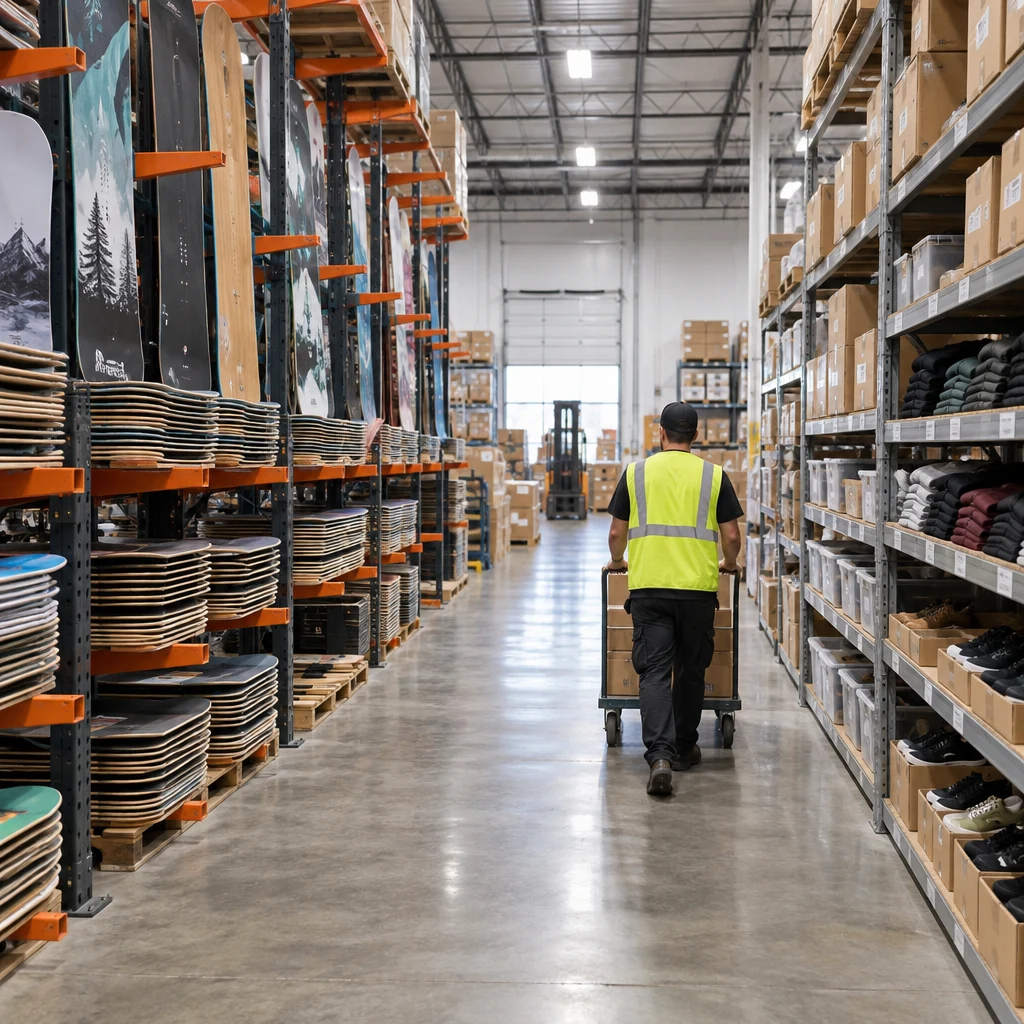
Daddies Board Shop is a specialty retailer of longboards, skateboards, snowboards and related apparel and footwear, selling through retail locations and a national e-commerce store. Material Handling USA supplied pallet rack systems for the company’s warehouse.
Most retail and e-commerce warehouse storage is designed around cartons: a box of a known size goes on a shelf or pallet position sized for boxes. A board-sports retailer breaks that assumption. A skateboard deck, longboard or snowboard is long, flat, and doesn’t stack, palletize or bin the way a carton of shirts or shoes does — while the same warehouse also has to handle completely conventional apparel and footwear cartons for the rest of the product line. That’s a different storage problem from our e-commerce apparel fulfillment case study for SKRE, which is a pure apparel pick/pack operation without the oversized hardgoods mix.
Why board-sports retail storage is different
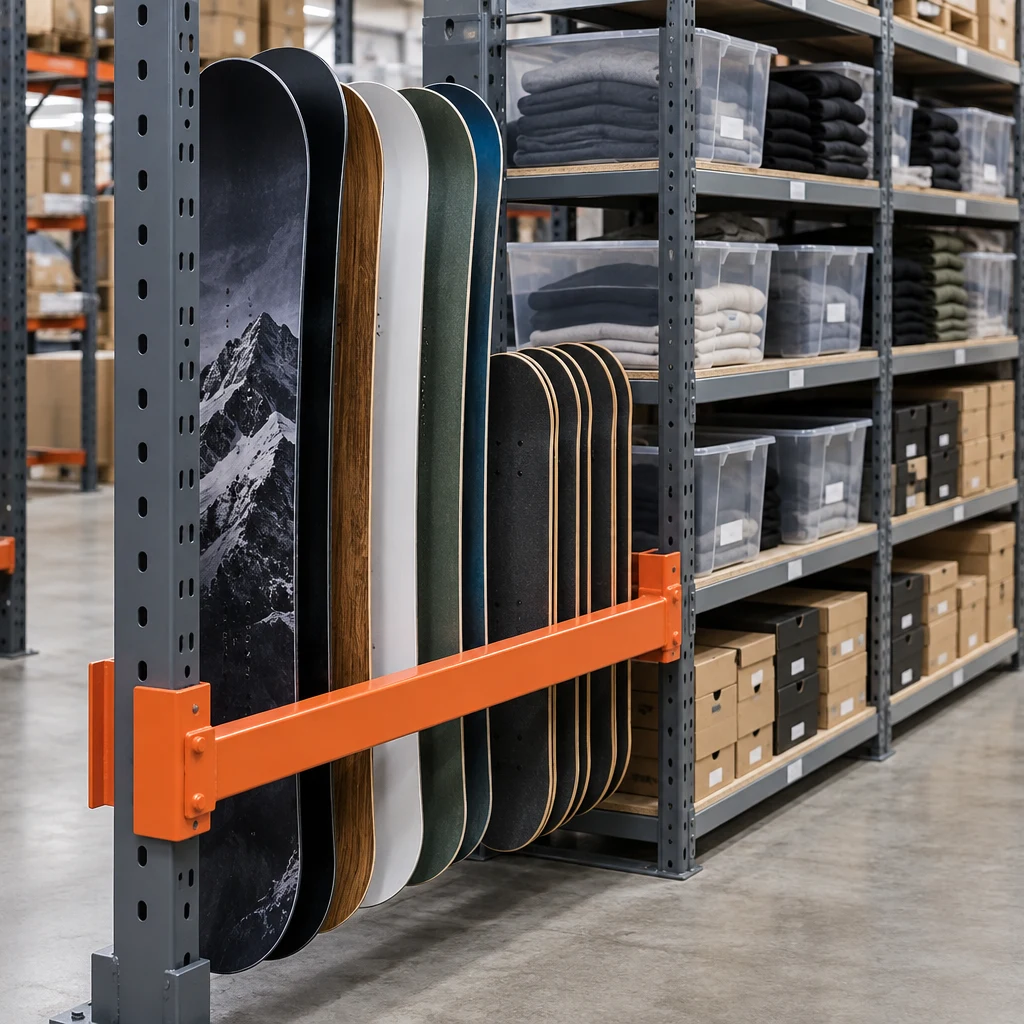
Boards are long, flat and awkward to shelve. A snowboard or longboard doesn’t fit a standard shelf depth, and stacking decks flat on a shelf makes it slow to pick a specific graphic or size without disturbing the whole stack.
Product mix spans two completely different handling profiles. Boards need open, vertical storage; apparel and footwear need conventional carton and bin storage. One rack type doesn’t serve both well.
Retail and e-commerce both depend on fast, accurate picking. Whether an order ships to a store or direct to a customer, a picker needs to find the right board length, flex and graphic quickly — open, visible storage beats boards buried in boxes.
Damage risk is higher for hardgoods. A scratched or dinged board deck or base can’t be sold as new, so storage that avoids boards rubbing, dropping or catching on rack components protects margin directly.
What a board shop’s warehouse stores
Splitting inventory by physical shape and handling need, not by product category alone, is what makes a mixed hardgoods-and-apparel warehouse work.
| Group | Examples | Storage that suits it |
|---|---|---|
| Long, flat hardgoods | Skateboard decks, longboards, snowboards | Cantilever rack arms holding boards on edge, sorted by length or graphic for fast visual picking |
| Completed/boxed boards | Pre-assembled complete skateboards and snowboards in shipping boxes | Selective pallet rack or boltless shelving sized to the box, kept separate from bare decks |
| Apparel | T-shirts, hoodies, outerwear, folded and hanging stock | Boltless shelving with labeled bins, or hanging rail sections for garments on hangers |
| Footwear | Skate shoes and boots in individual boxes | Boltless shelving sized to shoebox dimensions, organized by size run |
| Hardware and accessories | Trucks, wheels, bearings, bindings, wax, small parts | Bin shelving near the pack station for fast small-item picking |
| Seasonal overflow | Off-season snowboard or skate inventory awaiting the next season | Bulk selective pallet rack positions, separate from active-season pick stock |
Rack and shelving choices for oversized hardgoods
The core decision is giving boards their own open storage instead of forcing them into carton-shaped shelving built for something else.
- Cantilever rack for bare decks, longboards and snowboards. Open arms let boards stand on edge, visible and separated, without a shelf face forcing them flat.
- Selective pallet rack for boxed and palletized bulk inventory. Completed boards in shipping cartons and bulk seasonal overflow both fit standard pallet positions.
- Boltless shelving for apparel, footwear and accessories. Bin and carton storage for the conventional side of the product line, positioned next to the cantilever bays for a single pick path.
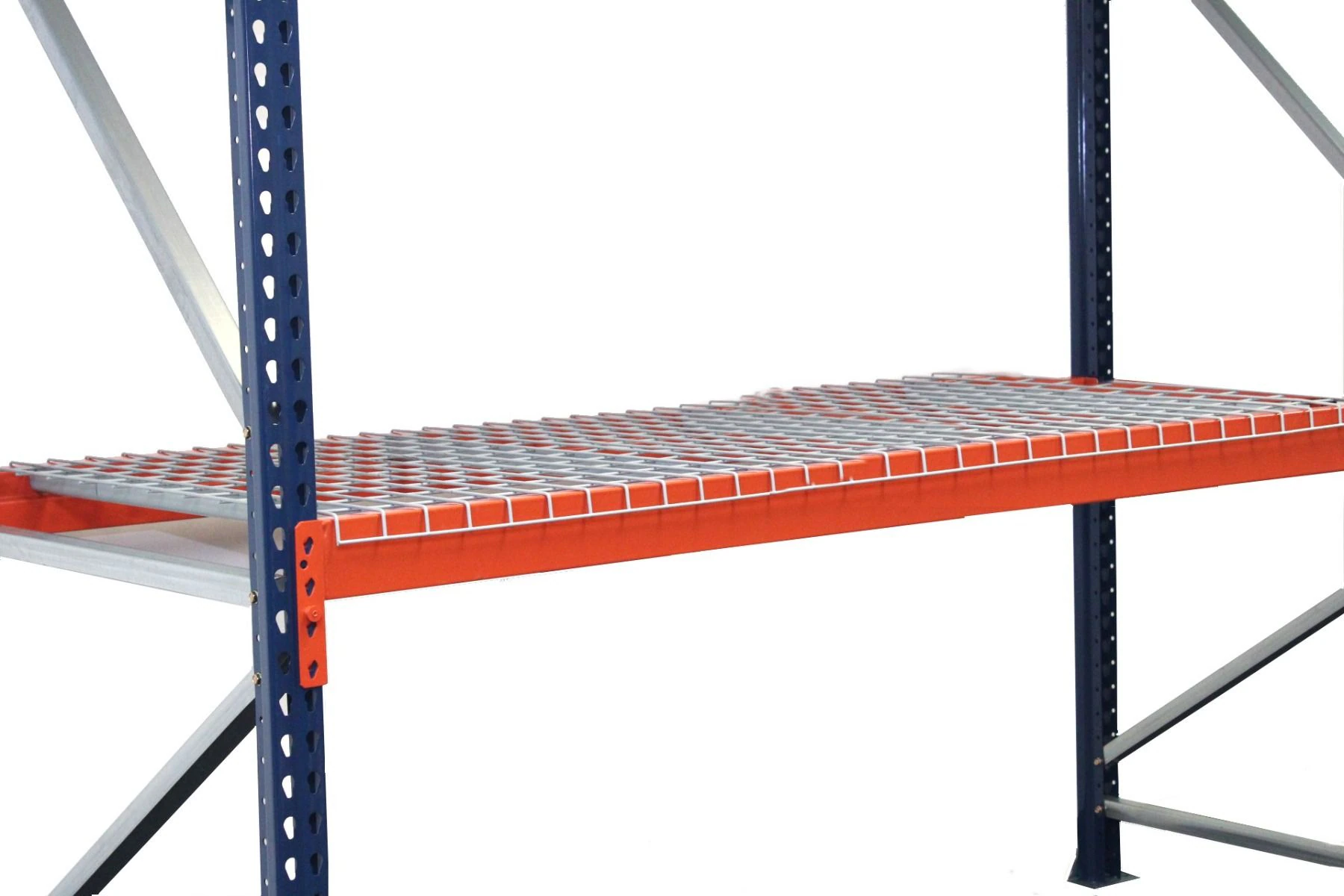
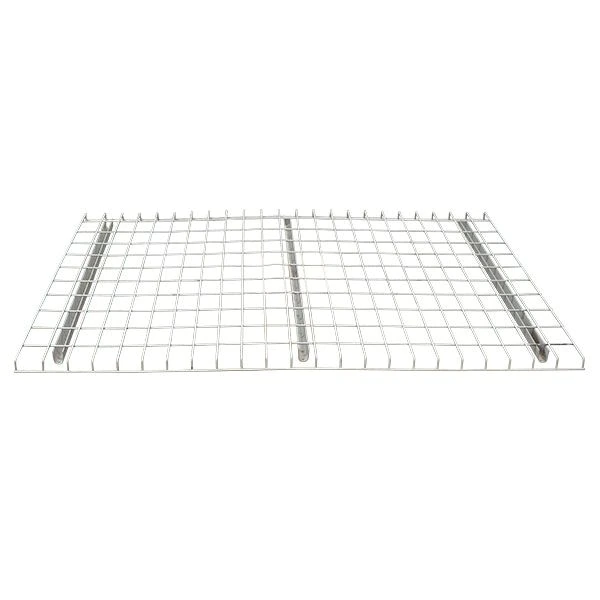
- Rack decking sized to prevent boards catching or scratching. A smooth, snag-free level surface protects graphics and bases — see wire decking options.
To lay out cantilever and pallet rack runs for a mixed hardgoods-and-apparel warehouse before ordering, try our 3D pallet rack designer. See also our general e-commerce fulfillment center guidance for the apparel and footwear side of a specialty retail operation.
Seasonal inventory swings
A board shop’s inventory mix shifts hard between skate season and snow season, and the storage layout has to absorb that swing without a warehouse reconfiguration every few months.
- Design cantilever bays for the peak of either season, not the average. Snowboard inventory peaks in fall; skateboard and longboard inventory peaks in spring and summer — sizing storage for the busier of the two avoids overflow.
- Keep off-season stock accessible but out of the primary pick path. Bulk pallet positions for the off-season category keep active picking aisles clear without pushing inventory to an outside storage unit.
- Plan flexible bay spacing. Adjustable cantilever arm spacing lets the same bays handle shorter skateboard decks in one season and longer snowboards in the next.
- Coordinate rack capacity with e-commerce demand spikes. A holiday or back-to-school sales spike hits apparel and footwear shelving as hard as it hits board storage — plan both together.
Retail and e-commerce replenishment
A specialty retailer selling through both physical stores and a national e-commerce store runs two different replenishment rhythms out of the same warehouse floor.
- Separate store-replenishment stock from e-commerce pick stock. A store order is a case-pack restock; an e-commerce order is a single unit pulled fast. Mixing the two pick paths slows both down.
- Put fast-moving board lengths and popular graphics closest to the pack station. E-commerce pick speed depends on the most-ordered SKUs being the easiest to reach, not just the newest arrivals.
- Keep a returns lane for both channels. Store returns and e-commerce returns both need inspection before boards or apparel go back into sellable stock, so a clearly marked returns area prevents damaged or incomplete items re-entering pick stock.
- Reserve bulk pallet positions for incoming vendor shipments. New-season board and apparel deliveries arrive in bulk and need staging space before they’re broken down into pick locations.
Installation and safety
A mixed cantilever-and-shelving warehouse still needs to meet the same structural standards as any other rack installation.
- Size cantilever arm capacity to real board weights and lengths — see pallet rack weight capacity guidance rather than assuming a generic arm rating covers the longest snowboards in the line.
- Protect aisle-end uprights with column protectors and end guards in a busy pick aisle with frequent cart traffic.
- Inspect cantilever arms and pallet rack on a defined cycle and after any impact — see rack inspection and repair.
- Anchor and install to the ANSI/RMI MH16.1 standard — see our rack installation guidance.
ANSI/RMI MH16.1 is published by the Rack Manufacturers Institute. We design, supply and install cantilever rack, pallet rack and shelving for specialty retail and e-commerce operations across the region — see Utah pallet rack.
Shop Pallet Rack Products Online
Buy select items directly from our online store, or request a quote for volume, custom sizes and freight-rated orders.
Frequently asked questions
What storage suits a board-sports specialty retailer’s warehouse?
Why can’t skateboard decks and snowboards go on standard shelving?
How is this different from a typical e-commerce apparel fulfillment warehouse?
How should a board shop handle the swing between ski/snowboard season and skate season?
What’s the design standard for the racking itself?
Planning storage for a specialty retail or e-commerce warehouse?
We design cantilever rack, pallet rack and shelving layouts for specialty retailers with mixed hardgoods and apparel inventory. Free design consultation.