
Robot-Ready Shelving & AMR Racks
WPSS RiveTier shelving, robot-specific bases and fulfillment infrastructure. Plan the physical storage system around your AMR, inventory and picking workflow.
MH-USA is an authorized Western Pacific Storage Solutions dealer. AMR robots are supplied separately.
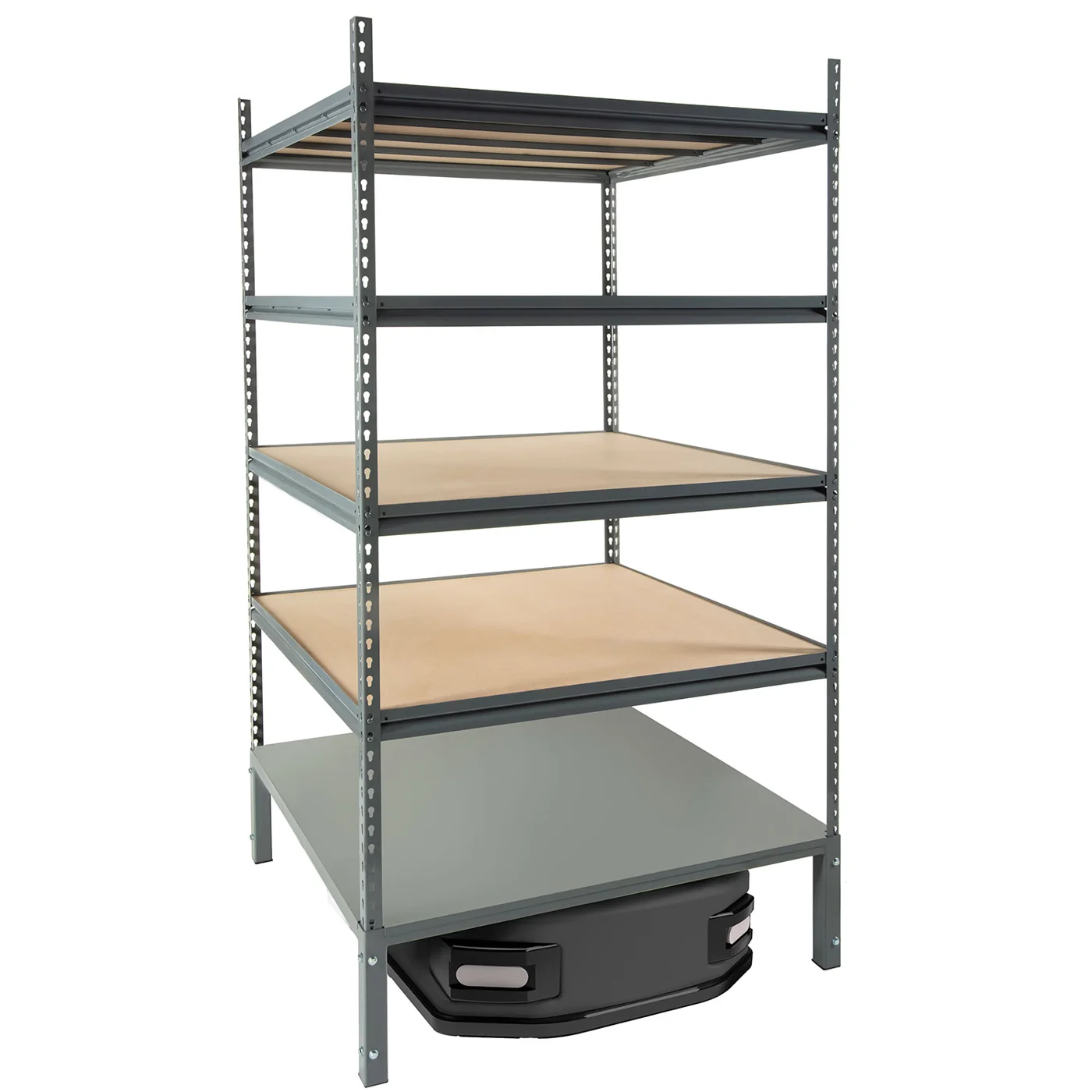
RiveTier
Adjustable boltless shelving
Custom bases
Matched to your robot
Four sides
Access and raised shelf lips
Phased
Shelve now, automate later
Bring inventory to people, not people to every aisle
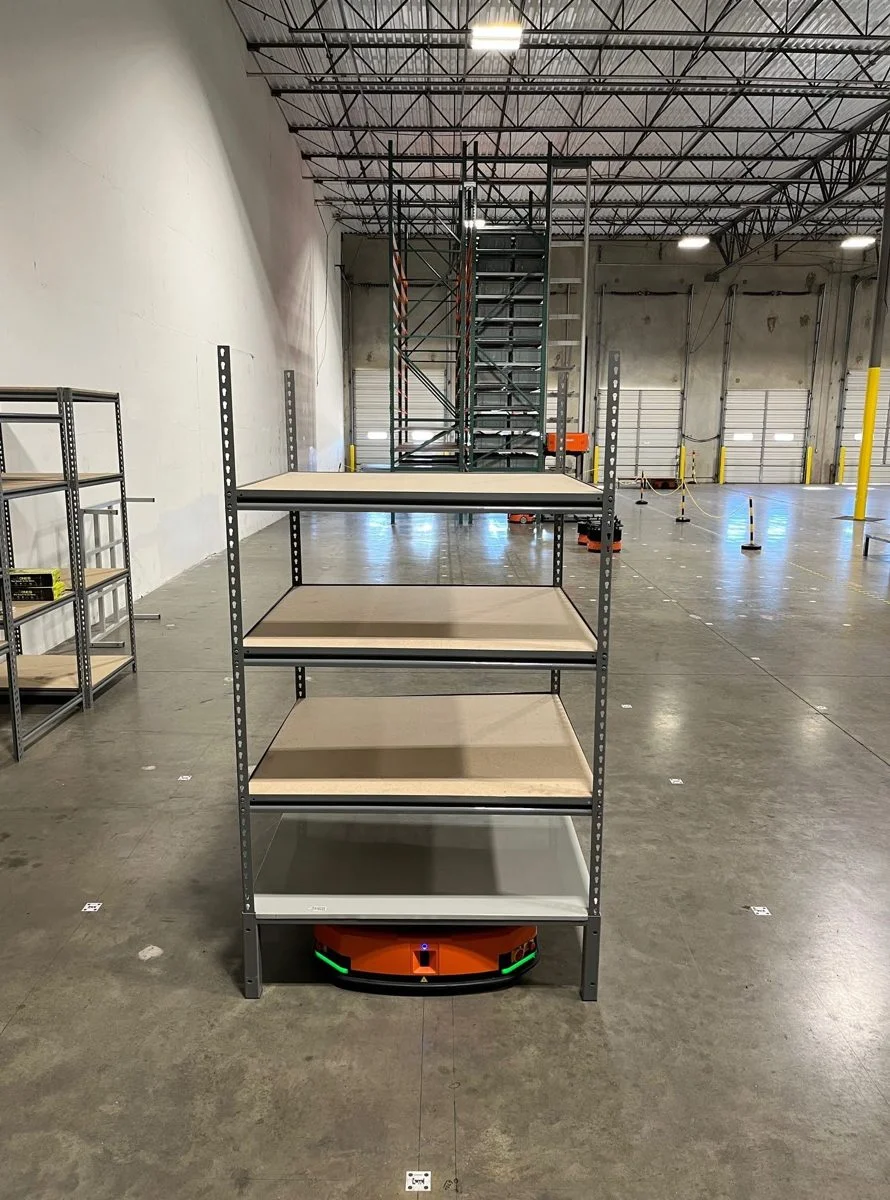
Robot-ready shelving is the mobile storage structure carried by an autonomous mobile robot (AMR). In a goods-to-person workflow, the robot retrieves a shelving unit and brings inventory to a picking, sorting or packing station. The shelving connects the stored product to the robot; it is not the robot itself.
Western Pacific Storage Solutions (WPSS) manufactures that physical infrastructure. Its RiveTier AMR Rack pairs adjustable boltless shelving from the same family as standard RiveTier boltless steel shelving with a reinforced base configured around the selected robot. MH-USA helps you plan and quote the shelving and supporting equipment with WPSS and your automation provider.
Compared with a conventional person-to-goods layout, this approach can reduce travel between storage locations and support a more consistent picking flow. Actual throughput, accuracy, aisle savings and return on investment depend on the complete system, inventory mix and operating plan. Start with the work your team needs to perform, then define the rack, robot and station interfaces together.
For a broader comparison of fixed and movable storage, explore our shelving solutions. This page focuses specifically on AMR-carried shelving and related WPSS infrastructure, not shelving on hand-pushed casters or high-density shelving that moves on floor tracks.
RiveTier AMR Racks and custom mobile shelving units
MSU: mobile shelving units
A WPSS mobile shelving unit combines an AMR base with standard RiveTier components. Boltless shelf levels can be added, removed or repositioned as cartons, totes and parts change. Four-sided access makes inventory reachable from different faces, while raised shelf lips on all four sides help contain product during movement.
WPSS lists medium density fiberboard, hemmed steel and wire shelf options. Select the surface around the inventory and operating conditions, then confirm the approved load and shelf arrangement for your configuration.

| Feature | WPSS configuration | What to resolve for your project |
|---|---|---|
| Shelf levels | Adjustable boltless levels with four-sided shelf lips | Product heights, usable openings and picking access |
| Primary components | 14-gauge steel, as identified in the RiveTier AMR sell sheet | Final member selection and approved configuration |
| Base and legs | Reinforced and configured around the AMR | Robot interface, pickup height and underside clearances |
| Shelf surfaces | Medium density fiberboard, hemmed steel or wire | Container contact, weight distribution and containment |
| System scope | Shelving and physical infrastructure | Robot, software and controls supplied by the automation provider |
There is no universal shelf capacity or overall unit rating for every AMR rack. Specify both the empty rack weight and the maximum inventory load. Your robot supplier also needs the combined moving weight and load distribution, not just the weight of the merchandise. Do not apply a conventional shelving catalog rating to a robot-carried unit without configuration approval.
Built for repeated robot transport

Robot-carried shelving needs more than an open space beneath a standard rack. WPSS designs the RiveTier AMR Rack for structural rigidity, vibration resistance and the demands of repeated movement. Reinforced bases and legs form the interface with the robot.
The reinforced base can be configured to the AMR, and leg height follows the robot’s requirements. A shelf lip helps retain products, but it does not make every loose part or container suitable for transport. Review the inventory, stacking and containment with your integrator before releasing the design.
Base grids: the foundation of an MSU
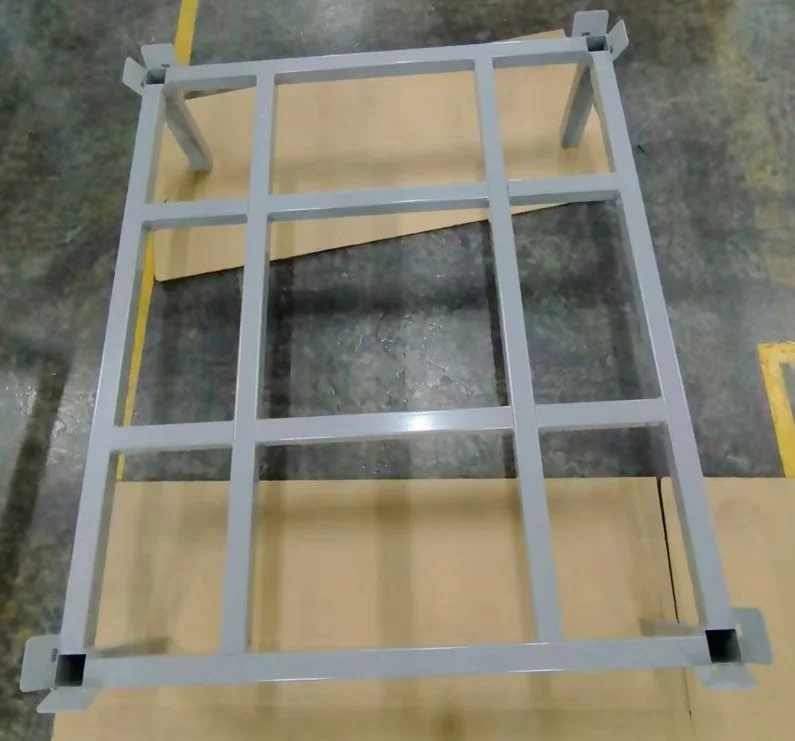
WPSS AMR base grids are customizable and provide space for a QR code. Heavier tubing is available where the project calls for it. These grids are the starting point for the mobile shelving assembly, rather than a one-size-fits-all robot accessory.
Send the OEM’s dimensional and interface drawings so the base can be coordinated with the robot’s approach, lift and identification requirements. Include any restrictions on labels, covers or underside features that could interfere with the selected platform.
Pallet movers and stationary transfer platforms
Not every automated load belongs on shelves. WPSS also manufactures pallet-moving and transfer infrastructure. Choose these components by the load and handoff sequence, then coordinate them with the selected AMR and the adjoining work area.
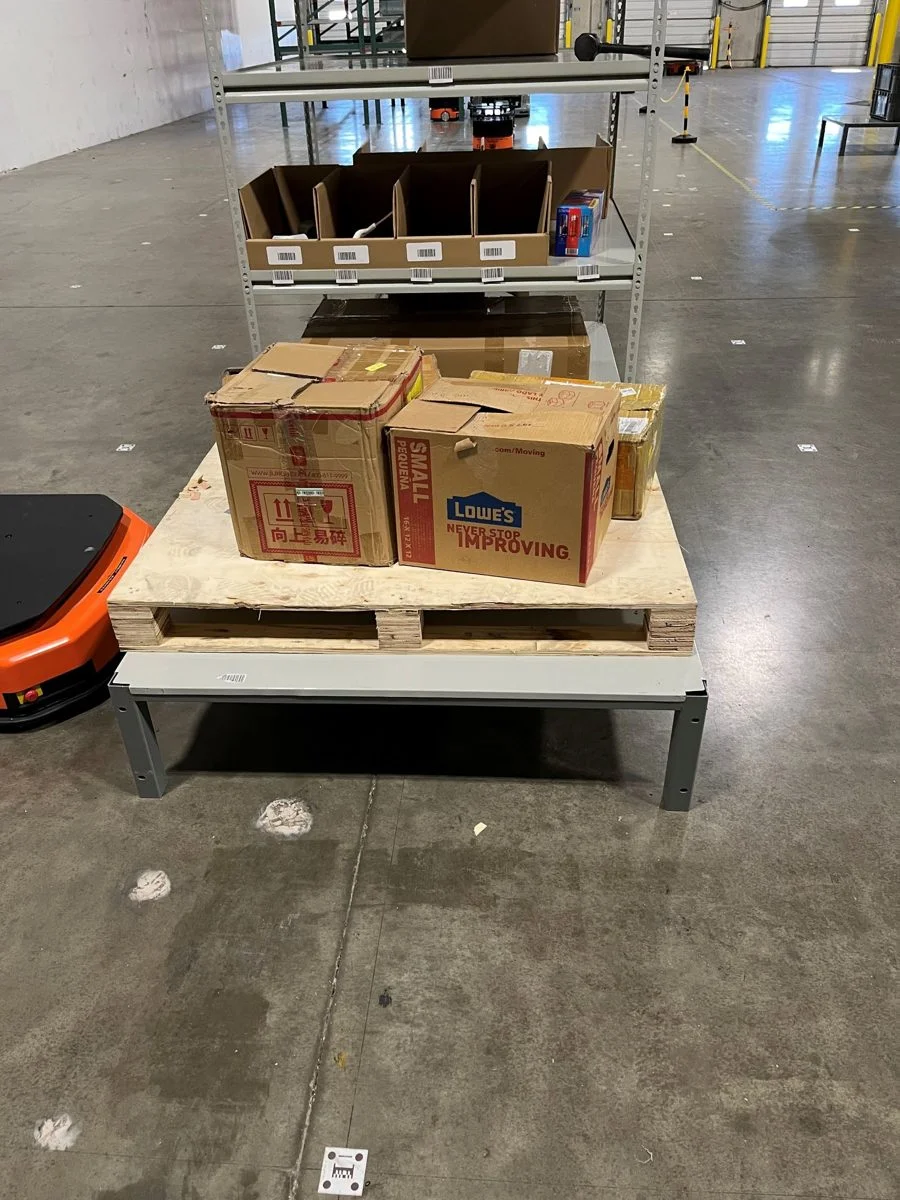 MPB: mobile pallet moversPlatforms for AMR-carried pallet loads. WPSS offers corner nubs, solid decks or open grid frames, with shelving or wire sides as possible configurations.
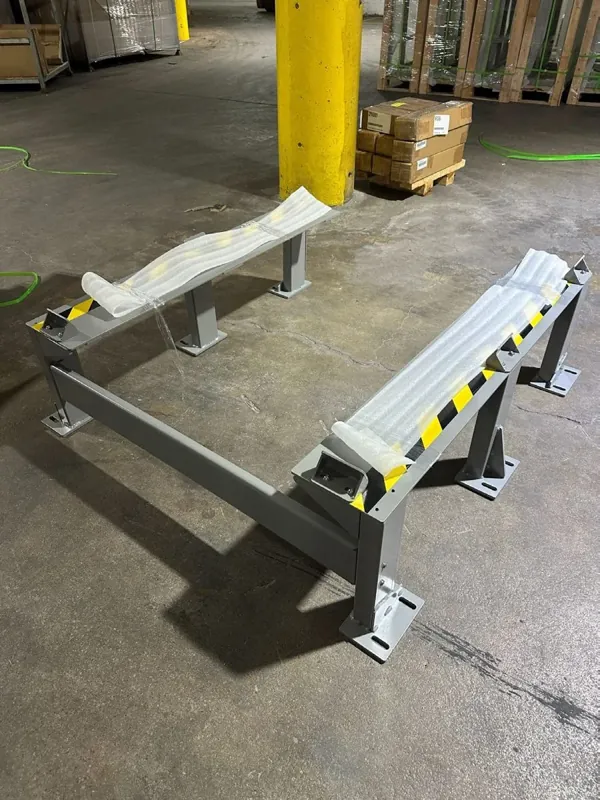 STP: stationary transfer platformsStationary platforms and rails support robot load-transfer workflows. Options include high-visibility striped rails and raised platforms for MSU picking.
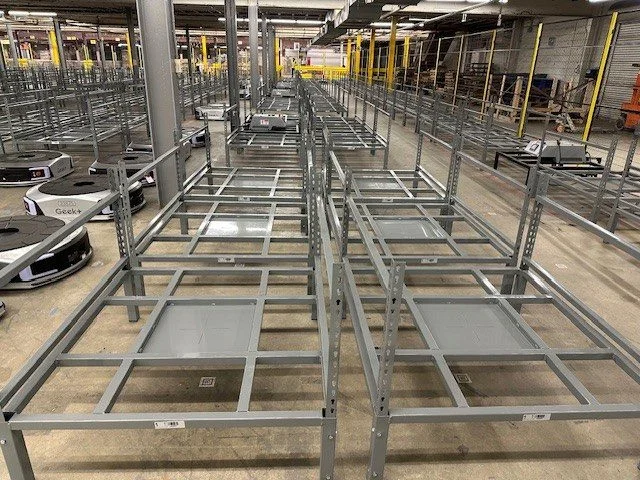 High-post pallet moversPallet movers with high posts at each corner. The frame and interface are configured to the robot and the load-handling application.
Define where the load starts, how the robot picks it up, where it is set down and who accesses it next. Pallet type, load footprint, overhang, approach direction and transfer height are useful starting information. A pallet mover, an MSU base and a stationary transfer platform serve different roles; they should not be substituted solely because their footprints appear similar.
Final transfer geometry, capacity and operating clearances belong in the approved system drawings. Confirm the full handoff with your automation provider, especially where people, manual equipment and robots share the same station.
Put walls connect robot delivery with order consolidation
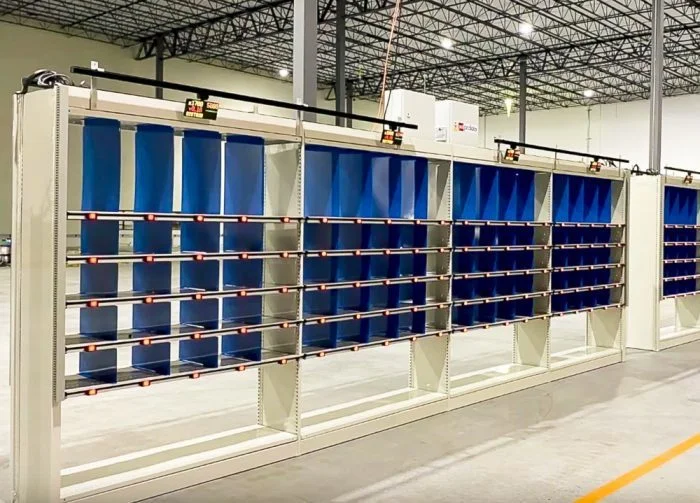
Moving inventory to a station is only part of fulfillment. WPSS pass-through Put Wall shelving organizes the human picking and order-consolidation side of an automated cell. Its put walls are built from standard Deluxe shelving components and can integrate with third-party pick-to-light or put-to-light technology.
Mobile versions on casters are available. In a coordinated layout, mobile shelving units serve the robot side and workers sort or consolidate orders on the other side. The physical shelves and the light-directed equipment need to be specified as separate, coordinated parts of the project.
Plan both sides of the station
Define tote or carton sizes, order positions, replenishment access and the tasks performed at each opening. Include the automation provider’s requirements for light modules, scanning equipment and controls. Shelving compatibility with a light-directed system is not a promise that software, wiring or lights are included.
WPSS supports integrators with engineering, estimating, project management and fabrication. MH-USA can coordinate the physical shelving quote while your automation partner defines the robot behavior and controls scope.

Additional WPSS automation infrastructure
Robotic tote shelving
Tote racks for robotic picking arrays, tall goods-to-person shelving and mini-load pod configurations. Identify the tote-handling robot and container requirements before choosing the storage geometry.
Multilevel pick modules
WPSS can manufacture shelving, platforms, guardrail, stairs and landings for pick-module projects, including robotic shelving on the floor or on a platform. Structural and access requirements are project-specific.
Automotive parts storage
Enclosed shelving units and high-density layouts support automotive parts organization. Distinguish fixed parts storage from the AMR-carried equipment in the same facility.
WPSS also identifies custom MSUs and STPs, robotic pick-to-light equipment, carts, high-bay applications, and four-way pallet shuttle pods and rails as development areas. Ask MH-USA about the current status and fit for your project; do not assume these development items are standard, released configurations.
Robot compatibility starts with the OEM specifications
“Robot-ready” does not mean one rack fits every autonomous mobile robot. WPSS designs products from OEM specifications and prototypes them to interface with the intended robot platform. Final compatibility depends on the actual rack, load, robot and operating environment.
| Design input | Information to send | Why it matters |
|---|---|---|
| Robot platform | Manufacturer, model, OEM drawings and lifting or attachment interface | Defines the physical connection between rack and AMR |
| Base geometry | Width, depth, leg spacing, pickup height and required clearance | Allows the robot to approach and engage the load |
| Identification | QR-code location and scanning or label requirements | Reserves the correct underside area and orientation |
| Moving load | Empty structure, inventory weight, distribution and overall height | Coordinates rack design with the robot’s payload and stability limits |
| Facility and travel | Floor conditions, layout, turns, transfer points and pick stations | Tests the operating route, not just a static fit |
| Containment | Totes, cartons, loose parts, overhang and retention needs | Identifies product movement risks during travel |
Review the loaded unit with the automation provider before manufacturing. Ask how the approved system will handle starts, stops, turns and handoffs. A drawing that shows the robot fitting beneath the rack is necessary, but it is not the same as validation of the complete operating system.
Keep changes controlled after approval. Adding shelf levels, storing heavier SKUs or moving dense product higher in the unit can change the assumptions behind the design. Have the appropriate project partners review those changes before returning the unit to robot service.
Choose shelves around the product, not just the rack footprint
| Available shelf surface | Questions to answer before selection |
|---|---|
| Medium density fiberboard | What are the tote or carton contact points, housekeeping needs and environmental conditions? |
| Hemmed steel | How will containers sit on the surface, and what containment or cleaning requirements apply? |
| Wire | Are the container bases suitable for the openings, and will small items need separate totes? |
Provide representative product and container dimensions, including the smallest items and the heaviest expected loads. Shelf spacing should allow practical retrieval without unnecessary empty height, while preserving the configuration approved for the robot. Four-sided access can be useful, but the surrounding station and robot approach may limit which faces are used in practice.
Where a facility has moisture, washdown, sensitive products or special material requirements, identify them at the quoting stage. The listed shelf materials alone do not establish a sanitation, cleanroom, ESD or other certification. Ask for the specific finish and documented suitability required by your operation.
Where robot-ready shelving can fit
WPSS identifies semiconductors and photonics, life sciences, automotive, food and consumer goods, and clothing among the sectors adopting automation. The useful starting point is the workflow: frequent travel to many locations, repeatable container handling and a clearly defined picking or transfer station.
E-commerce and consumer goods
Evaluate MSUs for mixed-SKU picking and put walls for consolidating items into orders. Share peak order patterns and replenishment needs so storage does not become a bottleneck at the station.
Automotive parts
Separate boxed service parts, components and pallet loads. Shelving units, enclosed fixed storage and pallet movers may serve different tasks within one coordinated layout.
Semiconductors, photonics and life sciences
Start with the actual container and handling requirements. Identify any sensitive-product or environmental constraints rather than assuming that standard shelving meets specialized production requirements.
Apparel and clothing
Map cartons, totes and order-consolidation positions. Adjustable levels help adapt the storage arrangement as SKU dimensions change, subject to the approved unit design.
Food and packaged goods
Define the environment and packaging first. A dry packaged-goods workflow is different from refrigerated, wet or washdown handling; material suitability must be confirmed for the application.
Pallet-transfer workflows
Consider mobile pallet movers and STPs where a pallet, rather than an entire shelving unit, is the load. Coordinate pickup, staging and handoff with the integrator.
Start with shelving today and automate on your timeline
RiveTier AMR Racks can function as shelving before robots are introduced. This supports a phased project: establish the planned storage configuration, then add compatible robots when the operating plan is ready. Unlike a fixed conveyor route, a modular arrangement can be reconfigured as the operation evolves.
Choose the intended robot platform early enough to preserve the right interface. Buying an ordinary shelving unit now and assuming it can later be placed on any robot is a different proposition. Existing shelving needs a specific review; a familiar boltless connection does not establish AMR suitability.
Define the future interface
Identify the intended AMR or the constraints still being evaluated. Establish the base, legs, pickup method and loaded unit.
Pilot a complete workflow
Coordinate storage, replenishment, travel and picking. Use the pilot to evaluate the operation, not only whether the robot can lift a rack.
Expand with a controlled design
Add units or change the layout with the integrator. Recheck clearances, station capacity and any changed inventory assumptions.
Automation can reduce walking and may enable denser storage, but there is no universal aisle width or guaranteed payback period. Compare the current travel and handling work with the proposed system using your own order profile, staffing and peak demand. Keep access, maintenance and replenishment in the layout, not just the storage positions.
From your layout to a configured shelving quote
Share layout and robot details
Send MH-USA the general layout, OEM specifications, inventory and quantities. WPSS estimating develops the bill of materials and the quote scope.
Review pricing and drawings
Confirm freight, current lead time, engineering calculations and the proposed configuration. WPSS project management prepares approval drawings for sign-off.
Manufacture and coordinate delivery
After approval, components are manufactured and delivery is coordinated. WPSS describes full-truckload shipment in its AMR project workflow; confirm the shipping plan for your order.
What to send for a useful quote
- AMR manufacturer, model and available OEM interface drawings.
- Desired unit width, depth, height, shelf arrangement and quantity.
- Product or tote dimensions, maximum weights and expected load distribution.
- Facility layout, floor conditions, robot paths and picking or transfer points.
- Requirements for base grids, pallet movers, STPs, put walls or pick modules.
- Project location, receiving constraints, target schedule and integrator contact.
If the robot has not been selected, tell us what is known and what remains open. We can help identify the information needed for a meaningful shelving quote. Include whether you are planning a small pilot, expanding an existing fleet or preparing a facility for future automation.
Pricing depends on the approved configuration and quantity. Keep the physical storage package, robot fleet, software, controls, integration, freight and installation responsibilities clear so proposals can be compared on the same scope.
Shop stationary shelving for nearby manual storage
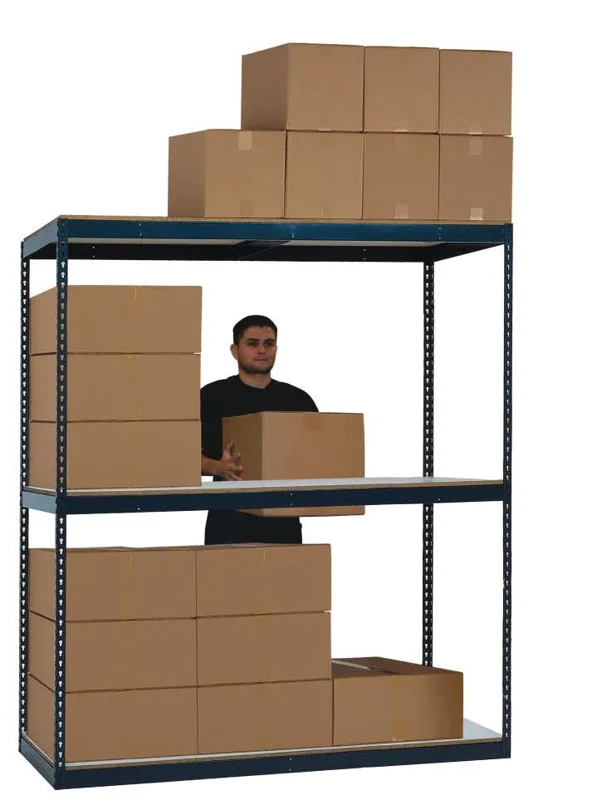
These conventional boltless shelving units are options for separate, hand-accessed storage areas. They are not WPSS AMR racks, are not approved robot bases and are not a substitute for the custom-quoted equipment above. Request pricing for the RiveTier AMR system.

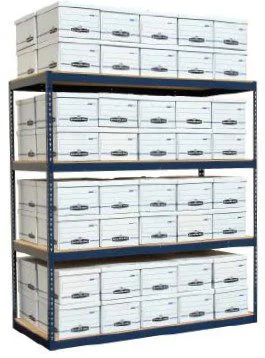 Jaken 300B archive shelving unitFrom $1,325.38. View product · Shop category
 Jaken 300B three-shelf unitFrom $664.58. View product · Shop category
Request a robot-ready shelving quote
Tell us about your AMR platform, inventory and layout. MH-USA will help coordinate the shelving configuration and next project-planning steps.
Robot-Ready Shelving FAQs
Is the robot included with the shelving?
Does MH-USA supply Western Pacific Storage Solutions products?
Will a RiveTier AMR Rack fit our robot?
How much weight can a robot-ready rack carry?
Which shelf surfaces are available?
Can we install shelving now and add robots later?
Can the system move pallets or support tote picking?
What is included with a pick-to-light put wall?
Can robot-ready shelving guarantee narrower aisles or a fixed ROI?
Product literature and related shelving planning
Download the WPSS RiveTier AMR Rack sell sheet (PDF) for the manufacturer’s product overview and component details.
Still comparing options? Review boltless shelving for stationary hand-loaded storage or bin shelving for organizing small parts. The Shelving Solutions hub connects the broader shelving families.
Product information and photography: Western Pacific Storage Solutions (WPSS). Manufacturer images show illustrative configurations; robots, inventory and integration equipment pictured are supplied separately.
Plan shelving around your robot
Share your layout and AMR specifications. Our team will help you move toward a coordinated shelving quote.