
RiveTier Shelving: Western Pacific Boltless Rivet Shelving, Specs and Unit Types
RiveTier is the boltless rivet shelving line from Western Pacific Storage Solutions. Compare its post and beam styles, published shelf capacities, unit types and decking, then get a quote sized to your room.
14 gauge
Steel in primary posts and beams
Up to 8 ft
Long span shelf width
350 to 1,750 lb
Published per-shelf range by beam
1 mallet
Only tool needed to assemble
What RiveTier Shelving Is
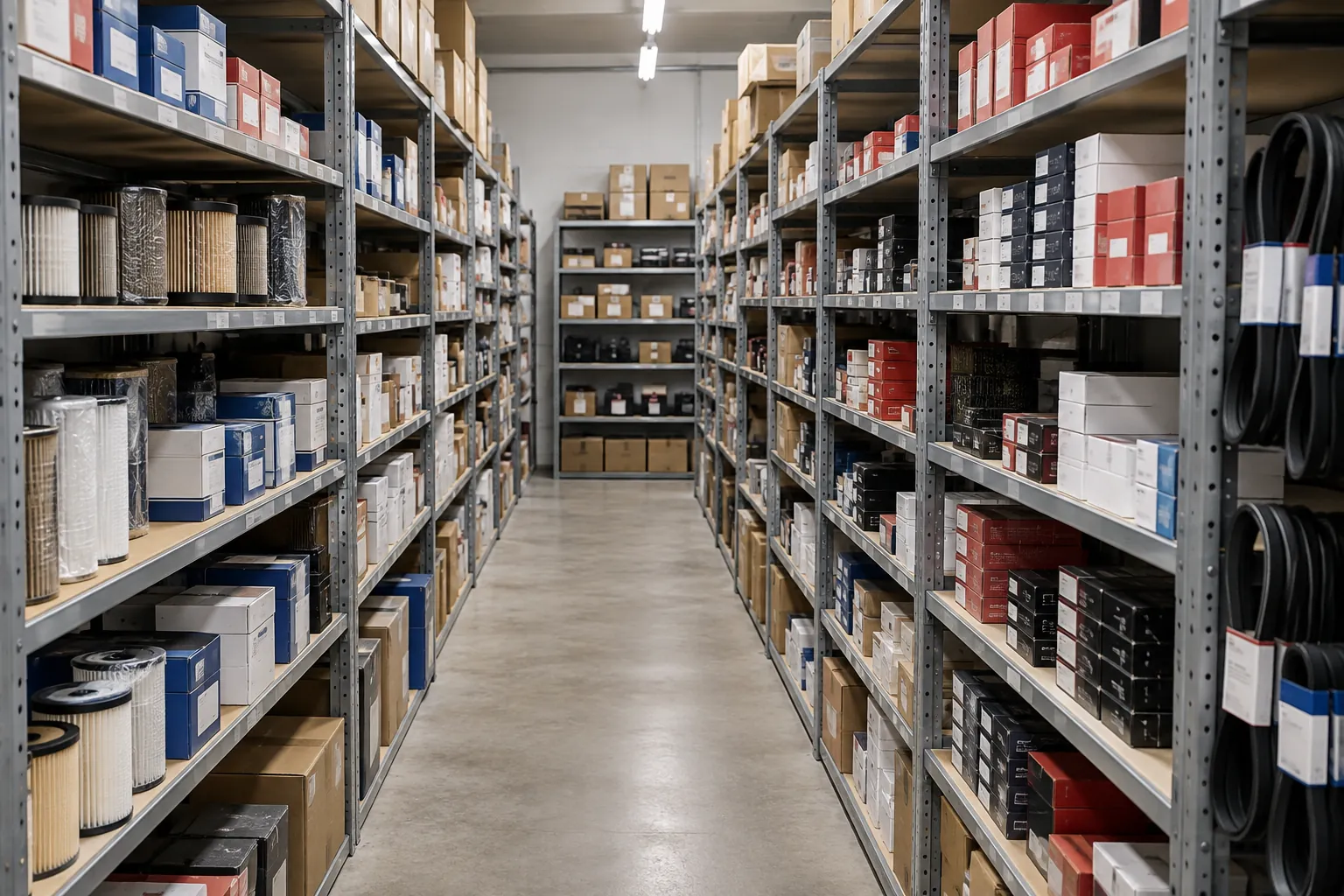
RiveTier is a boltless steel shelving system made by Western Pacific Storage Solutions (WPSS), which describes itself as the original manufacturer of RiveTier. Like every rivet shelving line, a RiveTier unit is built from slotted steel posts and beams with rivets on each end. The rivets drop into keyhole slots in the posts and lock tight when you tap the beam down with a rubber mallet. There are no nuts, bolts or clips, and the mallet is the only tool the system needs.
WPSS forms the primary posts and beams from 14 gauge steel. Because the frame is rigid without sway or cross bracing, a RiveTier unit stays open on all four sides, so cartons, bins and long items can be loaded and picked from the front, back or ends of a run.
RiveTier sits inside our wider boltless shelving range, which in turn is one family within our shelving solutions. If you are comparing brands rather than shopping for RiveTier specifically, our rivet shelving guide covers the other rivet lines we quote.
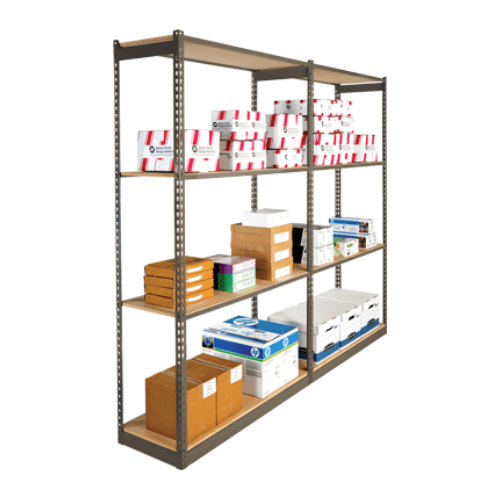
Two claims from the manufacturer are worth knowing when you compare quotes. WPSS states that RiveTier assembly runs 30 to 40 percent cheaper to install than traditional bolted shelving, because there is no hardware to start and torque. It also states that RiveTier is designed to be compatible with other major boltless products. We still confirm fit part by part before mixing RiveTier with shelving you already own, because slot shapes and rivet spacing vary between brands and even between product generations.
- No nuts, bolts or clips: beams lock into keyhole slots with a rubber mallet
- 14 gauge steel primary components
- No sway or cross bracing, so all four sides stay open
- Freestanding units, connected runs, or multi-level catwalk and mezzanine systems
- Disassembles and reconfigures as your storage changes
RiveTier Post Styles
WPSS publishes three post styles. Angle posts form the ends of a unit or run, and common T posts sit between bays so neighbouring units share one post instead of two. On a long wall of shelving that saves a post at every bay, which is a large part of why rivet shelving stays economical in big rooms.
| Post | Profile | Steel | Published use |
|---|---|---|---|
| Standard duty (LURH) | 1-1/2 in. x 1-1/2 in. | 14 gauge | Applications up to 12 ft high |
| Heavy duty (LURHD) | 1-7/8 in. x 1-7/8 in. | 14 gauge | Up to 12 ft high, large capacity and mezzanine applications |
| Common T post (TUR) | T section | 14 gauge | Adder units in rows up to 12 ft high |

How the connection works. Each post carries a vertical line of keyhole slots. WPSS’s RiveTier III sell sheet lists beam adjustment on 1-1/2 inch centers, so shelf levels can be moved in small steps to suit product heights without redesigning the unit.
Choosing a post. Standard duty posts cover most stockroom, parts room and archive shelving. Step up to heavy duty posts when units run taller, carry heavier long span shelves, or support a walkway or platform. If you are unsure, tell us the height, shelf count and heaviest items, and we will specify the post on the quote.
Starters and adders. A starter unit has four posts. Each adder unit borrows two posts from its neighbour and adds two more, using T posts where the bays meet. Ask for a run layout rather than a stack of separate units when you are filling a wall.
RiveTier Beam Styles and Published Capacities
The beam sets what a RiveTier shelf can hold far more than the post does. WPSS publishes four beam styles, from a concealed low-profile beam for light storage to long span beams for heavy, wide shelves. The capacities below are the manufacturer’s published maximums per shelf; the actual rating depends on width, depth, decking and supports, so we confirm it on every quote.
| Beam | Profile and deck | Best for | Published capacity |
|---|---|---|---|
| Low profile (SSLP) | Lowest profile; particle board hidden from view | Lightweight storage where a clean, metal-shelf look matters | Up to 350 lb per shelf |
| Z beam | Lower than the SS beam; front flush with the shelf top | Mid-range spans, wider than SSLP and shorter than SS | Up to 1,750 lb per shelf |
| Long span (SS) | Taller beam; particle board fully exposed | Heavy loads and large items on spans up to 8 ft | Up to 1,400 lb per shelf, more with accessories |
| Long span (SSC) | WPSS’s highest capacity RiveTier beam | When capacity and size are critical | Up to 1,400 lb per shelf, more with accessories |
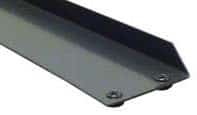
Low profile beams keep the deck nearly flush and hide its edge, so a RiveTier unit looks like closed metal shelving at a lower cost. WPSS lists low profile shelving for spans up to 4 feet. It suits supply rooms, retail backrooms, office storage and mobile systems.
Z beams are the hybrid. WPSS says the reduced profile gains 1-1/16 inches of vertical clearance per shelf compared with the SS beam, and the beam front sits flush with the shelf top to protect the edge. Z beam shelving is listed for spans up to 6 feet, with capacity up to 2,400 pounds per shelf depending on design.
Long span beams are what most people picture as industrial rivet shelving: a taller steel beam with the deck dropped inside. They are the choice for motors, cased goods, tires and bulky cartons.
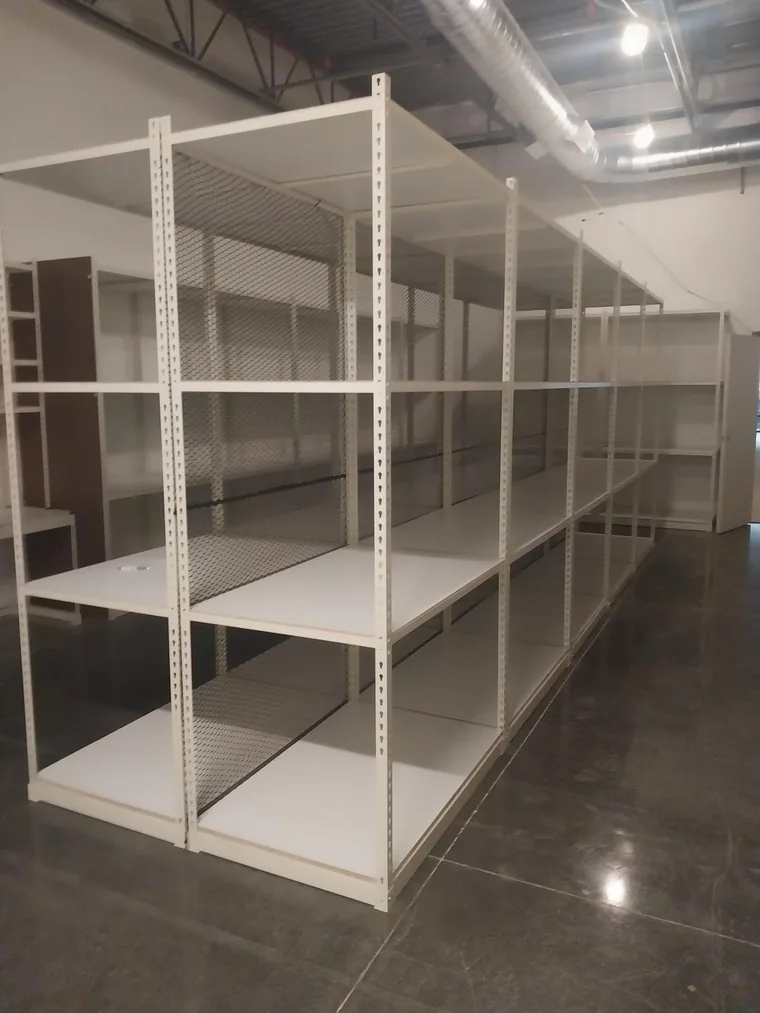
The same physics apply to every rivet line: a taller, thicker beam carries more weight over a longer span. Our single rivet vs double rivet beam guide walks through a full published capacity table by width, and the heavy duty boltless shelving and wide span boltless shelving pages cover the heaviest and widest configurations.
Capacity is per shelf, evenly distributed
Published ratings assume the load is spread across the deck. Point loads, overhanging items and missing deck supports all reduce what a shelf can safely hold. WPSS’s RiveTier assembly instructions call for a shelf support on intermediate shelves 30 inches deep or deeper, and for the bottom beam to sit no more than 3 inches off the floor.
RiveTier Unit Types
WPSS offers nine RiveTier unit types. These are the ones we are asked about most, with the manufacturer’s published figures.
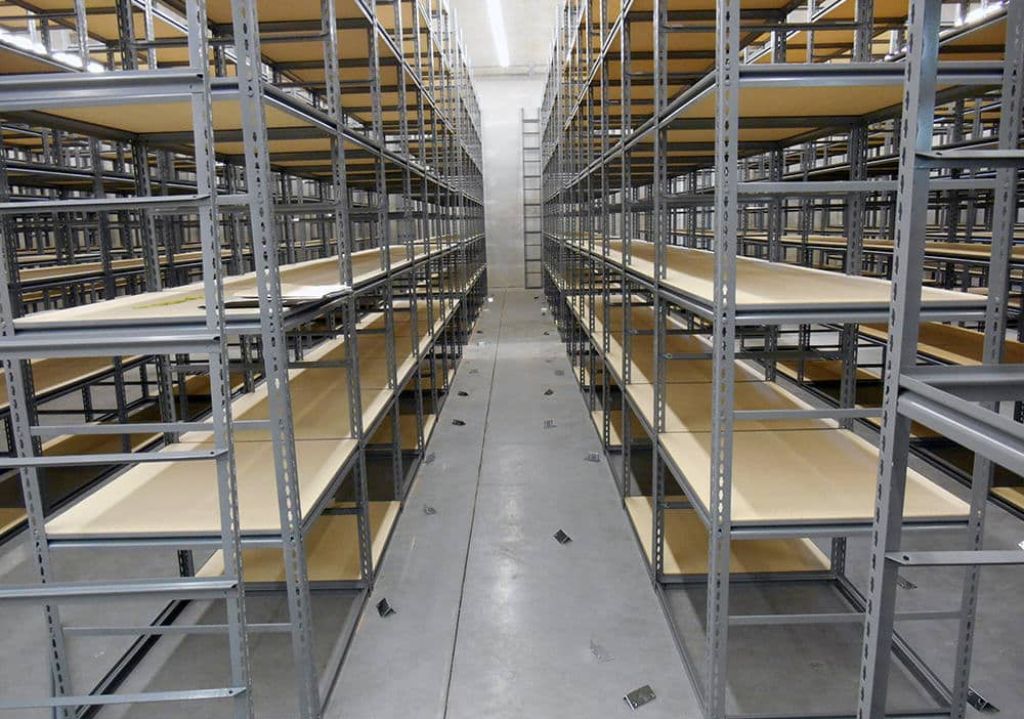
Multi-level systems. Because long span RiveTier reaches 21 feet without splicing, it can be built two or three levels high with catwalks between, turning one floor of shelving into two or three. This is common in distribution and archive buildings where floor space is fixed. Elevated walkways bring building code, egress and fire protection questions, so plan these with your building official early; our mezzanine team can help.
RiveTier generations. You may see RiveTier I, II and III on quotes. Distributors describe RiveTier II as using common T posts and mitered beams that remove the need for separate left-to-right and front-to-back beams, and WPSS’s RiveTier III sheet lists widths of 48 to 96 inches, depths of 12 to 48 inches, heights up to 144 inches and heavy-duty options up to 1,000 pounds per shelf. Parts are not always interchangeable between generations, so tell us which one you own before adding to it.
Decking Options for RiveTier Shelving
WPSS literature lists particle board, melamine, wire mesh decking, metal shelves and fire retardant board for RiveTier. Each changes how the shelf behaves:
- Particle board is the economical default and spreads load well for boxes and cartons.
- Melamine adds a wipe-clean surface for retail and light commercial rooms.
- Wire mesh lets light and air through and helps sprinkler water reach lower levels.
- Metal shelves resist moisture and suit oily parts and maintenance rooms.
- Fire retardant board is used where a fire marshal or insurer asks for it.
Deck choice also affects freight and assembly: steel and 3/4 inch board are heavier to ship and handle. See our boltless shelving decking options page for a fuller comparison.

Bin dividers, shelf dividers and drawers turn an open RiveTier level into small-parts storage, which is how many parts rooms run. Extra beams, deck supports and replacement decks can be added later; browse our boltless shelving accessories or send us a photo of your existing units and we will match the parts.
Planning a RiveTier Layout
List what you store
Note the heaviest and largest items, carton sizes and how often each is picked. This decides the beam and deck.
Measure the room
Record clear height, sprinkler heads, lights, doors and columns. Leave aisles wide enough for carts or pallet jacks.
Choose spans and depths
Wider shelves mean fewer posts but heavier beams. Deeper shelves over 30 in. need intermediate supports.
Lay out runs
Use starters and adders with shared T posts along walls and back-to-back in the middle of the room.
Confirm anchoring and delivery
Ask your building official about anchoring, and confirm who unloads freight and with what equipment.
Most RiveTier orders ship as material for the customer to assemble, and the system is designed for that: a two-person crew with a rubber mallet can build bays steadily once the first unit is square. For large rooms, tall units or multi-level systems, professional boltless shelving installation keeps runs straight and level and gets the room back in use sooner.
Considering used rivet shelving instead? Used savings are typically used up by installation: parts rarely fit well after disassembly, and the installer time spent straightening and fitting them often costs more than new. Reusing shelving you already own can work, but new is sometimes still cheaper after fix-up time. A quick call to our sales team with pictures helps decide; our used vs new boltless shelving guide covers what to inspect.
RiveTier in a Real Parts Room

In our RiveTier rivet shelving case study, Tinks Superior Auto Parts in Cedar City, Utah restocked an entire parts room with RiveTier shelving. The buyer already knew the line and sent us a component list itemized down to posts, beams and particle board decks. We quoted and shipped it as material plus freight, and the store crew assembled the bays themselves, setting level heights around their actual product lines.
That project shows why parts businesses favor rivet shelving: a parts room needs a very large number of reachable shelf feet at a low cost per foot, not pallet positions. Shared posts along long runs keep the steel count down, and open sides keep every part visible.
For related applications see automotive shelving, parts room shelving and records storage shelving. Need a bench in the same room? Boltless workbenches use the same style of beams and posts.
Buying in Utah? Our Salt Lake City team quotes, delivers and installs boltless and rivet shelving statewide. See boltless shelving in Salt Lake City or call 801-328-8788. Everywhere else in the U.S., call (800) 326-4403.
RiveTier vs Other Storage Options
| Option | Strengths | Watch for | Choose it when |
|---|---|---|---|
| RiveTier rivet shelving | Mallet assembly, four-sided access, long spans, tall units without splicing | Capacity depends on beam, span and deck | Hand-loaded cartons, parts and records in quantity |
| Other rivet shelving brands | Similar design, wide choice of sizes | Parts rarely interchange between brands | Matching an existing room or a specific spec |
| Closed steel shelving | Enclosed sides and backs, many bin options | More hardware, slower to assemble | Small parts needing containment and security |
| Pallet rack | Thousands of pounds per level, forklift loading | Needs forklifts, anchoring and permits | Palletized loads rather than hand-loaded items |
Still deciding? The main boltless shelving hub compares boltless, wire shelving and pallet rack side by side, and our team can lay out the same room in two systems so you can compare cost and capacity directly.
Shop Rivet Shelving Online
RiveTier is quoted to order. For ship-ready rivet shelving, these Lyon and Jaken units and parts are in our online store.



RiveTier Shelving FAQs
What is RiveTier shelving?
Who makes RiveTier shelving?
How much weight can a RiveTier shelf hold?
How wide and tall can RiveTier shelving be?
Is RiveTier compatible with other boltless shelving?
What decking is available for RiveTier?
Do RiveTier units need cross bracing?
Can I assemble RiveTier shelving myself?
Do you sell RiveTier shelving in Utah?
Get a RiveTier Shelving Quote
Send us your room dimensions, what you store and the shelf sizes you have in mind. We will specify posts, beams and decking for the load and confirm freight.