
Single Rivet vs Double Rivet Boltless Shelving Beams: A Capacity Guide for Utah Buyers
The beam decides what a boltless shelf can hold. Compare single rivet, double rivet and channel beams, see how span and deck supports change the published capacity, and choose light-duty to heavy-duty shelving for your Salt Lake City stockroom.
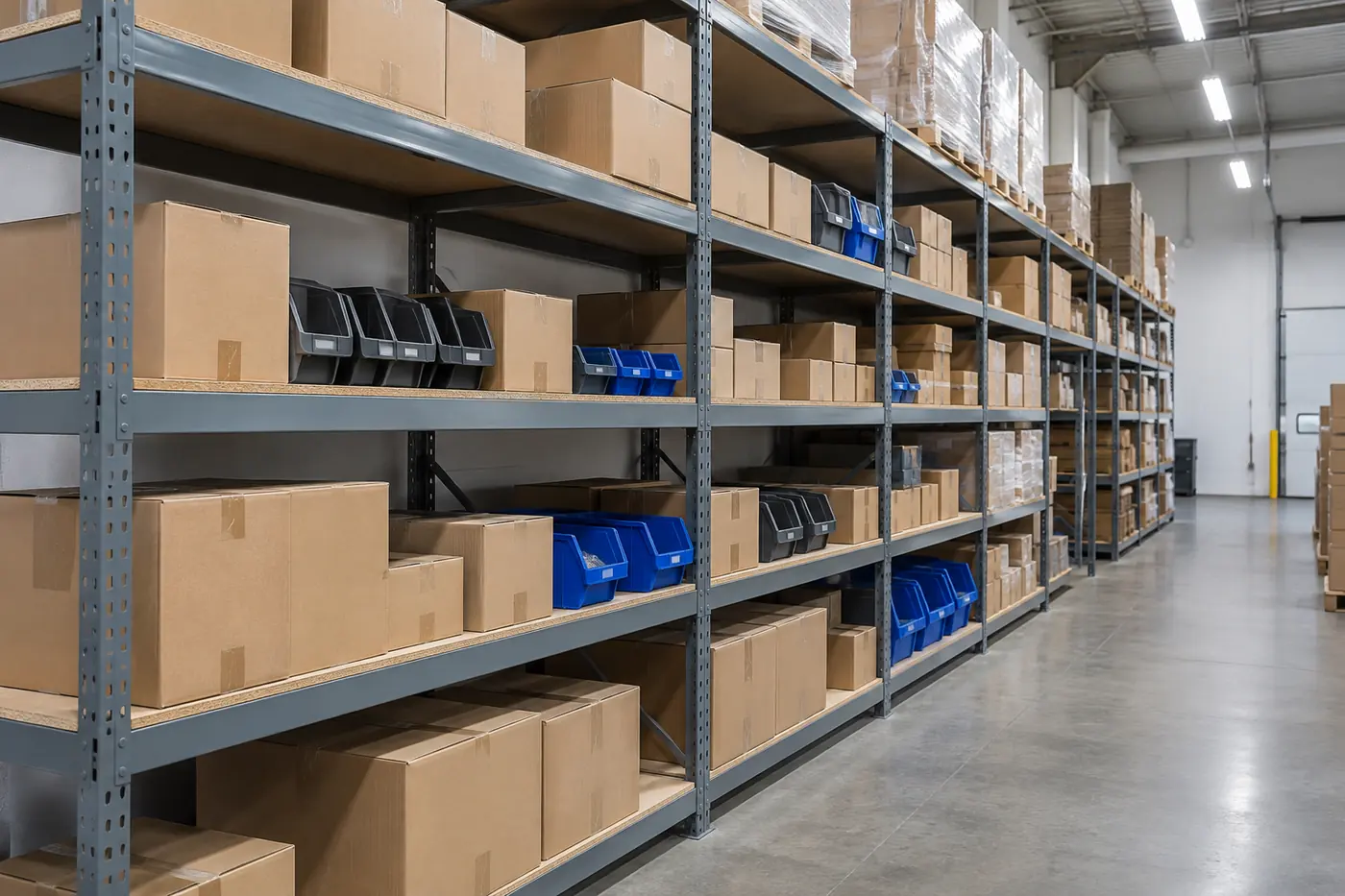
1 in. vs 2-3/4 in.
Single rivet vs double rivet beam height
150 to 2,000 lb
Published per-shelf range, by beam and span
Every 1-1/2 in.
Shelf adjustment on the post
801-328-8788
Salt Lake City quoting line
Why the Beam, Not the Post, Sets Shelf Capacity
Every boltless shelf is a rectangle of four steel beams hooked into four slotted posts, with a deck laid inside the frame. When you load that shelf, the beams carry the weight to the posts. Posts rarely limit a boltless unit in normal use; the beams do. That is why two shelving units that look almost the same from across the room can carry very different loads per level.
Three things decide how much a boltless shelf holds: the beam profile (how tall and how thick the steel is), the span (how far the front and back beams travel between posts), and the deck and its supports (whether anything holds up the middle of the board). Change any one of the three and the published rating changes, sometimes by a factor of two or more.
This guide explains the beam types you will see on quotes and product listings, walks through the manufacturer’s published capacity tables, and ends with a simple way to choose. It is part of our boltless shelving in Salt Lake City resources for Utah buyers.
If you are new to boltless shelving, the main boltless shelving guide covers how the system works and where it fits within our shelving solutions range. For a parts-level overview of posts, connectors and fit between brands, see our boltless shelving parts guide. This page stays focused on one decision: which beam, at which span, for the load you actually have.
The Four Beam Types on a Boltless Shelving Quote
Most boltless lines use the same family of beams, even if the names vary slightly by manufacturer. The figures below are Jaken’s published Series 200 specifications, the line we quote most often for boltless shelving.
| Beam | Profile height | Steel | Lengths published | Typical role |
|---|---|---|---|---|
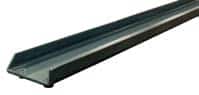
| Single rivet (SR) | 1 in. | 14 gauge | 12 to 48 in. | Low-profile, light to medium shelves; front-to-back or side beams |
| Single rivet heavy duty (SRH) | 1 in. | 11 gauge | 36, 48 and 60 in. | Heavier low-profile shelves with 3/4 in. board |
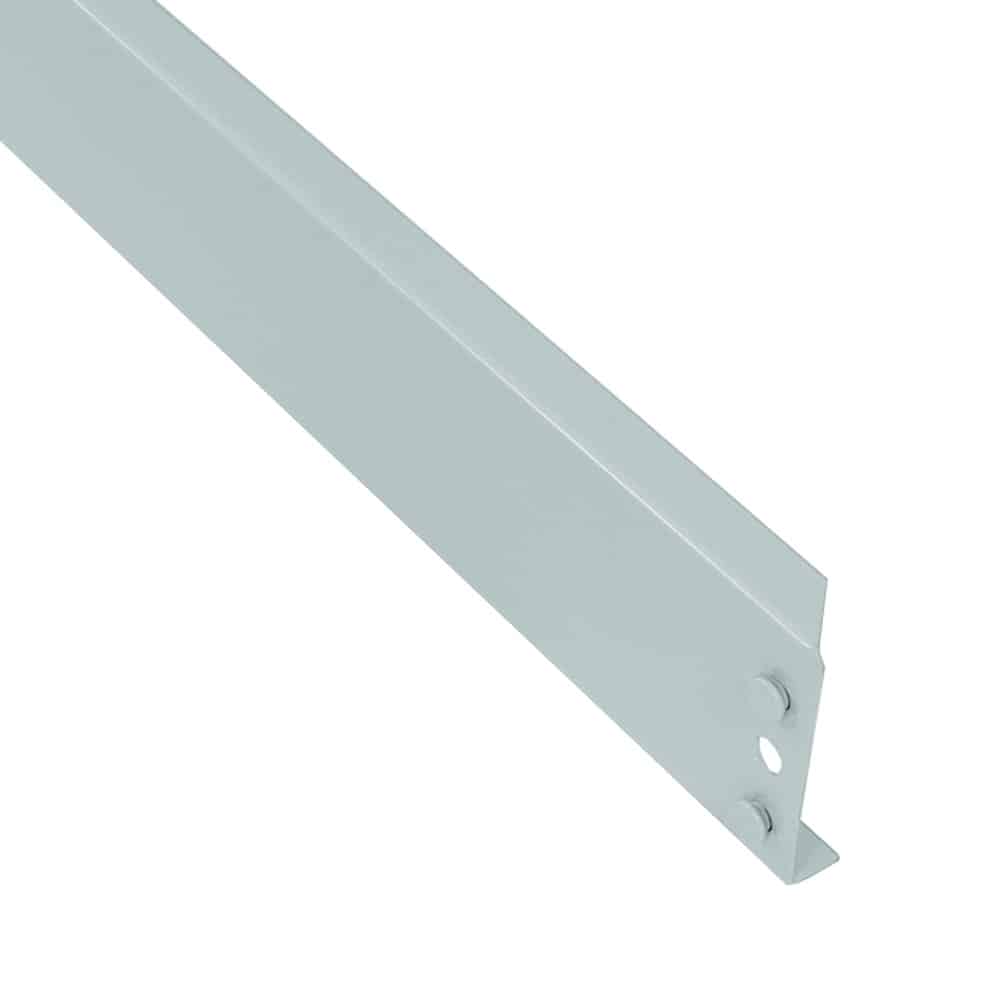
| Double rivet (DR) | 2-3/4 in. | 16 gauge to 48 in.; 14 gauge 60 to 96 in. | 12 to 96 in. | The standard beam for general and wide-span shelving |
| Channel (DC) / heavy-duty channel (DCH) | 2-3/4 in. | 14 gauge (DC); 11 gauge (DCH) | 72 and 96 in. | Left-to-right beams for the heaviest wide-span shelves |
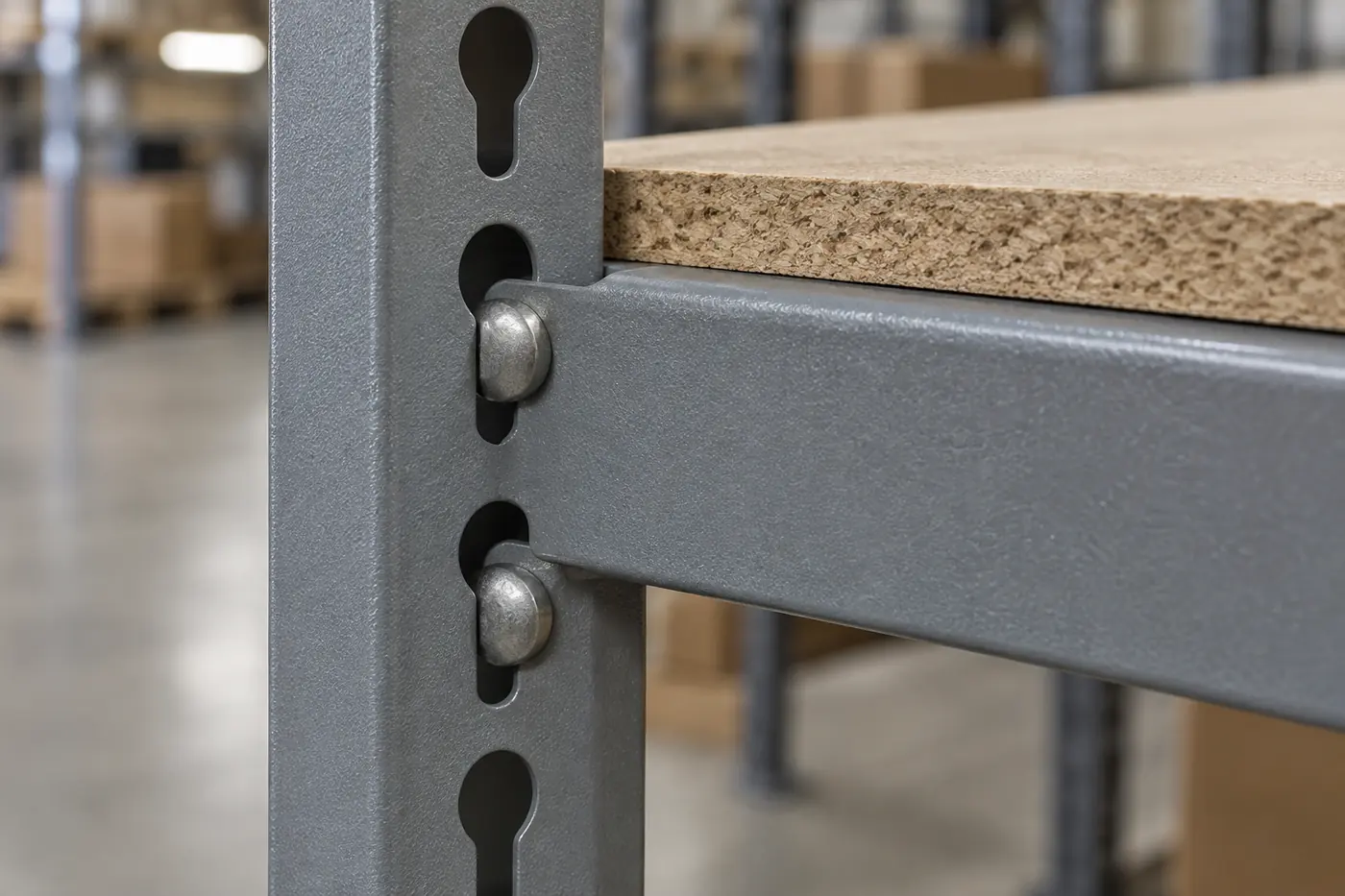
Rivets are how the beam locks in. Each beam end carries round rivets that drop into the keyhole slots on the post and wedge tight when you tap the beam down with a rubber mallet. A single rivet beam has one rivet per end; a double rivet beam has two, one above the other, which lets the taller beam engage more of the post and resist rotating under load.
Profile height is the real difference. A 2-3/4 inch beam is far stiffer than a 1 inch beam of similar steel, so it carries more weight over a longer span before it deflects. The trade-off is the space it uses: taller beams eat vertical room on every level, and they stand proud of the deck as a lip.
Gauge is the second lever. Lower gauge numbers mean thicker steel. Jaken’s heavy-duty single rivet and heavy-duty channel beams step up to 11 gauge, which is how those versions reach higher ratings without a taller profile.
Light-Duty Boltless Shelving: Where Single Rivet Beams Fit
Light-duty boltless shelving is usually built on single rivet beams. Jaken’s Series 200A low-profile shelving uses them to “maximize available storage space”: because the beam is only 1 inch tall, you lose very little height to steel on each level, so more shelves fit in the same unit and the deck sits nearly flush with the beam.
The ratings reflect the slimmer beam. Standard-duty Series 200A shelves with 1/2 inch particle board are published at 300 pounds per shelf at 36 inches wide, 225 pounds at 48 inches and 150 pounds at 60 inches. That is plenty for office supplies, paperwork, small boxed parts, retail back-stock, clothing and the kind of hand-placed items most supply rooms hold.
Jaken’s heavy-duty Series 200A uses 3/4 inch board and adds single rivet side supports, lifting the ratings to 500, 375 and 250 pounds per shelf at the same three widths. If you like the low profile but your items are denser, that is the first step up before switching beam families.
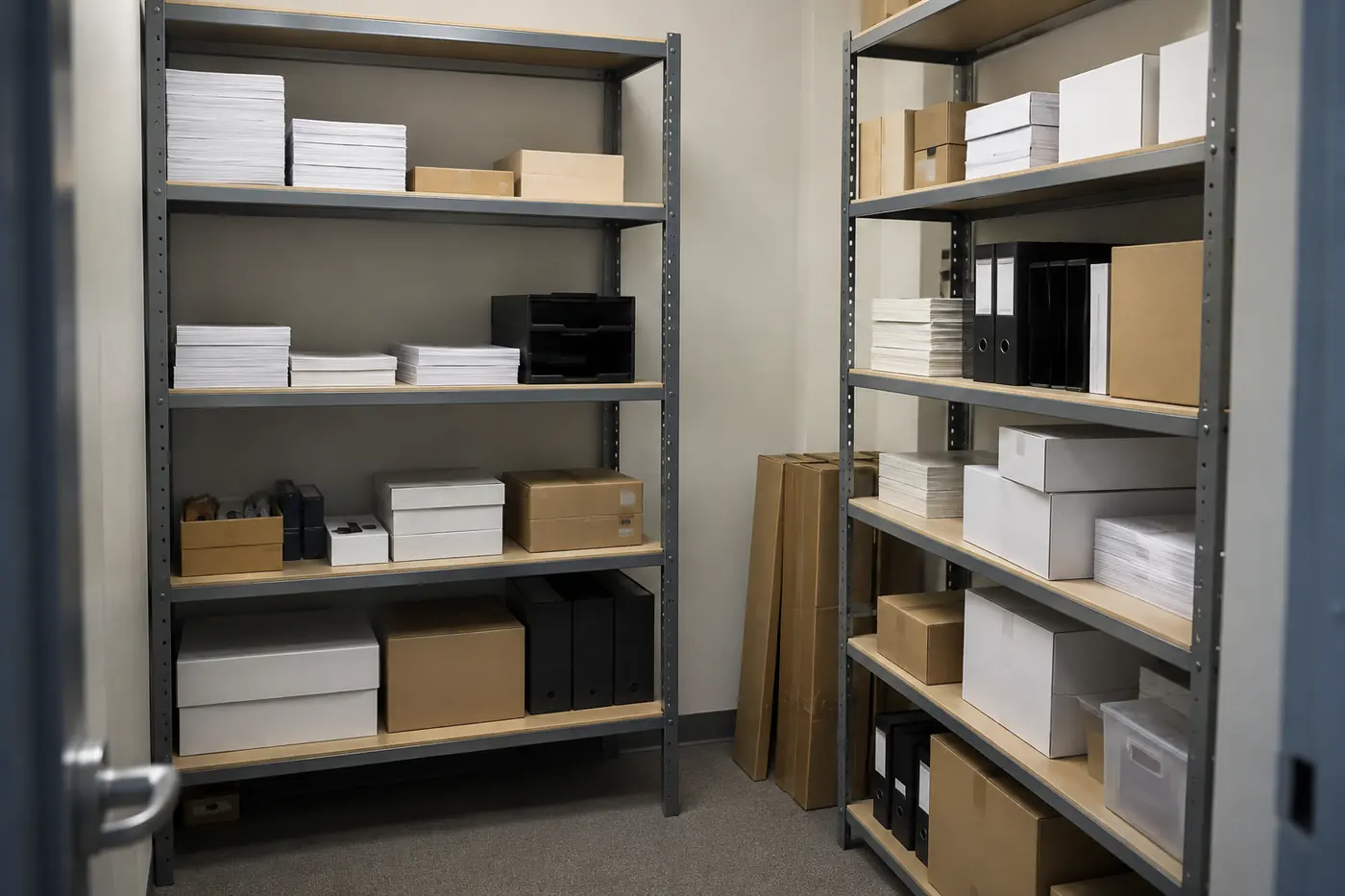
Light duty is a load class, not a quality grade
A light-duty unit uses the same 14 gauge posts and the same boltless connection as heavier units. It simply spends less steel on beams because the shelf does not need it. Buying heavier beams than your items need costs money and vertical space; buying lighter beams than you need is the mistake that matters.
Low-profile shelving has a real-world example in our cluster: Source Energy Company in Longmont chose low-profile boltless shelving across a phased build-out and upgraded to double rivet beams only on its wider 60 inch units. That pattern, low profile where spans are short and double rivet where they get long, is exactly what the capacity tables below point to.
Double Rivet Beams: The General-Purpose Choice

Double rivet beams are the workhorse of boltless shelving. Jaken’s Series 200B bulk storage shelving uses them to “increase capacities and allow for wide span applications”, and they are what most people picture when they think of rivet shelving: a 2-3/4 inch steel angle beam with a step that the deck drops into.
At 48 inches wide, a Series 200B shelf with particle board is published at 1,000 pounds at every depth from 12 to 48 inches. That single number explains why double rivet shelving is the default for stockrooms, parts rooms and maintenance shops: at a common 4 foot width, one level carries roughly four times what a standard low-profile level does.
Double rivet beams also work in both directions. Jaken lists them for use left to right (the long front and back beams) or front to back (the short side beams), so one beam style frames the whole shelf. The steel steps from 16 gauge on lengths up to 48 inches to 14 gauge on 60 to 96 inch lengths, where the span demands more.
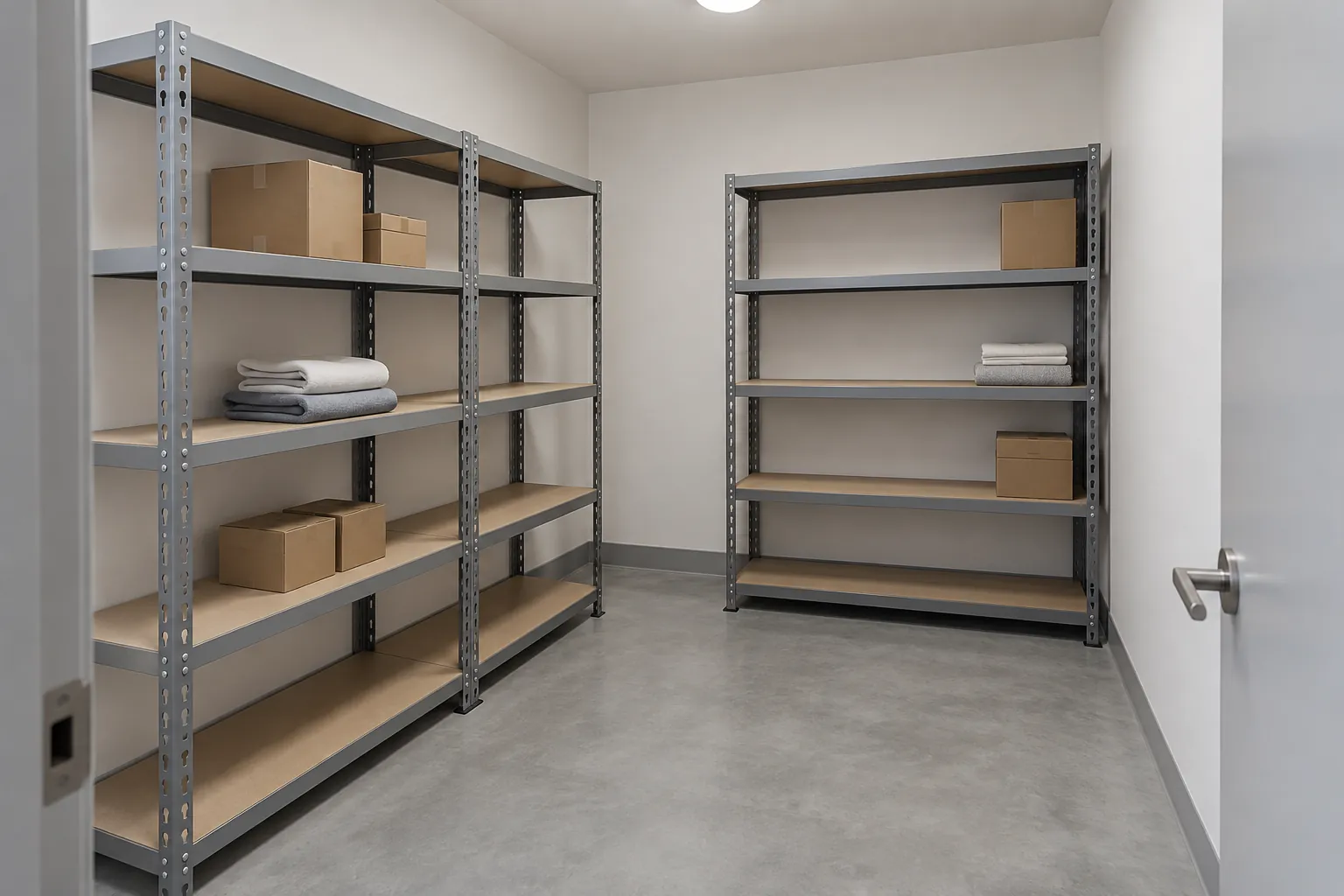
Utah projects in this cluster show double rivet shelving in very different rooms. Granite School District specified double rivet long and short beams with heavy-duty center supports for a district carpenter shop in Salt Lake City, and Ogden Housing Authority had boltless shelving installed in an apartment building storage room. If you are comparing brands, our rivet shelving and RiveTier shelving pages cover other double rivet lines.
Channel and Heavy-Duty Channel Beams for Wide, Heavy Shelves
Once a shelf passes 6 feet wide and the load is heavy, a standard double rivet angle beam runs out of stiffness. That is where channel beams come in. Jaken’s double rivet channel beam keeps the same 2-3/4 inch height but is formed as a channel, in 14 gauge for regular duty and 11 gauge for heavy duty, and is sold in 72 and 96 inch lengths to be used left to right “for greater shelf capacity”.
On a 72 inch Series 200B shelf, the published rating climbs from 600 pounds with particle board alone, to 1,000 pounds with a shelf deck support, to 1,500 pounds with channel beams, and to 2,000 pounds with the heavy-duty package: heavy-duty channel beams, 1-7/8 inch heavy-duty posts and 3/4 inch particle board. The same beam family, correctly specified, covers a more than threefold range at one width.
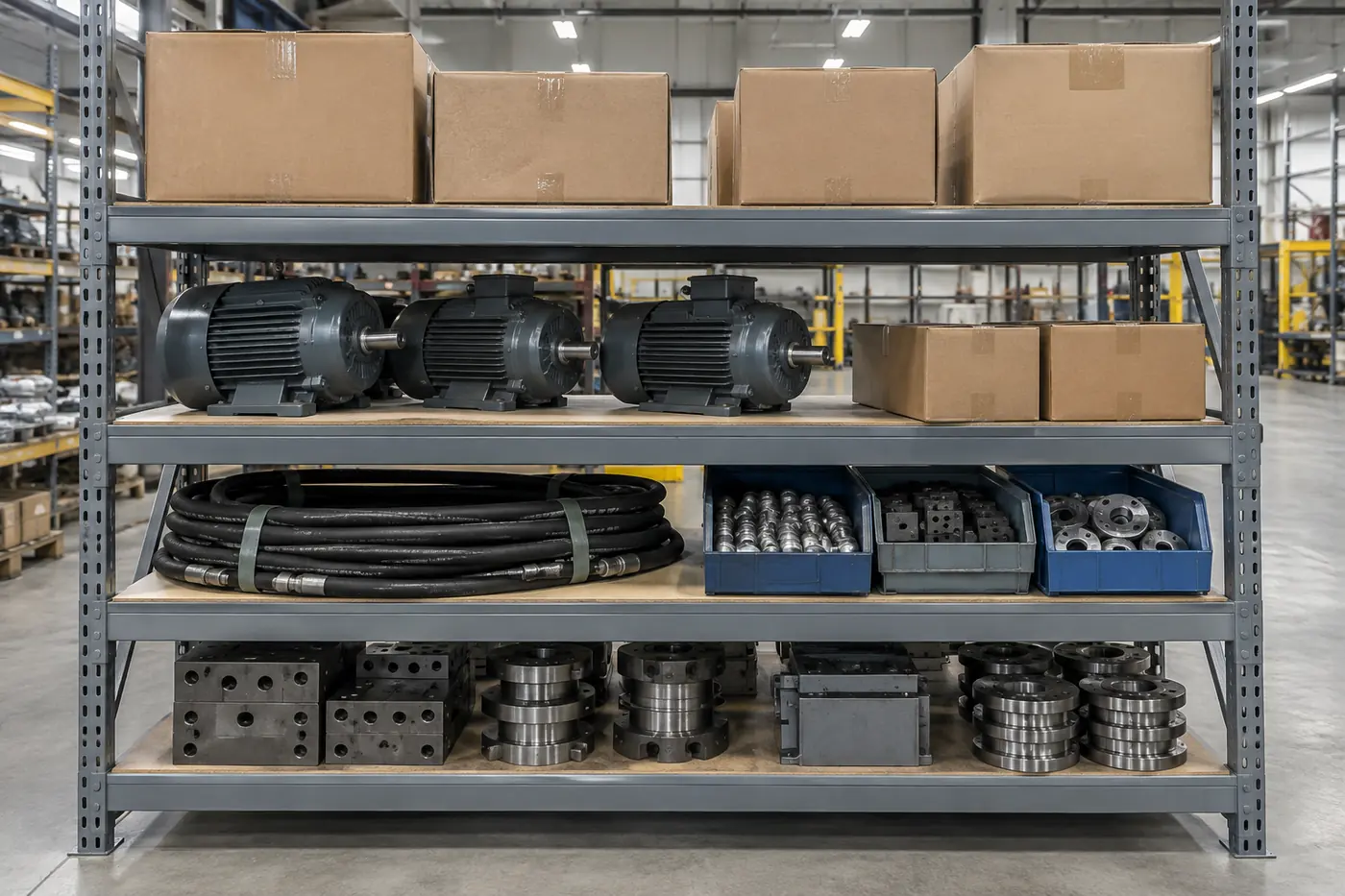
This is the territory of motors, castings, gearboxes, cased fluids and full cartons of hardware. For more on heavy loads and long spans see our heavy-duty boltless shelving and wide span boltless shelving pages.
Published Capacity by Beam and Span
The two tables below restate Jaken’s published per-shelf capacities for 7 foot tall units, uniformly distributed. They are the clearest way to see how beam choice and span interact. Other manufacturers publish different numbers for their own parts, so always use the rating for the exact product on your quote.
Low-profile single rivet shelving (Series 200A)
| Shelf width | Standard duty (1/2 in. board) | Heavy duty (3/4 in. board, side supports) |
|---|---|---|
| 36 in. | 300 lb per shelf | 500 lb per shelf |
| 48 in. | 225 lb per shelf | 375 lb per shelf |
| 60 in. | 150 lb per shelf | 250 lb per shelf |
Double rivet bulk storage shelving (Series 200B, particle board)
| Shelf width | Board only | Plus shelf deck support | Plus channel beams | Heavy-duty channel package |
|---|---|---|---|---|
| 48 in. | 1,000 lb | Not listed | Not listed | Not listed |
| 60 in. | 750 lb | 1,200 lb | Not listed | Not listed |
| 72 in. | 600 lb | 1,000 lb | 1,500 lb | 2,000 lb |
| 84 in. | Not listed | 600 lb | Not listed | Not listed |
| 96 in. | Not listed | 600 lb | 1,000 lb | 1,500 lb |
Span costs capacity
Standard single rivet drops from 300 lb at 36 in. to 150 lb at 60 in.: half the rating for two extra feet.
Supports buy it back
At 60 in., adding a deck support lifts a double rivet shelf from 750 to 1,200 lb.
Channels go further
At 72 in., channel beams reach 1,500 lb and the heavy-duty package 2,000 lb.
Wide spans need help
At 84 and 96 in., every published option includes a deck support or channel beams.
Reading a capacity rating correctly
Published shelf capacities assume the load is spread evenly across the deck. A single heavy item set in the middle of a board, or items dropped onto a shelf, is a harder load than the same weight spread out. When in doubt, choose the next rating up or add a deck support under the point load.
Shelf Deck Supports, Decks and the Rest of the Load Path

A shelf deck support is a steel bar that runs front to back under the middle of the deck. Jaken’s version is 16 gauge, 2-1/2 inches tall and bolts between double rivet or channel beams. It stops the board sagging in the middle and ties the front and back beams together so they share the load, which is why the tables above jump so sharply when a support is added. On wide shelves it is not optional; on 60 and 72 inch shelves it is the cheapest capacity upgrade available.
Deck thickness matters too. Jaken describes 1/2 inch particle board as the standard deck and 3/4 inch board as “ideal for heavy” loads, and its heavy-duty packages specify the thicker board. Wire decks and steel decks change the picture again; our boltless shelving decking options guide compares them, and the LF Illumination project shows wire deck levels added to existing boltless shelving.
Posts come in two sizes. Regular posts are 1-1/2 by 1-1/2 inches and heavy-duty posts 1-7/8 by 1-7/8 inches, both 14 gauge. Heavy-duty posts appear in the top capacity package because a 2,000 pound shelf on every level puts real load into the uprights.
Replacement beams, deck supports, tie plates and foot plates are listed on our boltless shelving accessories page. Jaken lists tie plates for connecting units side by side in rows and foot plates for anchoring units to the floor.
How to Choose: Matching the Beam to What You Store
- Weigh or estimate the heaviest full shelf, not the average one.
- Decide the widest shelf you want; wider is convenient but costs capacity.
- Pick the lightest beam family whose published rating clears that load with margin.
- Add a shelf deck support on any shelf 60 in. or wider unless the table says you do not need it.
- Choose 3/4 in. board for heavy or point loads.
- Keep one manufacturer per unit; beam ends and slot shapes differ between brands.
- Plan anchoring and row tie plates, especially for tall units in Utah.
Prefer to see it built? Our Jaken shelving and rack designer lets you configure units online, and pricing context is on our boltless shelving cost page. If you already know the parts, you can order boltless shelving directly.
Notes for Utah Buyers
Utah sits in an active seismic region along the Wasatch Front, so tall shelving deserves more thought about stability than it gets in many states. Heavier beams do not make a unit safer on their own; anchoring and connection do. Jaken offers foot plates for anchoring units to the floor and tie plates for joining units into rows, and we can include both on a quote. Your building owner, facility safety staff or local building official decides what anchoring a specific site requires, so ask early.
Two more practical points. First, beam choice affects freight: channel beams and 3/4 inch board are noticeably heavier to ship, which matters on LTL deliveries into sites without a dock. Second, if you are adding to shelving you already own, tell us the brand and beam style. Lyon, for example, sells its own rivet rack beams in light-duty single rivet, medium-duty double rivet and heavy-duty C channel versions, and they are built to fit Lyon posts, not another brand’s.
We quote boltless shelving across Salt Lake City and along the Wasatch Front, freight-only or with boltless shelving installation. Some common sizes are in stock at select manufacturers, subject to confirmation at the time of order. Call our Salt Lake City line at 801-328-8788, or see the statewide Utah boltless shelving overview and our Salt Lake City boltless shelving page. Setting up packing or repair areas too? Boltless workbenches use the same beams and posts.
About the specifications on this page
Beam profiles, gauges, lengths and per-shelf capacities are taken from Jaken’s published Series 200 boltless shelving brochure; Lyon beam families are named from our online catalog. Capacities apply to that manufacturer’s parts only. Where a combination is not listed, we say so and confirm the rating on your quote instead of estimating.
Shop Boltless Shelving Beams Online
Buy select items directly from our online store, or request a quote for volume, custom sizes and freight-rated orders.
Frequently Asked Questions
What is the difference between a single rivet and a double rivet beam?
How much weight does light-duty boltless shelving hold?
How much does a double rivet boltless shelf hold?
What is a channel beam on boltless shelving?
Do I need a shelf deck support?
Can I mix beams from different boltless shelving brands?
Does beam choice matter for Utah seismic safety?
Do you deliver boltless shelving in Salt Lake City?
Not Sure Which Beam Your Shelving Needs?
Tell us what you store, how wide you want each shelf and where the shelving is going. We will quote the right beams, supports and decks for the load, with freight confirmed.