
Wire Deck Levels for an Existing Boltless Shelving System: LF Illumination, Chatsworth, CA
How an architectural lighting manufacturer expanded a warehouse full of Jaken boltless shelving with matching wire shelf levels, verified fit before committing, and beat a ten-week factory lead time.
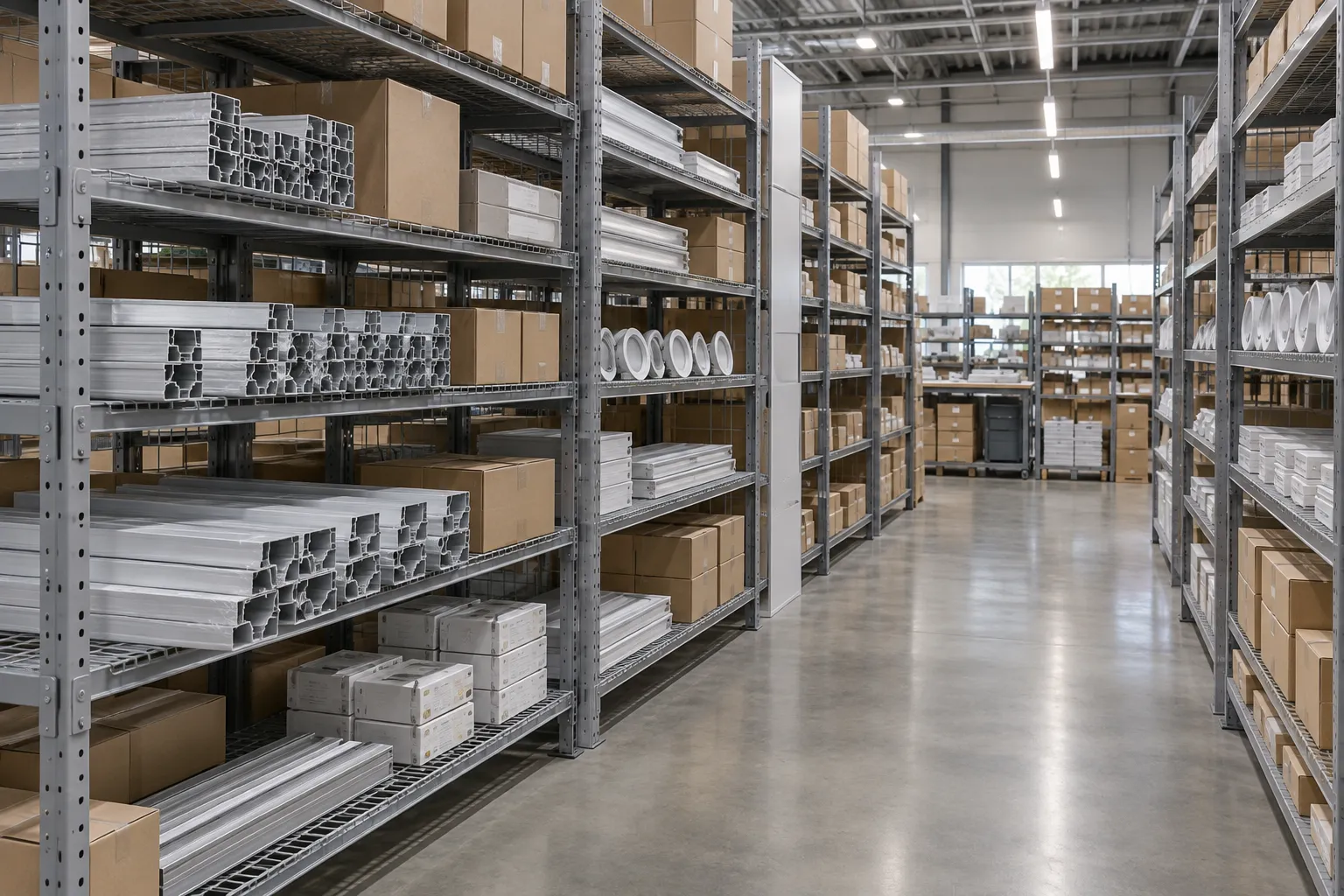
Chatsworth, CA
Project location
2026
Completed
Boltless rivet
Shelving type
Wire decks
Shelf level supplied
The Project: Re-Decking and Extending a Lighting Manufacturer’s Shelving
LF Illumination designs and manufactures architectural and decorative lighting at its facility in Chatsworth, California. Like most manufacturers that build to order, its warehouse carries a wide mix of small, awkward and light-but-bulky inventory: boxed fixtures, aluminum extrusions, lenses, drivers and finished assemblies waiting on a job release. That inventory already lived on boltless rivet shelving, and the company had run out of usable shelf levels.
In March 2026 the company reached out to Material Handling USA through the website asking for a quote on additional shelf levels for the shelving it already owned. Director of Sales Chris Rodgers handled the request, and the project closed in late April 2026 with the order shipping the following week. What makes it a useful case study is not the size of the order, it is the sequence: the shelving was already installed, so every decision had to be made around hardware that was bought years earlier from a specific manufacturer.
The component set described here is covered in more depth on our boltless shelving overview, which sits under the wider shelving solutions hub.
Why Wire Decks Instead of Particle Board on Boltless Shelving

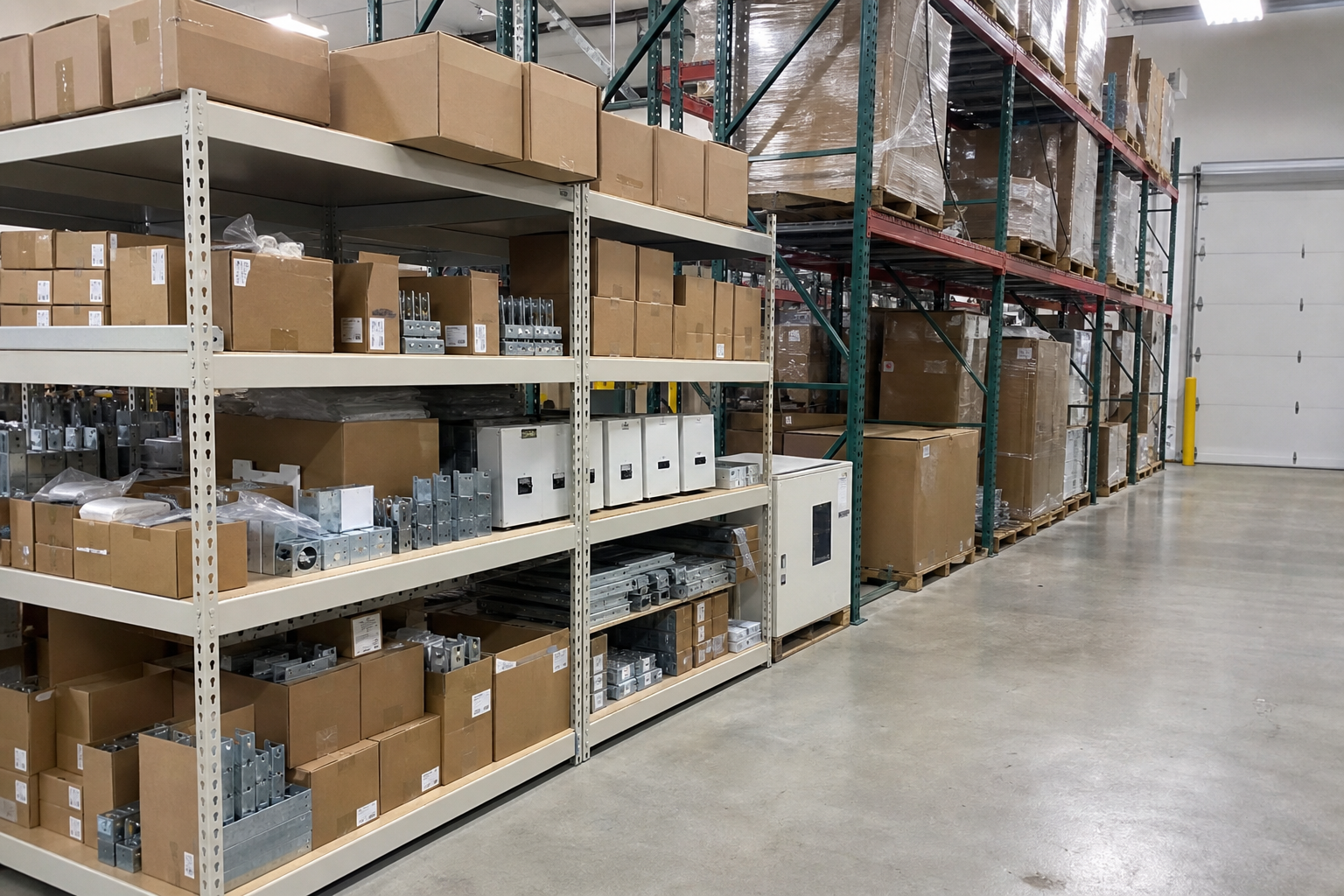
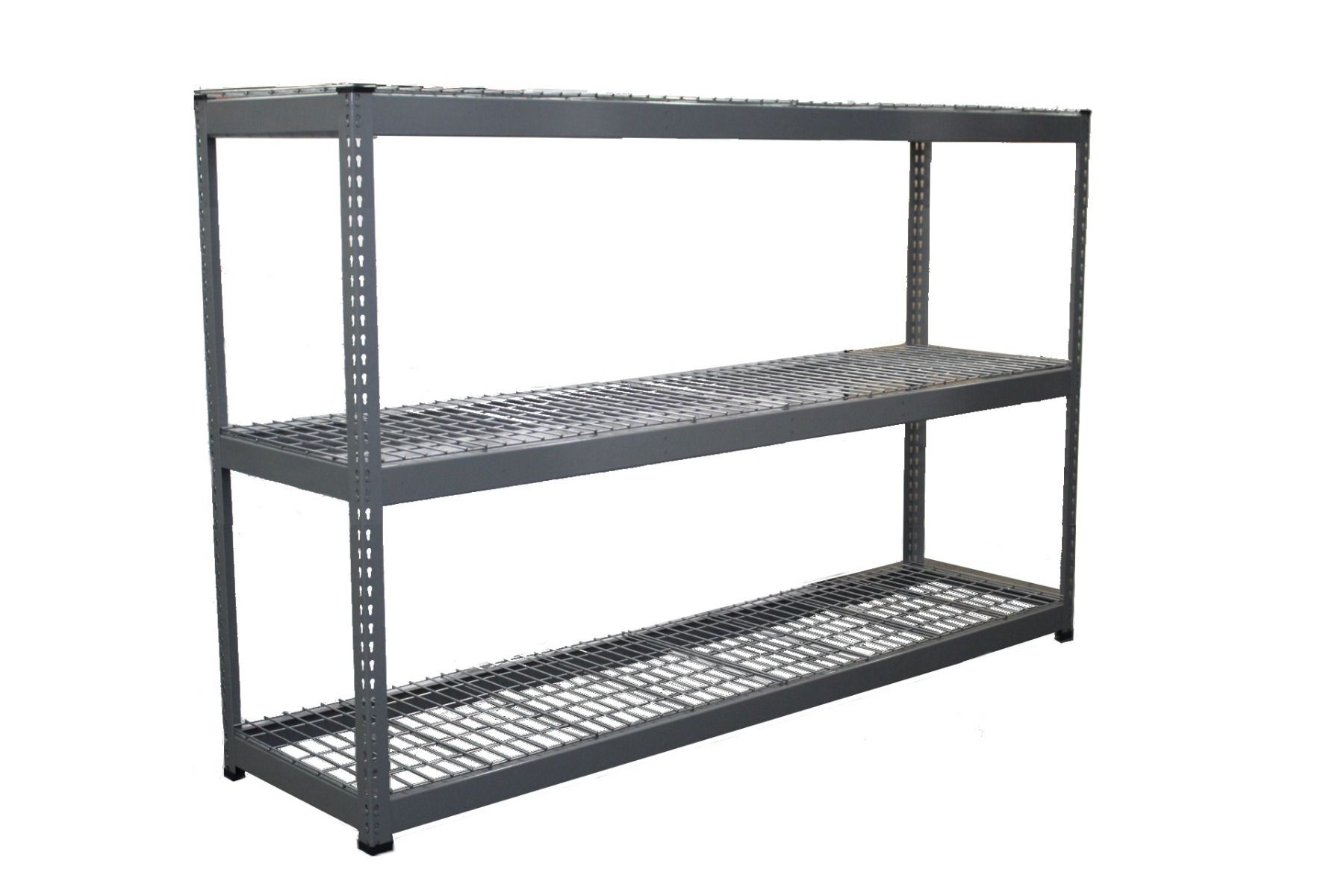
Boltless shelving, also called rivet shelving, is a beam-and-upright system: rivet-ended beams drop into slotted angle or keyhole posts, and the beams themselves carry the load. The shelf surface that sits on those beams is a separate decision, and it is the one buyers most often get wrong on the first order. Particle board is the default because it is inexpensive and gives a flat, continuous surface for small loose items. Welded wire decking costs more per level and is the better long-term answer in a surprising number of plants.
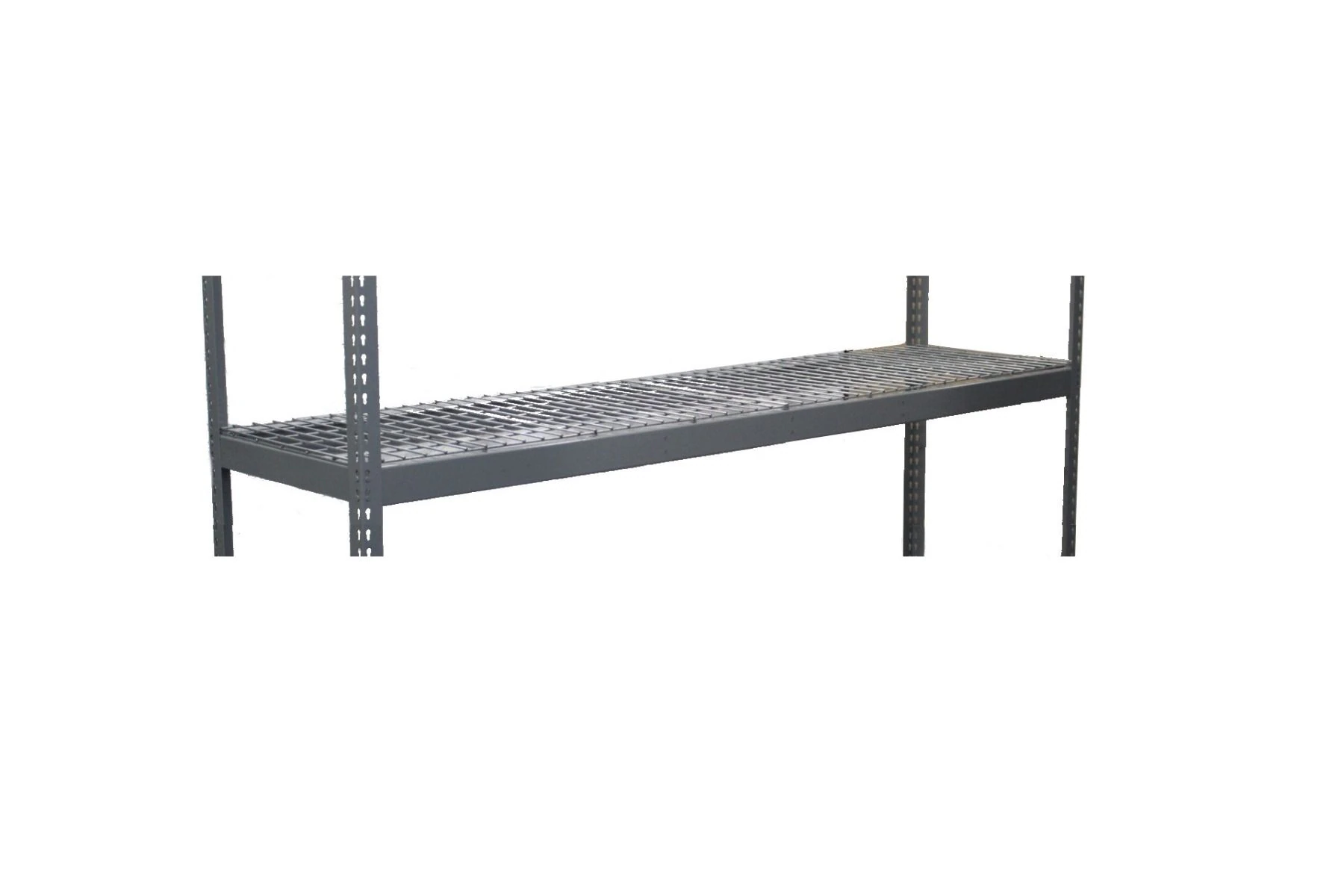
Wire lets light through, which matters in a facility where overhead fixtures are the only light source and the lower levels of a deep bay would otherwise sit in shadow. It lets sprinkler water through, which is often the deciding factor when a fire protection review looks at solid decks in a warehouse. It does not swell, sag or delaminate if something wet gets on it. And it does not hide dust, which makes housekeeping visible rather than theoretical.
The trade is that very small parts, loose hardware and anything with a narrow footprint can fall through or tip. That is solved with bins, cartons or a thin inlay on the levels that carry small items, not by decking the whole system in board.
Matching Hardware You Already Own
The first real question on this project was not what shelf to buy, it was what shelving the customer already had. Boltless shelving looks generic in a photograph and is anything but interchangeable in practice. Beam end connectors, post slot spacing and deck support geometry all vary by manufacturer, and a deck built for one brand’s beam profile can sit proud, rock, or refuse to seat at all on another’s.
Chris asked the question directly in the second email of the thread, before quoting anything: what brand is the current system? Material Handling USA represents effectively every shelving manufacturer selling into the US market, so the answer changes the source, not whether the job can be done. In this case the installed system was Jaken, so the add-on levels were specified to fit Jaken boltless shelving rather than being sold as a generic shelf.
If you are ordering into an existing system, find the brand before you shop. Check the beam end for a stamped part number, look for a label on an upright, or pull an old purchase order. A photo of the beam-to-post connection is usually enough for a supplier who knows the systems to identify the line.

| What to check on your existing shelving | Why it matters | How to find it |
|---|---|---|
| Manufacturer and series | Determines beam profile and deck support fit | Beam end stamp, upright label, old purchase order |
| Beam type | Step beams, box beams and angle beams support decks differently | Photograph the beam-to-post connection |
| Bay width and depth | Decks are sized to the bay, not to the room | Measure an existing deck, not the aisle |
| Current deck material | Tells you what the levels were originally rated to carry | Inspect an unloaded level |
| Level spacing | Sets how many new levels will actually fit | Count slots between existing beams |
Proving the Fit Before Committing to the Full Order

Even with the brand identified, this project did two things that are worth copying. First, the manufacturer had no published cut sheet for the deck, only stated dimensions, so those dimensions were passed straight to the customer so its own team could check them against the installed bays before anything was ordered. Second, a small sample of shelves was supplied and tried in the real bays, and Material Handling USA followed up to ask how the test shelves worked before the full order was written.
That two-step sequence removes essentially all of the risk from an add-on order. A deck that does not fit is not a small problem when it arrives in volume: it is a freight claim, a restocking conversation, and weeks of delay on a warehouse that is already out of shelf space. A handful of sample decks tested in the actual bays answers the question for real, including the things a drawing will not tell you, such as whether the deck clears an existing brace or sits flush with a beam that has been loaded for a decade.
Ask for a sample whenever you are buying add-on components for installed shelving, and test it in the worst bay you have, not the newest one.
Identify the installed system
Confirm manufacturer, series and beam type before requesting pricing.
Verify dimensions
Check published deck dimensions against the bays you actually own.
Test a sample
Fit a small quantity in real bays, including older or loaded ones.
Release the full order
Order the balance only after the sample seats correctly.
When the Factory Lead Time Does Not Work
Partway through the project the original manufacturer came back with a lead time of roughly ten weeks for the quantity involved. For a warehouse that is out of shelf space today, a quarter of a year is not a lead time, it is a different project. Rather than pass the date along and wait, Material Handling USA went back into the supply base and sourced compatible decking from another producer, and the order shipped about a week after it was placed.
This is the practical argument for buying shelving through a distributor that carries multiple manufacturers rather than direct from one factory. A single-line supplier can only tell you its own schedule. A multi-line distributor can compare the same component across several producers and quote the one that can actually deliver, which on large-quantity, low-complexity items like shelf decks is frequently the difference between weeks and months.
Lead times on shelving components move constantly with steel supply, coil availability and plant backlog. Treat a quoted date as information to verify at order time, not a permanent property of the product, and always ask whether an equivalent is available sooner.

Shelf Deck Options for Boltless and Rivet Shelving
Most boltless shelving lines offer the same family of deck choices. The right one depends on what sits on the level, what the room does to the material, and what your fire protection plan expects of the shelving.
| Deck type | Best for | Watch out for |
|---|---|---|
| Welded wire | Light transmission, sprinkler flow, damp or wash-down adjacent areas, visibility | Small loose parts need bins or an inlay |
| Particle board | Small parts, loose items, low-cost general storage | Swells if it gets wet; can sag under concentrated load over time |
| Steel deck | Heavy point loads, hot or oily environments, long service life | Higher cost and weight per level |
| Open steel grating | Heavy loads plus drainage | Overkill for light manufacturing inventory |
| No deck (beams only) | Long banded material laid directly across beams | Only suitable for loads that bridge safely between beams |
What This Project Shows About Expanding Boltless Shelving
Boltless shelving is designed to be extended. Levels are added by dropping in another pair of beams and a deck, provided the posts have the slot height available and the added load stays inside the unit’s rating. That flexibility is the main reason manufacturers, distributors and stockrooms keep choosing it over fixed-shelf systems, and it is why an expansion order like this one is usually a components purchase rather than a new system purchase.
- Identify the installed manufacturer and series before requesting a quote on add-on components.
- Get published dimensions and check them against your own bays, especially when no cut sheet exists.
- Test a small sample in real bays before releasing a large quantity.
- Ask what the lead time is and whether an equivalent component ships sooner from another producer.
- Confirm the beam rating as well as the deck rating before increasing what a level carries.
- Plan bins or inlays for small parts if you move to wire decking.
For a broader view of the options that sit alongside boltless shelving, including wide span, clip and four post systems, see the shelving solutions hub, or the boltless shelving page for the product itself. If you are weighing shelving against racking for bulk inventory, our pallet rack section covers the point where a load stops being a shelving job.
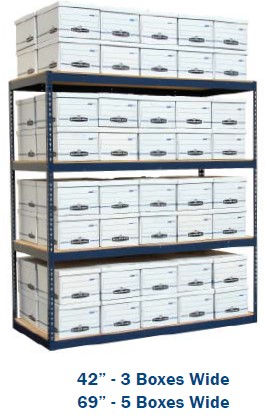
Shop Boltless and Rivet Shelving Online
Buy select items directly from our online store, or request a quote for volume, custom sizes and freight-rated orders.

Frequently Asked Questions
Can I add shelf levels to boltless shelving I already own?
How do I find out what brand my existing shelving is?
Are wire decks better than particle board for boltless shelving?
Do wire decks change the load capacity of a shelf level?
What lead time should I expect on boltless shelving components?
Do you ship shelving components outside Utah?
Expanding or Re-Decking Your Shelving?
Send us a photo of your existing bays and we will identify the system and quote matching components.