
Boltless Shelving for an Electrical Equipment Supplier: Utah Breakers & Supply, Salt Lake City, UT
How a Salt Lake City circuit breaker and electrical equipment dealer stocked its warehouse with one standard 30 inch deep, six-level boltless shelving section, and why it picked the gray finish over tan.
SLC, UT
Project location
Electrical
Wholesale supply
30 in deep
One section size
6 levels
Per 8 ft unit
The Project: Shelving for a Circuit Breaker Warehouse
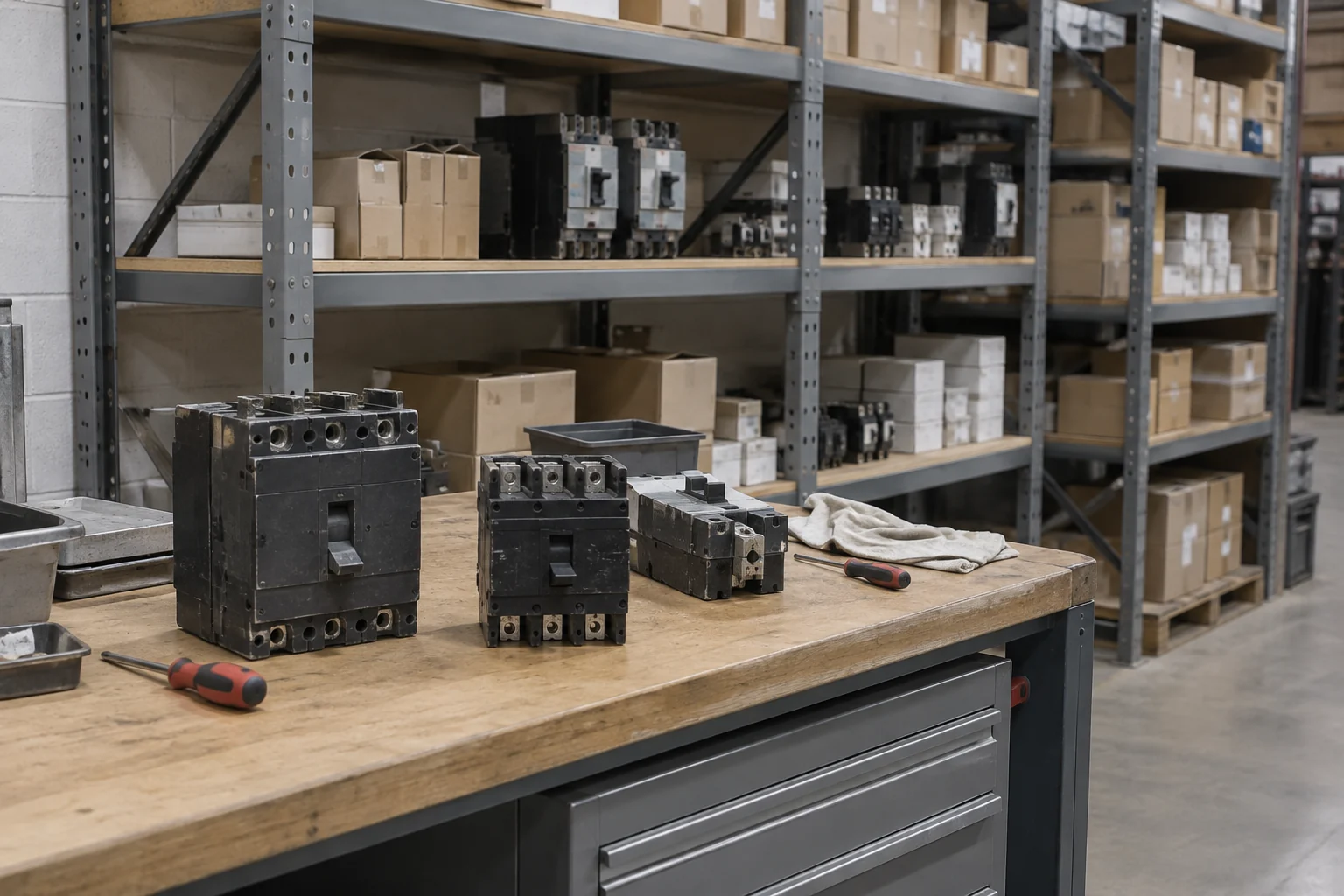
Utah Breakers & Supply is a Salt Lake City electrical equipment dealer founded in 2003. It buys and sells new, used, obsolete and hard-to-find electrical equipment, with a focus on circuit breakers, plus hardware kits, transformers, safety switches, bus plugs, MCC buckets and starters. Used equipment is reconditioned and load-tested before it is sold, so the warehouse is not just storage: it is where stock arrives, waits for testing, gets refurbished and then waits again until an order ships.
That kind of inventory is awkward to store. A breaker stock covers many frame sizes and brands, a lot of parts are one-offs, and the business depends on finding a specific item quickly when a customer calls about a part that is no longer made. Floor stacking and mixed hand-me-down shelving make that hard. What a dealer like this needs is a long run of uniform, open shelving where every item sits at a known level and is visible from the aisle.
In February 2017 the company asked our Salt Lake City team to quote boltless shelving for its warehouse. Chris Rodgers, our director of sales, quoted it, the order was placed in March 2017, and the shelving was shipped by freight from the manufacturer for the company to assemble itself.
This project is one of the Salt Lake City jobs behind our boltless shelving in Salt Lake City service page. The product family is covered in depth on our boltless shelving hub, part of our wider shelving solutions range, and wholesale stockrooms like this one are covered on our distribution center shelving and inventory storage systems pages.
A note on what we know
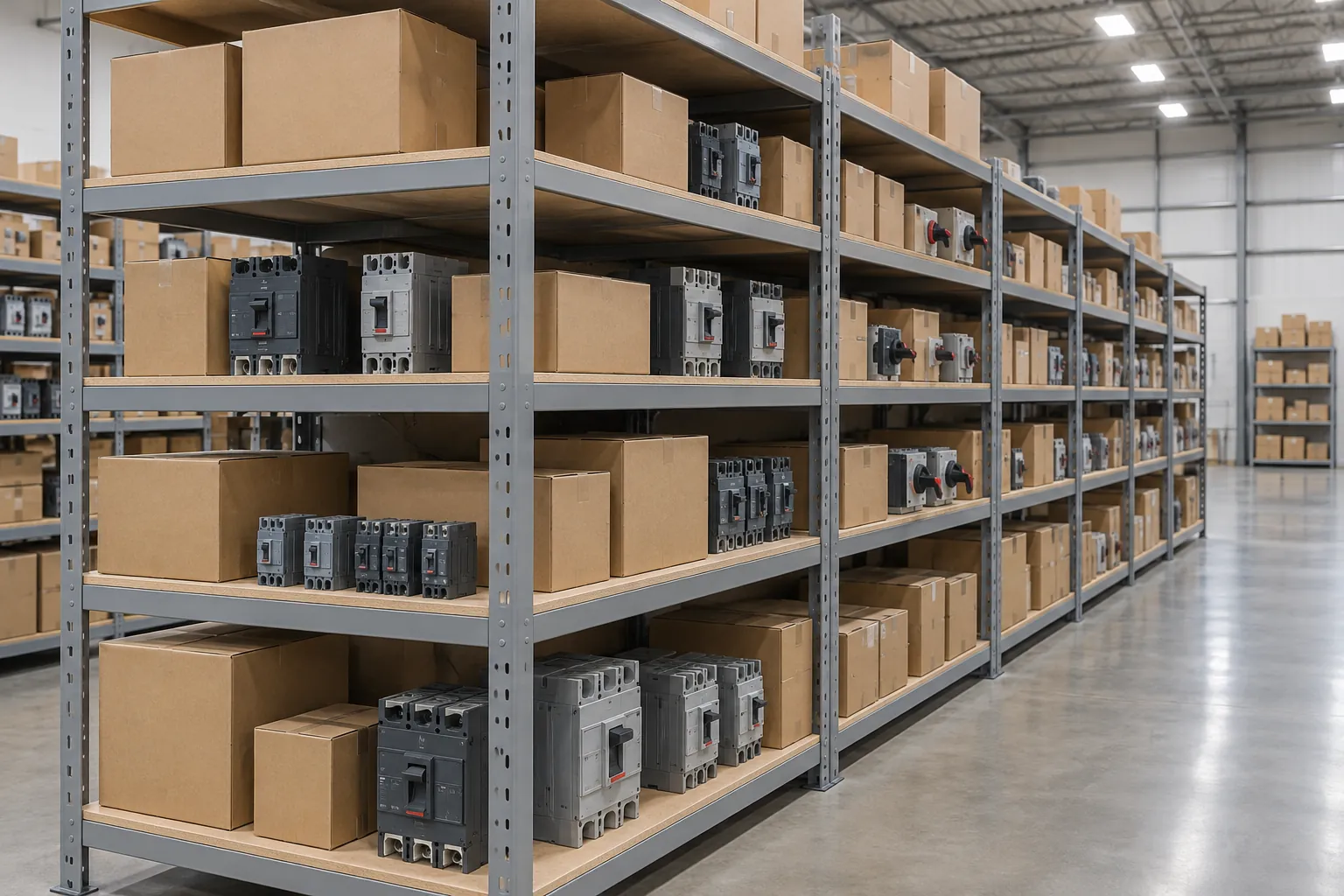
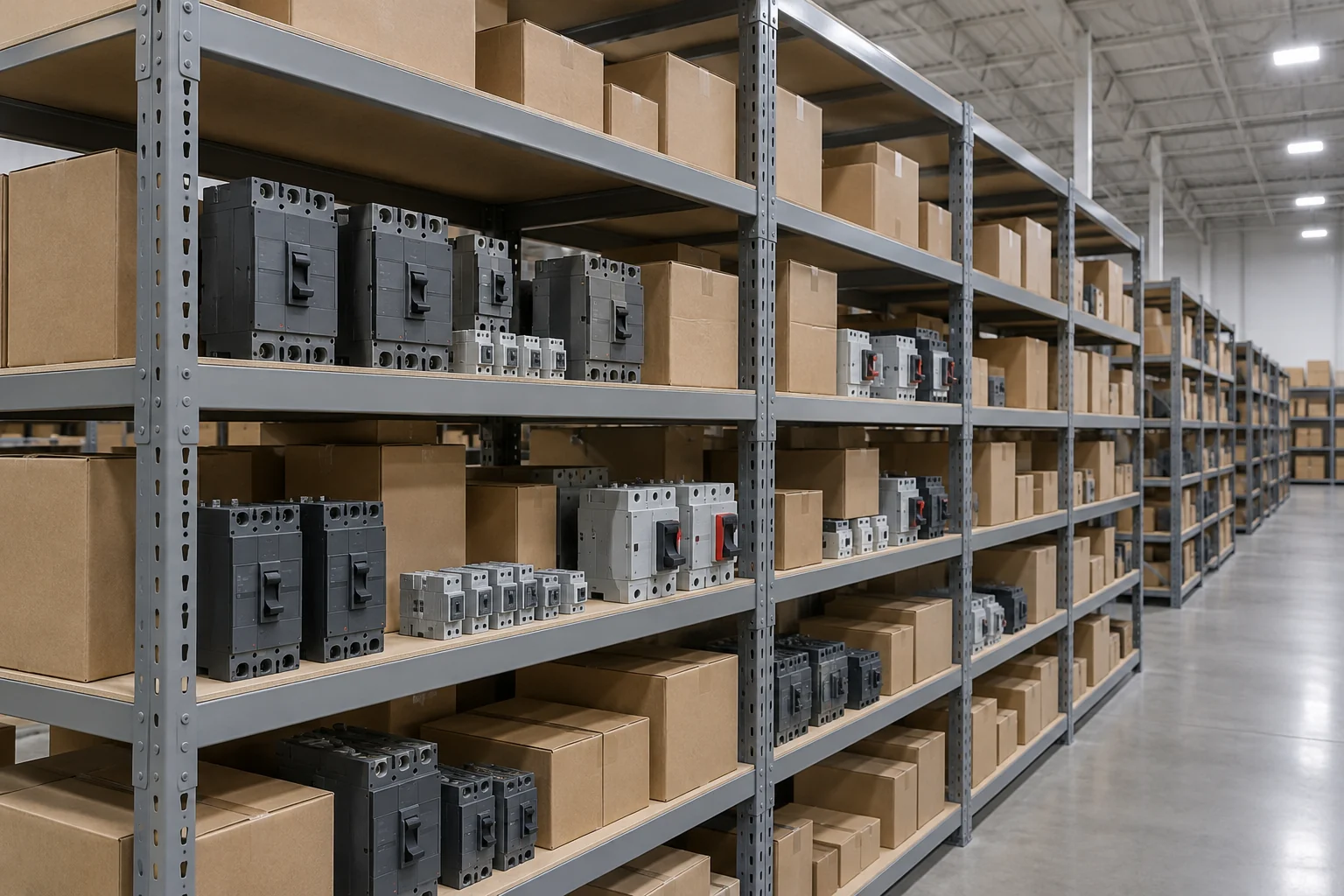
We supplied the shelving; we were not on site and do not know exactly what sits on each shelf. We are not publishing the warehouse layout, the address or how many units were ordered. The photos on this page are illustrations, not photos of the customer’s building. Everything said about the shelving itself (size, components, finish options, purchasing and delivery) comes from the project’s quotes, invoices and manufacturer purchase order, and the company description comes from its own website.
One Standard Section: 72 Inches Wide, 30 Inches Deep, 96 Inches High
Where our Weber County Library case study mixed three depths in one order, this order did the opposite. Every section in it was the same: 72 inches wide, 30 inches deep and 96 inches high, with six particle board shelf levels and one deck support under each level. For a warehouse that is going to be filled aisle by aisle, one size has real advantages.
| Choice on the quote | What was ordered | Why it suits an electrical parts warehouse |
|---|---|---|
| Width | 72 inch | Long shelves hold a full row of boxed breakers or switches per level and mean fewer posts in the aisle face. |
| Depth | 30 inch | Deep enough for boxed molded case breakers and mid-size cartons, shallow enough that nothing hides at the back. |
| Height | 96 inch, 8 foot posts | Uses the warehouse’s height while the top level is still reachable from a step ladder. |
| Levels | Six per section | Tighter spacing than the usual five, which suits small and medium boxed parts. |
| Deck | Particle board | A solid, smooth surface for loose parts that would fall through or tip on wire. |
| Deck supports | One per level | A steel bar under the middle of each deck, front to back. |
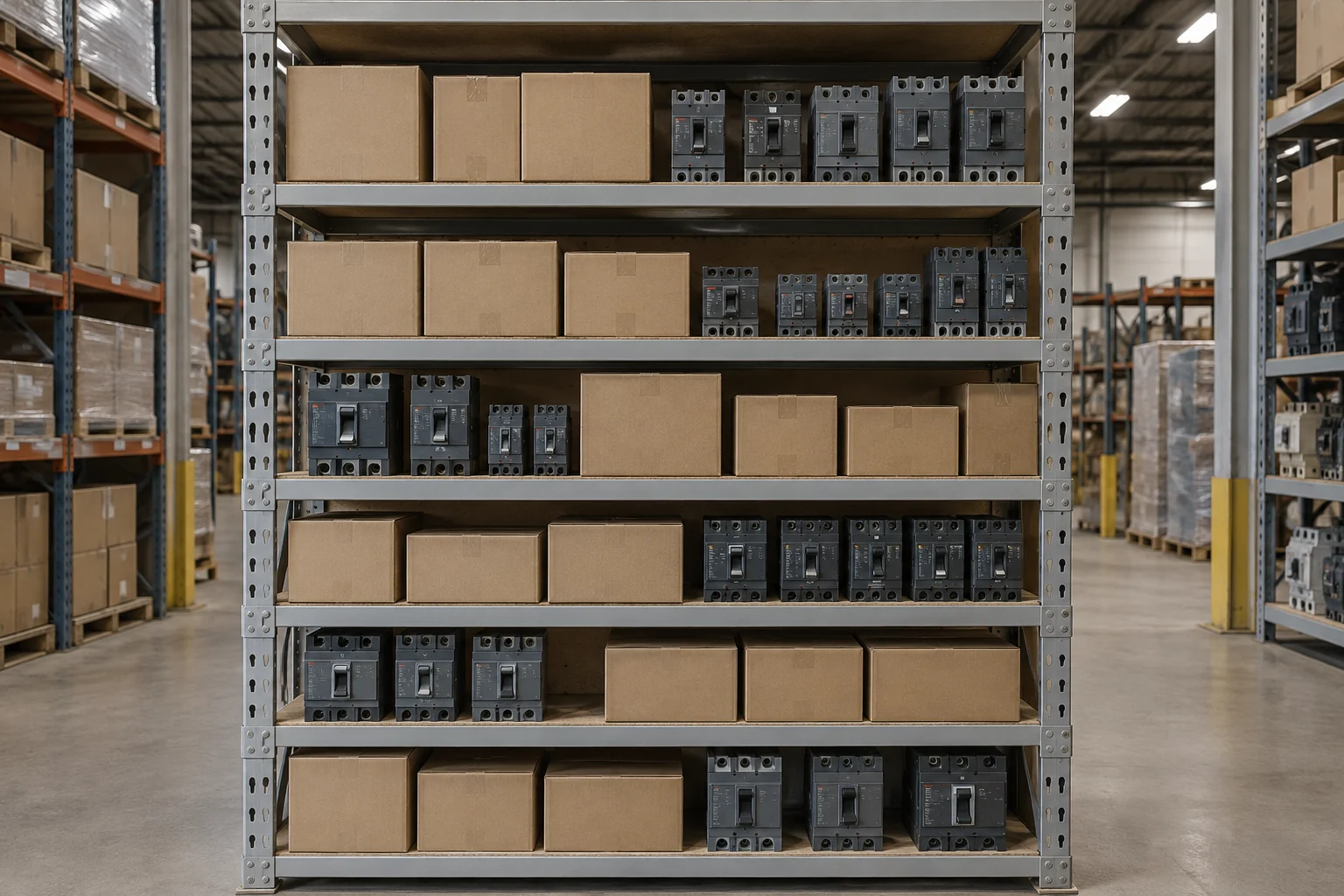
The 30 inch depth is the decision most buyers get wrong in one direction or the other. Standard boltless shelving is commonly sold 24 inches deep, and a 24 inch shelf is a little tight for larger boxed breakers, starters and bulky cartons, which end up hanging over the beam. Jumping to 36 or 48 inches deep fixes that, but small parts then drift to the back where nobody can see or reach them, and every extra inch of depth comes out of the aisle.
Thirty inches sits in between. Most boxed electrical components fit on it without overhang, a person standing in the aisle can still see and reach the back of the shelf, and two rows of small boxes can sit one behind the other without the back row being lost. It is a common choice for parts rooms and wholesale stock for exactly that reason.
The 72 inch width works with it. A wide shelf means fewer posts across the face of a run, more continuous shelf for labels and part numbers, and a deck that is still easy to handle during assembly. Width and depth are set only by beam lengths, so the same posts would accept other beam sizes later if the stock changed.
Pick the depth from the parts, not the catalog default
Measure the largest boxed item that will live on the shelf, add a couple of inches, and round up to the next standard depth. If most of your stock is boxed breakers, switches and small transformers, 30 inches is often the right answer; for loose small parts in bins, shallower shelving with bins works better.
Why Six Levels Instead of Five
Most eight foot boltless units are quoted with four or five shelf levels. This order asked for six on every section. The difference matters when the stock is lots of small and medium items rather than big cartons.
With six evenly spaced levels on an eight foot post, the openings between shelves are roughly a foot and a half. That is plenty for boxed breakers stood on end, safety switches, hardware kits and small cartons, and it is far less wasted air than the tall openings of a five-level unit, where boxes tend to get stacked on top of each other. Stacked boxes are what slow down picking: the box you need is always the one at the bottom.
An extra level per section also adds a lot of shelf area across a whole warehouse for almost no extra floor space. The only costs are one more set of beams, one more deck and one more deck support per section, and those were all on the order.
Because boltless beams lock into keyhole slots up the full height of the post, six levels do not have to stay evenly spaced. A level can be tapped out and moved up or down to make a taller opening for bulky items near the floor, and moved back later. Heavy items, such as larger breakers and small transformers, belong on the lowest levels, and very heavy items belong on pallet rack, not shelving. Our boltless shelving vs pallet racking guide explains where that line falls.
Load ratings
How much each level can carry depends on the beam type and span, not the number of levels. The manufacturer’s published capacities by beam length are on our single vs double rivet beams guide; confirm the right rating for your heaviest stock on the quote.
Deck Supports and Double Rivet Beams
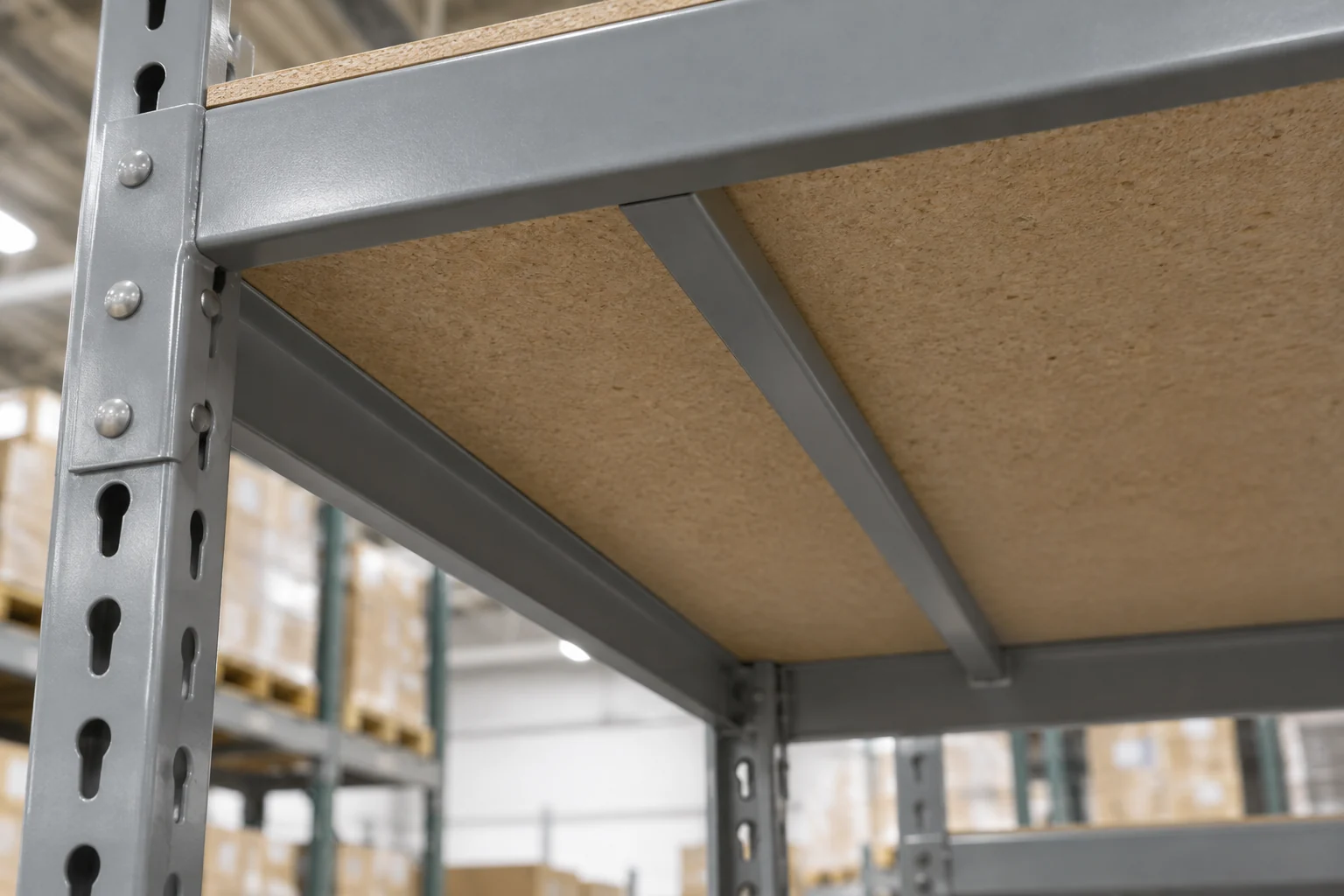
Every level in this order was built with double rivet beams on all four sides: 72 inch beams across the front and back, and 30 inch beams on the ends. Double rivet beams have two rivets at each end instead of one, which makes the beam stiffer and the connection to the post stronger. On a 72 inch span that carries a full row of electrical parts, that stiffness is what keeps the front edge straight.
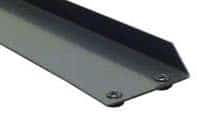
Under each particle board deck sat one 30 inch deck support, a light steel bar running front to back between the beams at mid-span. A particle board deck only rests on the beams around its edges, so on a six foot shelf the middle needs help. One support splits the span in half, and it is cheap insurance against a sagging deck, which is hard to fix once a shelf is loaded.
Deeper or more heavily loaded shelves sometimes take two supports per level; our library case study used two on its 60 and 72 inch wide, deeper decks. On a 30 inch deep shelf, one was the specification on this quote. The right number for your contents should be confirmed when you order.
| Component on the purchase order | What it does |
|---|---|
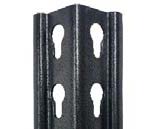
| 8 foot angle posts | Uprights with keyhole slots up the full height; four per freestanding section. |
| 72 inch double rivet beams | Front and back beams that set the width of each level. |
| 30 inch double rivet beams | End beams that set the depth and square the unit. |
| 72 by 30 inch particle board decks | One solid deck per level. |
| 30 inch deck supports | One per level, under the middle of the deck. |
For other deck choices, our boltless shelving decking options page compares particle board, wire and steel decks, and replacement beams, posts, decks and supports are listed on our boltless shelving accessories page.
Gray or Tan: Finish, Price and Lead Time
The quote offered the same shelving in two steel finishes. That turned out to be the most practical decision on the order, because the two options were not just different colors.
| Gray finish | Tan finish | |
|---|---|---|
| Shelving specification | Identical: 72 x 30 x 96 inch, six levels, particle board, deck supports | Identical |
| Price | Lower | Noticeably higher for the same parts |
| Quoted delivery | About 2 weeks | About 4 weeks |
| Chosen | Yes | No |
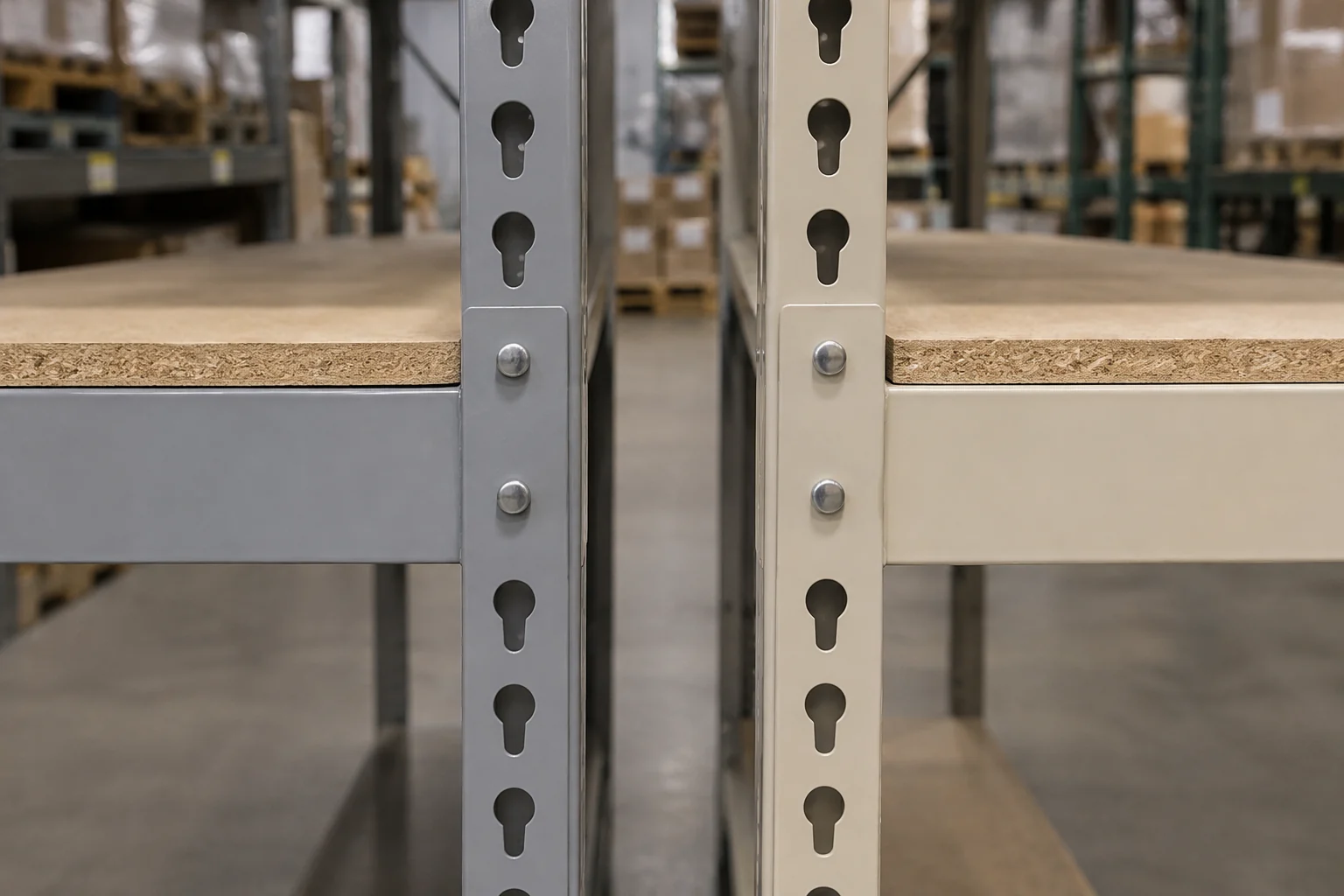
Gray is the standard, high-volume finish for boltless shelving, so it is the color manufacturers keep moving through production. Other colors are made in smaller runs, which is why the tan option carried a higher price and roughly double the lead time for exactly the same posts, beams and decks.
For a working warehouse the choice was straightforward. The shelving would spend its life full of boxed electrical equipment, where the color of the steel hardly shows, and getting the warehouse organized two weeks sooner was worth more than a matching color. The company ordered the gray finish.
Color is worth paying for in some places: a customer-facing showroom, a retail back room that must match existing shelving, or an office records room. In a stock warehouse, it usually is not. Whatever you choose, ask for both price and lead time for each finish on the same quote, the way this one was laid out, so the trade-off is clear before you order.
Matching existing shelving?
If you are adding to shelving you already own, match the post style and finish of the existing units, and check whether parts are interchangeable before mixing brands. Our used vs new boltless shelving guide covers what to check.
Freestanding Sections, Freight Delivery and Self-Assembly
The post count on the purchase order shows how the shelving was meant to stand: four angle posts for every section, so each section is a complete freestanding unit rather than part of a connected run that shares posts. Freestanding sections use a few more posts, but in a warehouse that is still settling into its layout they are easier to live with. Any unit can be emptied, moved and rebuilt somewhere else without taking apart its neighbors.
The quote was a one-page proposal: section size, number of levels, deck supports, particle board decks and freight, with delivery in about two weeks for gray. A 50 percent deposit was invoiced when the order was placed, the manufacturer purchase order went to Jaken that week, and the balance was invoiced after delivery. Installation was not part of the order. The shelving shipped by freight, and the company’s own crew assembled it.
That is a common pattern for warehouse buyers. Boltless shelving goes together with a rubber mallet, with only basic hand tools for the deck supports, and a warehouse crew with a pallet jack can receive and assemble a full order without outside help. Six levels per section does add assembly time, so plan for it when you schedule the crew.

Measure the stock
Size depth to the largest boxed item; count how many levels the item mix needs.
Compare finishes
Ask for gray and color options with price and lead time side by side.
Confirm the specification
Beam type, deck type and deck supports per level on the quote.
Receive the freight
Pallets of posts, beams and decks; a dock or forklift makes it quick.
Assemble and load
Build, level, fit deck supports, and load the heaviest stock low.
Need it installed?
If your crew cannot assemble the shelving, installation can be added to the quote. See our boltless shelving installation page and our Utah shelving installation service.
A Year Later: A Smaller Parts Package
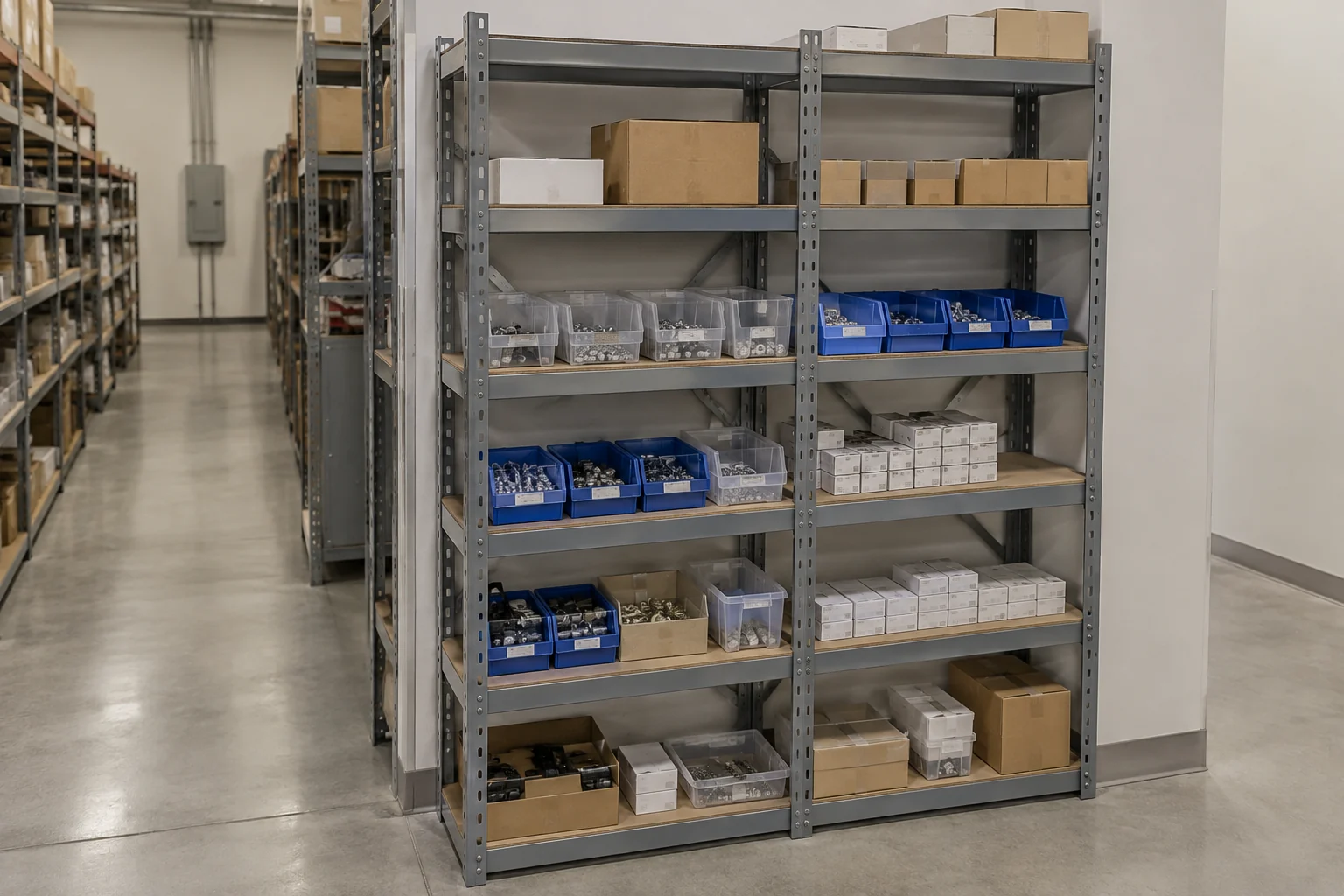
In February 2018, almost a year after the warehouse order, the company asked us to quote a second, much smaller package. It was a different kind of shelving: shorter 72 and 84 inch posts, narrower 48 inch wide by 24 inch deep particle board levels, and a mix of double rivet and single rivet beams.
That mix is a good example of matching beams to load. Double rivet beams carry heavier levels; single rivet beams are lighter and less expensive, and are fine for levels holding light items such as small boxed parts, fuses and hardware kits. Shorter posts suit a smaller room or a counter-height area where staff need to reach every level from the floor.
Our records show the 2018 quote but do not show it as a completed order, so we describe it only as a quote. It is still a useful pattern: start with one standard warehouse section, then use smaller units from the same parts family for the areas the big sections do not suit.
If you need sizes the standard units do not cover, our custom boltless shelving page explains how posts, beams and decks combine into almost any size.
Planning Checklist for Electrical Supply Warehouse Shelving
Electrical wholesalers, breaker dealers and contractors’ supply houses face the same decisions Utah Breakers & Supply made. These steps cover most of them.
- Sort stock by size and weight: boxed breakers and switches on shelving, small loose parts in bins, heavy transformers and reels elsewhere.
- Size shelf depth to the largest boxed item; 30 inch deep shelving suits most boxed electrical components.
- Use one standard section across the warehouse so beams and decks stay interchangeable.
- Add levels for small and medium stock; six levels on an 8 foot post reduces stacking and speeds picking.
- Use double rivet beams on long, loaded spans and order a deck support under every particle board level.
- Ask for gray and color options with lead times side by side, and decide whether color is worth the wait.
- Plan receiving and assembly time; freestanding units are easiest to rearrange later.
- Keep aisles, exits and sprinkler clearances clear, and anchor tall units if your building requires it.
For the rest of an electrical supply operation, see vertical storage for electrical supply and wire distribution, bin shelving for Utah electrical wholesalers, Storeganizer for electrical, plumbing and HVAC distribution, fastener storage and contractor bin shelving. Other Utah boltless projects include RiveTier shelving for an auto parts store, seed storage for an ecommerce company and City of Draper. For Utah projects, start with our Salt Lake City boltless shelving page or the statewide Utah boltless shelving overview, read the boltless shelving buying guide and the rivet shelving overview, or, if you already know what you need, order boltless shelving directly.
What we verified for this case study
This page is built from the project’s own records: the Zoho deal, the customer quotes and invoices and the manufacturer purchase order, plus the company’s own website for what it does. Email correspondence from 2017 is not archived, so no staff quotes or design discussion are included, and the company’s reasons are described from what it ordered rather than from what it said. Order values, unit and part quantities, layouts, the street address, purchase order numbers and contact names are deliberately not published.
Shop Boltless Shelving Components Online
Buy select items directly from our online store, or request a quote for volume, custom sizes and freight-rated orders.

Frequently Asked Questions
What is boltless shelving?
Is 30 inch deep shelving a good size for a warehouse?
How many shelf levels should an 8 foot boltless unit have?
Why does tan or colored boltless shelving cost more than gray?
Do boltless shelves with particle board decks need deck supports?
What is the difference between single and double rivet beams?
Do you supply boltless shelving to warehouses in Salt Lake City?
Planning Warehouse Shelving in Utah?
Tell us what you stock and how much of it. We will size the shelf depth and levels, compare finishes and lead times, and quote it delivered to your Salt Lake City area warehouse.