
Seed Storage Shelving for an Ecommerce Seed Company: True Leaf Market Case Study
How a Salt Lake City seed company added long runs of boltless rivet shelving with particle board decks to keep packet, bulk and sprouting inventory picked fast and stored dry.

Customer
True Leaf Market, an ecommerce seed and sprouting supply company
Location
Salt Lake City, Utah
Product
Boltless rivet shelving with particle board decking
Application
Seed inventory storage and order picking
About True Leaf Market
True Leaf Market is a Salt Lake City seed company that has been selling seed since 1974. The business ships vegetable, herb, flower, microgreen, sprouting and wheatgrass seed across the country from its Utah facility, along with growing supplies and equipment. Orders range from a single packet to bulk sacks, which makes the warehouse part stockroom, part fulfillment center.
That mix is exactly the case boltless shelving is built for. Seed does not need a pallet position, but it does need a lot of hand-pick locations, clear labels, and shelves strong enough to carry buckets and cases without sagging. True Leaf Market has worked with Material Handling USA on more than one storage project over the years, and the most recent one closed in August 2026.
The situation
An ecommerce seed company grows in stock keeping units before it grows in square feet. Every new variety, every new packet size and every seasonal item needs its own home. When that growth outruns the shelving, three problems show up at once.
Pick locations run out. Overflow goes on the floor, on carts or on top of other stock. Pickers start hunting, and the walk per order gets longer.
Counts drift. When one item lives in three places, cycle counts stop matching the system and oversells follow, which is painful in a business where a variety can sell out for a season.
Peaks hurt more. Seed demand is seasonal. A layout that just barely works in October falls apart in February when spring planting orders arrive.
The goal for this project was simple: add a large block of well built hand-pick storage in the existing building, keep it easy to relabel and rearrange as the catalog shifts, and do it without shutting down shipping.

What Material Handling USA supplied
We supplied a long run of boltless rivet shelving with five shelf levels per section and particle board decks on every level, along with the tie plates and foot plates that turn separate units into one stable row.
Everything in the order came from the same product family covered on our industrial boltless shelving and heavy duty boltless shelving pages, so future add-on sections will match what is already standing.
Why boltless shelving fit this warehouse
Seed inventory is light per unit and dense per shelf. A packet weighs almost nothing, a case of packets weighs a little, and a bucket of bulk seed weighs a lot more. What matters is not one big load but hundreds of small ones spread across many levels.
Pallet rack is the wrong tool for that. It creates a few very strong positions at heights a picker cannot reach by hand. Wire shelving is closer, but small seed packets and envelopes do not sit well on an open grid. Boltless rivet shelving lands in the middle: many levels, solid decks, real capacity, and a price per pick location that stays reasonable.
The second reason is change. A seed catalog is never finished. Shelf levels on rivet shelving move in the slotted posts, so a level can be dropped or raised in minutes when a product line changes size.
We compare the two systems in detail on boltless shelving versus pallet racking if you are weighing the same decision.
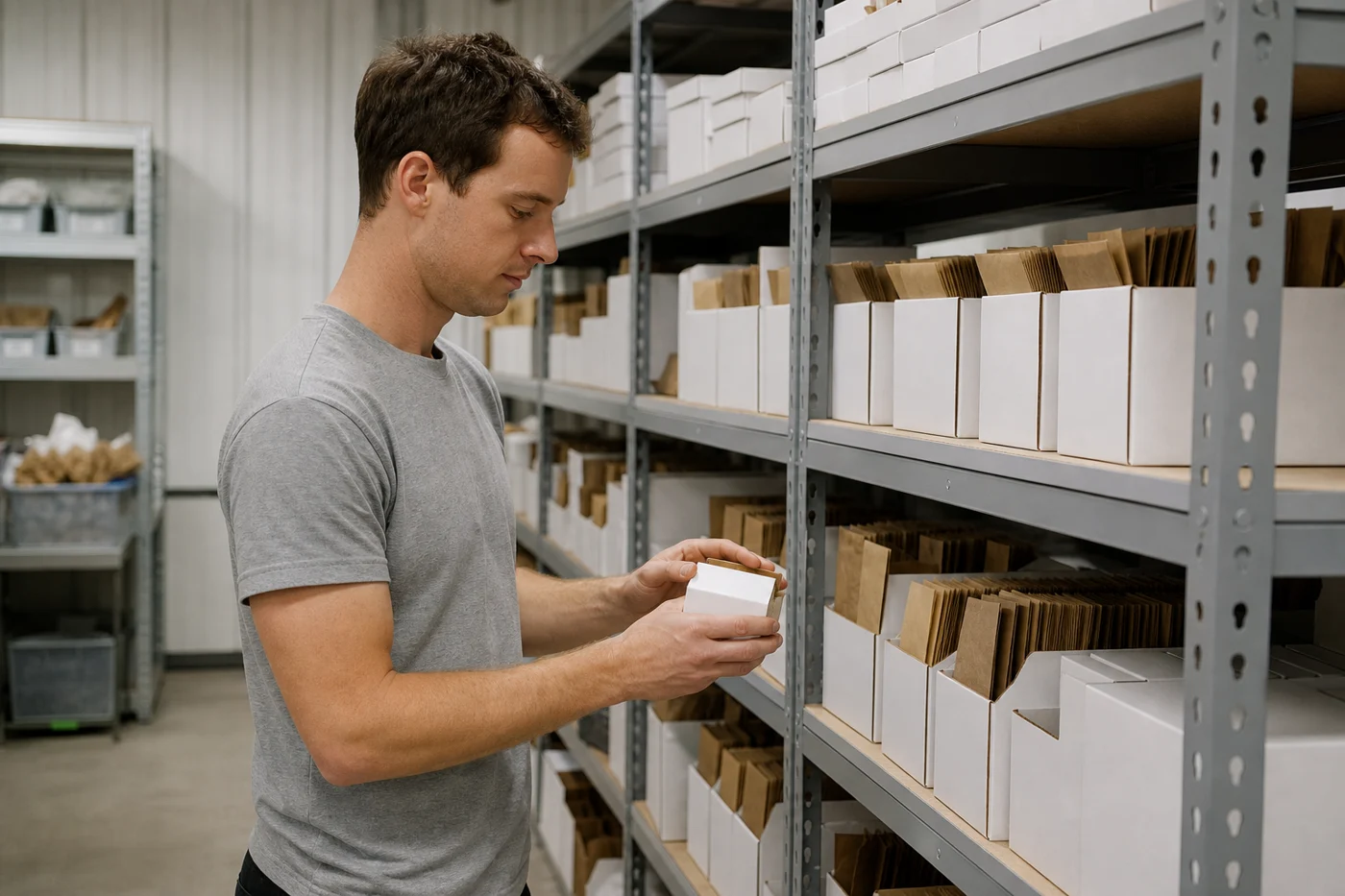
Choosing the deck: why particle board
The deck is the part people underestimate. It decides what can sit on the shelf, how easy the shelf is to clean, and how the level looks two years in.
| Deck type | Good for | Trade-off |
|---|---|---|
| Particle board | Small items, packets, envelopes, cases, buckets on a flat surface | Not for wet areas; a spill should be wiped up rather than left standing |
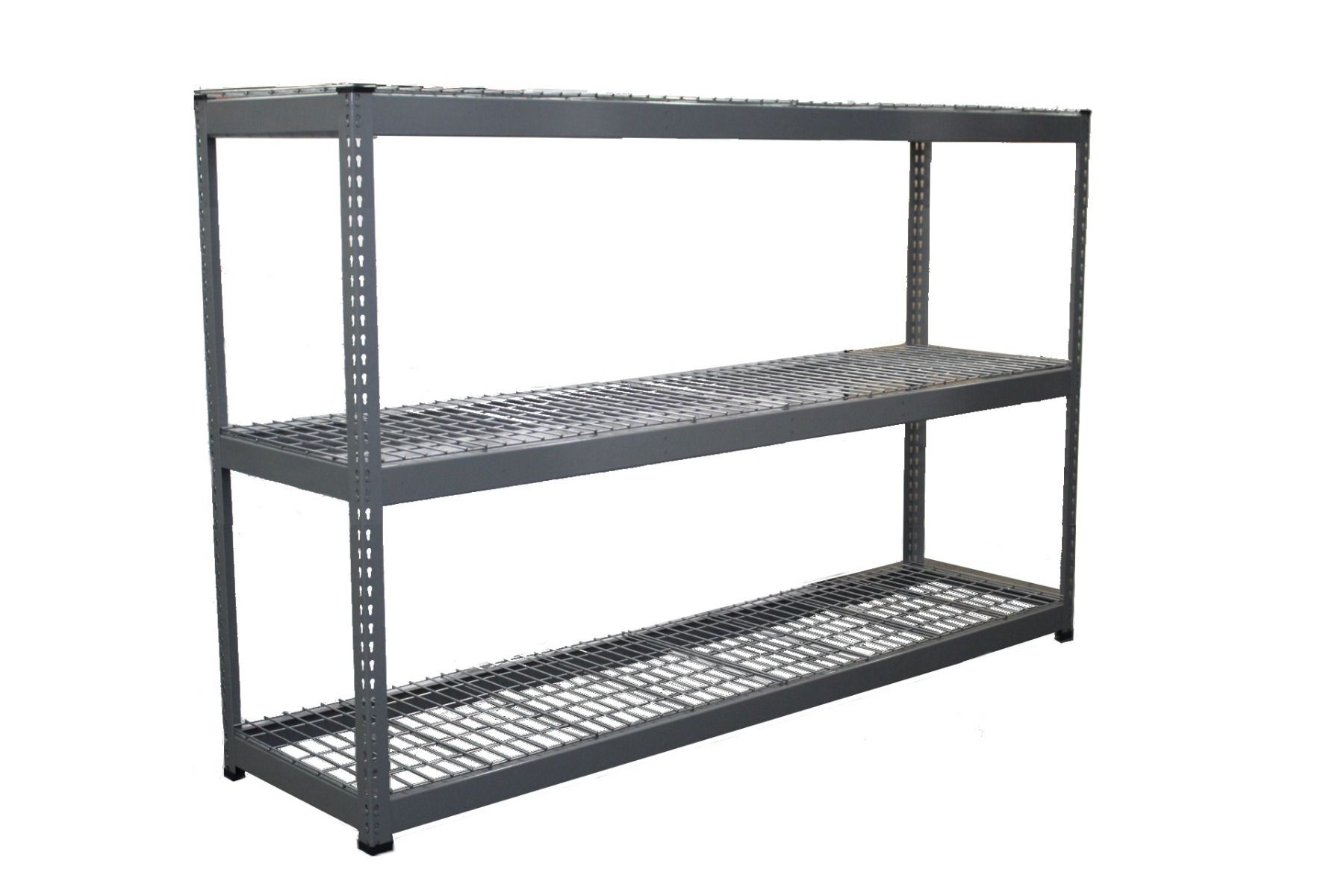
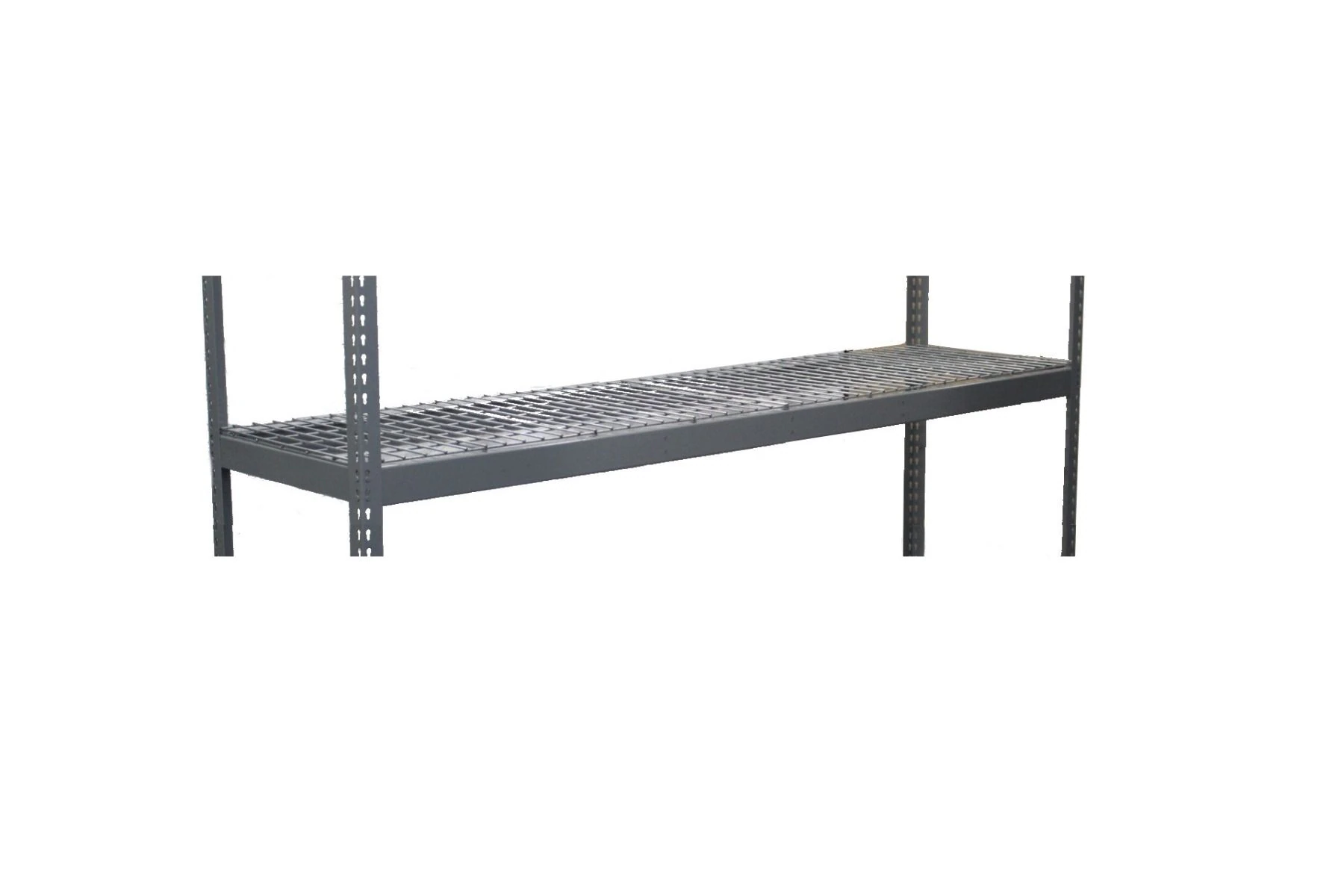
| Wire decking | Sprinkler water flow, visibility, dust falling through | Small or soft items can sag through or tip over the grid |
| Steel decking | Heavy point loads and rough handling | Higher cost per level than board for light hand-pick stock |
| No deck (beams only) | Long or bulky items that span the beams | Nothing small can be stored on the level |
For a seed operation the answer is usually board. Packets, seed envelopes, jars, sprouting lids and small cartons all need a flat surface, and pickers reach across a level constantly. Our decking options guide walks through the same choice for other applications.

Layout and pick flow
Adding shelving is easy. Adding shelving that shortens the pick path takes a little planning. Four questions shaped this layout.
What moves most? Fast movers belong at waist and chest height near the pack stations. Slow seasonal stock can sit on the top level or at the far end of the run.
How wide are the aisles? Wide enough for a picking cart to pass a person, narrow enough that the floor is not wasted. Cart traffic decides this, not the shelving.
Where does replenishment come from? Bulk stock and reserve cases should feed the pick face from behind or above without crossing the picking aisle at peak.
How will locations be labeled? A simple aisle, section, level and position scheme printed on the beam face keeps new seasonal staff productive on day one.
Long straight runs also beat scattered islands. One continuous line of shelving reads as a single aisle, ties together for stability, and makes location codes run in order instead of jumping around the building.
Storing seed well on open shelving
Seed is alive. Germination drops when seed is stored warm and damp, and it holds far longer when it is stored cool and dry. Utah State University Extension and the USDA both point to the same basic rule: control moisture first, then temperature.
Shelving cannot condition a room, but the way stock sits on it matters more than most people expect.
General guidance on seed storage is published by Utah State University Extension and the USDA Agricultural Research Service. Use them for the conditions target, and use the shelving layout to support it.
What the new shelving changed
More pick faces in the same footprint. Five levels of hand-pick storage per section turns a single floor position into several, without adding a square foot of building.
One home per item. Enough locations means every product can have a fixed spot, which is what makes cycle counting and receiving fast.
Shorter picks. A continuous run with sensible slotting keeps most of an order inside a few steps instead of across the building.
Safer handling. Buckets and cases sit at reachable heights on a flat deck instead of stacked on the floor.
Room to grow. Add-on sections share posts with the units already standing, so the next expansion is a small order rather than a new project.
A cleaner warehouse. Product off the floor is easier to sweep around, easier to inspect and easier to keep free of pests.
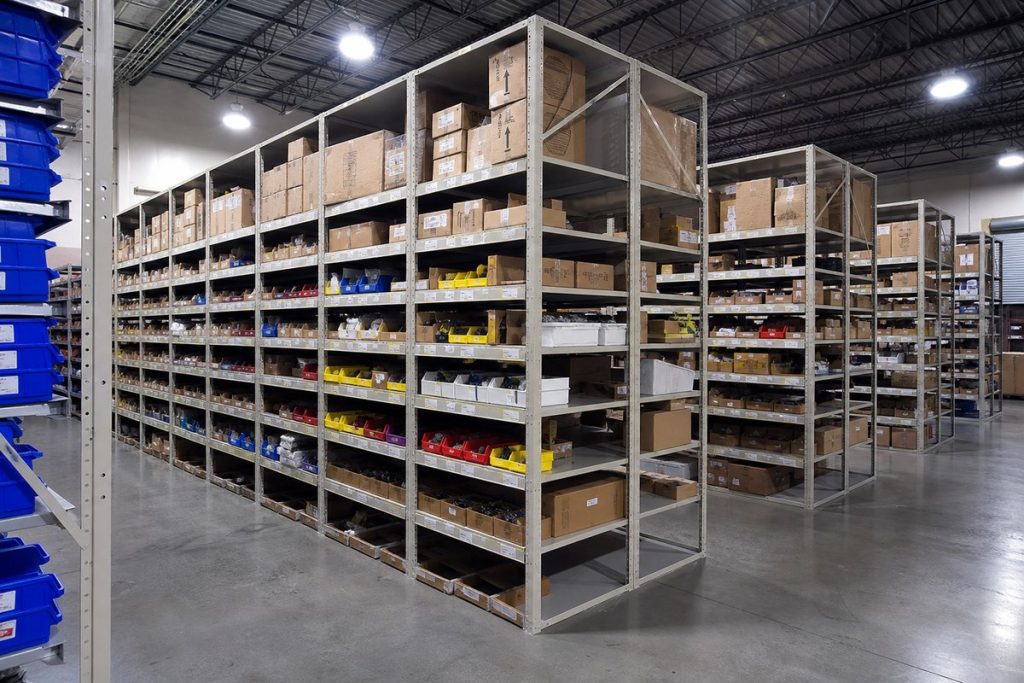
The cost case for boltless shelving
We never publish project pricing, but the arithmetic behind a decision like this is worth explaining because it repeats on almost every seed, food and ecommerce project.
For general budgeting ranges on this product line, see the boltless shelving cost and pricing guide and the buying guide.
How the project ran
The sequence on this job is the one we use on most Utah shelving projects.
Delivery on a stock configuration like this typically runs a couple of weeks from order. Where a customer wants a crew rather than a self build, our installation service covers layout, assembly, anchoring and cleanup.

What this means for Salt Lake City area businesses
Material Handling USA has served Utah since 1997 from Salt Lake City. Seed companies, food producers, ecommerce sellers, distributors and manufacturers along the Wasatch Front all run into the same wall: the building is full of small items and short of pick locations.
Boltless shelving is usually the fastest fix. It ships flat, builds quickly, adjusts later and works just as well in Provo, Ogden, West Valley City, Sandy, Lehi and Layton as it does in Salt Lake City itself. Local stock and local delivery mean a project can be quoted, delivered and standing in weeks rather than months.
If you are planning a similar project, start with the Salt Lake City boltless shelving page, then look at warehouse shelving systems, fulfillment center shelving and inventory storage systems for layout ideas. If pallet volume grows alongside the small-parts picking, the seed and agriculture warehouse racking guide covers the pallet rack side of the same kind of warehouse.
Material Handling USA, 222 S. Main St., 5th Floor, Salt Lake City, UT 84101. Call (801) 328-8788 for a Utah project.
Shop Boltless Shelving Online
Buy complete boltless shelving units and add-on levels directly online, or request a quote for volume, custom sizes and freight-rated orders.

Frequently asked questions
Is boltless shelving strong enough for buckets of bulk seed?
Why particle board instead of wire decking for seed storage?
How long does it take to build a long run of rivet shelving?
Can we add more sections later and have them match?
Can shelf levels be moved after the shelving is installed?
Do you deliver and install boltless shelving in Salt Lake City?
What information do you need to quote a project like this?
For more on how we approached this specific project, read how we helped this Salt Lake City seed company store more SKUs without moving warehouses.
Planning shelving for a seed, food or ecommerce warehouse?
Tell us what you store and how you pick it, and we will lay out a boltless shelving run that fits your building. Salt Lake City delivery and installation available across Utah.