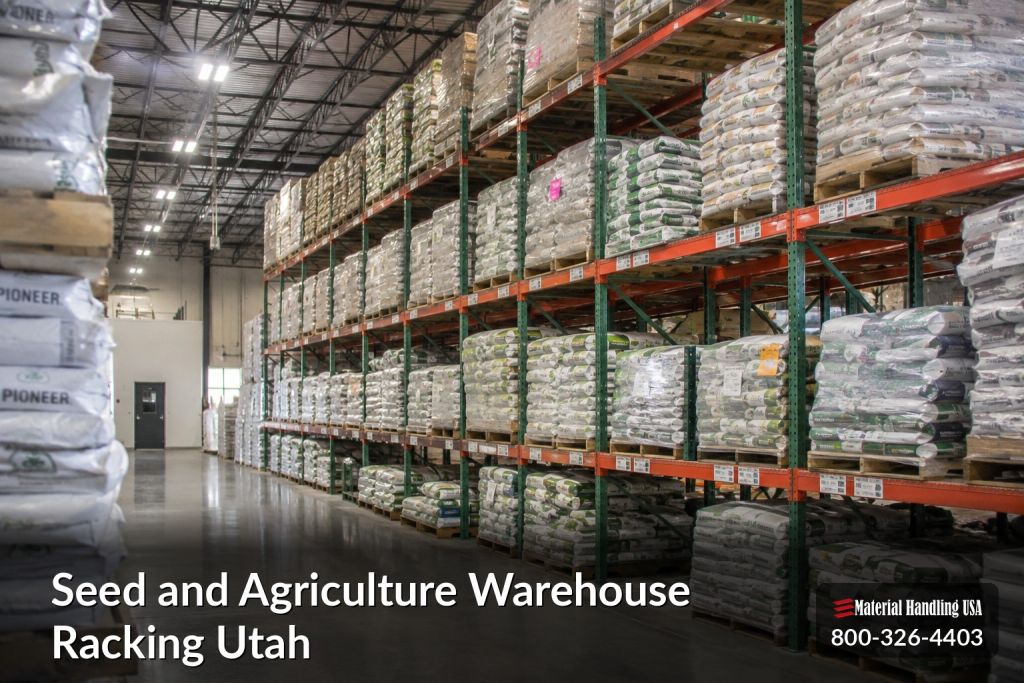
You're probably staring at a warehouse that has to do too much at once. Seed comes in by the lot, treated product needs clean separation, bulk inventory takes floor space fast, and the whole building still has to move product out before the next seasonal swing hits. In Utah, that gets harder because the rack has to fit the seed lot, the fork truck, the dock flow, and the building itself, not just the pallet count.
Seed and Agriculture Warehouse Racking Utah is really a planning problem first. If you pick the wrong layout, you pay for it in slow turns, damaged product, messy segregation, and avoidable install delays. If you pick the right one, the warehouse stays flexible through planting season, harvest, and the quieter months in between.
What Utah Seed and Agriculture Warehouses Are Solving For
A Utah seed operation usually isn't short on product. It's short on the right storage mix for a business that changes pace with the calendar. Spring fills the building with bagged seed, treated lots, and fast-moving pallet inventory. Winter often shifts attention to slower stock, parts, and other ag inputs that still need organized storage.
The real pressure is rotation, not just capacity
Seed has to move cleanly by lot. That means the warehouse needs clear pick faces, good identification, and enough separation to keep treated material away from other inventory when needed. You're not just storing pallets, you're protecting lot integrity and making sure the right product ships first.
Utah also adds site pressure. The Wasatch Front brings seismic design demands, and the dry climate can pull moisture out of product while still leaving you with condensation risk in the wrong place. A layout that works in one county may need stronger anchorage, different aisle planning, or tighter climate separation in another.
Practical rule: design the warehouse around product movement first, then fit the rack into that workflow. If the workflow is wrong, more storage density just gives you a bigger bottleneck.
Historical Utah seed storage shows why this matters. Warehouse No. 3 in St. George stored sugar beet seed in 1934 in 15 bins, each holding about 80,000 to 130,000 pounds of seed, and the seed was cleaned, treated, bagged, and shipped by rail to multiple western states (UtahRails). That's the old lesson and the current one. Utah seed warehousing has always been about volume, handling discipline, and movement.
For buyers building or upgrading a facility, the first question is simple. What does the building need to solve most, rotation speed, climate separation, dock throughput, or seismic anchorage? Once that answer is clear, the rack decision gets much easier.
What This Operation Typically Needs to Store
A seed and agriculture warehouse rarely handles one clean product line. It handles a mix, and that mix decides the rack. Bagged seed, bulk grain, treated lots, fertilizer, inoculants, irrigation parts, and repair stock all behave differently on the floor.
Start with SKU behavior, not product labels
Bagged seed in pallet loads needs selective access. Bulk grain or slower seasonal stock can justify denser lanes. Treated lots need cleaner separation and, in many cases, better environmental control. Long items like pipe or odd-shaped ag parts don't belong in standard pallet positions at all. For a look at how this plays out for a smaller ecommerce seed operation, see the True Leaf Market seed storage case study.
The Utah agricultural storage picture supports that mix. Utah producers stored 1.20 million tons of hay as of December 1, 2016, and Utah's off-farm all wheat stocks were 3.95 million bushels on December 1, 2022, both from state and USDA reporting (Utah agricultural statistics bulletin). Those numbers show a state that depends on organized bulk storage, not casual stacking.
| Typical Seed and Agriculture Warehouse Inventory Mix | |||
|---|---|---|---|
| SKU Category | Typical Pack | Handling Trait | Rack Implication |
| Bagged seed | Palletized bags | Lot-sensitive, clean, fast pick | Selective rack |
| Treated seed | Palletized bags or totes | Needs separation and airflow | Selective rack with zoning |
| Bulk grain | Super sacks or bulk loads | Dense, slow moving, seasonal | Drive-in or push-back |
| Fertilizer or inoculant | Pallets | Corrosive or moisture sensitive | Separated zone, coated finishes may help |
| Irrigation parts | Mixed cartons and small pallets | Odd cube and frequent picking | Selective rack, smaller pick faces |
| Pipe and long goods | Long bundles | Nonstandard length | Cantilever rack |
One internal reference point for this kind of planning is the agricultural storage solutions hub. Use it as the product-side starting point, then size the warehouse around the inventory mix, not the other way around.

Seed inventory should be sorted by how it moves, not just by what it is. Lot control, access speed, and storage condition matter more than a generic pallet count.
Equipment Options That Fit Seed and Agriculture Storage
Selective pallet rack is the default for a reason. It keeps every pallet addressable, which matters when you're chasing lot rotation, customer orders, or recall control. If the building needs clean access and regular picking, selective should be the base layer.
Compare the main options before you buy
| Configuration | Best Use | Main Trade-Off |
|---|---|---|
| Selective pallet rack | Bagged seed, treated lots, mixed ag inventory | Lower density than deep lane systems |
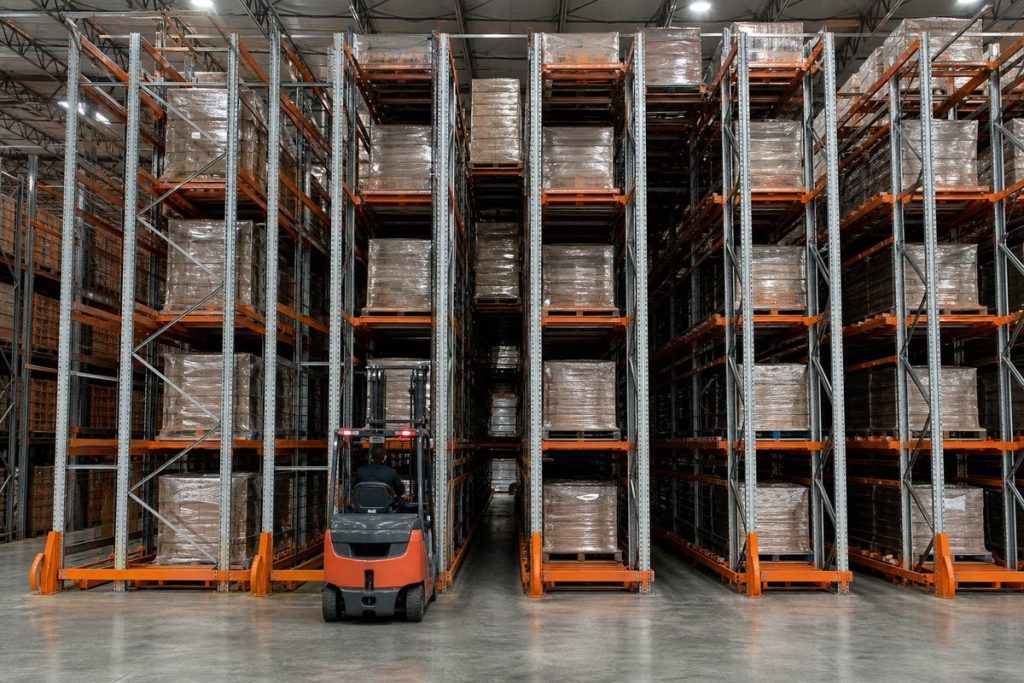
| Drive-in rack | Bulk grain, seasonal overflow, same-SKU storage | Lower selectivity, last-in-first-out behavior |
| Push-back rack | Dated seed lots, dense pallet storage | More cost than drive-in, needs disciplined pallet quality |
| Pallet flow rack | Fast-moving FIFO seed or chemical | Higher cost, cleaner floor and tighter maintenance needed |
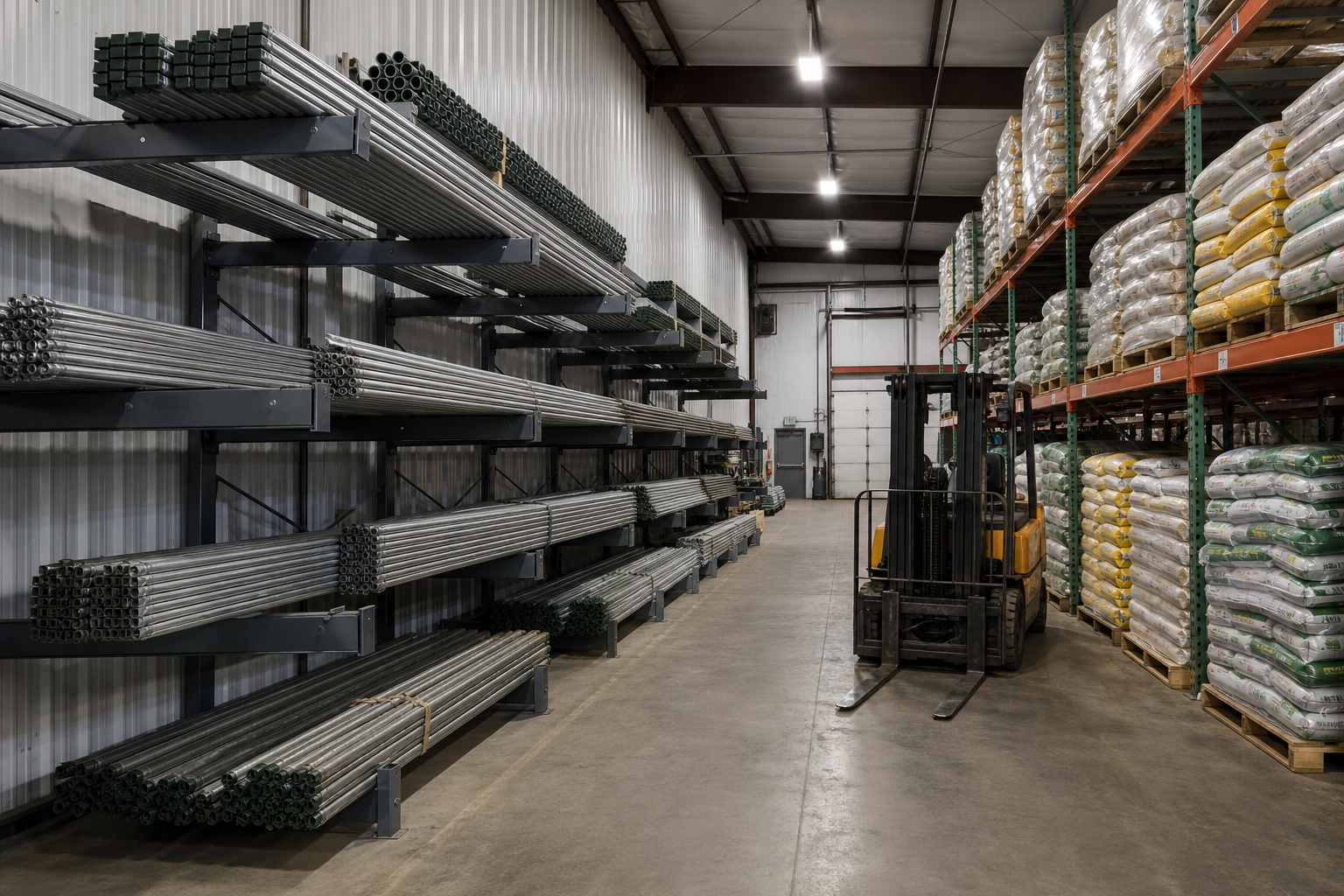
| Cantilever rack | Pipe, long cartons, odd agricultural materials | Not for standard pallet-only storage |
Selective rack is the safest starting point for most seed warehouses. Drive-in and push-back make sense when you have bulk inventory that doesn't need constant access. Flow rack is right when rotation discipline matters more than raw density. Cantilever belongs where the ag yard or parts area needs it.
For Utah operations that want a local rack path, the Utah pallet rack hub is the cleanest place to begin. If you're comparing broader product families, the main pallet rack page helps frame the options without overbuilding the layout.
Choose by rotation, not by rack type hype
The right setup usually starts with selective rack for pick faces, then adds denser storage in the back of the house. That gives you access where you need it and density where you can afford to lose it. If your team is still deciding between FIFO control and deep storage, the answer usually depends on whether the product is time-sensitive, climate-sensitive, or both.
Sizing, Layout, and Access Considerations
Good rack projects win or lose on measurement. If the layout misses ceiling height, column spacing, dock flow, or forklift aisle width, the warehouse will work against itself every day. A strong design makes the warehouse feel easier to run because the product path is shorter and clearer.
Measure the building before you choose the rack
Start with clear height, floor flatness, and column spacing. Then map where incoming product lands, where outbound pallets leave, and where the awkward items sit in between. That's the point where a designer can tell you whether you need more selective bays, a deep lane zone, or better staging.
Forklift choice matters here. A counterbalance reach setup typically wants roughly 11 to 12 feet of aisle, a stand-up reach truck about 9 to 10 feet, and turret trucks can run 7 to 8 feet. Those widths change the whole layout, because one extra foot in every aisle can erase a bay or two of storage.
Layout rule: keep the most active SKUs closest to the dock. Put slower lots deeper in the building only if the handling pattern justifies it.
Don't ignore the small clearances
Rack still needs practical spacing. Back-to-back loads need flue space, walls need clearance, and sprinklers need headroom. Seed storage also benefits from zoning treated and untreated inventory separately, because a mixed room is harder to manage and harder to keep clean.
A scaled layout tied to real pallet counts is the right way to budget. That's where warehouse design and layout services matter, because a sketch on paper is not the same thing as a working plan. A real layout should show pallet positions, aisle widths, dock flow, and the space you'll need for staging and rework.
Sizing and layout checklist before you order rack
- Confirm clear height, floor flatness, and column spacing across the whole building, not just one bay.
- Match aisle width to the actual forklift: roughly 11 to 12 feet for counterbalance reach, 9 to 10 feet for stand-up reach, 7 to 8 feet for turret trucks.
- Map incoming and outbound flow so the most active SKUs land closest to the dock.
- Leave flue space between back-to-back loads, clearance at walls, and headroom under sprinklers.
- Zone treated and untreated seed separately instead of storing them in one mixed room.
Code, Safety, and Site Considerations in Utah
Utah rack projects are not just storage projects. They are structural and safety projects. On the Wasatch Front, seismic demand can drive the frame design, the anchor pattern, and the documentation you need before the system goes in.
Seismic design changes the rack conversation
Facilities in Salt Lake, Davis, Weber, and Utah counties often fall into seismic design categories C or D, which can require heavier uprights, engineered anchor bolts, and cross-bracing to resist lateral loads. That is not a nice-to-have. It's part of making the rack legal and usable in the building.
OSHA does not have a single rack-only rule, but it still expects storage not to create hazards and aisles to stay clear and marked. For design and use, ANSI MH16.1 is the key industrial steel storage rack standard, and local code enforcement may require stamped drawings and load documentation. The right internal starting point is pallet rack seismic compliance.
Utah State University Extension says seed quality is best protected at 35°F to 40°F with relative humidity below 40%, and it warns against storing seed where temperatures exceed 70°F or humidity exceeds 60% (USU Extension). That makes environmental control a design requirement, not a preference, for seed inventory.
| Utah Code and Safety Reference for Seed and Agriculture Rack | ||
|---|---|---|
| Standard | Applies To | Storage Rule |
| ANSI MH16.1 | Steel storage racks | Use it for design and use of industrial rack |
| ASCE 7 | Seismic loads | Rack must be engineered for the county's seismic demand |
| OSHA 1910.176 | Storage and material handling | Keep storage safe, aisles clear, and loads controlled |
| Local building code and permit review | Utah installations | Stamped drawings, anchor details, and inspection may be required |
| NFPA 13 | Sprinkler clearance | Maintain required clearance under the system |
Treated seed lots may also trigger pesticide storage rules depending on the product. Check labels and state requirements before you lock in the final storage plan. For operations that want to keep the site clean and documented, rack engineering should happen before installation, not after.
Installation, Lead Time, and Service Considerations
Agricultural buyers plan around the season, not the calendar invite. If a project is going in before planting or harvest, the lead time has to be handled early, because the installation window closes fast once the warehouse is busy again.
Build the schedule around your work cycle
Standard rack often moves faster than custom configurations, but the schedule depends on the layout, the anchors, and whether seismic engineering is part of the package. If the system needs permit review, stamped drawings, or special components, the calendar stretches. That is why the quote request has to include the building details, not just pallet counts.
Before you order
- Confirm whether the layout uses standard or custom configurations.
- Flag if seismic engineering, permit review, or stamped drawings apply to your county.
- Send building details, not just pallet counts, with the quote request.
After the install
- Keep load signs and as-built drawings on hand.
- Set a plan for anchor inspection and repair after any forklift contact.
- Revisit the layout each season as traffic patterns and inventory change.
Service matters after the install too
A rack job is not finished when the last beam goes in. You still need load signs, as-built drawings, and a plan for anchor inspection and repair if a forklift hits a column. In agricultural warehouses, that matters because the building changes with the season and the traffic pattern changes with it.
Some common sizes are stocked at select manufacturers, subject to confirmation, but special configurations should be treated as a project order. That is where planning early helps. It keeps the design cleaner, reduces last-minute substitutions, and avoids forcing a seasonal operation into the wrong rack geometry.
A Practical Decision Guide for Different Buyer Scenarios
The right rack choice depends on what kind of operation you run. A small retail seed dealer does not need the same layout as a regional distributor, and neither one needs the same mix as a grain co-op. Match the equipment to the inventory profile and the movement pattern, not the title on the building.
Match the rack to the buyer profile
| Buyer Profile | Recommended Rack | Key Services |
|---|---|---|
| Small retail seed dealer | Heavy-duty selective rack with climate-controlled storage for sensitive lots | Layout review, load sizing, quote support |
| Regional seed distributor | Selective base with push-back or drive-in in slower zones | Space planning, lot zoning, seismic documentation |
| Grain elevator or co-op | Selective rack plus cantilever for odd ag items | Dock flow planning, access review, install coordination |
| Mixed ag supplier | Selective rack with separated product zones | Free layout, quote, and site-specific design support |
If your operation handles a seasonal spike, the safest move is usually to keep selective storage in the active zone and add density only where the inventory turns slowly. If you have a long list of SKUs, ask for a layout that separates fast movers from long-tail items from the start.
The quote should reflect the building, the county, and the equipment mix. That is how you avoid paying for rack you can't use well. It's also how you keep room open for future phases without tearing out the first install.
Frequently Asked Questions About Seed and Agriculture Rack
Do seed warehouses need climate control?
Often, yes. Seed storage is much safer when temperature and humidity are controlled, especially for higher-value or long-term inventory. Rack choice still matters, because you need airflow, separation, and access to the right lot.
What aisle width should I plan for in a tight Utah warehouse?
It depends on the forklift. A counterbalance reach setup usually needs more room than a stand-up reach truck, and turret trucks need the least. Measure the truck first, then size the aisle.
Should treated seed lots be stored with food-grade lots?
No. Keep treated lots separated from other inventory whenever possible. The issue is product control, clean handling, and reducing mix-up risk.
How does seismic anchoring change on the Wasatch Front?
The rack often needs stronger anchorage and engineering because the local seismic demand can be higher. That means stamped drawings, anchor details, and site-specific review are more likely to matter.
What lead time should I expect before spring planting?
Plan early. The install window is easiest to secure before the seasonal rush, especially if the order needs engineering or permitting. Waiting until the warehouse is already busy usually compresses everything.
How do I plan for seasonal SKU surges without overbuilding?
Use selective rack for active product and add density only where the slower inventory justifies it. That keeps the building flexible and avoids locking money into storage you won't use year-round.
Can I mix seed, fertilizer, and parts in one layout?
Yes, but not in one undifferentiated zone. Separate the inventory by handling needs, clean storage requirements, and traffic flow. That keeps the operation easier to run and easier to audit.
Material Handling USA can help you size the rack, map the flow, and line up the right storage mix for Seed and Agriculture Warehouse Racking Utah. If you need a practical layout review, a quote, or a call on product fit, visit Material Handling USA, or contact the team at 800-326-4403 for a direct conversation about your building and your inventory.
Design it yourself, then get a quote
Use our free online design tools to configure exactly what this article describes, then send the configuration to our team for pricing:
Ready to talk it through? Call Material Handling USA at (800) 326-4403 for a free design consultation.