
Fastener Storage: Bolt Bins & Nut and Bolt Storage Shelving
Bolt bins, compartment drawers and bin shelving that give every bolt, nut, washer and screw size its own labeled home, for maintenance shops, production lines and fastener distributors.
1 size
Per bin or compartment, never mixed
400 lb
Per shelf on steel bin units
From $19.26
Divided compartment box online
3 keys
Sort by type, diameter, length
Shop Bolt Bins and Fastener Storage Online
Four ways to start: a steel bin shelving unit for the bulk of your fastener stock, a compartment drawer cabinet for small sizes, tip-out bins for the bench and divided boxes for kits. Online prices are per unit; full fastener rooms, mixed bin sizes and freight are quoted by our team.
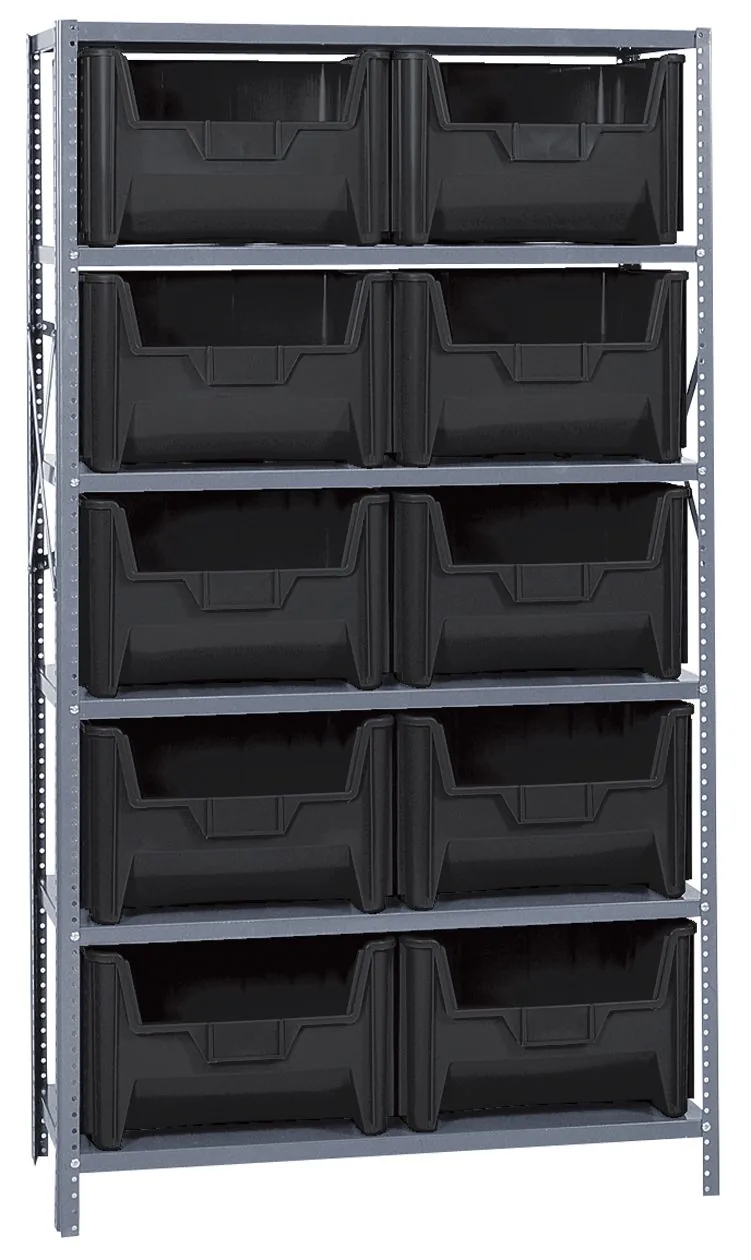
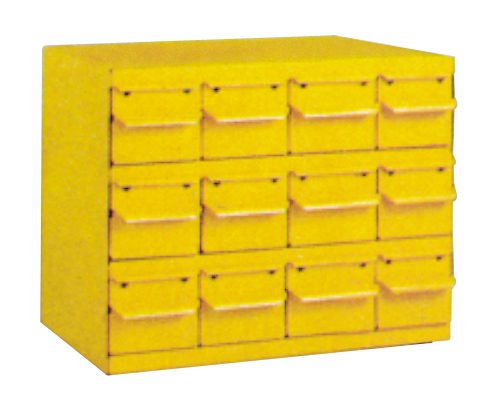
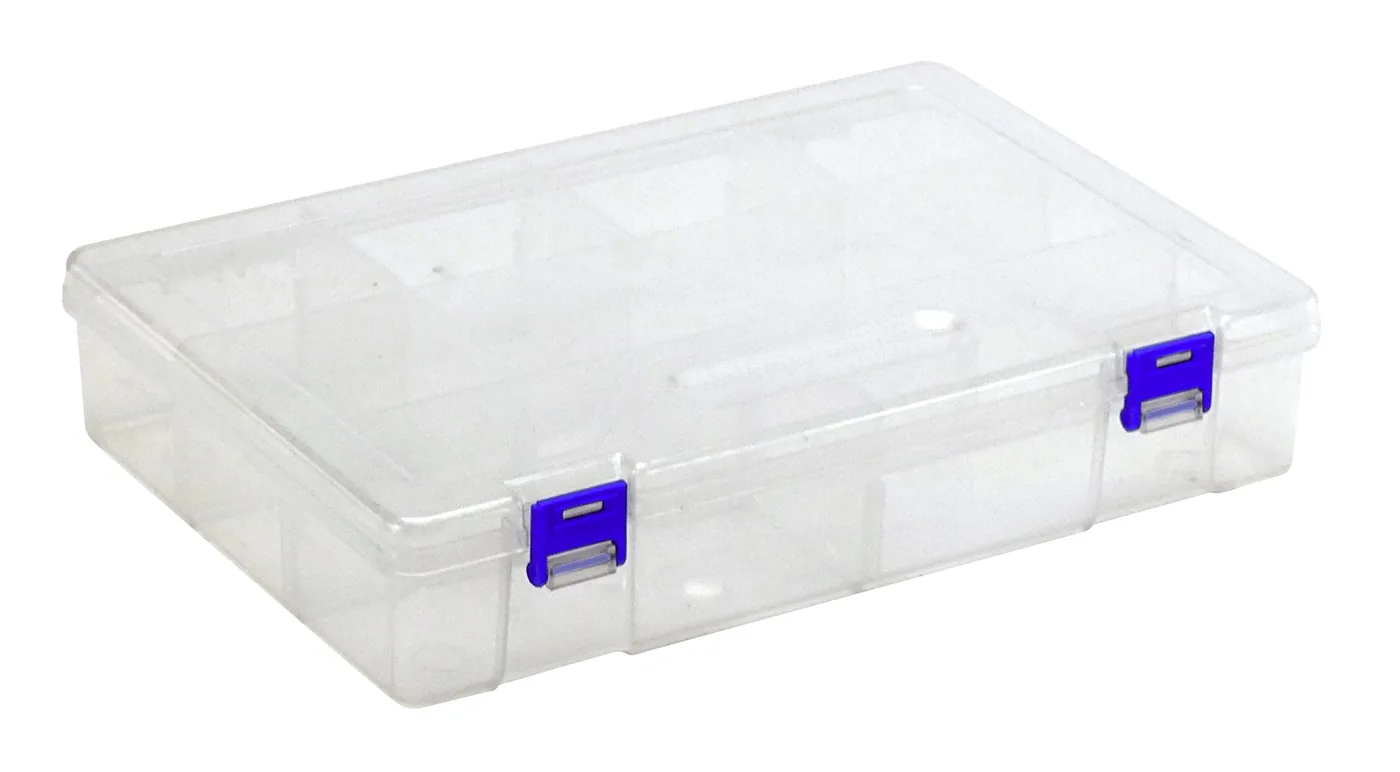
Browse bin shelving units → | Bins and dividers: plastic shelf bins | Bench organizers: plastic drawer cabinets
What a Bolt Bin Is, and Why Fasteners Need Their Own System
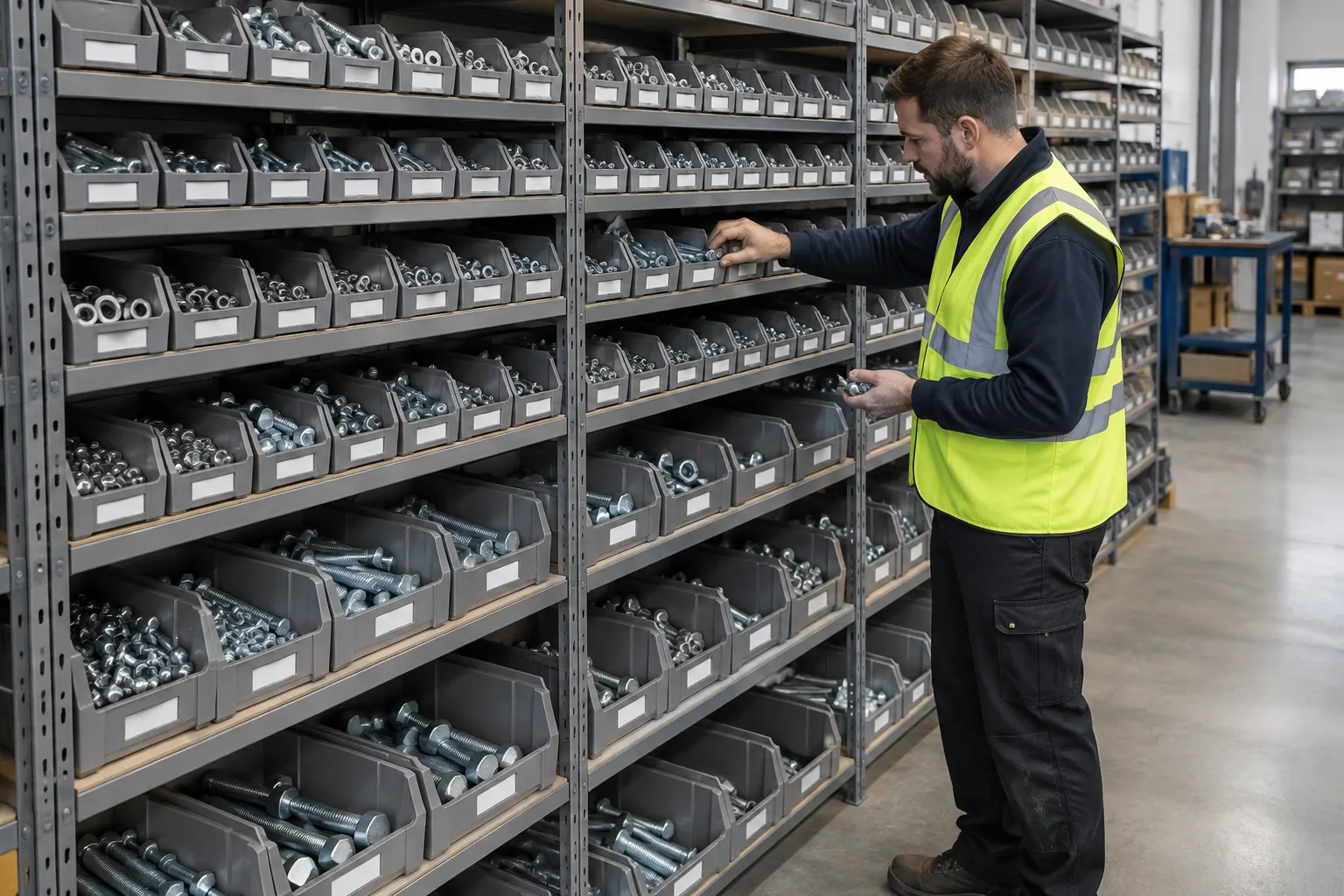
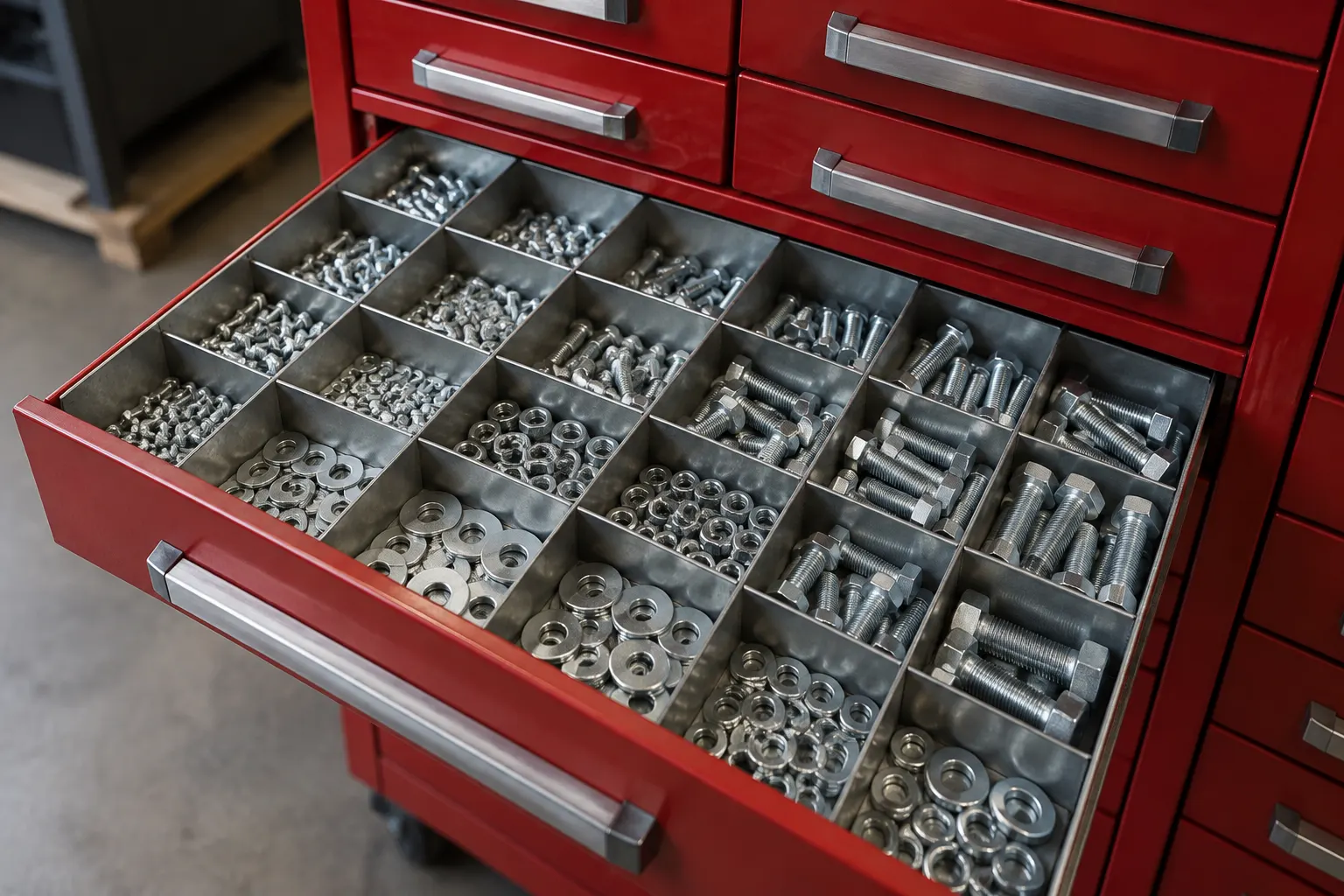
A bolt bin is any container that holds one fastener size in one labeled spot: a steel drawer split into compartments, an open-front plastic bin on a shelf, or a tip-out bin on a wall rail. A bolt bin kit is a cabinet or rack that ships with its compartments already laid out.
Fasteners break the rules that work for other parts. A shop can easily carry several hundred sizes that look almost identical, each worth pennies, and each critical the moment it runs out. A 3/8″ bolt dropped into the 5/16″ bin is close to invisible until a technician strips a thread on the job.
Good fastener storage makes the right size obvious, keeps sizes from mixing, and shows at a glance when a bin is low.
Signs your nut and bolt storage needs work
- Coffee cans and mystery buckets of mixed hardware that someone sorts by hand before every job.
- Rush orders for common sizes that turn out to be sitting in an unlabeled box on another shelf.
- Wrong-grade bolts in critical joints because grade 5 and grade 8 shared a container.
- Overflowing open bins where small washers and nuts spill into the next size down.
- No way to count what is on hand, so reorders are guesses.
Fastener Storage Options Compared
Most fastener rooms combine two or three of these. The deciding factors are how many sizes you carry, how many pieces of each, and whether the stock is picked in a storeroom or used at the bench.
| Option | Best for | Capacity per size | Pros | Watch-outs |
|---|---|---|---|---|
| Open-front bins on steel bin shelving | The main fastener room: hundreds of sizes | Medium to large | Fast to pick, easy to see levels, re-arrange in minutes | Open tops collect dust; keep heavy bins low |
| Compartment drawer cabinets (bolt bin cabinets) | Small sizes, high variety, tidy work areas | Small | Very dense, dust-free, dividers separate sizes | Slower to restock; check drawer load rating |
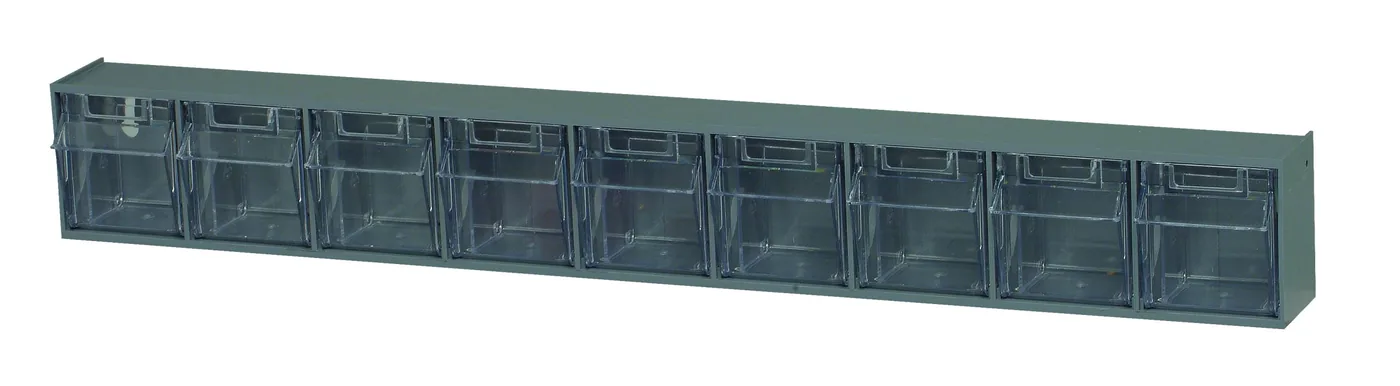
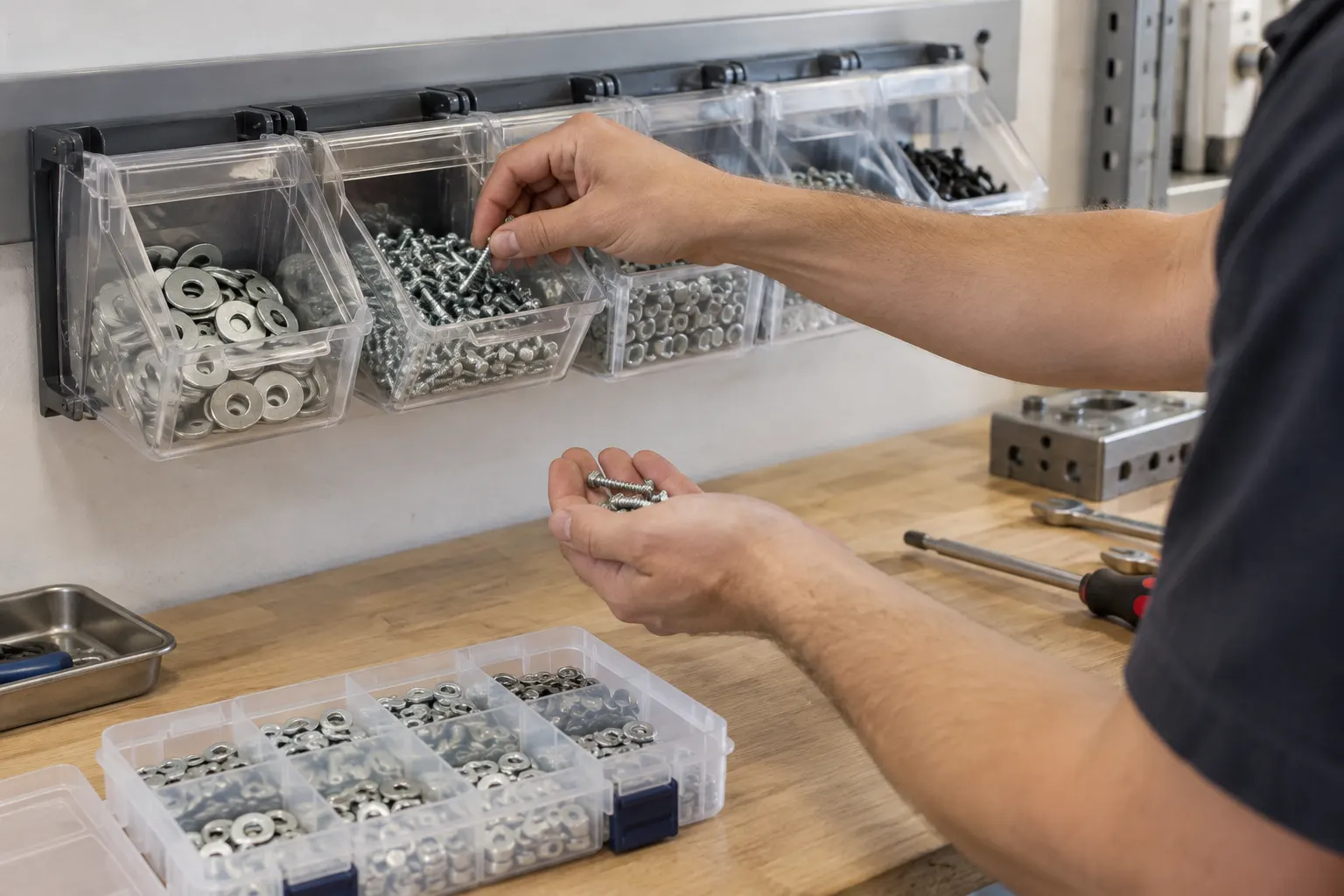
| Tip-out bins on a rail or cabinet | Screws, nuts and washers at the point of use | Small | One-hand access, wall-mounted, clear fronts | Not for long bolts or large quantities |
| Divided compartment boxes | Kits, service vans, small assortments | Very small | Portable, lids keep sizes apart | Too small for a storeroom |
| Lockable bin cabinets | High-value, specialty or controlled fasteners | Small to medium | Secure, bins on doors and shelves | Higher cost per opening |
| Wire shelving with bins | Washdown or open-air areas, mobile carts | Medium | Light, mobile, airflow | See wire shelving with bins |
Need the broader picture across electrical, spare and production parts? Our small parts storage systems guide compares the same families for every part type.
How to Sort and Label Nuts and Bolts

Sort by type, then diameter, then length. Keep hex cap screws in one zone, carriage bolts in another, socket heads in a third. Within each zone run diameters top to bottom and lengths left to right, so the next size is always the next bin.
Put mating parts beside each diameter. Nuts, flat washers and lock washers for a diameter sit at the end of that diameter’s row, so one stop collects a full set.
Split inch and metric into separate runs, and keep coarse and fine thread apart; they look the same in a bin and cause the most mix-ups.
What goes on a fastener bin label
| Label field | Example | Why it matters |
|---|---|---|
| Type and head | Hex cap screw | Separates look-alike families |
| Diameter and thread | 3/8″-16 (coarse) or M10 x 1.5 | Stops coarse/fine and inch/metric mix-ups |
| Length | 1-1/2″ | The size people search for first |
| Grade or class | Grade 5, Grade 8, 8.8, 10.9 | Prevents a weaker bolt in a critical joint |
| Material and finish | Zinc, stainless, black oxide | Corrosion and appearance |
| Location code and min/max | B-04-07 · min 50 / max 200 | Counting, reorders and put-away |
- Color-code by material or grade with bin color or a label stripe, so a stainless bin in a zinc row stands out.
- Tape one sample to the label or use a clear bin front for sizes that are easy to confuse.
- Use location codes that match your purchasing or maintenance software; our bin location labeling guide shows formats that work.
Fasteners Are Heavy: Plan Shelf Capacity
A bin of bolts is mostly steel. Even with air between the parts, a small open-front bin filled to the top with large hex bolts can weigh 20 to 30 lb, and a whole shelf of them adds up fast. Plan the load before the layout.
- Check the shelf rating, not the bin. The steel bin shelving units in our shop row are rated 400 lb per shelf, evenly distributed; drawer cabinets carry a lower rating per drawer.
- Large diameters and long bolts go on the bottom two shelves, small screws, nuts and washers up top.
- Use closed-back or heavy-duty bins for heavy sizes so the bin does not bow or tip forward when pulled.
- Buy bulk in boxes, store a working quantity in the bin. Keep reserve cartons on a lower shelf or a separate overstock shelf instead of overfilling.
- Anchor tall units and tie runs together in busy aisles or seismic areas.
Fasteners at the Bench and on the Line
Assembly cells and repair benches use a handful of sizes all day. Walking to the storeroom for each one wastes more time than the fasteners cost, so keep a working supply where the work happens.
Tip-out bins mount on a wall rail or sit in a cabinet; the clear bin tilts open with one hand and closes to keep dust out. Divided compartment boxes hold small assortments for a job, a van or a field kit.
For larger bench setups, a louvered panel or bin rail holds open-front bins at eye level, and sloped pick racks present fast-moving sizes at an angle on the line.
Who Uses Industrial Fastener Storage
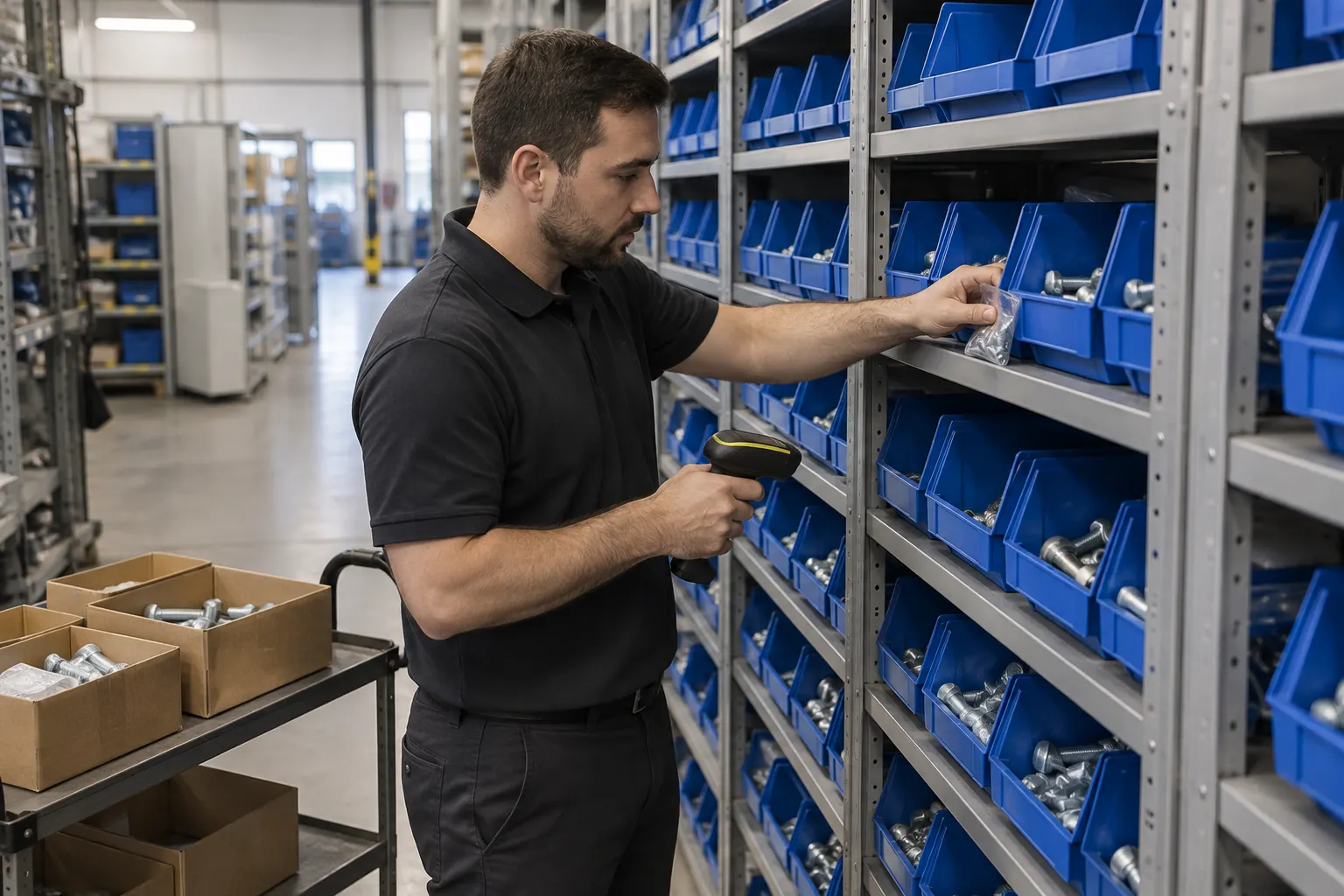
Fastener distributors and VMI programs. Distributors that manage a customer’s stock (vendor-managed inventory) set up bin shelving at the plant, one bin per part number, often two bins deep. When the front bin empties, it is scanned and refilled on the next service visit. Clean labeling and fixed locations are what make those routes fast.
Plant maintenance and MRO. Maintenance stores carry a wide spread of sizes for repairs. Group fasteners near the equipment spares they support, and lock specialty hardware in a tool crib or bin cabinet.
- Manufacturing and assembly: line-side tip-out bins and pick racks fed from a central bolt bin room; a two-bin inventory system keeps the line from running dry.
- Contractors and fleet shops: a shop fastener wall plus divided boxes for each truck; see contractor bin shelving for van restock layouts.
- Warehouses and fulfillment: fasteners sold by the each or the bag live in warehouse bin shelving pick zones.
- Equipment dealers and service departments: bins sized to the hardware kits they sell and install.
Planning a Fastener Room
- Count sizes, not pieces. Export your fastener part list and group it by type, diameter and length. The number of sizes sets the number of bins; add 10–20% for growth.
- Sort sizes by quantity. Small counts go into drawer compartments or small bins, big counts into medium bins with reserve cartons behind.
- Choose shelf depth by the longest bolt. 12″ deep shelves suit screws and short bolts; 18″ to 24″ deep fits long bolts, all-thread lengths and bulk boxes.
- Put the fastest movers between waist and shoulder nearest the door or the work area.
- Label before you load, then move one fastener family at a time so nothing gets mixed in transit.
- Set min/max levels on every label from day one.
Send your list and space
A fastener part list or photos of the current setup, plus room or wall dimensions.
We lay out the bins
Bin sizes matched to quantities, shelving and drawer cabinets sized to the space, with a location plan.
One quote, shipped
Shelving, bins, dividers, cabinets and labels on one quote, delivered nationwide.
Call 800-326-4403 or request a quote. Compare every unit type and size on our bin shelving systems page, browse storage bins on their own, or work with our Salt Lake City team through Utah bin shelving.
Get a free quote
Tell us what you are storing, the room size and your timeline. A project specialist will follow up with layout options and pricing. Prefer to talk? Call (800) 326-4403.
Fastener Storage FAQs
What is the best way to store nuts and bolts?
How do you organize nuts and bolts in a shop?
What is a bolt bin kit?
Are drawers or open bins better for fasteners?
How much weight can a bin shelving shelf hold for bolts?
How should fastener bins be labeled?
Need a Fastener Storage System?
Send us your fastener list and space for a free bolt bin layout with shelving, bins and cabinets on one quote.