
Rivet Shelving with Wire Deck
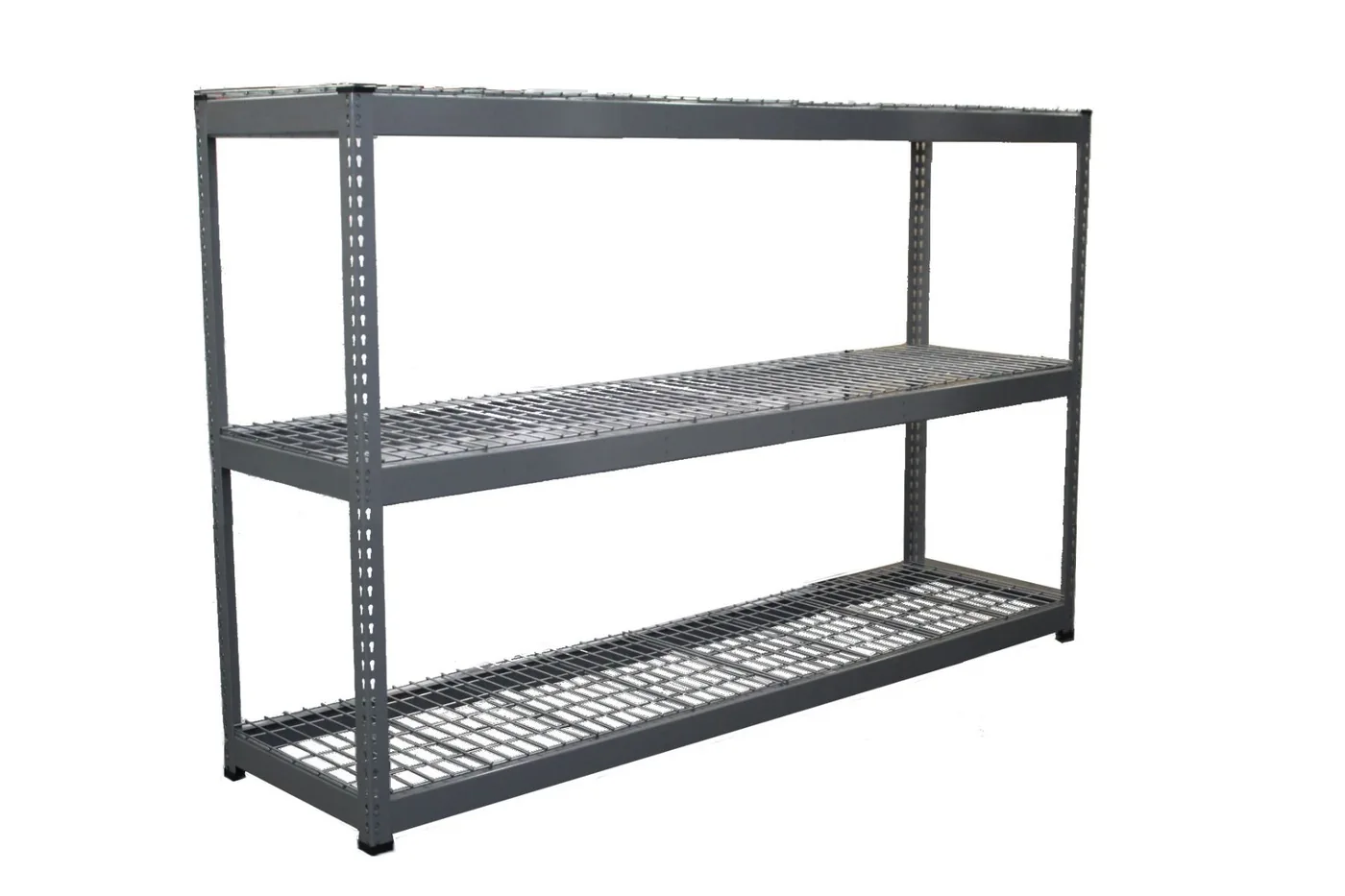
Boltless steel rivet shelving with welded wire mesh decks for warehouses, stockrooms and parts rooms. Open decks let air, light and sprinkler water through every level, and the frame goes together with a rubber mallet.
Free layout help: (800) 326-4403 or sales@mh-usa.com

Shop Rivet Shelving with Wire Deck Online
Buy wire-deck rivet shelving units, extra levels and replacement wire decks online, or call (800) 326-4403 for a quote on larger runs, custom sizes and freight-rated orders.
500–1,000 lb
Per shelf, Interlake units
1-1/2"
Level adjustment
5-gauge
Welded wire decks
4-way
Open access, no cross braces
What is rivet shelving with wire deck?
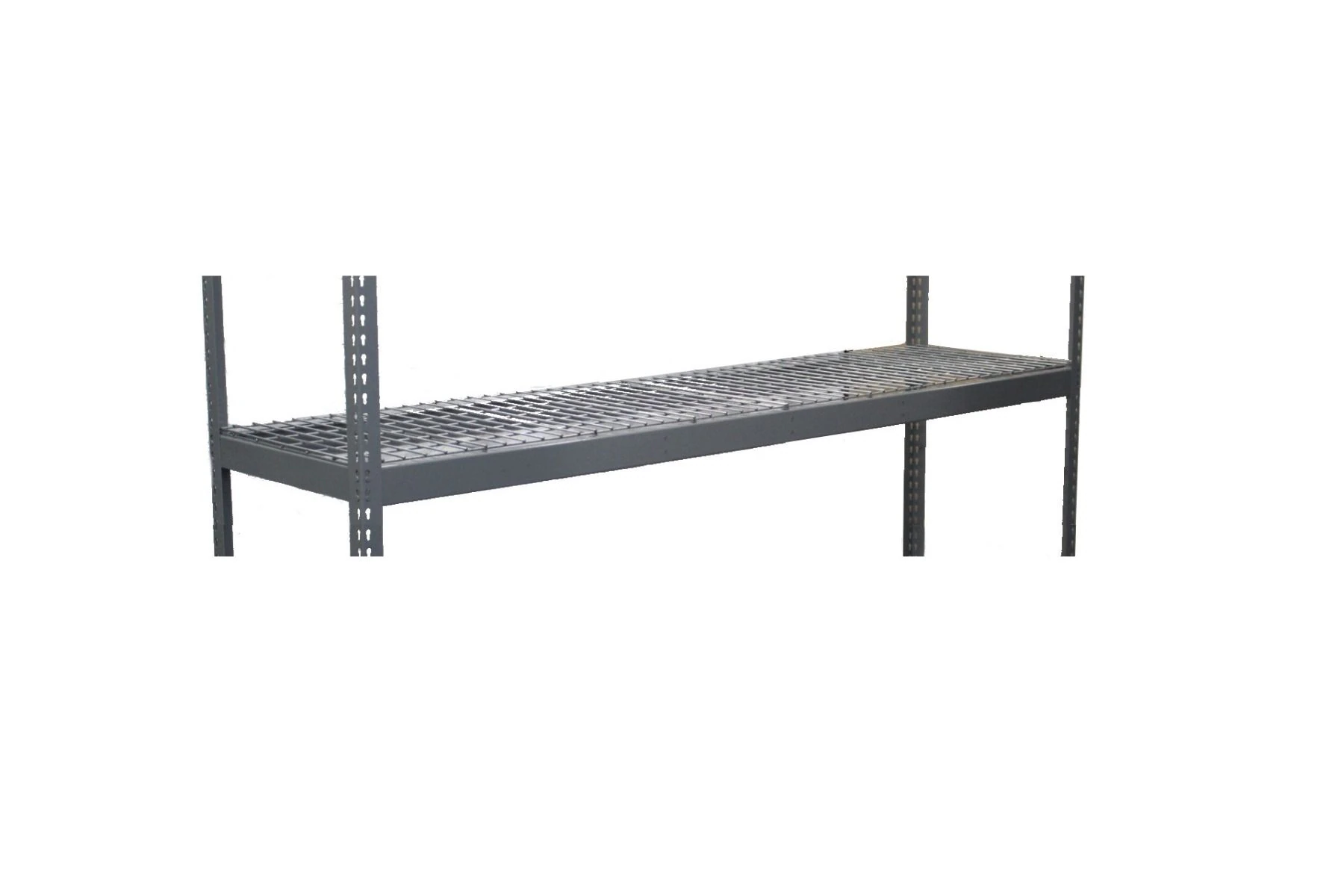
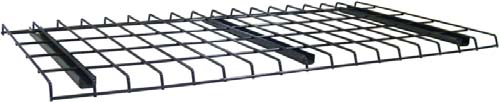
Rivet shelving with wire deck is the open-deck version of rivet shelving. The frame is the same: steel angle posts with keyhole slots, and beams with rivets on each end that drop into the slots and lock under load. No nuts, bolts or shelf clips are needed. The difference is the shelf surface. Instead of particle board, each level carries welded wire mesh panels that rest on the beams.
That one change makes a bay behave differently in a building. Air moves through it, light from the fixtures above reaches the lower levels, dust does not pile up on a flat board, and sprinkler water can fall through instead of being stopped at the top shelf.

Who buys it: warehouse and distribution teams storing hand-loaded cartons, parts rooms and tool cribs, contractors and maintenance shops, and any facility where a fire marshal or insurer has asked for open decking. If you need the full picture of frames, series and brands first, start with our rivet shelving guide, then come back here to plan the wire-deck version.
Why choose a wire deck over a solid shelf

What the deck does not do: a wire deck does not raise the rated capacity of a shelf. Capacity comes from the beam length, the beam profile and the post. The deck spreads the load between the front and back beams, and on wider levels a center support adds stiffness.
Small parts: the openings on the decks we sell are about 2" x 4". Screws, fittings and other loose items should go into bins or onto a shelf liner on top of the deck.
Wire deck vs particle board vs steel decking
Most rivet shelving can take more than one deck type. Here is how the common options compare for the same frame.
| Deck type | Best for | Sprinkler and airflow | Moisture | Watch out for |
|---|---|---|---|---|
| Welded wire mesh | Cartons, totes, parts in bins, sprinklered warehouses | Open; water, air and light pass through | Does not swell | Small loose items fall through the grid |
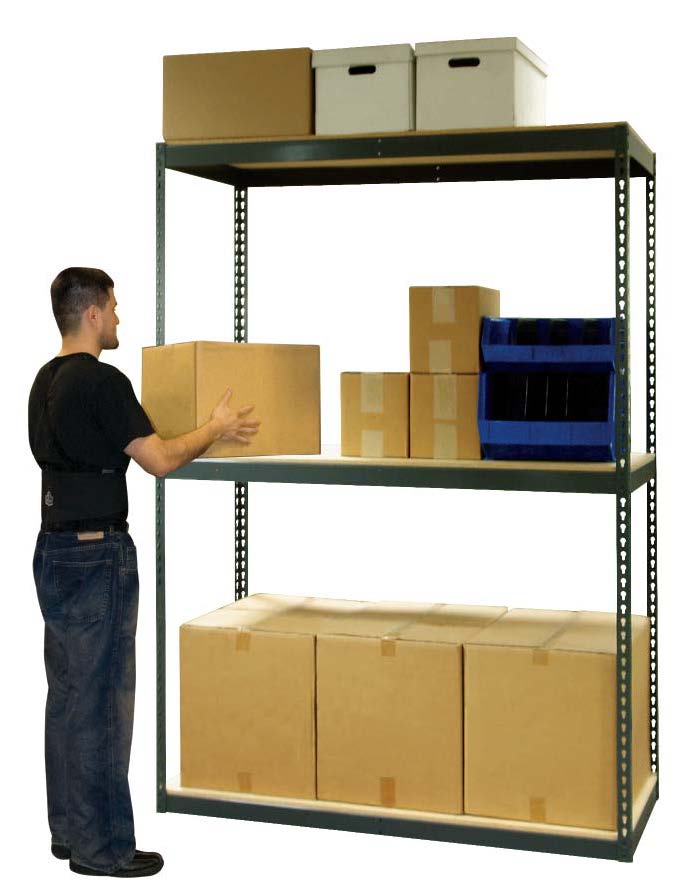
| Particle board | Small loose items, labeling, lowest cost | Blocks water and airflow | Swells and sags if wet | Can be restricted by the fire marshal in some buildings |
| White melamine board | Clean rooms, retail backrooms, food packaging | Blocks water and airflow | Better surface, still board inside | Higher cost than raw board |
| Steel deck | Point loads, drums, items dragged across the shelf | Blocks water unless perforated | Does not swell | Heavier and costs more |
A common layout is a mixed deck run: wire mesh on the upper levels where cartons and totes live, and a solid deck at waist height where people sort or set small items down. That keeps most of the open-deck benefit while giving staff a solid work surface.
If you need a board deck for some levels, see our particle board shelving decks page for sizes and grades.
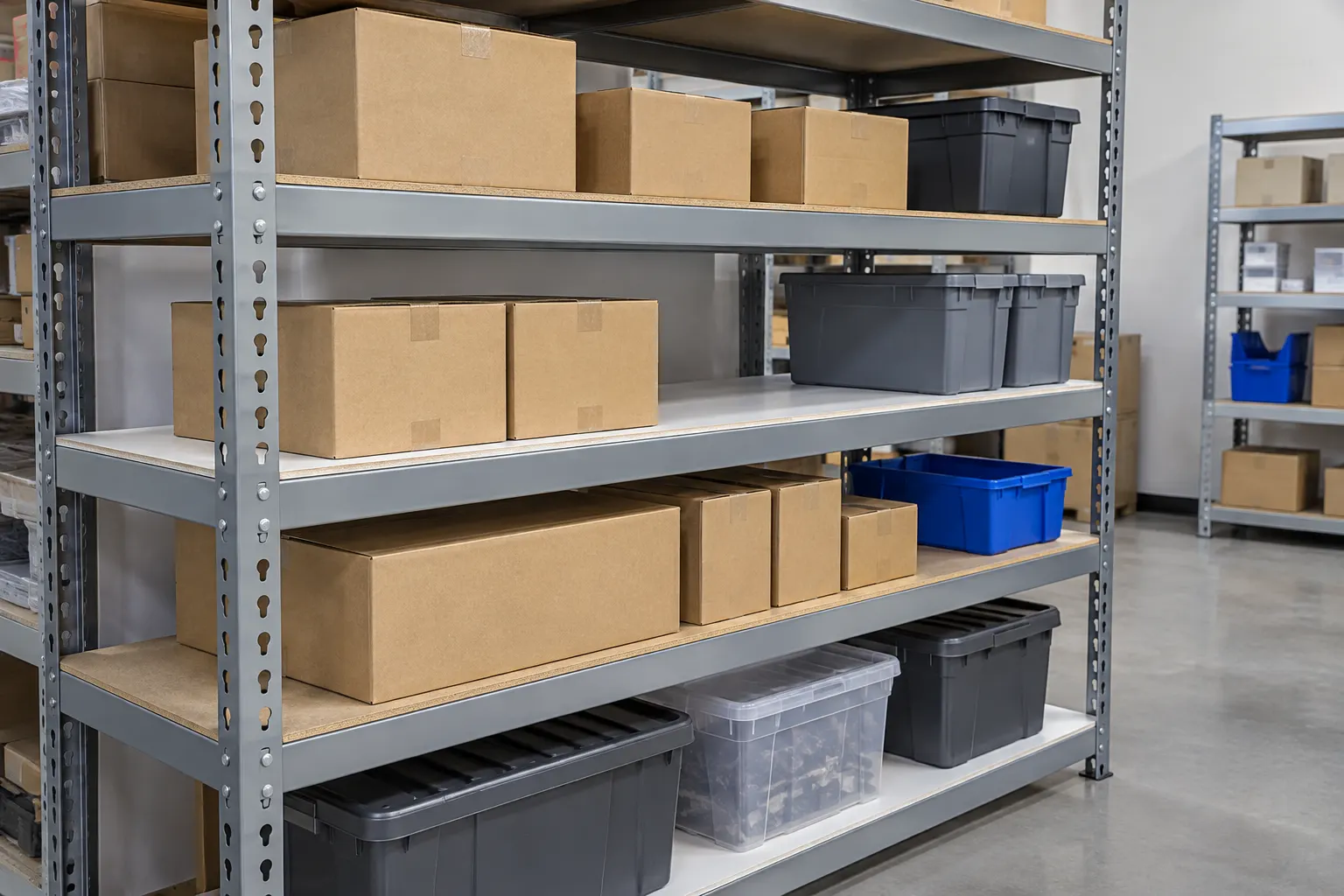
Rivet shelving with wire deck specifications
These are the published specifications for the wire-deck rivet shelving we sell online. Use them to compare against a quote or an existing system, and call us to confirm a size or rating before ordering.
Interlake heavy-duty rivet shelving with wire decking
| Specification | Interlake heavy-duty unit with wire decking |
|---|---|
| Rated capacity | 500 lb per shelf; 96" wide units 1,000 lb per shelf |
| Posts | 1-7/8" x 1-7/8" angle posts, 14-gauge steel, with plastic caps and footplates |
| Beams | 14-gauge double rivet cross beams front and back, double rivet side beams on the ends |
| Level adjustment | Every 1-1/2" |
| Decking | 5-gauge galvanized wire decks, 2" x 4" mesh, with reinforcement support bars |
| Center supports | Added on 72", 84" and 96" wide levels |
| Widths | 36", 48", 60", 72", 96" |
| Depths | 18", 24", 36", 48" |
| Heights | 60", 72", 84", 96", 120" |
| Finish | Electrostatic epoxy-polyester powder coat, lead-free; gray, or blue posts with orange beams |
| Complete unit includes | 4 posts, 3 wire decks, 6 cross beams, 6 side beams, 3 center supports, caps and footplates |
| Extra level includes | 2 cross beams, 2 side beams, 1 center support, wire decking |
| Assembly | Boltless, with a rubber mallet |
Jaken boltless rivet shelving with wire mesh decking
| Jaken series | Configuration we carry with wire mesh | Notes |
|---|---|---|
| Series 200A | 5-shelf units, 36"–48" long x 12"–24" deep x 72"–96" high | Low-profile single rivet beams; more levels for lighter cartons and supplies. 300 lb per level (36" x 12" unit). Need more? Jaken’s Series 300A option raises it to 500 lb per level at 36" wide. Series 300A units come with board decks; see the Series 300A unit in our shop |
| Series 200B | 3-shelf units, 48"–96" long x 12"–48" deep x 72"–96" high | Standard or heavy-duty beam versions. 900 lb per level on 48" standard-beam units; 1,100 lb per level on 72" x 18" heavy-duty-beam units; 7,000 lb total per unit |
| Extra wire mesh shelves | Matched to Series 200B lengths and depths | 5-gauge wire, about 2" x 4" openings, silver powder coat. Same capacity as the unit’s own levels: 900 lb (48" x 12") or 1,100 lb (72" x 18" heavy-duty); the 7,000 lb unit total still applies. Jaken carries one wire mesh deck style for both 200A and 200B |
| All Jaken units | Levels adjust in 1-1/2" increments; 4-way access with no cross braces | Tie plates to connect units sold separately. Ratings above are Jaken’s figures for evenly distributed loads (confirmed by Jaken, October 2026); ask us for sizes not listed |
Jaken wire mesh shelf ratings by size
Capacity drops as the span gets longer, so the same series can hold very different loads depending on width. These are Jaken’s per-level ratings for its wire mesh units at each width; depth does not change the rating.
| Series and width | Depths offered with wire mesh | Rating per level (evenly distributed) |
|---|---|---|
| Series 200A, 36" wide | 12", 18", 24" | 300 lb (confirmed by Jaken for 36" x 12") |
| Series 200A, 48" wide | 12", 18", 24" | 225 lb |
| Series 200B, 48" wide | 12", 18", 24", 36", 48" | 900 lb (confirmed by Jaken for 48" x 12") |
| Series 200B, 72" wide, standard beams | 18", 24", 36", 48" | 900 lb |
| Series 200B, 72" wide, heavy-duty beams | 18", 24", 36", 48" | 1,100 lb (confirmed by Jaken for 72" x 18") |
| Series 200B, 96" wide, standard beams | 18", 24", 36", 48" | 500 lb |
| Series 200B, 96" wide, heavy-duty beams | 18", 24", 36", 48" | 900 lb |
Source: Jaken boltless shelving dealer catalog, with the marked sizes rechecked directly with Jaken in October 2026. Series 200B units carry a 7,000 lb maximum per unit across all levels. Jaken now supplies one wire mesh deck for both series (5-gauge wire, about 2" x 4" openings, silver powder coat). We confirm the rating for your exact size on your quote.
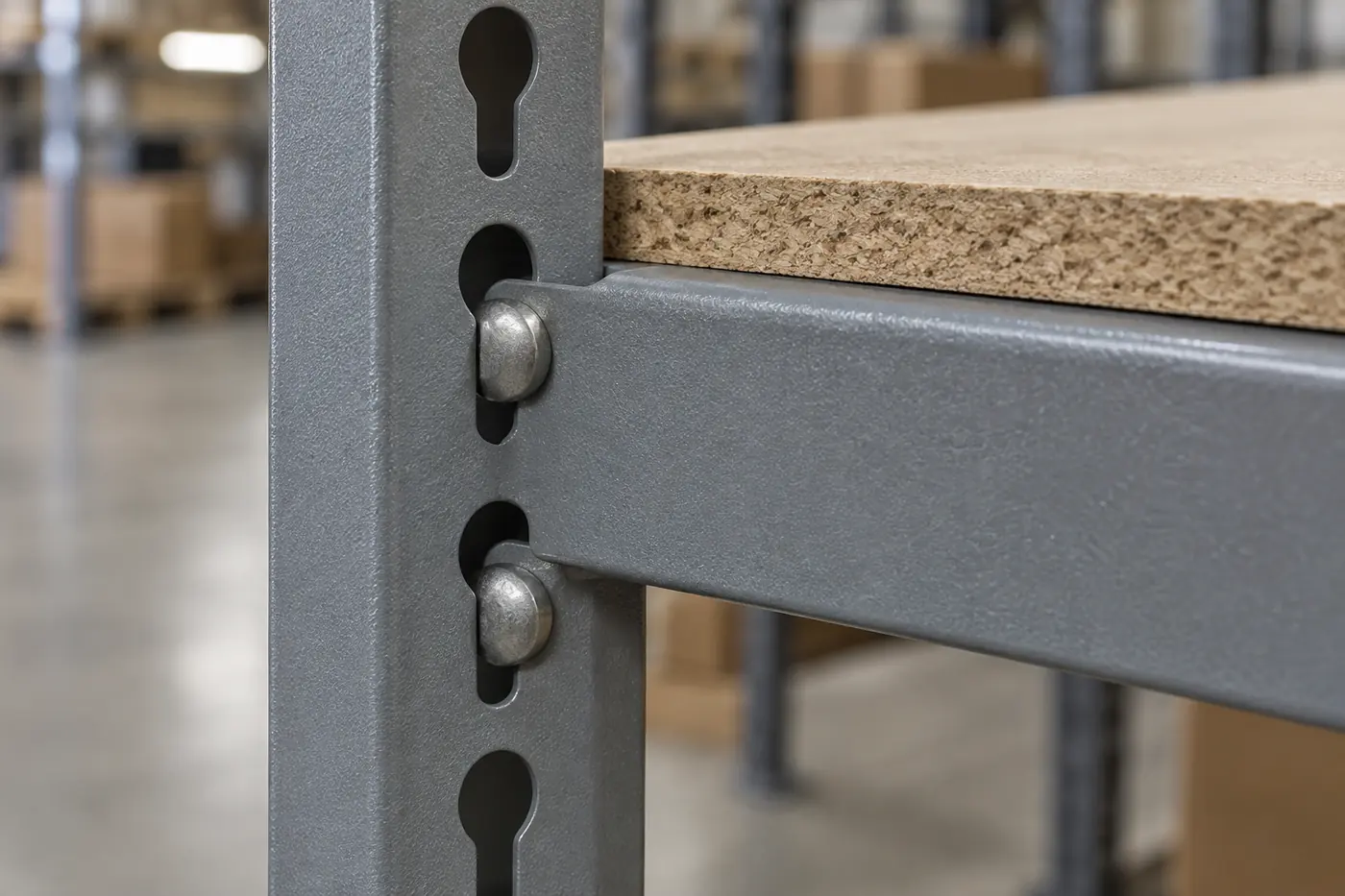
How the frame carries the load: each beam end has rivets that drop into the keyhole slots in the posts. Under load the rivets pull down into the narrow part of the slot, which locks the beam in place. Double rivet beams spread that load over two connection points per end and are the norm on heavier-duty units; single rivet beams have a lower profile and leave more usable space between levels.
For a deeper comparison of beam types and what they mean for capacity, read single rivet vs double rivet beams.
Sizing a wire deck rivet shelving run
Start from the floor and the product, not the catalog. Five measurements set almost every decision:
- Wall or aisle length available for the run, minus any doors, columns or panels
- Depth of the largest carton or tote, plus a little room so nothing overhangs the front beam
- Clear height to the lowest obstruction, such as sprinkler heads, lights or ductwork
- Heaviest load on any single level, spread evenly
- Aisle width for people, carts or a rolling ladder

Worked example
A parts room has a 24 ft wall and stores cartons up to 20" deep, with the heaviest level holding about 400 lb. A run of three 96" wide x 24" deep bays covers about 24 ft (3 x 8 ft, plus a few inches for the posts, so check the exact run length against the wall). Each 96" level on the Interlake units is rated 1,000 lb, so the 400 lb load is well inside the rating, and the 96" levels include center supports. Buying one starter and two add-on units, instead of three starters, removes two pairs of posts from the order.
Keep clearance under sprinklers. Leave the space your fire marshal requires between the top of stored goods and the sprinkler deflectors. That clearance often decides whether a 96" or 120" post makes sense, not the ceiling height alone.
Need an odd size, a taller frame or more levels than the standard unit? We build custom boltless shelving from separate posts, beams and decks.
Starter and add-on units
Measure
Wall length, depth, clear height and the heaviest level.
Pick the bay size
Choose widths that fill the run without leftover gaps.
Starter + add-ons
One starter per run, then add-ons that share its end posts.
Choose decks
Wire on most levels; a solid deck where small items sit.
Applications for rivet shelving with wire deck
Wire-deck rivet shelving earns its place wherever cartons, totes and boxed parts are stored by hand, and wherever open decks help with sprinklers, dust or visibility. These are the uses we quote most often, with a guide for each.
Not sure if wire deck shelving or a heavier system fits? Compare the two in our guide to boltless shelving vs pallet racking, or see the wider range of boltless shelving.
Accessories and options
A wire-deck run can be adapted after it is installed. The most useful add-ons are:
- Tie plates to join back-to-back or side-by-side units into one stable run
- Extra levels with wire decking when product mix changes
- Shelf liners or bins on top of the mesh for small loose items
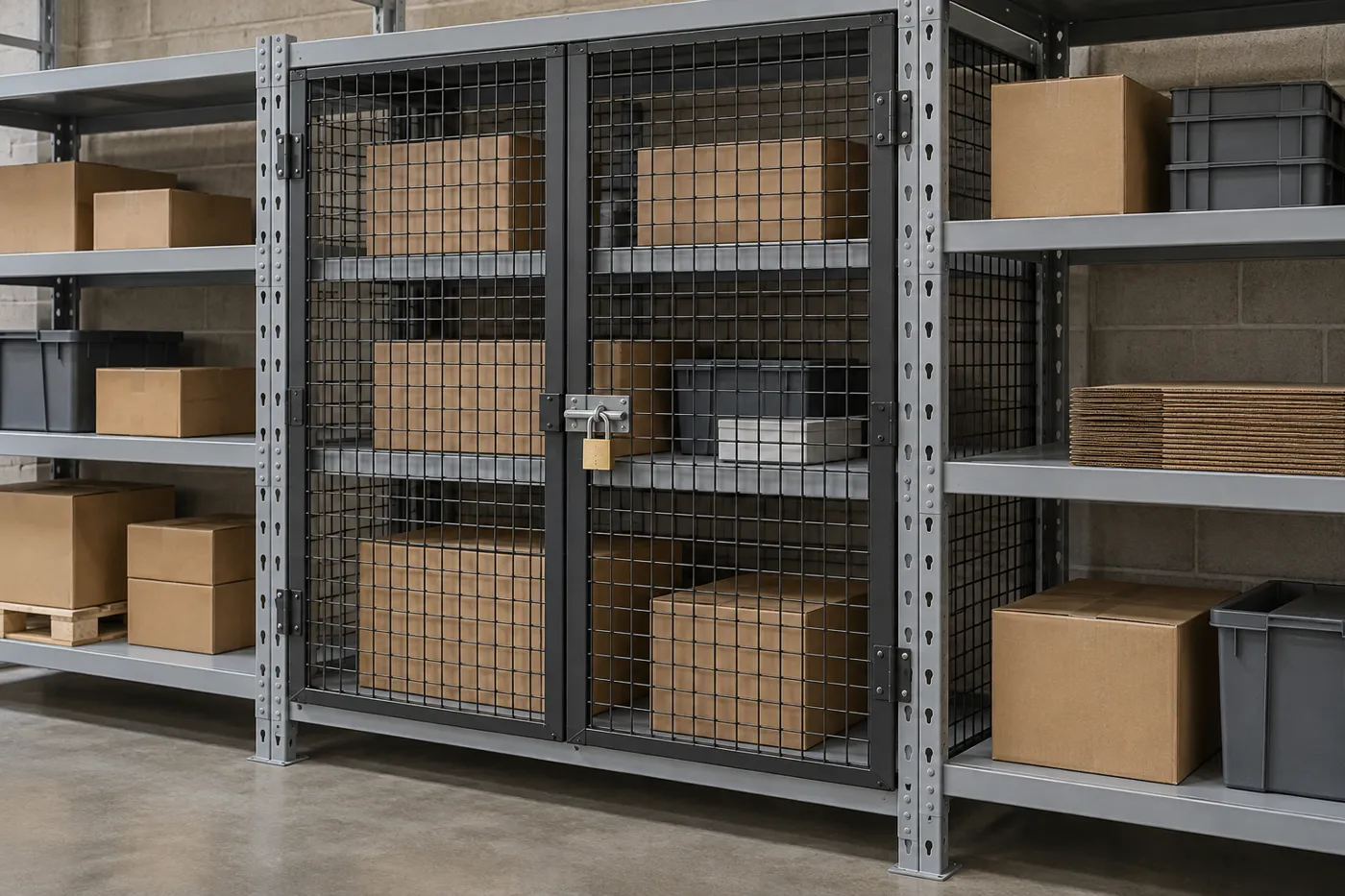
- Mesh side panels and locking doors to secure one bay without building a cage
- Replacement wire decks sized to the beam length and depth
Shop extra levels and replacement decks in the online row above, or ask us to match parts for an existing system.
Installation and safety
Rivet shelving is simple to assemble, but a few habits keep a run safe for years:
- Set units on a level floor and check each bay for plumb before loading.
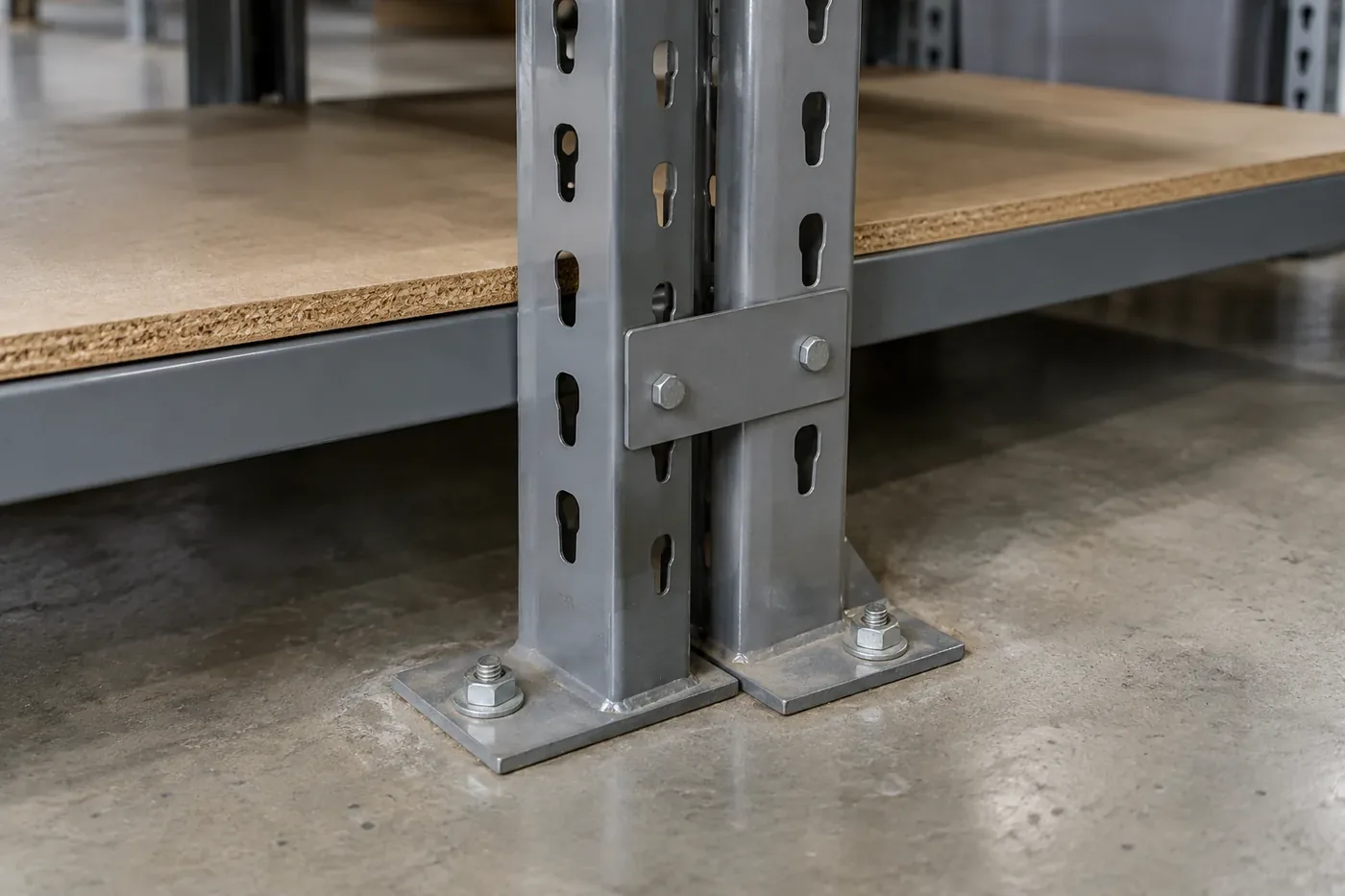
- Join connected units with tie plates, and anchor tall or narrow units to the floor or wall, especially in seismic areas.
- Seat every beam fully with a rubber mallet so the rivets lock into the slots.
- Rest wire decks fully on both beams; on wide levels install the center supports.
- Load heavy items low and spread weight evenly across the deck; never exceed the rated capacity per level.
- Keep the required clearance below sprinkler heads, and ask your fire marshal about deck type and storage height.
Planning your own crew? Our boltless shelving assembly time guide shows how long typical runs take. We also install shelving runs; see commercial shelving installation for how a project works.
Ordering, freight and delivery
Complete units, extra levels and replacement wire decks can be ordered online. Shelving ships by freight on a pallet, and a liftgate is available on select items for an additional charge if your site has no dock.
For larger runs, mixed deck types, custom sizes or installation, call (800) 326-4403 or request a quote with your measurements. A quick sketch of the wall or room, the carton sizes and the heaviest level is enough for us to price a layout.

Rivet and boltless shelving case studies
Real projects from MH-USA customers. The first one is a wire-deck project; the others show the same rivet shelving frames with other deck types.
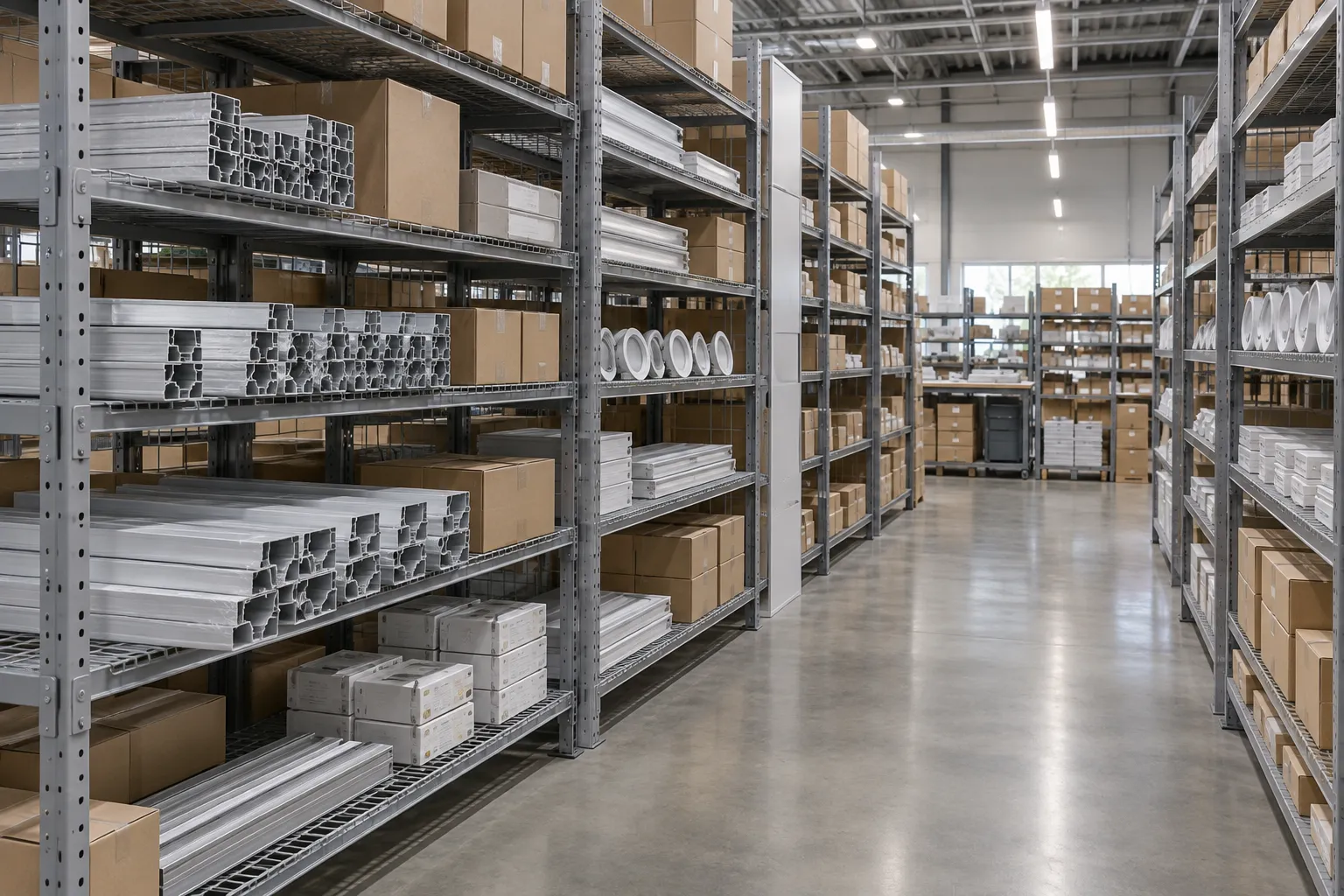 Wire deck levels added to an existing shelving systemA lighting manufacturer in Chatsworth, California added wire deck levels to boltless shelving it already owned.
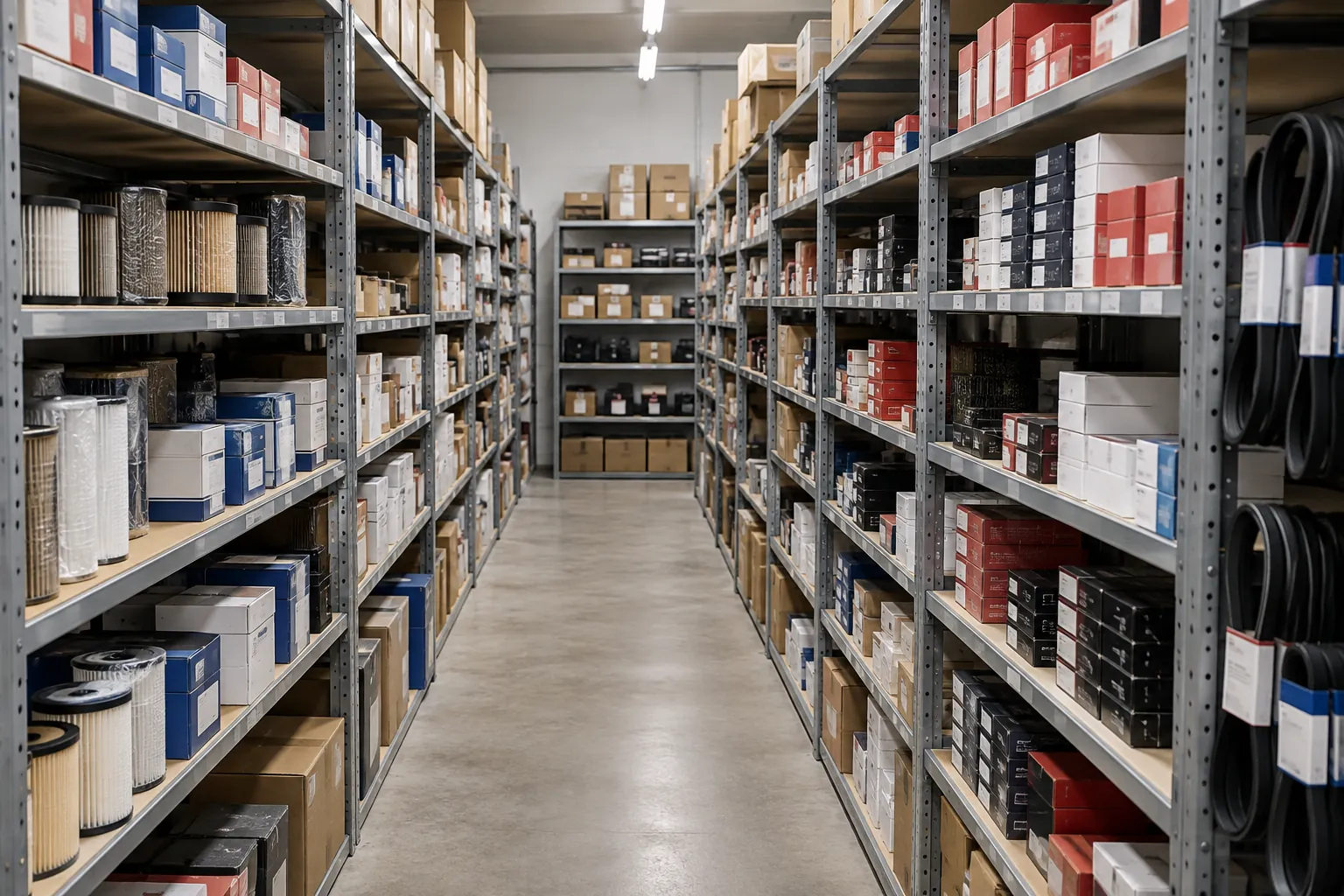 Rivet shelving for an auto parts storeA Cedar City, Utah parts store stocked its stockroom with long runs of rivet shelving.
 Shelving for an ecommerce warehouseAn online retailer added storage for more SKUs without moving to a larger building.
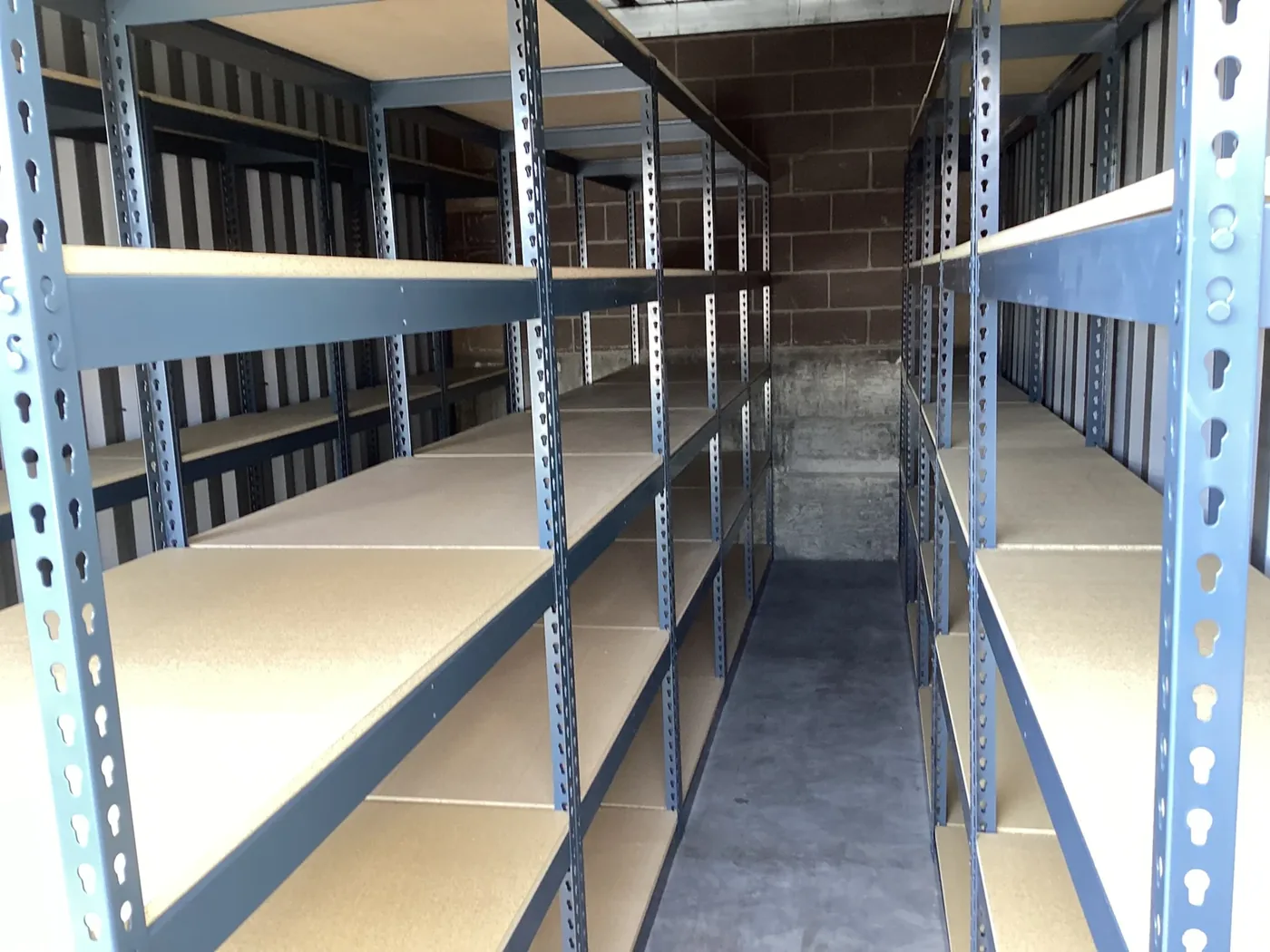 Off-site archive box storageA Lehi, Utah office set up rivet shelving in a storage unit for archive boxes.
Rivet shelving with wire deck FAQs
What is rivet shelving with wire deck?
It is boltless steel shelving whose shelf levels are welded wire mesh panels instead of particle board. Riveted beams lock into keyhole slots in the posts with a rubber mallet, and the wire decks sit on top of the beams. The open grid lets air, light and sprinkler water pass through each level.
How much weight does a wire deck rivet shelf hold?
It depends on the frame, not the deck alone. The Interlake heavy-duty units we sell are rated 500 lb per shelf, and the 96" wide units are rated 1,000 lb per shelf. Jaken rates its wire mesh units at 300 lb per level for Series 200A (500 lb with the Series 300A option), 900 lb per level for 48" Series 200B and 1,100 lb per level for 72" heavy-duty 200B, with a 7,000 lb total per unit. Wider spans hold less: Jaken lists 225 lb per level for 48" Series 200A and 500 lb (900 lb with heavy-duty beams) for 96" Series 200B. Load ratings assume an evenly distributed load, so heavy point loads need a different deck or a shorter span. We confirm the rating for your exact size before you order.
Is wire decking better than particle board for rivet shelving?
Wire is better where airflow, sprinkler water, visibility or dust matter, and it does not swell in damp rooms. Particle board is better for small loose items that would fall through a 2" x 4" grid and costs less. Many runs mix both: wire on the upper levels and a solid deck at hand height.
Do wire decks help with fire sprinkler requirements?
An open wire deck lets sprinkler water reach lower shelf levels, which is why many fire marshals and insurers prefer it over solid decks in sprinklered buildings. Requirements vary by occupancy, commodity and storage height, so confirm with your local fire marshal or authority having jurisdiction before you decide.
Can I add wire decks to rivet shelving I already own?
Usually, yes. Measure the beam length and the depth between the front and back beams, and check whether your beams have a ledge for the deck to sit on. Send us those measurements or a photo of the beam end and we will match a deck or tell you if a beam swap is needed.
How adjustable are the shelf levels?
On the Interlake and Jaken units we carry, beam levels adjust in 1-1/2" increments along the post. Move a level by tapping the beams up out of the keyhole slots and reseating them at the new height.
What sizes are available?
Our Interlake heavy-duty wire-deck units come in 36", 48", 60", 72" and 96" widths, 18" to 48" depths and 60" to 120" heights. Jaken Series 200A and 200B units add more length, depth and height combinations. Call for sizes you do not see online.
What is the difference between a starter unit and an add-on unit?
A starter unit is a complete freestanding bay with four posts. An add-on unit has two posts and shares the end posts of the bay next to it, so a long run of connected bays costs less than buying every bay as a starter.
Plan Your Rivet Shelving with Wire Deck
Send your measurements and we will size the run, match the decks and quote delivery or installation.